Production technology
of pomegranates
Botanical description
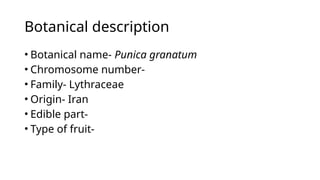
• Botanical name- Punica granatum
• Chromosome number-
• Family- Lythraceae
• Origin- Iran
• Edible part-
• Type of fruit-
Importance and uses
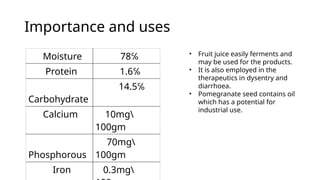
Moisture 78℅
Protein 1.6℅
Carbohydrate
14.5℅
Calcium 10mg
100gm
Phosphorous
70mg
100gm
Iron 0.3mg
• Fruit juice easily ferments and
may be used for the products.
• It is also employed in the
therapeutics in dysentry and
diarrhoea.
• Pomegranate seed contains oil
which has a potential for
industrial use.
Soil and climate required
Soil
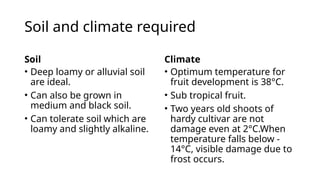
• Deep loamy or alluvial soil
are ideal.
• Can also be grown in
medium and black soil.
• Can tolerate soil which are
loamy and slightly alkaline.
Climate
• Optimum temperature for
fruit development is 38°C.
• Sub tropical fruit.
• Two years old shoots of
hardy cultivar are not
damage even at 2°C.When
temperature falls below -
14°C, visible damage due to
frost occurs.
Species
P.protopunica
• Wild in
Choice of varieties
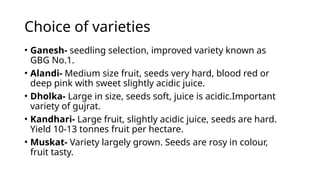
• Ganesh- seedling selection, improved variety known as
GBG No.1.
• Alandi- Medium size fruit, seeds very hard, blood red or
deep pink with sweet slightly acidic juice.
• Dholka- Large in size, seeds soft, juice is acidic.Important
variety of gujrat.
• Kandhari- Large fruit, slightly acidic juice, seeds are hard.
Yield 10-13 tonnes fruit per hectare.
• Muskat- Variety largely grown. Seeds are rosy in colour,
fruit tasty.
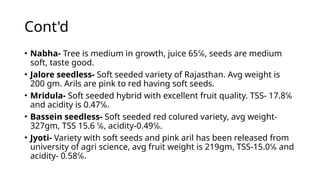
Cont'd
• Nabha- Tree is medium in growth, juice 65℅, seeds are medium
soft, taste good.
• Jalore seedless- Soft seeded variety of Rajasthan. Avg weight is
200 gm. Arils are pink to red having soft seeds.
• Mridula- Soft seeded hybrid with excellent fruit quality. TSS- 17.8℅
and acidity is 0.47℅.
• Bassein seedless- Soft seeded red colured variety, avg weight-
327gm, TSS 15.6 ℅, acidity-0.49℅.
• Jyoti- Variety with soft seeds and pink aril has been released from
university of agri science, avg fruit weight is 219gm, TSS-15.0℅ and
acidity- 0.58℅.
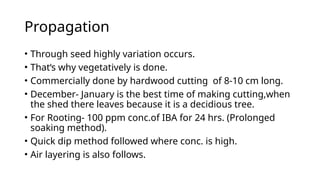
Propagation
• Through seed highly variation occurs.
• That‘s why vegetatively is done.
• Commercially done by hardwood cutting of 8-10 cm long.
• December- January is the best time of making cutting,when
the shed there leaves because it is a decidious tree.
• For Rooting- 100 ppm conc.of IBA for 24 hrs. (Prolonged
soaking method).
• Quick dip method followed where conc. is high.
• Air layering is also follows.
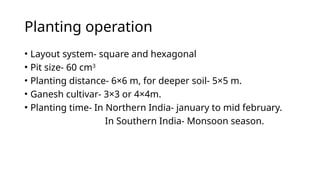
Planting operation
• Layout system- square and hexagonal
• Pit size- 60 cm3
• Planting distance- 6×6 m, for deeper soil- 5×5 m.
• Ganesh cultivar- 3×3 or 4×4m.
• Planting time- In Northern India- january to mid february.
In Southern India- Monsoon season.

Presentation for agriculture students.pptx

  • 1.
  • 2.
    Botanical description • Botanicalname- Punica granatum • Chromosome number- • Family- Lythraceae • Origin- Iran • Edible part- • Type of fruit-
  • 3.
    Importance and uses Moisture78℅ Protein 1.6℅ Carbohydrate 14.5℅ Calcium 10mg 100gm Phosphorous 70mg 100gm Iron 0.3mg • Fruit juice easily ferments and may be used for the products. • It is also employed in the therapeutics in dysentry and diarrhoea. • Pomegranate seed contains oil which has a potential for industrial use.
  • 4.
    Soil and climaterequired Soil • Deep loamy or alluvial soil are ideal. • Can also be grown in medium and black soil. • Can tolerate soil which are loamy and slightly alkaline. Climate • Optimum temperature for fruit development is 38°C. • Sub tropical fruit. • Two years old shoots of hardy cultivar are not damage even at 2°C.When temperature falls below - 14°C, visible damage due to frost occurs.
  • 5.
  • 6.
    Choice of varieties •Ganesh- seedling selection, improved variety known as GBG No.1. • Alandi- Medium size fruit, seeds very hard, blood red or deep pink with sweet slightly acidic juice. • Dholka- Large in size, seeds soft, juice is acidic.Important variety of gujrat. • Kandhari- Large fruit, slightly acidic juice, seeds are hard. Yield 10-13 tonnes fruit per hectare. • Muskat- Variety largely grown. Seeds are rosy in colour, fruit tasty.
  • 7.
    Cont'd • Nabha- Treeis medium in growth, juice 65℅, seeds are medium soft, taste good. • Jalore seedless- Soft seeded variety of Rajasthan. Avg weight is 200 gm. Arils are pink to red having soft seeds. • Mridula- Soft seeded hybrid with excellent fruit quality. TSS- 17.8℅ and acidity is 0.47℅. • Bassein seedless- Soft seeded red colured variety, avg weight- 327gm, TSS 15.6 ℅, acidity-0.49℅. • Jyoti- Variety with soft seeds and pink aril has been released from university of agri science, avg fruit weight is 219gm, TSS-15.0℅ and acidity- 0.58℅.
  • 9.
    Propagation • Through seedhighly variation occurs. • That‘s why vegetatively is done. • Commercially done by hardwood cutting of 8-10 cm long. • December- January is the best time of making cutting,when the shed there leaves because it is a decidious tree. • For Rooting- 100 ppm conc.of IBA for 24 hrs. (Prolonged soaking method). • Quick dip method followed where conc. is high. • Air layering is also follows.
  • 10.
    Planting operation • Layoutsystem- square and hexagonal • Pit size- 60 cm3 • Planting distance- 6×6 m, for deeper soil- 5×5 m. • Ganesh cultivar- 3×3 or 4×4m. • Planting time- In Northern India- january to mid february. In Southern India- Monsoon season.