
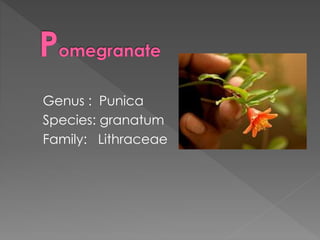


Genus : Punica
Species: granatum
Family: Lithraceae
 Native to the region of Persia and the
western Himalayan range
 Cultivated in Iran, Azerbaijan,
Afghanistan, Northern India and Russia
 Ornamental tree and shrub
 Drought tolerant, can be grown in dry
soil
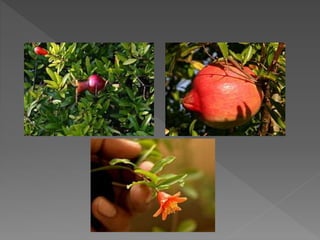
 Leaves
› Glossy, narrow, oblong (3 – 7 cm long, 2 cm
broad)
 Flower
› Bright red with 4-5 petals
 Fruit
› Berry 5-12 cm diameter having thick reddish
skin
 Seed
› Embedded in white spongy, astringent pulp
 Tropic, sub-tropic and sub-temperate
 Hot dry summer
 More cold hardy (10 C
0
)
 Full summer
 Good internal drainage
 Slightly acidic to neutral
 Best grown in alkaline soil
 Adequate space is required
Large
• Wonderful
• Double Red
• Early wonderful
• Flavescene
• Granada
• Eight ball
Compact Variety
• Sate Fair
• Nana (a dwarf variety)
 Seed
 Seedlings (don’t come true to type)
 Air layering (successful but tedious)
 Hard wood cutting stuck in later winter to
early spring) is the most preferable
method
 Frequent sucker removal
 Annual pruning is not necessary
 Some thinning of suckers and branches
from time to time
• Severe fruit drop during first two years of
seedling establishment
• Not occur in vegetatively propagated
plant
Uses
• Eaten Fresh
• Juice, beverage, or syrup
• Cocktail
• Seeds use as anardana
Fungal diseases result in leaf drop and fruit splitting
• Remedy or control is copper fungicide
Insect pests are;
• Pomegranate butterfly
• Leaf footed bug
Health benefits
• Antioxidant
• Skin glowing
• Anti inflammatory agent reduce arthritic pain
• Reduce cholesterol
• Prevent cancer of all types
• Prevent dental plaque
• Dewormer
Pomegranate

Pomegranate

  • 2.
    Genus : Punica Species:granatum Family: Lithraceae
  • 3.
     Native tothe region of Persia and the western Himalayan range  Cultivated in Iran, Azerbaijan, Afghanistan, Northern India and Russia  Ornamental tree and shrub  Drought tolerant, can be grown in dry soil
  • 4.
     Leaves › Glossy,narrow, oblong (3 – 7 cm long, 2 cm broad)  Flower › Bright red with 4-5 petals  Fruit › Berry 5-12 cm diameter having thick reddish skin  Seed › Embedded in white spongy, astringent pulp
  • 6.
     Tropic, sub-tropicand sub-temperate  Hot dry summer  More cold hardy (10 C 0 )  Full summer
  • 7.
     Good internaldrainage  Slightly acidic to neutral  Best grown in alkaline soil  Adequate space is required
  • 8.
    Large • Wonderful • DoubleRed • Early wonderful • Flavescene • Granada • Eight ball Compact Variety • Sate Fair • Nana (a dwarf variety)
  • 9.
     Seed  Seedlings(don’t come true to type)  Air layering (successful but tedious)  Hard wood cutting stuck in later winter to early spring) is the most preferable method
  • 10.
     Frequent suckerremoval  Annual pruning is not necessary  Some thinning of suckers and branches from time to time
  • 11.
    • Severe fruitdrop during first two years of seedling establishment • Not occur in vegetatively propagated plant Uses • Eaten Fresh • Juice, beverage, or syrup • Cocktail • Seeds use as anardana
  • 12.
    Fungal diseases resultin leaf drop and fruit splitting • Remedy or control is copper fungicide Insect pests are; • Pomegranate butterfly • Leaf footed bug Health benefits • Antioxidant • Skin glowing • Anti inflammatory agent reduce arthritic pain • Reduce cholesterol • Prevent cancer of all types • Prevent dental plaque • Dewormer