JOHNSON
A Metrical
composition; it is
the art of uniting
pleasure with truth
by calling
imagination with
the help of reason.
CLASSES OF POETRY
• Personal or Subjective Poetry: Poetry of self
delineation and self expression.
• Impersonal or Objective Poetry: Poetry of
representation or creation. Two groups
 The Narrative
The Dramatic
• Lyric:- Expresses an emotion or an idea or
describes a scene
• Elegy:- Mournful poem, lamenting the death
of someone love and lost.
• Sonnet:- A fourteen line poem with a specific
rhyme scheme. Italian Poem meaning little
sound.
• Ode:- A form of address, dignified in
subjective matter, feeling and style.
Personal or Subjective
Impersonal or Objective
The Narrative
• Ballad:- Short story in verse
• Epic:- Heroic Poem which recounts
a great event in an elevated and
grand style.
• English Narratives:
7
Technical Aspects of Poetry
• Meter
• Rhythm
• Imagery
• Form
METER
A pattern of stressed and unstressed
syllables.
Meter occurs when the stressed and
unstressed syllables of the words in a
poem are arranged in a repeating
pattern.
9
Rhythm
• Gives poetry a musical
feel.
• Can be fast or slow,
depending on mood
and subject of poem.
10
• Rhyme
• Repetition
• Alliteration
• Onomatopoeia
Sound Devices include
Sound
11
Rhyme
• Rhymes are words
that end with the
same sound. (Hat,
cat and bat rhyme.)
The snake slithered
silently along the sunny
sidewalk.
12
Repetition
• Repetition occurs
when poets repeat
words, phrases, or
lines in a poem.
• Creates a pattern.
• Increases rhythm.
• Strengthens feelings,
ideas and mood in a
poem.
13
Onomatopoeia
• Words that represent the actual sound of
something are words of onomatopoeia.
Alliteration
•Use of same sound or letter at the
beginning of words
•Applied only to consonants'.
14
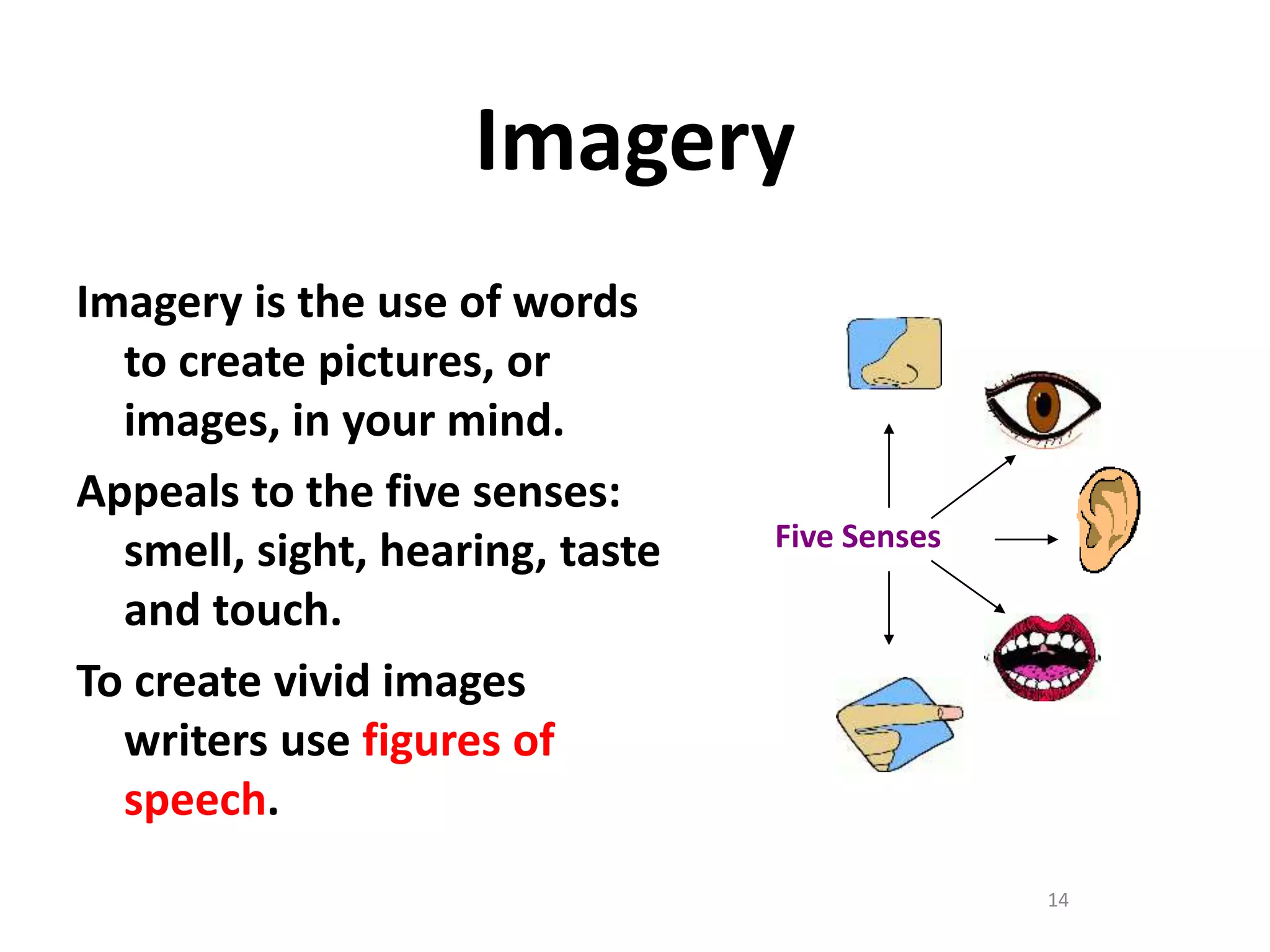
Imagery
Five Senses
Imagery is the use of words
to create pictures, or
images, in your mind.
Appeals to the five senses:
smell, sight, hearing, taste
and touch.
To create vivid images
writers use figures of
speech.
15
Figures of Speech
• Figures of speech are tools that
writers use to create images, or
“paint pictures,” in your mind.
• Similes, metaphors, and
personification are three
figures of speech that create
imagery.
16
Simile
• A simile compares two
things using the words
“like” or “as.”
Metaphor
• A metaphor compares two
things without using the
words “like” or “as.”
• Gives the qualities of one
thing to something that is
quite different.
The winter wind is a wolf
howling at the door.
PERSONIFICATION
• Personification gives
human traits and
feelings to things
that are not human
– like animals or
objects.
The moon smiled down at me.
= Innocence
=
Innocence
Idiom
• It means something other than what it
actually says.
Hyperbole
• Exaggeration often used for emphasis.
Poetry

Poetry

  • 2.
    JOHNSON A Metrical composition; itis the art of uniting pleasure with truth by calling imagination with the help of reason.
  • 3.
    CLASSES OF POETRY •Personal or Subjective Poetry: Poetry of self delineation and self expression. • Impersonal or Objective Poetry: Poetry of representation or creation. Two groups  The Narrative The Dramatic
  • 5.
    • Lyric:- Expressesan emotion or an idea or describes a scene • Elegy:- Mournful poem, lamenting the death of someone love and lost. • Sonnet:- A fourteen line poem with a specific rhyme scheme. Italian Poem meaning little sound. • Ode:- A form of address, dignified in subjective matter, feeling and style. Personal or Subjective
  • 6.
    Impersonal or Objective TheNarrative • Ballad:- Short story in verse • Epic:- Heroic Poem which recounts a great event in an elevated and grand style. • English Narratives:
  • 7.
    7 Technical Aspects ofPoetry • Meter • Rhythm • Imagery • Form
  • 8.
    METER A pattern ofstressed and unstressed syllables. Meter occurs when the stressed and unstressed syllables of the words in a poem are arranged in a repeating pattern.
  • 9.
    9 Rhythm • Gives poetrya musical feel. • Can be fast or slow, depending on mood and subject of poem.
  • 10.
    10 • Rhyme • Repetition •Alliteration • Onomatopoeia Sound Devices include Sound
  • 11.
    11 Rhyme • Rhymes arewords that end with the same sound. (Hat, cat and bat rhyme.) The snake slithered silently along the sunny sidewalk.
  • 12.
    12 Repetition • Repetition occurs whenpoets repeat words, phrases, or lines in a poem. • Creates a pattern. • Increases rhythm. • Strengthens feelings, ideas and mood in a poem.
  • 13.
    13 Onomatopoeia • Words thatrepresent the actual sound of something are words of onomatopoeia. Alliteration •Use of same sound or letter at the beginning of words •Applied only to consonants'.
  • 14.
    14 Imagery Five Senses Imagery isthe use of words to create pictures, or images, in your mind. Appeals to the five senses: smell, sight, hearing, taste and touch. To create vivid images writers use figures of speech.
  • 15.
    15 Figures of Speech •Figures of speech are tools that writers use to create images, or “paint pictures,” in your mind. • Similes, metaphors, and personification are three figures of speech that create imagery.
  • 16.
    16 Simile • A similecompares two things using the words “like” or “as.” Metaphor • A metaphor compares two things without using the words “like” or “as.” • Gives the qualities of one thing to something that is quite different. The winter wind is a wolf howling at the door.
  • 17.
    PERSONIFICATION • Personification gives humantraits and feelings to things that are not human – like animals or objects. The moon smiled down at me. = Innocence = Innocence
  • 18.
    Idiom • It meanssomething other than what it actually says. Hyperbole • Exaggeration often used for emphasis.