“A Tempest” as a Postcolonial play 
Roll no:03 Semester-3 Year-2014-15 
Bharat Bhammar 
Paper-11 (Postcolonial Literature) 
Submitted to: Department of English 
S.B Gardi Maharaja Krishnakumarsinhji 
Bhavnagar University
What is colonialism? 
 The control and governing influence of a nation over a 
dependent country, territory, or people. 
What is Post-colonialism? 
 Post-colonialism mean after colonialism. Post-colonialism 
is the study of a culture after the 
physical and political withdrawal of an oppressive 
power.
What is Tempest ? 
 A violent, windstorm especially one with rain, hail, or snow
Theme of colonialism 
 Cesaire also has a conscious politician aim in reworking 
The Tempest his play keenly examines key issues and 
themes of the original in the light of Post-colonial 
criticism has been a significant literary approach since the 
later twentieth century when many countries all around the 
world liberated themselves from European imperialism 
and European literary works began to be re-examined for 
their imperialist leaning.
Theme of colonialism 
 The imperialist themes of “A Tempest” have often been noted 
by post-colonial critics, with Prospero being seen as an 
European overlord and Caliban as a victim of this colonist 
oppression.
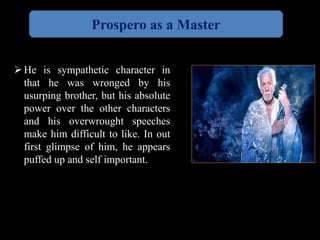
Prospero as a Master 
He is sympathetic character in 
that he was wronged by his 
usurping brother, but his absolute 
power over the other characters 
and his overwrought speeches 
make him difficult to like. In out 
first glimpse of him, he appears 
puffed up and self important.
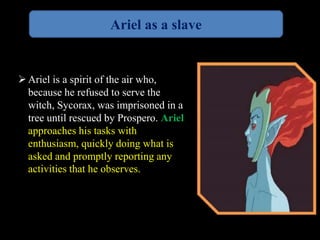
Ariel as a slave 
 Ariel is a spirit of the air who, 
because he refused to serve the 
witch, Sycorax, was imprisoned in a 
tree until rescued by Prospero. Ariel 
approaches his tasks with 
enthusiasm, quickly doing what is 
asked and promptly reporting any 
activities that he observes.
 Early in the play, Ariel reports the plot to murder Prospero, and 
later, he assists in punishing Prospero's enemies. Ariel's obedience 
is an important symbol of Prospero's humanity, because he 
ameliorates Prospero's role on the island and humanizes the action 
that Prospero takes against his old adversaries. 
 Finally, Ariel's willing obedience of Prospero's wishes stands in 
stark contrast to Caliban's cursing and plotting against the same 
master.
PROSPERO: Well, Ariel? 
ARIEL: Mission accomplished. 
PROSPERO: Bravo; good work! But what seems to be the matter? I give you a 
compliment and you don't seem pleased? Are you tired? 
ARIEL: Not tired; disgusted. I obeyed you but ? why not come out with it ? I 
did so most unwillingly. It was a real pity to see that great ship go 
down, so full of life.
PROSPERO: Oh, so you're upset, are you! It's always like that with 
intellectuals! So be it! What interests me is not your moods, but 
your deeds. Let's split: I’ll take the zeal and you can keep your 
doubts. Agreed? 
ARIEL: Master, I must beg you to spare me this kind of labor.
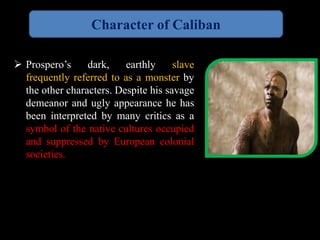
Character of Caliban 
 Prospero’s dark, earthly slave 
frequently referred to as a monster by 
the other characters. Despite his savage 
demeanor and ugly appearance he has 
been interpreted by many critics as a 
symbol of the native cultures occupied 
and suppressed by European colonial 
societies.
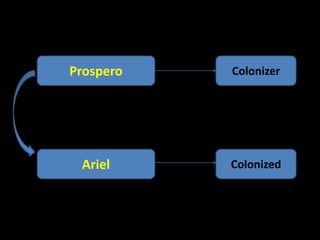
Prospero 
Colonizer 
Ariel Colonized
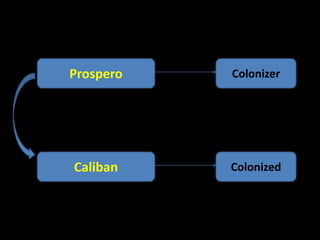
Prospero 
Colonizer 
Caliban Colonized
"A Tempest" as a Post-colonial play

"A Tempest" as a Post-colonial play

  • 1.
    “A Tempest” asa Postcolonial play Roll no:03 Semester-3 Year-2014-15 Bharat Bhammar Paper-11 (Postcolonial Literature) Submitted to: Department of English S.B Gardi Maharaja Krishnakumarsinhji Bhavnagar University
  • 2.
    What is colonialism?  The control and governing influence of a nation over a dependent country, territory, or people. What is Post-colonialism?  Post-colonialism mean after colonialism. Post-colonialism is the study of a culture after the physical and political withdrawal of an oppressive power.
  • 3.
    What is Tempest?  A violent, windstorm especially one with rain, hail, or snow
  • 4.
    Theme of colonialism  Cesaire also has a conscious politician aim in reworking The Tempest his play keenly examines key issues and themes of the original in the light of Post-colonial criticism has been a significant literary approach since the later twentieth century when many countries all around the world liberated themselves from European imperialism and European literary works began to be re-examined for their imperialist leaning.
  • 5.
    Theme of colonialism  The imperialist themes of “A Tempest” have often been noted by post-colonial critics, with Prospero being seen as an European overlord and Caliban as a victim of this colonist oppression.
  • 6.
    Prospero as aMaster He is sympathetic character in that he was wronged by his usurping brother, but his absolute power over the other characters and his overwrought speeches make him difficult to like. In out first glimpse of him, he appears puffed up and self important.
  • 7.
    Ariel as aslave  Ariel is a spirit of the air who, because he refused to serve the witch, Sycorax, was imprisoned in a tree until rescued by Prospero. Ariel approaches his tasks with enthusiasm, quickly doing what is asked and promptly reporting any activities that he observes.
  • 8.
     Early inthe play, Ariel reports the plot to murder Prospero, and later, he assists in punishing Prospero's enemies. Ariel's obedience is an important symbol of Prospero's humanity, because he ameliorates Prospero's role on the island and humanizes the action that Prospero takes against his old adversaries.  Finally, Ariel's willing obedience of Prospero's wishes stands in stark contrast to Caliban's cursing and plotting against the same master.
  • 9.
    PROSPERO: Well, Ariel? ARIEL: Mission accomplished. PROSPERO: Bravo; good work! But what seems to be the matter? I give you a compliment and you don't seem pleased? Are you tired? ARIEL: Not tired; disgusted. I obeyed you but ? why not come out with it ? I did so most unwillingly. It was a real pity to see that great ship go down, so full of life.
  • 10.
    PROSPERO: Oh, soyou're upset, are you! It's always like that with intellectuals! So be it! What interests me is not your moods, but your deeds. Let's split: I’ll take the zeal and you can keep your doubts. Agreed? ARIEL: Master, I must beg you to spare me this kind of labor.
  • 11.
    Character of Caliban  Prospero’s dark, earthly slave frequently referred to as a monster by the other characters. Despite his savage demeanor and ugly appearance he has been interpreted by many critics as a symbol of the native cultures occupied and suppressed by European colonial societies.
  • 12.
  • 13.