PneumoniaPrepared by:      Brian Kieth C. Gonzales
What is pneumonia?Pneumonia is an infection or inflammation of the lung, and can be caused by nearly any class of organism known to cause human infections, including bacteria, viruses, fungi, and parasites.
Different organisms are more frequently encountered by different age groups.  Viruses cause the majority of pneumonias in young children (especially respiratory syncytial virus, parainfluenza and influenza viruses, and adenovirus). Adults are more frequently infected with bacteria (such as Streptococcus pneumoniae, Haemophilus influenzae, and Staphylococcus aureus). Pneumonia in older children and young adults is often caused by the bacteria-like Mycoplasma pneumoniae .
Bacterial PneumoniaBacterial pneumonia is an infection that causes irritation, swelling, and congestion in the lungs. It is also called bacterial pneumonitis. 
Viral Pneumoniais an infection or inflammation of the lungs. It can be in just one part of the lungs, or it can involve many parts. 
Mycoplasmal pneumoniaIt is a type of atypical pneumonia. It is caused by the bacteria M. pneumoniae. This type of pneumonia usually affects people younger than 40.
Pneumocystis Pneumonia (PCP)A fungal infection of the lungs that is particularly common and life-threatening in premature or malnourished infants and in immunosuppressed persons. Pneumocystis pneumonia (PCP) is the most common opportunistic infection in people infected with HIV (human immunodeficiency virus).
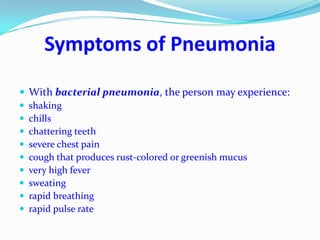
Symptoms of PneumoniaWith bacterial pneumonia, the person may experience:
shaking
chills
chattering teeth
severe chest pain
cough that produces rust-colored or greenish mucus
very high fever
sweating
rapid breathing
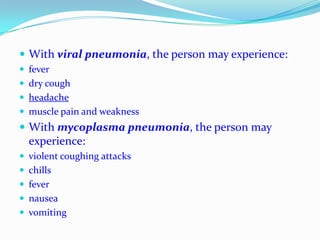
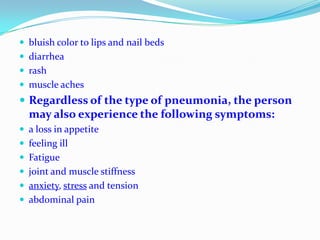
rapid pulse rateWith viral pneumonia, the person may experience:feverdry coughheadachemuscle pain and weaknessWith mycoplasma pneumonia, the person may experience:violent coughing attackschillsfevernauseavomiting
bluish color to lips and nail beds

Pneumonia Micro2

  • 1.
    PneumoniaPrepared by: Brian Kieth C. Gonzales
  • 3.
    What is pneumonia?Pneumoniais an infection or inflammation of the lung, and can be caused by nearly any class of organism known to cause human infections, including bacteria, viruses, fungi, and parasites.
  • 4.
    Different organisms aremore frequently encountered by different age groups.  Viruses cause the majority of pneumonias in young children (especially respiratory syncytial virus, parainfluenza and influenza viruses, and adenovirus). Adults are more frequently infected with bacteria (such as Streptococcus pneumoniae, Haemophilus influenzae, and Staphylococcus aureus). Pneumonia in older children and young adults is often caused by the bacteria-like Mycoplasma pneumoniae .
  • 5.
    Bacterial PneumoniaBacterial pneumoniais an infection that causes irritation, swelling, and congestion in the lungs. It is also called bacterial pneumonitis. 
  • 6.
    Viral Pneumoniais an infection or inflammation ofthe lungs. It can be in just one part of the lungs, or it can involve many parts. 
  • 7.
    Mycoplasmal pneumoniaIt isa type of atypical pneumonia. It is caused by the bacteria M. pneumoniae. This type of pneumonia usually affects people younger than 40.
  • 8.
    Pneumocystis Pneumonia (PCP)Afungal infection of the lungs that is particularly common and life-threatening in premature or malnourished infants and in immunosuppressed persons. Pneumocystis pneumonia (PCP) is the most common opportunistic infection in people infected with HIV (human immunodeficiency virus).
  • 9.
    Symptoms of PneumoniaWith bacterialpneumonia, the person may experience:
  • 10.
  • 11.
  • 12.
  • 13.
  • 14.
    cough that producesrust-colored or greenish mucus
  • 15.
  • 16.
  • 17.
  • 18.
    rapid pulse rateWith viralpneumonia, the person may experience:feverdry coughheadachemuscle pain and weaknessWith mycoplasma pneumonia, the person may experience:violent coughing attackschillsfevernauseavomiting
  • 19.
    bluish color tolips and nail beds