PNEUMOCYSTIS JIROVECI
• Pneumocystis jirovecii (formerly P carinii) is an ascomycetous fungus
that causes opportunistic infection, particularly pneumonia, in patients
who have impaired immunity.
• Pneumocystis pneumonia (PCP) continues to be a devastating AIDS
defining illness in patients who have HIV infection.
• PCP also occurs in other non HIV immunosuppressed patients
particulary those receiving immunosuppressive agents in the settings of
 Malignancy-30 percent
 Organ transplantation-25 percent
 Various rheumatologic and hematologic conditions. -22 percent
 Solid tumour-13 percent
HISTORICAL CONSIDERATION
• In 1988, P.carinii was phylogenetically reclassified within thefungal kingdom
after sequencing of the small ribosomal RNA subunit and the discovery that it
possessed homology to ascomycetous fungi.
• Since its initial discovery, a unique form of Pneumocystis has been identified
in virtually every mammal investigated, including rats, mice, ferrets, swine,
sheep, various primates, bats, and cetacean host species.
• Each form of Pneumocystis possesses unique genetic characteristics and
strict host specificity.
• The explanation for such strict host specificity has not been determined and
is largely unprecedented in the fungi.
• The form that infects humans has recently been renamed Pneumocystis
jirovecii, after the pathologist Jirovec who first reported the organism in
humans
EPIDEMOLOGY
• Prior to the widespread use of highly active antiretroviral therapy
(HAART), PCP occurred in 70-80% of patients with HIV infection.
• The frequency of PCP is decreasing with the use of PCP prophylaxis
and HAART.
• PCP is still the most common opportunistic infection in patients with HIV
infection
• Currently, the frequency of documented Pneumocystis infection is
increasing in Africa, with Pneumocystis organisms found in up to 80% of
infants with pneumonia who have HIV infection.
• In sub-Saharan Africa and India, tuberculosis is a common co-infection
in persons with PCP.
• Other individuals at risk for contracting PCP include patients who have
hematologic or solid malignancies.
• Individuals receiving immunosuppressive medications, transplant recipients,
and those who have an altered immune system.
• Patients who have cancer may present with PCP before receiving
chemotherapy likely resulting from malignancy-related immune depression.
• Although corticosteroids remain the most recognized immunosuppressive
medication associated with Pneumocystis infection.
• PCP has been reported with many nonsteroid immune modulating
medications.
• Several recent reports describe the development of PCP in patients who
have autoimmune diseases or malignancy being treated with the monoclonal
antibodies adalimumab, infliximab, etanercept, or rituximab.The true
incidence of PCP in these individuals is unknown
• Accordingly, care providers must be aware of PCP as a possible complication
of their use and remain vigilant for this complication.
LIFE CYCLE
Proposed life cycle of Pneumocystis. Motile Pneumocystis forms bind tightly to
lung alveolar epithelial cells. Growing evidence supports a sexual conjugation-
mating phase followed by meiosis and mitosis resulting in a mature cyst
containing eight intracystic bodies. The cyst ruptures releasing the intracystic
bodies as new trophic forms. The trophic forms are haploid and it is further
proposed that they may also undergo asexual proliferation through haploid
PATHOPHISIOLOGY
• Pneumocystis organisms are commonly found in the lungs of healthy
individuals. Most children are believed to have been exposed to the organism
by age 3 or 4 years,.
• Airborne transmission has been reported.
• Human evidence of this is provided by molecular analysis of Pneumocystis
isolates obtained from groups of patients involved in hospital outbreaks.
• Further evidence of human transmission has been found in cases of
recurrent pneumonia in which the genotype of Pneumocystis organisms in
the same person differed from prior episodes.
• Despite this, barrier precautions are not required for patients hospitalized
with P carinii pneumonia (PCP) except to protect other patients with
depressed immunity
• Development of PCP Disease occurs when both cellular immunity
and humoral immunity are defective.
• Once inhaled, the trophic form of Pneumocystis organisms attach
to the alveoli.
• Multiple host immune defects allow for uncontrolled replication of
Pneumocystis organisms and development of illness.
• Activated alveolar macrophages without CD4+ cells are unable to
eradicate Pneumocystis organisms.
• Increased alveolar-capillary permeability is visible on electron
microscopy.
• Infection in the lung starts with the multiplication of the organism in the alveoli.
• As infection progresses,alveoli fill with exudates, there is type 2 pneumocyte
hyperplasia, and mononuclear cells infiltrate the lung.
• Desquamation of the alveolar lining cells creates increased permeability of the
alveolar capillary membrane and noncardiogenic pulmonary edema.
• In patients with AIDS, there are larger numbers of Pneumocystis organisms in
the lungs and fewer nflammatory cells than in patients with Pneumocystis
pneumonia (PCP) who are HIV-negative.
• Fewer inflammatory cells in AIDS patients with PCP seems to be related to
better oxygenation and survival than in patients without AIDS.
• Further lung destruction can lead to formation of pneumatoceles (also known as
cysts, blebs or cavities) and pneumothoraces. This damage may occur from
chronic, low-grade infection, erosion of lung parenchymafrom inflammation
causing release of proteases and elastases, or alteration in lung connective
tissue by HIV infection
• Physiologic changes include the following:
• Hypoxemia with an increased alveolar arterial oxygen
gradient
• Respiratory alkalosis
• Impaired diffusing capacity
• Changes in total lung capacity and vital capacity
• There have been reports of PCP occurring as part of the
immune reconstitutionsyndrome
RISK FACTORS IN HIV POSITIVE
• CD4+ T-lymphocyte cell count < 200 per mm3 (200 ×
106 per L)
• Unexplained fever of > 37.7°C (100°F) for > two weeks
• History of oropharyngeal candidiasis
• Previous episode of PCP
• Other AIDS-defining illness
RISK FACTORS IN HIV NEGATIVE
• Patients taking steroids or other immunosuppressants.
• Eg.Patients with
Haematological malignancy.
Organ transplant recipients.
Connective tissue diseases such as rheumatoid arthritis.
• Congenital immune deficiency - eg, thymic aplasia, SCID,
hypogammaglobulinaemia.
• Severe malnutrition (poor nutrition in HIV-positive
individuals increases risk).
• Pre-existing lung disease
DRU
PHYSICAL EXAMINATION
• The findings on physical examination are nonspecific and include
fever, tachypnea, and tachycardia.
• Pulmonary examination is often normal but occasionally
demonstrates mild crackles on auscultation.
• Children may present with cyanosis.
• Infection rarely causes extrapulmonary manifestations, but in
patients with advanced AIDS there may be systemic infection.
• Diminished breath sounds unilaterally may be a sign of
pneumothorax. Pleuritic pain may be a sign of pneumothorax but
is uncommon in PCP without a pneumothorax.
PRESENTATION AND PROGRESSION
• In HIV-positive PCP, presentation is often an insidious progression of fatigue,
fevers, chills, sweats, nonproductive cough, and dyspnea over several
weeks. Other findings associated with PCP are a history of recurrent
bacterial pneumonias, weight loss, and oral candidiaisis.
• In HIV-negative patients, the presentation is typically more rapid and more
severe.The onset of symptoms may occur while the usual dose of
immunosuppressive agents is being tritrated.
• Rarely, infection causes extrapulmonary manifestations in those with
advanced HIV; however, in patients with advanced AIDS or in HIV-positive
patients who are not taking their prophylaxis, there may be systemic infection
with visual symptoms, cognitive impairment owing to CNS involvement, and
GI symptoms such as diarrhea
• Compared with patients who do not have HIV, patients infected with HIV
often present with a higher arterial oxygen tension and a lower alveolar–
arterial oxygen gradient, and a better clinical outcome.
• The higher mortality rate is likely a result of delayed diagnoses and initiation
of appropriate treatment.
• A recent review of patients who had HIV with PCP revealed an overall
hospital mortality of 11.6%, with mortality in patients requiring intensive
care of 29.0%. Mechanical ventilation, development of pneumothoraces, or low
serum albumin were independent predictors of increased mortality in these
patients.
• Furthermore, the diagnosis of PCP in patients using HAART most likely
represented failing HAART regimens or noncompliance with HAART
regimens.
• Immunocompromised patients who do not have HIV typically present more
acutely with fulminate respiratory failure associated with fever and dry cough
and frequently require mechanical ventilation.
• Acute respiratory failure occurs in 43% of patients who do not have AIDS who
develop PCP, and the overall mortality of PCP in patients who do not have AIDS
may be as high as 40%.
• Symptoms may correlate with the titration of immunosuppressants (particularly
corticosteroids) or may be associated with an immunosuppressant dosage
increase (such as cytotoxic agents). Evidence suggests that great than 90% of
the PCP cases in patients who did not have AIDS occurred when the patients
had received systemic corticosteroids within 1 month of the PCP diagnosis.
• In that study, most patients who had PCP had received a corticosteroid dose
equivalent to 16 mg or greater administered for at least 8 weeks.
IMAGING
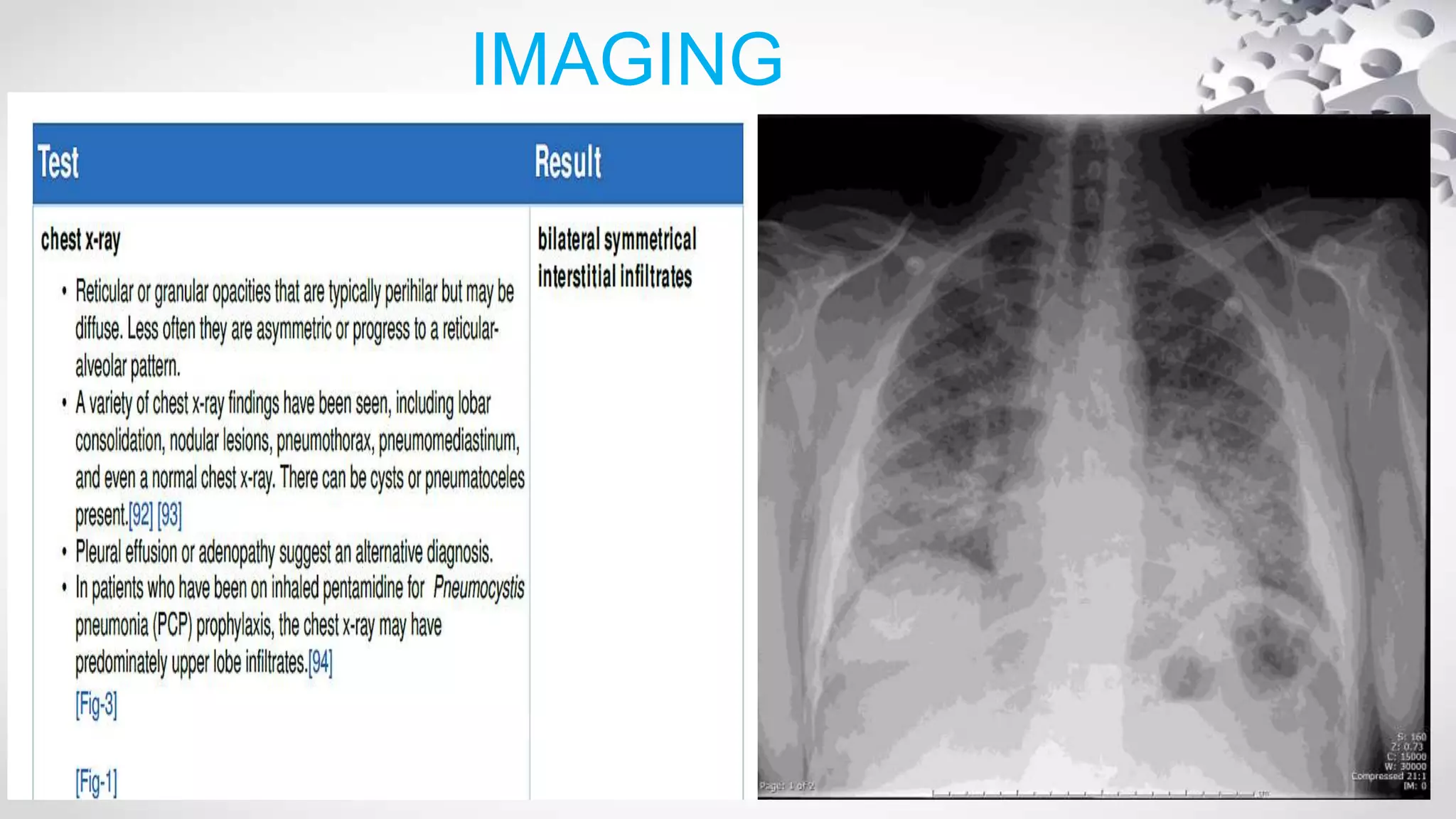
Posteroanterior Chest Radiograph of a 68-Year-Old Patient
with Pneumocystis Pneumonia That Developed as a
Consequence of Long-
Term Corticosteroid Therapy for an Inflammatory Neuropathy.
Mixed alveolar and interstitial infiltrates are more prominent on
the right side
than on the left
INDUCED SPUTUM AND BAL
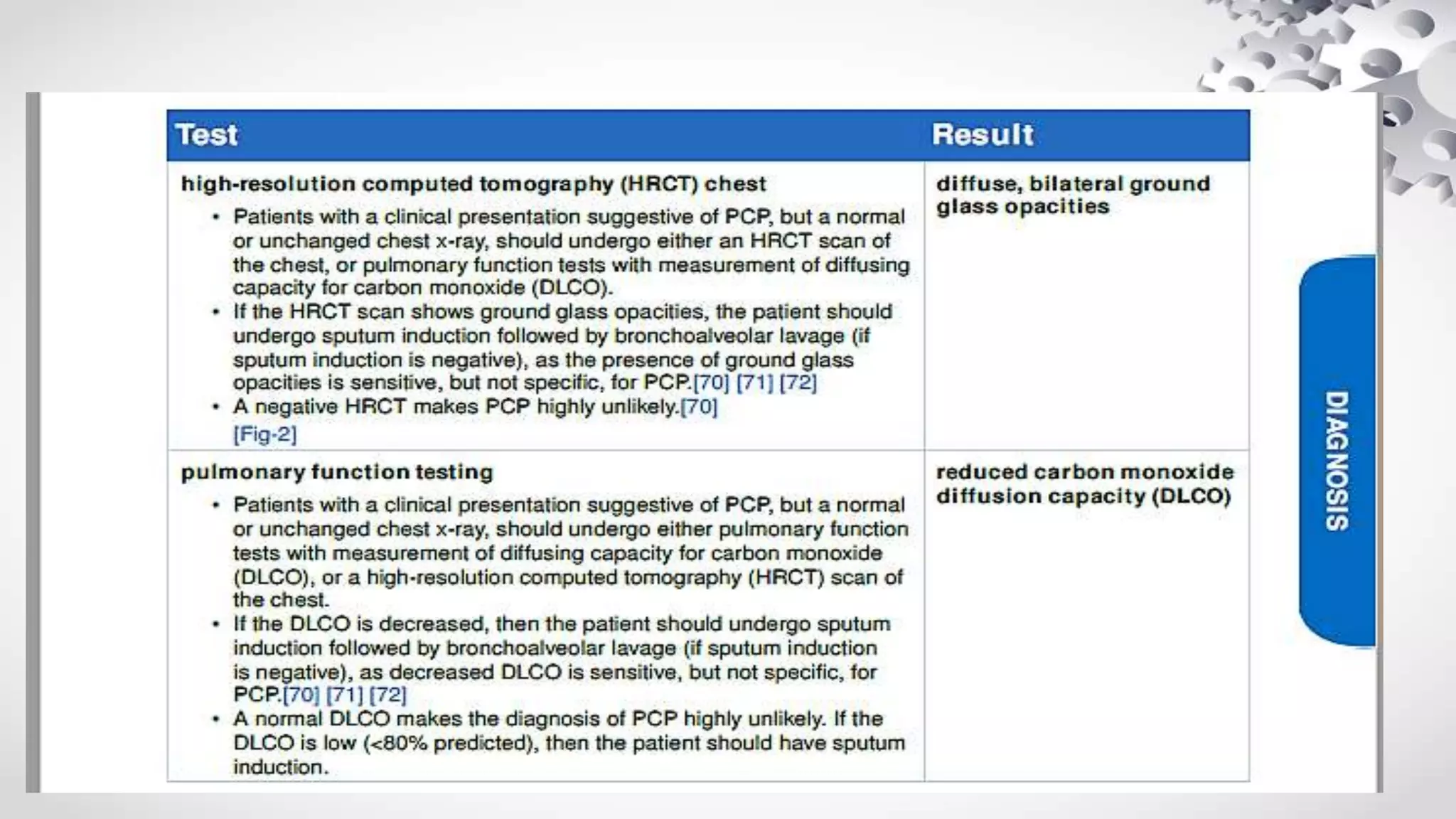
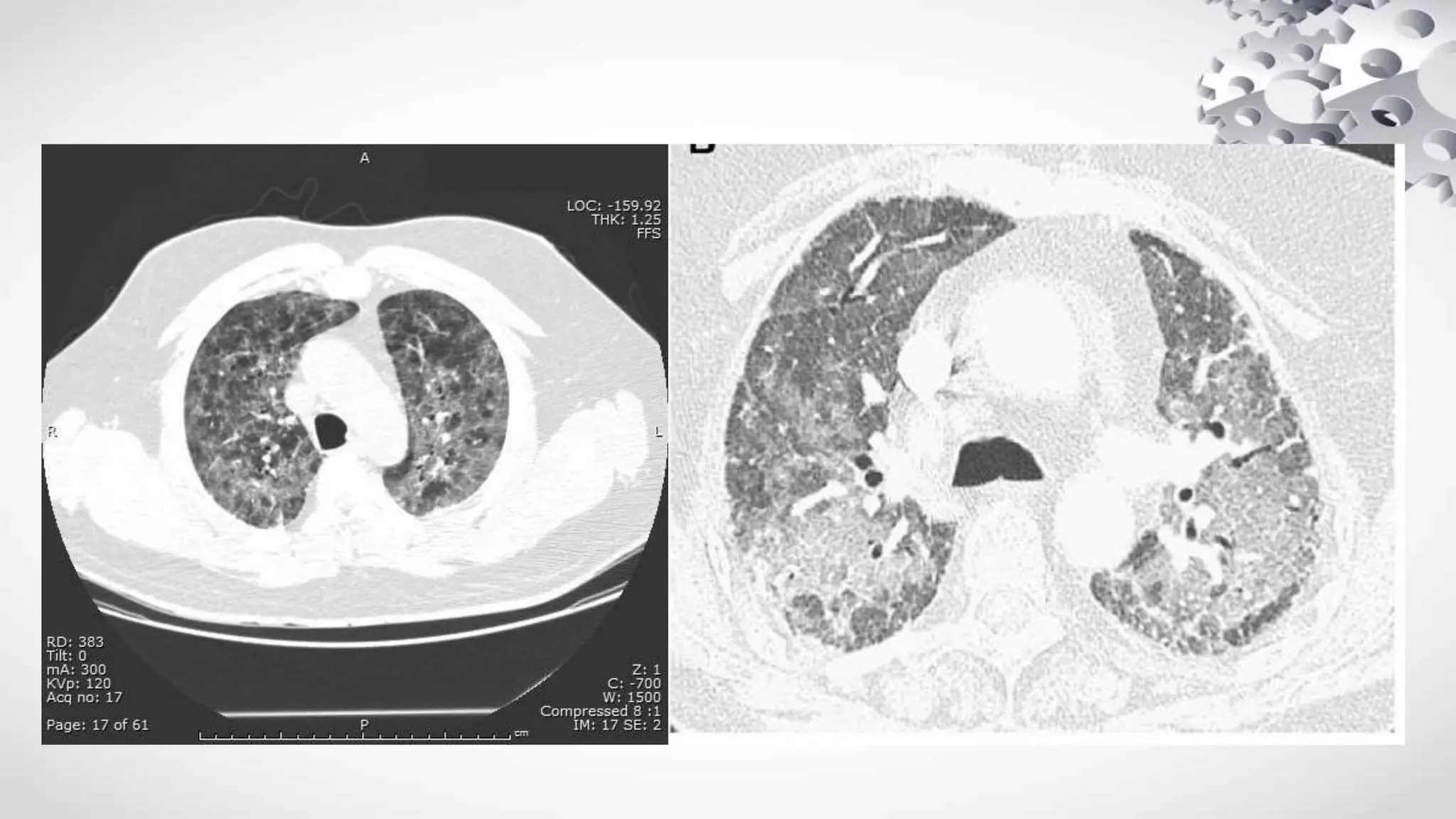
• If PCP is suspected based on clinical presentation, and the chest x-ray is
compatible with PCP, the first step in diagnosis should be an induced sputum for
visualization of Pneumocystis jirovecii .
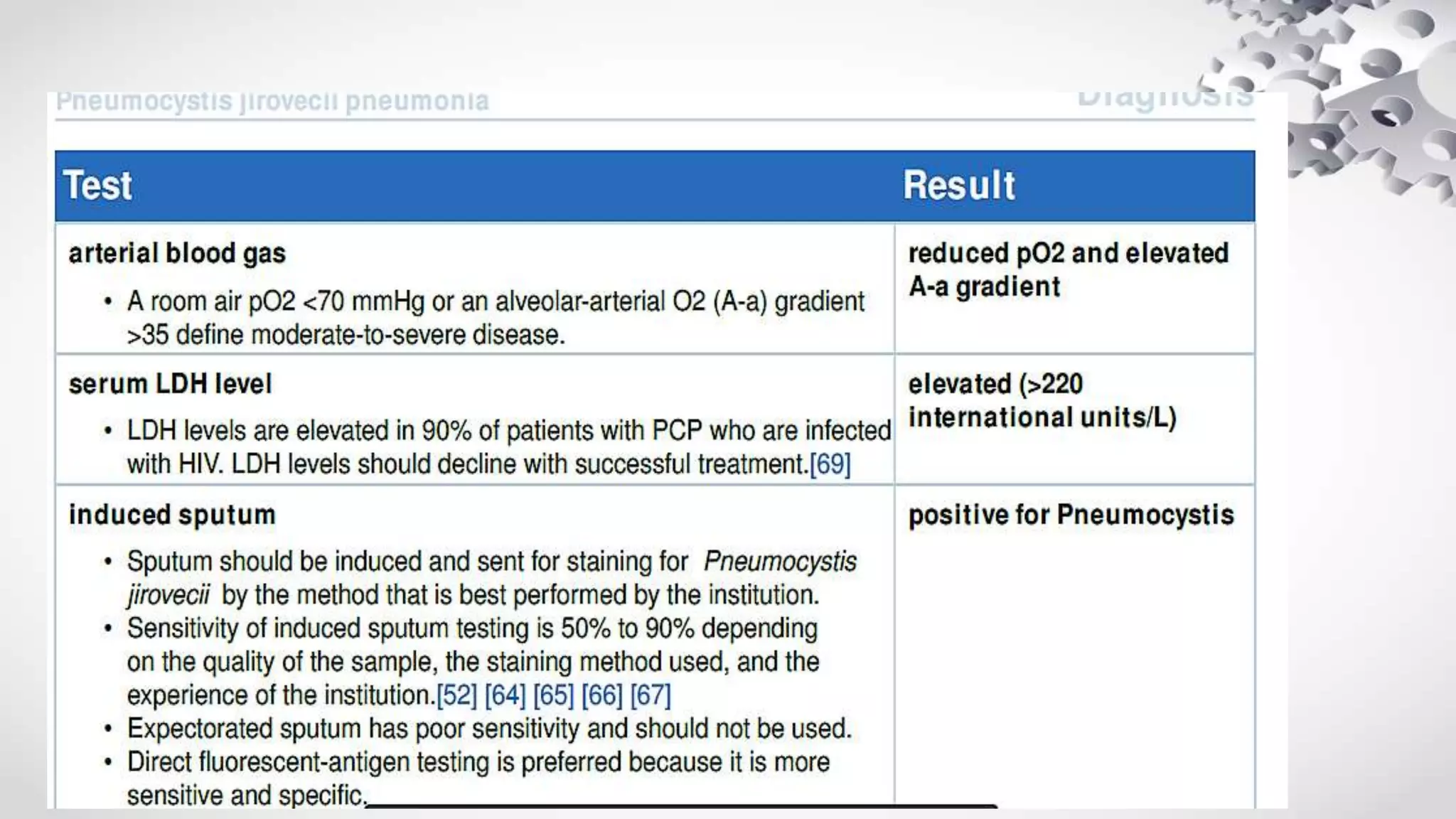
• Sensitivity of induced sputum testing is 50% to 90% depending on the quality of
the sample, the staining method used, and the experience of the institution.
• If sputum induction is negative, bronchoscopic examination with bronchoalveolar
lavage (BAL) should be performed. The sensitivity for BAL is 90% to 99% in HIV-
positive patients, so it is usually performed without transbronchial biopsy.
• In general, if BAL is negative in an HIV-positive patient, then another etiology
should be considered and treatment can be discontinued.
• Transbronchial biopsies can be performed if initial BAL is negative but clinical
suspicion of PCP is high or other diagnoses are considered likely. Sensitivity of
transbronchial biopsies is 95% to 100%.
• In HIVnegative patients, transbronchial biopsy is more often
necessary to confirm a diagnosis because BAL is less sensitive.
Transbronchial biopsy does have a higher risk of complication,
such as bleeding and pneumothorax.
• Pneumothorax occurred in 9% of HIV-positive patients who had
transbronchial biopsies in one series with 5% requiring insertion of
a chest tube.
• If clinical suspicion for PCP remains high or prior testing does not
reveal the etiology for the patient's illness, an open lung biopsy
can be considered to confirm or rule out PCP as well as to
determine if another pathology is present.
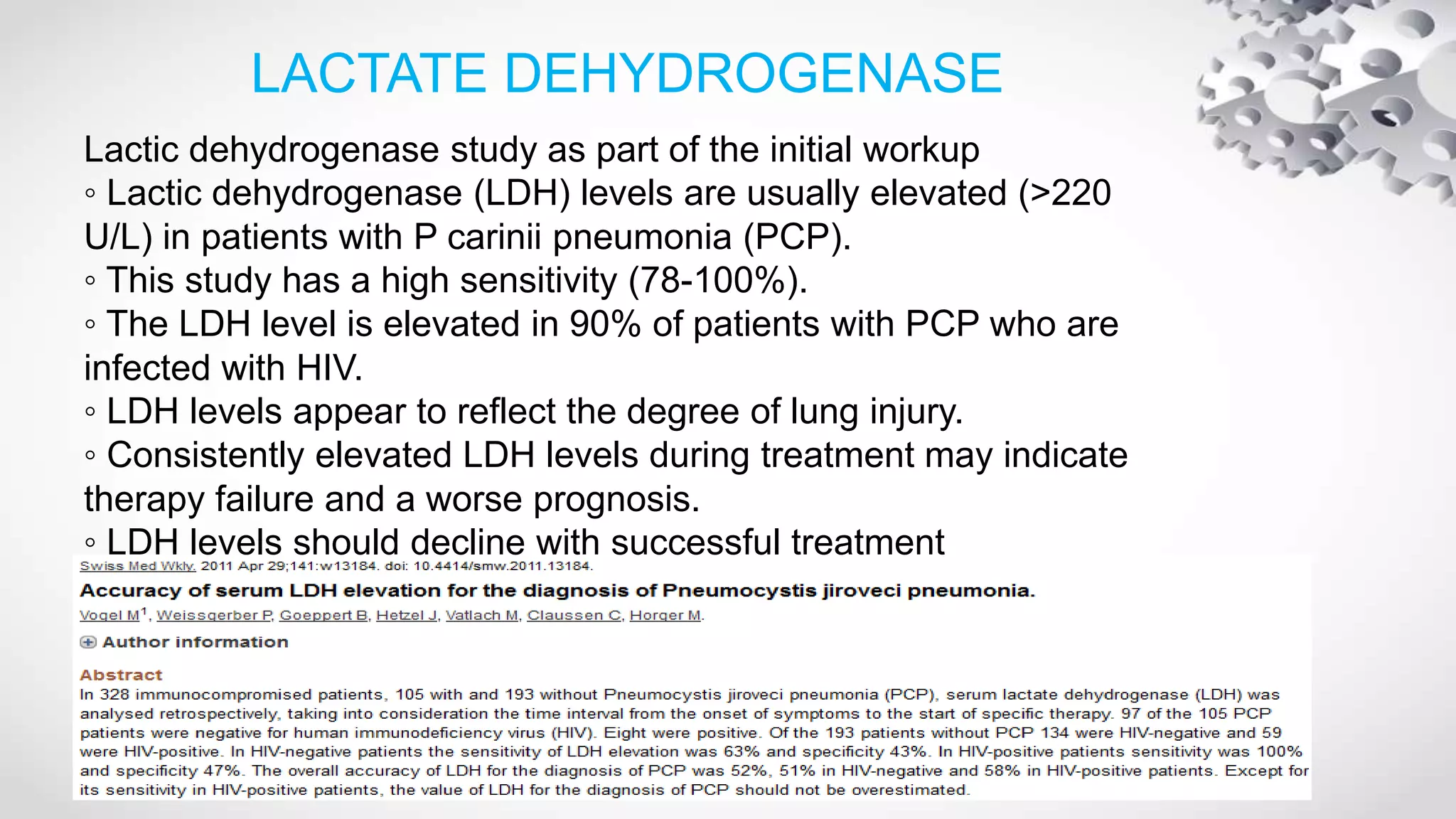
LACTATE DEHYDROGENASE
Lactic dehydrogenase study as part of the initial workup
◦ Lactic dehydrogenase (LDH) levels are usually elevated (>220
U/L) in patients with P carinii pneumonia (PCP).
◦ This study has a high sensitivity (78-100%).
◦ The LDH level is elevated in 90% of patients with PCP who are
infected with HIV.
◦ LDH levels appear to reflect the degree of lung injury.
◦ Consistently elevated LDH levels during treatment may indicate
therapy failure and a worse prognosis.
◦ LDH levels should decline with successful treatment
beta-D-GLUCAN
• beta-D-glucan (BDG), which is the major component of the cell wall of most
fungi, has been used as a serologic marker for the diagnosis of candidiasis and
aspergillosis.
• A recent study comparing serum indicators for the diagnosis of PCP found serum
BDG to be a reliable marker with a sensitivity and specificity of 92.3%
and 86.1%, respectively.
• The clinician must keep in mind that BDG assays cannot always reliably
differentiate the BDG release into the blood from Pneumocystis compared with
other fungi.
• BDG levels have been used as a diagnostic adjunct for patients who have HIV
who have newly identified symptoms consistent with PCP.
• Other recent reports indicate that serial BDG levels decrease during treatment of
PCP.These preliminary studies suggest that serum BDG might
be useful as an adjunctive noninvasive diagnostic test for PCP.
MICROSCOPY
• Since Pneumocystis cannot be cultured, the gold standard for diagnosis is
microscopic visualization of the organism.
• Traditionally different stains have been used to identify either the trophic form
(Gram–Weigert, Wright–Giemsa or modified Papanicolaou stains) or the cyst
forms (calcofluor white, cresyl violet, Gomori methenamine silver or toluidine
blue)
• Immunofluorescent antibody (IFA) stains, which use monoclonal antibodies
(MAbs) directed against human Pneumocystis, are also available for the direct
detection of this organism in clinical specimens.
• IFA stains have the advantage of being able to detect both the trophic and cyst
forms of the organism.
• IFA staining is more expensive than conventional stains, however, and is also
more time consuming
• A recent study comparing histochemical staining with CW, GMS, or Diff- Quik to
IFA staining with Merifluor Pneumocystis found the IFA stain to be the most
sensitive, but also the least specific staining method
• These results led the authors to recommend that if the primary staining method in
a clinical microbiology laboratory is IFA staining, then confirmation with a second
method should be performed to increase the specificity and positive predictive
value of the final test result.
• Patients who do not have AIDS who develop PCP have a significantly higher
number of neutrophils and significantly fewer organisms in BAL fluid obtained
during an episode of PCP.
• It may therefore be more difficult to obtain organisms by induced sputum or BAL
in patients who do not have AIDS.
• Although direct visualization of Pneumocystis life forms with the use of
immunofluorescent or conventional stains has been the mainstay of PCP
diagnosis, the diagnostic challenge of a small organism burden in patients who
do not have AIDS has led to the development of more sensitive diagnostic
technologies.
POLYMERASE CHAIN REACTION• In recent years, real-time PCR-based strategies have largely replaced earlier methods of nested
PCR for clinical diagnosis, which may be less specific for active infection leading to higher false-
positive rates
• The use of real-time PCR has also reduced inter run contamination and reduced turnover time
(< 3hours) increasing the specificity of the assay.
• Multiple protocols that use various Pneumocystis gene targets have been developed. The main
targeted genes include the heat shock protein gene (HSP70) [Huggett et al. 2008], the dihydrofolate
reductase gene (DHFR) [Bandt and Monecke, 2007], the dihydropteroate synthase gene (DHPS)
[Alvarez-Martinez et al.2006], and the cell division cycle 2 gene (CDC2).
• The LightCycler PCR assay was 21% more sensitive than CW staining and was highly specific
demonstrating no cross-reactivity with other microbial pathogens or human DNA.
• Despite the increased sensitivity and specificityof PCR, the potential remains for this
diagnosticapproach to produce false-positive results. This potential has led some authors to
recommend that PCR detection of P jirovecii be regarded in the same manner as detection of
Streptococcuspneumoniae in the upper airway,a transient colonizer with the potential of causing
pneumonia in immunocompromised individuals
Reverse Transcriptase Polymerase Chain
Reaction Assay
• The detection of Pneumocystis nucleic acids by PCR can identify
the presence of organisms.
• The detection of Pneumocystis DNA by PCR provides no
information concerning the organism’s viability or infectivity.
• However ,Messenger RNA is much less stable than DNA, and its
identification may serve as a surrogate for organism viability.
• Recent evidence suggests reverse transcriptase (RT)– PCR
identification of Pneumocystis mRNA in BAL specimens yields a
diagnostic sensitivity of 100% and specificity of 86%, and that this
assay may become a useful tool for detecting and monitoring
P. jirovecii in minimally invasive clinical samples
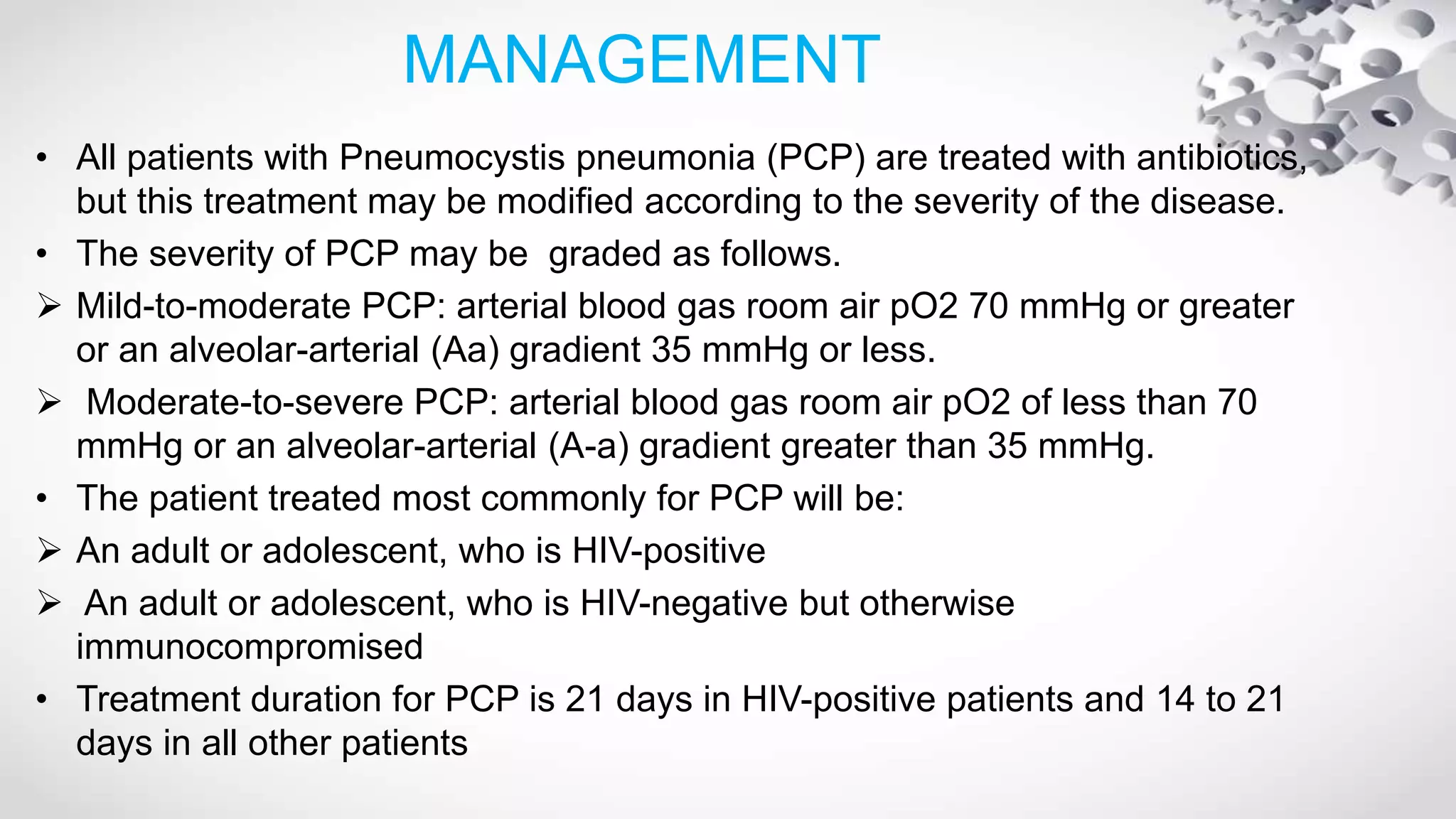
MANAGEMENT
• All patients with Pneumocystis pneumonia (PCP) are treated with antibiotics,
but this treatment may be modified according to the severity of the disease.
• The severity of PCP may be graded as follows.
 Mild-to-moderate PCP: arterial blood gas room air pO2 70 mmHg or greater
or an alveolar-arterial (Aa) gradient 35 mmHg or less.
 Moderate-to-severe PCP: arterial blood gas room air pO2 of less than 70
mmHg or an alveolar-arterial (A-a) gradient greater than 35 mmHg.
• The patient treated most commonly for PCP will be:
 An adult or adolescent, who is HIV-positive
 An adult or adolescent, who is HIV-negative but otherwise
immunocompromised
• Treatment duration for PCP is 21 days in HIV-positive patients and 14 to 21
days in all other patients
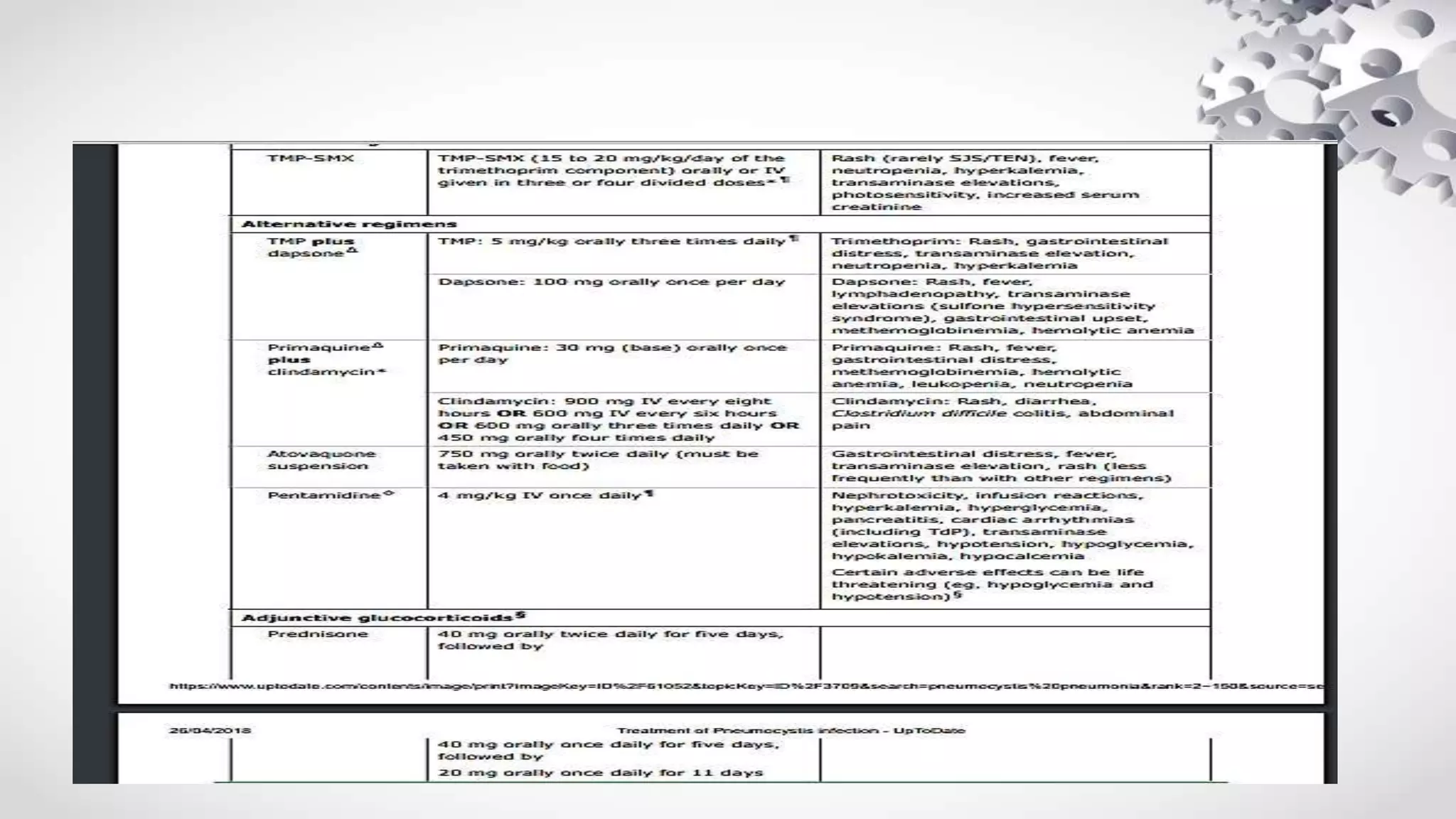
FIRST LINE TREATMENT
• Historically, the mainstay of treatment for Pneumocystis pneumonia has been
trimethoprim-sulfamethoxazole (TMP-SMX).
• Despite the existence of other drugs to treat Pneumocystis pneumonia,
TMP-SMX is still the recommended first-line therapy for patients with mild,
moderate, and severe disease [Huang et al.2006; Benson et al. 2004]
• The standard dose for both the pediatric (older than 2 months of age) and
adult population is 15-20 mg/kg/day of TMP and 75-100 mg/kg/day of SMX
administered in divided doses.
• For severe cases, the intravenous (IV) form is preferred over the oral
formulation. However, IV can be switched to oral once clinical improvement is
achieved.
• Dose adjustments are necessary for patients with renal and liver failure since
SMX is extensively metabolized in the liver and renally excreted.
ALTERNATIVE REGIMEN FOR MILD-MODERATE
The following oral regimens should be administered for 21 days, and are listed
in order of our preference:
●Trimethoprim-dapsone – Oral trimethoprim is administered at a dose of 5
mg/kg (typically rounded to the nearest 100 milligrams) three times per day with
dapsone 100 mg per day. Dapsone is a sulfone that is usually tolerated by
persons who have adverse reactions to TMP-SMX(*G6PD DEFICENCY)
●Clindamycin-primaquine – Oral clindamycin-primaquine is administered as
clindamycin (450 mg every six hours or 600 mg every eight hours) along with
primaquine base 30 mg per day.(* G6PD DEFICENCY)
●Atovaquone – Atovaquone suspension can be used for the treatment of mild
PCP . The dose is 750 mg twice daily and should be taken with food [12]. In
general, this agent is not used for the initial treatment of moderate disease
since atovaquone was less effective than TMP/SMX in a comparative clinical
trial However, we may switch a patient with moderate to severe disease to
atovaquone if they are clinically improved on a more potent agent, but have
developed an adverse reaction.
• Patients should be tested for glucose-6-phosphate
dehydrogenase (G6PD) deficiency when using a regimen that
contains dapsone or primaquine since patients with G6PD
deficiency are at risk for developing hemolytic anemia when
exposed to these agents. Sulfa-intolerant patients with G6PD
deficiency and mild disease should receive atovaquone. For those
with G6PD deficiency and moderate disease, the decision to use
atovaquone, desensitize to TMP-SMX, or switch to IV therapy with
pentamidine depends upon the severity of their disease and their
past reaction to TMP-SMX. Although it is best if G6PD results are
available prior to initiating treatment, therapy may be initiated
simultaneously without testing as the risk for this deficiency is
quite low
ALTERNATIVE REGIMEN FOR
MODERATE- SEVERE
●Clindamycin-primaquine – Clindamycin can be administered intravenously at a
dose of 600 mg every six hours or 900 mg every eight hours. Primaquine base is
given orally at a dose of 30 mg daily.
●Pentamidine – Pentamidine is administered intravenously at a dose of 4 mg/kg
daily. Avoid pentamidine in patients with renal insufficiency (estimated glomerular
filtration rate <60 mL/min/1.73m2), as well as those with concurrent pancreatitis
because of its potential toxicities.
• Patients who require treatment with pentamidine should be admitted to the
hospital and closely monitored (for life threatening conidtions
like,hypotension,hypoglycemia,cardiac arrythmia) with bedside telemetry and
frequent measurement of blood pressure. The drug should be administered
over at least 60 minutes while the patient is supine and adequately hydrated.
• Several studies have demonstrated the benefits of adjunctive corticosteroids in
patients who have AIDS and symptoms of moderate to severe PCP.
• Specifically, corticosteroids are of benefit in patients infected with HIV who
have hypoxemia manifest as a partial pressure of arterial oxygenunder 70 mm
Hg with the patient breathing room air or an alveolar–arteriolar gradient greater
than35.
• Corticosteroid regimen — Corticosteroids should be initiated concurrently with anti-
Pneumocystis therapy. Although studies have not demonstrated the optimal dose or duration of
therapy, the following 21-day oral regimen is the most common one
• ●Prednisone 40 mg twice daily for 5 days
• followed by
• ●Prednisone 40 mg daily for 5 days
• followed by
• ●Prednisone 20 mg daily for 11 days
• Intravenous methylprednisolone can be substituted for oral prednisone at 75 percent of the
prednisone dose if IV therapy is necessary
• Unfortunately, the data for non-HIV patients are far less clear.
• For instance, a review of 31 non-HIV patients with histologically confirmed
Pneumocystis pneumonia and hypoxemia found that those that received higher
dose of steroids(prednisone equivalent >60 mg/day) had a shorter duration for
mechanical ventilation, ICU stay, and oxygen use [Pareja et al. 1998].
• However, another similar study was unable to show improvement in survival
[Delclaux et al.1999]. .
• Taking the sparsely available data into consideration, the recommendation of
adjunctive therapy in non-HIV patient must be individualized.
• Corticosteroids should not be first-line adjunctive therapy in patients with mild to
moderate disease with no respiratory failure.
• However, adjunctive corticosteroids should be seriously considered in non-HIV-
infected patients with severe Pneumocystis pneumonia, particularly if hypoxemia
is present.
ECHINIOCANDINS
• Echinocandins are a class of antifungal drugs that
inhibit the synthesis of the fungal cell-wall molecule
glucan
• Animal studies and case reports have been
published.
• No clinical trials are available to date. Echinocandins
may be used increasingly in the future for the
treatment of Pneumocystis pneumonia
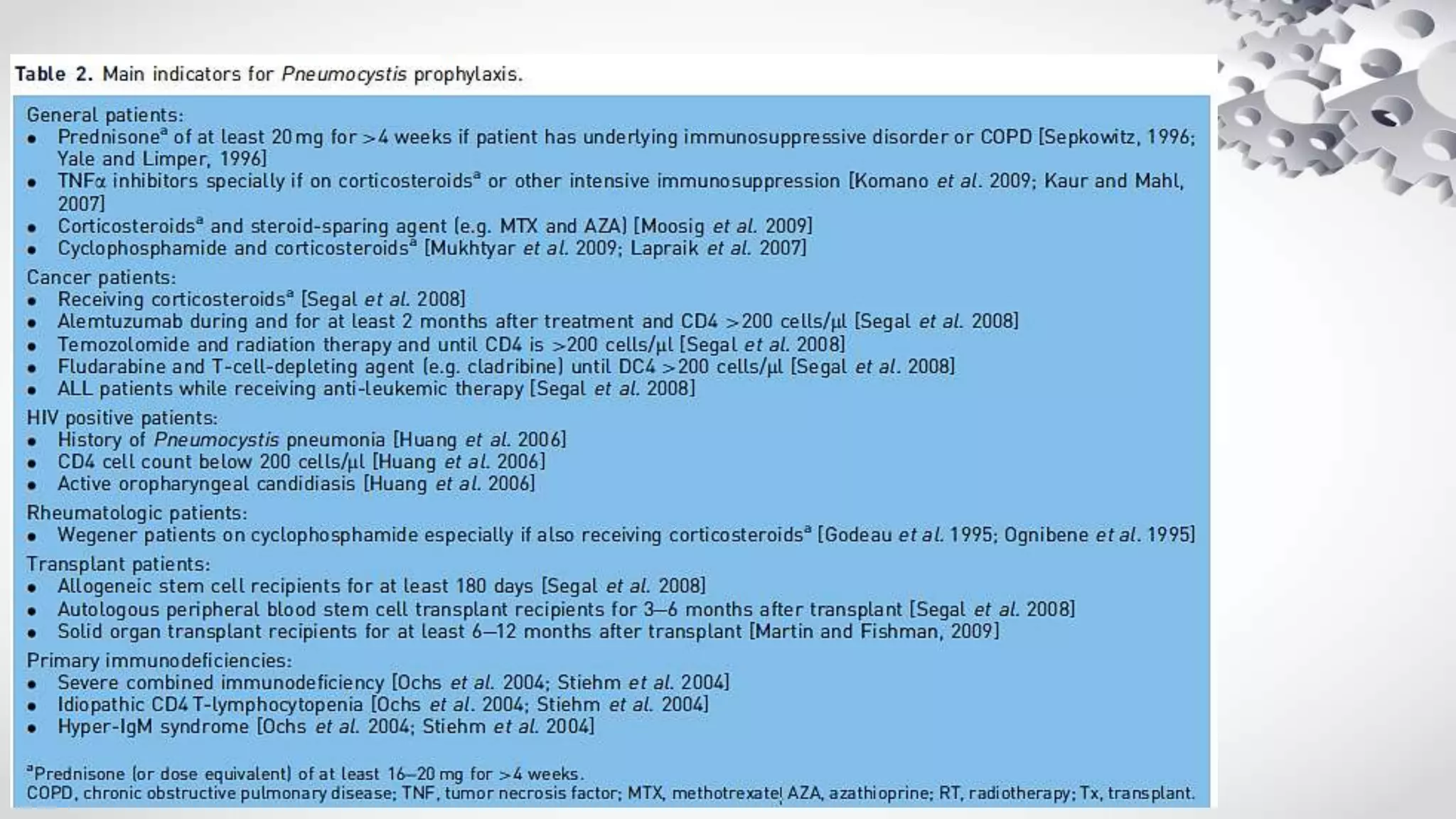
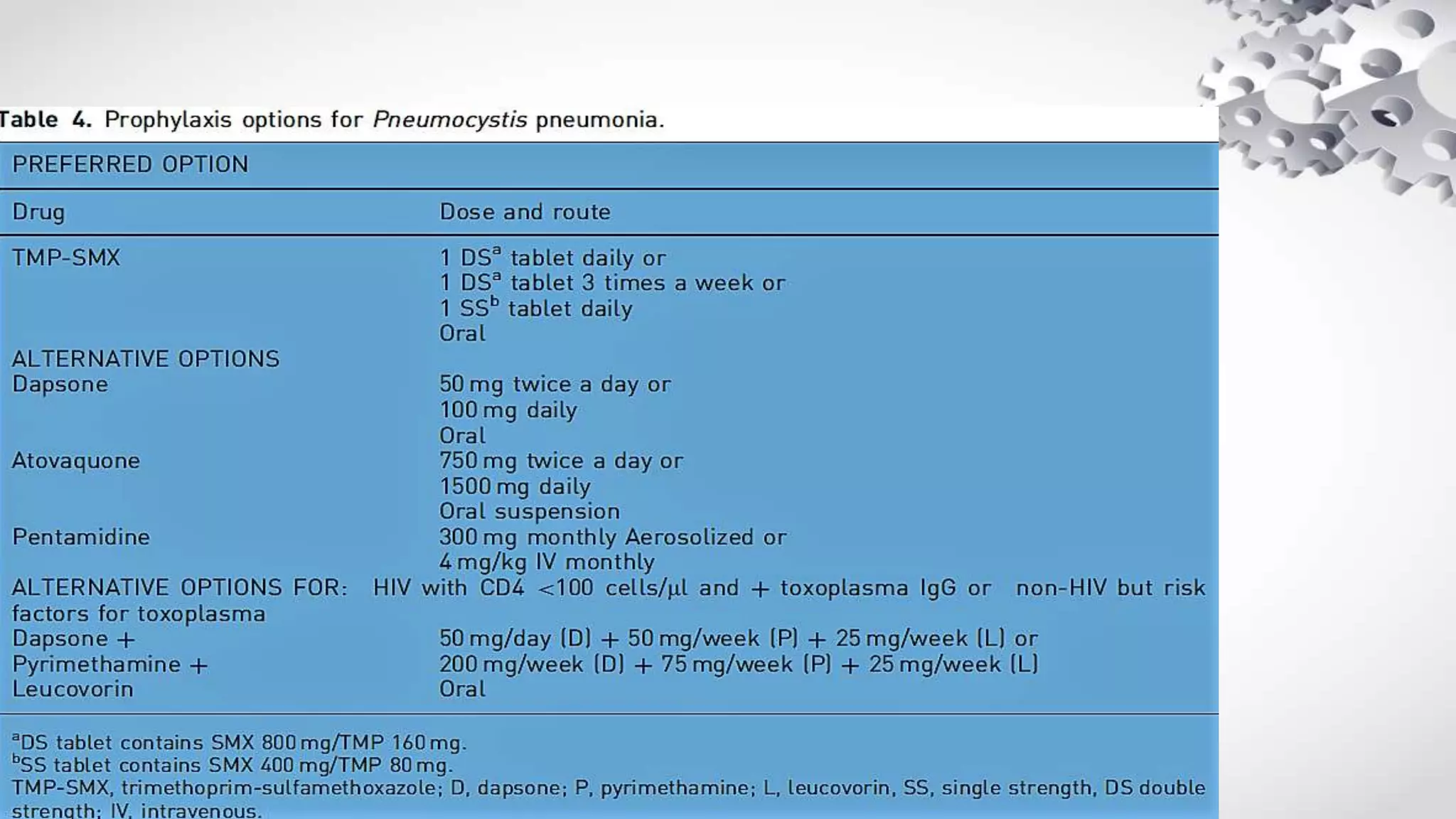
CHEMOPROPHYLAXIS
• Chemoprophylaxis in patients with HIV Infection
 Adults, adolescents, and pregnant patients with a CD4 count of less than
200/μL
 oropharyngeal candidiasis
 CD4% <14%
 History of AIDS-defining illness
 CD4 count >200 but <250 cells/mm3 and if CD4 cell count monitoring (e.g.,
every 3 months) is not possible
• Prophylaxis may be discontinued in patients with HIV infection whose CD4
count exceeds 200/μL for 3 consecutive months while on HAART.
• Prophylaxis should be restarted if the CD4 count drops below200/μL
• .Prophylaxis should be continued for life in patients who developed PJP while
their CD4 level exceeded 200/μL.
• Chemoprophylaxis in patients without HIV infection
• Patients with an underlying primary immune deficiency(eg, severe
combined immunodeficiency,hypogammaglobulinemia)
• Patients with a persistent CD4 count less than 200/μL
• Solid organ transplant recipients
• Hematopoietic stem cell transplant (HSCT) recipients,
• Patients receiving daily systemic corticosteroid therapy (at least 20
mg daily for at least 1 month)
• Patients with cancer, vasculitides, or collagen vascular disorders
• Patients receiving cytotoxic or immunosuppressive treatments such
as cyclosporine or the purine analogs fludarabine or cladribine
MONITORING
• Monitoring during therapy should focus on evaluating for response to treatment,
drug toxicities, and immune reconstitution inflammatory syndrome (IRIS).
• If Pneumocystis pneumonia (PCP) appears to be clinically worsening after
starting combination antiretroviral therapy (ART), it is important to rule out PCP
treatment failure, drug reaction, new infection, malignancy, or another process,
such as congestive heart failure, before diagnosing IRIS.
• Early initiation of ART (within 2 weeks) compared with initiation of ART after the
end of treatment was associated with lower mortality risk in one study of non-
ICU patients with PCP, and early ART initiation is recommended
COMPLICATIONS
• RESPIRATORY FAILURE
• Respiratory failure is much more likely in HIV-negative
patients.
• The prognosis in patients who require mechanical
ventilation for Pneumocystis pneumonia (PCP) is worse.
• A condition similar to acute respiratory-distress syndrome
(ARDS) is seen in some patients with severe PCP and
these patients have a poor prognosis
• TREATMENT COMPLICATIONS
• Side effects from treatment are common in HIV-positive patients and can be
treatment limiting.
• Trimethoprim/sulfamethoxazole: adverse effects are common in HIV-positive
patients (20% to 85%) and include hyperkalemia, renal failure,
myelosuppression, rash, Stevens-Johnson syndrome, hepatotoxicity,nausea,
vomiting, and crystalluria.
• Pentamidine: when given intravenously, can cause nephrotoxicity, infusion-
related hypotension,arrhythmias, pancreatitis, hypoglycemia, diabetes mellitus,
hepatitis, and electrolyte abnormalities. It isrecommended that patients be on
continuous cardiac monitoring and electrocardiograms be monitored forQT
prolongation.
• Clindamycin: adverse effects include diarrhea, pseudomembranous colitis, and
rash.
• .
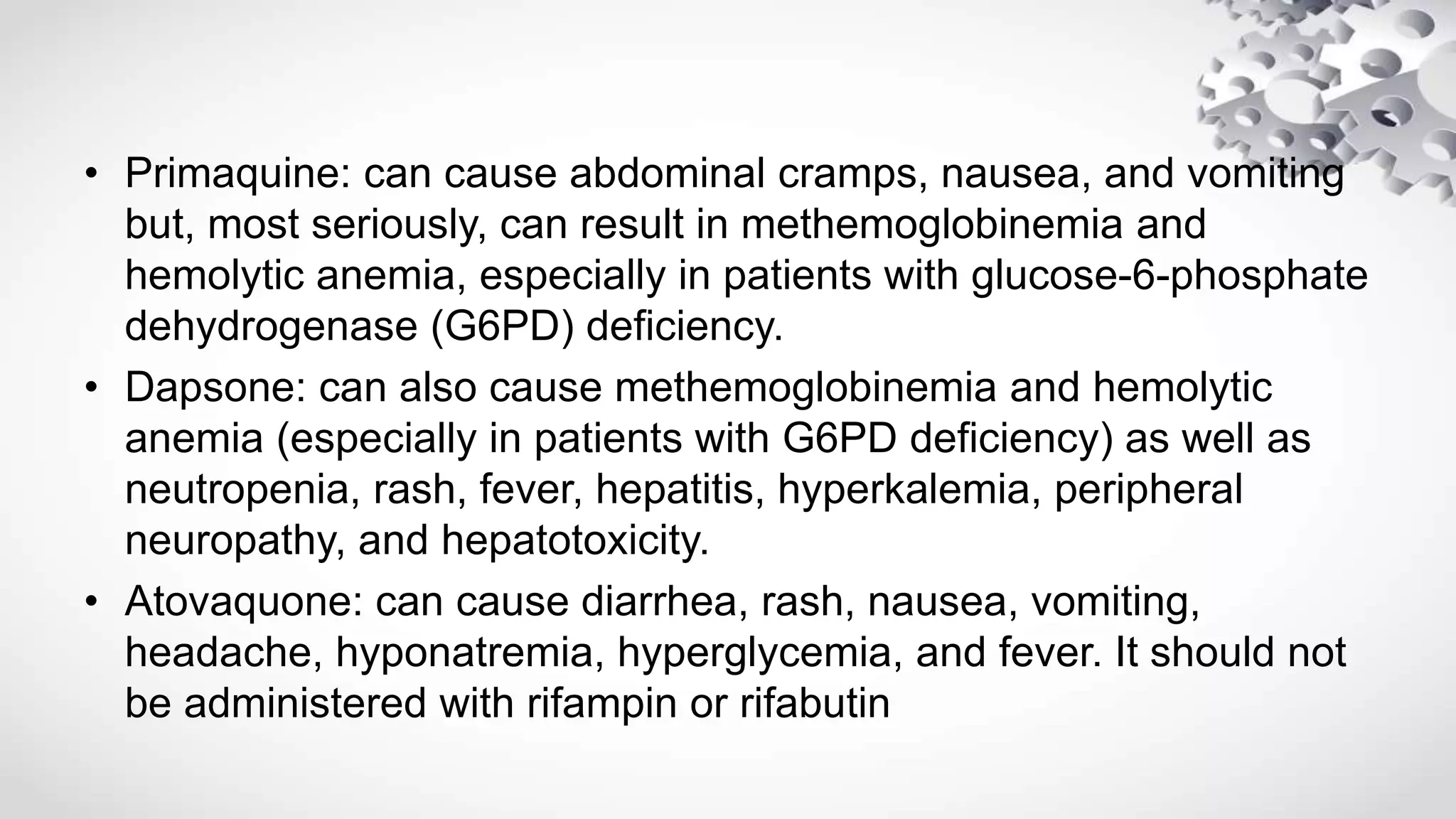
• Primaquine: can cause abdominal cramps, nausea, and vomiting
but, most seriously, can result in methemoglobinemia and
hemolytic anemia, especially in patients with glucose-6-phosphate
dehydrogenase (G6PD) deficiency.
• Dapsone: can also cause methemoglobinemia and hemolytic
anemia (especially in patients with G6PD deficiency) as well as
neutropenia, rash, fever, hepatitis, hyperkalemia, peripheral
neuropathy, and hepatotoxicity.
• Atovaquone: can cause diarrhea, rash, nausea, vomiting,
headache, hyponatremia, hyperglycemia, and fever. It should not
be administered with rifampin or rifabutin
• PNEUMOTHORAX
• The relative risk of developing pneumothorax in a patient with a
history of PCP is 14.5 compared with HIV positive patients with no
history of PCP and, in patients receiving inhaled pentamidine, it is
17.6.
• In one series of HIV-positive patients who had PCP, 6 out of 104
patients developed spontaneous pneumothorax.
• Risk factors for pneumothorax in HIV-positive patients with PCP
include a history of cigarette smoking, aerosolized pentamidine
treatment, and pneumatoceles on chest radiography
• Immune-reconstitution inflammatory syndrome
(IRIS)
• Immune-reconstitution inflammatory syndrome (IRIS) is
an inflammatory reaction to specific antigens due to the
immune restoration associated with combination
antiretroviral therapy (ART) and can occur to any antigen
(infective, host or tumor) but commonly occurs with PCP
or other opportunistic infection.
• IRIS secondary to PCP can present with worsening
hypoxemia, progressive radiographic abnormalities, and
fever.
EVIDENCES• Mortality and treatment failure: there is good-quality evidence that trimethoprim/sulfamethoxazole
(TMP/SMX) is more effective at reducing mortality compared with atovaquone. TMP/SMX is as
effective as clindamycin plus primaquine, intravenous pentamidine, and trimethoprim plus dapsone
at reducing mortality. There is good-quality evidence that TMP/SMX is more effective at preventing
treatment failure compared with atovaquone. TMP/SMX is as effective as clindamycin plus
primaquine,intravenous pentamidine, and trimethoprim plus dapsone at preventing treatment failure.
(Evidence level A)
• Mortality and treatment failure: there is medium-quality evidence that the combination of
trimethoprimplus dapsone is as effective as the combination of clindamycin plus primaquine at
reducing mortality inpatients with PCP, and is as effective at preventing treatment failure as the
combination of clindamycin plus primaquine.
(Evidence level B:)
• Mortality and treatment failure: there is good-quality evidence that the combination of clindamycin
plus primaquine is as effective as trimethoprim/sulfamethoxazole (TMP/SMX) at reducing mortality in
patients with PCP, and is as effective at preventing treatment failure as TMP/SMX.
(Evidence level A)
• Mortality and treatment failure: there is good-quality evidence that atovaquone is less effective
than trimethoprim/sulfamethoxazole (TMP/SMX) at reducing mortality in patients with PCP, and is
less effective at preventing treatment failure compared with TMP/SMX. However, there is
consensus that atovaquone is considered beneficial in patients who cannot be prescribed
TMP/SMX.(Evidence level A):
• Mortality and treatment failure: there is medium-quality evidence that intravenous pentamidine is
as effective as trimethoprim/sulfamethoxazole (TMP/SMX) at reducing mortality in patients with
PCP, and is as effective at preventing treatment failure as TMP/SMX. (Evidence level B)
• Prevention: there is poor-quality evidence to suggest that trimethoprim/sulfamethoxazole
(TMP/SMX) may be more effective than aerolized pentamindine and dapsone (with or without
pyrimethamine) at reducing the incidence of PCP.
• Treatment efficacy: there is good-quality evidence that, in moderate-to-severe Pneumocystis
pneumonia(PCP), adjuvant corticosteroids improve 1- and 3-month mortality and prevent the
need for mechanical ventilation.(Evidence level A:)
Pcp
Pcp

Pcp

  • 2.
    PNEUMOCYSTIS JIROVECI • Pneumocystisjirovecii (formerly P carinii) is an ascomycetous fungus that causes opportunistic infection, particularly pneumonia, in patients who have impaired immunity. • Pneumocystis pneumonia (PCP) continues to be a devastating AIDS defining illness in patients who have HIV infection. • PCP also occurs in other non HIV immunosuppressed patients particulary those receiving immunosuppressive agents in the settings of  Malignancy-30 percent  Organ transplantation-25 percent  Various rheumatologic and hematologic conditions. -22 percent  Solid tumour-13 percent
  • 3.
  • 4.
    • In 1988,P.carinii was phylogenetically reclassified within thefungal kingdom after sequencing of the small ribosomal RNA subunit and the discovery that it possessed homology to ascomycetous fungi. • Since its initial discovery, a unique form of Pneumocystis has been identified in virtually every mammal investigated, including rats, mice, ferrets, swine, sheep, various primates, bats, and cetacean host species. • Each form of Pneumocystis possesses unique genetic characteristics and strict host specificity. • The explanation for such strict host specificity has not been determined and is largely unprecedented in the fungi. • The form that infects humans has recently been renamed Pneumocystis jirovecii, after the pathologist Jirovec who first reported the organism in humans
  • 5.
    EPIDEMOLOGY • Prior tothe widespread use of highly active antiretroviral therapy (HAART), PCP occurred in 70-80% of patients with HIV infection. • The frequency of PCP is decreasing with the use of PCP prophylaxis and HAART. • PCP is still the most common opportunistic infection in patients with HIV infection • Currently, the frequency of documented Pneumocystis infection is increasing in Africa, with Pneumocystis organisms found in up to 80% of infants with pneumonia who have HIV infection. • In sub-Saharan Africa and India, tuberculosis is a common co-infection in persons with PCP.
  • 6.
    • Other individualsat risk for contracting PCP include patients who have hematologic or solid malignancies. • Individuals receiving immunosuppressive medications, transplant recipients, and those who have an altered immune system. • Patients who have cancer may present with PCP before receiving chemotherapy likely resulting from malignancy-related immune depression. • Although corticosteroids remain the most recognized immunosuppressive medication associated with Pneumocystis infection. • PCP has been reported with many nonsteroid immune modulating medications. • Several recent reports describe the development of PCP in patients who have autoimmune diseases or malignancy being treated with the monoclonal antibodies adalimumab, infliximab, etanercept, or rituximab.The true incidence of PCP in these individuals is unknown • Accordingly, care providers must be aware of PCP as a possible complication of their use and remain vigilant for this complication.
  • 7.
    LIFE CYCLE Proposed lifecycle of Pneumocystis. Motile Pneumocystis forms bind tightly to lung alveolar epithelial cells. Growing evidence supports a sexual conjugation- mating phase followed by meiosis and mitosis resulting in a mature cyst containing eight intracystic bodies. The cyst ruptures releasing the intracystic bodies as new trophic forms. The trophic forms are haploid and it is further proposed that they may also undergo asexual proliferation through haploid
  • 8.
    PATHOPHISIOLOGY • Pneumocystis organismsare commonly found in the lungs of healthy individuals. Most children are believed to have been exposed to the organism by age 3 or 4 years,. • Airborne transmission has been reported. • Human evidence of this is provided by molecular analysis of Pneumocystis isolates obtained from groups of patients involved in hospital outbreaks. • Further evidence of human transmission has been found in cases of recurrent pneumonia in which the genotype of Pneumocystis organisms in the same person differed from prior episodes. • Despite this, barrier precautions are not required for patients hospitalized with P carinii pneumonia (PCP) except to protect other patients with depressed immunity
  • 9.
    • Development ofPCP Disease occurs when both cellular immunity and humoral immunity are defective. • Once inhaled, the trophic form of Pneumocystis organisms attach to the alveoli. • Multiple host immune defects allow for uncontrolled replication of Pneumocystis organisms and development of illness. • Activated alveolar macrophages without CD4+ cells are unable to eradicate Pneumocystis organisms. • Increased alveolar-capillary permeability is visible on electron microscopy.
  • 10.
    • Infection inthe lung starts with the multiplication of the organism in the alveoli. • As infection progresses,alveoli fill with exudates, there is type 2 pneumocyte hyperplasia, and mononuclear cells infiltrate the lung. • Desquamation of the alveolar lining cells creates increased permeability of the alveolar capillary membrane and noncardiogenic pulmonary edema. • In patients with AIDS, there are larger numbers of Pneumocystis organisms in the lungs and fewer nflammatory cells than in patients with Pneumocystis pneumonia (PCP) who are HIV-negative. • Fewer inflammatory cells in AIDS patients with PCP seems to be related to better oxygenation and survival than in patients without AIDS. • Further lung destruction can lead to formation of pneumatoceles (also known as cysts, blebs or cavities) and pneumothoraces. This damage may occur from chronic, low-grade infection, erosion of lung parenchymafrom inflammation causing release of proteases and elastases, or alteration in lung connective tissue by HIV infection
  • 11.
    • Physiologic changesinclude the following: • Hypoxemia with an increased alveolar arterial oxygen gradient • Respiratory alkalosis • Impaired diffusing capacity • Changes in total lung capacity and vital capacity • There have been reports of PCP occurring as part of the immune reconstitutionsyndrome
  • 12.
    RISK FACTORS INHIV POSITIVE • CD4+ T-lymphocyte cell count < 200 per mm3 (200 × 106 per L) • Unexplained fever of > 37.7°C (100°F) for > two weeks • History of oropharyngeal candidiasis • Previous episode of PCP • Other AIDS-defining illness
  • 13.
    RISK FACTORS INHIV NEGATIVE • Patients taking steroids or other immunosuppressants. • Eg.Patients with Haematological malignancy. Organ transplant recipients. Connective tissue diseases such as rheumatoid arthritis. • Congenital immune deficiency - eg, thymic aplasia, SCID, hypogammaglobulinaemia. • Severe malnutrition (poor nutrition in HIV-positive individuals increases risk). • Pre-existing lung disease
  • 14.
  • 15.
    PHYSICAL EXAMINATION • Thefindings on physical examination are nonspecific and include fever, tachypnea, and tachycardia. • Pulmonary examination is often normal but occasionally demonstrates mild crackles on auscultation. • Children may present with cyanosis. • Infection rarely causes extrapulmonary manifestations, but in patients with advanced AIDS there may be systemic infection. • Diminished breath sounds unilaterally may be a sign of pneumothorax. Pleuritic pain may be a sign of pneumothorax but is uncommon in PCP without a pneumothorax.
  • 16.
    PRESENTATION AND PROGRESSION •In HIV-positive PCP, presentation is often an insidious progression of fatigue, fevers, chills, sweats, nonproductive cough, and dyspnea over several weeks. Other findings associated with PCP are a history of recurrent bacterial pneumonias, weight loss, and oral candidiaisis. • In HIV-negative patients, the presentation is typically more rapid and more severe.The onset of symptoms may occur while the usual dose of immunosuppressive agents is being tritrated. • Rarely, infection causes extrapulmonary manifestations in those with advanced HIV; however, in patients with advanced AIDS or in HIV-positive patients who are not taking their prophylaxis, there may be systemic infection with visual symptoms, cognitive impairment owing to CNS involvement, and GI symptoms such as diarrhea
  • 17.
    • Compared withpatients who do not have HIV, patients infected with HIV often present with a higher arterial oxygen tension and a lower alveolar– arterial oxygen gradient, and a better clinical outcome. • The higher mortality rate is likely a result of delayed diagnoses and initiation of appropriate treatment. • A recent review of patients who had HIV with PCP revealed an overall hospital mortality of 11.6%, with mortality in patients requiring intensive care of 29.0%. Mechanical ventilation, development of pneumothoraces, or low serum albumin were independent predictors of increased mortality in these patients. • Furthermore, the diagnosis of PCP in patients using HAART most likely represented failing HAART regimens or noncompliance with HAART regimens.
  • 18.
    • Immunocompromised patientswho do not have HIV typically present more acutely with fulminate respiratory failure associated with fever and dry cough and frequently require mechanical ventilation. • Acute respiratory failure occurs in 43% of patients who do not have AIDS who develop PCP, and the overall mortality of PCP in patients who do not have AIDS may be as high as 40%. • Symptoms may correlate with the titration of immunosuppressants (particularly corticosteroids) or may be associated with an immunosuppressant dosage increase (such as cytotoxic agents). Evidence suggests that great than 90% of the PCP cases in patients who did not have AIDS occurred when the patients had received systemic corticosteroids within 1 month of the PCP diagnosis. • In that study, most patients who had PCP had received a corticosteroid dose equivalent to 16 mg or greater administered for at least 8 weeks.
  • 19.
  • 20.
    Posteroanterior Chest Radiographof a 68-Year-Old Patient with Pneumocystis Pneumonia That Developed as a Consequence of Long- Term Corticosteroid Therapy for an Inflammatory Neuropathy. Mixed alveolar and interstitial infiltrates are more prominent on the right side than on the left
  • 23.
    INDUCED SPUTUM ANDBAL • If PCP is suspected based on clinical presentation, and the chest x-ray is compatible with PCP, the first step in diagnosis should be an induced sputum for visualization of Pneumocystis jirovecii . • Sensitivity of induced sputum testing is 50% to 90% depending on the quality of the sample, the staining method used, and the experience of the institution. • If sputum induction is negative, bronchoscopic examination with bronchoalveolar lavage (BAL) should be performed. The sensitivity for BAL is 90% to 99% in HIV- positive patients, so it is usually performed without transbronchial biopsy. • In general, if BAL is negative in an HIV-positive patient, then another etiology should be considered and treatment can be discontinued. • Transbronchial biopsies can be performed if initial BAL is negative but clinical suspicion of PCP is high or other diagnoses are considered likely. Sensitivity of transbronchial biopsies is 95% to 100%.
  • 24.
    • In HIVnegativepatients, transbronchial biopsy is more often necessary to confirm a diagnosis because BAL is less sensitive. Transbronchial biopsy does have a higher risk of complication, such as bleeding and pneumothorax. • Pneumothorax occurred in 9% of HIV-positive patients who had transbronchial biopsies in one series with 5% requiring insertion of a chest tube. • If clinical suspicion for PCP remains high or prior testing does not reveal the etiology for the patient's illness, an open lung biopsy can be considered to confirm or rule out PCP as well as to determine if another pathology is present.
  • 26.
    LACTATE DEHYDROGENASE Lactic dehydrogenasestudy as part of the initial workup ◦ Lactic dehydrogenase (LDH) levels are usually elevated (>220 U/L) in patients with P carinii pneumonia (PCP). ◦ This study has a high sensitivity (78-100%). ◦ The LDH level is elevated in 90% of patients with PCP who are infected with HIV. ◦ LDH levels appear to reflect the degree of lung injury. ◦ Consistently elevated LDH levels during treatment may indicate therapy failure and a worse prognosis. ◦ LDH levels should decline with successful treatment
  • 29.
    beta-D-GLUCAN • beta-D-glucan (BDG),which is the major component of the cell wall of most fungi, has been used as a serologic marker for the diagnosis of candidiasis and aspergillosis. • A recent study comparing serum indicators for the diagnosis of PCP found serum BDG to be a reliable marker with a sensitivity and specificity of 92.3% and 86.1%, respectively. • The clinician must keep in mind that BDG assays cannot always reliably differentiate the BDG release into the blood from Pneumocystis compared with other fungi. • BDG levels have been used as a diagnostic adjunct for patients who have HIV who have newly identified symptoms consistent with PCP. • Other recent reports indicate that serial BDG levels decrease during treatment of PCP.These preliminary studies suggest that serum BDG might be useful as an adjunctive noninvasive diagnostic test for PCP.
  • 30.
    MICROSCOPY • Since Pneumocystiscannot be cultured, the gold standard for diagnosis is microscopic visualization of the organism. • Traditionally different stains have been used to identify either the trophic form (Gram–Weigert, Wright–Giemsa or modified Papanicolaou stains) or the cyst forms (calcofluor white, cresyl violet, Gomori methenamine silver or toluidine blue) • Immunofluorescent antibody (IFA) stains, which use monoclonal antibodies (MAbs) directed against human Pneumocystis, are also available for the direct detection of this organism in clinical specimens. • IFA stains have the advantage of being able to detect both the trophic and cyst forms of the organism. • IFA staining is more expensive than conventional stains, however, and is also more time consuming
  • 31.
    • A recentstudy comparing histochemical staining with CW, GMS, or Diff- Quik to IFA staining with Merifluor Pneumocystis found the IFA stain to be the most sensitive, but also the least specific staining method • These results led the authors to recommend that if the primary staining method in a clinical microbiology laboratory is IFA staining, then confirmation with a second method should be performed to increase the specificity and positive predictive value of the final test result. • Patients who do not have AIDS who develop PCP have a significantly higher number of neutrophils and significantly fewer organisms in BAL fluid obtained during an episode of PCP. • It may therefore be more difficult to obtain organisms by induced sputum or BAL in patients who do not have AIDS. • Although direct visualization of Pneumocystis life forms with the use of immunofluorescent or conventional stains has been the mainstay of PCP diagnosis, the diagnostic challenge of a small organism burden in patients who do not have AIDS has led to the development of more sensitive diagnostic technologies.
  • 33.
    POLYMERASE CHAIN REACTION•In recent years, real-time PCR-based strategies have largely replaced earlier methods of nested PCR for clinical diagnosis, which may be less specific for active infection leading to higher false- positive rates • The use of real-time PCR has also reduced inter run contamination and reduced turnover time (< 3hours) increasing the specificity of the assay. • Multiple protocols that use various Pneumocystis gene targets have been developed. The main targeted genes include the heat shock protein gene (HSP70) [Huggett et al. 2008], the dihydrofolate reductase gene (DHFR) [Bandt and Monecke, 2007], the dihydropteroate synthase gene (DHPS) [Alvarez-Martinez et al.2006], and the cell division cycle 2 gene (CDC2). • The LightCycler PCR assay was 21% more sensitive than CW staining and was highly specific demonstrating no cross-reactivity with other microbial pathogens or human DNA. • Despite the increased sensitivity and specificityof PCR, the potential remains for this diagnosticapproach to produce false-positive results. This potential has led some authors to recommend that PCR detection of P jirovecii be regarded in the same manner as detection of Streptococcuspneumoniae in the upper airway,a transient colonizer with the potential of causing pneumonia in immunocompromised individuals
  • 34.
    Reverse Transcriptase PolymeraseChain Reaction Assay • The detection of Pneumocystis nucleic acids by PCR can identify the presence of organisms. • The detection of Pneumocystis DNA by PCR provides no information concerning the organism’s viability or infectivity. • However ,Messenger RNA is much less stable than DNA, and its identification may serve as a surrogate for organism viability. • Recent evidence suggests reverse transcriptase (RT)– PCR identification of Pneumocystis mRNA in BAL specimens yields a diagnostic sensitivity of 100% and specificity of 86%, and that this assay may become a useful tool for detecting and monitoring P. jirovecii in minimally invasive clinical samples
  • 36.
    MANAGEMENT • All patientswith Pneumocystis pneumonia (PCP) are treated with antibiotics, but this treatment may be modified according to the severity of the disease. • The severity of PCP may be graded as follows.  Mild-to-moderate PCP: arterial blood gas room air pO2 70 mmHg or greater or an alveolar-arterial (Aa) gradient 35 mmHg or less.  Moderate-to-severe PCP: arterial blood gas room air pO2 of less than 70 mmHg or an alveolar-arterial (A-a) gradient greater than 35 mmHg. • The patient treated most commonly for PCP will be:  An adult or adolescent, who is HIV-positive  An adult or adolescent, who is HIV-negative but otherwise immunocompromised • Treatment duration for PCP is 21 days in HIV-positive patients and 14 to 21 days in all other patients
  • 37.
    FIRST LINE TREATMENT •Historically, the mainstay of treatment for Pneumocystis pneumonia has been trimethoprim-sulfamethoxazole (TMP-SMX). • Despite the existence of other drugs to treat Pneumocystis pneumonia, TMP-SMX is still the recommended first-line therapy for patients with mild, moderate, and severe disease [Huang et al.2006; Benson et al. 2004] • The standard dose for both the pediatric (older than 2 months of age) and adult population is 15-20 mg/kg/day of TMP and 75-100 mg/kg/day of SMX administered in divided doses. • For severe cases, the intravenous (IV) form is preferred over the oral formulation. However, IV can be switched to oral once clinical improvement is achieved. • Dose adjustments are necessary for patients with renal and liver failure since SMX is extensively metabolized in the liver and renally excreted.
  • 38.
    ALTERNATIVE REGIMEN FORMILD-MODERATE The following oral regimens should be administered for 21 days, and are listed in order of our preference: ●Trimethoprim-dapsone – Oral trimethoprim is administered at a dose of 5 mg/kg (typically rounded to the nearest 100 milligrams) three times per day with dapsone 100 mg per day. Dapsone is a sulfone that is usually tolerated by persons who have adverse reactions to TMP-SMX(*G6PD DEFICENCY) ●Clindamycin-primaquine – Oral clindamycin-primaquine is administered as clindamycin (450 mg every six hours or 600 mg every eight hours) along with primaquine base 30 mg per day.(* G6PD DEFICENCY) ●Atovaquone – Atovaquone suspension can be used for the treatment of mild PCP . The dose is 750 mg twice daily and should be taken with food [12]. In general, this agent is not used for the initial treatment of moderate disease since atovaquone was less effective than TMP/SMX in a comparative clinical trial However, we may switch a patient with moderate to severe disease to atovaquone if they are clinically improved on a more potent agent, but have developed an adverse reaction.
  • 39.
    • Patients shouldbe tested for glucose-6-phosphate dehydrogenase (G6PD) deficiency when using a regimen that contains dapsone or primaquine since patients with G6PD deficiency are at risk for developing hemolytic anemia when exposed to these agents. Sulfa-intolerant patients with G6PD deficiency and mild disease should receive atovaquone. For those with G6PD deficiency and moderate disease, the decision to use atovaquone, desensitize to TMP-SMX, or switch to IV therapy with pentamidine depends upon the severity of their disease and their past reaction to TMP-SMX. Although it is best if G6PD results are available prior to initiating treatment, therapy may be initiated simultaneously without testing as the risk for this deficiency is quite low
  • 40.
    ALTERNATIVE REGIMEN FOR MODERATE-SEVERE ●Clindamycin-primaquine – Clindamycin can be administered intravenously at a dose of 600 mg every six hours or 900 mg every eight hours. Primaquine base is given orally at a dose of 30 mg daily. ●Pentamidine – Pentamidine is administered intravenously at a dose of 4 mg/kg daily. Avoid pentamidine in patients with renal insufficiency (estimated glomerular filtration rate <60 mL/min/1.73m2), as well as those with concurrent pancreatitis because of its potential toxicities. • Patients who require treatment with pentamidine should be admitted to the hospital and closely monitored (for life threatening conidtions like,hypotension,hypoglycemia,cardiac arrythmia) with bedside telemetry and frequent measurement of blood pressure. The drug should be administered over at least 60 minutes while the patient is supine and adequately hydrated.
  • 41.
    • Several studieshave demonstrated the benefits of adjunctive corticosteroids in patients who have AIDS and symptoms of moderate to severe PCP. • Specifically, corticosteroids are of benefit in patients infected with HIV who have hypoxemia manifest as a partial pressure of arterial oxygenunder 70 mm Hg with the patient breathing room air or an alveolar–arteriolar gradient greater than35. • Corticosteroid regimen — Corticosteroids should be initiated concurrently with anti- Pneumocystis therapy. Although studies have not demonstrated the optimal dose or duration of therapy, the following 21-day oral regimen is the most common one • ●Prednisone 40 mg twice daily for 5 days • followed by • ●Prednisone 40 mg daily for 5 days • followed by • ●Prednisone 20 mg daily for 11 days • Intravenous methylprednisolone can be substituted for oral prednisone at 75 percent of the prednisone dose if IV therapy is necessary
  • 42.
    • Unfortunately, thedata for non-HIV patients are far less clear. • For instance, a review of 31 non-HIV patients with histologically confirmed Pneumocystis pneumonia and hypoxemia found that those that received higher dose of steroids(prednisone equivalent >60 mg/day) had a shorter duration for mechanical ventilation, ICU stay, and oxygen use [Pareja et al. 1998]. • However, another similar study was unable to show improvement in survival [Delclaux et al.1999]. . • Taking the sparsely available data into consideration, the recommendation of adjunctive therapy in non-HIV patient must be individualized. • Corticosteroids should not be first-line adjunctive therapy in patients with mild to moderate disease with no respiratory failure. • However, adjunctive corticosteroids should be seriously considered in non-HIV- infected patients with severe Pneumocystis pneumonia, particularly if hypoxemia is present.
  • 44.
    ECHINIOCANDINS • Echinocandins area class of antifungal drugs that inhibit the synthesis of the fungal cell-wall molecule glucan • Animal studies and case reports have been published. • No clinical trials are available to date. Echinocandins may be used increasingly in the future for the treatment of Pneumocystis pneumonia
  • 45.
    CHEMOPROPHYLAXIS • Chemoprophylaxis inpatients with HIV Infection  Adults, adolescents, and pregnant patients with a CD4 count of less than 200/μL  oropharyngeal candidiasis  CD4% <14%  History of AIDS-defining illness  CD4 count >200 but <250 cells/mm3 and if CD4 cell count monitoring (e.g., every 3 months) is not possible • Prophylaxis may be discontinued in patients with HIV infection whose CD4 count exceeds 200/μL for 3 consecutive months while on HAART. • Prophylaxis should be restarted if the CD4 count drops below200/μL • .Prophylaxis should be continued for life in patients who developed PJP while their CD4 level exceeded 200/μL.
  • 46.
    • Chemoprophylaxis inpatients without HIV infection • Patients with an underlying primary immune deficiency(eg, severe combined immunodeficiency,hypogammaglobulinemia) • Patients with a persistent CD4 count less than 200/μL • Solid organ transplant recipients • Hematopoietic stem cell transplant (HSCT) recipients, • Patients receiving daily systemic corticosteroid therapy (at least 20 mg daily for at least 1 month) • Patients with cancer, vasculitides, or collagen vascular disorders • Patients receiving cytotoxic or immunosuppressive treatments such as cyclosporine or the purine analogs fludarabine or cladribine
  • 49.
    MONITORING • Monitoring duringtherapy should focus on evaluating for response to treatment, drug toxicities, and immune reconstitution inflammatory syndrome (IRIS). • If Pneumocystis pneumonia (PCP) appears to be clinically worsening after starting combination antiretroviral therapy (ART), it is important to rule out PCP treatment failure, drug reaction, new infection, malignancy, or another process, such as congestive heart failure, before diagnosing IRIS. • Early initiation of ART (within 2 weeks) compared with initiation of ART after the end of treatment was associated with lower mortality risk in one study of non- ICU patients with PCP, and early ART initiation is recommended
  • 50.
    COMPLICATIONS • RESPIRATORY FAILURE •Respiratory failure is much more likely in HIV-negative patients. • The prognosis in patients who require mechanical ventilation for Pneumocystis pneumonia (PCP) is worse. • A condition similar to acute respiratory-distress syndrome (ARDS) is seen in some patients with severe PCP and these patients have a poor prognosis
  • 51.
    • TREATMENT COMPLICATIONS •Side effects from treatment are common in HIV-positive patients and can be treatment limiting. • Trimethoprim/sulfamethoxazole: adverse effects are common in HIV-positive patients (20% to 85%) and include hyperkalemia, renal failure, myelosuppression, rash, Stevens-Johnson syndrome, hepatotoxicity,nausea, vomiting, and crystalluria. • Pentamidine: when given intravenously, can cause nephrotoxicity, infusion- related hypotension,arrhythmias, pancreatitis, hypoglycemia, diabetes mellitus, hepatitis, and electrolyte abnormalities. It isrecommended that patients be on continuous cardiac monitoring and electrocardiograms be monitored forQT prolongation. • Clindamycin: adverse effects include diarrhea, pseudomembranous colitis, and rash. • .
  • 52.
    • Primaquine: cancause abdominal cramps, nausea, and vomiting but, most seriously, can result in methemoglobinemia and hemolytic anemia, especially in patients with glucose-6-phosphate dehydrogenase (G6PD) deficiency. • Dapsone: can also cause methemoglobinemia and hemolytic anemia (especially in patients with G6PD deficiency) as well as neutropenia, rash, fever, hepatitis, hyperkalemia, peripheral neuropathy, and hepatotoxicity. • Atovaquone: can cause diarrhea, rash, nausea, vomiting, headache, hyponatremia, hyperglycemia, and fever. It should not be administered with rifampin or rifabutin
  • 53.
    • PNEUMOTHORAX • Therelative risk of developing pneumothorax in a patient with a history of PCP is 14.5 compared with HIV positive patients with no history of PCP and, in patients receiving inhaled pentamidine, it is 17.6. • In one series of HIV-positive patients who had PCP, 6 out of 104 patients developed spontaneous pneumothorax. • Risk factors for pneumothorax in HIV-positive patients with PCP include a history of cigarette smoking, aerosolized pentamidine treatment, and pneumatoceles on chest radiography
  • 54.
    • Immune-reconstitution inflammatorysyndrome (IRIS) • Immune-reconstitution inflammatory syndrome (IRIS) is an inflammatory reaction to specific antigens due to the immune restoration associated with combination antiretroviral therapy (ART) and can occur to any antigen (infective, host or tumor) but commonly occurs with PCP or other opportunistic infection. • IRIS secondary to PCP can present with worsening hypoxemia, progressive radiographic abnormalities, and fever.
  • 55.
    EVIDENCES• Mortality andtreatment failure: there is good-quality evidence that trimethoprim/sulfamethoxazole (TMP/SMX) is more effective at reducing mortality compared with atovaquone. TMP/SMX is as effective as clindamycin plus primaquine, intravenous pentamidine, and trimethoprim plus dapsone at reducing mortality. There is good-quality evidence that TMP/SMX is more effective at preventing treatment failure compared with atovaquone. TMP/SMX is as effective as clindamycin plus primaquine,intravenous pentamidine, and trimethoprim plus dapsone at preventing treatment failure. (Evidence level A) • Mortality and treatment failure: there is medium-quality evidence that the combination of trimethoprimplus dapsone is as effective as the combination of clindamycin plus primaquine at reducing mortality inpatients with PCP, and is as effective at preventing treatment failure as the combination of clindamycin plus primaquine. (Evidence level B:) • Mortality and treatment failure: there is good-quality evidence that the combination of clindamycin plus primaquine is as effective as trimethoprim/sulfamethoxazole (TMP/SMX) at reducing mortality in patients with PCP, and is as effective at preventing treatment failure as TMP/SMX. (Evidence level A)
  • 56.
    • Mortality andtreatment failure: there is good-quality evidence that atovaquone is less effective than trimethoprim/sulfamethoxazole (TMP/SMX) at reducing mortality in patients with PCP, and is less effective at preventing treatment failure compared with TMP/SMX. However, there is consensus that atovaquone is considered beneficial in patients who cannot be prescribed TMP/SMX.(Evidence level A): • Mortality and treatment failure: there is medium-quality evidence that intravenous pentamidine is as effective as trimethoprim/sulfamethoxazole (TMP/SMX) at reducing mortality in patients with PCP, and is as effective at preventing treatment failure as TMP/SMX. (Evidence level B) • Prevention: there is poor-quality evidence to suggest that trimethoprim/sulfamethoxazole (TMP/SMX) may be more effective than aerolized pentamindine and dapsone (with or without pyrimethamine) at reducing the incidence of PCP. • Treatment efficacy: there is good-quality evidence that, in moderate-to-severe Pneumocystis pneumonia(PCP), adjuvant corticosteroids improve 1- and 3-month mortality and prevent the need for mechanical ventilation.(Evidence level A:)