PERFORMANCE
MANAGEMENT
FARHANA ZAHEER
NATIONAL INSTITUTE OF LABOR
ADMINISTRATION & TRAINING, KARACHI-
PAKISTAN
DECEMBER,2020
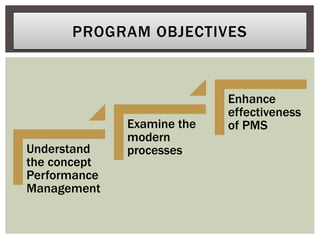
PROGRAM OBJECTIVES
Understand
the concept
Performance
Management
Examine the
modern
processes
Enhance
effectiveness
of PMS
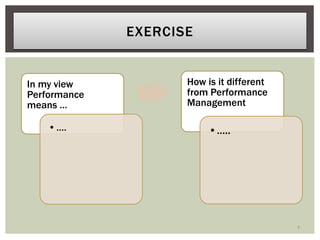
In my view
Performance
means …
•….
How is it different
from Performance
Management
•…..
3
EXERCISE
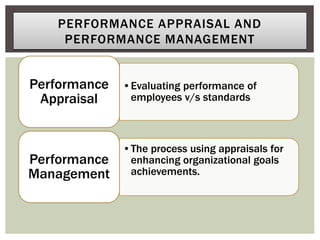
PERFORMANCE APPRAISAL AND
PERFORMANCE MANAGEMENT
•Evaluating performance of
employees v/s standards
Performance
Appraisal
•The process using appraisals for
enhancing organizational goals
achievements.
Performance
Management
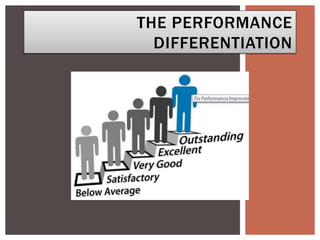
THE PERFORMANCE
DIFFERENTIATION
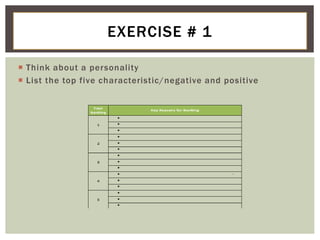
 Think about a personality
 List the top five characteristic/negative and positive
EXERCISE # 1
 What are the key learning’s of this exercise ?
GROUP DISCUSSION
METHODS OF PERFORMANCE
MANAGEMENT
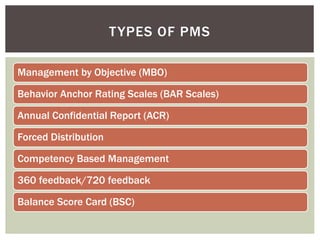
Management by Objective (MBO)
Behavior Anchor Rating Scales (BAR Scales)
Annual Confidential Report (ACR)
Forced Distribution
Competency Based Management
360 feedback/720 feedback
Balance Score Card (BSC)
TYPES OF PMS
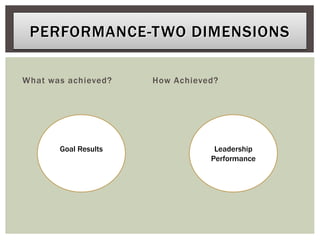
What was achieved? How Achieved?
PERFORMANCE-TWO DIMENSIONS
Leadership
Performance
Goal Results
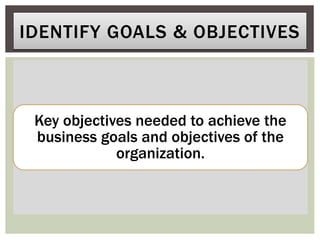
Key objectives needed to achieve the
business goals and objectives of the
organization.
IDENTIFY GOALS & OBJECTIVES
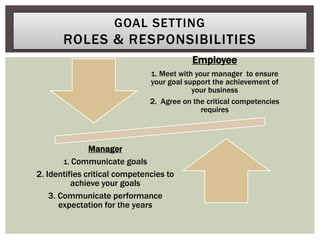
Employee
1. Meet with your manager to ensure
your goal support the achievement of
your business
2. Agree on the critical competencies
requires
Manager
1. Communicate goals
2. Identifies critical competencies to
achieve your goals
3. Communicate performance
expectation for the years
GOAL SETTING
ROLES & RESPONSIBILITIES
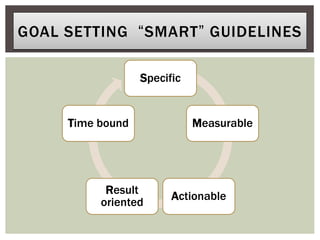
Specific
Measurable
Actionable
Result
oriented
Time bound
GOAL SETTING “SMART” GUIDELINES
IMPLEMENTING
PERFORMANCE
MANAGEMENT SYSTEM
EFFECTIVELY
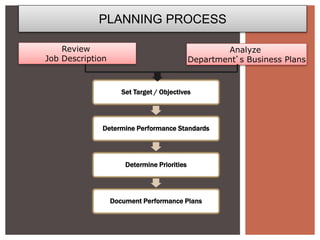
PLANNING PROCESS
Set Target / Objectives
Determine Performance Standards
Determine Priorities
Document Performance Plans
Review
Job Description
Analyze
Department’s Business Plans
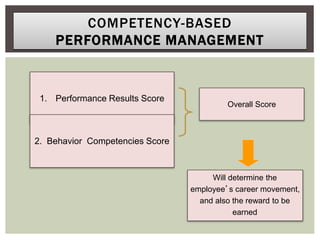
COMPETENCY-BASED
PERFORMANCE MANAGEMENT
1. Performance Results Score
2. Behavior Competencies Score
Overall Score
Will determine the
employee’s career movement,
and also the reward to be
earned
CASE STUDY
ABC BANK
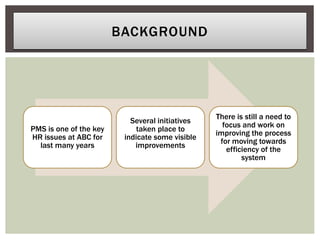
PMS is one of the key
HR issues at ABC for
last many years
Several initiatives
taken place to
indicate some visible
improvements
There is still a need to
focus and work on
improving the process
for moving towards
efficiency of the
system
BACKGROUND
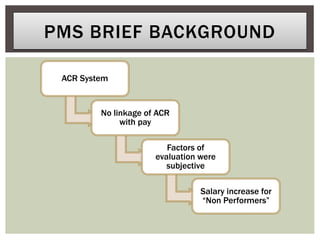
ACR System
No linkage of ACR
with pay
Factors of
evaluation were
subjective
Salary increase for
“Non Performers”
PMS BRIEF BACKGROUND
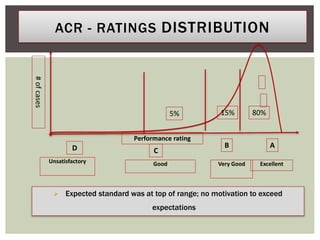
ACR - RATINGS DISTRIBUTION
5% 15% 80%
Performance rating
#ofcases
 Expected standard was at top of range; no motivation to exceed
expectations
C
BD A
Good Very Good ExcellentUnsatisfactory
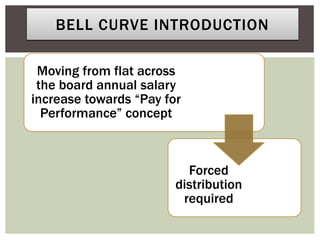
Moving from flat across
the board annual salary
increase towards “Pay for
Performance” concept
Forced
distribution
required
BELL CURVE INTRODUCTION
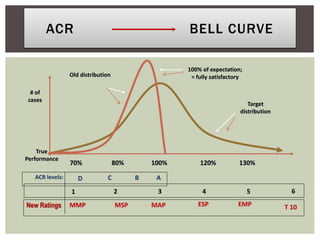
ACR BELL CURVE
True
Performance
# of
cases
100%80% 120% 130%70%
Old distribution
Target
distribution
100% of expectation;
= fully satisfactory
D C B A
1 2 3 4 5
ACR levels:
6
MMP MSP MAP ESP EMPNew Ratings T 10
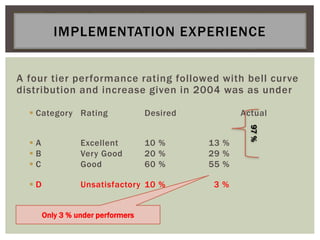
A four tier performance rating followed with bell curve
distribution and increase given in 2004 was as under
 Category Rating Desired Actual
 A Excellent 10 % 13 %
 B Very Good 20 % 29 %
 C Good 60 % 55 %
 D Unsatisfactory 10 % 3 %
IMPLEMENTATION EXPERIENCE
97%
Only 3 % under performers
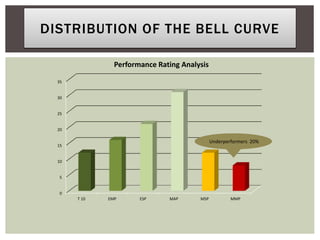
DISTRIBUTION OF THE BELL CURVE
0
5
10
15
20
25
30
35
T 10 EMP ESP MAP MSP MMP
Performance Rating Analysis
Underperformers 20%
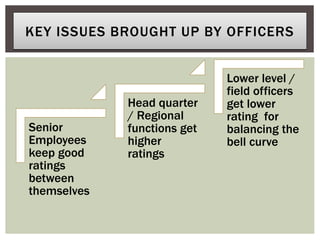
Senior
Employees
keep good
ratings
between
themselves
Head quarter
/ Regional
functions get
higher
ratings
Lower level /
field officers
get lower
rating for
balancing the
bell curve
KEY ISSUES BROUGHT UP BY OFFICERS
Modified policy options
 Grade based bell curve
 Functionalized Bell Curve
CHANGES IN PMS
Modified policy options
• Grade based bell curve
• Functionalized Bell Curve
CHANGES IN PMS
MOVING ON . . .
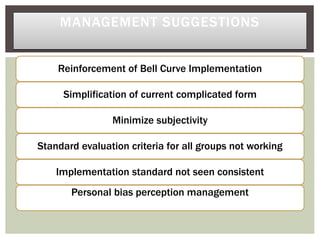
Reinforcement of Bell Curve Implementation
Simplification of current complicated form
Minimize subjectivity
Standard evaluation criteria for all groups not working
Implementation standard not seen consistent
Personal bias perception management
MANAGEMENT SUGGESTIONS
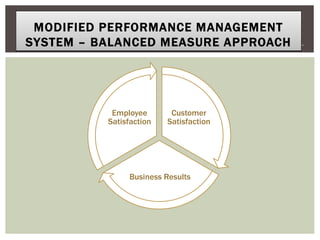
MODIFIED PERFORMANCE MANAGEMENT
SYSTEM – BALANCED MEASURE APPROACH
Customer
Satisfaction
Business Results
Employee
Satisfaction
PMS in all organizations in the world has always been a
source of employees concern as it involves human factor
despite sophistication of systems
It is a part of HR strategy to review this process every year
and keep it aligning with the new business requirements
Free two way communication with line management and
employees will be key to success of the system
CONCLUSIONS

Pms 2020

  • 1.
    PERFORMANCE MANAGEMENT FARHANA ZAHEER NATIONAL INSTITUTEOF LABOR ADMINISTRATION & TRAINING, KARACHI- PAKISTAN DECEMBER,2020
  • 2.
    PROGRAM OBJECTIVES Understand the concept Performance Management Examinethe modern processes Enhance effectiveness of PMS
  • 3.
    In my view Performance means… •…. How is it different from Performance Management •….. 3 EXERCISE
  • 4.
    PERFORMANCE APPRAISAL AND PERFORMANCEMANAGEMENT •Evaluating performance of employees v/s standards Performance Appraisal •The process using appraisals for enhancing organizational goals achievements. Performance Management
  • 5.
  • 6.
     Think abouta personality  List the top five characteristic/negative and positive EXERCISE # 1
  • 7.
     What arethe key learning’s of this exercise ? GROUP DISCUSSION
  • 8.
  • 9.
    Management by Objective(MBO) Behavior Anchor Rating Scales (BAR Scales) Annual Confidential Report (ACR) Forced Distribution Competency Based Management 360 feedback/720 feedback Balance Score Card (BSC) TYPES OF PMS
  • 10.
    What was achieved?How Achieved? PERFORMANCE-TWO DIMENSIONS Leadership Performance Goal Results
  • 12.
    Key objectives neededto achieve the business goals and objectives of the organization. IDENTIFY GOALS & OBJECTIVES
  • 13.
    Employee 1. Meet withyour manager to ensure your goal support the achievement of your business 2. Agree on the critical competencies requires Manager 1. Communicate goals 2. Identifies critical competencies to achieve your goals 3. Communicate performance expectation for the years GOAL SETTING ROLES & RESPONSIBILITIES
  • 14.
  • 15.
  • 16.
    PLANNING PROCESS Set Target/ Objectives Determine Performance Standards Determine Priorities Document Performance Plans Review Job Description Analyze Department’s Business Plans
  • 17.
    COMPETENCY-BASED PERFORMANCE MANAGEMENT 1. PerformanceResults Score 2. Behavior Competencies Score Overall Score Will determine the employee’s career movement, and also the reward to be earned
  • 18.
  • 19.
    PMS is oneof the key HR issues at ABC for last many years Several initiatives taken place to indicate some visible improvements There is still a need to focus and work on improving the process for moving towards efficiency of the system BACKGROUND
  • 20.
    ACR System No linkageof ACR with pay Factors of evaluation were subjective Salary increase for “Non Performers” PMS BRIEF BACKGROUND
  • 21.
    ACR - RATINGSDISTRIBUTION 5% 15% 80% Performance rating #ofcases  Expected standard was at top of range; no motivation to exceed expectations C BD A Good Very Good ExcellentUnsatisfactory
  • 22.
    Moving from flatacross the board annual salary increase towards “Pay for Performance” concept Forced distribution required BELL CURVE INTRODUCTION
  • 23.
    ACR BELL CURVE True Performance #of cases 100%80% 120% 130%70% Old distribution Target distribution 100% of expectation; = fully satisfactory D C B A 1 2 3 4 5 ACR levels: 6 MMP MSP MAP ESP EMPNew Ratings T 10
  • 24.
    A four tierperformance rating followed with bell curve distribution and increase given in 2004 was as under  Category Rating Desired Actual  A Excellent 10 % 13 %  B Very Good 20 % 29 %  C Good 60 % 55 %  D Unsatisfactory 10 % 3 % IMPLEMENTATION EXPERIENCE 97% Only 3 % under performers
  • 25.
    DISTRIBUTION OF THEBELL CURVE 0 5 10 15 20 25 30 35 T 10 EMP ESP MAP MSP MMP Performance Rating Analysis Underperformers 20%
  • 26.
    Senior Employees keep good ratings between themselves Head quarter /Regional functions get higher ratings Lower level / field officers get lower rating for balancing the bell curve KEY ISSUES BROUGHT UP BY OFFICERS
  • 27.
    Modified policy options Grade based bell curve  Functionalized Bell Curve CHANGES IN PMS
  • 28.
    Modified policy options •Grade based bell curve • Functionalized Bell Curve CHANGES IN PMS
  • 29.
  • 30.
    Reinforcement of BellCurve Implementation Simplification of current complicated form Minimize subjectivity Standard evaluation criteria for all groups not working Implementation standard not seen consistent Personal bias perception management MANAGEMENT SUGGESTIONS
  • 31.
    MODIFIED PERFORMANCE MANAGEMENT SYSTEM– BALANCED MEASURE APPROACH Customer Satisfaction Business Results Employee Satisfaction
  • 32.
    PMS in allorganizations in the world has always been a source of employees concern as it involves human factor despite sophistication of systems It is a part of HR strategy to review this process every year and keep it aligning with the new business requirements Free two way communication with line management and employees will be key to success of the system CONCLUSIONS