PRESENTERS: GROUP TWO
Alhagie H. Ceesay
Amie Jagne
Yahya Bojang
PRESENTATION ON PERFORMANCE
MANAGEMENT
INTRODUCTION
 Performance management is an
ongoing, collaborative process that
aligns individual employee
performance with organizational goals
through continuous communication,
planning, monitoring, development,
and evaluation.
Learning Objectives
 Definition of performance & PM
 Characteristics of an ideal PM systems
 Aims and role of PM
 PM process
 PM & HR
 Strategic planning in PM
 Solutions
What do Employees Expect in an
org?
 Be treated fairly and
consistently
 Job/career enrichment
opportunities
 Clear expectations
 Positive/constructive
feedback on a regular
basis
 Involvement in goal
setting
 Economic reward
Why Perform?
 To reach organizational
mission and goals
 Encourage and reward
behaviors aligned with
organizational mission
and goals
 Curb or redirect non-
productive activities
Meaning of Performance
 The action or process of carrying out or
accomplishing an action, task, or function
can be termed as performance.
 Performance management includes the
processes used to manage corporate
performance, the methodologies that drive
some of the processes and the metrics
used to measure performance against
strategic and operational performance
goals.
What are Performance Standards?
Performance Standards are the
benchmark against which performance is
measured.
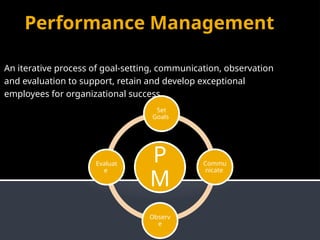
Performance Management
An iterative process of goal-setting, communication, observation
and evaluation to support, retain and develop exceptional
employees for organizational success.
P
M
Set
Goals
Commu
nicate
Observ
e
Evaluat
e
Purpose of PM system
 It serves the strategic purpose of the org.
 Provide information for reward system
 Facilitates HR decisions
 Enabling employees to learn about their
performance as against org expectations
 It serves as a developmental purpose
 Serves org maintenance purpose
 Support HR decision to meet legal
requirements
Benefits/Contributions of PM to
an organization
 Motivation to perform is increased
 Increases self esteem
 Managers gain insight about subordinates
 Jobs are simplified
 Organizational goals are clear
 Employees become more competent
 Differentiation b/n good & poor
performance
 Performances are communicated
 Change can be possible
Characteristics of an ideal PM
system
 Strategic
congruence
 Thoroughness
 Practicality
 Meaningfulness
 Specificity
 Reliability
 Validity
 Acceptability
 Inclusiveness
 Openness
 Correctability
 Standardization
 Ethicality
 Identification of
effective &
ineffective
performance
Key characteristics of PM
 Strategic alignment:
 Continuous feedback:
 Mutual accountability:
 Employee development:
 Clear goal setting:.
 Performance measurement
and recognition.
 Employee engagement:
 Customizable and flexible:
 Clear goal setting:
 Performance measurement
and recognition:
.
 Employee engagement:
 Customizable and flexible:
Aims & roles of PM system
 The information collected by a PM
system is most frequently used for
1. Salary administration
2. Performance feedback
3. Identification of employee strengths &
weakness
Aims or Purposes of PM
 Strategic purpose
 Administrative purpose
 Informational
 Developmental
 Organizational maintenance
 Documentational
Disadvantages of poorly
implemented PM system
 Increased turnover
 Use of misleading information
 Wasted time & money
 Lowered self esteem
 Damaged relationships
 Decreased motivation to perform
 Employee job burnout & dissatisfaction
Disadvantage Contd….
 Increased risk of litigation
 Unjustified demands on managers &
employees resources
 Varying & unfair stds & ratings
 Emerging biases
 Unclear rating systems
Prerequisites
Performance Planning
Performance
Execution
Performance
Assessment
Performance Review
Performance Renewal &
Re-contracting
PM Process
PM
PM
PM
PM
PM
PM
1. Prerequisities
 Two important prerequisites before PM
system are:
1. Knowledge of the org’s mission &
strategic goals
2. Knowledge of the job in question (this
is done through job analysis)
2. Performance Planning
 Employees should have a through
knowledge of the PM System.
 Planning discussion includes :
1. Results
2. Behaviours
3. Developmental issues
3. Performance Execution
 At the execution stage, following
factors must be considered:
1. Commitment to goal achievement
2. Ongoing performance feedback &
coaching
3. Communication
4. Collecting & sharing performance data
5. Preparing for performance reviews
4. Performance Assessment
 It is important for employee as well as
the managers to take ownership of
assessment process.
 It helps the org to use the information
obtained in a productive manner for
the future requirements.
 Inclusion of self appraisal is also
beneficial in all manner.
5. Performance Review
 Review stage involves meeting between
employees & the manager.
 This meeting is called Appraisal
Meeting.
 Review meeting helps employee and
manager to design developmental
plans.
6. Renewal & Recontracting
 Its identical to planning stage.
 Manager uses the insights &
information gained from other phases
to reset performance goals for
employees
ADDRESSING
UNDERPERFORMANCE/SOLUTION
 Make sure everyone knows what’s
expected of them
 Start by talking about it informally
 Figure out exactly what the problems
are
 Tell people what might happen if things
don’t get better
 Keep a close eye on how things are
going
 If needed, follow a formal process for
END OF PRESENTATION
THANK YOU, CLASS
FOR YOUR ATTENTION!

Performance Management Presentation.pptx

  • 1.
    PRESENTERS: GROUP TWO AlhagieH. Ceesay Amie Jagne Yahya Bojang PRESENTATION ON PERFORMANCE MANAGEMENT
  • 2.
    INTRODUCTION  Performance managementis an ongoing, collaborative process that aligns individual employee performance with organizational goals through continuous communication, planning, monitoring, development, and evaluation.
  • 3.
    Learning Objectives  Definitionof performance & PM  Characteristics of an ideal PM systems  Aims and role of PM  PM process  PM & HR  Strategic planning in PM  Solutions
  • 4.
    What do EmployeesExpect in an org?  Be treated fairly and consistently  Job/career enrichment opportunities  Clear expectations  Positive/constructive feedback on a regular basis  Involvement in goal setting  Economic reward
  • 5.
    Why Perform?  Toreach organizational mission and goals  Encourage and reward behaviors aligned with organizational mission and goals  Curb or redirect non- productive activities
  • 6.
    Meaning of Performance The action or process of carrying out or accomplishing an action, task, or function can be termed as performance.  Performance management includes the processes used to manage corporate performance, the methodologies that drive some of the processes and the metrics used to measure performance against strategic and operational performance goals.
  • 7.
    What are PerformanceStandards? Performance Standards are the benchmark against which performance is measured.
  • 8.
    Performance Management An iterativeprocess of goal-setting, communication, observation and evaluation to support, retain and develop exceptional employees for organizational success. P M Set Goals Commu nicate Observ e Evaluat e
  • 9.
    Purpose of PMsystem  It serves the strategic purpose of the org.  Provide information for reward system  Facilitates HR decisions  Enabling employees to learn about their performance as against org expectations  It serves as a developmental purpose  Serves org maintenance purpose  Support HR decision to meet legal requirements
  • 10.
    Benefits/Contributions of PMto an organization  Motivation to perform is increased  Increases self esteem  Managers gain insight about subordinates  Jobs are simplified  Organizational goals are clear  Employees become more competent  Differentiation b/n good & poor performance  Performances are communicated  Change can be possible
  • 11.
    Characteristics of anideal PM system  Strategic congruence  Thoroughness  Practicality  Meaningfulness  Specificity  Reliability  Validity  Acceptability  Inclusiveness  Openness  Correctability  Standardization  Ethicality  Identification of effective & ineffective performance
  • 12.
    Key characteristics ofPM  Strategic alignment:  Continuous feedback:  Mutual accountability:  Employee development:  Clear goal setting:.  Performance measurement and recognition.  Employee engagement:  Customizable and flexible:  Clear goal setting:  Performance measurement and recognition: .  Employee engagement:  Customizable and flexible:
  • 13.
    Aims & rolesof PM system  The information collected by a PM system is most frequently used for 1. Salary administration 2. Performance feedback 3. Identification of employee strengths & weakness
  • 14.
    Aims or Purposesof PM  Strategic purpose  Administrative purpose  Informational  Developmental  Organizational maintenance  Documentational
  • 15.
    Disadvantages of poorly implementedPM system  Increased turnover  Use of misleading information  Wasted time & money  Lowered self esteem  Damaged relationships  Decreased motivation to perform  Employee job burnout & dissatisfaction
  • 16.
    Disadvantage Contd….  Increasedrisk of litigation  Unjustified demands on managers & employees resources  Varying & unfair stds & ratings  Emerging biases  Unclear rating systems
  • 17.
  • 18.
    1. Prerequisities  Twoimportant prerequisites before PM system are: 1. Knowledge of the org’s mission & strategic goals 2. Knowledge of the job in question (this is done through job analysis)
  • 19.
    2. Performance Planning Employees should have a through knowledge of the PM System.  Planning discussion includes : 1. Results 2. Behaviours 3. Developmental issues
  • 20.
    3. Performance Execution At the execution stage, following factors must be considered: 1. Commitment to goal achievement 2. Ongoing performance feedback & coaching 3. Communication 4. Collecting & sharing performance data 5. Preparing for performance reviews
  • 21.
    4. Performance Assessment It is important for employee as well as the managers to take ownership of assessment process.  It helps the org to use the information obtained in a productive manner for the future requirements.  Inclusion of self appraisal is also beneficial in all manner.
  • 22.
    5. Performance Review Review stage involves meeting between employees & the manager.  This meeting is called Appraisal Meeting.  Review meeting helps employee and manager to design developmental plans.
  • 23.
    6. Renewal &Recontracting  Its identical to planning stage.  Manager uses the insights & information gained from other phases to reset performance goals for employees
  • 24.
    ADDRESSING UNDERPERFORMANCE/SOLUTION  Make sureeveryone knows what’s expected of them  Start by talking about it informally  Figure out exactly what the problems are  Tell people what might happen if things don’t get better  Keep a close eye on how things are going  If needed, follow a formal process for
  • 25.
    END OF PRESENTATION THANKYOU, CLASS FOR YOUR ATTENTION!