Farhana Zaheer
National Institute of labor Administration &
Training, Karachi-Pakistan 13 October ,2020
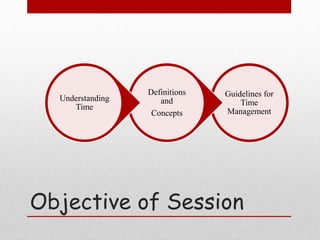
Objective of Session
Guidelines for
Time
Management
Definitions
and
Concepts
Understanding
Time
Define Time…
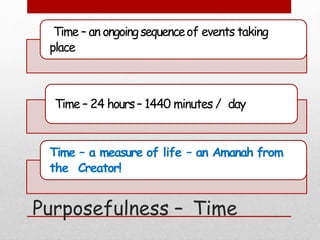
Purposefulness – Time
Time – an ongoingsequenceof events taking
place
Time – 24 hours– 1440 minutes / day
Time – a measure of life – an Amanah from
the Creator!
Time Management in Islam…
Time and Quran…
Time and Quran…
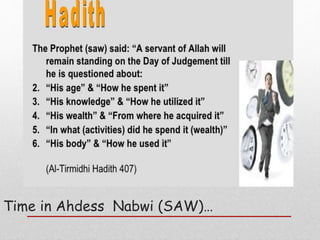
Time in Ahdess Nabwi (SAW)…
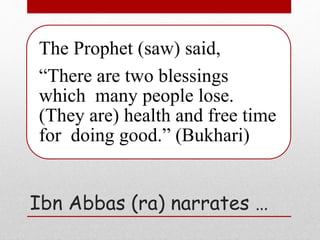
Ibn Abbas (ra) narrates …
The Prophet (saw) said,
“There are two blessings
which many people lose.
(They are) health and free time
for doing good.” (Bukhari)
“I feel sorry for those people who are busy in
play and amusement, roaming around without
any specific purpose, sitting in the market-
place staring at every passer-by and aand
giving their opinion on the rise and fall of
nations.”
•He wrote his first book at the age of 13 and
more than 700 books in his lifetime.
Ibn al-Jawzi
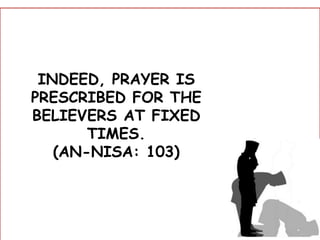
INDEED, PRAYER IS
PRESCRIBED FOR THE
BELIEVERS AT FIXED
TIMES.
(AN-NISA: 103)
Time
An Amanah from
the Creator!
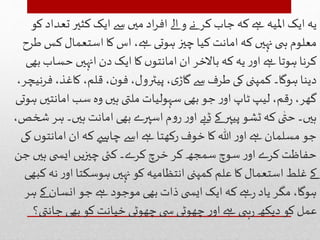
‫کو‬ ‫تعداد‬‫کثیر‬‫ایک‬‫سے‬ ‫میں‬ ‫اد‬‫ر‬‫اف‬‫الے‬ ‫و‬‫نے‬ ‫کر‬ ‫جاب‬‫کہ‬‫ےہ‬ ‫املیہ‬‫ایک‬ ‫یہ‬
‫طرح‬ ‫کس‬‫استعمال‬ ‫کا‬ ‫اس‬،‫ےہ‬‫ہوتی‬ ‫چیز‬‫کیا‬ ‫امانت‬ ‫کہ‬‫نہیں‬‫ی‬ ‫ہ‬‫معلوم‬
‫بھی‬‫حساب‬ ‫انہیں‬‫دن‬‫ایک‬‫کا‬‫ں‬‫امانتو‬‫ان‬‫باالخر‬‫کہ‬ ‫یہ‬‫ر‬‫او‬‫ےہ‬‫ہوتا‬‫کرنا‬
‫فرنی‬،‫کاغذ‬ ،‫قلم‬،‫ن‬‫فو‬،‫پیٹرول‬،‫ی‬‫گاڑ‬‫سے‬ ‫طرف‬ ‫کی‬‫کمپنی‬‫ہوگا۔‬‫دینا‬،‫چر‬
‫ہوتی‬ ‫امانتیں‬ ‫سب‬‫وہ‬ ‫ہیں‬‫ملتی‬ ‫سہولیات‬‫بھی‬‫جو‬‫ر‬‫او‬‫ٹاپ‬ ‫لیپ‬ ،‫قم‬‫ر‬،‫گھر‬
‫ش‬‫ہر‬‫ہیں۔‬ ‫امانت‬‫بھی‬‫اسپرے‬‫م‬‫و‬‫ر‬‫ر‬‫او‬‫ڈبے‬‫کے‬ ‫پیپر‬‫ٹشو‬‫کہ‬ ‫ی‬ٰ‫حت‬‫ہیں۔‬،‫خص‬
‫کی‬‫ں‬‫امانتو‬‫ان‬‫کہ‬‫چاہےی‬‫اسے‬‫ےہ‬‫رکھتا‬‫خوف‬‫کا‬‫ہللا‬ ‫ر‬‫او‬‫ےہ‬‫مسلمان‬ ‫جو‬
‫جن‬‫ہیں‬ ‫ی‬ ‫ایس‬‫چیزیں‬‫کئی‬‫کرے۔‬‫خرچ‬‫کر‬‫سمجھ‬‫سوچ‬‫ر‬‫او‬‫کرے‬‫حفاظت‬
‫کب‬ ‫نہ‬‫ر‬‫او‬‫ہوسکتا‬‫نہیں‬‫کو‬ ‫انتظامیہ‬‫کمپنی‬‫علم‬‫کا‬ ‫استعمال‬‫غلط‬‫کے‬‫ھی‬
‫ہر‬‫کے‬‫انسان‬‫جو‬‫ےہ‬‫موجود‬ ‫بھی‬‫ذات‬ ‫ی‬ ‫ایس‬‫ایک‬‫کہ‬‫ےہ‬‫ر‬ ‫یاد‬‫مگر‬،‫ہوگا‬
‫جانتی؟‬ ‫بھی‬‫کو‬ ‫خیانت‬‫چھوٹی‬‫ی‬ ‫س‬‫چھوٹی‬ ‫ر‬‫او‬‫ےہ‬ ‫ی‬ ‫ہ‬‫ر‬ ‫دیکھ‬‫کو‬‫عمل‬
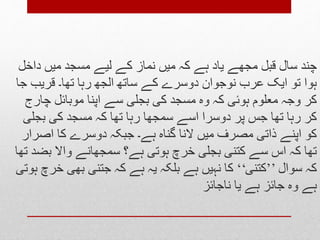
‫چ‬‫داخل‬ ‫میں‬ ‫مسجد‬ ‫لیے‬ ‫کے‬ ‫نماز‬ ‫میں‬ ‫کہ‬ ‫ہے‬ ‫یاد‬ ‫مجھے‬ ‫قبل‬ ‫سال‬ ‫ند‬
‫جا‬ ‫قریب‬ ‫تھا۔‬ ‫رہا‬ ‫الجھ‬ ‫ساتھ‬ ‫کے‬ ‫دوسرے‬ ‫نوجوان‬ ‫عرب‬ ‫ایک‬ ‫تو‬ ‫ہوا‬
‫چارج‬ ‫موبائل‬ ‫اپنا‬ ‫سے‬ ‫بجلی‬ ‫کی‬ ‫مسجد‬ ‫وہ‬ ‫کہ‬ ‫ہوئی‬ ‫معلوم‬ ‫وجہ‬ ‫کر‬
‫بجلی‬ ‫کی‬ ‫مسجد‬ ‫کہ‬ ‫تھا‬ ‫رہا‬ ‫سمجھا‬ ‫اسے‬ ‫دوسرا‬ ‫پر‬ ‫جس‬ ‫تھا‬ ‫رہا‬ ‫کر‬
‫اصرار‬ ‫کا‬ ‫دوسرے‬ ‫جبکہ‬ ‫ہے۔‬ ‫گناہ‬ ‫النا‬ ‫میں‬ ‫مصرف‬ ‫ذاتی‬ ‫اپنے‬ ‫کو‬
‫تھا‬ ‫بضد‬ ‫واال‬ ‫سمجھانے‬ ‫ہے؟‬ ‫ہوتی‬ ‫خرچ‬ ‫بجلی‬ ‫کتنی‬ ‫سے‬ ‫اس‬ ‫کہ‬ ‫تھا‬
‫سوال‬ ‫کہ‬’’‫کتنی‬‘‘‫ہوتی‬ ‫خرچ‬ ‫بھی‬ ‫جتنی‬ ‫کہ‬ ‫ہے‬ ‫یہ‬ ‫بلکہ‬ ‫ہے‬ ‫نہیں‬ ‫کا‬
‫ناجائز‬ ‫یا‬ ‫ہے‬ ‫جائز‬ ‫وہ‬ ‫ہے‬
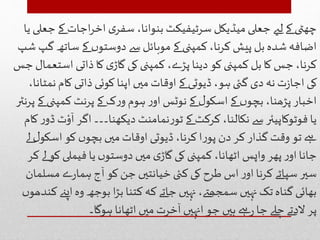
‫جع‬‫کے‬ ‫اجات‬‫ر‬‫اخ‬ ‫ی‬‫سفر‬ ،‫بنوانا‬ ‫سرٹیفیکٹ‬ ‫میڈیکل‬‫جعلی‬ ‫لےی‬‫کے‬‫چھٹی‬‫یا‬ ‫لی‬
‫گ‬ ‫ساتھ‬‫کے‬ ‫ں‬‫دوستو‬ ‫سے‬‫موبائل‬ ‫کے‬‫کمپنی‬،‫کرنا‬ ‫پیش‬ ‫بل‬ ‫شدہ‬‫اضافہ‬‫شپ‬ ‫پ‬
‫استعمال‬ ‫ذاتی‬‫کا‬‫ی‬‫گاڑ‬ ‫کی‬‫کمپنی‬ ،‫پڑے‬‫دینا‬ ‫کو‬‫کمپنی‬ ‫بل‬‫کا‬ ‫جس‬،‫کرنا‬‫جس‬
‫نمٹانا‬‫کام‬ ‫ذاتی‬‫کوئی‬ ‫اپنا‬ ‫میں‬‫اوقات‬‫کے‬ ‫ڈیوٹی‬،‫ہو‬ ‫گئی‬ ‫دی‬ ‫نہ‬ ‫ت‬‫ز‬‫اجا‬‫کی‬،
‫ک‬‫کمپنی‬ ‫پرنٹ‬‫کے‬ ‫ک‬‫ر‬‫و‬ ‫ہوم‬‫ر‬‫او‬ ‫نوٹس‬ ‫کے‬‫ل‬‫اسکو‬‫کے‬ ‫ں‬‫بچو‬ ،‫پڑھنا‬‫اخبار‬‫پرنٹر‬‫ے‬
‫ٹ‬ٔ‫و‬
ٓ
‫ا‬ ‫اگر‬ ‫دیکھنا۔۔۔‬ ‫نمامنٹ‬‫ر‬‫ٹو‬‫کے‬ ‫کرکٹ‬ ،‫نکالنا‬ ‫سے‬‫فوٹوکاپیئر‬ ‫یا‬‫کام‬‫ر‬‫ڈو‬
‫لے‬ ‫ل‬‫اسکو‬‫کو‬ ‫ں‬‫بچو‬ ‫میں‬‫اوقات‬ ‫ڈیوٹی‬،‫کرنا‬ ‫ا‬‫ر‬‫پو‬ ‫دن‬‫کر‬‫گذار‬ ‫وقت‬ ‫تو‬ ‫ےہ‬
‫لے‬ ‫کو‬ ‫فیملی‬ ‫یا‬ ‫ں‬‫دوستو‬ ‫میں‬‫ی‬‫گاڑ‬ ‫کی‬ ‫کمپنی‬ ،‫اٹھانا‬ ‫واپس‬ ‫پھر‬‫ر‬‫او‬‫جانا‬‫کر‬
‫مسلمان‬ ‫ے‬‫ر‬‫ہما‬ ‫ج‬
ٓ
‫ا‬‫کو‬‫جن‬ ‫خیانتیں‬‫کئی‬‫کی‬ ‫طرح‬ ‫اس‬ ‫ر‬‫او‬‫کرنا‬ ‫سپاٹے‬ ‫سیر‬
‫ک‬ ‫اپےن‬‫وہ‬ ‫بوجھ‬ ‫ا‬‫ڑ‬‫ب‬‫کتنا‬ ‫کہ‬ ‫جاتے‬ ‫نہیں‬ ،‫سمجھےت‬ ‫نہیں‬ ‫تک‬‫گناہ‬ ‫بھائی‬‫ں‬‫ندھو‬
‫ہوگا۔‬ ‫اٹھانا‬ ‫میں‬ ‫خرت‬
ٓ
‫ا‬ ‫انہیں‬‫جو‬ ‫ہیں‬ ‫ےہ‬‫ر‬‫جا‬ ‫چلے‬ ‫الدتے‬ ‫پر‬
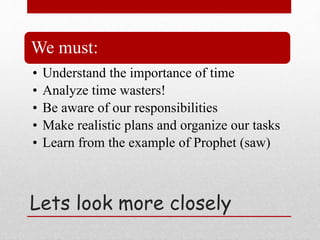
We must:
• Understand the importance of time
• Analyze time wasters!
• Be aware of our responsibilities
• Make realistic plans and organize our tasks
• Learn from the example of Prophet (saw)
Lets look more closely
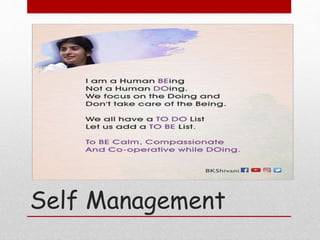
Self Management
Self Management
• You don’t manage time but manage
yourself, others and work
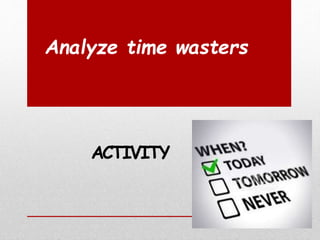
Analyze time wasters
ACTIVITY
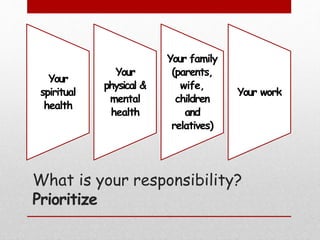
What is your responsibility?
Prioritize
Your
spiritual
health
Your
physical &
mental
health
Your family
(parents,
wife,
children
and
relatives)
Your work
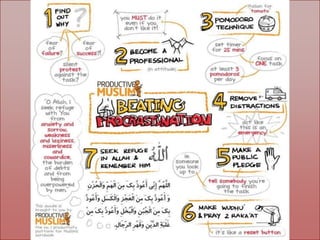
The Pomodoro Technique
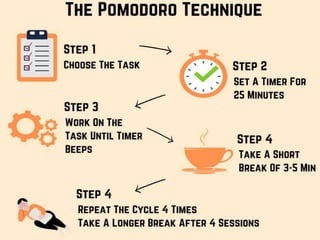
• The Pomodoro technique is a time management
methodology where you work for 25 minutes
followed by a short 3-5 minute break. You repeat
the same cycle 4 times and take a longer break.
• Today, we have more work to do than time on our
hands. People often spend long hours and
complete the work just before the deadline.
• In today’s busy world, the Pomodoro technique is
one of the well known time management methods
for productivity.
Dua of Hazrat Umar (ra)
O’Allah! Shower Your blessings on my
property, my time and the provisions
You have given me.
Be an early riser!
ProphetMuhammad (Peacebe uponhim)
said“O Allah, blessmyUmmahin its early
hours”.
Thetime after fajr hassomuch‘Barakah’(blessing)
• that you’llbeamazedat howmuchyoucan
achievein theseearly hours.
IMPORTANCE & SCOPE OF
TIME MANAGEMENT
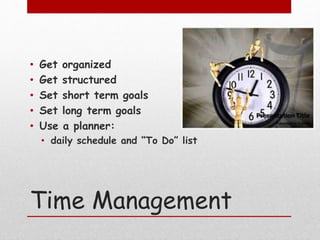
Time Management
• Get organized
• Get structured
• Set short term goals
• Set long term goals
• Use a planner:
• daily schedule and “To Do” list
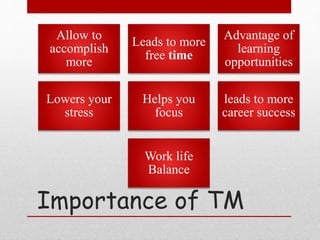
Importance of TM
Allow to
accomplish
more
Leads to more
free time
Advantage of
learning
opportunities
Lowers your
stress
Helps you
focus
leads to more
career success
Work life
Balance
Pareto analysis
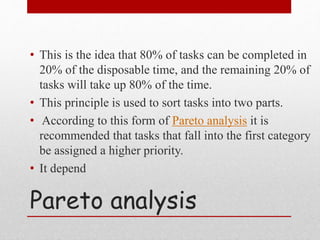
• This is the idea that 80% of tasks can be completed in
20% of the disposable time, and the remaining 20% of
tasks will take up 80% of the time.
• This principle is used to sort tasks into two parts.
• According to this form of Pareto analysis it is
recommended that tasks that fall into the first category
be assigned a higher priority.
• It depend
Pareto analysis
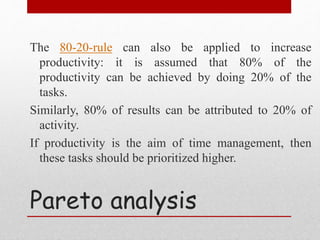
The 80-20-rule can also be applied to increase
productivity: it is assumed that 80% of the
productivity can be achieved by doing 20% of the
tasks.
Similarly, 80% of results can be attributed to 20% of
activity.
If productivity is the aim of time management, then
these tasks should be prioritized higher.
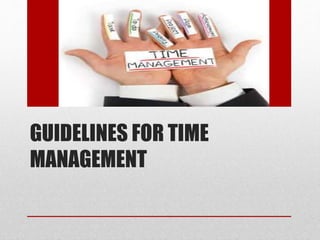
GUIDELINES FOR TIME
MANAGEMENT
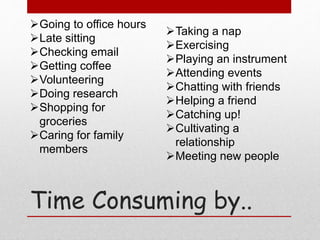
Time Consuming by..
Going to office hours
Late sitting
Checking email
Getting coffee
Volunteering
Doing research
Shopping for
groceries
Caring for family
members
Taking a nap
Exercising
Playing an instrument
Attending events
Chatting with friends
Helping a friend
Catching up!
Cultivating a
relationship
Meeting new people
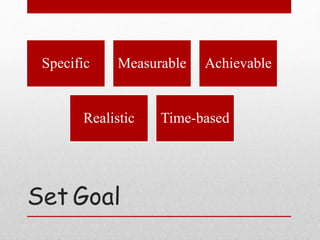
Specific Measurable Achievable
Realistic Time-based
Set Goal
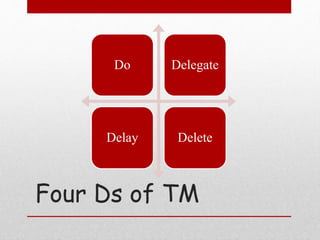
Four Ds of TM
Do Delegate
Delay Delete
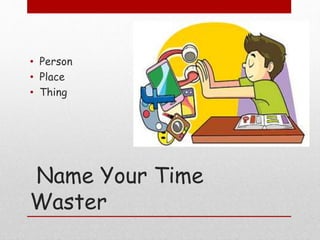
Name Your Time
Waster
• Person
• Place
• Thing
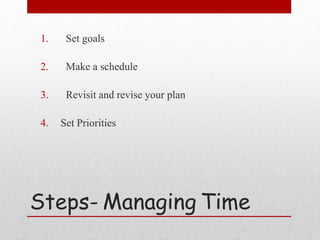
Steps- Managing Time
1. Set goals
2. Make a schedule
3. Revisit and revise your plan
4. Set Priorities
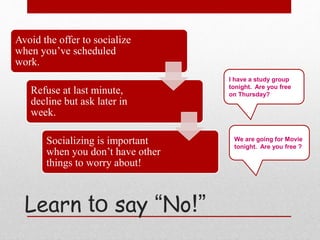
Avoid the offer to socialize
when you’ve scheduled
work.
Refuse at last minute,
decline but ask later in
week.
Socializing is important
when you don’t have other
things to worry about!
I have a study group
tonight. Are you free
on Thursday?
We are going for Movie
tonight. Are you free ?
Learn to say “No!”
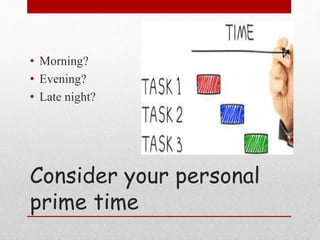
Consider your personal
prime time
• Morning?
• Evening?
• Late night?
Time Management Tips
• Write things down. Don’t rely on memory
• Prioritize your list and Plan your week.
• Spend some time at the beginning of each
week to plan your schedule.
• Carry a notebook.
• Write down those great ideas and brilliant
insights (capture your thoughts).
• Learn to say no.
• Say no to low priority requests.
Conclusion
1. Time and management can make you more
productive and reduce your stress level.
2. The Three Steps- Set goals- Make a schedule Revisit
and revise your plan
3. Be tough with your time.
4. Actively avoid time wasters.
5. Learn to say “no” to distractions.
6. Employ a variety of time management strategies to
maximize your time.
7. Relax and enjoy the extra time that you’ve
discovered!
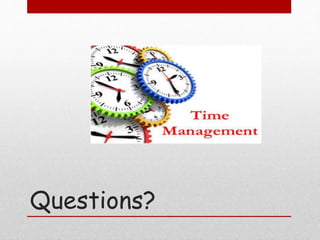
Questions?
Feedback & follow us at
Farza747@yahoo.com

Time is an Amannat from Creator

  • 2.
    Farhana Zaheer National Instituteof labor Administration & Training, Karachi-Pakistan 13 October ,2020
  • 3.
    Objective of Session Guidelinesfor Time Management Definitions and Concepts Understanding Time
  • 4.
  • 5.
    Purposefulness – Time Time– an ongoingsequenceof events taking place Time – 24 hours– 1440 minutes / day Time – a measure of life – an Amanah from the Creator!
  • 6.
  • 7.
  • 8.
  • 9.
    Time in AhdessNabwi (SAW)…
  • 10.
    Ibn Abbas (ra)narrates … The Prophet (saw) said, “There are two blessings which many people lose. (They are) health and free time for doing good.” (Bukhari)
  • 11.
    “I feel sorryfor those people who are busy in play and amusement, roaming around without any specific purpose, sitting in the market- place staring at every passer-by and aand giving their opinion on the rise and fall of nations.” •He wrote his first book at the age of 13 and more than 700 books in his lifetime. Ibn al-Jawzi
  • 12.
    INDEED, PRAYER IS PRESCRIBEDFOR THE BELIEVERS AT FIXED TIMES. (AN-NISA: 103)
  • 15.
  • 16.
    ‫کو‬ ‫تعداد‬‫کثیر‬‫ایک‬‫سے‬ ‫میں‬‫اد‬‫ر‬‫اف‬‫الے‬ ‫و‬‫نے‬ ‫کر‬ ‫جاب‬‫کہ‬‫ےہ‬ ‫املیہ‬‫ایک‬ ‫یہ‬ ‫طرح‬ ‫کس‬‫استعمال‬ ‫کا‬ ‫اس‬،‫ےہ‬‫ہوتی‬ ‫چیز‬‫کیا‬ ‫امانت‬ ‫کہ‬‫نہیں‬‫ی‬ ‫ہ‬‫معلوم‬ ‫بھی‬‫حساب‬ ‫انہیں‬‫دن‬‫ایک‬‫کا‬‫ں‬‫امانتو‬‫ان‬‫باالخر‬‫کہ‬ ‫یہ‬‫ر‬‫او‬‫ےہ‬‫ہوتا‬‫کرنا‬ ‫فرنی‬،‫کاغذ‬ ،‫قلم‬،‫ن‬‫فو‬،‫پیٹرول‬،‫ی‬‫گاڑ‬‫سے‬ ‫طرف‬ ‫کی‬‫کمپنی‬‫ہوگا۔‬‫دینا‬،‫چر‬ ‫ہوتی‬ ‫امانتیں‬ ‫سب‬‫وہ‬ ‫ہیں‬‫ملتی‬ ‫سہولیات‬‫بھی‬‫جو‬‫ر‬‫او‬‫ٹاپ‬ ‫لیپ‬ ،‫قم‬‫ر‬،‫گھر‬ ‫ش‬‫ہر‬‫ہیں۔‬ ‫امانت‬‫بھی‬‫اسپرے‬‫م‬‫و‬‫ر‬‫ر‬‫او‬‫ڈبے‬‫کے‬ ‫پیپر‬‫ٹشو‬‫کہ‬ ‫ی‬ٰ‫حت‬‫ہیں۔‬،‫خص‬ ‫کی‬‫ں‬‫امانتو‬‫ان‬‫کہ‬‫چاہےی‬‫اسے‬‫ےہ‬‫رکھتا‬‫خوف‬‫کا‬‫ہللا‬ ‫ر‬‫او‬‫ےہ‬‫مسلمان‬ ‫جو‬ ‫جن‬‫ہیں‬ ‫ی‬ ‫ایس‬‫چیزیں‬‫کئی‬‫کرے۔‬‫خرچ‬‫کر‬‫سمجھ‬‫سوچ‬‫ر‬‫او‬‫کرے‬‫حفاظت‬ ‫کب‬ ‫نہ‬‫ر‬‫او‬‫ہوسکتا‬‫نہیں‬‫کو‬ ‫انتظامیہ‬‫کمپنی‬‫علم‬‫کا‬ ‫استعمال‬‫غلط‬‫کے‬‫ھی‬ ‫ہر‬‫کے‬‫انسان‬‫جو‬‫ےہ‬‫موجود‬ ‫بھی‬‫ذات‬ ‫ی‬ ‫ایس‬‫ایک‬‫کہ‬‫ےہ‬‫ر‬ ‫یاد‬‫مگر‬،‫ہوگا‬ ‫جانتی؟‬ ‫بھی‬‫کو‬ ‫خیانت‬‫چھوٹی‬‫ی‬ ‫س‬‫چھوٹی‬ ‫ر‬‫او‬‫ےہ‬ ‫ی‬ ‫ہ‬‫ر‬ ‫دیکھ‬‫کو‬‫عمل‬
  • 17.
    ‫چ‬‫داخل‬ ‫میں‬ ‫مسجد‬‫لیے‬ ‫کے‬ ‫نماز‬ ‫میں‬ ‫کہ‬ ‫ہے‬ ‫یاد‬ ‫مجھے‬ ‫قبل‬ ‫سال‬ ‫ند‬ ‫جا‬ ‫قریب‬ ‫تھا۔‬ ‫رہا‬ ‫الجھ‬ ‫ساتھ‬ ‫کے‬ ‫دوسرے‬ ‫نوجوان‬ ‫عرب‬ ‫ایک‬ ‫تو‬ ‫ہوا‬ ‫چارج‬ ‫موبائل‬ ‫اپنا‬ ‫سے‬ ‫بجلی‬ ‫کی‬ ‫مسجد‬ ‫وہ‬ ‫کہ‬ ‫ہوئی‬ ‫معلوم‬ ‫وجہ‬ ‫کر‬ ‫بجلی‬ ‫کی‬ ‫مسجد‬ ‫کہ‬ ‫تھا‬ ‫رہا‬ ‫سمجھا‬ ‫اسے‬ ‫دوسرا‬ ‫پر‬ ‫جس‬ ‫تھا‬ ‫رہا‬ ‫کر‬ ‫اصرار‬ ‫کا‬ ‫دوسرے‬ ‫جبکہ‬ ‫ہے۔‬ ‫گناہ‬ ‫النا‬ ‫میں‬ ‫مصرف‬ ‫ذاتی‬ ‫اپنے‬ ‫کو‬ ‫تھا‬ ‫بضد‬ ‫واال‬ ‫سمجھانے‬ ‫ہے؟‬ ‫ہوتی‬ ‫خرچ‬ ‫بجلی‬ ‫کتنی‬ ‫سے‬ ‫اس‬ ‫کہ‬ ‫تھا‬ ‫سوال‬ ‫کہ‬’’‫کتنی‬‘‘‫ہوتی‬ ‫خرچ‬ ‫بھی‬ ‫جتنی‬ ‫کہ‬ ‫ہے‬ ‫یہ‬ ‫بلکہ‬ ‫ہے‬ ‫نہیں‬ ‫کا‬ ‫ناجائز‬ ‫یا‬ ‫ہے‬ ‫جائز‬ ‫وہ‬ ‫ہے‬
  • 18.
    ‫جع‬‫کے‬ ‫اجات‬‫ر‬‫اخ‬ ‫ی‬‫سفر‬،‫بنوانا‬ ‫سرٹیفیکٹ‬ ‫میڈیکل‬‫جعلی‬ ‫لےی‬‫کے‬‫چھٹی‬‫یا‬ ‫لی‬ ‫گ‬ ‫ساتھ‬‫کے‬ ‫ں‬‫دوستو‬ ‫سے‬‫موبائل‬ ‫کے‬‫کمپنی‬،‫کرنا‬ ‫پیش‬ ‫بل‬ ‫شدہ‬‫اضافہ‬‫شپ‬ ‫پ‬ ‫استعمال‬ ‫ذاتی‬‫کا‬‫ی‬‫گاڑ‬ ‫کی‬‫کمپنی‬ ،‫پڑے‬‫دینا‬ ‫کو‬‫کمپنی‬ ‫بل‬‫کا‬ ‫جس‬،‫کرنا‬‫جس‬ ‫نمٹانا‬‫کام‬ ‫ذاتی‬‫کوئی‬ ‫اپنا‬ ‫میں‬‫اوقات‬‫کے‬ ‫ڈیوٹی‬،‫ہو‬ ‫گئی‬ ‫دی‬ ‫نہ‬ ‫ت‬‫ز‬‫اجا‬‫کی‬، ‫ک‬‫کمپنی‬ ‫پرنٹ‬‫کے‬ ‫ک‬‫ر‬‫و‬ ‫ہوم‬‫ر‬‫او‬ ‫نوٹس‬ ‫کے‬‫ل‬‫اسکو‬‫کے‬ ‫ں‬‫بچو‬ ،‫پڑھنا‬‫اخبار‬‫پرنٹر‬‫ے‬ ‫ٹ‬ٔ‫و‬ ٓ ‫ا‬ ‫اگر‬ ‫دیکھنا۔۔۔‬ ‫نمامنٹ‬‫ر‬‫ٹو‬‫کے‬ ‫کرکٹ‬ ،‫نکالنا‬ ‫سے‬‫فوٹوکاپیئر‬ ‫یا‬‫کام‬‫ر‬‫ڈو‬ ‫لے‬ ‫ل‬‫اسکو‬‫کو‬ ‫ں‬‫بچو‬ ‫میں‬‫اوقات‬ ‫ڈیوٹی‬،‫کرنا‬ ‫ا‬‫ر‬‫پو‬ ‫دن‬‫کر‬‫گذار‬ ‫وقت‬ ‫تو‬ ‫ےہ‬ ‫لے‬ ‫کو‬ ‫فیملی‬ ‫یا‬ ‫ں‬‫دوستو‬ ‫میں‬‫ی‬‫گاڑ‬ ‫کی‬ ‫کمپنی‬ ،‫اٹھانا‬ ‫واپس‬ ‫پھر‬‫ر‬‫او‬‫جانا‬‫کر‬ ‫مسلمان‬ ‫ے‬‫ر‬‫ہما‬ ‫ج‬ ٓ ‫ا‬‫کو‬‫جن‬ ‫خیانتیں‬‫کئی‬‫کی‬ ‫طرح‬ ‫اس‬ ‫ر‬‫او‬‫کرنا‬ ‫سپاٹے‬ ‫سیر‬ ‫ک‬ ‫اپےن‬‫وہ‬ ‫بوجھ‬ ‫ا‬‫ڑ‬‫ب‬‫کتنا‬ ‫کہ‬ ‫جاتے‬ ‫نہیں‬ ،‫سمجھےت‬ ‫نہیں‬ ‫تک‬‫گناہ‬ ‫بھائی‬‫ں‬‫ندھو‬ ‫ہوگا۔‬ ‫اٹھانا‬ ‫میں‬ ‫خرت‬ ٓ ‫ا‬ ‫انہیں‬‫جو‬ ‫ہیں‬ ‫ےہ‬‫ر‬‫جا‬ ‫چلے‬ ‫الدتے‬ ‫پر‬
  • 19.
    We must: • Understandthe importance of time • Analyze time wasters! • Be aware of our responsibilities • Make realistic plans and organize our tasks • Learn from the example of Prophet (saw) Lets look more closely
  • 20.
  • 21.
    Self Management • Youdon’t manage time but manage yourself, others and work
  • 22.
  • 23.
    What is yourresponsibility? Prioritize Your spiritual health Your physical & mental health Your family (parents, wife, children and relatives) Your work
  • 25.
    The Pomodoro Technique •The Pomodoro technique is a time management methodology where you work for 25 minutes followed by a short 3-5 minute break. You repeat the same cycle 4 times and take a longer break. • Today, we have more work to do than time on our hands. People often spend long hours and complete the work just before the deadline. • In today’s busy world, the Pomodoro technique is one of the well known time management methods for productivity.
  • 27.
    Dua of HazratUmar (ra) O’Allah! Shower Your blessings on my property, my time and the provisions You have given me.
  • 28.
    Be an earlyriser! ProphetMuhammad (Peacebe uponhim) said“O Allah, blessmyUmmahin its early hours”. Thetime after fajr hassomuch‘Barakah’(blessing) • that you’llbeamazedat howmuchyoucan achievein theseearly hours.
  • 29.
    IMPORTANCE & SCOPEOF TIME MANAGEMENT
  • 30.
    Time Management • Getorganized • Get structured • Set short term goals • Set long term goals • Use a planner: • daily schedule and “To Do” list
  • 31.
    Importance of TM Allowto accomplish more Leads to more free time Advantage of learning opportunities Lowers your stress Helps you focus leads to more career success Work life Balance
  • 32.
    Pareto analysis • Thisis the idea that 80% of tasks can be completed in 20% of the disposable time, and the remaining 20% of tasks will take up 80% of the time. • This principle is used to sort tasks into two parts. • According to this form of Pareto analysis it is recommended that tasks that fall into the first category be assigned a higher priority. • It depend
  • 33.
    Pareto analysis The 80-20-rulecan also be applied to increase productivity: it is assumed that 80% of the productivity can be achieved by doing 20% of the tasks. Similarly, 80% of results can be attributed to 20% of activity. If productivity is the aim of time management, then these tasks should be prioritized higher.
  • 34.
  • 35.
    Time Consuming by.. Goingto office hours Late sitting Checking email Getting coffee Volunteering Doing research Shopping for groceries Caring for family members Taking a nap Exercising Playing an instrument Attending events Chatting with friends Helping a friend Catching up! Cultivating a relationship Meeting new people
  • 36.
  • 37.
    Four Ds ofTM Do Delegate Delay Delete
  • 38.
    Name Your Time Waster •Person • Place • Thing
  • 40.
    Steps- Managing Time 1.Set goals 2. Make a schedule 3. Revisit and revise your plan 4. Set Priorities
  • 41.
    Avoid the offerto socialize when you’ve scheduled work. Refuse at last minute, decline but ask later in week. Socializing is important when you don’t have other things to worry about! I have a study group tonight. Are you free on Thursday? We are going for Movie tonight. Are you free ? Learn to say “No!”
  • 42.
    Consider your personal primetime • Morning? • Evening? • Late night?
  • 43.
    Time Management Tips •Write things down. Don’t rely on memory • Prioritize your list and Plan your week. • Spend some time at the beginning of each week to plan your schedule. • Carry a notebook. • Write down those great ideas and brilliant insights (capture your thoughts). • Learn to say no. • Say no to low priority requests.
  • 44.
    Conclusion 1. Time andmanagement can make you more productive and reduce your stress level. 2. The Three Steps- Set goals- Make a schedule Revisit and revise your plan 3. Be tough with your time. 4. Actively avoid time wasters. 5. Learn to say “no” to distractions. 6. Employ a variety of time management strategies to maximize your time. 7. Relax and enjoy the extra time that you’ve discovered!
  • 45.
  • 46.
    Feedback & followus at Farza747@yahoo.com