PLUMBING SYSTEM
PREPARED BY
MURALI.C
D.C.E & B.TECH
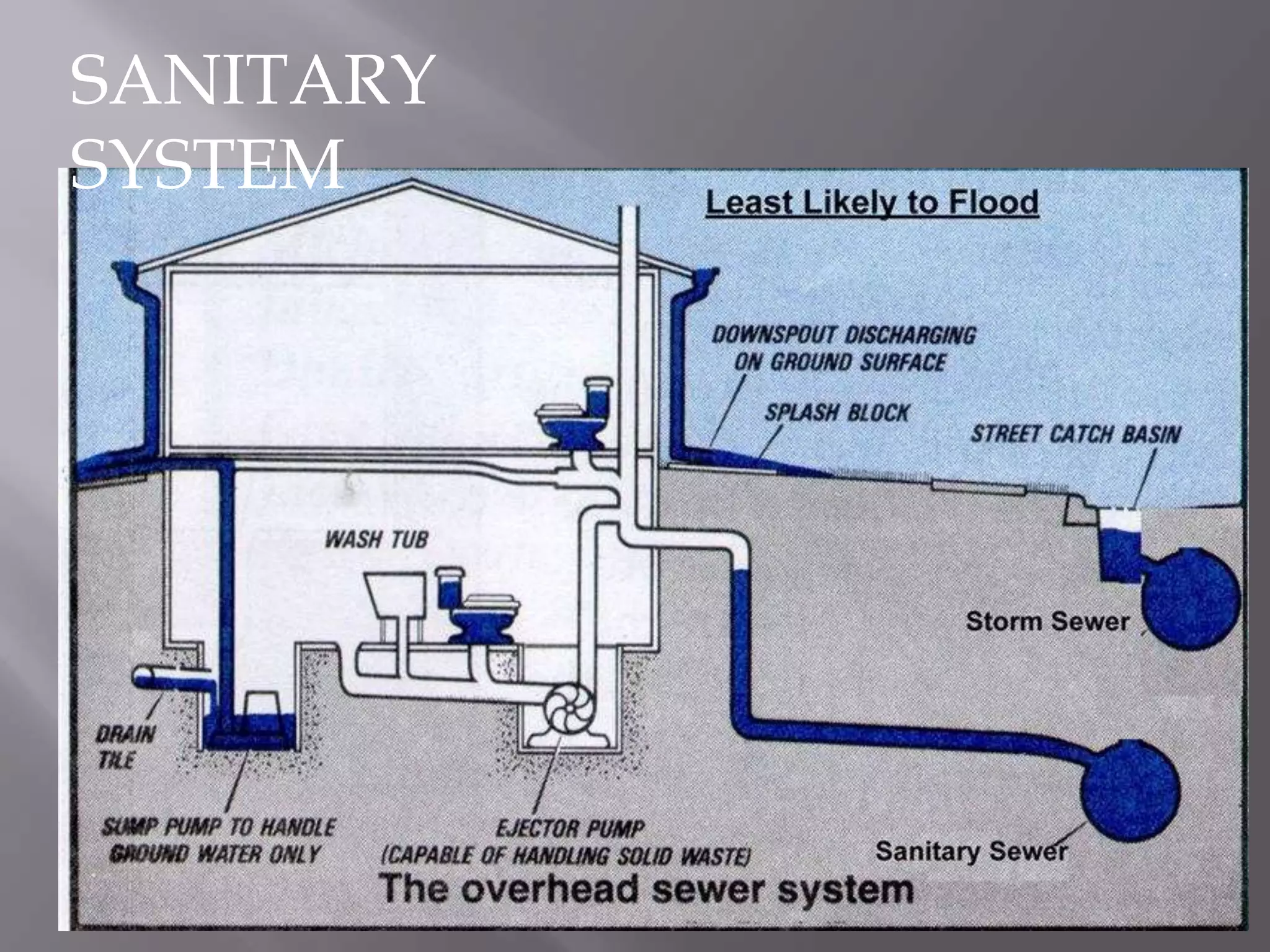
SANITARY SYSTEM
Sewer:
• Are the underground conduits or drains
• Used for carrying the sewage
• The most common types of sewer are:
I. Sanitary Sewer :
• Is a underground carriage system.
• Used for transporting sewage from houses
and commercial buildings
• Sanitary sewers serving industrial areas
also carry Industrial sewage.
• Sanitary sewage is collected with the help
of sanitary sewer line
• The sanitary sewer is attached to a main
sewer.
• The main sewer runs directly to the
sewage treatment plant.
II. Storm Sewer:
• A storm sewer collects storm water with the
help of gutter & catch basin
• Gutter allow the storm water to drain from
the street directly into the storm sewer.
Sewer:
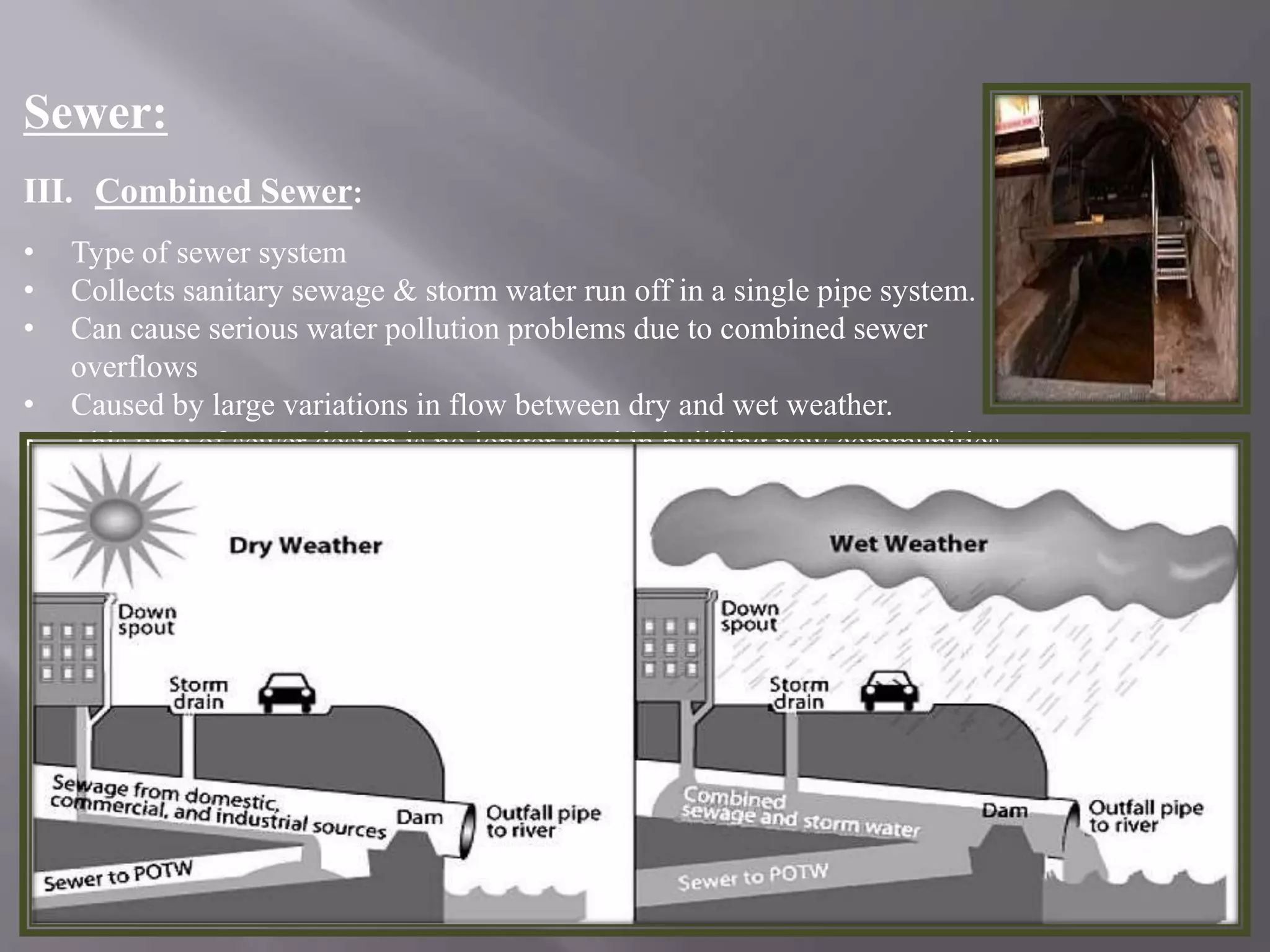
III. Combined Sewer:
• Type of sewer system
• Collects sanitary sewage & storm water run off in a single pipe system.
• Can cause serious water pollution problems due to combined sewer
overflows
• Caused by large variations in flow between dry and wet weather.
• This type of sewer design is no longer used in building new communities.
VARIOUS FITTINGS –GLOBE
VALVE
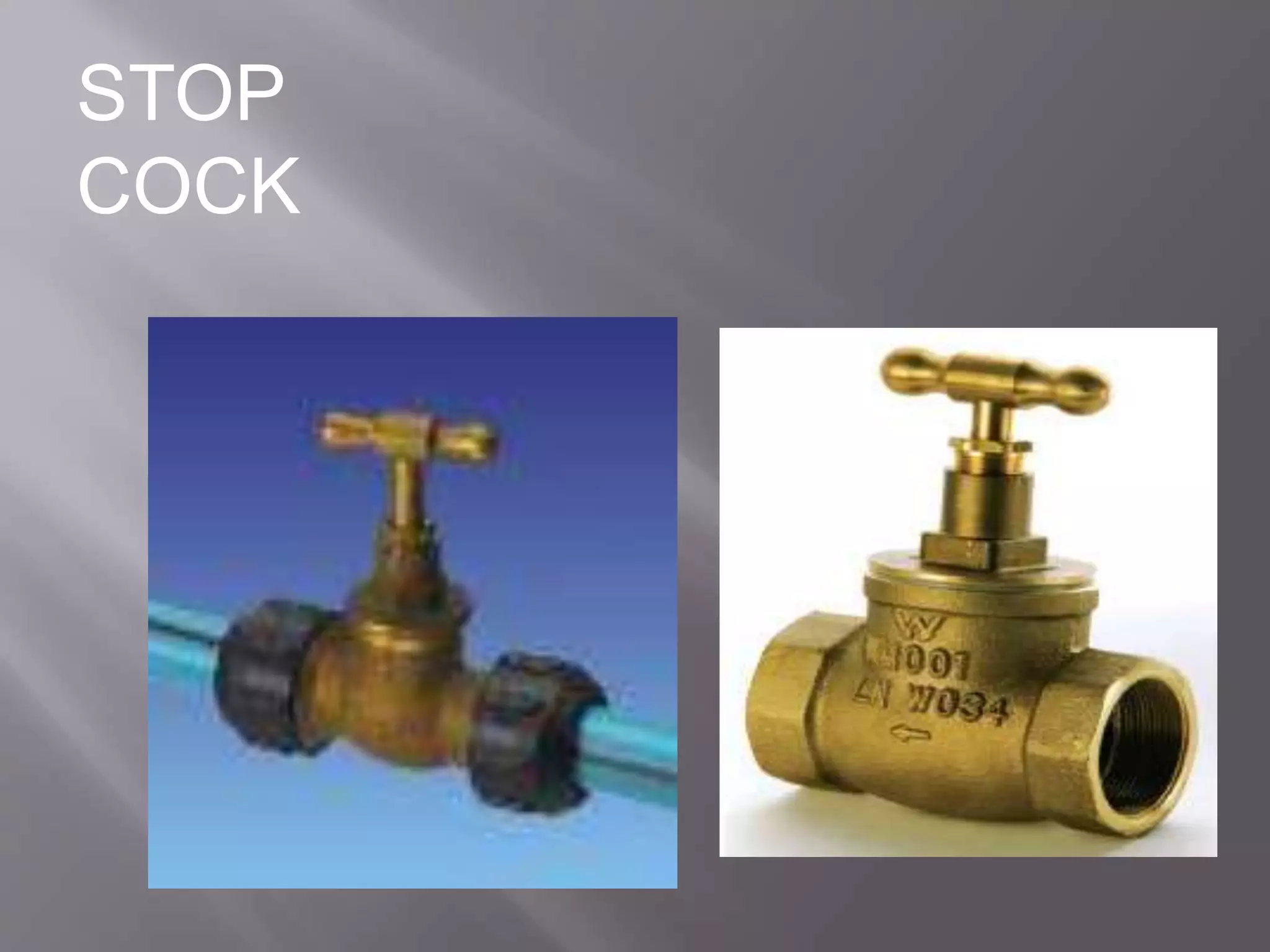
STOP
COCK
SANITARY
SYSTEM
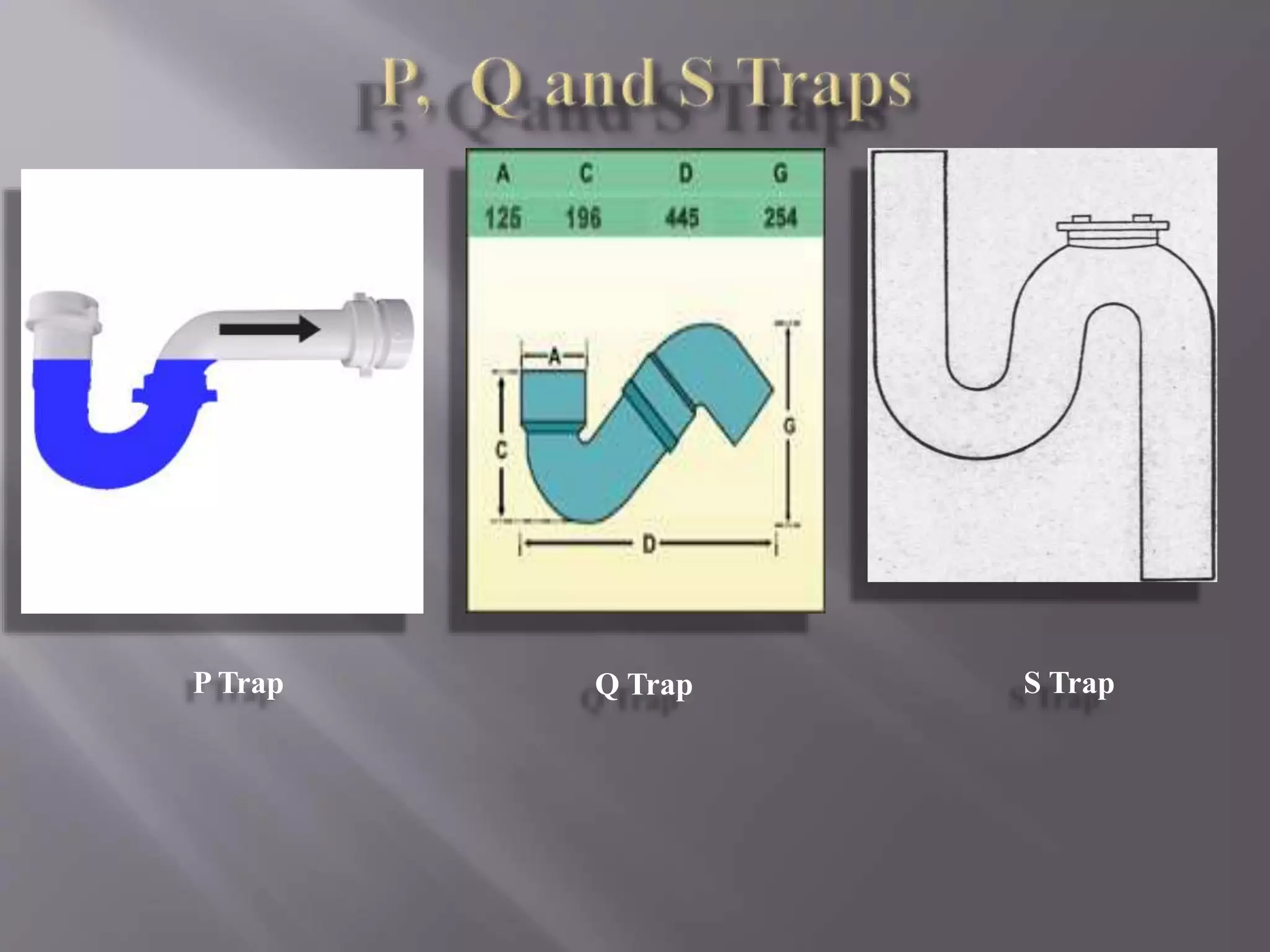
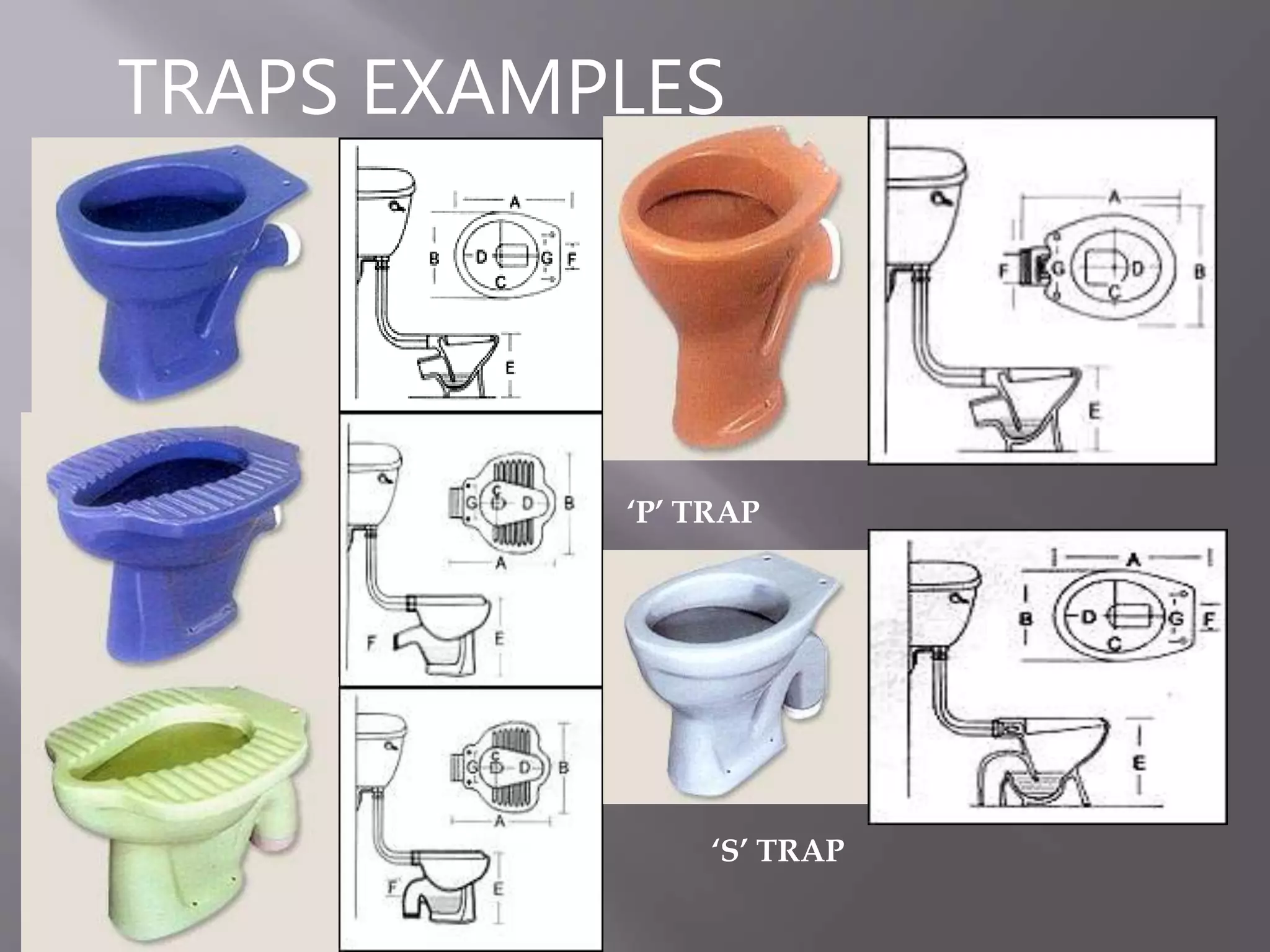
Q Trap S TrapP Trap
TRAPS ACCORDING TO
SHAPE
TRAPS EXAMPLES
‘P’ TRAP
‘S’ TRAP
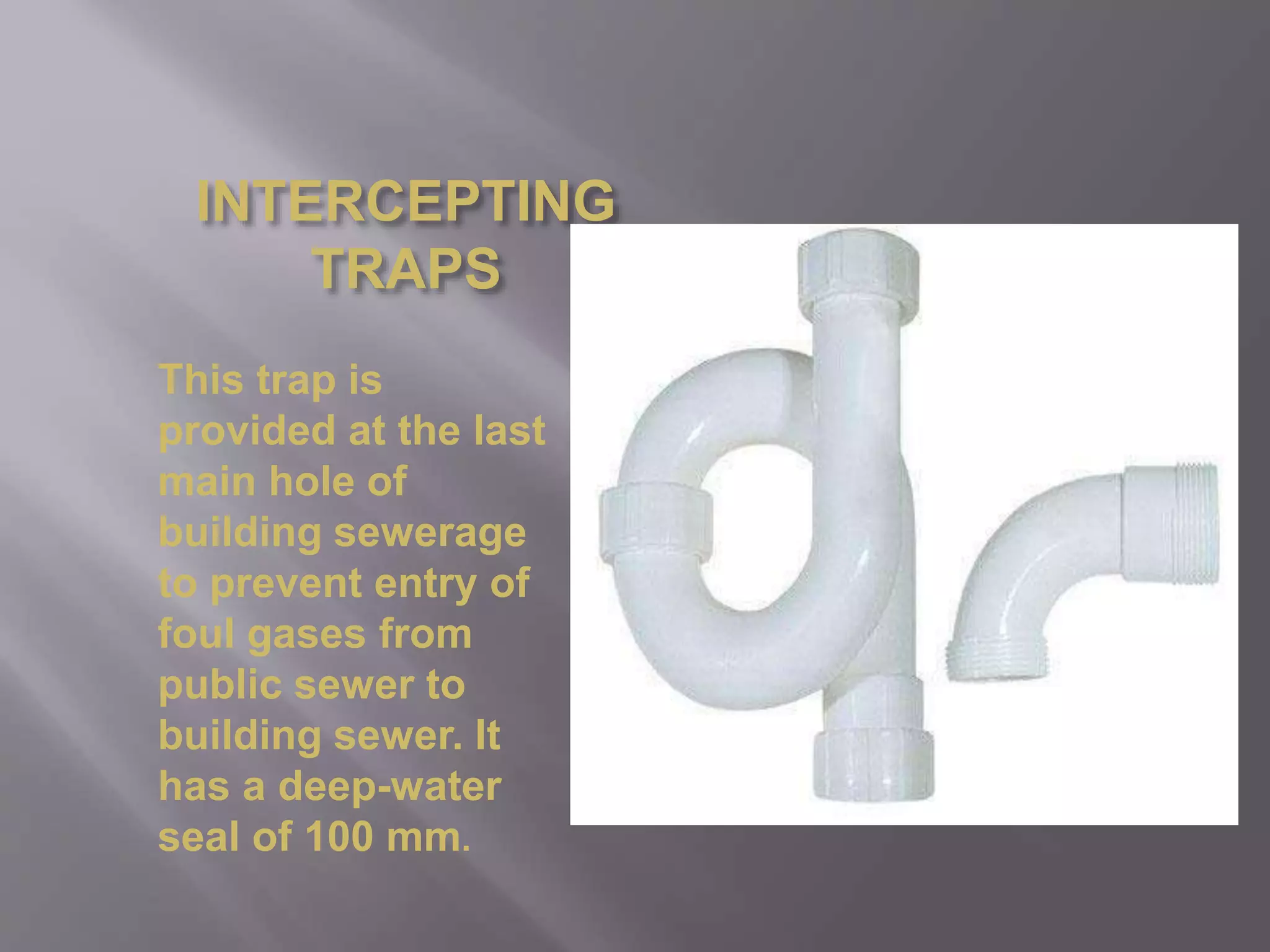
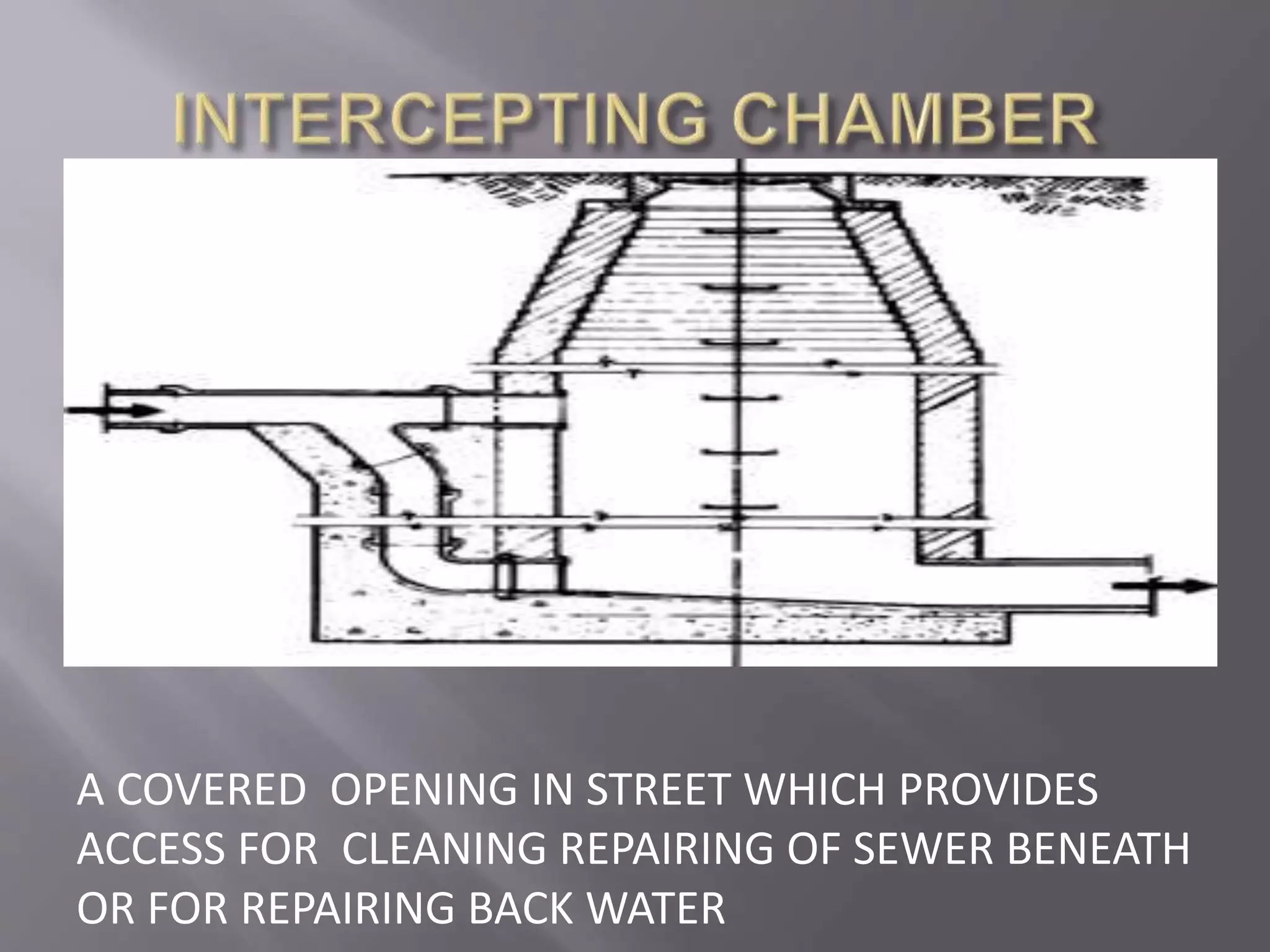
INTERCEPTING
TRAPS
This trap is
provided at the last
main hole of
building sewerage
to prevent entry of
foul gases from
public sewer to
building sewer. It
has a deep-water
seal of 100 mm.
This trap is provided
in the floor to collect
waste water from
washbasin, shower,
sink and bathroom etc.
These are available in
cast iron or UPVC
material and have
removable grating
(JALI) on the top of the
trap. The minimum
depth of water seal
should be 50 mm.
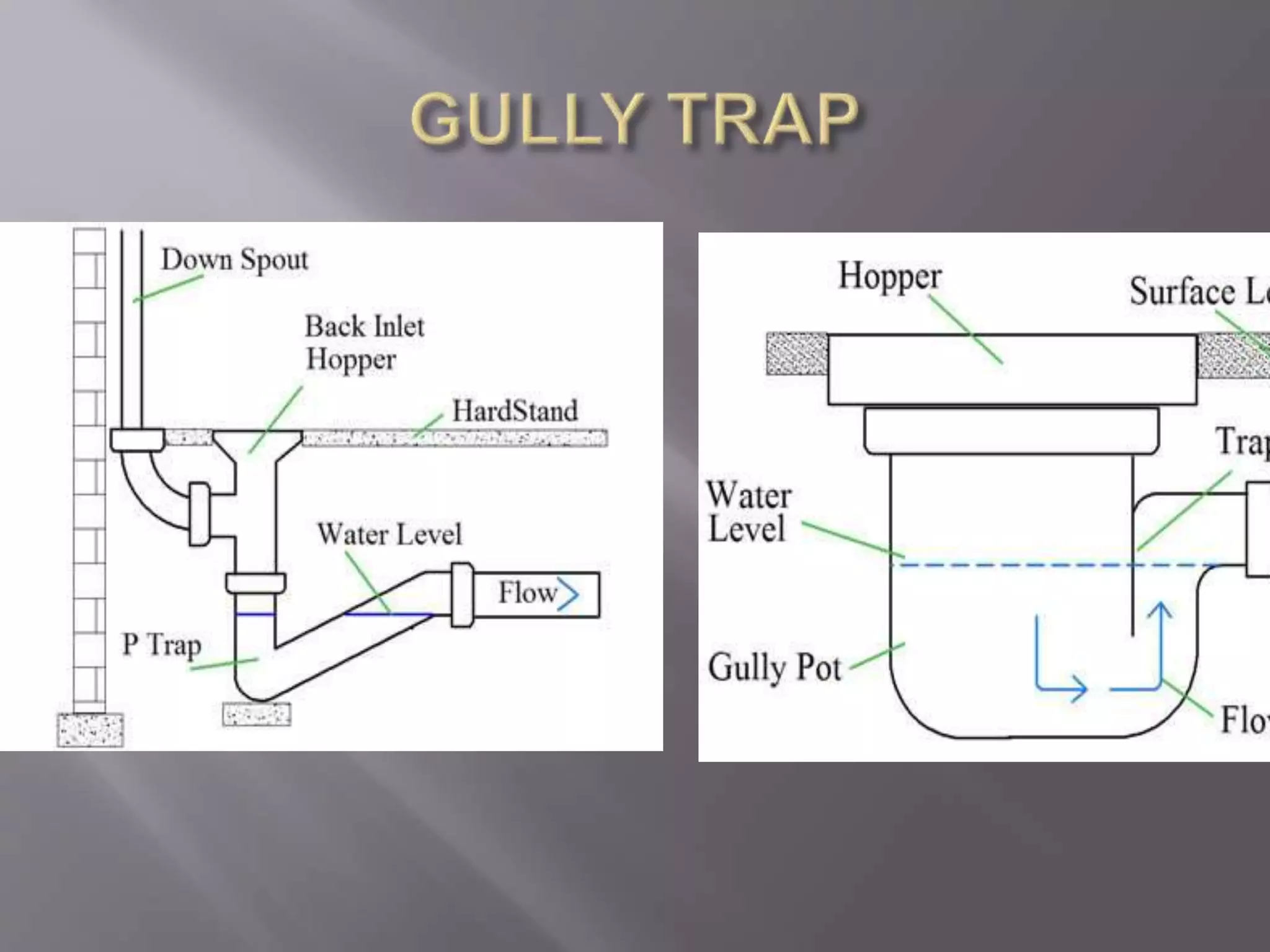
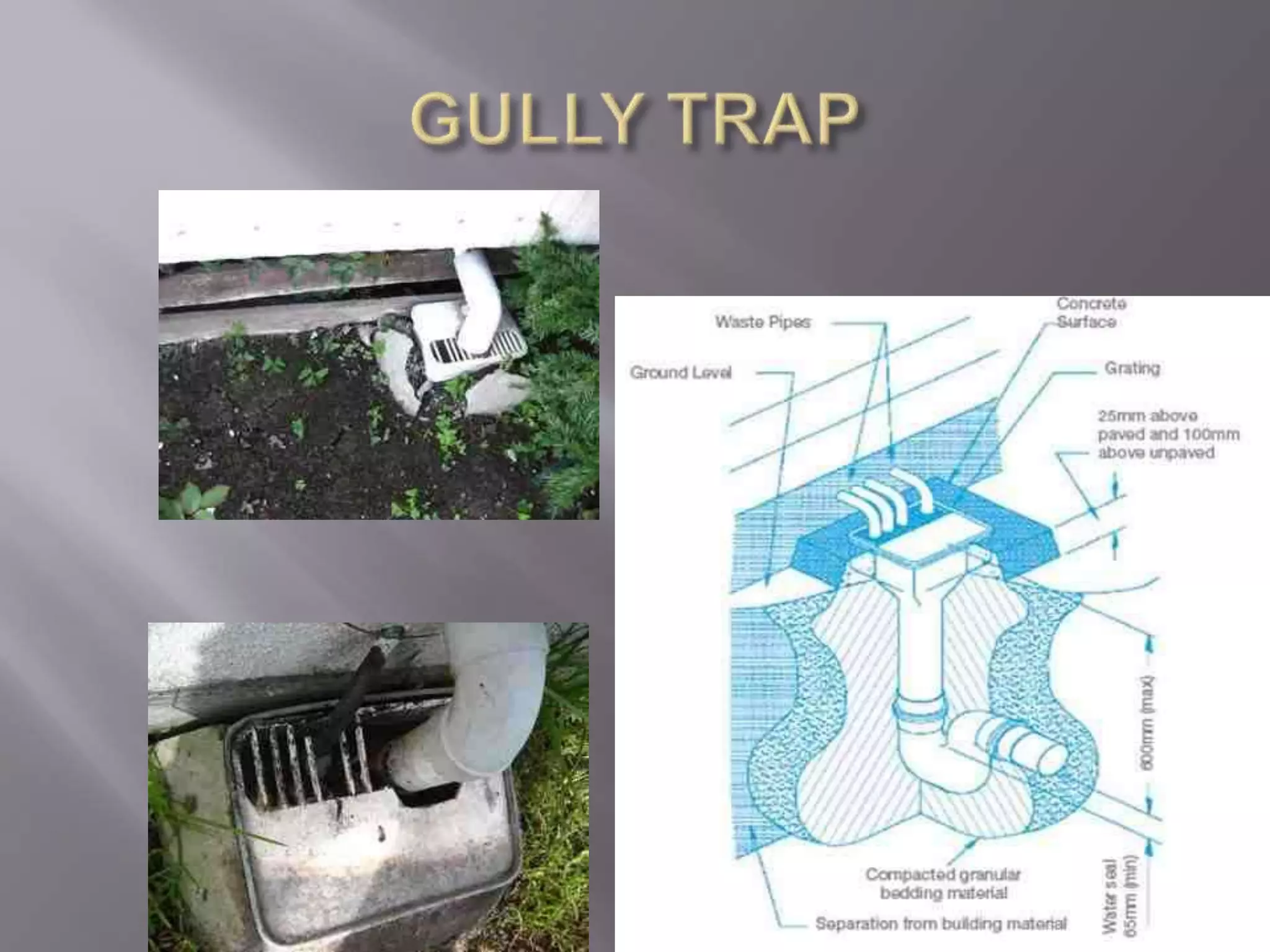
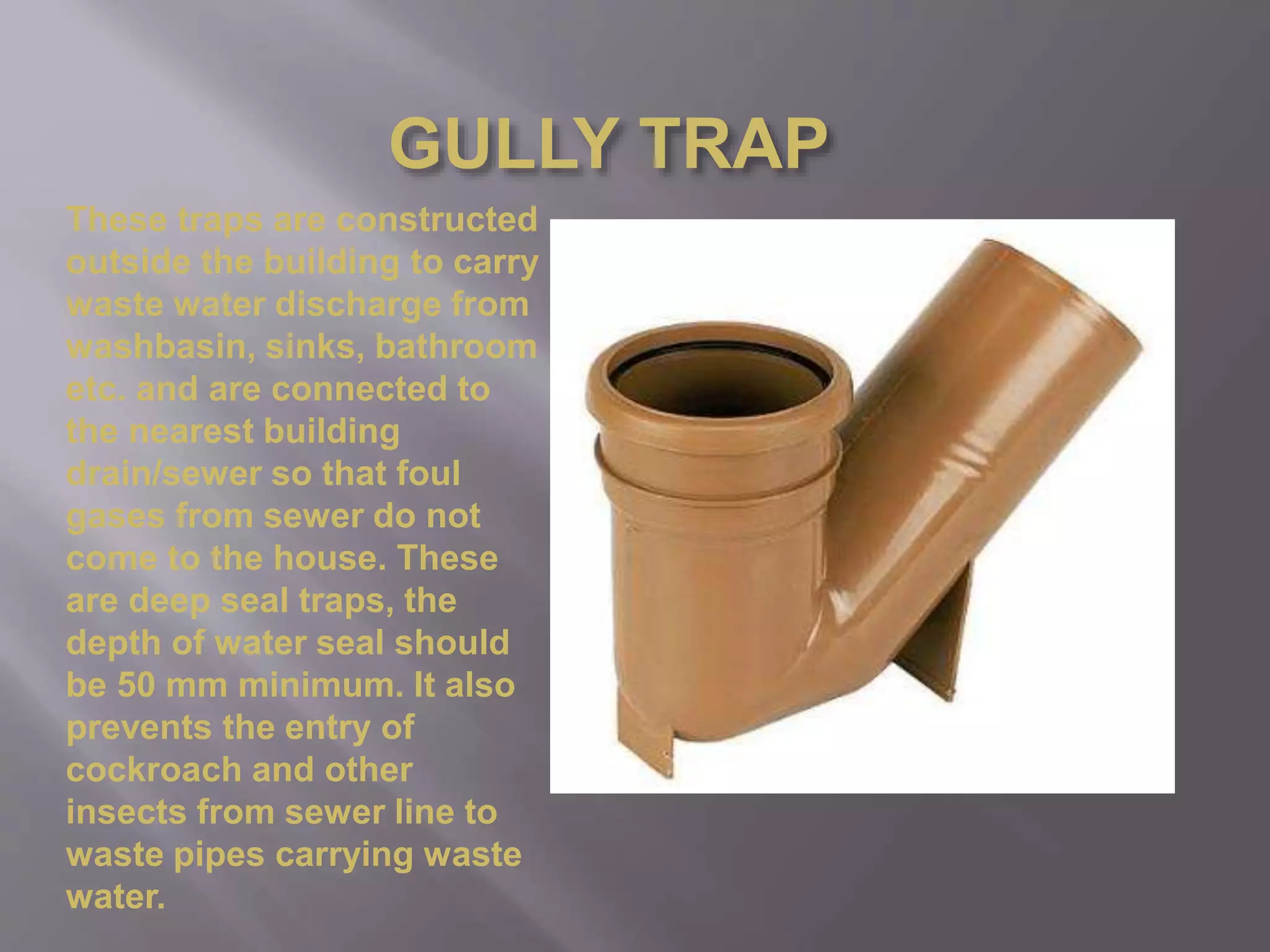
GULLY TRAP
These traps are constructed
outside the building to carry
waste water discharge from
washbasin, sinks, bathroom
etc. and are connected to
the nearest building
drain/sewer so that foul
gases from sewer do not
come to the house. These
are deep seal traps, the
depth of water seal should
be 50 mm minimum. It also
prevents the entry of
cockroach and other
insects from sewer line to
waste pipes carrying waste
water.
SANITARY
SYSTEM
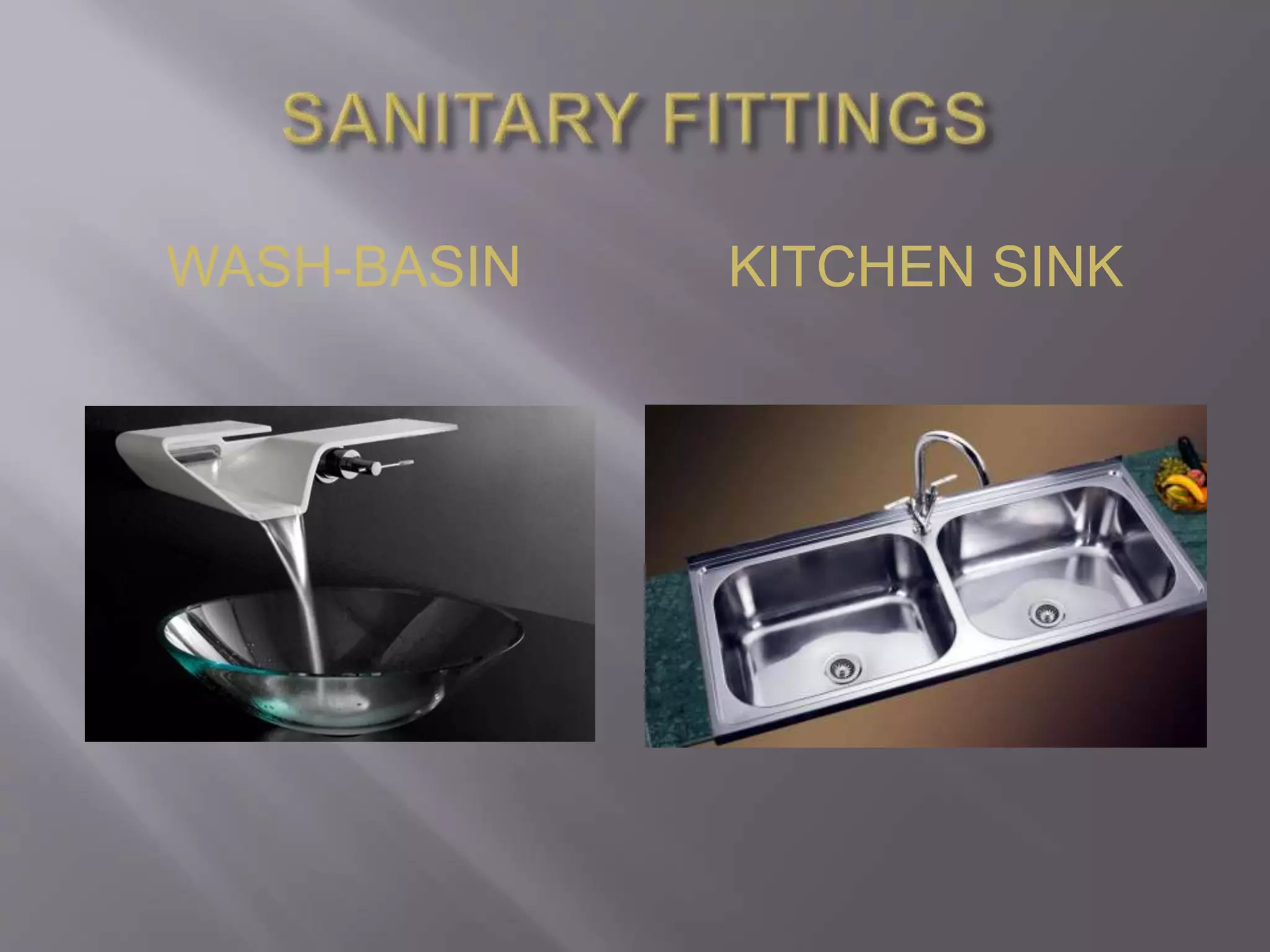
SINKS
WASH BASINS
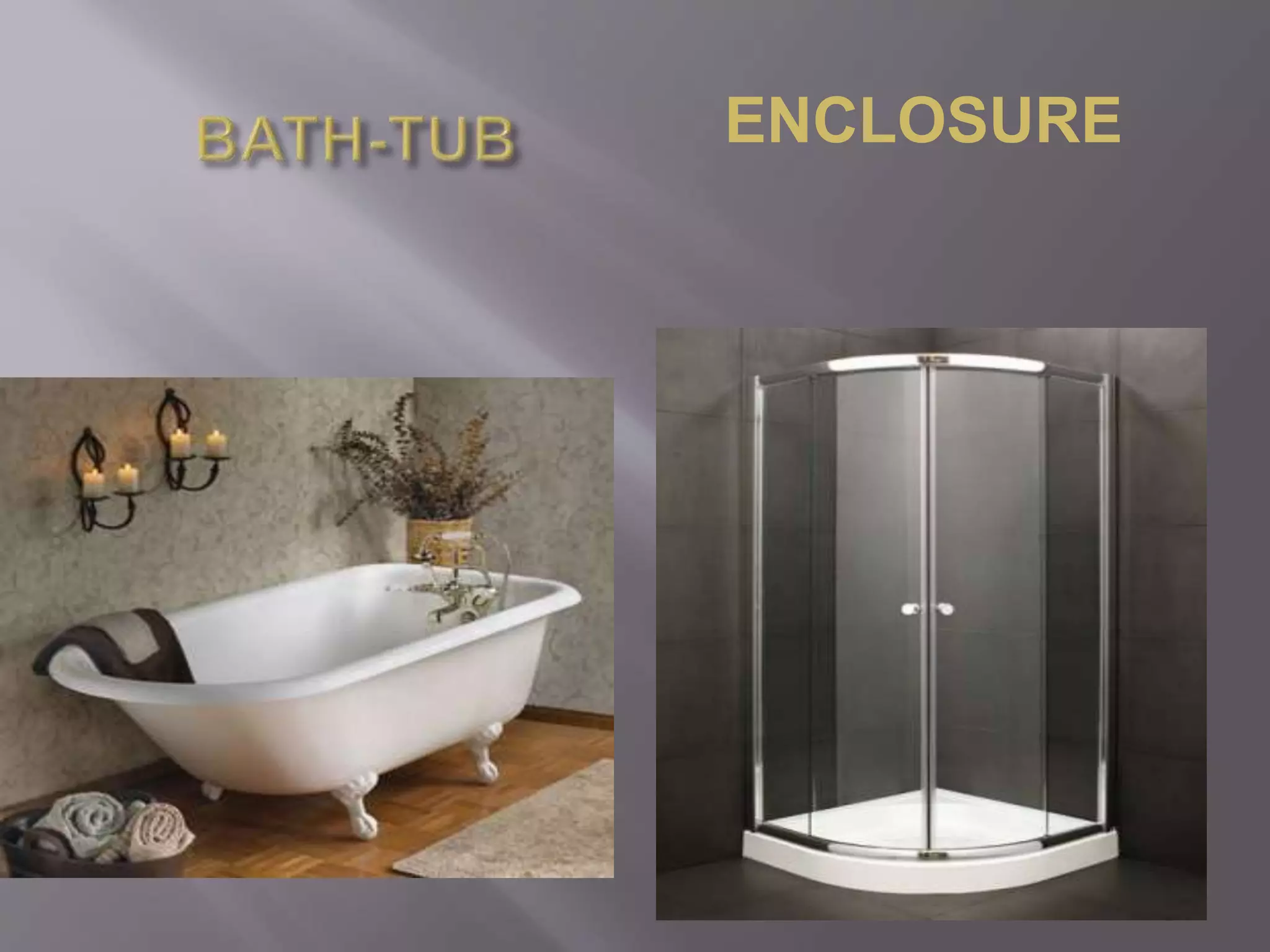
ENCLOSURE
BATH TUBS
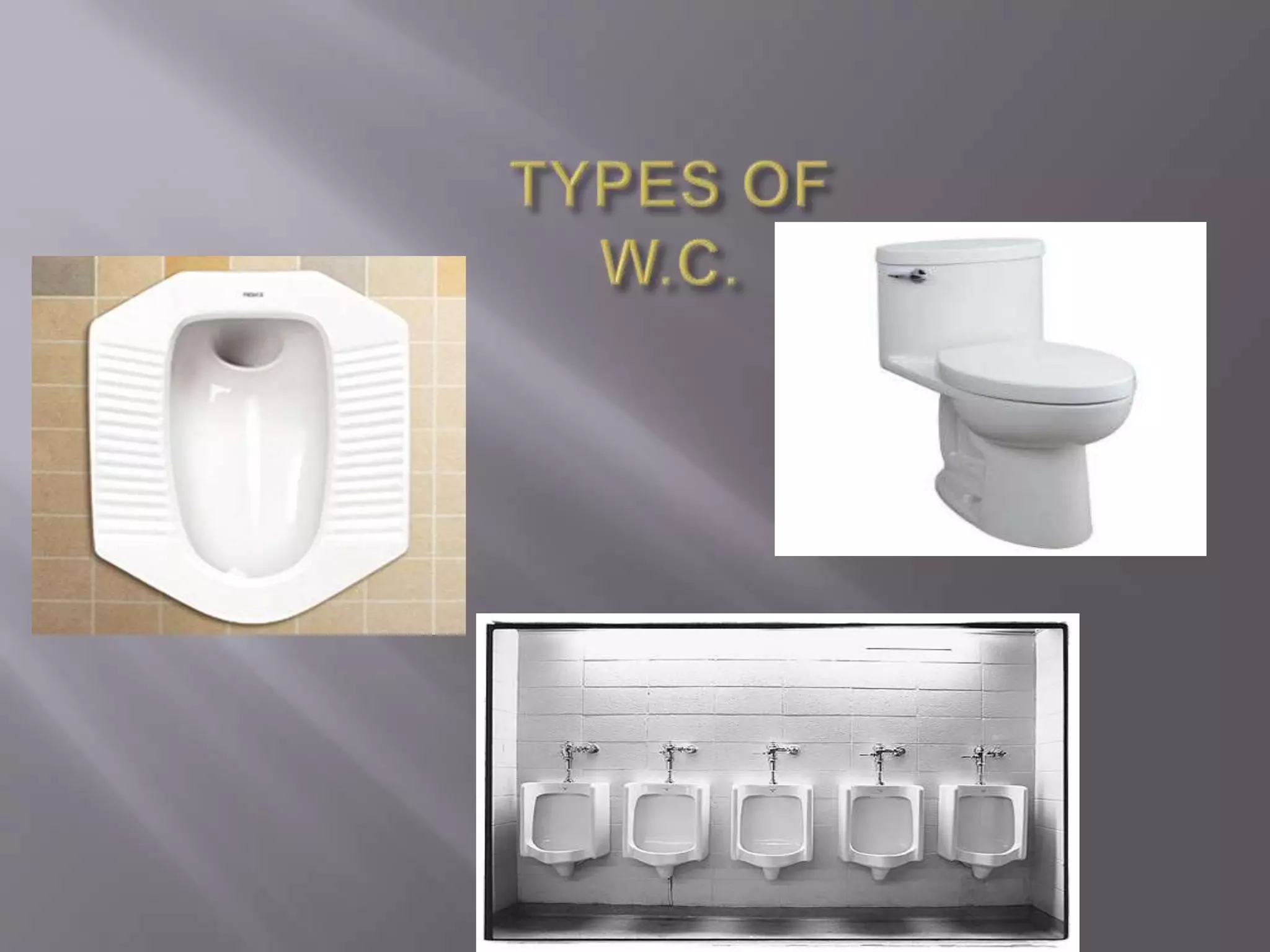
URINALS
PUBLICLADIES
GENTS
TOILETS
STREET
URINALS
WASH-BASIN KITCHEN SINK
A COVERED OPENING IN STREET WHICH PROVIDES
ACCESS FOR CLEANING REPAIRING OF SEWER BENEATH
OR FOR REPAIRING BACK WATER
PLUMBING YSTEM
PLUMBING YSTEM
PLUMBING YSTEM
PLUMBING YSTEM
PLUMBING YSTEM
PLUMBING YSTEM
PLUMBING YSTEM
PLUMBING YSTEM
PLUMBING YSTEM
PLUMBING YSTEM
PLUMBING YSTEM
PLUMBING YSTEM
PLUMBING YSTEM
PLUMBING YSTEM

PLUMBING YSTEM

  • 1.
  • 2.
  • 3.
    Sewer: • Are theunderground conduits or drains • Used for carrying the sewage • The most common types of sewer are: I. Sanitary Sewer : • Is a underground carriage system. • Used for transporting sewage from houses and commercial buildings • Sanitary sewers serving industrial areas also carry Industrial sewage. • Sanitary sewage is collected with the help of sanitary sewer line • The sanitary sewer is attached to a main sewer. • The main sewer runs directly to the sewage treatment plant. II. Storm Sewer: • A storm sewer collects storm water with the help of gutter & catch basin • Gutter allow the storm water to drain from the street directly into the storm sewer.
  • 4.
    Sewer: III. Combined Sewer: •Type of sewer system • Collects sanitary sewage & storm water run off in a single pipe system. • Can cause serious water pollution problems due to combined sewer overflows • Caused by large variations in flow between dry and wet weather. • This type of sewer design is no longer used in building new communities.
  • 5.
  • 6.
  • 7.
  • 8.
    Q Trap STrapP Trap
  • 10.
  • 11.
  • 15.
    INTERCEPTING TRAPS This trap is providedat the last main hole of building sewerage to prevent entry of foul gases from public sewer to building sewer. It has a deep-water seal of 100 mm.
  • 18.
    This trap isprovided in the floor to collect waste water from washbasin, shower, sink and bathroom etc. These are available in cast iron or UPVC material and have removable grating (JALI) on the top of the trap. The minimum depth of water seal should be 50 mm.
  • 19.
    GULLY TRAP These trapsare constructed outside the building to carry waste water discharge from washbasin, sinks, bathroom etc. and are connected to the nearest building drain/sewer so that foul gases from sewer do not come to the house. These are deep seal traps, the depth of water seal should be 50 mm minimum. It also prevents the entry of cockroach and other insects from sewer line to waste pipes carrying waste water.
  • 21.
  • 22.
  • 23.
  • 24.
  • 25.
  • 27.
  • 28.
  • 30.
    A COVERED OPENINGIN STREET WHICH PROVIDES ACCESS FOR CLEANING REPAIRING OF SEWER BENEATH OR FOR REPAIRING BACK WATER