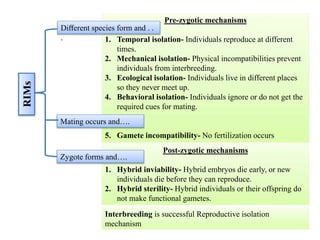
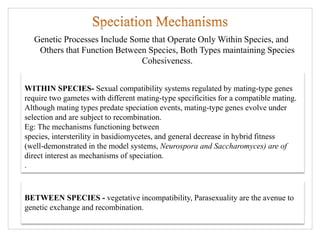
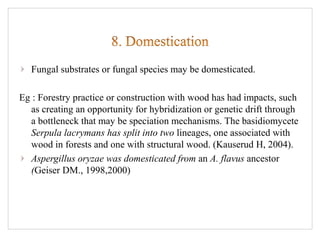
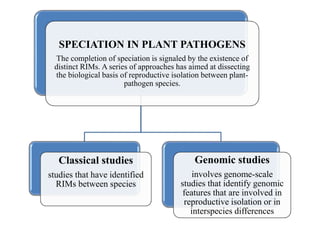
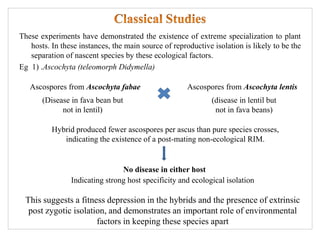
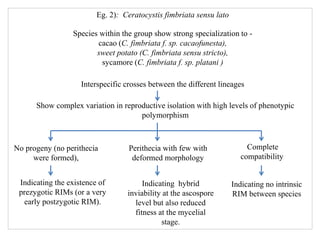
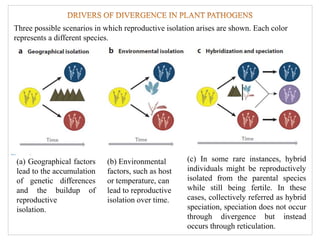
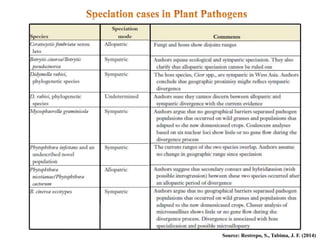
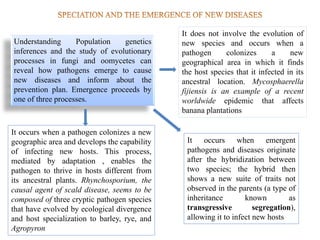
This document discusses speciation in fungi and oomycetes. It defines speciation as the evolutionary process by which new species arise. There are several mechanisms that can drive speciation, including allopatric, parapatric, peripatric and sympatric speciation. Reproductive isolation plays a key role in maintaining species boundaries and can occur through pre-zygotic and post-zygotic barriers. Genetic mechanisms like polyploidy can also cause reproductive isolation and lead to speciation. Speciation in plant pathogenic fungi may be driven by specialization to different host plants. Genome studies can help identify genes and regions involved in reproductive isolation and adaptation to new environments or hosts.