A 21 st  Century Learning Community
Outcomes Participants should be able to: define Professional Learning Communities, discuss the principles associated with starting a PLC describe the components necessary for maintaining a PLC synthesize ways in which PLCs may be extended beyond the course levels
Defining   “Professional Learning Community”
“ We’re a school and we’re a community – so we’re a learning community” - a high school teacher
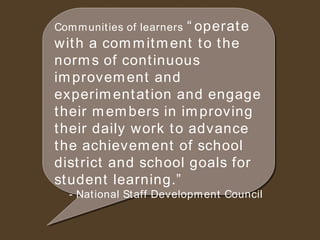
Communities of learners   “operate with a commitment to the norms of continuous improvement and experimentation and engage their members in improving their daily work to advance the achievement of school district and school goals for student learning.” - National Staff Development Council
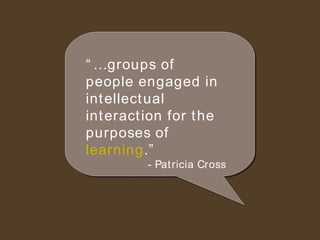
“… groups of people engaged in intellectual interaction for the purposes of  learning .” - Patricia Cross
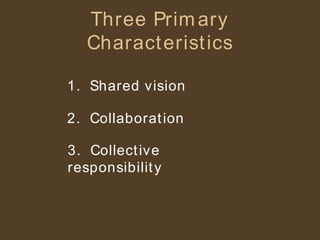
Three Primary Characteristics 1.  Shared vision 2.  Collaboration 3.  Collective responsibility
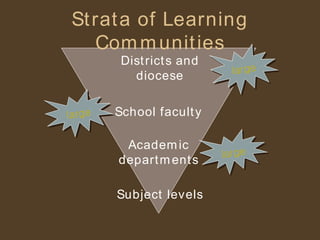
Strata of Learning Communities School faculty Academic departments Subject levels Districts and diocese large large large
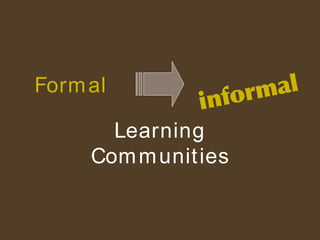
Formal vs . informal Learning Communities
Creating   a Professional Learning Community
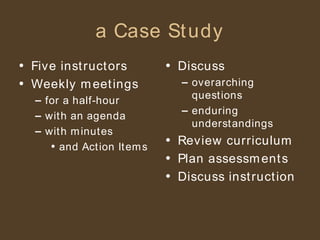
a Case Study Five instructors Weekly meetings for a half-hour with an agenda with minutes and Action Items Discuss overarching questions enduring understandings Review curriculum Plan assessments Discuss instruction
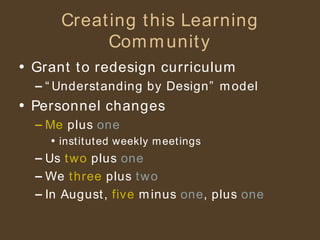
Creating this Learning Community Grant to redesign curriculum “Understanding by Design” model Personnel changes Me  plus  one instituted weekly meetings Us  two  plus  one We  three  plus  two In August,  five  minus  one , plus  one
Maintaining  a Professional Learning Community
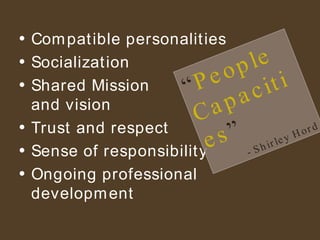
Compatible personalities Socialization Shared Mission  and vision Trust and respect Sense of responsibility Ongoing professional development “ People Capacities ” - Shirley Hord
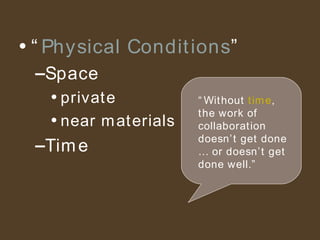
“ Physical Conditions ” Space private near materials Time “ Without  time , the work of collaboration doesn’t get done … or doesn’t get done well.”
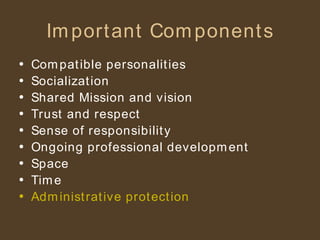
Important Components Compatible personalities Socialization Shared Mission and vision Trust and respect Sense of responsibility Ongoing professional development Space Time Administrative protection
Think – Pair - Table-share To what extent do these exist in your Department or school? What is needed in order to improve the professional learning communities in your Department or school? What is  your   role?
Extending   the Culture of Collaboration
Departmental PLCs Departmental scope & sequence Observations Mentoring Collaboration around content and pedagogy
Inter-disciplinary Collaboration Share resources Websites and internet tools Videos Maps Models and manipulatives Joint guest speakers Inter-disciplinary Units Literature and History of WWII Math and History of the Maya Poems and Religions of the Abrahamic religions
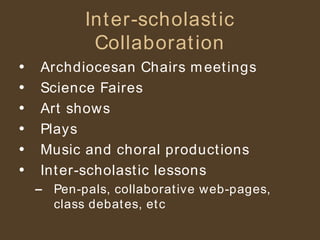
Inter-scholastic Collaboration Archdiocesan Chairs meetings Science Faires Art shows Plays Music and choral productions Inter-scholastic lessons Pen-pals, collaborative web-pages, class debates, etc
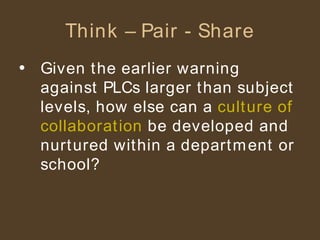
Think – Pair - Share Given the earlier warning against PLCs larger than subject levels, how else can a  culture of collaboration  be developed and nurtured within a department or school?
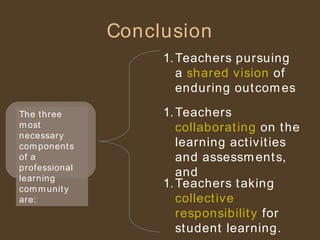
Conclusion Teachers pursuing a  shared vision  of enduring outcomes Teachers  collaborating  on the learning activities and assessments, and Teachers taking  collective responsibility  for student learning. The three most necessary components of a professional learning community are:
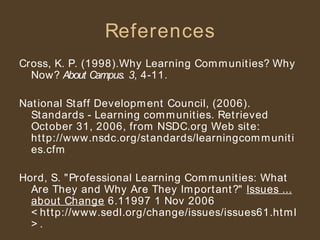
References Cross, K. P. (1998).Why Learning Communities? Why Now?  About Campus .  3 , 4-11. National Staff Development Council, (2006). Standards - Learning communities. Retrieved October 31, 2006, from NSDC.org Web site: http://www.nsdc.org/standards/learningcommunities.cfm Hord, S. &quot;Professional Learning Communities: What Are They and Why Are They Important?&quot;  Issues ... about Change  6.11997 1 Nov 2006 <http://www.sedl.org/change/issues/issues61.html>.
Contact Information Eric E Castro Saint Ignatius College Preparatory San Francisco, CA [email_address] http://www.siprep.org/faculty/ecastro This work is licensed under the Creative Commons Attribution-Share Alike 3.0 United States License. To view a copy of this license, visit http://creativecommons.org/licenses/by-sa/3.0/us/ or send a letter to Creative Commons, 171 Second Street, Suite 300, San Francisco, California, 94105, USA.

PLC Talk Slides

  • 1.
    A 21 st Century Learning Community
  • 2.
    Outcomes Participants shouldbe able to: define Professional Learning Communities, discuss the principles associated with starting a PLC describe the components necessary for maintaining a PLC synthesize ways in which PLCs may be extended beyond the course levels
  • 3.
    Defining “Professional Learning Community”
  • 4.
    “ We’re aschool and we’re a community – so we’re a learning community” - a high school teacher
  • 5.
    Communities of learners “operate with a commitment to the norms of continuous improvement and experimentation and engage their members in improving their daily work to advance the achievement of school district and school goals for student learning.” - National Staff Development Council
  • 6.
    “… groups ofpeople engaged in intellectual interaction for the purposes of learning .” - Patricia Cross
  • 7.
    Three Primary Characteristics1. Shared vision 2. Collaboration 3. Collective responsibility
  • 8.
    Strata of LearningCommunities School faculty Academic departments Subject levels Districts and diocese large large large
  • 9.
    Formal vs .informal Learning Communities
  • 10.
    Creating a Professional Learning Community
  • 11.
    a Case StudyFive instructors Weekly meetings for a half-hour with an agenda with minutes and Action Items Discuss overarching questions enduring understandings Review curriculum Plan assessments Discuss instruction
  • 12.
    Creating this LearningCommunity Grant to redesign curriculum “Understanding by Design” model Personnel changes Me plus one instituted weekly meetings Us two plus one We three plus two In August, five minus one , plus one
  • 13.
    Maintaining aProfessional Learning Community
  • 14.
    Compatible personalities SocializationShared Mission and vision Trust and respect Sense of responsibility Ongoing professional development “ People Capacities ” - Shirley Hord
  • 15.
    “ Physical Conditions” Space private near materials Time “ Without time , the work of collaboration doesn’t get done … or doesn’t get done well.”
  • 16.
    Important Components Compatiblepersonalities Socialization Shared Mission and vision Trust and respect Sense of responsibility Ongoing professional development Space Time Administrative protection
  • 17.
    Think – Pair- Table-share To what extent do these exist in your Department or school? What is needed in order to improve the professional learning communities in your Department or school? What is your role?
  • 18.
    Extending the Culture of Collaboration
  • 19.
    Departmental PLCs Departmentalscope & sequence Observations Mentoring Collaboration around content and pedagogy
  • 20.
    Inter-disciplinary Collaboration Shareresources Websites and internet tools Videos Maps Models and manipulatives Joint guest speakers Inter-disciplinary Units Literature and History of WWII Math and History of the Maya Poems and Religions of the Abrahamic religions
  • 21.
    Inter-scholastic Collaboration ArchdiocesanChairs meetings Science Faires Art shows Plays Music and choral productions Inter-scholastic lessons Pen-pals, collaborative web-pages, class debates, etc
  • 22.
    Think – Pair- Share Given the earlier warning against PLCs larger than subject levels, how else can a culture of collaboration be developed and nurtured within a department or school?
  • 23.
    Conclusion Teachers pursuinga shared vision of enduring outcomes Teachers collaborating on the learning activities and assessments, and Teachers taking collective responsibility for student learning. The three most necessary components of a professional learning community are:
  • 24.
    References Cross, K.P. (1998).Why Learning Communities? Why Now? About Campus . 3 , 4-11. National Staff Development Council, (2006). Standards - Learning communities. Retrieved October 31, 2006, from NSDC.org Web site: http://www.nsdc.org/standards/learningcommunities.cfm Hord, S. &quot;Professional Learning Communities: What Are They and Why Are They Important?&quot; Issues ... about Change 6.11997 1 Nov 2006 <http://www.sedl.org/change/issues/issues61.html>.
  • 25.
    Contact Information EricE Castro Saint Ignatius College Preparatory San Francisco, CA [email_address] http://www.siprep.org/faculty/ecastro This work is licensed under the Creative Commons Attribution-Share Alike 3.0 United States License. To view a copy of this license, visit http://creativecommons.org/licenses/by-sa/3.0/us/ or send a letter to Creative Commons, 171 Second Street, Suite 300, San Francisco, California, 94105, USA.

Editor's Notes

  • #2 First SS new hire in twelve years Teaching World History rise of the hominid line until the Industrial Revolution million years of human history 36 instructional weeks