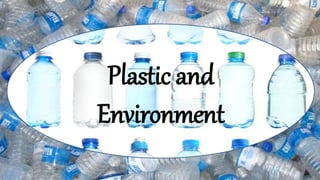
Plastic and
Environment
• The word plastic has been derived from the greek
word ‘PLASTIKOS’ which means ‘FIT FOR
MOULDING’.
• Despite the many different uses of plastics, there
are environmental and health hazards associated
with disposal. This is because plastics are non-
biodegradable.
• The term non-biodegradable describes substances
that do not break down to a natural,
environmentally safe condition over time by
biological processes. In other words, non-
biodegradable materials do not decay.
INTRODUCTION
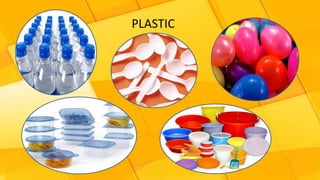
PLASTIC
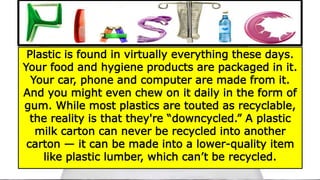
Plastic is found in virtually everything these days.
Your food and hygiene products are packaged in it.
Your car, phone and computer are made from it.
And you might even chew on it daily in the form of
gum. While most plastics are touted as recyclable,
the reality is that they're “downcycled.” A plastic
milk carton can never be recycled into another
carton — it can be made into a lower-quality item
like plastic lumber, which can’t be recycled.
PLASTIC
• Soil fertility is also affected due to plastic material as it
forms part of manure remaining in the soil for years
without natural degradation.
• Death of animals due to suffocation, stomach and
intestine related diseases due to improper disposal of
plastic.
• Pollution of environment by by disposing of the plastic
waste and chemicals used in the process of manufacturing
plastic material into nearby water channels and open
spaces.
EFFECTS OF PLASTIC ON OUR
ENVIRONMENT
• Littering of the landfills and other
open spaces with plastic garbage
becomes unhygienic and ugly.
• Plastic waste is finding its way
into the rivers, oceans and seas
of the world due to which the rich
marine life is facing serious
health hazards
A FEW THINGS THAT CAN BE DONE TO
LIMIT THE HARMFUL EFFECTS ASSOCIATED
WITH PLASTICS ARE AS FOLLWS:
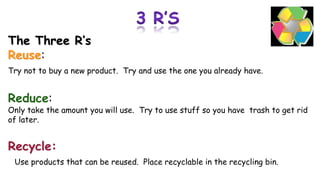
The Three R’s
Reuse:
Try not to buy a new product. Try and use the one you already have.
Reduce:
Only take the amount you will use. Try to use stuff so you have trash to get rid
of later.
Recycle:
Use products that can be reused. Place recyclable in the recycling bin.
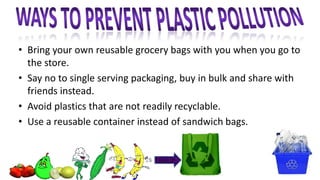
• Bring your own reusable grocery bags with you when you go to
the store.
• Say no to single serving packaging, buy in bulk and share with
friends instead.
• Avoid plastics that are not readily recyclable.
• Use a reusable container instead of sandwich bags.
• It has been observed, to reduce bad effects of waste plastics, it
is better to recycle and re-utilize waste plastics in environment-
friendly manners. In addition to reducing the amount of
plastics waste requiring disposal, recycling and reuse of plastic
can have several other advantages, such as:
• A) Reduced consumption of energy.
• B)Reduced amounts of solid waste going to landfill.
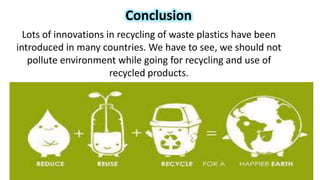
Conclusion
Lots of innovations in recycling of waste plastics have been
introduced in many countries. We have to see, we should not
pollute environment while going for recycling and use of
recycled products.
DONE BY:-
POOJA JAYAPRASAD
PRERNA CHANDIRAMANI
RIDDHI UMESH
RINU JOHN
RIVA JANE D’SOUZA
SAKSHI VEJANI
Plastic and Environment

Plastic and Environment

  • 1.
  • 2.
    • The wordplastic has been derived from the greek word ‘PLASTIKOS’ which means ‘FIT FOR MOULDING’. • Despite the many different uses of plastics, there are environmental and health hazards associated with disposal. This is because plastics are non- biodegradable. • The term non-biodegradable describes substances that do not break down to a natural, environmentally safe condition over time by biological processes. In other words, non- biodegradable materials do not decay. INTRODUCTION
  • 3.
    PLASTIC Plastic is foundin virtually everything these days. Your food and hygiene products are packaged in it. Your car, phone and computer are made from it. And you might even chew on it daily in the form of gum. While most plastics are touted as recyclable, the reality is that they're “downcycled.” A plastic milk carton can never be recycled into another carton — it can be made into a lower-quality item like plastic lumber, which can’t be recycled.
  • 4.
  • 6.
    • Soil fertilityis also affected due to plastic material as it forms part of manure remaining in the soil for years without natural degradation. • Death of animals due to suffocation, stomach and intestine related diseases due to improper disposal of plastic. • Pollution of environment by by disposing of the plastic waste and chemicals used in the process of manufacturing plastic material into nearby water channels and open spaces. EFFECTS OF PLASTIC ON OUR ENVIRONMENT
  • 8.
    • Littering ofthe landfills and other open spaces with plastic garbage becomes unhygienic and ugly. • Plastic waste is finding its way into the rivers, oceans and seas of the world due to which the rich marine life is facing serious health hazards
  • 9.
    A FEW THINGSTHAT CAN BE DONE TO LIMIT THE HARMFUL EFFECTS ASSOCIATED WITH PLASTICS ARE AS FOLLWS:
  • 10.
    The Three R’s Reuse: Trynot to buy a new product. Try and use the one you already have. Reduce: Only take the amount you will use. Try to use stuff so you have trash to get rid of later. Recycle: Use products that can be reused. Place recyclable in the recycling bin.
  • 11.
    • Bring yourown reusable grocery bags with you when you go to the store. • Say no to single serving packaging, buy in bulk and share with friends instead. • Avoid plastics that are not readily recyclable. • Use a reusable container instead of sandwich bags.
  • 12.
    • It hasbeen observed, to reduce bad effects of waste plastics, it is better to recycle and re-utilize waste plastics in environment- friendly manners. In addition to reducing the amount of plastics waste requiring disposal, recycling and reuse of plastic can have several other advantages, such as: • A) Reduced consumption of energy. • B)Reduced amounts of solid waste going to landfill.
  • 13.
    Conclusion Lots of innovationsin recycling of waste plastics have been introduced in many countries. We have to see, we should not pollute environment while going for recycling and use of recycled products.
  • 14.
    DONE BY:- POOJA JAYAPRASAD PRERNACHANDIRAMANI RIDDHI UMESH RINU JOHN RIVA JANE D’SOUZA SAKSHI VEJANI