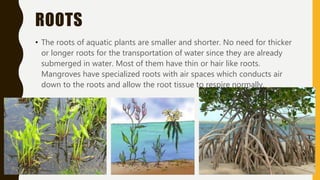
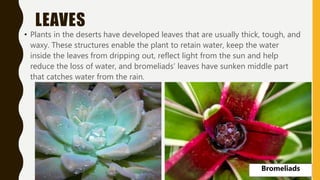
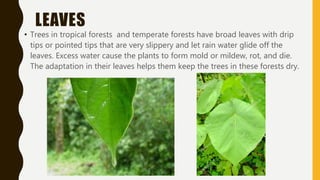
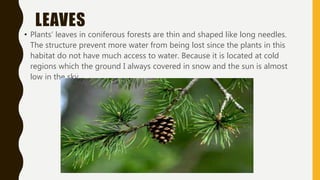
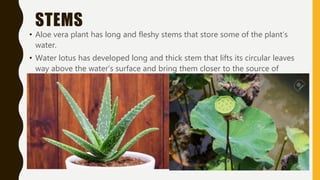
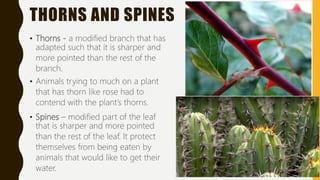
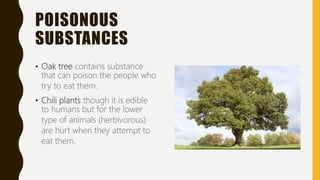
Plants have developed various specialized structures that allow them to survive in different habitats. These adaptations help plants obtain water and sunlight. For example, desert plants have roots that spread horizontally to absorb water and thick, waxy leaves to retain water. Aquatic plant roots are smaller as they are submerged, while their leaves are wide to capture sunlight underwater. Leaves of trees in tropical forests have drip tips to shed excess rain, while conifer leaves are needle-like to reduce water loss in cold climates. Plants also have adaptations for protection, such as thorns, toxic substances, and smells, which deter animals from eating them.