

Presented by:
Mesele TilahunBelete
(Integ.2ndyear)
Advisor: MoonJae Sun Mar 25, 2021
KRISS,UST, S.Korea
Contents
1. The plant microbiome
1.1 Composition of plant- associated microbiota
1.2 Core and hub microbiota
1.3 Dynamics of the plant- associated microbiome
2. Plant colonization and community assembly
2.1 Plant sensing and the initiation of colonization
2.2 Uptake of plant metabolites
2.3 Evading plant defences
2.4 Microbial interactions
3. Functions of plant- associated microbiomes
3.1 Nutrient acquisition
3.2 Disease resistance
3.3 Stress tolerance
5. Conclusion
1. The plant microbiome
1.1 Composition of plant- associated microbiota
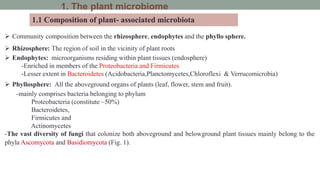
 Community composition between the rhizosphere, endophytes and the phyllo sphere.
 Rhizosphere: The region of soil in the vicinity of plant roots
 Endophytes: microorganisms residing within plant tissues (endosphere)
-Enriched in members of the Proteobacteria and Firmicutes
-Lesser extent in Bacteroidetes (Acidobacteria,Planctomycetes,Chloroflexi & Verrucomicrobia)
 Phyllosphere: All the aboveground organs of plants (leaf, flower, stem and fruit).
-mainly comprises bacteria belonging to phylum
Proteobacteria (constitute ~50%)
Bacteroidetes,
Firmicutes and
Actinomycetes
-The vast diversity of fungi that colonize both aboveground and belowground plant tissues mainly belong to the
phyla Ascomycota and Basidiomycota (Fig. 1).
Composition of plant-associated microbiota…
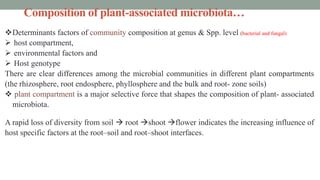
Determinants factors of community composition at genus & Spp. level (bacterial and fungal)
 host compartment,
 environmental factors and
 Host genotype
There are clear differences among the microbial communities in different plant compartments
(the rhizosphere, root endosphere, phyllosphere and the bulk and root- zone soils)
 plant compartment is a major selective force that shapes the composition of plant- associated
microbiota.
A rapid loss of diversity from soil  root shoot flower indicates the increasing influence of
host specific factors at the root–soil and root–shoot interfaces.
Composition of plant- associated microbiota…
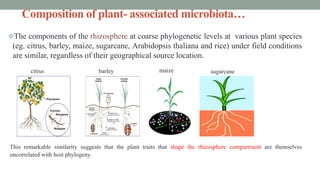
The components of the rhizosphere at coarse phylogenetic levels at various plant species
(eg. citrus, barley, maize, sugarcane, Arabidopsis thaliana and rice) under field conditions
are similar, regardless of their geographical source location.
This remarkable similarity suggests that the plant traits that shape the rhizosphere compartment are themselves
uncorrelated with host phylogeny.
citrus barley maize sugarcane
Composition of plant- associated microbiota…
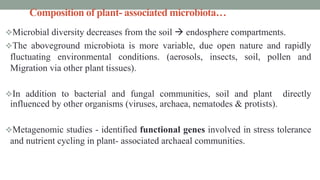
Microbial diversity decreases from the soil  endosphere compartments.
The aboveground microbiota is more variable, due open nature and rapidly
fluctuating environmental conditions. (aerosols, insects, soil, pollen and
Migration via other plant tissues).
In addition to bacterial and fungal communities, soil and plant directly
influenced by other organisms (viruses, archaea, nematodes & protists).
Metagenomic studies - identified functional genes involved in stress tolerance
and nutrient cycling in plant- associated archaeal communities.
The plant microbiome
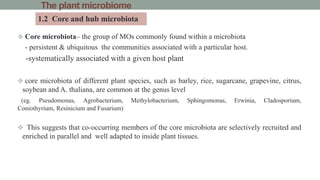
 Core microbiota– the group of MOs commonly found within a microbiota
- persistent & ubiquitous the communities associated with a particular host.
-systematically associated with a given host plant
 core microbiota of different plant species, such as barley, rice, sugarcane, grapevine, citrus,
soybean and A. thaliana, are common at the genus level
(eg. Pseudomonas, Agrobacterium, Methylobacterium, Sphingomonas, Erwinia, Cladosporium,
Coniothyrium, Resinicium and Fusarium)
 This suggests that co-occurring members of the core microbiota are selectively recruited and
enriched in parallel and well adapted to inside plant tissues.
1.2 Core and hub microbiota
Core and hub microbiota…
 Hub microorganisms- Microbial groups that are substantially more connected within a co-
occurrence network than other groups on the basis of centrality measurements, such as
degree, between-ness centrality and closeness centrality.
have a regulatory effect on the network of microbial interactions, as their removal results in
the loss of interactions.
 there abundance functioning carbohydrate metabolism and stress responses control to Host.
The plant microbiome
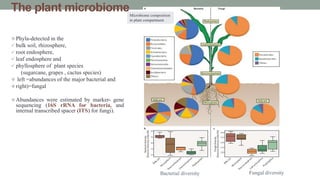
Phyla-detected in the
 bulk soil, rhizosphere,
 root endosphere,
 leaf endosphere and
 phyllosphere of plant species
(sugarcane, grapes , cactus species)
 left =abundances of the major bacterial and
right)=fungal
Abundances were estimated by marker- gene
sequencing (16S rRNA for bacteria, and
internal transcribed spacer (ITS) for fungi).
Bacterial diversity Fungal diversity
Microbiome composition
in plant compartment
The plant microbiome
 The assembly of a plant- associated microbiome is a successional, multistep process that is determined by
dispersal,
species interactions,
the environment and
 the host
Early colonizers could be transmitted vertically, via the parents, through seed transmission pathways.
seed-borne microorganisms  associated with aboveground plant tissues, whereas
soil-derived microorganisms mainly associated with the rhizosphere and roots.
The microbial composition of microbiomes highly dynamic in the early vegetative phase, begins to
converge throughout vegetative growth and stabilizes during the reproductive phase.
These microorganisms possess multiple traits,
for efficient colonization,
stress tolerance and
beneficial effects on the hosts
1.3 Dynamics of the plant- associated microbiome
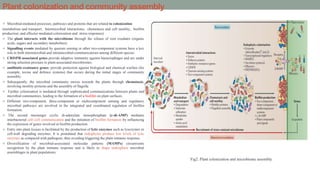
2. Plant colonization and community assembly
MOs use chemotaxis to sense & respond to plant- derived signals, (organic acids & sugars
present in plant exudates, and to initiate colonization (Fig. 2).
 Once a signal is perceived, move towards the plant primarily through the use of flagella.
Subsequently, attach to root surface and form a biofilm.
• Genes that encode proteins involved in
bacterial chemotaxis, flagella assembly, bacterial motility, biofilm formation, bacterial
secretion and
two-component regulatory systems are highly abundant in Mos and microbial communities
found in root , stem & phyllosphere environments, compared with bulk soil.
 After successful colonization, diverse host processes, such as the activation of plant
signalling pathways and nutrient- stress- mediated root inhibition alters the host root
architecture.
2.1 Plant sensing and the initiation of colonization
Plant colonization and community assembly
Plant metabolism generates chemically distinct environments.
Comparative genomic analysis- confirmed the trends of metagenome analysis towards positive
selection for genes involved in carbohydrate metabolism and transport and for transcriptional
regulators of these genes in the genomes of phylogenetically diverse plant- associated bacteria.
• Carbohydrate- active enzymes are shared between plant-associated bacteria and fungi, despite
large evolutionary distances.
2.2 Uptake of plant metabolites
Uptake of plant metabolites…
 Siderophores-small, high-affinity iron-chelating compounds that are secreted by
microorganisms such as bacteria and fungi.
serve primarily to transport iron across cell membranes
scavenge iron from the Environment & make the element available to microbial
cells & a plant host.
iron biogeochemical cycling in soils,
pathogen competition,
plant growth promotion and cross- kingdom signaling.
Siderophores- producing gene clusters were enriched in the rhizosphere of barley,
citrus and grapes compared with the bulk soil.
Metagenomics analysis further revealed enrichment of siderophore- producing
genes in the endosphere.
Plant colonization and community assembly
 Microbial-mediated processes, pathways and proteins that are related to colonization
(metabolism and transport; Intermicrobial interactions; chemotaxis and cell motility; biofilm
production; and effector-mediated colonization and stress responses)
 The plant interacts with the microbiome through the release of root exudates (organic
acids, sugars and secondary metabolites) .
 Signalling events mediated by quorum sensing or other two-component systems have a key
role in both intermicrobial and intramicrobial communications among different species
 CRISPR-associated genes provide adaptive immunity against bacteriophages and are under
strong selection pressure in plant-associated microbiomes.
 antibiotic-resistance genes- provide protection against biological and chemical warfare (for
example, toxins and defence systems) that occurs during the initial stages of community
assembly.
 Subsequently, the microbial community moves towards the plants through chemotaxis,
involving motility proteins and the assembly of flagella.
 Further colonization is mediated through sophisticated communications between plants and
microbial communities, leading to the formation of a biofilm on plant surfaces.
 Different two-component, three-component or multicomponent sensing and regulatory
microbial pathways are involved in the integrated and coordinated regulation of biofilm
formation.
 The second messenger cyclic di-adenylate monophosphate (c-di-AMP) mediates
interbacterial cell–cell communication and the initiation of biofilm formation by influencing
the expression of genes involved in biofilm production.
 Entry into plant tissues is facilitated by the production of lytic enzymes such as lysozymes or
cell-wall degrading enzymes. It is postulated that endophytes produce low levels of lytic
enzymes as compared with pathogens, thus avoiding triggering the plant immune response.
 Diversification of microbial-associated molecular patterns (MAMPs) circumvents
recognition by the plant immune response and is likely to shape endosphere microbial
assemblages in plant populations.
Fig2. Plant colonization and microbiome assembly.
Plant colonization and community assembly
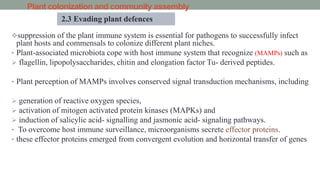
suppression of the plant immune system is essential for pathogens to successfully infect
plant hosts and commensals to colonize different plant niches.
• Plant-associated microbiota cope with host immune system that recognize (MAMPs) such as
 flagellin, lipopolysaccharides, chitin and elongation factor Tu- derived peptides.
• Plant perception of MAMPs involves conserved signal transduction mechanisms, including
 generation of reactive oxygen species,
 activation of mitogen activated protein kinases (MAPKs) and
 induction of salicylic acid- signalling and jasmonic acid- signaling pathways.
• To overcome host immune surveillance, microorganisms secrete effector proteins.
• these effector proteins emerged from convergent evolution and horizontal transfer of genes
2.3 Evading plant defences
Plant colonization and community assembly
• several microbial genes active/enriched in plant e’vts have a role in cooperative
/competitive interactions with other members of microbiome
• The genomes of plant-associated bacteria encode interspecific and intraspecific bacteria-
killing mechanisms(e.g production of antibiotics), through which distribution, abundance
and diversity of other microbial groups within the plant host occurs.
• Specific functional traits related to pathogen suppression (for example, protein secretion
systems and biosynthesis genes for antifungal compounds) are more abundant in the
bacterial rhizosphere community of disease- resistant varieties of bean and tomato.
• Pathogen- induced activation of chitinase genes and various unknown biosynthetic gene
clusters encoding non-ribosomal peptide synthetases (NRPSs) and polyketide synthases
(PKSs) is responsible for disease- suppressive functions in the endophytic root microbiome.
2.4 Microbial interactions
Microbial interactions…
 Quorum sensing- mechanism of bacterial cell-to-cell communication that involves the
production and sensing of signaling molecules (such as homoserine lactone (HSL)).
• The perception of HSLs by plants leads to
 modulation of plant metabolism,
immune response and
root development
detect and respond to cell population density by gene regulation
 Different bacterial taxa can generate the same type of signaling molecule, which
enables either cooperation or interference (quorum quenching) with unrelated taxa.
3. Functions of plant- associated microbiomes
 essential for improving plant nutrition.
 enhance bioavailability of insoluble minerals
improve the root system architecture of host plants,  increasing the capacity of the
root for water and minerals.
 Conservation of nutrients that differentiate exploitative (fast- growing) vs
conservative (slow- growing) plant species
effective conversion of organic N2 into nitrate and ammonium by the indica- enriched
microbiome may contribute to higher N2 use efficiency in indica rice. (Oryza indica
than of Oryza japonica varieties).
3.1 Nutrient acquisition
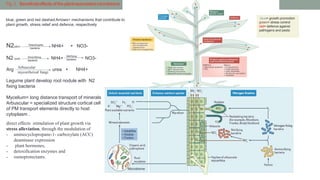
Fig.3 Beneficialeffectsoftheplant-associatedmicrobiome
blue= growth promotion
green= stress control
red= defence against
pathogens and pests
blue, green and red dashed Arrows= mechanisms that contribute to
plant growth, stress relief and defence, respectively
N2(atm) NH4+ + NO3-
N2 (soil) NH4+ NO3-
Arg urea + NH4+
Legume plant develop root nodule with N2
fixing bacteria
Mycelium= long distance transport of minerals
Arbuscular = specialized structure cortical cell
of PM transport elements directly to host
cytoplasm .
Diazotrophic
bacteria
Amonifying
bacteria
Nitrifying
bacteria
Microbiome
Arbuscular
mycorrhzizal fungi
direct effects stimulation of plant growth via
stress alleviation, through the modulation of
- aminocyclopropane-1- carboxylate (ACC)
deaminase expression
- plant hormones,
- detoxification enzymes and
- osmoprotectants.
Functions of plant- associated microbiomes
 plant root exudates stimulate, enrich and support soil MOs as the 1st line of defence against
soil- borne pathogens
 provide extra layer of defense by enriching microbiome members to generate antimicrobial
enzymes & 2nd metabolites against pathogen.
The abundances of Actinobacteria and Firmicutes used as predictive markers of disease-
suppressive soils against Fusarium oxysporum.
3.2 Disease resistance
Functions of plant- associated microbiomes
 modify plant evolutionary responses to environmental stress in at least three non- mutually-
exclusive pathways: by
altering the fitness of individual plant genotypes,
the expression of plant traits related to fitness, and
the strength or direction of natural selection occurring within populations.
 recent studies have shown that naturally occurring and artificial variation in the microbiome
can alter plant flowering time 1–5 days.
• early flowering a potential mechanism of drought avoidance.
fungal endophytes, stress tolerance predicted 26–53% of the endophyte- mediated effects on
plant performance under water stress.
3.3 Stress tolerance
Research Gap from this review
Similarly to breeding, the plant microbiota may affect the plant phenotype. BUT
 there is a critical knowledge gap concerning the shape and drivers of other fractions
of the plant microbiome (for example, viruses, archaea, protists and nematodes)
Although bacterial and fungal lineages contribute majority of the plant- associated
microbiome abundance,
Although the optimization of SynComs is rapidly advancing, crop- breeding
programmes have not yet incorporated the selection of beneficial plant–
microorganism interactions in order to breed ‘microorganism- optimized’ plants.
5. Conclusions
 Recently , plant–microbiome research have cross- disciplinary (multi-‘omics’, engineering,
experimental & computational biology and statistics to generate quantitative insights into
plant–microbiome interactions.
GWASs and metagenome- wide association studies have identified key drivers that influence
the
 assembly of plant- associated microbiota and
 linked individual microbial taxa and
 genes to plant colonization,
 plant physiology and
 traits related to plant fitness.
 Plant- associated microbiomes confer fitness advantages to the plant host, including growth
promotion, nutrient uptake, stress tolerance and resistance to pathogens.
Plant microbe interaction review ppt

Plant microbe interaction review ppt

  • 1.
    Presented by: Mesele TilahunBelete (Integ.2ndyear) Advisor:MoonJae Sun Mar 25, 2021 KRISS,UST, S.Korea
  • 2.
    Contents 1. The plantmicrobiome 1.1 Composition of plant- associated microbiota 1.2 Core and hub microbiota 1.3 Dynamics of the plant- associated microbiome 2. Plant colonization and community assembly 2.1 Plant sensing and the initiation of colonization 2.2 Uptake of plant metabolites 2.3 Evading plant defences 2.4 Microbial interactions 3. Functions of plant- associated microbiomes 3.1 Nutrient acquisition 3.2 Disease resistance 3.3 Stress tolerance 5. Conclusion
  • 3.
    1. The plantmicrobiome 1.1 Composition of plant- associated microbiota  Community composition between the rhizosphere, endophytes and the phyllo sphere.  Rhizosphere: The region of soil in the vicinity of plant roots  Endophytes: microorganisms residing within plant tissues (endosphere) -Enriched in members of the Proteobacteria and Firmicutes -Lesser extent in Bacteroidetes (Acidobacteria,Planctomycetes,Chloroflexi & Verrucomicrobia)  Phyllosphere: All the aboveground organs of plants (leaf, flower, stem and fruit). -mainly comprises bacteria belonging to phylum Proteobacteria (constitute ~50%) Bacteroidetes, Firmicutes and Actinomycetes -The vast diversity of fungi that colonize both aboveground and belowground plant tissues mainly belong to the phyla Ascomycota and Basidiomycota (Fig. 1).
  • 4.
    Composition of plant-associatedmicrobiota… Determinants factors of community composition at genus & Spp. level (bacterial and fungal)  host compartment,  environmental factors and  Host genotype There are clear differences among the microbial communities in different plant compartments (the rhizosphere, root endosphere, phyllosphere and the bulk and root- zone soils)  plant compartment is a major selective force that shapes the composition of plant- associated microbiota. A rapid loss of diversity from soil  root shoot flower indicates the increasing influence of host specific factors at the root–soil and root–shoot interfaces.
  • 5.
    Composition of plant-associated microbiota… The components of the rhizosphere at coarse phylogenetic levels at various plant species (eg. citrus, barley, maize, sugarcane, Arabidopsis thaliana and rice) under field conditions are similar, regardless of their geographical source location. This remarkable similarity suggests that the plant traits that shape the rhizosphere compartment are themselves uncorrelated with host phylogeny. citrus barley maize sugarcane
  • 6.
    Composition of plant-associated microbiota… Microbial diversity decreases from the soil  endosphere compartments. The aboveground microbiota is more variable, due open nature and rapidly fluctuating environmental conditions. (aerosols, insects, soil, pollen and Migration via other plant tissues). In addition to bacterial and fungal communities, soil and plant directly influenced by other organisms (viruses, archaea, nematodes & protists). Metagenomic studies - identified functional genes involved in stress tolerance and nutrient cycling in plant- associated archaeal communities.
  • 7.
    The plant microbiome Core microbiota– the group of MOs commonly found within a microbiota - persistent & ubiquitous the communities associated with a particular host. -systematically associated with a given host plant  core microbiota of different plant species, such as barley, rice, sugarcane, grapevine, citrus, soybean and A. thaliana, are common at the genus level (eg. Pseudomonas, Agrobacterium, Methylobacterium, Sphingomonas, Erwinia, Cladosporium, Coniothyrium, Resinicium and Fusarium)  This suggests that co-occurring members of the core microbiota are selectively recruited and enriched in parallel and well adapted to inside plant tissues. 1.2 Core and hub microbiota
  • 8.
    Core and hubmicrobiota…  Hub microorganisms- Microbial groups that are substantially more connected within a co- occurrence network than other groups on the basis of centrality measurements, such as degree, between-ness centrality and closeness centrality. have a regulatory effect on the network of microbial interactions, as their removal results in the loss of interactions.  there abundance functioning carbohydrate metabolism and stress responses control to Host.
  • 9.
    The plant microbiome Phyla-detectedin the  bulk soil, rhizosphere,  root endosphere,  leaf endosphere and  phyllosphere of plant species (sugarcane, grapes , cactus species)  left =abundances of the major bacterial and right)=fungal Abundances were estimated by marker- gene sequencing (16S rRNA for bacteria, and internal transcribed spacer (ITS) for fungi). Bacterial diversity Fungal diversity Microbiome composition in plant compartment
  • 10.
    The plant microbiome The assembly of a plant- associated microbiome is a successional, multistep process that is determined by dispersal, species interactions, the environment and  the host Early colonizers could be transmitted vertically, via the parents, through seed transmission pathways. seed-borne microorganisms  associated with aboveground plant tissues, whereas soil-derived microorganisms mainly associated with the rhizosphere and roots. The microbial composition of microbiomes highly dynamic in the early vegetative phase, begins to converge throughout vegetative growth and stabilizes during the reproductive phase. These microorganisms possess multiple traits, for efficient colonization, stress tolerance and beneficial effects on the hosts 1.3 Dynamics of the plant- associated microbiome
  • 11.
    2. Plant colonizationand community assembly MOs use chemotaxis to sense & respond to plant- derived signals, (organic acids & sugars present in plant exudates, and to initiate colonization (Fig. 2).  Once a signal is perceived, move towards the plant primarily through the use of flagella. Subsequently, attach to root surface and form a biofilm. • Genes that encode proteins involved in bacterial chemotaxis, flagella assembly, bacterial motility, biofilm formation, bacterial secretion and two-component regulatory systems are highly abundant in Mos and microbial communities found in root , stem & phyllosphere environments, compared with bulk soil.  After successful colonization, diverse host processes, such as the activation of plant signalling pathways and nutrient- stress- mediated root inhibition alters the host root architecture. 2.1 Plant sensing and the initiation of colonization
  • 12.
    Plant colonization andcommunity assembly Plant metabolism generates chemically distinct environments. Comparative genomic analysis- confirmed the trends of metagenome analysis towards positive selection for genes involved in carbohydrate metabolism and transport and for transcriptional regulators of these genes in the genomes of phylogenetically diverse plant- associated bacteria. • Carbohydrate- active enzymes are shared between plant-associated bacteria and fungi, despite large evolutionary distances. 2.2 Uptake of plant metabolites
  • 13.
    Uptake of plantmetabolites…  Siderophores-small, high-affinity iron-chelating compounds that are secreted by microorganisms such as bacteria and fungi. serve primarily to transport iron across cell membranes scavenge iron from the Environment & make the element available to microbial cells & a plant host. iron biogeochemical cycling in soils, pathogen competition, plant growth promotion and cross- kingdom signaling. Siderophores- producing gene clusters were enriched in the rhizosphere of barley, citrus and grapes compared with the bulk soil. Metagenomics analysis further revealed enrichment of siderophore- producing genes in the endosphere.
  • 14.
    Plant colonization andcommunity assembly  Microbial-mediated processes, pathways and proteins that are related to colonization (metabolism and transport; Intermicrobial interactions; chemotaxis and cell motility; biofilm production; and effector-mediated colonization and stress responses)  The plant interacts with the microbiome through the release of root exudates (organic acids, sugars and secondary metabolites) .  Signalling events mediated by quorum sensing or other two-component systems have a key role in both intermicrobial and intramicrobial communications among different species  CRISPR-associated genes provide adaptive immunity against bacteriophages and are under strong selection pressure in plant-associated microbiomes.  antibiotic-resistance genes- provide protection against biological and chemical warfare (for example, toxins and defence systems) that occurs during the initial stages of community assembly.  Subsequently, the microbial community moves towards the plants through chemotaxis, involving motility proteins and the assembly of flagella.  Further colonization is mediated through sophisticated communications between plants and microbial communities, leading to the formation of a biofilm on plant surfaces.  Different two-component, three-component or multicomponent sensing and regulatory microbial pathways are involved in the integrated and coordinated regulation of biofilm formation.  The second messenger cyclic di-adenylate monophosphate (c-di-AMP) mediates interbacterial cell–cell communication and the initiation of biofilm formation by influencing the expression of genes involved in biofilm production.  Entry into plant tissues is facilitated by the production of lytic enzymes such as lysozymes or cell-wall degrading enzymes. It is postulated that endophytes produce low levels of lytic enzymes as compared with pathogens, thus avoiding triggering the plant immune response.  Diversification of microbial-associated molecular patterns (MAMPs) circumvents recognition by the plant immune response and is likely to shape endosphere microbial assemblages in plant populations. Fig2. Plant colonization and microbiome assembly.
  • 15.
    Plant colonization andcommunity assembly suppression of the plant immune system is essential for pathogens to successfully infect plant hosts and commensals to colonize different plant niches. • Plant-associated microbiota cope with host immune system that recognize (MAMPs) such as  flagellin, lipopolysaccharides, chitin and elongation factor Tu- derived peptides. • Plant perception of MAMPs involves conserved signal transduction mechanisms, including  generation of reactive oxygen species,  activation of mitogen activated protein kinases (MAPKs) and  induction of salicylic acid- signalling and jasmonic acid- signaling pathways. • To overcome host immune surveillance, microorganisms secrete effector proteins. • these effector proteins emerged from convergent evolution and horizontal transfer of genes 2.3 Evading plant defences
  • 16.
    Plant colonization andcommunity assembly • several microbial genes active/enriched in plant e’vts have a role in cooperative /competitive interactions with other members of microbiome • The genomes of plant-associated bacteria encode interspecific and intraspecific bacteria- killing mechanisms(e.g production of antibiotics), through which distribution, abundance and diversity of other microbial groups within the plant host occurs. • Specific functional traits related to pathogen suppression (for example, protein secretion systems and biosynthesis genes for antifungal compounds) are more abundant in the bacterial rhizosphere community of disease- resistant varieties of bean and tomato. • Pathogen- induced activation of chitinase genes and various unknown biosynthetic gene clusters encoding non-ribosomal peptide synthetases (NRPSs) and polyketide synthases (PKSs) is responsible for disease- suppressive functions in the endophytic root microbiome. 2.4 Microbial interactions
  • 17.
    Microbial interactions…  Quorumsensing- mechanism of bacterial cell-to-cell communication that involves the production and sensing of signaling molecules (such as homoserine lactone (HSL)). • The perception of HSLs by plants leads to  modulation of plant metabolism, immune response and root development detect and respond to cell population density by gene regulation  Different bacterial taxa can generate the same type of signaling molecule, which enables either cooperation or interference (quorum quenching) with unrelated taxa.
  • 18.
    3. Functions ofplant- associated microbiomes  essential for improving plant nutrition.  enhance bioavailability of insoluble minerals improve the root system architecture of host plants,  increasing the capacity of the root for water and minerals.  Conservation of nutrients that differentiate exploitative (fast- growing) vs conservative (slow- growing) plant species effective conversion of organic N2 into nitrate and ammonium by the indica- enriched microbiome may contribute to higher N2 use efficiency in indica rice. (Oryza indica than of Oryza japonica varieties). 3.1 Nutrient acquisition
  • 19.
    Fig.3 Beneficialeffectsoftheplant-associatedmicrobiome blue= growthpromotion green= stress control red= defence against pathogens and pests blue, green and red dashed Arrows= mechanisms that contribute to plant growth, stress relief and defence, respectively N2(atm) NH4+ + NO3- N2 (soil) NH4+ NO3- Arg urea + NH4+ Legume plant develop root nodule with N2 fixing bacteria Mycelium= long distance transport of minerals Arbuscular = specialized structure cortical cell of PM transport elements directly to host cytoplasm . Diazotrophic bacteria Amonifying bacteria Nitrifying bacteria Microbiome Arbuscular mycorrhzizal fungi direct effects stimulation of plant growth via stress alleviation, through the modulation of - aminocyclopropane-1- carboxylate (ACC) deaminase expression - plant hormones, - detoxification enzymes and - osmoprotectants.
  • 20.
    Functions of plant-associated microbiomes  plant root exudates stimulate, enrich and support soil MOs as the 1st line of defence against soil- borne pathogens  provide extra layer of defense by enriching microbiome members to generate antimicrobial enzymes & 2nd metabolites against pathogen. The abundances of Actinobacteria and Firmicutes used as predictive markers of disease- suppressive soils against Fusarium oxysporum. 3.2 Disease resistance
  • 21.
    Functions of plant-associated microbiomes  modify plant evolutionary responses to environmental stress in at least three non- mutually- exclusive pathways: by altering the fitness of individual plant genotypes, the expression of plant traits related to fitness, and the strength or direction of natural selection occurring within populations.  recent studies have shown that naturally occurring and artificial variation in the microbiome can alter plant flowering time 1–5 days. • early flowering a potential mechanism of drought avoidance. fungal endophytes, stress tolerance predicted 26–53% of the endophyte- mediated effects on plant performance under water stress. 3.3 Stress tolerance
  • 22.
    Research Gap fromthis review Similarly to breeding, the plant microbiota may affect the plant phenotype. BUT  there is a critical knowledge gap concerning the shape and drivers of other fractions of the plant microbiome (for example, viruses, archaea, protists and nematodes) Although bacterial and fungal lineages contribute majority of the plant- associated microbiome abundance, Although the optimization of SynComs is rapidly advancing, crop- breeding programmes have not yet incorporated the selection of beneficial plant– microorganism interactions in order to breed ‘microorganism- optimized’ plants.
  • 23.
    5. Conclusions  Recently, plant–microbiome research have cross- disciplinary (multi-‘omics’, engineering, experimental & computational biology and statistics to generate quantitative insights into plant–microbiome interactions. GWASs and metagenome- wide association studies have identified key drivers that influence the  assembly of plant- associated microbiota and  linked individual microbial taxa and  genes to plant colonization,  plant physiology and  traits related to plant fitness.  Plant- associated microbiomes confer fitness advantages to the plant host, including growth promotion, nutrient uptake, stress tolerance and resistance to pathogens.