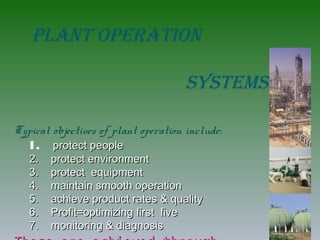
PLANT OPERATION
sysTEms
Typical objectives of plant operation include:
1. protect peopleprotect people
2. protect environment2. protect environment
3. protect equipment3. protect equipment
4. maintain smooth operation4. maintain smooth operation
5. achieve product rates & quality5. achieve product rates & quality
6. Profit=optimizing first five6. Profit=optimizing first five
7. monitoring & diagnosis7. monitoring & diagnosis
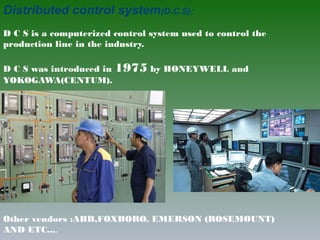
Distributed control system(D.C.S):
D C S is a computerized control system used to control the
production line in the industry.
D C S was introduced in 1975 by HONEYWELL and
YOKOGAWA(CENTUM).
Other vendors :ABB,FOXBORO, EMERSON (ROSEMOUNT)
AND ETC..,.
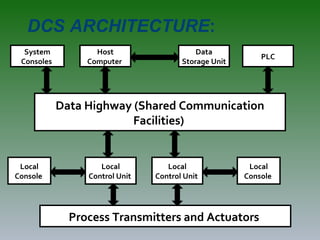
DCS ARCHITECTURE:
System
Consoles
Host
Computer
Data
Storage Unit
PLC
Data Highway (Shared Communication
Facilities)
Process Transmitters and Actuators
Local
Console
Local
Control Unit
Local
Control Unit
Local
Console
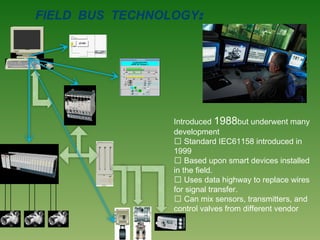
FIELD BUS TECHNOLOGY:
Introduced 1988but underwent many
development
 Standard IEC61158 introduced in
1999
 Based upon smart devices installed
in the field.
 Uses data highway to replace wires
for signal transfer.
 Can mix sensors, transmitters, and
control valves from different vendor
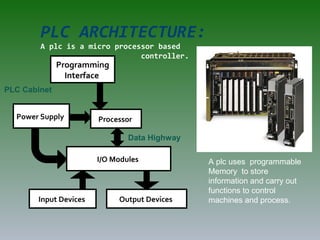
PLC ARCHITECTURE:
A plc is a micro processor based
controller.
Programming
Interface
Power Supply
Input Devices
I/O Modules
Output Devices
Processor
PLC Cabinet
Data Highway
A plc uses programmable
Memory to store
information and carry out
functions to control
machines and process.
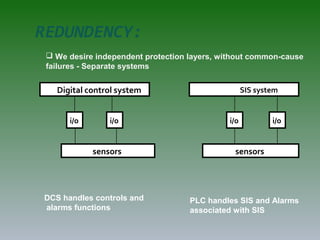
REDUNDENCY:
Digital control system
sensorssensors
SIS system
i/o i/o i/oi/o
 We desire independent protection layers, without common-cause
failures - Separate systems
DCS handles controls and
alarms functions
PLC handles SIS and Alarms
associated with SIS
INPUTS:
These are typically “switches”
and “sensors”. The switches and sensors are
connected to an input module that provides
the interface between the switches (or)
sensors to the PLC.
OUTPUTS:
The plc output are connected
directly or indirectly(eg: Through relay) to
actuator controls. Eg: “solenoid valves” and
warning lights.
There are three main types of output
modules:-
1. RELAY
2. TRANSISTOR
APPLICATIONS:
 * Pneumatic machines.
 * Hydraulic machines.
 * Robots.
 * Production process.
 * Packaging lines.
 * Traffic lights & signalling systems.
 * Refining processes.
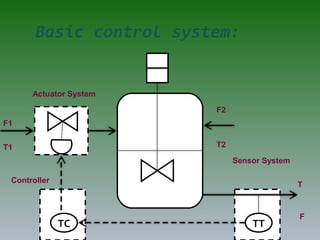
Basic control system:
TC TT
Actuator System
Sensor System
Controller
F1
T1
F2
T2
T
F
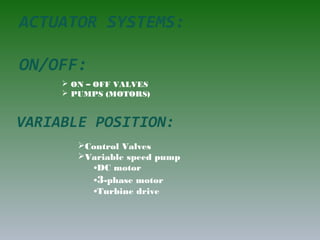
ACTUATOR SYSTEMS:
ON/OFF:
 ON – OFF VALVES
 PUMPS (MOTORS)
VARIABLE POSITION:
Control Valves
Variable speed pump
•DC motor
•3-phase motor
•Turbine drive
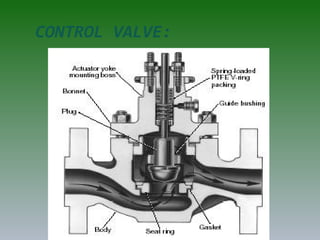
CONTROL VALVE:
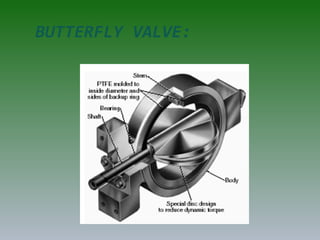
BUTTERFLY VALVE:
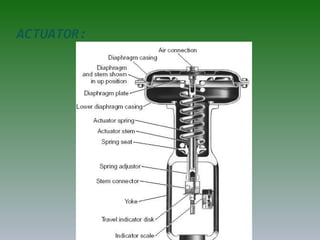
ACTUATOR:
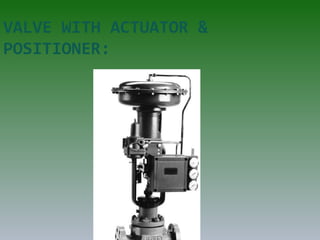
VALVE WITH ACTUATOR &
POSITIONER:
THANKYOU
 BY: MANIROOP.B
 15345A0428


Plant operation systems

  • 1.
    PLANT OPERATION sysTEms Typical objectivesof plant operation include: 1. protect peopleprotect people 2. protect environment2. protect environment 3. protect equipment3. protect equipment 4. maintain smooth operation4. maintain smooth operation 5. achieve product rates & quality5. achieve product rates & quality 6. Profit=optimizing first five6. Profit=optimizing first five 7. monitoring & diagnosis7. monitoring & diagnosis
  • 2.
    Distributed control system(D.C.S): DC S is a computerized control system used to control the production line in the industry. D C S was introduced in 1975 by HONEYWELL and YOKOGAWA(CENTUM). Other vendors :ABB,FOXBORO, EMERSON (ROSEMOUNT) AND ETC..,.
  • 3.
    DCS ARCHITECTURE: System Consoles Host Computer Data Storage Unit PLC DataHighway (Shared Communication Facilities) Process Transmitters and Actuators Local Console Local Control Unit Local Control Unit Local Console
  • 4.
    FIELD BUS TECHNOLOGY: Introduced1988but underwent many development  Standard IEC61158 introduced in 1999  Based upon smart devices installed in the field.  Uses data highway to replace wires for signal transfer.  Can mix sensors, transmitters, and control valves from different vendor
  • 5.
    PLC ARCHITECTURE: A plcis a micro processor based controller. Programming Interface Power Supply Input Devices I/O Modules Output Devices Processor PLC Cabinet Data Highway A plc uses programmable Memory to store information and carry out functions to control machines and process.
  • 6.
    REDUNDENCY: Digital control system sensorssensors SISsystem i/o i/o i/oi/o  We desire independent protection layers, without common-cause failures - Separate systems DCS handles controls and alarms functions PLC handles SIS and Alarms associated with SIS
  • 7.
    INPUTS: These are typically“switches” and “sensors”. The switches and sensors are connected to an input module that provides the interface between the switches (or) sensors to the PLC. OUTPUTS: The plc output are connected directly or indirectly(eg: Through relay) to actuator controls. Eg: “solenoid valves” and warning lights. There are three main types of output modules:- 1. RELAY 2. TRANSISTOR
  • 8.
    APPLICATIONS:  * Pneumaticmachines.  * Hydraulic machines.  * Robots.  * Production process.  * Packaging lines.  * Traffic lights & signalling systems.  * Refining processes.
  • 9.
    Basic control system: TCTT Actuator System Sensor System Controller F1 T1 F2 T2 T F
  • 10.
    ACTUATOR SYSTEMS: ON/OFF:  ON– OFF VALVES  PUMPS (MOTORS) VARIABLE POSITION: Control Valves Variable speed pump •DC motor •3-phase motor •Turbine drive
  • 11.
  • 12.
  • 13.
  • 14.
    VALVE WITH ACTUATOR& POSITIONER:
  • 15.