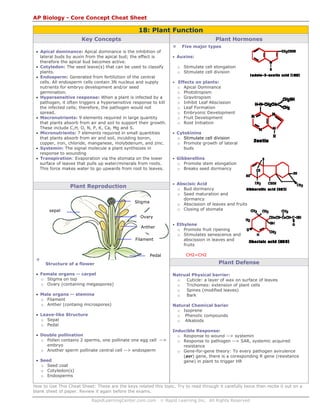
AP Biology - Core Concept Cheat Sheet

18: Plant Function
Key Concepts

Plant Hormones
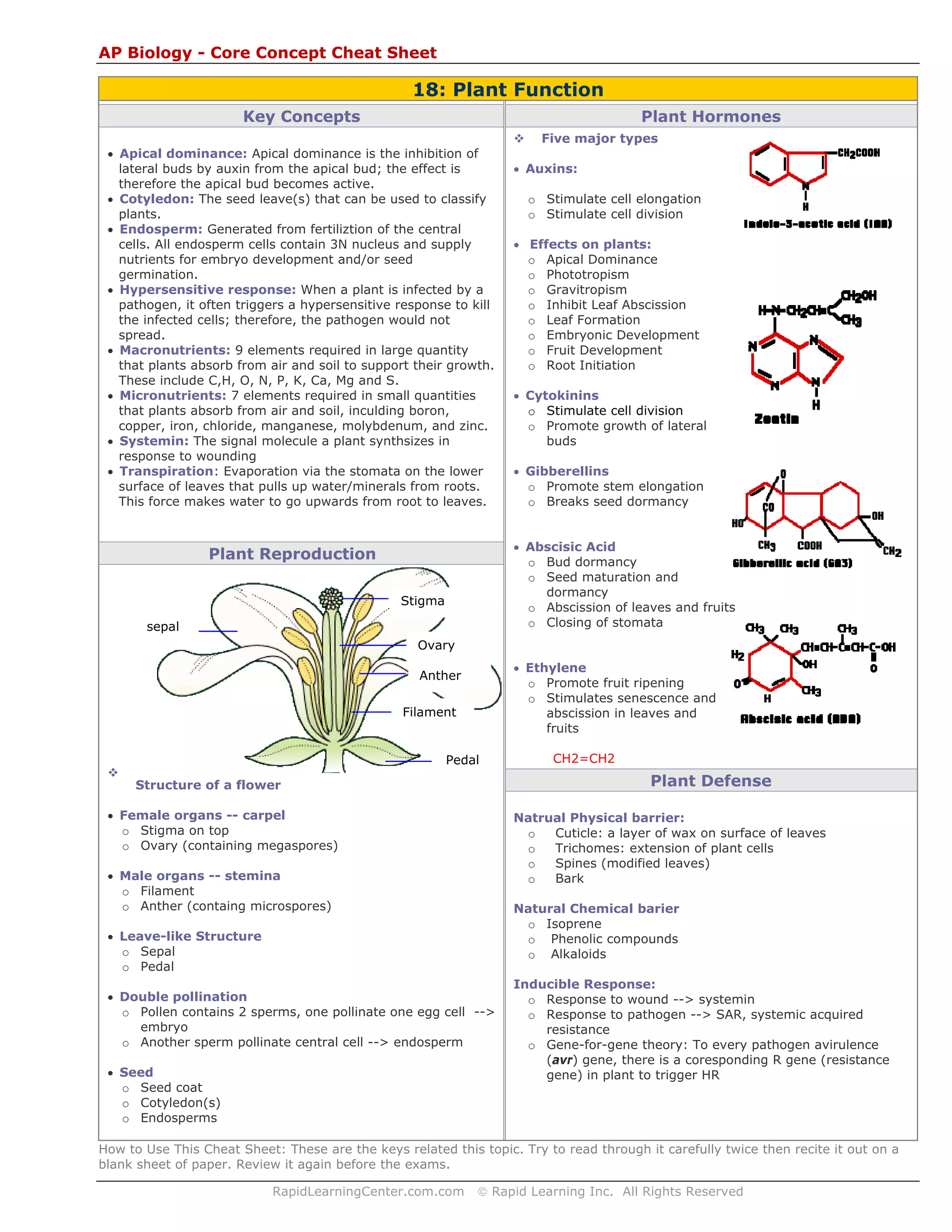
Five major types

• Apical dominance: Apical dominance is the inhibition of
lateral buds by auxin from the apical bud; the effect is
therefore the apical bud becomes active.
• Cotyledon: The seed leave(s) that can be used to classify
plants.
• Endosperm: Generated from fertiliztion of the central
cells. All endosperm cells contain 3N nucleus and supply
nutrients for embryo development and/or seed
germination.
• Hypersensitive response: When a plant is infected by a
pathogen, it often triggers a hypersensitive response to kill
the infected cells; therefore, the pathogen would not
spread.
• Macronutrients: 9 elements required in large quantity
that plants absorb from air and soil to support their growth.
These include C,H, O, N, P, K, Ca, Mg and S.
• Micronutrients: 7 elements required in small quantities
that plants absorb from air and soil, inculding boron,
copper, iron, chloride, manganese, molybdenum, and zinc.
• Systemin: The signal molecule a plant synthsizes in
response to wounding
• Transpiration: Evaporation via the stomata on the lower
surface of leaves that pulls up water/minerals from roots.
This force makes water to go upwards from root to leaves.

• Auxins:
o Stimulate cell elongation
o Stimulate cell division
• Effects on plants:
o Apical Dominance
o Phototropism
o Gravitropism
o Inhibit Leaf Abscission
o Leaf Formation
o Embryonic Development
o Fruit Development
o Root Initiation
• Cytokinins
o Stimulate cell division
o Promote growth of lateral
buds
• Gibberellins
o Promote stem elongation
o Breaks seed dormancy
• Abscisic Acid
o Bud dormancy
o Seed maturation and
dormancy
o Abscission of leaves and fruits
o Closing of stomata

Plant Reproduction
Stigma
sepal
Ovary

• Ethylene
o Promote fruit ripening
o Stimulates senescence and
abscission in leaves and
fruits

Anther
Filament

Pedal

Plant Defense

Structure of a flower
• Female organs -- carpel
o Stigma on top
o Ovary (containing megaspores)

Natrual Physical barrier:
o
Cuticle: a layer of wax on surface of leaves
o
Trichomes: extension of plant cells
o
Spines (modified leaves)
o
Bark

• Male organs -- stemina
o Filament
o Anther (containg microspores)

Natural Chemical barier
o Isoprene
o Phenolic compounds
o Alkaloids

• Leave-like Structure
o Sepal
o Pedal
• Double pollination
o Pollen contains 2 sperms, one pollinate one egg cell -->
embryo
o Another sperm pollinate central cell --> endosperm
• Seed
o Seed coat
o Cotyledon(s)
o Endosperms

CH2=CH2

Inducible Response:
o Response to wound --> systemin
o Response to pathogen --> SAR, systemic acquired
resistance
o Gene-for-gene theory: To every pathogen avirulence
(avr) gene, there is a coresponding R gene (resistance
gene) in plant to trigger HR

How to Use This Cheat Sheet: These are the keys related this topic. Try to read through it carefully twice then recite it out on a
blank sheet of paper. Review it again before the exams.
RapidLearningCenter.com.com

© Rapid Learning Inc. All Rights Reserved

Plant function cheat sheet

  • 1.
    AP Biology -Core Concept Cheat Sheet 18: Plant Function Key Concepts Plant Hormones Five major types • Apical dominance: Apical dominance is the inhibition of lateral buds by auxin from the apical bud; the effect is therefore the apical bud becomes active. • Cotyledon: The seed leave(s) that can be used to classify plants. • Endosperm: Generated from fertiliztion of the central cells. All endosperm cells contain 3N nucleus and supply nutrients for embryo development and/or seed germination. • Hypersensitive response: When a plant is infected by a pathogen, it often triggers a hypersensitive response to kill the infected cells; therefore, the pathogen would not spread. • Macronutrients: 9 elements required in large quantity that plants absorb from air and soil to support their growth. These include C,H, O, N, P, K, Ca, Mg and S. • Micronutrients: 7 elements required in small quantities that plants absorb from air and soil, inculding boron, copper, iron, chloride, manganese, molybdenum, and zinc. • Systemin: The signal molecule a plant synthsizes in response to wounding • Transpiration: Evaporation via the stomata on the lower surface of leaves that pulls up water/minerals from roots. This force makes water to go upwards from root to leaves. • Auxins: o Stimulate cell elongation o Stimulate cell division • Effects on plants: o Apical Dominance o Phototropism o Gravitropism o Inhibit Leaf Abscission o Leaf Formation o Embryonic Development o Fruit Development o Root Initiation • Cytokinins o Stimulate cell division o Promote growth of lateral buds • Gibberellins o Promote stem elongation o Breaks seed dormancy • Abscisic Acid o Bud dormancy o Seed maturation and dormancy o Abscission of leaves and fruits o Closing of stomata Plant Reproduction Stigma sepal Ovary • Ethylene o Promote fruit ripening o Stimulates senescence and abscission in leaves and fruits Anther Filament Pedal Plant Defense Structure of a flower • Female organs -- carpel o Stigma on top o Ovary (containing megaspores) Natrual Physical barrier: o Cuticle: a layer of wax on surface of leaves o Trichomes: extension of plant cells o Spines (modified leaves) o Bark • Male organs -- stemina o Filament o Anther (containg microspores) Natural Chemical barier o Isoprene o Phenolic compounds o Alkaloids • Leave-like Structure o Sepal o Pedal • Double pollination o Pollen contains 2 sperms, one pollinate one egg cell --> embryo o Another sperm pollinate central cell --> endosperm • Seed o Seed coat o Cotyledon(s) o Endosperms CH2=CH2 Inducible Response: o Response to wound --> systemin o Response to pathogen --> SAR, systemic acquired resistance o Gene-for-gene theory: To every pathogen avirulence (avr) gene, there is a coresponding R gene (resistance gene) in plant to trigger HR How to Use This Cheat Sheet: These are the keys related this topic. Try to read through it carefully twice then recite it out on a blank sheet of paper. Review it again before the exams. RapidLearningCenter.com.com © Rapid Learning Inc. All Rights Reserved