Planning
INDEX:
Definition
 “The relevant information from the past and the
present and the assignment of the probable future
development so that a course of action may be
determined to enable the organization to meet its
objectives”.
Henry Sick.
 “ Planning is deciding in advance what is to be
done”
W.H. Newman.
Planning
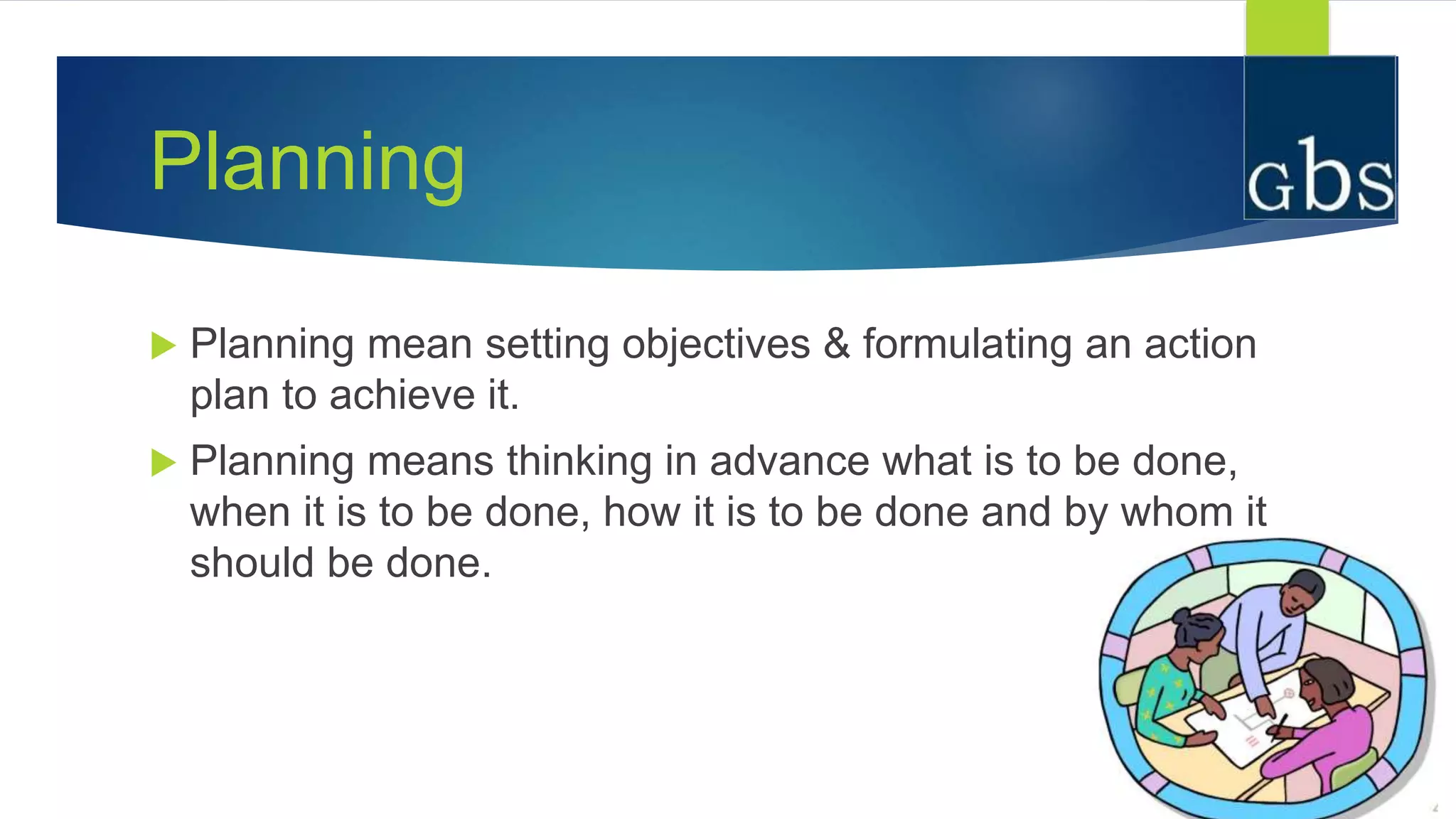
 Planning mean setting objectives & formulating an action
plan to achieve it.
 Planning means thinking in advance what is to be done,
when it is to be done, how it is to be done and by whom it
should be done.
What is planning?
 Planning
Defining the organization’s goals
Establishing an overall strategy for achieving those
goals
Developing a comprehensive set of plans to integrate
and coordinate organizational work.
Features
 Planning is primary function: no other function can be
performed without planning.
 Focus on achieving objectives: Determines goals & objectives
of firm.
 Planning is continuous-process: Never ending process.
 Planning is pervasive: At every level(Top, middle, lower).
 Planning is futuristic: Never done for past.
 Planning involves decision making: No alternative no planning.
Importance
 Facing complexities of modern business.
 Face competition in the market.
 Forewarn against business failures.
 Technological changes.
 Attention on objectives.
 Better co-ordination.
Types of plans
 Strategic plans.
 Tactical plans.
 Operational plans.
 Long term and Short term plans.
 Proactive plans and Reactive plans.
 Formal and Informal plans.
 Standing and Single-use plans.
PLANNING PROCESS
Planning ppt
Planning ppt

Planning ppt

  • 1.
  • 2.
  • 3.
    Definition  “The relevantinformation from the past and the present and the assignment of the probable future development so that a course of action may be determined to enable the organization to meet its objectives”. Henry Sick.  “ Planning is deciding in advance what is to be done” W.H. Newman.
  • 4.
    Planning  Planning meansetting objectives & formulating an action plan to achieve it.  Planning means thinking in advance what is to be done, when it is to be done, how it is to be done and by whom it should be done.
  • 5.
    What is planning? Planning Defining the organization’s goals Establishing an overall strategy for achieving those goals Developing a comprehensive set of plans to integrate and coordinate organizational work.
  • 6.
    Features  Planning isprimary function: no other function can be performed without planning.  Focus on achieving objectives: Determines goals & objectives of firm.  Planning is continuous-process: Never ending process.  Planning is pervasive: At every level(Top, middle, lower).  Planning is futuristic: Never done for past.  Planning involves decision making: No alternative no planning.
  • 7.
    Importance  Facing complexitiesof modern business.  Face competition in the market.  Forewarn against business failures.  Technological changes.  Attention on objectives.  Better co-ordination.
  • 8.
    Types of plans Strategic plans.  Tactical plans.  Operational plans.  Long term and Short term plans.  Proactive plans and Reactive plans.  Formal and Informal plans.  Standing and Single-use plans.
  • 9.