ICCMRT, LUCKNOW
Presentation On
Type Of Planning,
Its Goals
& Objectives
Submitted to: Submitted by:
Ma’am Bhoomika Trehan Vaibhav Sagar
Sushmita Rajpoot
Shubham 2
Sunita Gupta
Sfurti Yadav
Shreya Prasad
Index
What is PLANNING?
TYPES OF PLANNING
AdvantageLimitations
“PLANNING”
 Planning is the basic function in management that
involves setting objectives and determining a course of
action for achieving these objectives.
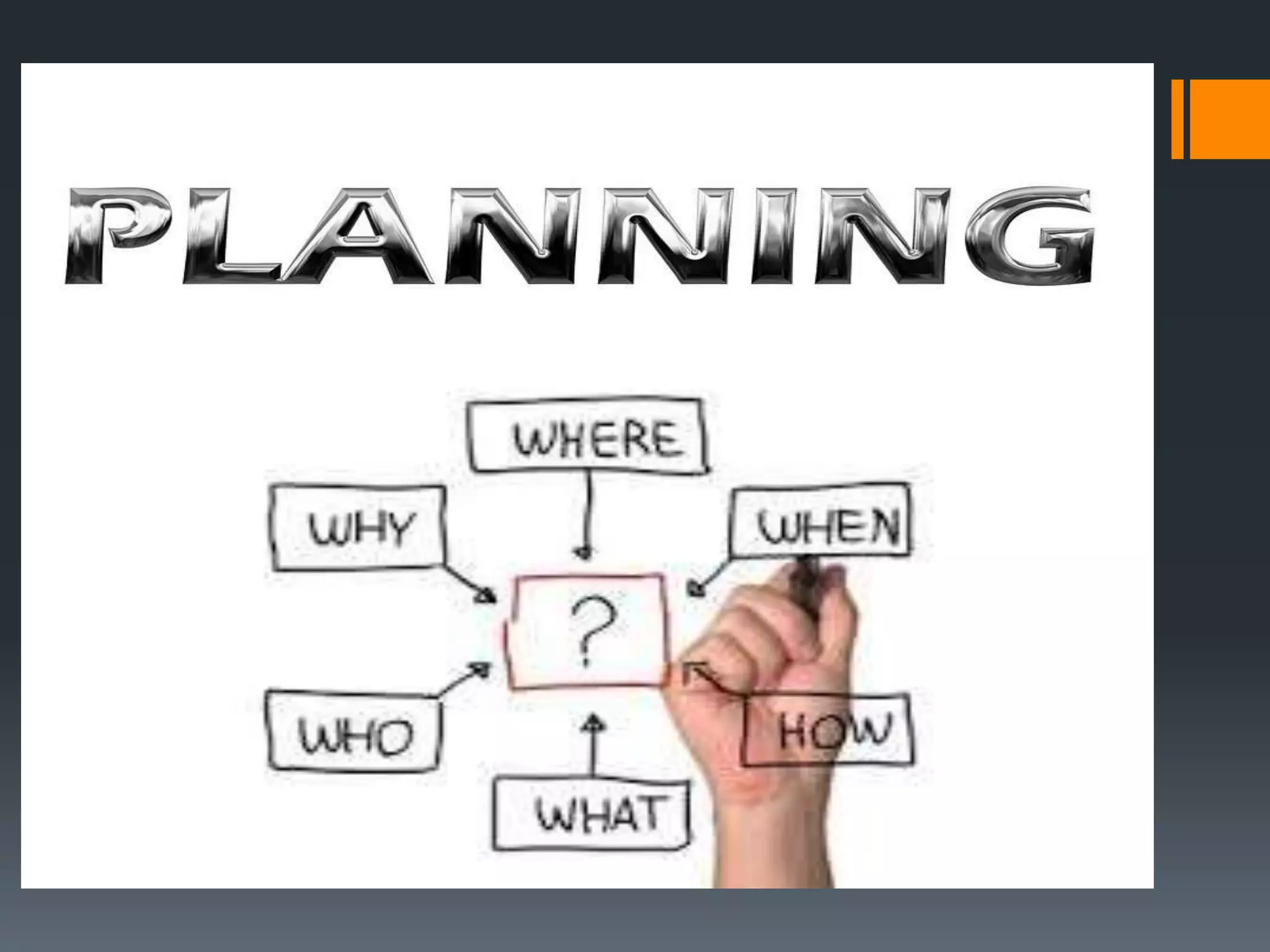
 Planning is deciding in advance what is to be done,
when where, how and by whom it is to be done.
 Planning bridges the gap from where we are to where
we want to reach.
 It includes the selection of objectives, policies,
procedures and programmes from among alternatives.
 It specifies:- resource allocations, schedules, actions
necessary for attaining goals
 It is an exercise in problem solving and decision making.
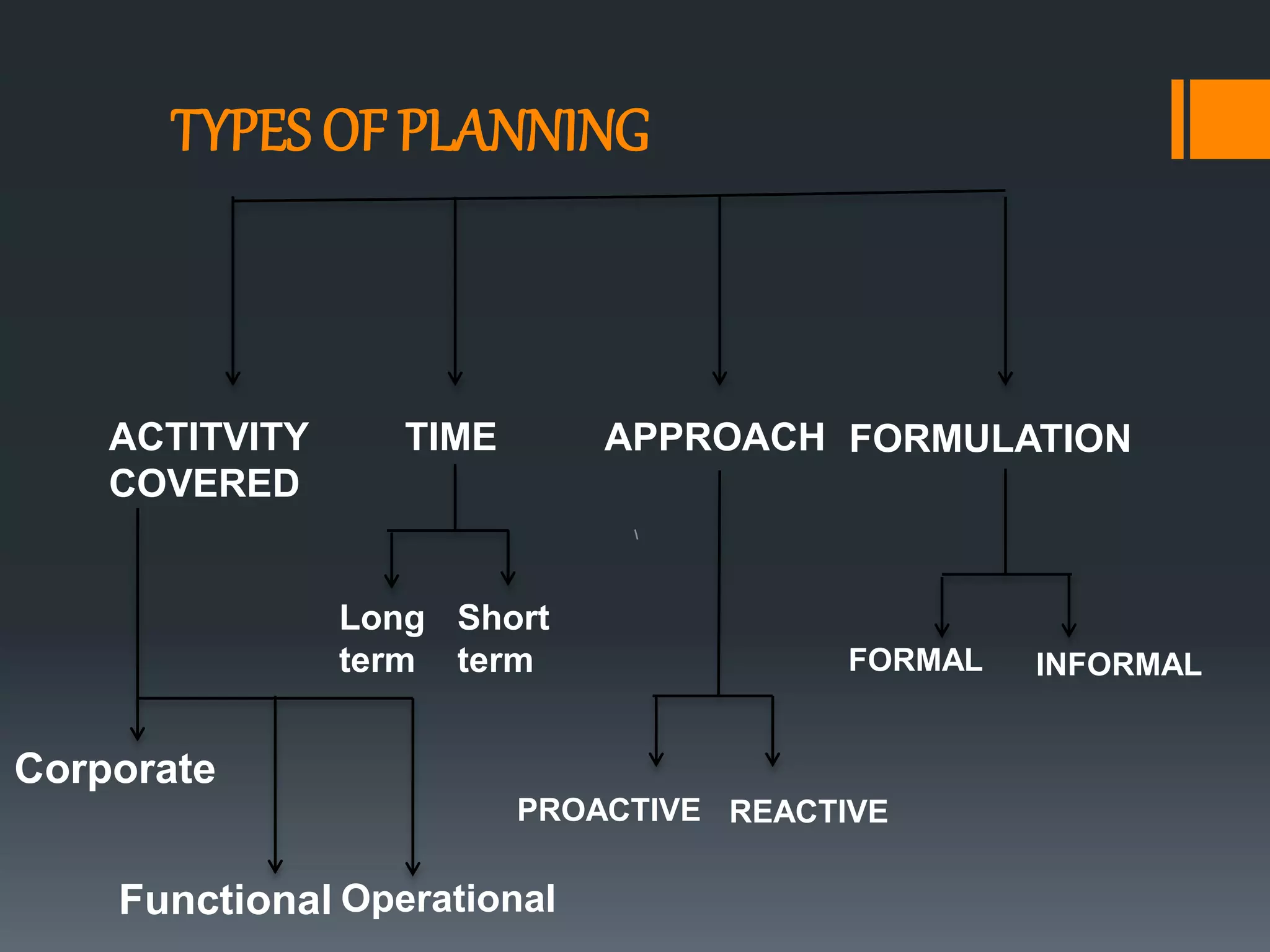
TYPES OF PLANNING
ACTITVITY
COVERED
Corporate
Functional
TIME
Long
term
Short
term
APPROACH
PROACTIVE REACTIVE
FORMULATION
FORMAL INFORMAL
TYPES OF PLANNING
Operational
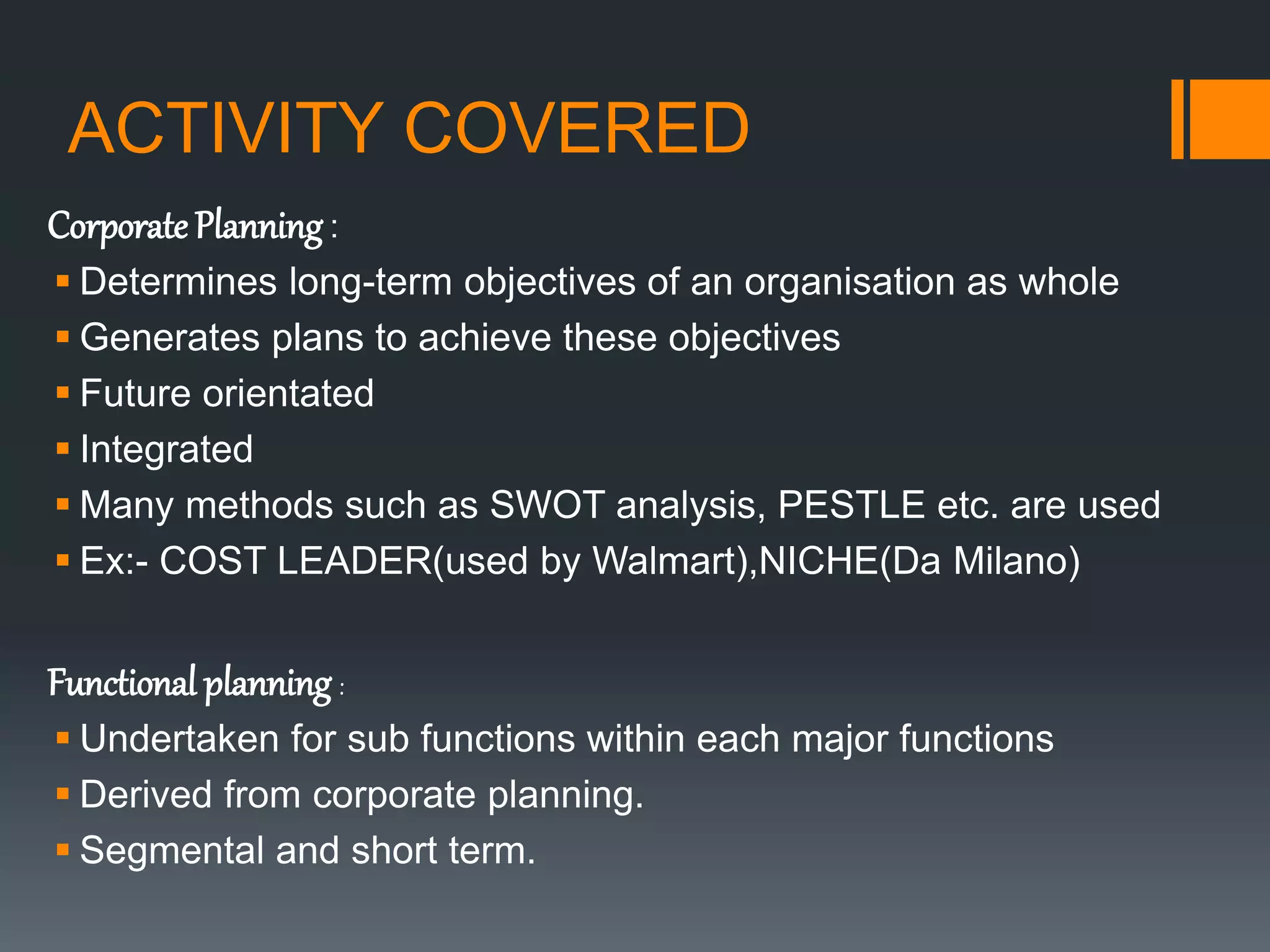
ACTIVITY COVERED
Corporate Planning :
 Determines long-term objectives of an organisation as whole
 Generates plans to achieve these objectives
 Future orientated
 Integrated
 Many methods such as SWOT analysis, PESTLE etc. are used
 Ex:- COST LEADER(used by Walmart),NICHE(Da Milano)
Functional planning :
 Undertaken for sub functions within each major functions
 Derived from corporate planning.
 Segmental and short term.
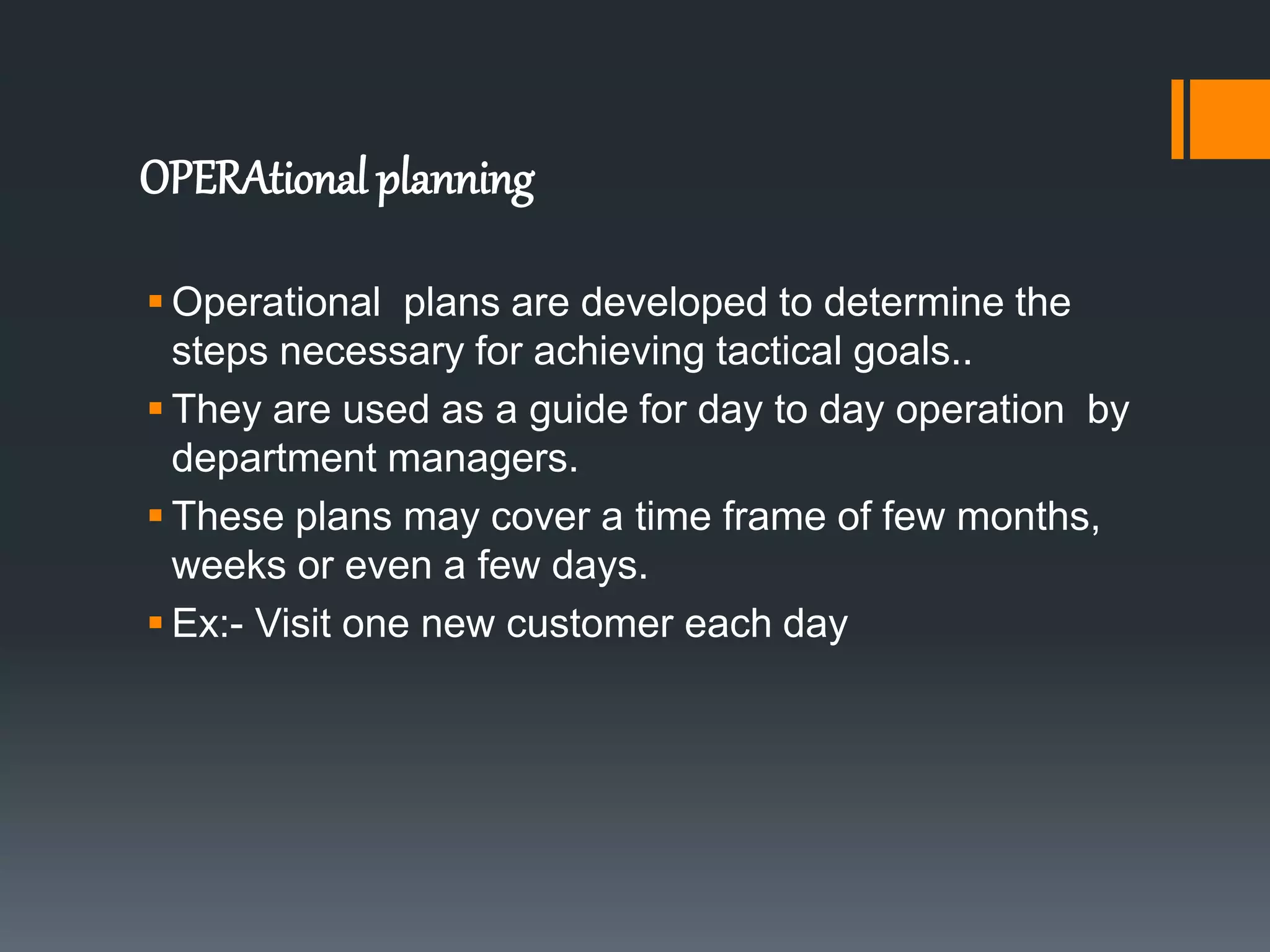
OPERAtional planning
 Operational plans are developed to determine the
steps necessary for achieving tactical goals..
 They are used as a guide for day to day operation by
department managers.
 These plans may cover a time frame of few months,
weeks or even a few days.
 Ex:- Visit one new customer each day
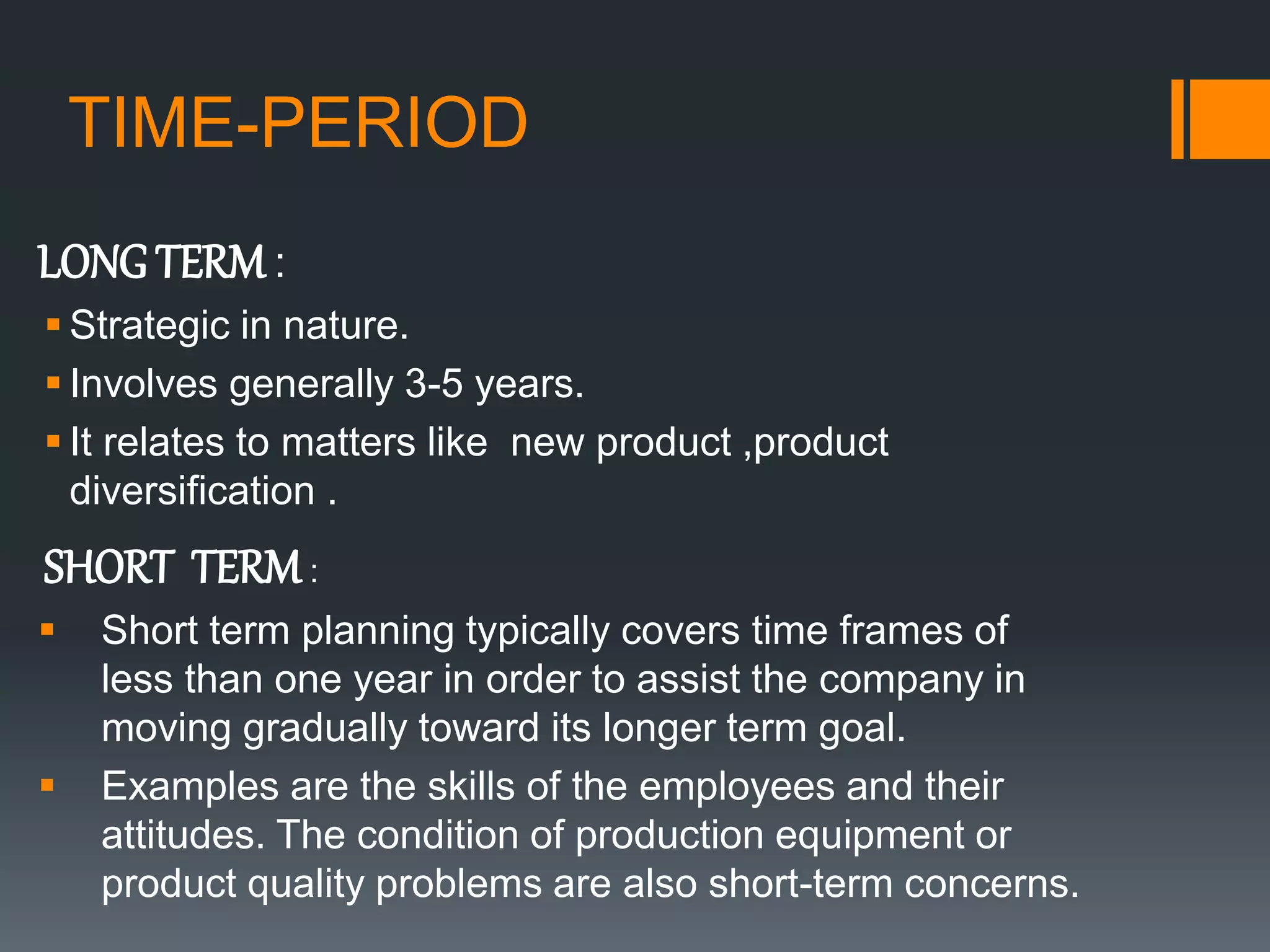
TIME-PERIOD
LONG TERM :
 Strategic in nature.
 Involves generally 3-5 years.
 It relates to matters like new product ,product
diversification .
SHORT TERM:
 Short term planning typically covers time frames of
less than one year in order to assist the company in
moving gradually toward its longer term goal.
 Examples are the skills of the employees and their
attitudes. The condition of production equipment or
product quality problems are also short-term concerns.
APPROACH
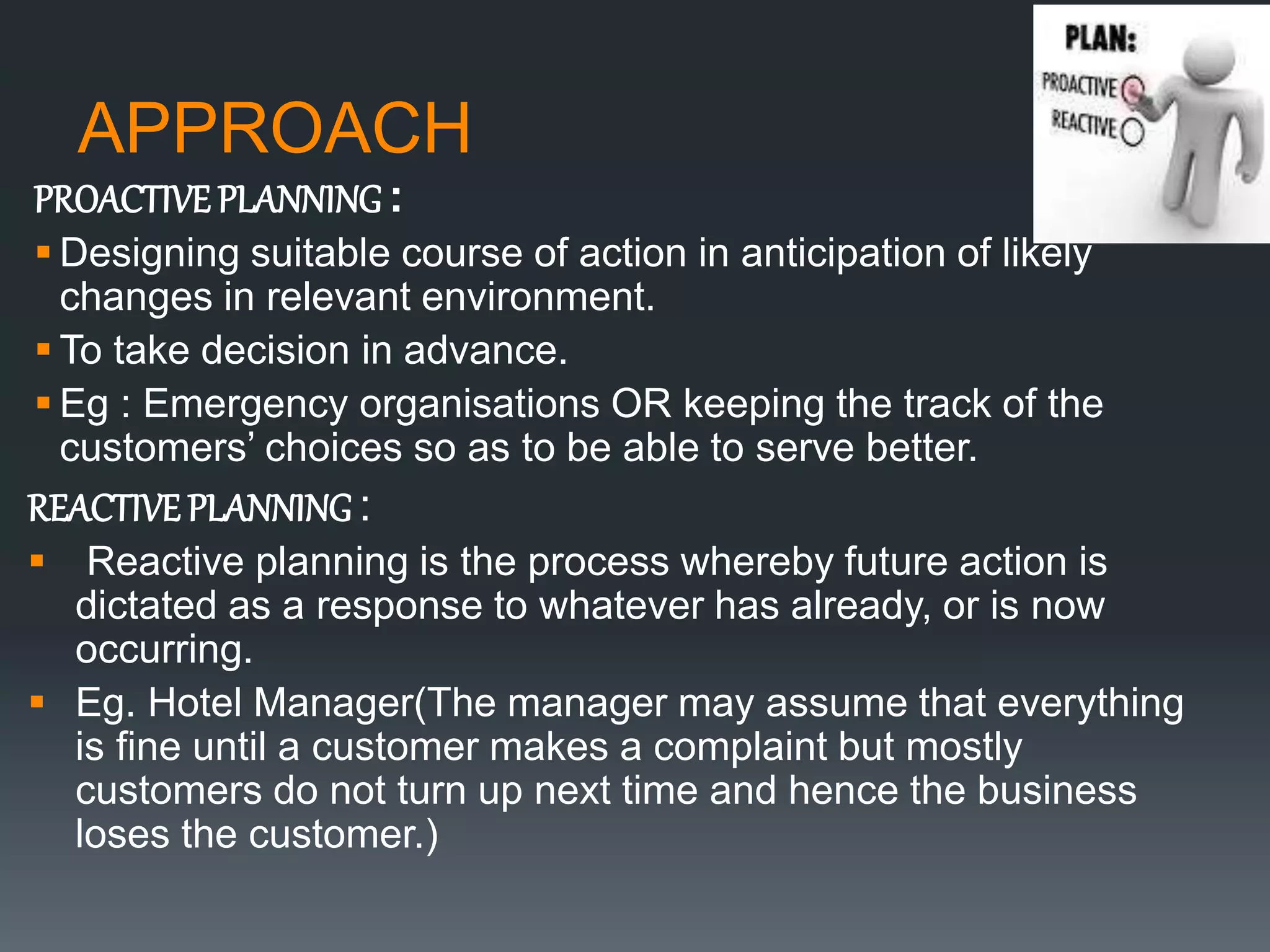
PROACTIVE PLANNING:
 Designing suitable course of action in anticipation of likely
changes in relevant environment.
 To take decision in advance.
 Eg : Emergency organisations OR keeping the track of the
customers’ choices so as to be able to serve better.
REACTIVE PLANNING:
 Reactive planning is the process whereby future action is
dictated as a response to whatever has already, or is now
occurring.
 Eg. Hotel Manager(The manager may assume that everything
is fine until a customer makes a complaint but mostly
customers do not turn up next time and hence the business
loses the customer.)
DEGREE OF FORMALISATION
FORMALPLANNING:
 It is a structured plan.
 It has some procedure to follow.
 Written record is followed in formal plan.
 Example:- Five year plan of a country, launch of a product in
new market
INFORMALPLANNING
 It is unstructured plan.
 It does not have any procedure to follow.
 No record is maintained for future purpose.
 It consists of rudimentary plan.
 Example:- Business plans made by budding entrepreneurs,
especially the ones who have a mindset of a steady growth
and are not thinking of approaching investors too soon.
ADVANTAGES
facilitates management by objectives
minimizes uncertainties
facilitates co-ordination
improves employee’s moral
helps in achieving economies
facilitates controlling
provides competitive edge
encourages innovations
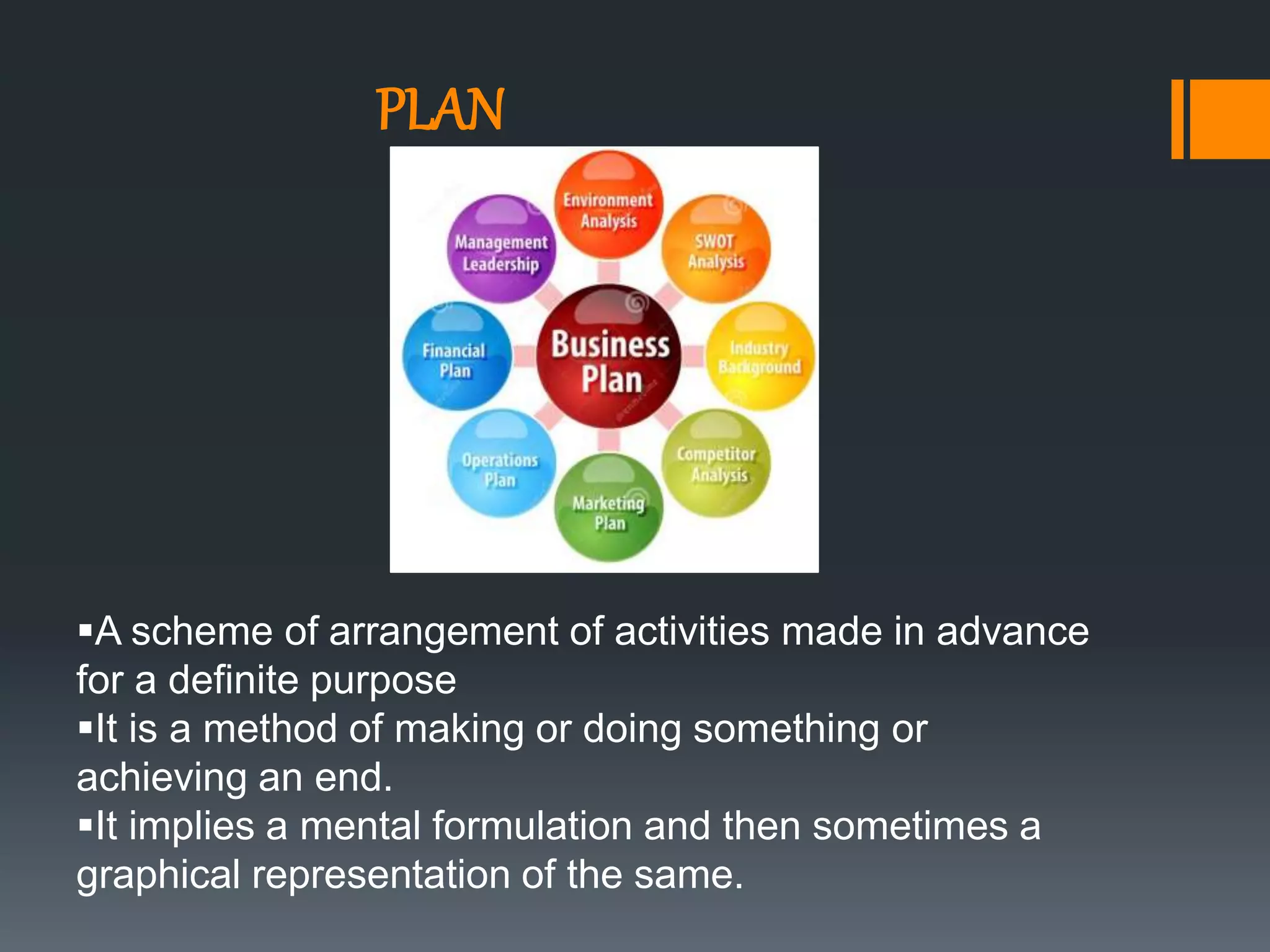
PLAN
A scheme of arrangement of activities made in advance
for a definite purpose
It is a method of making or doing something or
achieving an end.
It implies a mental formulation and then sometimes a
graphical representation of the same.
TYPES OF PLAN
Operational plan
Tactical plan
Strategic plan
Contingency plan
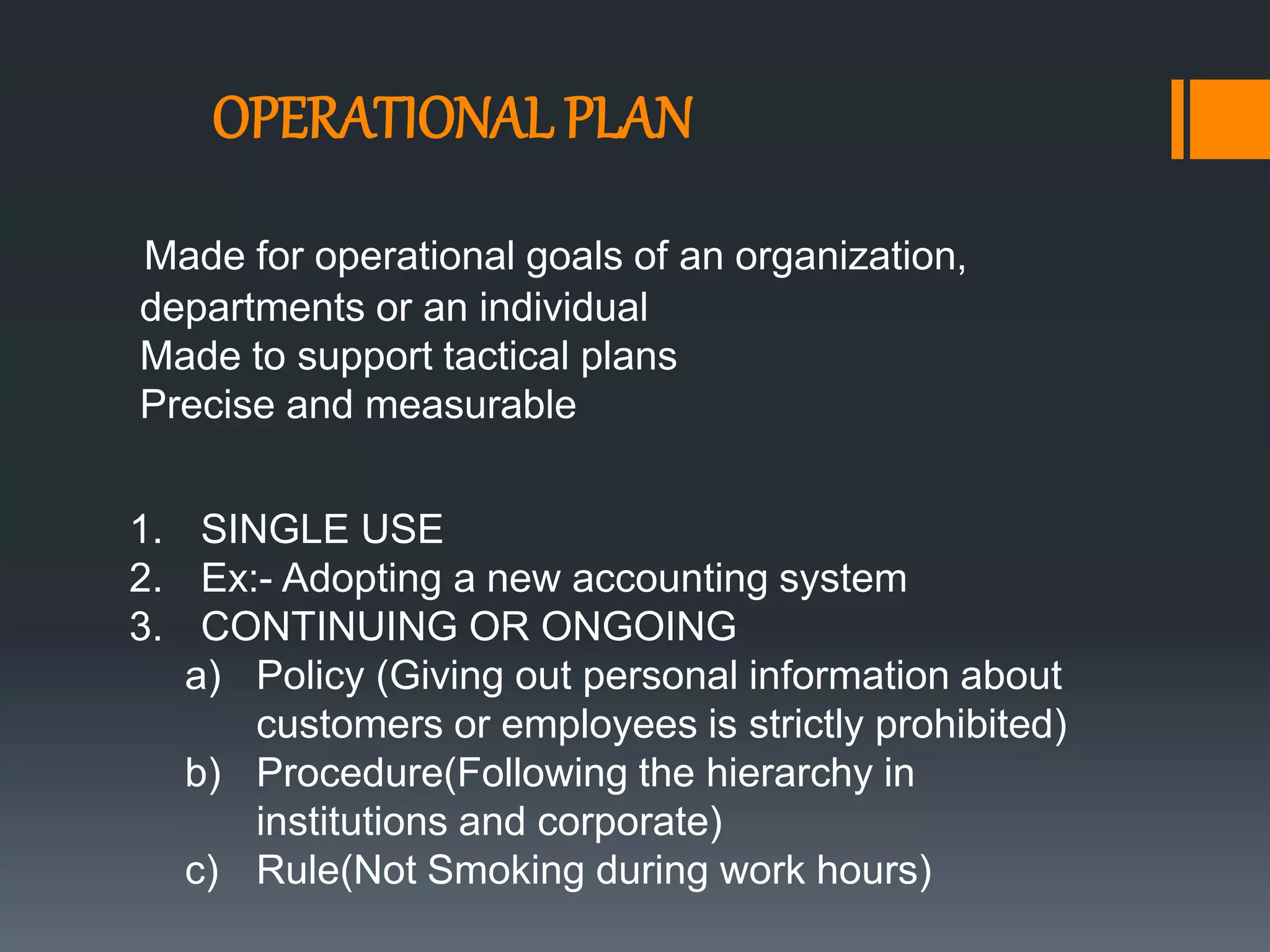
OPERATIONAL PLAN
Made for operational goals of an organization,
departments or an individual
Made to support tactical plans
Precise and measurable
1. SINGLE USE
2. Ex:- Adopting a new accounting system
3. CONTINUING OR ONGOING
a) Policy (Giving out personal information about
customers or employees is strictly prohibited)
b) Procedure(Following the hierarchy in
institutions and corporate)
c) Rule(Not Smoking during work hours)
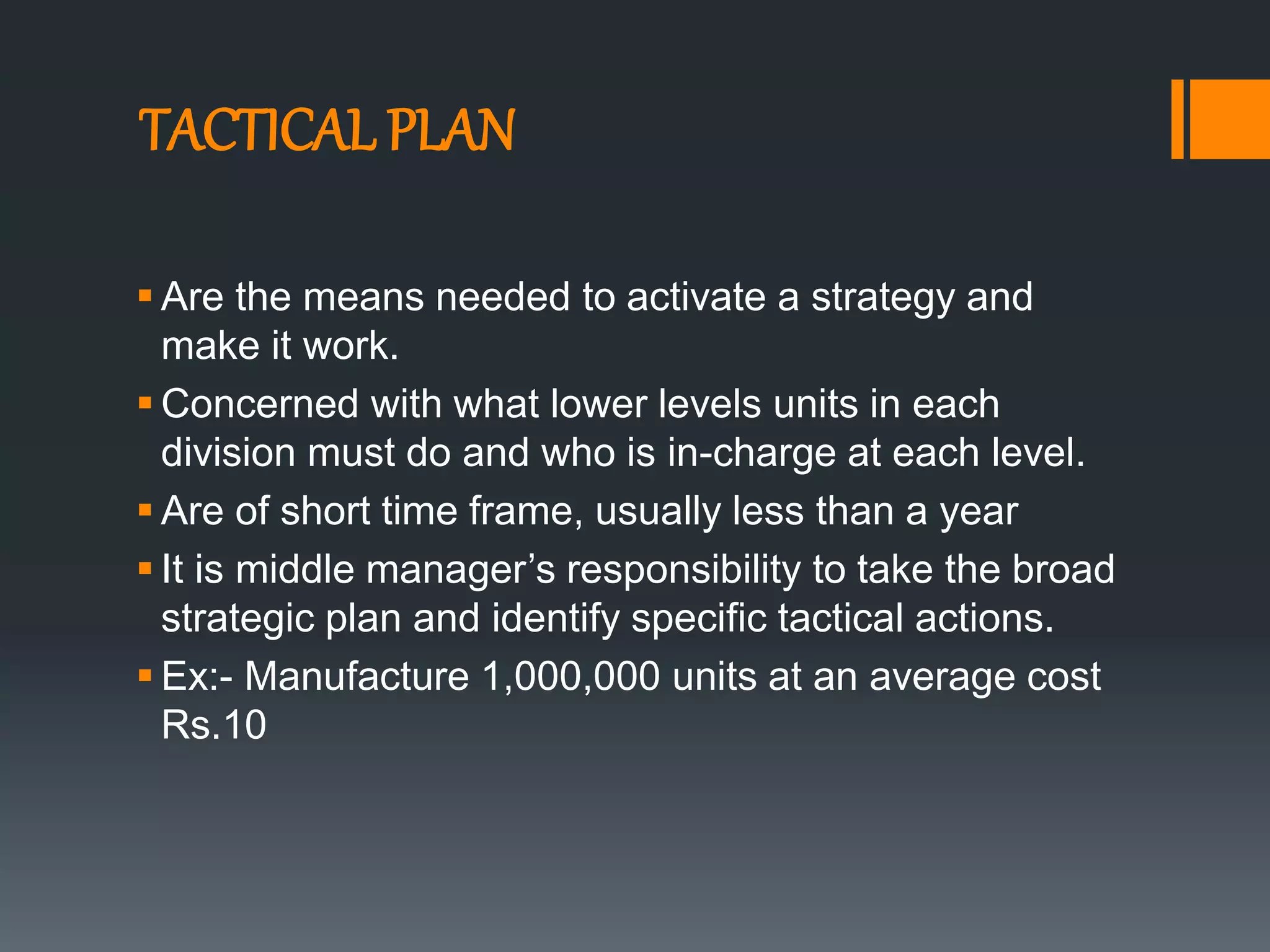
TACTICAL PLAN
 Are the means needed to activate a strategy and
make it work.
 Concerned with what lower levels units in each
division must do and who is in-charge at each level.
 Are of short time frame, usually less than a year
 It is middle manager’s responsibility to take the broad
strategic plan and identify specific tactical actions.
 Ex:- Manufacture 1,000,000 units at an average cost
Rs.10
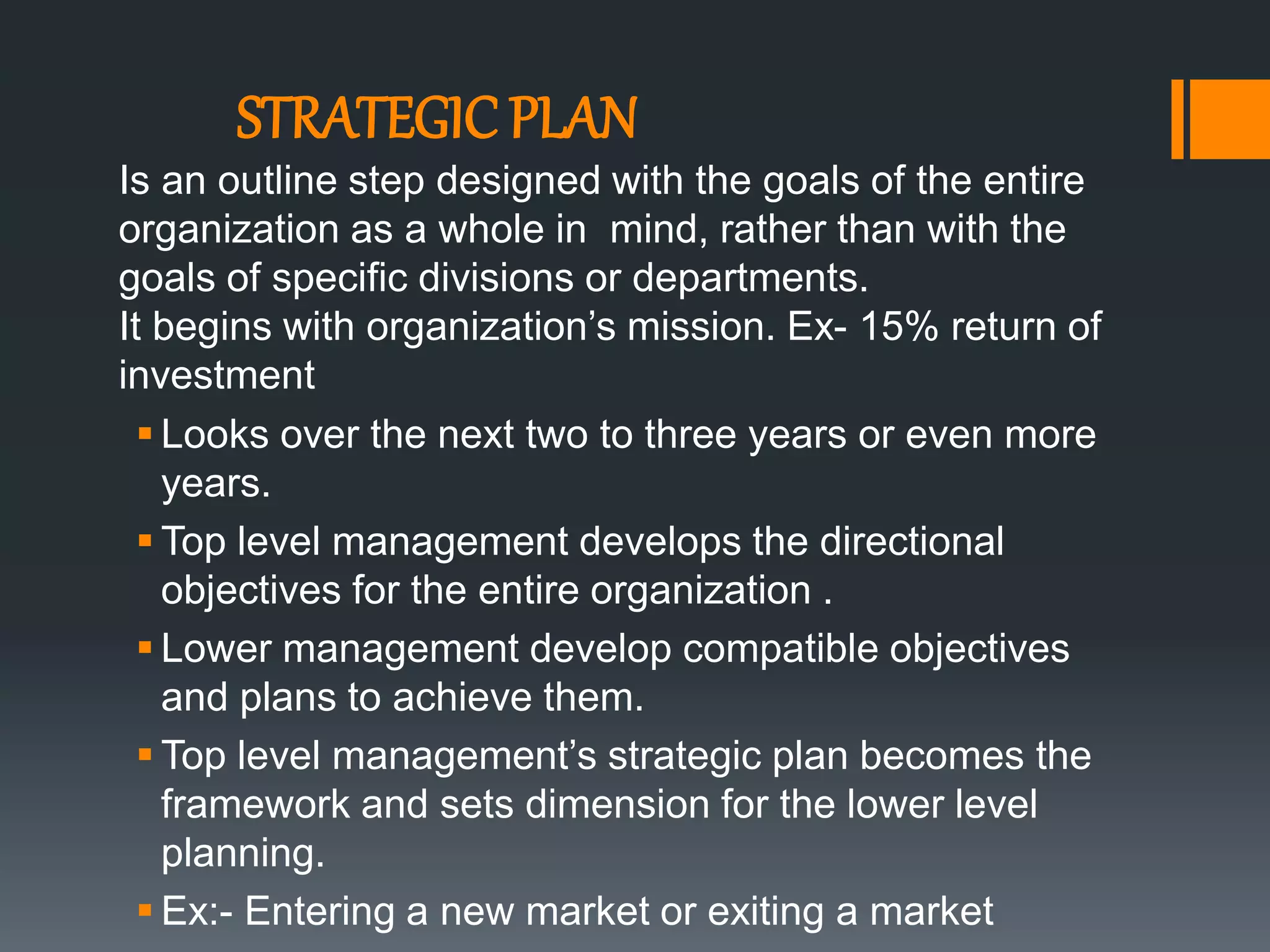
STRATEGIC PLAN
 Looks over the next two to three years or even more
years.
 Top level management develops the directional
objectives for the entire organization .
 Lower management develop compatible objectives
and plans to achieve them.
 Top level management’s strategic plan becomes the
framework and sets dimension for the lower level
planning.
 Ex:- Entering a new market or exiting a market
Is an outline step designed with the goals of the entire
organization as a whole in mind, rather than with the
goals of specific divisions or departments.
It begins with organization’s mission. Ex- 15% return of
investment
CONTINGENCY PLAN
 A strong management requires keeping all options
open approach.
 This can be done by contingency planning.
 Contingency planning involves identifying alternative
courses of action that can be implemented if and when
the original plan proves to be inadequate.
 For example:- Strikes, boycotts, natural disasters.
GOALS & OBJECTIVES OF PLANNING
Goals and Objectives are important to
Planning because they turn the mission and
vision of the organization into specific
measurable targets.
A goal without a plan remains just a goal-
many people have visions, intensions, ideas,
dreams which never happen because they
are not planned.
A PLAN MAKES THINGS HAPPEN
The essential objectives could be
described as follows:
To bring certainity in future events.
To provide specific directions.
To forecast.
To bring economy in managerial
operations.
To attain pre-determined goals.
To get victory over competitors.
Types of planning, its goals and objectives.

Types of planning, its goals and objectives.

  • 1.
    ICCMRT, LUCKNOW Presentation On TypeOf Planning, Its Goals & Objectives Submitted to: Submitted by: Ma’am Bhoomika Trehan Vaibhav Sagar Sushmita Rajpoot Shubham 2 Sunita Gupta Sfurti Yadav Shreya Prasad
  • 2.
    Index What is PLANNING? TYPESOF PLANNING AdvantageLimitations
  • 3.
    “PLANNING”  Planning isthe basic function in management that involves setting objectives and determining a course of action for achieving these objectives.  Planning is deciding in advance what is to be done, when where, how and by whom it is to be done.  Planning bridges the gap from where we are to where we want to reach.  It includes the selection of objectives, policies, procedures and programmes from among alternatives.  It specifies:- resource allocations, schedules, actions necessary for attaining goals  It is an exercise in problem solving and decision making.
  • 4.
  • 5.
  • 6.
    ACTIVITY COVERED Corporate Planning:  Determines long-term objectives of an organisation as whole  Generates plans to achieve these objectives  Future orientated  Integrated  Many methods such as SWOT analysis, PESTLE etc. are used  Ex:- COST LEADER(used by Walmart),NICHE(Da Milano) Functional planning :  Undertaken for sub functions within each major functions  Derived from corporate planning.  Segmental and short term.
  • 7.
    OPERAtional planning  Operationalplans are developed to determine the steps necessary for achieving tactical goals..  They are used as a guide for day to day operation by department managers.  These plans may cover a time frame of few months, weeks or even a few days.  Ex:- Visit one new customer each day
  • 8.
    TIME-PERIOD LONG TERM : Strategic in nature.  Involves generally 3-5 years.  It relates to matters like new product ,product diversification . SHORT TERM:  Short term planning typically covers time frames of less than one year in order to assist the company in moving gradually toward its longer term goal.  Examples are the skills of the employees and their attitudes. The condition of production equipment or product quality problems are also short-term concerns.
  • 9.
    APPROACH PROACTIVE PLANNING:  Designingsuitable course of action in anticipation of likely changes in relevant environment.  To take decision in advance.  Eg : Emergency organisations OR keeping the track of the customers’ choices so as to be able to serve better. REACTIVE PLANNING:  Reactive planning is the process whereby future action is dictated as a response to whatever has already, or is now occurring.  Eg. Hotel Manager(The manager may assume that everything is fine until a customer makes a complaint but mostly customers do not turn up next time and hence the business loses the customer.)
  • 10.
    DEGREE OF FORMALISATION FORMALPLANNING: It is a structured plan.  It has some procedure to follow.  Written record is followed in formal plan.  Example:- Five year plan of a country, launch of a product in new market INFORMALPLANNING  It is unstructured plan.  It does not have any procedure to follow.  No record is maintained for future purpose.  It consists of rudimentary plan.  Example:- Business plans made by budding entrepreneurs, especially the ones who have a mindset of a steady growth and are not thinking of approaching investors too soon.
  • 11.
    ADVANTAGES facilitates management byobjectives minimizes uncertainties facilitates co-ordination improves employee’s moral helps in achieving economies facilitates controlling provides competitive edge encourages innovations
  • 12.
    PLAN A scheme ofarrangement of activities made in advance for a definite purpose It is a method of making or doing something or achieving an end. It implies a mental formulation and then sometimes a graphical representation of the same.
  • 13.
    TYPES OF PLAN Operationalplan Tactical plan Strategic plan Contingency plan
  • 14.
    OPERATIONAL PLAN Made foroperational goals of an organization, departments or an individual Made to support tactical plans Precise and measurable 1. SINGLE USE 2. Ex:- Adopting a new accounting system 3. CONTINUING OR ONGOING a) Policy (Giving out personal information about customers or employees is strictly prohibited) b) Procedure(Following the hierarchy in institutions and corporate) c) Rule(Not Smoking during work hours)
  • 15.
    TACTICAL PLAN  Arethe means needed to activate a strategy and make it work.  Concerned with what lower levels units in each division must do and who is in-charge at each level.  Are of short time frame, usually less than a year  It is middle manager’s responsibility to take the broad strategic plan and identify specific tactical actions.  Ex:- Manufacture 1,000,000 units at an average cost Rs.10
  • 16.
    STRATEGIC PLAN  Looksover the next two to three years or even more years.  Top level management develops the directional objectives for the entire organization .  Lower management develop compatible objectives and plans to achieve them.  Top level management’s strategic plan becomes the framework and sets dimension for the lower level planning.  Ex:- Entering a new market or exiting a market Is an outline step designed with the goals of the entire organization as a whole in mind, rather than with the goals of specific divisions or departments. It begins with organization’s mission. Ex- 15% return of investment
  • 17.
    CONTINGENCY PLAN  Astrong management requires keeping all options open approach.  This can be done by contingency planning.  Contingency planning involves identifying alternative courses of action that can be implemented if and when the original plan proves to be inadequate.  For example:- Strikes, boycotts, natural disasters.
  • 18.
    GOALS & OBJECTIVESOF PLANNING Goals and Objectives are important to Planning because they turn the mission and vision of the organization into specific measurable targets. A goal without a plan remains just a goal- many people have visions, intensions, ideas, dreams which never happen because they are not planned. A PLAN MAKES THINGS HAPPEN
  • 19.
    The essential objectivescould be described as follows: To bring certainity in future events. To provide specific directions. To forecast. To bring economy in managerial operations. To attain pre-determined goals. To get victory over competitors.