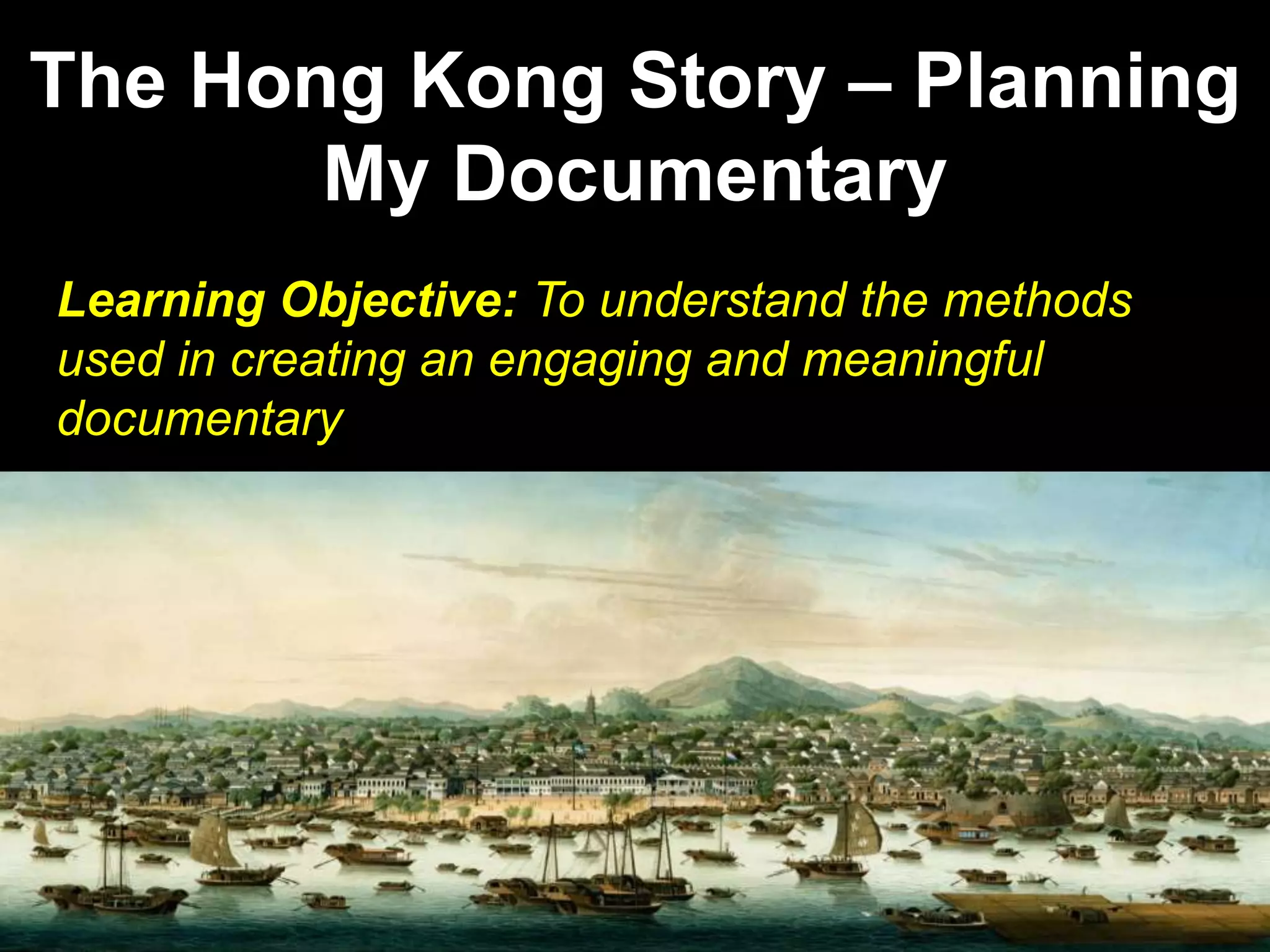
The Hong Kong Story – Planning
My Documentary
Learning Objective: To understand the methods
used in creating an engaging and meaningful
documentary
Pre Production
You have now chosen a subject to study and
create a documentary on. What steps
should you take to produce an engaging and
entertaining documentary?
Pre Production
• Watch other documentaries - especially ones
related to your topic and decide on a style. Pay
particular attention to how the narrative is
structured.
• Research you topic well – ensure that you are
using the correct terminology and that your facts
are precise and accurate.
• Write a treatment. This initial document should
include a summary of the documentary, and the
goal or purpose of the film. Outline your script,
covering each major section but keeping the outline
under 300 words.
Pre Production
• Script your story idea. You will need to have a
script, or you can't have a film. While thinking of an
idea, make sure you write something attractive to
your viewers.
• Prioritize scenes. From your outline identify priority
scenes. Remember you should be filming at least at
one other location that is related to your topic.
• Draw out a storyboard, illustrating the shots you
plan to use. Don't worry about following the
storyboard perfectly. It's just a good idea to get your
thoughts on paper and a great way to see if you can
communicate an idea "visually”.
Pre Production
• Get feedback. Show what you have so far to
friends, family, teachers, etc. Polish your work
until you're ready to film
• Be prepared. Brainstorm the worst things that
could happen during making your documentary
and how will you deal with these. Remember to
look at both technical problems and story
problems.
Production
• B-roll footage – Identify suitable b-roll
footage that could be used in your
documentary.
• Location, Location, Location!
• Sound – Ensure that when you are filming
outside that you use a microphone or you
do a voice over in post production. Sound
is always an area where students fall
down.
Production
Interview the subjects.
• Plan questions. The easiest way of doing
this and keeping focus is to write who, what,
when, where, why, how, and then brainstorm
questions around these.
• Subject must be comfortable around the
camera and open and honest.
• Talk to them before filming, you could talk for
half an hour or more to make the subject
comfortable around you.

Planning my history documentary

  • 1.
    The Hong KongStory – Planning My Documentary Learning Objective: To understand the methods used in creating an engaging and meaningful documentary
  • 2.
    Pre Production You havenow chosen a subject to study and create a documentary on. What steps should you take to produce an engaging and entertaining documentary?
  • 3.
    Pre Production • Watchother documentaries - especially ones related to your topic and decide on a style. Pay particular attention to how the narrative is structured. • Research you topic well – ensure that you are using the correct terminology and that your facts are precise and accurate. • Write a treatment. This initial document should include a summary of the documentary, and the goal or purpose of the film. Outline your script, covering each major section but keeping the outline under 300 words.
  • 4.
    Pre Production • Scriptyour story idea. You will need to have a script, or you can't have a film. While thinking of an idea, make sure you write something attractive to your viewers. • Prioritize scenes. From your outline identify priority scenes. Remember you should be filming at least at one other location that is related to your topic. • Draw out a storyboard, illustrating the shots you plan to use. Don't worry about following the storyboard perfectly. It's just a good idea to get your thoughts on paper and a great way to see if you can communicate an idea "visually”.
  • 5.
    Pre Production • Getfeedback. Show what you have so far to friends, family, teachers, etc. Polish your work until you're ready to film • Be prepared. Brainstorm the worst things that could happen during making your documentary and how will you deal with these. Remember to look at both technical problems and story problems.
  • 6.
    Production • B-roll footage– Identify suitable b-roll footage that could be used in your documentary. • Location, Location, Location! • Sound – Ensure that when you are filming outside that you use a microphone or you do a voice over in post production. Sound is always an area where students fall down.
  • 7.
    Production Interview the subjects. •Plan questions. The easiest way of doing this and keeping focus is to write who, what, when, where, why, how, and then brainstorm questions around these. • Subject must be comfortable around the camera and open and honest. • Talk to them before filming, you could talk for half an hour or more to make the subject comfortable around you.