PLANNING AND CONTROL
PRESENTED BY
Mr,CHETAN R SANGATI
IInd YR, M.Sc NURSING
INTRODUCTION
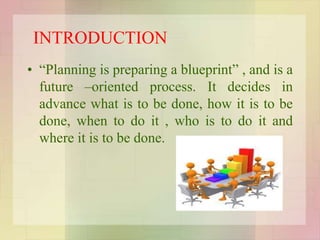
• “Planning is preparing a blueprint” , and is a
future –oriented process. It decides in
advance what is to be done, how it is to be
done, when to do it , who is to do it and
where it is to be done.
What is planning?
• Planning is a process of… setting objectives
and… determining how to accomplish them
.
• Planning refers to thinking ahead of time
and formulating preliminary thoughts.
PRINCIPLES OF PLANNING
• Contribution of objectives
• Efficiency in plans
• Primacy of planning
• Planning premises
• Policy framework
• Timing
• Alternatives
• Commitments
• Flexibility
• Competitive strategies
Essentials of a good plan
• According to urwick, the essentials of a
good plan are as fallows.
1) It should be based on a clearly defined
objectives.
2) It must be simple
3) It should be rational and appropriate.
4) IT SHOULD BE COMPREHENSIVE
5) IT SHOULD BE PROVIDE FOR A PROPER ANALYSIS AND
CLASSIFICATION OF ACTIONS.
6) IT MUST BE FLEXIBLE
7) IT MUST BE BALANCED
8)IT MUST BE USE ALL AVAILABLE RESOURCES AND
OPPORTUNITES
9) THERE SHOULD BE PROPER COORDINATION AMONG
SHORT – TERM AND LONG TERM PLANS.
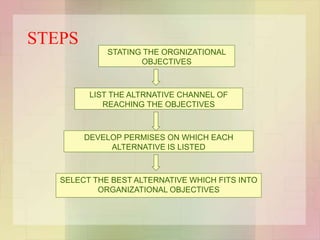
STEPS
STATING THE ORGNIZATIONAL
OBJECTIVES
LIST THE ALTRNATIVE CHANNEL OF
REACHING THE OBJECTIVES
DEVELOP PERMISES ON WHICH EACH
ALTERNATIVE IS LISTED
SELECT THE BEST ALTERNATIVE WHICH FITS INTO
ORGANIZATIONAL OBJECTIVES
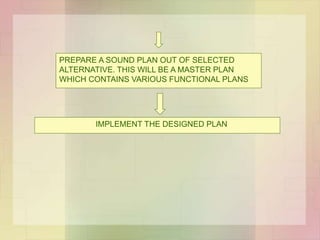
PREPARE A SOUND PLAN OUT OF SELECTED
ALTERNATIVE. THIS WILL BE A MASTER PLAN
WHICH CONTAINS VARIOUS FUNCTIONAL PLANS
IMPLEMENT THE DESIGNED PLAN
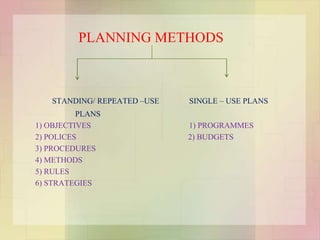
PLANNING METHODS
STANDING/ REPEATED –USE SINGLE – USE PLANS
PLANS
1) OBJECTIVES 1) PROGRAMMES
2) POLICES 2) BUDGETS
3) PROCEDURES
4) METHODS
5) RULES
6) STRATEGIES
ADVANTAGES OF PLANNING
• INCREASING COMPLEXITY IN
MODERN BUSINESS
• HELP IN COORDINATION
• HELP IN EXERCISING EFFECIVE
CONTROLE
• HELPS IN THE PROPER UTILIZATION OF THE
COMPANY RESOURCES
• FACILITATE UNITY OF ACTION
• HELP IN AVOIDING BUSINESS FAILURE
• FOCUSES ATTENTION ON THE ORGANIZATINS
GOALS
• IMPROVE COMPETITVE STRENGTH
• IMPROVE ADAPTATION
• GUIDES DECISION MAKING
DISADAVNTAGES OF PLANNING
1) FORECASTS
2) RIGIDITY
3) TIME CONSUMING
4) COSTLY
5) INFLUENCE OF EXTERNAL FACTORS
6) LIMITED SCOPE SPECIFIC ORGANIZATION
7) PEOPLES RESISTANCE
8) FAILURE OF PLANNERS
CONTROLLING
• The process of measuring performance and
taking action to ensure desired results.
• Has a positive and necessary role in the
management process.
• Ensures that the right things happen, in the
right way, at the right time.
What is the control process?
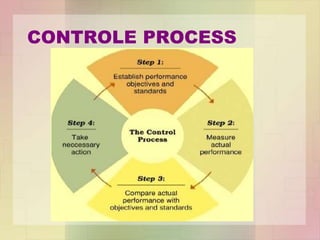
• Steps in the control process –
• Step 1— establish objectives and standards
–
• Step 2— measure actual performance
• Step 3— compare results with objectives
and standards
• Step 4— take corrective action as needed
CONTROLE PROCESS
What is the control process?
Step 1—establishing objectives and
standards
• Output standards
Measure performance results in terms of
quantity, quality, cost, or time.
• Input standards
Measure effort in terms of amount of work
expended in task performance.
WHAT IS THE CONTROL
PROCESS?
Step 2—measuring actual performance
• Goal is accurate measurement of actual
results on output and/or input standards.
• Effective control requires measurement.
 Step 3—comparing results with objectives and
standards
• Control equation
• Need for action reflects the difference between
desired performance and actual performance
• Methods of comparing desired and actual
performance
1) Historical comparison
2) Relative comparison
3)Engineering comparison
• Benchmarking using different comparison
methods
• Step 4—taking corrective action – Taking
action when a discrepancy exists between
desired and actual performance.
– Management by exception
• Giving priority attention to situations
showing the greatest need for action.
• Types of exceptions –
1)Problem situation –
2)Opportunity situation
FEED FORWARD CONTROLS.
• Employed before a work activity begins.
• Ensures that:
1) Objectives are clear.
2) Proper directions are established.
3) Right resources are available.
• Focuses on quality of resources.
• CONCURRENT CONTROLS
 Focus on what happens during work
process.
Monitor ongoing operations to make sure
they are being done according to plan.
Can reduce waste in unacceptable finished
products or services.
• Feedback controls
Take place after work is completed.
Focus on quality of end results.
Provide useful information for improving
future operations.
Planning and controlling

Planning and controlling

  • 1.
    PLANNING AND CONTROL PRESENTEDBY Mr,CHETAN R SANGATI IInd YR, M.Sc NURSING
  • 2.
    INTRODUCTION • “Planning ispreparing a blueprint” , and is a future –oriented process. It decides in advance what is to be done, how it is to be done, when to do it , who is to do it and where it is to be done.
  • 3.
    What is planning? •Planning is a process of… setting objectives and… determining how to accomplish them . • Planning refers to thinking ahead of time and formulating preliminary thoughts.
  • 4.
    PRINCIPLES OF PLANNING •Contribution of objectives • Efficiency in plans • Primacy of planning • Planning premises • Policy framework • Timing • Alternatives
  • 5.
  • 6.
    Essentials of agood plan • According to urwick, the essentials of a good plan are as fallows. 1) It should be based on a clearly defined objectives. 2) It must be simple 3) It should be rational and appropriate.
  • 7.
    4) IT SHOULDBE COMPREHENSIVE 5) IT SHOULD BE PROVIDE FOR A PROPER ANALYSIS AND CLASSIFICATION OF ACTIONS. 6) IT MUST BE FLEXIBLE 7) IT MUST BE BALANCED 8)IT MUST BE USE ALL AVAILABLE RESOURCES AND OPPORTUNITES 9) THERE SHOULD BE PROPER COORDINATION AMONG SHORT – TERM AND LONG TERM PLANS.
  • 8.
    STEPS STATING THE ORGNIZATIONAL OBJECTIVES LISTTHE ALTRNATIVE CHANNEL OF REACHING THE OBJECTIVES DEVELOP PERMISES ON WHICH EACH ALTERNATIVE IS LISTED SELECT THE BEST ALTERNATIVE WHICH FITS INTO ORGANIZATIONAL OBJECTIVES
  • 9.
    PREPARE A SOUNDPLAN OUT OF SELECTED ALTERNATIVE. THIS WILL BE A MASTER PLAN WHICH CONTAINS VARIOUS FUNCTIONAL PLANS IMPLEMENT THE DESIGNED PLAN
  • 10.
    PLANNING METHODS STANDING/ REPEATED–USE SINGLE – USE PLANS PLANS 1) OBJECTIVES 1) PROGRAMMES 2) POLICES 2) BUDGETS 3) PROCEDURES 4) METHODS 5) RULES 6) STRATEGIES
  • 11.
    ADVANTAGES OF PLANNING •INCREASING COMPLEXITY IN MODERN BUSINESS • HELP IN COORDINATION • HELP IN EXERCISING EFFECIVE CONTROLE
  • 12.
    • HELPS INTHE PROPER UTILIZATION OF THE COMPANY RESOURCES • FACILITATE UNITY OF ACTION • HELP IN AVOIDING BUSINESS FAILURE • FOCUSES ATTENTION ON THE ORGANIZATINS GOALS • IMPROVE COMPETITVE STRENGTH • IMPROVE ADAPTATION • GUIDES DECISION MAKING
  • 13.
    DISADAVNTAGES OF PLANNING 1)FORECASTS 2) RIGIDITY 3) TIME CONSUMING 4) COSTLY 5) INFLUENCE OF EXTERNAL FACTORS 6) LIMITED SCOPE SPECIFIC ORGANIZATION 7) PEOPLES RESISTANCE 8) FAILURE OF PLANNERS
  • 14.
    CONTROLLING • The processof measuring performance and taking action to ensure desired results. • Has a positive and necessary role in the management process. • Ensures that the right things happen, in the right way, at the right time.
  • 15.
    What is thecontrol process? • Steps in the control process – • Step 1— establish objectives and standards – • Step 2— measure actual performance • Step 3— compare results with objectives and standards • Step 4— take corrective action as needed
  • 16.
  • 17.
    What is thecontrol process? Step 1—establishing objectives and standards • Output standards Measure performance results in terms of quantity, quality, cost, or time. • Input standards Measure effort in terms of amount of work expended in task performance.
  • 18.
    WHAT IS THECONTROL PROCESS? Step 2—measuring actual performance • Goal is accurate measurement of actual results on output and/or input standards. • Effective control requires measurement.
  • 19.
     Step 3—comparingresults with objectives and standards • Control equation • Need for action reflects the difference between desired performance and actual performance • Methods of comparing desired and actual performance 1) Historical comparison 2) Relative comparison 3)Engineering comparison • Benchmarking using different comparison methods
  • 20.
    • Step 4—takingcorrective action – Taking action when a discrepancy exists between desired and actual performance. – Management by exception • Giving priority attention to situations showing the greatest need for action. • Types of exceptions – 1)Problem situation – 2)Opportunity situation
  • 21.
    FEED FORWARD CONTROLS. •Employed before a work activity begins. • Ensures that: 1) Objectives are clear. 2) Proper directions are established. 3) Right resources are available. • Focuses on quality of resources.
  • 22.
    • CONCURRENT CONTROLS Focus on what happens during work process. Monitor ongoing operations to make sure they are being done according to plan. Can reduce waste in unacceptable finished products or services.
  • 23.
    • Feedback controls Takeplace after work is completed. Focus on quality of end results. Provide useful information for improving future operations.