Fiscal PlanningBY
P.N.VIJI, M.Sc(N)
LECTURER
Steps
Plan Non-Plan
Zero Budgeting
Mid- term
appraisal
Capital &
revenue
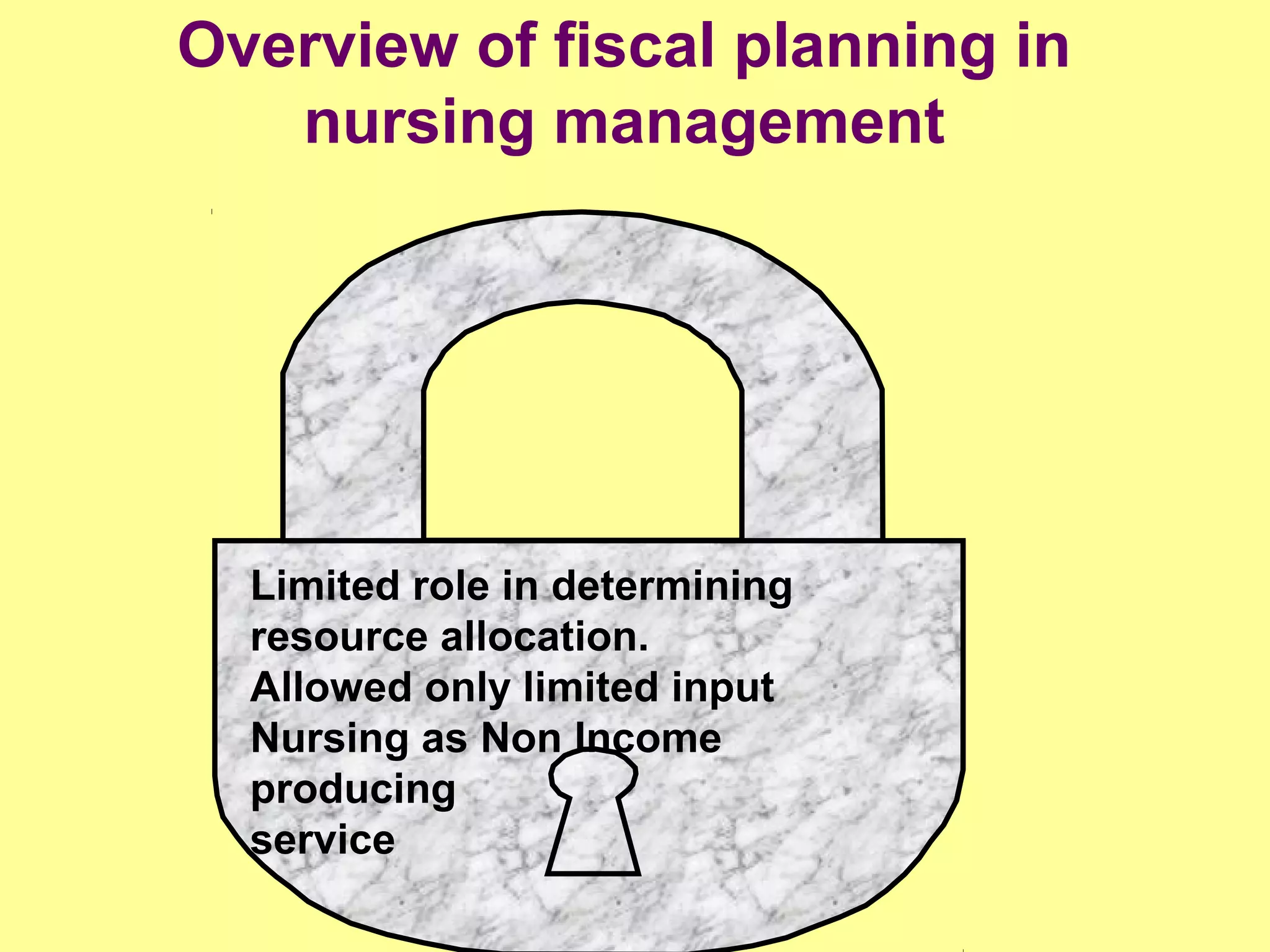
Limited role in determining
resource allocation.
Allowed only limited input
Nursing as Non Income
producing
service
Overview of fiscal planning in
nursing management
Nursing budgets generally
account for the greatest
share of the total expenses
in healthcare institutions,
participation in fiscal
planning has become a
fundamental and powerful
tool for nursing
Nursing budgets generally
account for the greatest
share of the total expenses
in healthcare institutions,
participation in fiscal
planning has become a
fundamental and powerful
tool for nursing
In 21st
century….
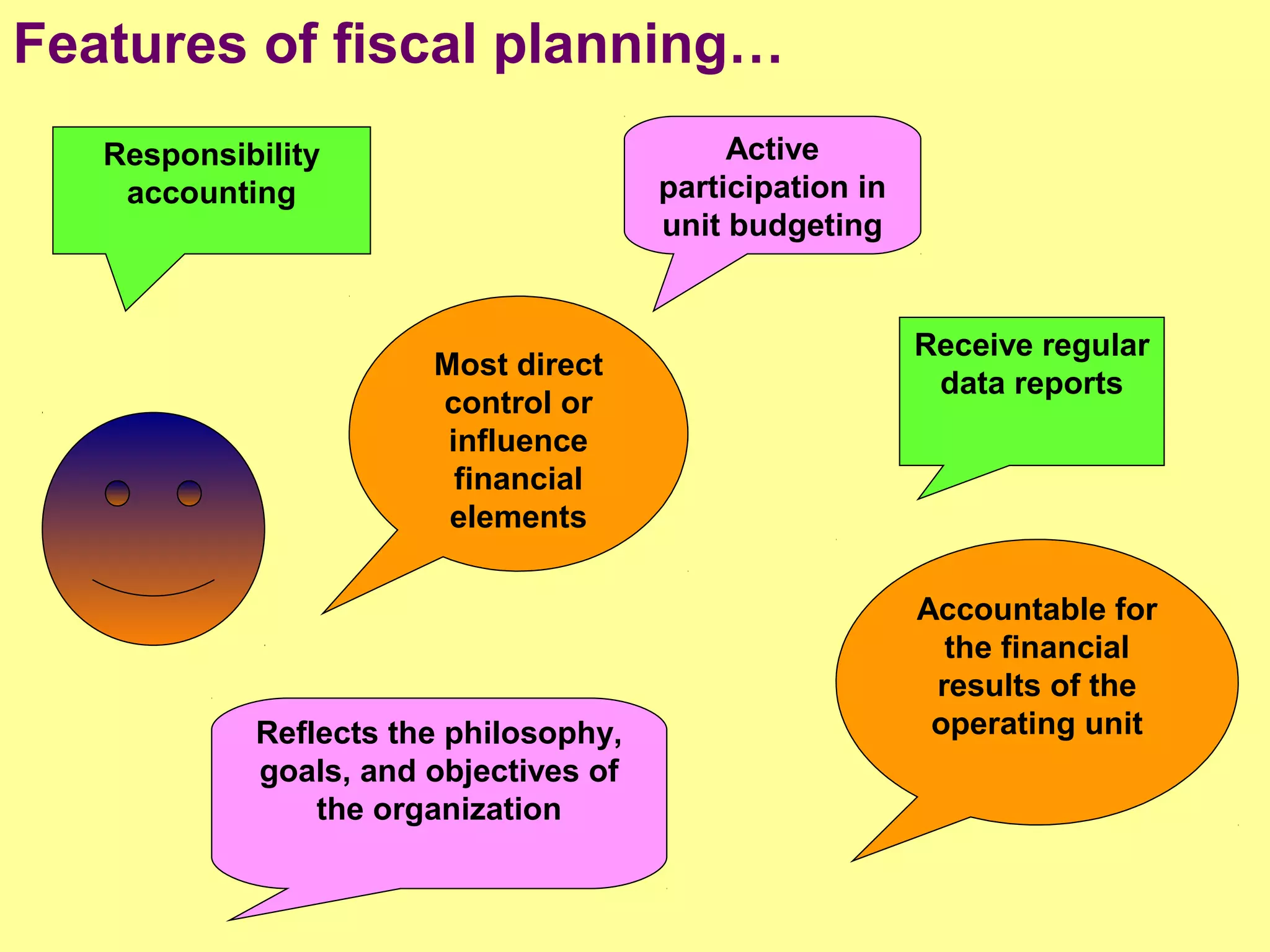
Features of fiscal planning…
Most direct
control or
influence
financial
elements
Receive regular
data reports
Reflects the philosophy,
goals, and objectives of
the organization
Accountable for
the financial
results of the
operating unit
Responsibility
accounting
Active
participation in
unit budgeting
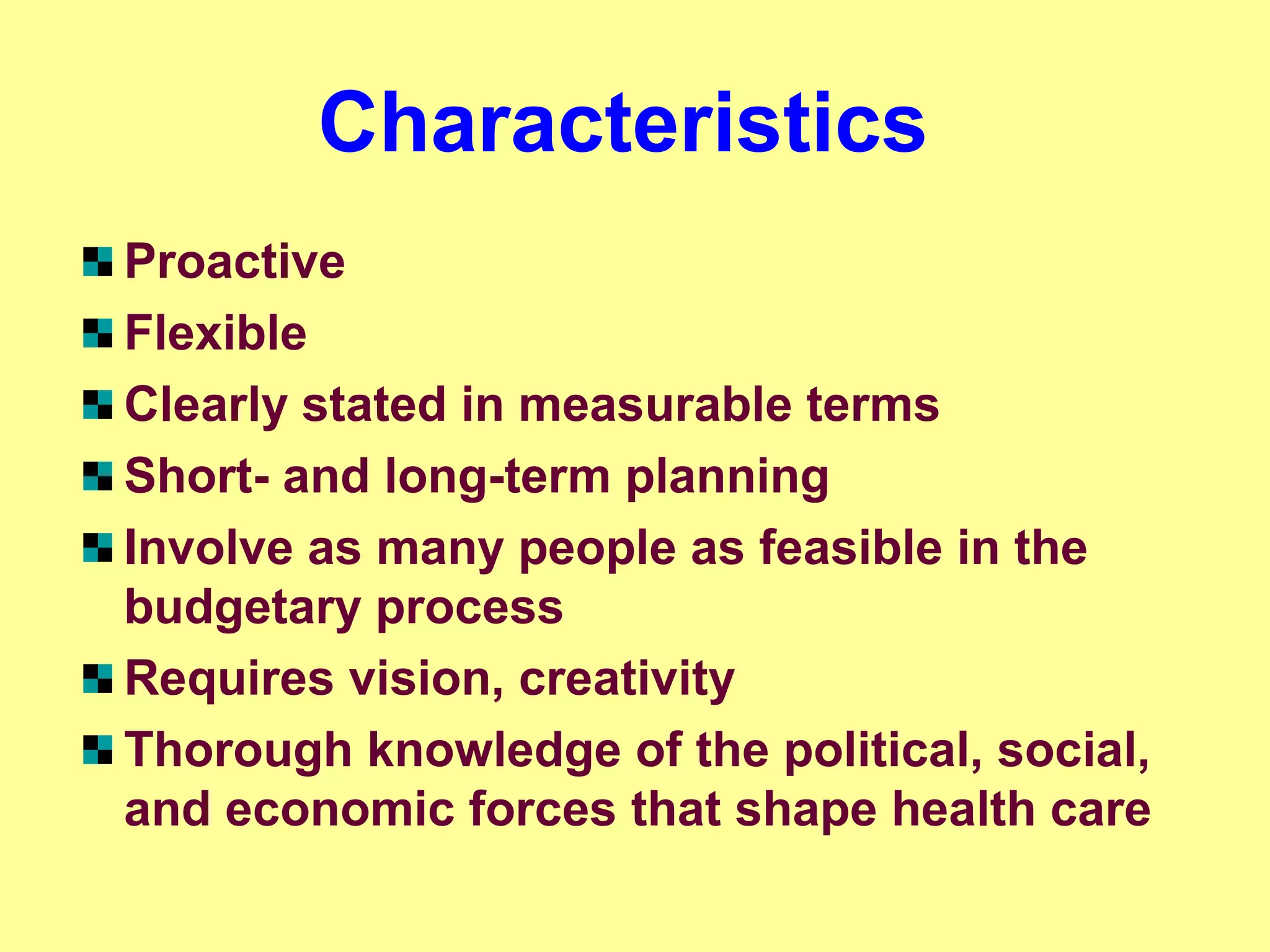
Characteristics
Proactive
Flexible
Clearly stated in measurable terms
Short- and long-term planning
Involve as many people as feasible in the
budgetary process
Requires vision, creativity
Thorough knowledge of the political, social,
and economic forces that shape health care
Evaluation
Implementation
Develop a plan
Assess what needs to be covered
STEPS IN FISCAL PLANNING
Integrating Leadership Roles And
Management Functions In Fiscal
Planning
Understand fiscal terminology
Aware of budgetary responsibilities
Maintaining cost effective unit
sensitivity to the organization’s
economic, social, and legislative
climate is a high-level management
function
Skillful in the monitoring aspects of
budget control
Leadership skills……
Flexibility
Creativity
Vision regarding future needs
Anticipate budget constraints
Act proactively
Identifying alternatives
Cost containment does not jeopardize
patient safety
Components of
expenditure
Plan Non- plan
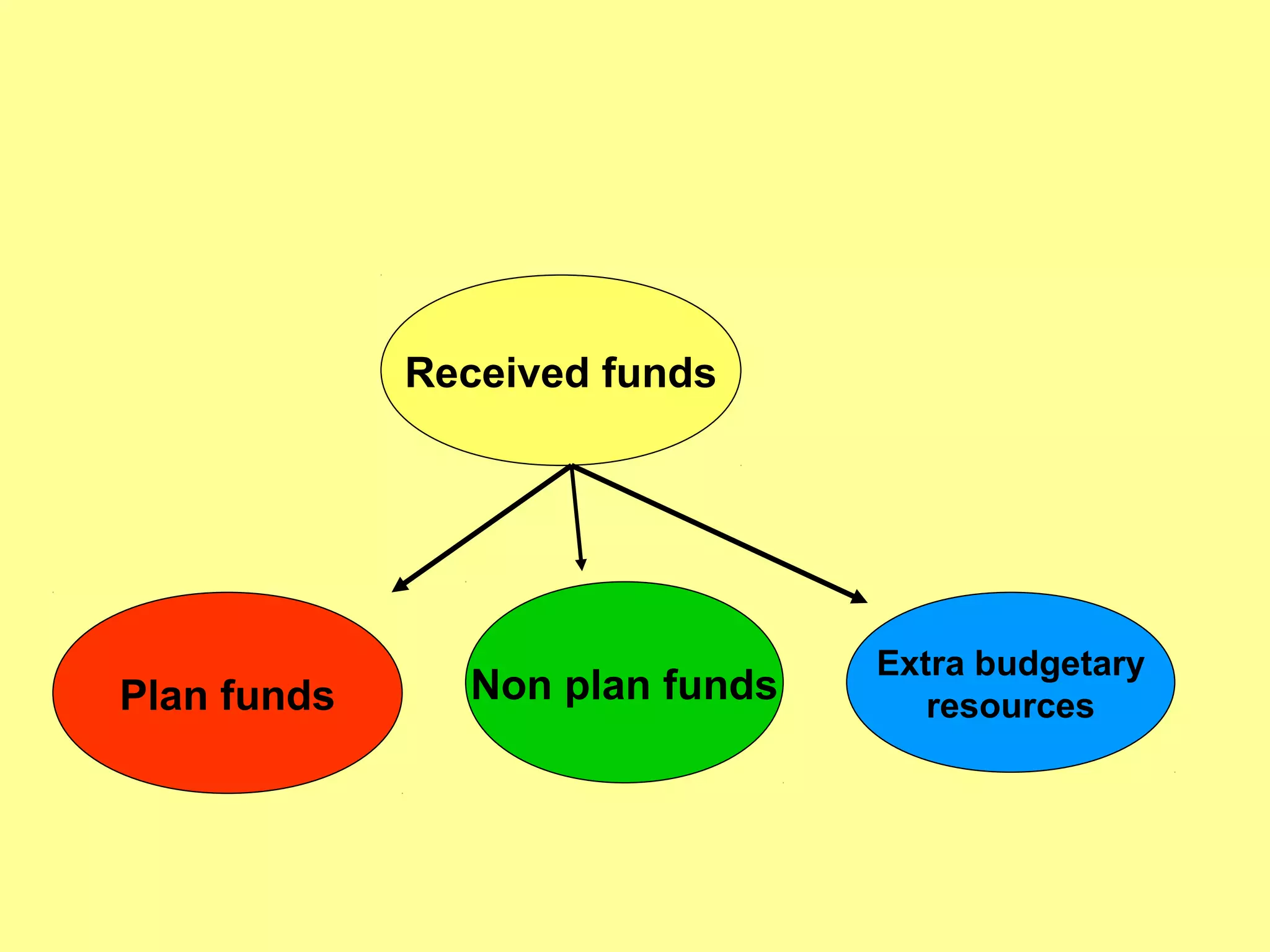
Received funds
Plan funds Non plan funds
Extra budgetary
resources
Zero based budgeting
A method of budgeting in which all
expenses must be justified for each new
period. Zero-based budgeting starts from a
"zero base" and every function within an
organization is analyzed for its needs and
costs. Budgets are then built around what is
needed for the upcoming period, regardless
of whether the budget is higher or lower than
the previous one.
Advantages
of zero
based
budgeting
Find cost
Effective
ways
Detects
Inflated
budgets
Useful
for service
departments
Efficient
allocation
of resources
Increases
Staff
motivation
Eliminate
Wasteful
operation
Identify
opportunities
Identify
mission
Increases
Communication
&
coordination
Disadvantages of
Zero based
budgeting
Difficult to
define
decision
units
Forced to
justify every
detail
Necessary to train
managers
Compressing
may remove
critically
important
details
Honesty of
the
managers
must be
reliable &
uniform
Implementation of Zero based
budgeting
The zero-based budgeting system puts the
burden of proof on the manager, and
demands that each manager justify the
entire budget in detail and prove why he or she
should spend the organization's money in the
manner proposed. A "decision package“
must be developed by each manager for every
project or activity, which includes an analysis
of cost, purpose, alternative courses of action,
measures of performance, consequences of not
performing the activity, and the benefits.
Each budget start
with an assumed value
of 0.
Each budgeted item is
started at last years
level, and next period’s
level is planned as an
increment to that level
Zero based budgeting Incremental budgeting
Vs
A combination of
zero-based
budgets with
rolling budgets or
some other form of
budgeting
Dysfunctional
behavior in
subordinates
Significant
levels of job
related tensions
Adverse effects
on peer and
subordinate –
superior
relationship
Behavioral impacts of
Zero
Based budgeting
Mid term appraisal
MTA — which is an exercise carried out
during the middle of a Plan period to
assess the direction in which the Plan
is moving and to take corrective action
wherever required — is slated to be
much more than a review of how much
money is going into various schemes
and projects .
Capital budget
Capital payments consist of capital
expenditure on acquisition of assets like
land, buildings, machinery, equipment, as
also investments in shares, etc., and loans
and advances granted by Central
Government to State and Union Territory
Governments, Government companies,
Corporations and other parties. Capital
Budget also incorporates transactions in the
Public Account.
Revenue budget
The revenue budget consists of
revenue receipts of the government
(revenues from tax and other sources)
and the expenditure met from these
revenues.
Hierarchy Of Budgets
Capital
assets
vehiclesvehiclesMachinery
&
productio
n
equipment
Machinery
&
productio
n
equipment
Store
equipment
&
furnishing
Store
equipment
&
furnishing
Lab
equipment
Lab
equipment
Office
furniture &
office
equipment
Office
furniture &
office
equipment
BuildingsBuildings
Large IT
systems
Large IT
systems
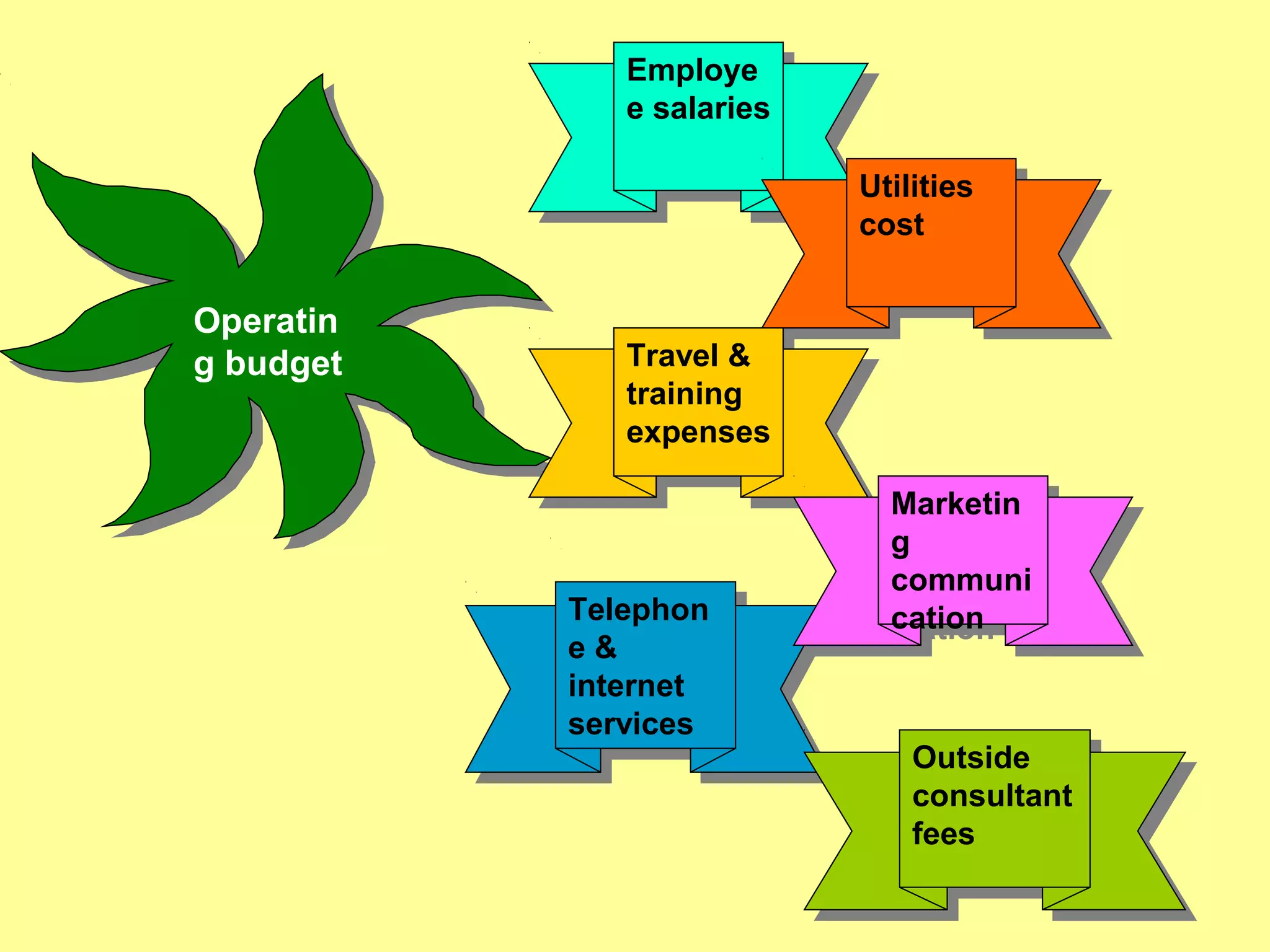
Operatin
g budget
Operatin
g budget
Employe
e salaries
Employe
e salaries
Utilities
cost
Utilities
cost
Travel &
training
expenses
Travel &
training
expenses
Telephon
e &
internet
services
Telephon
e &
internet
services
Marketin
g
communi
cation
Marketin
g
communi
cation
Outside
consultant
fees
Outside
consultant
fees
India union budget
• Revenue Budget: The revenue budget
primarily comprises Government revenue
receipts like tax and expenditure met from
the revenue. The tax revenues principally
constitute yields of taxes and other duties
imposed by the Government of India.
• Capital Budget: The capital budget primarily
comprises capital receipts and payments.
Revenue Deficit
Revenue deficit occurs when the actual
amount of expenditure and actual
amount of received revenue do not tally
with the anticipated expenditure and
revenue figures
Recommendations and Advice
by Experts
• precautionary measures to reduce
revenue deficit level not less than 50%
from the current level
• Recommends lowering the ratio of
revenue deficit to fiscal deficit below 50
percent.
Fiscal planning in nursing management

Fiscal planning in nursing management

  • 1.
  • 2.
    Steps Plan Non-Plan Zero Budgeting Mid-term appraisal Capital & revenue
  • 3.
    Limited role indetermining resource allocation. Allowed only limited input Nursing as Non Income producing service Overview of fiscal planning in nursing management
  • 4.
    Nursing budgets generally accountfor the greatest share of the total expenses in healthcare institutions, participation in fiscal planning has become a fundamental and powerful tool for nursing Nursing budgets generally account for the greatest share of the total expenses in healthcare institutions, participation in fiscal planning has become a fundamental and powerful tool for nursing In 21st century….
  • 5.
    Features of fiscalplanning… Most direct control or influence financial elements Receive regular data reports Reflects the philosophy, goals, and objectives of the organization Accountable for the financial results of the operating unit Responsibility accounting Active participation in unit budgeting
  • 6.
    Characteristics Proactive Flexible Clearly stated inmeasurable terms Short- and long-term planning Involve as many people as feasible in the budgetary process Requires vision, creativity Thorough knowledge of the political, social, and economic forces that shape health care
  • 7.
    Evaluation Implementation Develop a plan Assesswhat needs to be covered STEPS IN FISCAL PLANNING
  • 8.
    Integrating Leadership RolesAnd Management Functions In Fiscal Planning Understand fiscal terminology Aware of budgetary responsibilities Maintaining cost effective unit sensitivity to the organization’s economic, social, and legislative climate is a high-level management function Skillful in the monitoring aspects of budget control
  • 9.
    Leadership skills…… Flexibility Creativity Vision regardingfuture needs Anticipate budget constraints Act proactively Identifying alternatives Cost containment does not jeopardize patient safety
  • 10.
  • 11.
    Received funds Plan fundsNon plan funds Extra budgetary resources
  • 12.
    Zero based budgeting Amethod of budgeting in which all expenses must be justified for each new period. Zero-based budgeting starts from a "zero base" and every function within an organization is analyzed for its needs and costs. Budgets are then built around what is needed for the upcoming period, regardless of whether the budget is higher or lower than the previous one.
  • 13.
    Advantages of zero based budgeting Find cost Effective ways Detects Inflated budgets Useful forservice departments Efficient allocation of resources Increases Staff motivation Eliminate Wasteful operation Identify opportunities Identify mission Increases Communication & coordination
  • 14.
    Disadvantages of Zero based budgeting Difficultto define decision units Forced to justify every detail Necessary to train managers Compressing may remove critically important details Honesty of the managers must be reliable & uniform
  • 15.
    Implementation of Zerobased budgeting The zero-based budgeting system puts the burden of proof on the manager, and demands that each manager justify the entire budget in detail and prove why he or she should spend the organization's money in the manner proposed. A "decision package“ must be developed by each manager for every project or activity, which includes an analysis of cost, purpose, alternative courses of action, measures of performance, consequences of not performing the activity, and the benefits.
  • 16.
    Each budget start withan assumed value of 0. Each budgeted item is started at last years level, and next period’s level is planned as an increment to that level Zero based budgeting Incremental budgeting Vs
  • 17.
    A combination of zero-based budgetswith rolling budgets or some other form of budgeting Dysfunctional behavior in subordinates Significant levels of job related tensions Adverse effects on peer and subordinate – superior relationship Behavioral impacts of Zero Based budgeting
  • 18.
    Mid term appraisal MTA— which is an exercise carried out during the middle of a Plan period to assess the direction in which the Plan is moving and to take corrective action wherever required — is slated to be much more than a review of how much money is going into various schemes and projects .
  • 19.
    Capital budget Capital paymentsconsist of capital expenditure on acquisition of assets like land, buildings, machinery, equipment, as also investments in shares, etc., and loans and advances granted by Central Government to State and Union Territory Governments, Government companies, Corporations and other parties. Capital Budget also incorporates transactions in the Public Account.
  • 20.
    Revenue budget The revenuebudget consists of revenue receipts of the government (revenues from tax and other sources) and the expenditure met from these revenues.
  • 21.
  • 22.
  • 23.
    Operatin g budget Operatin g budget Employe esalaries Employe e salaries Utilities cost Utilities cost Travel & training expenses Travel & training expenses Telephon e & internet services Telephon e & internet services Marketin g communi cation Marketin g communi cation Outside consultant fees Outside consultant fees
  • 24.
    India union budget •Revenue Budget: The revenue budget primarily comprises Government revenue receipts like tax and expenditure met from the revenue. The tax revenues principally constitute yields of taxes and other duties imposed by the Government of India. • Capital Budget: The capital budget primarily comprises capital receipts and payments.
  • 25.
    Revenue Deficit Revenue deficitoccurs when the actual amount of expenditure and actual amount of received revenue do not tally with the anticipated expenditure and revenue figures
  • 26.
    Recommendations and Advice byExperts • precautionary measures to reduce revenue deficit level not less than 50% from the current level • Recommends lowering the ratio of revenue deficit to fiscal deficit below 50 percent.