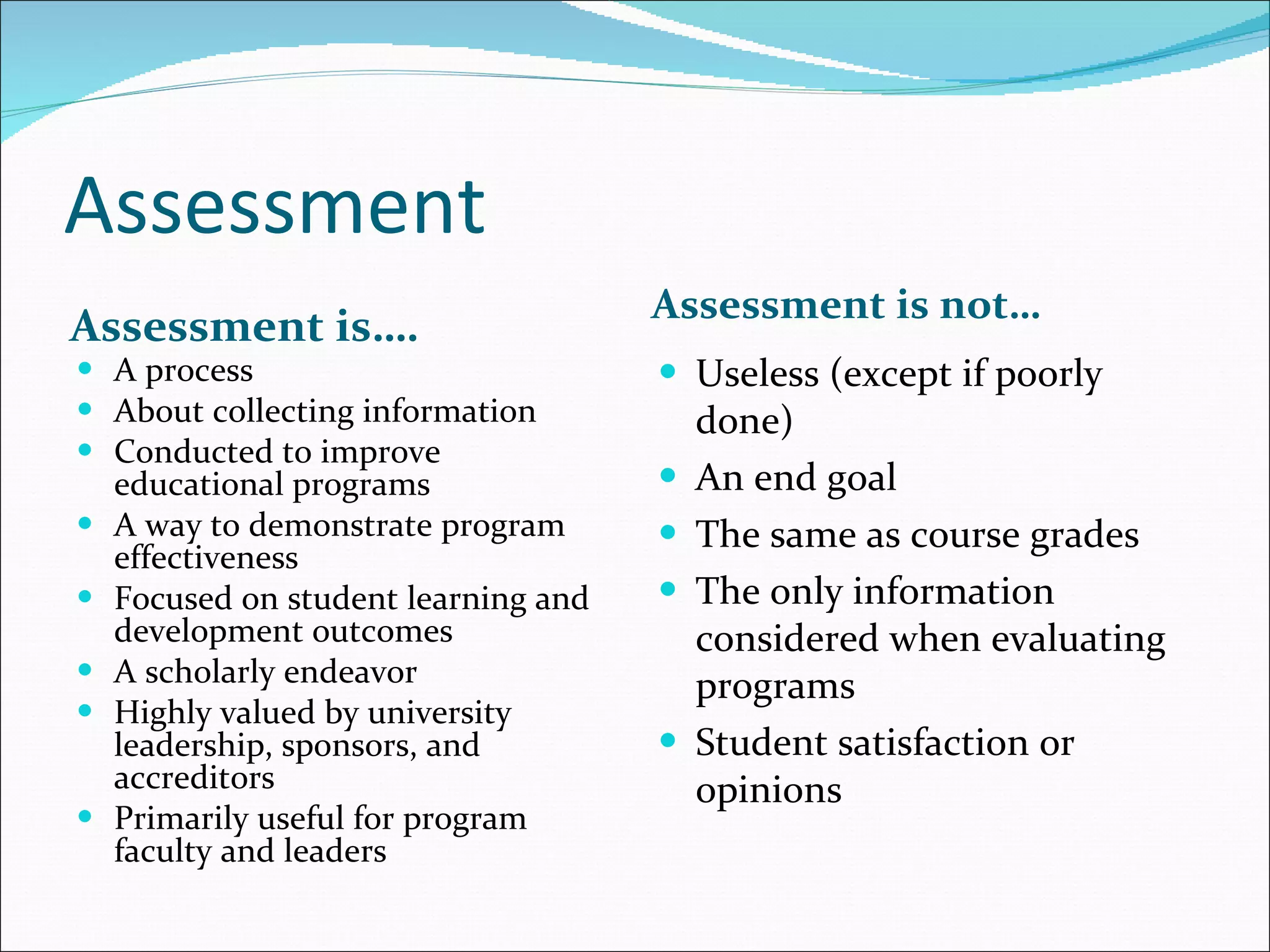
Assessment Assessment is…. Assessment is not… A process  About collecting information Conducted to improve educational programs A way to demonstrate program effectiveness Focused on student learning and development outcomes A scholarly endeavor Highly valued by university leadership, sponsors, and accreditors Primarily useful for program faculty and leaders  Useless (except if poorly done) An end goal The same as course grades  The only information considered when evaluating programs Student satisfaction or opinions
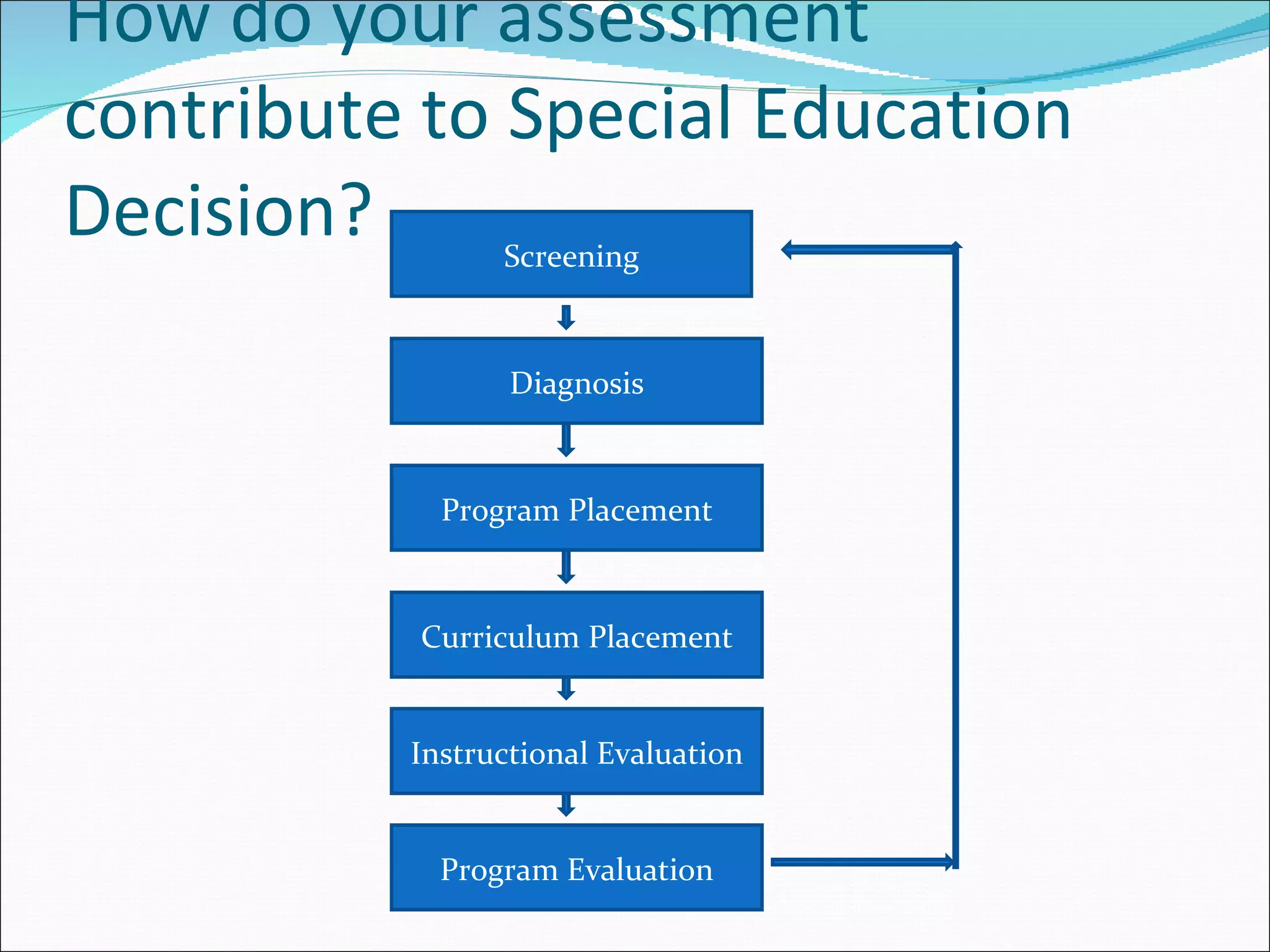
How do your assessment contribute to Special Education Decision? Screening Diagnosis Program Placement Curriculum Placement Instructional Evaluation Program Evaluation
Assignment: What are the types of assessing students with special needs? What are the accommodations to be made in the assessment process?
Making Action Plans McGill Action Planning System (MAPS) can help families, professionals, and a special student's peers find ways to fully include the student in school, in a classroom with classmates who are the same age. can help ensure the student and his or her peers will have positive learning experiences in that classroom.
What is the individual's history?"   "What is your dream for the child?"   "What is your nightmare?“ "Who is the student?“   "What are the student's gifts?“ "What are the student's needs?“ "What would an ideal day at school be like for the student?“
 
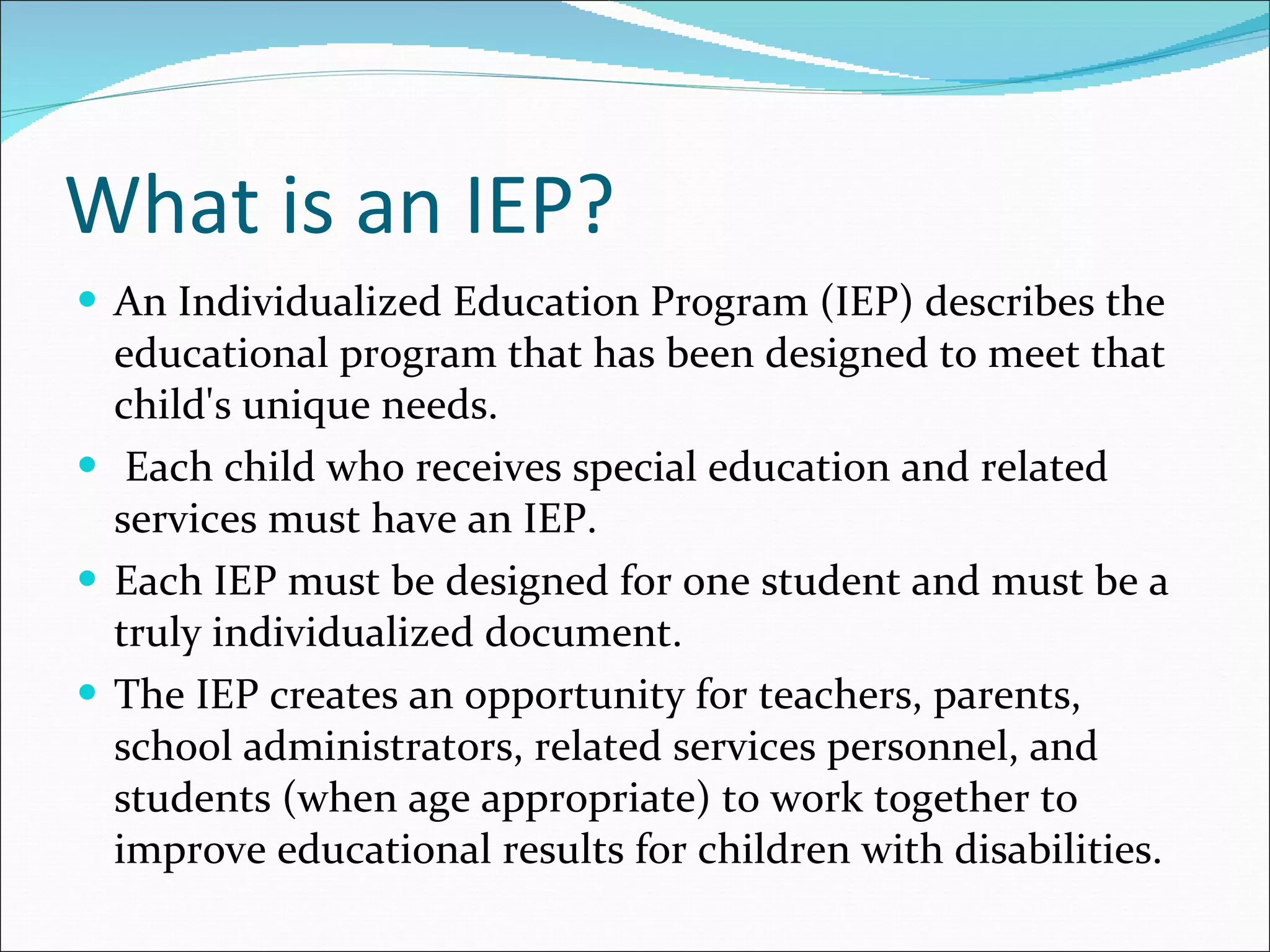
What is an IEP? An Individualized Education Program (IEP) describes the educational program that has been designed to meet that child's unique needs.  Each child who receives special education and related services must have an IEP.   Each IEP must be designed for one student and must be a truly individualized document.   The IEP creates an opportunity for teachers, parents, school administrators, related services personnel, and students (when age appropriate) to work together to improve educational results for children with disabilities.
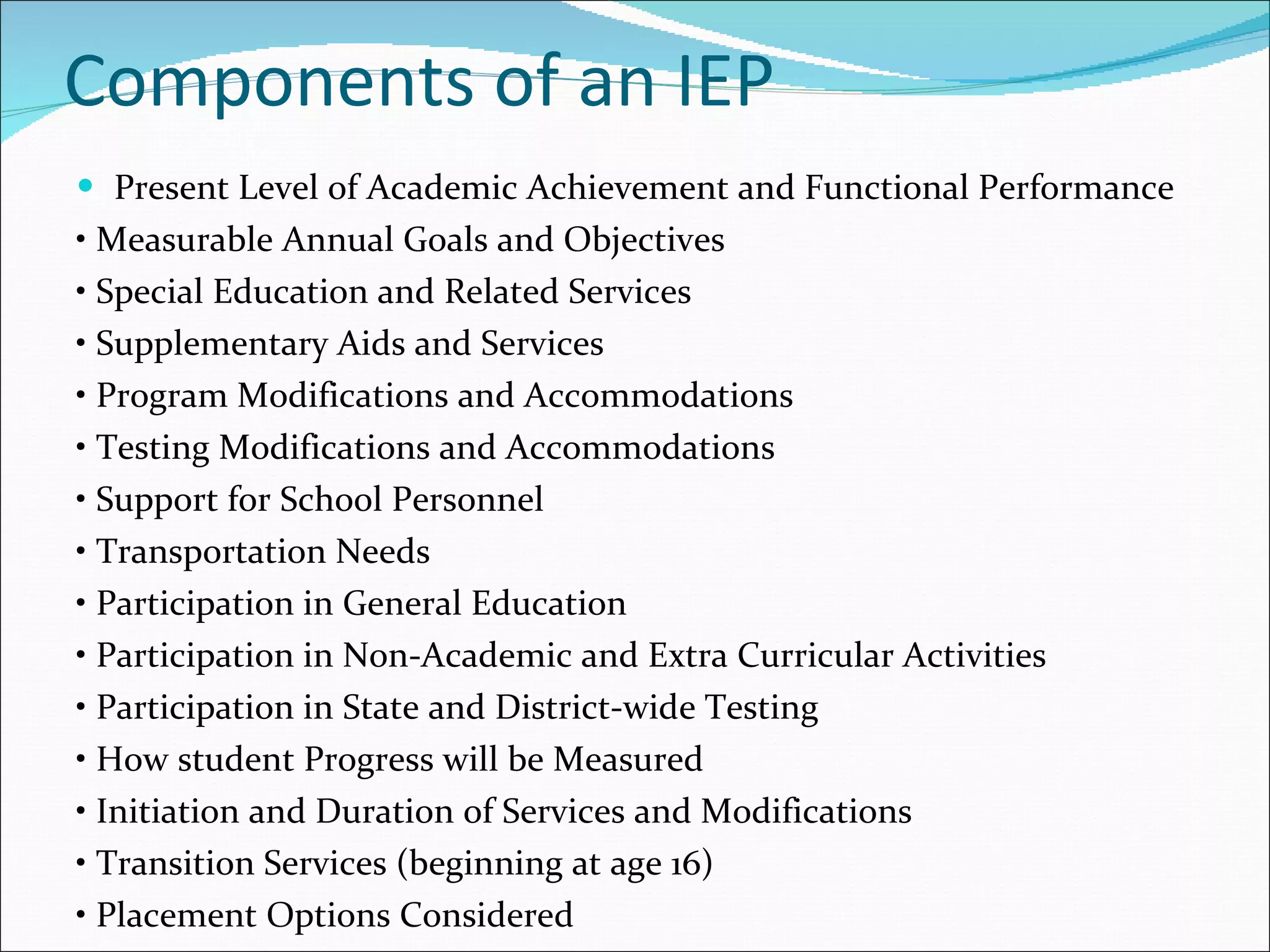
Components of an IEP Present Level of Academic Achievement and Functional Performance •  Measurable Annual Goals and Objectives •  Special Education and Related Services •  Supplementary Aids and Services •  Program Modifications and Accommodations •  Testing Modifications and Accommodations •  Support for School Personnel •  Transportation Needs •  Participation in General Education •  Participation in Non-Academic and Extra Curricular Activities •  Participation in State and District-wide Testing •  How student Progress will be Measured •  Initiation and Duration of Services and Modifications •  Transition Services (beginning at age 16) •  Placement Options Considered
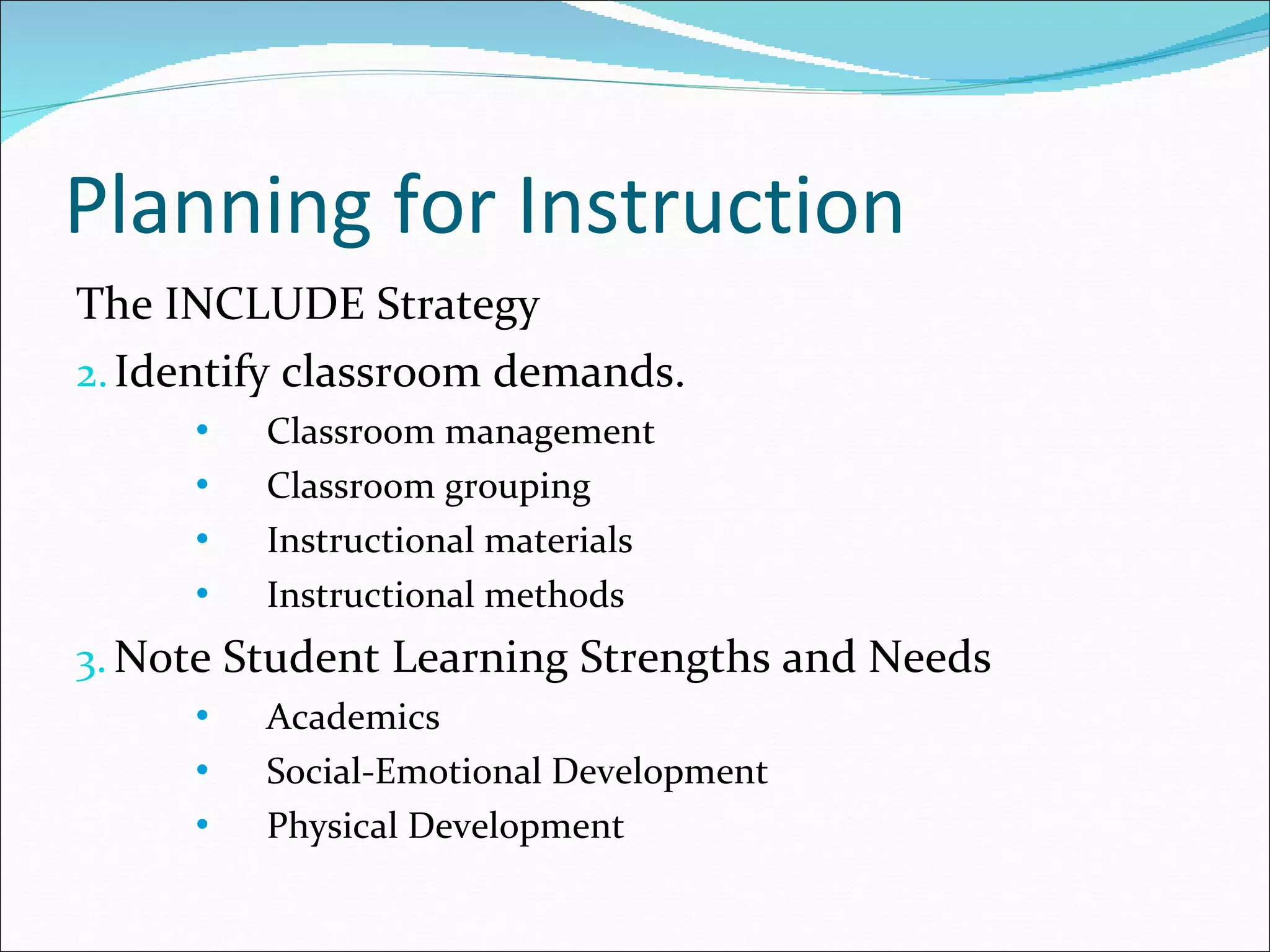
Planning for Instruction The INCLUDE Strategy Identify classroom demands. Classroom management Classroom grouping Instructional materials Instructional methods Note Student Learning Strengths and Needs Academics Social-Emotional Development Physical Development
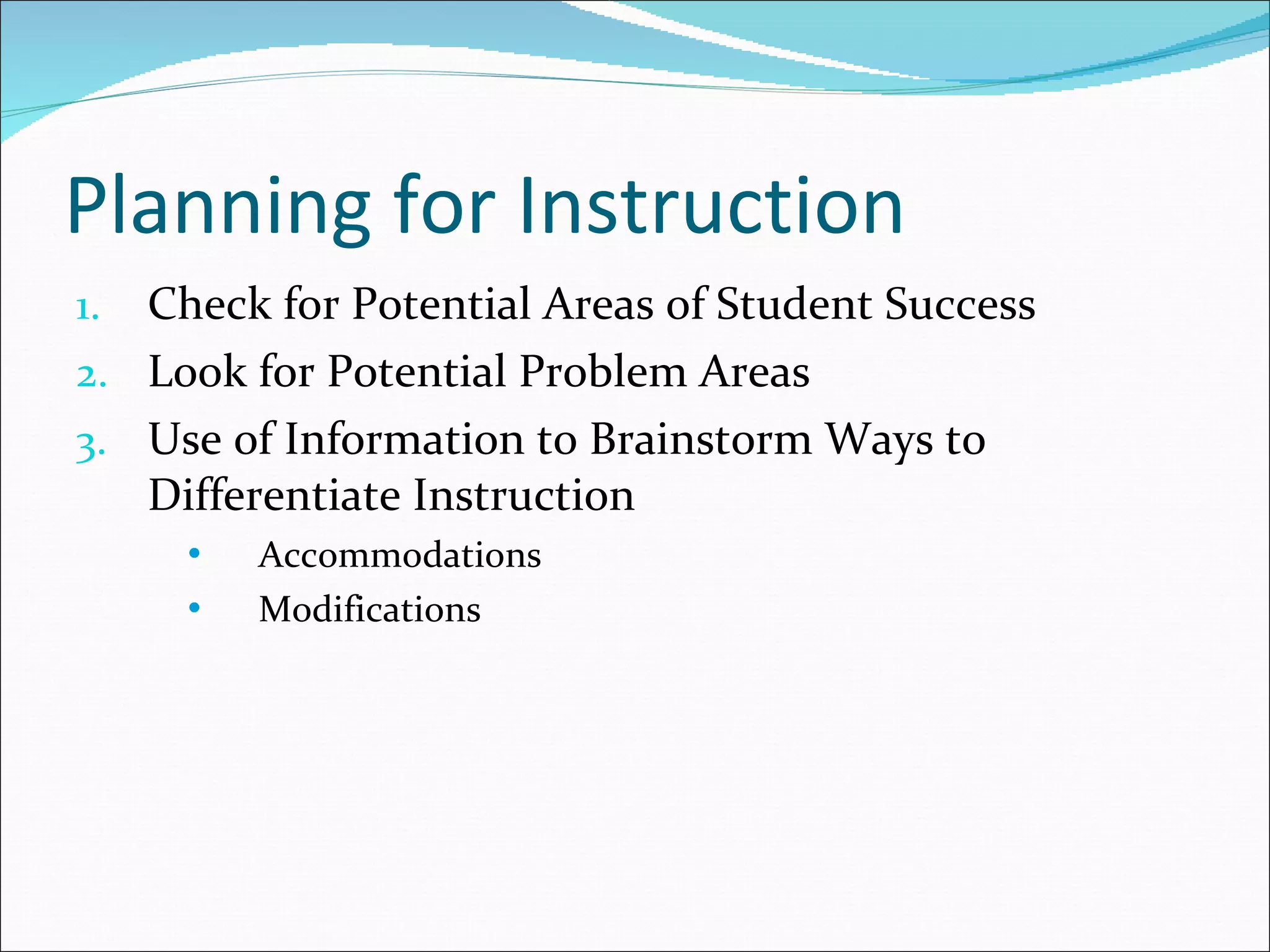
Planning for Instruction Check for Potential Areas of Student Success Look for Potential Problem Areas Use of Information to Brainstorm Ways to Differentiate Instruction Accommodations Modifications
Planning for Instruction 6. Differentiate Instruction Select age-appropriate strategies Select the easiest approach first Select accommodation and modifications you agree with Determine whether you are dealing with a “Can’t” or a “Won’t” Give students choices Select strategies with demonstrated effectiveness 7.  Evaluate Student Progress

Planing for instruction

  • 1.
  • 2.
  • 3.
    Assessment Assessment is….Assessment is not… A process About collecting information Conducted to improve educational programs A way to demonstrate program effectiveness Focused on student learning and development outcomes A scholarly endeavor Highly valued by university leadership, sponsors, and accreditors Primarily useful for program faculty and leaders Useless (except if poorly done) An end goal The same as course grades The only information considered when evaluating programs Student satisfaction or opinions
  • 4.
    How do yourassessment contribute to Special Education Decision? Screening Diagnosis Program Placement Curriculum Placement Instructional Evaluation Program Evaluation
  • 5.
    Assignment: What arethe types of assessing students with special needs? What are the accommodations to be made in the assessment process?
  • 6.
    Making Action PlansMcGill Action Planning System (MAPS) can help families, professionals, and a special student's peers find ways to fully include the student in school, in a classroom with classmates who are the same age. can help ensure the student and his or her peers will have positive learning experiences in that classroom.
  • 7.
    What is theindividual's history?" "What is your dream for the child?" "What is your nightmare?“ "Who is the student?“ "What are the student's gifts?“ "What are the student's needs?“ "What would an ideal day at school be like for the student?“
  • 8.
  • 9.
    What is anIEP? An Individualized Education Program (IEP) describes the educational program that has been designed to meet that child's unique needs.  Each child who receives special education and related services must have an IEP.  Each IEP must be designed for one student and must be a truly individualized document.  The IEP creates an opportunity for teachers, parents, school administrators, related services personnel, and students (when age appropriate) to work together to improve educational results for children with disabilities.
  • 10.
    Components of anIEP Present Level of Academic Achievement and Functional Performance • Measurable Annual Goals and Objectives • Special Education and Related Services • Supplementary Aids and Services • Program Modifications and Accommodations • Testing Modifications and Accommodations • Support for School Personnel • Transportation Needs • Participation in General Education • Participation in Non-Academic and Extra Curricular Activities • Participation in State and District-wide Testing • How student Progress will be Measured • Initiation and Duration of Services and Modifications • Transition Services (beginning at age 16) • Placement Options Considered
  • 11.
    Planning for InstructionThe INCLUDE Strategy Identify classroom demands. Classroom management Classroom grouping Instructional materials Instructional methods Note Student Learning Strengths and Needs Academics Social-Emotional Development Physical Development
  • 12.
    Planning for InstructionCheck for Potential Areas of Student Success Look for Potential Problem Areas Use of Information to Brainstorm Ways to Differentiate Instruction Accommodations Modifications
  • 13.
    Planning for Instruction6. Differentiate Instruction Select age-appropriate strategies Select the easiest approach first Select accommodation and modifications you agree with Determine whether you are dealing with a “Can’t” or a “Won’t” Give students choices Select strategies with demonstrated effectiveness 7. Evaluate Student Progress