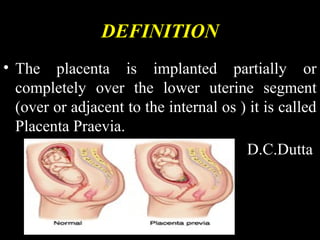
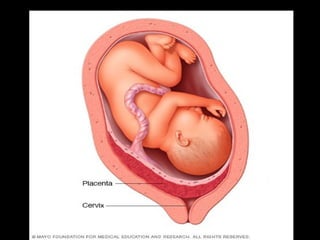
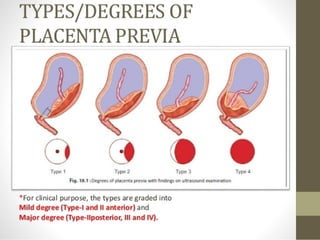
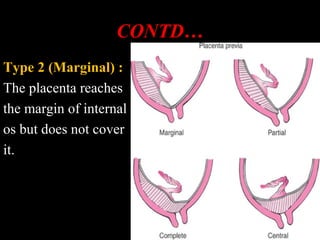
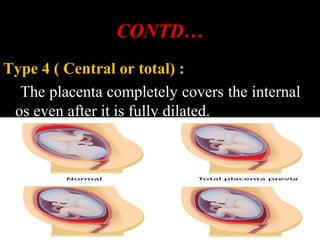
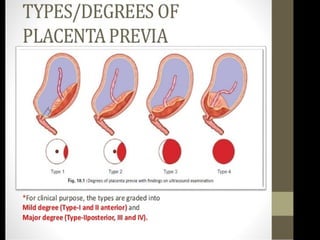
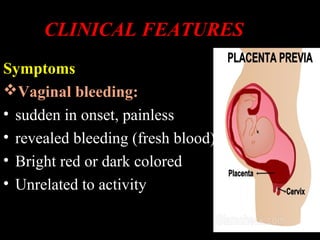
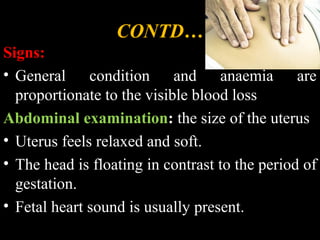
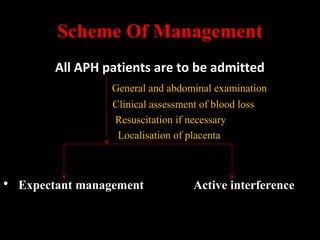
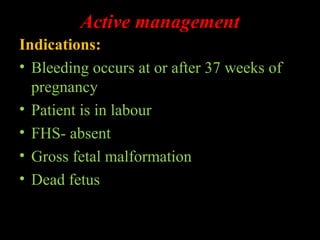
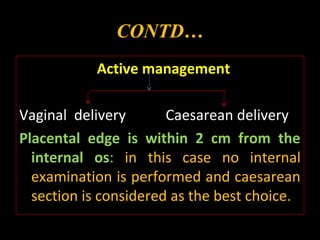
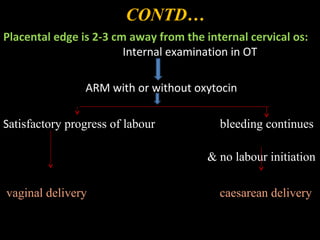
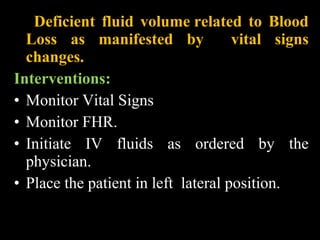
Placenta praevia is a condition where the placenta is implanted in the lower uterine segment, either partially or completely covering the internal cervical os. There are four types depending on the degree of coverage of the cervical os. Risk factors include multiparity, increased maternal age, smoking, and history of uterine scarring. Symptoms include painless vaginal bleeding unrelated to activity. Management depends on gestational age and stability of the mother and fetus, ranging from bed rest to cesarean delivery. Nursing care focuses on monitoring for signs of decreased cardiac output or tissue perfusion due to blood loss, and providing education and support to address the mother's fears.