
CASE STUDY
A 40 year old pregnant female of 30 weeks gestation presents
to the emergency room because of vaginal bleeding of 1
month duration. Spotty during the early days but significant
over the last 5 days. The patient also reports some
contractions but denies any continuing abdominal pain. She
denies any recent trauma. Her first baby was delivered via
caesarean section. She also revealed that she had been
smoking for the last 15 years.
On physical examination, her blood pressure was 80/60, heart
rate was 105/min. The uterus was soft and tender. There was
normal fetal heart tones.
Based on the history and physical examination, what is the
most likely diagnosis? Explain why this is your diagnosis.
The most common cause of late-pregnancy bleeding is a
problem with the placenta. Some bleeding can also be due to
an abnormal cervix or vagina.
The placenta can partially or completely cover the cervical opening (the
opening of the womb to the vagina). When a woman bleeds because of this,
it is called placenta previa. Late in pregnancy as the opening of the womb,
called the cervix, thins and dilates (widens) in preparation for labor, some
blood vessels of the placenta stretch and rupture. This causes about 20% of
third-trimester bleeding and happens in about 1 in 200 pregnancies.
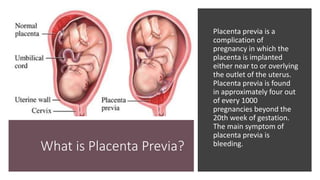
What is Placenta Previa?
Placenta previa is a
complication of
pregnancy in which the
placenta is implanted
either near to or overlying
the outlet of the uterus.
Placenta previa is found
in approximately four out
of every 1000
pregnancies beyond the
20th week of gestation.
The main symptom of
placenta previa is
bleeding.
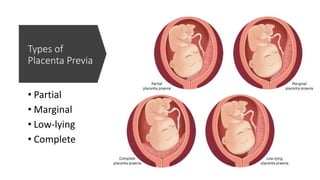
Types of
Placenta Previa
• Partial
• Marginal
• Low-lying
• Complete
Symptoms of
Placenta Previa
Bleeding is the primary symptom of
placenta previa and occurs in the majority
(70%-80%) of women with this condition.
• Vaginal bleeding after the 20th week of
gestation is characteristic of placenta
previa.
• Usually the bleeding is painless, but it
can be associated with uterine
contractions and abdominal pain.
• Bleeding may range in severity from
light to severe.
What are the diagnostic exams that should
be done to confirm this diagnosis?
Placenta previa is diagnosed through ultrasound,
either during a routine prenatal appointment or
after an episode of vaginal bleeding. Most cases of
placenta previa are diagnosed during a second
trimester ultrasound exam.
Diagnosis might require a combination of
abdominal ultrasound and transvaginal ultrasound.
If the doctor suspects placenta previa, they will
avoid routine vaginal exams to reduce the risk of
heavy bleeding.

Placenta Previa

  • 1.
  • 2.
    A 40 yearold pregnant female of 30 weeks gestation presents to the emergency room because of vaginal bleeding of 1 month duration. Spotty during the early days but significant over the last 5 days. The patient also reports some contractions but denies any continuing abdominal pain. She denies any recent trauma. Her first baby was delivered via caesarean section. She also revealed that she had been smoking for the last 15 years. On physical examination, her blood pressure was 80/60, heart rate was 105/min. The uterus was soft and tender. There was normal fetal heart tones.
  • 3.
    Based on thehistory and physical examination, what is the most likely diagnosis? Explain why this is your diagnosis. The most common cause of late-pregnancy bleeding is a problem with the placenta. Some bleeding can also be due to an abnormal cervix or vagina. The placenta can partially or completely cover the cervical opening (the opening of the womb to the vagina). When a woman bleeds because of this, it is called placenta previa. Late in pregnancy as the opening of the womb, called the cervix, thins and dilates (widens) in preparation for labor, some blood vessels of the placenta stretch and rupture. This causes about 20% of third-trimester bleeding and happens in about 1 in 200 pregnancies.
  • 4.
    What is PlacentaPrevia? Placenta previa is a complication of pregnancy in which the placenta is implanted either near to or overlying the outlet of the uterus. Placenta previa is found in approximately four out of every 1000 pregnancies beyond the 20th week of gestation. The main symptom of placenta previa is bleeding.
  • 5.
    Types of Placenta Previa •Partial • Marginal • Low-lying • Complete
  • 6.
    Symptoms of Placenta Previa Bleedingis the primary symptom of placenta previa and occurs in the majority (70%-80%) of women with this condition. • Vaginal bleeding after the 20th week of gestation is characteristic of placenta previa. • Usually the bleeding is painless, but it can be associated with uterine contractions and abdominal pain. • Bleeding may range in severity from light to severe.
  • 7.
    What are thediagnostic exams that should be done to confirm this diagnosis? Placenta previa is diagnosed through ultrasound, either during a routine prenatal appointment or after an episode of vaginal bleeding. Most cases of placenta previa are diagnosed during a second trimester ultrasound exam. Diagnosis might require a combination of abdominal ultrasound and transvaginal ultrasound. If the doctor suspects placenta previa, they will avoid routine vaginal exams to reduce the risk of heavy bleeding.