Salale University College of Health Sciences Department of
Adult Health Nursing Medical Surgical Nursing 2st Year 1nd
Semester, Msc Program
GROUP Seminar Presentation on: PITUITARY DISORDERS
Presented TO TADELE K. (Assistant Professor)
Presented by MESFIN SHIFERA 185-15
MESFIN ASSEFA 186-15
SEPT, 2023
Fitche,Oromia, Ethiopia
10/3/2023 1
Course Outline
Introduction
Anatomy
Definition
Etiology
Clinical Manifestations
Management
Prevention
Summary
Reference
10/3/2023 2
Objective
After completing this presentation, Students will able
to:
Identify anatomy of pituitary
Define pituitary disorders.
List causes of pituitary disorders.
Identify different management of pituitary disorders.
Define pituitary disorders and its management.
10/3/2023 3
Introduction
Located at the base of the brain and connected to the
hypothalamus.
Master gland because it controls the other endocrine
glands.
Divided into anterior and posterior lobes
(adenohypophysis &neurohypophysis).
Hypothalamus controls pituitary secretions.
10/3/2023 4
Introduction cont.…
5
Anterior pituitary lobe produces six major hormones:
Adrenocorticotropin hormone (ACTH) – stimulate adrenal
gland to secrete ACTH.
GH – bone and tissue growth.
TSH – stimulate thyroid gland to secrete T3 & T4.
Prolactin - act on breast to stimulate milk production.
FSH - sperm production & development of egg.
LH - secrete sex hormones (testosterone in male and estrogen
& progesterone in females).
10/3/2023
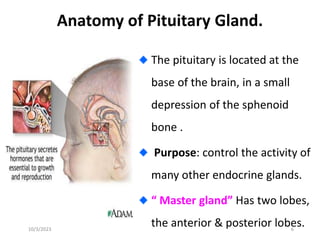
Anatomy of Pituitary Gland.
The pituitary is located at the
base of the brain, in a small
depression of the sphenoid
bone .
Purpose: control the activity of
many other endocrine glands.
“ Master gland” Has two lobes,
the anterior & posterior lobes.
10/3/2023 6
Anatomy cont....
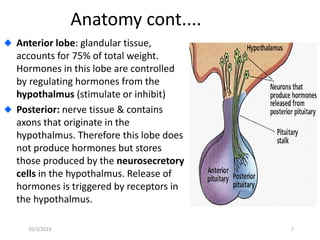
Anterior lobe: glandular tissue,
accounts for 75% of total weight.
Hormones in this lobe are controlled
by regulating hormones from the
hypothalmus (stimulate or inhibit)
Posterior: nerve tissue & contains
axons that originate in the
hypothalmus. Therefore this lobe does
not produce hormones but stores
those produced by the neurosecretory
cells in the hypothalmus. Release of
hormones is triggered by receptors in
the hypothalmus.
10/3/2023 7
Review - Hormones
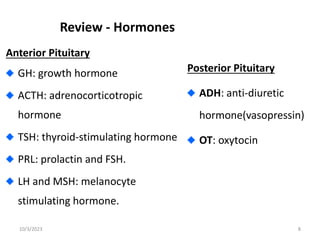
Anterior Pituitary
GH: growth hormone
ACTH: adrenocorticotropic
hormone
TSH: thyroid-stimulating hormone
PRL: prolactin and FSH.
LH and MSH: melanocyte
stimulating hormone.
Posterior Pituitary
ADH: anti-diuretic
hormone(vasopressin)
OT: oxytocin
10/3/2023 8
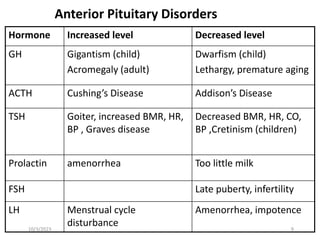
Anterior Pituitary Disorders
Hormone Increased level Decreased level
GH Gigantism (child)
Acromegaly (adult)
Dwarfism (child)
Lethargy, premature aging
ACTH Cushing’s Disease Addison’s Disease
TSH Goiter, increased BMR, HR,
BP , Graves disease
Decreased BMR, HR, CO,
BP ,Cretinism (children)
Prolactin amenorrhea Too little milk
FSH Late puberty, infertility
LH Menstrual cycle
disturbance
Amenorrhea, impotence
10/3/2023 9
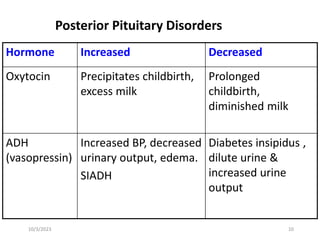
Posterior Pituitary Disorders
Hormone Increased Decreased
Oxytocin Precipitates childbirth,
excess milk
Prolonged
childbirth,
diminished milk
ADH
(vasopressin)
Increased BP, decreased
urinary output, edema.
SIADH
Diabetes insipidus ,
dilute urine &
increased urine
output
10/3/2023 10
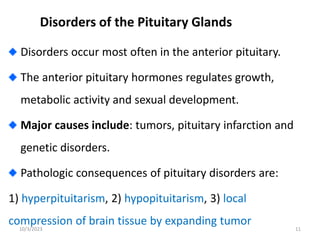
Disorders of the Pituitary Glands
10/3/2023 11
Disorders occur most often in the anterior pituitary.
The anterior pituitary hormones regulates growth,
metabolic activity and sexual development.
Major causes include: tumors, pituitary infarction and
genetic disorders.
Pathologic consequences of pituitary disorders are:
1) hyperpituitarism, 2) hypopituitarism, 3) local
compression of brain tissue by expanding tumor
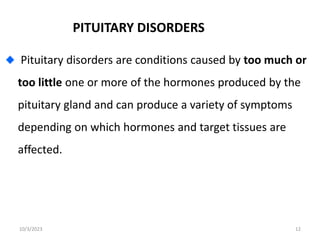
PITUITARY DISORDERS
Pituitary disorders are conditions caused by too much or
too little one or more of the hormones produced by the
pituitary gland and can produce a variety of symptoms
depending on which hormones and target tissues are
affected.
10/3/2023 12
1.HYPOPITUITARISM
Hypopituitarism is a rare disorder where there is a loss of
function in the pituitary and the failure to secrete
hormones that affect many of the body's functions.
Patients diagnosed with hypopituitarism may be deficient
in one or several hormones or have complete pituitary
failure.
10/3/2023 13
ETIOLOGY
Congenital
Tumor
Inflammation
Infection
Head injuries
Lesions
Surgery
Tuberculosis
Radiographic therapy
10/3/2023 14
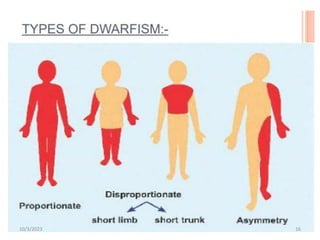
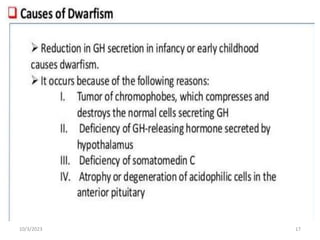
DWARFISM
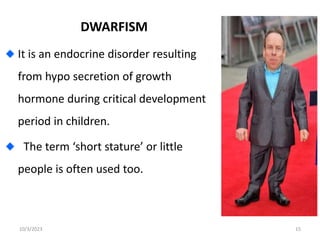
It is an endocrine disorder resulting
from hypo secretion of growth
hormone during critical development
period in children.
The term ‘short stature’ or little
people is often used too.
10/3/2023 15
10/3/2023 16
10/3/2023 17
Conti...
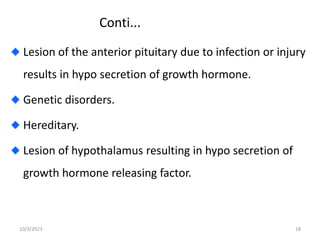
Lesion of the anterior pituitary due to infection or injury
results in hypo secretion of growth hormone.
Genetic disorders.
Hereditary.
Lesion of hypothalamus resulting in hypo secretion of
growth hormone releasing factor.
10/3/2023 18
CLINICAL FEATURES:
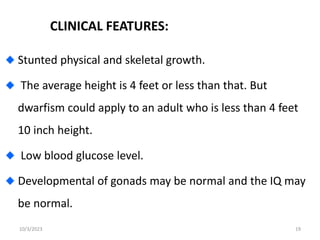
Stunted physical and skeletal growth.
The average height is 4 feet or less than that. But
dwarfism could apply to an adult who is less than 4 feet
10 inch height.
Low blood glucose level.
Developmental of gonads may be normal and the IQ may
be normal.
10/3/2023 19
DIAGNOSTIC EVALUATION:
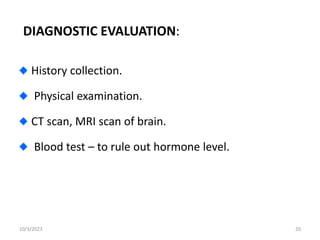
History collection.
Physical examination.
CT scan, MRI scan of brain.
Blood test – to rule out hormone level.
10/3/2023 20
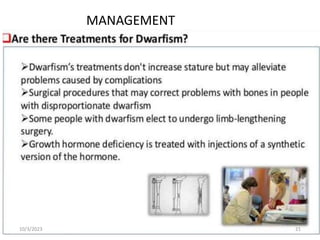
MANAGEMENT
10/3/2023 21
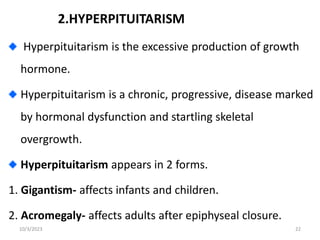
2.HYPERPITUITARISM
Hyperpituitarism is the excessive production of growth
hormone.
Hyperpituitarism is a chronic, progressive, disease marked
by hormonal dysfunction and startling skeletal
overgrowth.
Hyperpituitarism appears in 2 forms.
1. Gigantism- affects infants and children.
2. Acromegaly- affects adults after epiphyseal closure.
10/3/2023 22
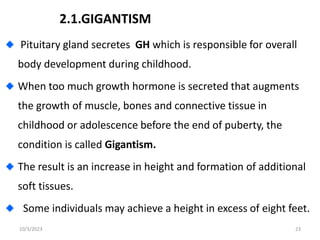
2.1.GIGANTISM
Pituitary gland secretes GH which is responsible for overall
body development during childhood.
When too much growth hormone is secreted that augments
the growth of muscle, bones and connective tissue in
childhood or adolescence before the end of puberty, the
condition is called Gigantism.
The result is an increase in height and formation of additional
soft tissues.
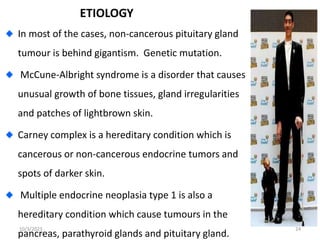
Some individuals may achieve a height in excess of eight feet.
10/3/2023 23
ETIOLOGY
In most of the cases, non-cancerous pituitary gland
tumour is behind gigantism. Genetic mutation.
McCune-Albright syndrome is a disorder that causes
unusual growth of bone tissues, gland irregularities
and patches of lightbrown skin.
Carney complex is a hereditary condition which is
cancerous or non-cancerous endocrine tumors and
spots of darker skin.
Multiple endocrine neoplasia type 1 is also a
hereditary condition which cause tumours in the
pancreas, parathyroid glands and pituitary gland.
10/3/2023 24
CLINICAL FEATURES
Child will be much taller than other children of the same age.
Parts of the body may be visibly bigger than other parts.
Common signs of gigantism include.
large hands and feet,
Thick toes and fingers.
A bulging jaw and forehead.
Improper facial features and Children suffering from gigantism may
also suffer from large heads, lips, or tongues.
10/3/2023 25
The symptoms of gigantism depend on the size of the
pituitary gland tumor.
Some children may experience vision problems,
headaches and nausea from tumor.
Other symptoms include:
Large scale sweating.
Weakness .
Onset of puberty in boys and girls may be delayed .
Irregularity in menstrual cycle and Deafness.
10/3/2023 26
DIAGNOSTIC EVALUATION
History collection.
CT scan , MRI scan- to rule out pituitary tumour.
Oral Glucose Tolerance Test- to rule out hyperglycemia.
Blood test- to rule out growth hormone level, high
prolactin level, increase insulin level, growth factor - 1
levels
10/3/2023 27
MANAGEMENT
Gigantism requires early detection and strong treatment to
prevent excess production of growth hormone and to improve
life expectancy.
Surgery include. Transsphenoidal adenectomy.
Hypophysectomy surgery is the first line of treatment with the
objective of removing the tumor to minimize growth hormone
levels and reduce the pressure on the nerves.
Radiation therapy is another option if surgery has not provided
a complete cure.
It can take several years for radiation therapy to be effective.
Half of the patients achieve controlled growth hormone in 5-
10 years.
10/3/2023 28
Drug therapy may also be used in certain circumstances.
Drug therapy include:-
 Somatostatin analogs - reduces growth hormone release.
 Pegvisomant -blocks the effects of growth hormone.
Drug therapy is used :–
Prior to surgery in order to control symptoms and cause
the tumour to shrink.
Post surgery when growth hormone levels are not
managed.
While radiation therapy is going on.
Individuals not qualified for surgical process.
10/3/2023 29
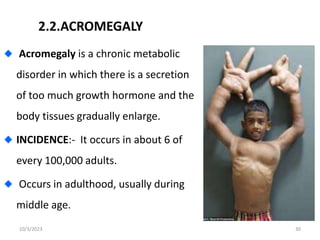
2.2.ACROMEGALY
Acromegaly is a chronic metabolic
disorder in which there is a secretion
of too much growth hormone and the
body tissues gradually enlarge.
INCIDENCE:- It occurs in about 6 of
every 100,000 adults.
Occurs in adulthood, usually during
middle age.
10/3/2023 30
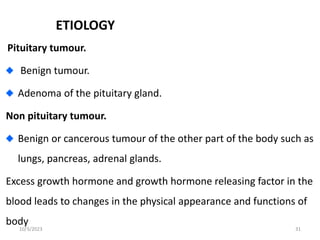
ETIOLOGY
Pituitary tumour.
Benign tumour.
Adenoma of the pituitary gland.
Non pituitary tumour.
Benign or cancerous tumour of the other part of the body such as
lungs, pancreas, adrenal glands.
Excess growth hormone and growth hormone releasing factor in the
blood leads to changes in the physical appearance and functions of
body
10/3/2023 31
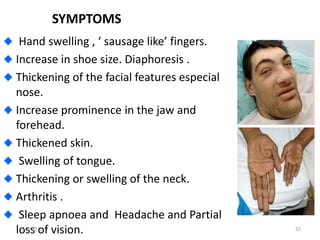
SYMPTOMS
Hand swelling , ‘ sausage like’ fingers.
Increase in shoe size. Diaphoresis .
Thickening of the facial features especial
nose.
Increase prominence in the jaw and
forehead.
Thickened skin.
Swelling of tongue.
Thickening or swelling of the neck.
Arthritis .
Sleep apnoea and Headache and Partial
loss of vision.
10/3/2023 32
SYMPTOMS Cont…
Pain , numbness, tingling or weakness in hands and
wrists.
Increased thirst and urination.
Hyperglycemia.
Chest pain.
Shortness of breath.
Palpitation and Heart failure.
10/3/2023 33
DIAGNOSTIC EVALUATION
History collection.
Physical examination.
CT scan , MRI scan of head, chest, abdomen, pelvis,
adrenal glands, ovaries,
10/3/2023 34
MANAGEMENT
Goal of the treatment is to relieve
and reverse the symptoms of
acromegaly.
Surgical treatment is the first line
treatment. Surgery brings remission
and in some people, but not all.
TRANSSPHENOIDAL HYPOPHYSECTOMY
10/3/2023 35
Radiation therapy- is an option to reduce the size of the
tumour and hence reduce the production of growth hormone.
Radiation therapy focuses on high intensity radiation at
pituitary tumour to destroy the abnormal cells.
Drug therapy – Somatostatin analogs- reduces growth hormone
release.
Dopamine agonists- prevents the release of growth hormone.
Growth hormone receptor agonist eg .Pegvisomant blocks the
effects of growth hormone.
10/3/2023 36
DIABETES INSIPIDUS
10/3/2023 37
Diabetes insipidus
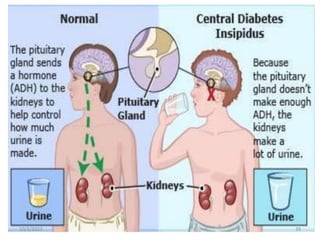
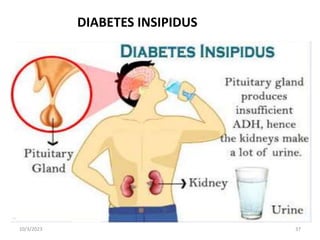
DEFINITION :- Diabetes insipidus is a disorder of the
posterior lobe of the pituitary gland characterized by a
deficiency of antidiuretic hormone (ADH), or vasopressin.
Great thirst (polydipsia) and large volumes of dilute urine
characterize the disorder.
10/3/2023 38
10/3/2023 39
TYPES OF DI
Central diabetes insipidus
Nephrogenic diabetes insipidus
Psychogenic diabetes insipidus
Gestational diabetes insipidus.
10/3/2023 40
CAUSES
A) Central diabetes insipidus .
Head trauma or surgery .
Pituitary or hypothalamic tumour .
Intracerebral occlusion or infection
B) Nephrogenic diabetes insipidus .
Systemic diseases involving the kidney .
Multiple myeloma .
sickle cell anemia .
Polycystic kidney disease .
Pyelonephritis and Medications such as lithium
10/3/2023 41
PATHOPHYSIOLOGY
A) Central diabetes insipidus .
Loss of vasopressin-producing cells.
Causing deficiency in antidiuretic hormone (ADH)
synthesis or release.
Deficiency in ADH, resulting in an inability to conserve water.
leading to extreme polyuria and polydipsia.
B) Nephrogenic diabetes insipidus .
Depression of aldosterone release or inability of the nephrons to
respond to ADH.
causing extreme polyuria and polydipsia
10/3/2023 42
SIGNS AND SYMPTOMS
Polyuria with urine output of 5 to 15 L daily.
Polydipsia, especially a desire for cold fluids .
Marked dehydration, as evidenced by dry mucous
membranes, dry skin, and weight loss.
Anorexia and epigastric fullness and Nocturia and
related fatigue from interrupted sleep
10/3/2023 43
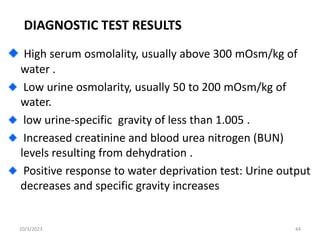
DIAGNOSTIC TEST RESULTS
High serum osmolality, usually above 300 mOsm/kg of
water .
Low urine osmolarity, usually 50 to 200 mOsm/kg of
water.
low urine-specific gravity of less than 1.005 .
Increased creatinine and blood urea nitrogen (BUN)
levels resulting from dehydration .
Positive response to water deprivation test: Urine output
decreases and specific gravity increases
10/3/2023 44
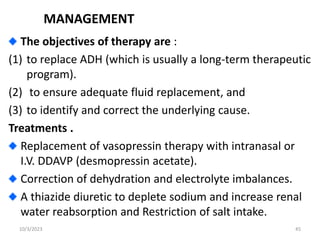
MANAGEMENT
The objectives of therapy are :
(1) to replace ADH (which is usually a long-term therapeutic
program).
(2) to ensure adequate fluid replacement, and
(3) to identify and correct the underlying cause.
Treatments .
Replacement of vasopressin therapy with intranasal or
I.V. DDAVP (desmopressin acetate).
Correction of dehydration and electrolyte imbalances.
A thiazide diuretic to deplete sodium and increase renal
water reabsorption and Restriction of salt intake.
10/3/2023 45
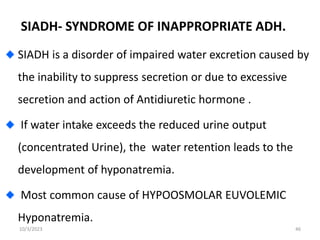
SIADH- SYNDROME OF INAPPROPRIATE ADH.
SIADH is a disorder of impaired water excretion caused by
the inability to suppress secretion or due to excessive
secretion and action of Antidiuretic hormone .
If water intake exceeds the reduced urine output
(concentrated Urine), the water retention leads to the
development of hyponatremia.
Most common cause of HYPOOSMOLAR EUVOLEMIC
Hyponatremia.
10/3/2023 46
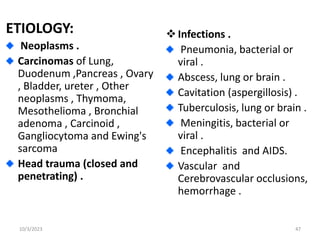
ETIOLOGY:
Neoplasms .
Carcinomas of Lung,
Duodenum ,Pancreas , Ovary
, Bladder, ureter , Other
neoplasms , Thymoma,
Mesothelioma , Bronchial
adenoma , Carcinoid ,
Gangliocytoma and Ewing's
sarcoma
Head trauma (closed and
penetrating) .
Infections .
Pneumonia, bacterial or
viral .
Abscess, lung or brain .
Cavitation (aspergillosis) .
Tuberculosis, lung or brain .
Meningitis, bacterial or
viral .
Encephalitis and AIDS.
Vascular and
Cerebrovascular occlusions,
hemorrhage .
10/3/2023 47
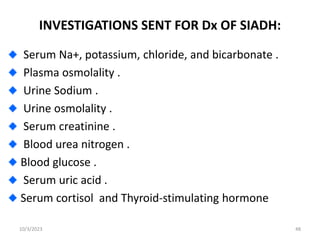
INVESTIGATIONS SENT FOR Dx OF SIADH:
Serum Na+, potassium, chloride, and bicarbonate .
Plasma osmolality .
Urine Sodium .
Urine osmolality .
Serum creatinine .
Blood urea nitrogen .
Blood glucose .
Serum uric acid .
Serum cortisol and Thyroid-stimulating hormone
10/3/2023 48
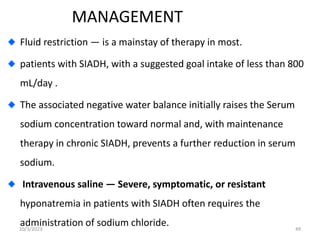
MANAGEMENT
Fluid restriction — is a mainstay of therapy in most.
patients with SIADH, with a suggested goal intake of less than 800
mL/day .
The associated negative water balance initially raises the Serum
sodium concentration toward normal and, with maintenance
therapy in chronic SIADH, prevents a further reduction in serum
sodium.
Intravenous saline — Severe, symptomatic, or resistant
hyponatremia in patients with SIADH often requires the
administration of sodium chloride.
10/3/2023 49
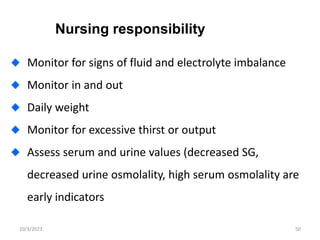
Nursing responsibility
Monitor for signs of fluid and electrolyte imbalance
Monitor in and out
Daily weight
Monitor for excessive thirst or output
Assess serum and urine values (decreased SG,
decreased urine osmolality, high serum osmolality are
early indicators
10/3/2023 50
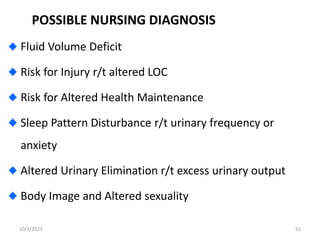
POSSIBLE NURSING DIAGNOSIS
Fluid Volume Deficit
Risk for Injury r/t altered LOC
Risk for Altered Health Maintenance
Sleep Pattern Disturbance r/t urinary frequency or
anxiety
Altered Urinary Elimination r/t excess urinary output
Body Image and Altered sexuality
10/3/2023 51
Panhypopituitarism
When both the anterior and posterior fail to secrete
hormones, the condition is called panhypopituitarism.
Causes include tumors, infection, injury, iatrogenic (radiation,
surgery), infarction
Manifestations don’t occur until 75% of pituitary has been
obliterated.
Treatment involves removal of cause and hormone
replacement (adrenaocortical insufficiency, thyroid hormone,
sex hormones)
10/3/2023 52
SUMMARRY
The anterior pituitary gland releases a number of peptide
hormones, which are themselves regulated by hypothalamus
hormones that reach the pituitary via the portal blood system.
The anterior pituitary hormones include ACTH, TSH, LH and
FSH; the irrespective target organs are the adrenal and thyroid
glands and the ovaries/testes.
GH is also an anterior pituitary hormone but does not have a
specific target organ.
Hypopituitarism can be due to many conditions, such as
pituitary infiltration or destruction, and results in a deficiency
of all (panhypopituitarism) or some of the pituitary hormones.
Conversely, excess release of certain anterior pituitary
hormones can occur because of pituitary tumours. For
example, acromegaly is due to excess GH, and Cushing's
disease to excess ACTH release.
10/3/2023 53
REFERENCES
1. Levy A, Lightman SL. Molecular defects in the pathogenesis
of pituitary tumors. Frontiers in Neuroendocrinology
2003;24:94–127. c A comprehensive review of pituitary
tumour pathogenesis, including the familial pituitary cancer
syndromes.
2. Melmed S, Vance ML, Barkan AL, et al. Current status and
future opportunities for controlling acromegaly. Pituitary An
overview of treatment options in acromegaly.
3. Marcou Y, Plowman PN. Stereotactic radiosurgery for
pituitary adenomas.
4. McKeage K, Cheer S, Wagstaff AJ. Octreotide long-acting
release (LAR): a review of its use in the management of
acromegaly. Drugs 2003;63:247–9. c A review of somatostatin
analogue efficacy in acromegaly.
10/3/2023 54
10/3/2023 55

pitutiary disorder final.pptx

  • 1.
    Salale University Collegeof Health Sciences Department of Adult Health Nursing Medical Surgical Nursing 2st Year 1nd Semester, Msc Program GROUP Seminar Presentation on: PITUITARY DISORDERS Presented TO TADELE K. (Assistant Professor) Presented by MESFIN SHIFERA 185-15 MESFIN ASSEFA 186-15 SEPT, 2023 Fitche,Oromia, Ethiopia 10/3/2023 1
  • 2.
  • 3.
    Objective After completing thispresentation, Students will able to: Identify anatomy of pituitary Define pituitary disorders. List causes of pituitary disorders. Identify different management of pituitary disorders. Define pituitary disorders and its management. 10/3/2023 3
  • 4.
    Introduction Located at thebase of the brain and connected to the hypothalamus. Master gland because it controls the other endocrine glands. Divided into anterior and posterior lobes (adenohypophysis &neurohypophysis). Hypothalamus controls pituitary secretions. 10/3/2023 4
  • 5.
    Introduction cont.… 5 Anterior pituitarylobe produces six major hormones: Adrenocorticotropin hormone (ACTH) – stimulate adrenal gland to secrete ACTH. GH – bone and tissue growth. TSH – stimulate thyroid gland to secrete T3 & T4. Prolactin - act on breast to stimulate milk production. FSH - sperm production & development of egg. LH - secrete sex hormones (testosterone in male and estrogen & progesterone in females). 10/3/2023
  • 6.
    Anatomy of PituitaryGland. The pituitary is located at the base of the brain, in a small depression of the sphenoid bone . Purpose: control the activity of many other endocrine glands. “ Master gland” Has two lobes, the anterior & posterior lobes. 10/3/2023 6
  • 7.
    Anatomy cont.... Anterior lobe:glandular tissue, accounts for 75% of total weight. Hormones in this lobe are controlled by regulating hormones from the hypothalmus (stimulate or inhibit) Posterior: nerve tissue & contains axons that originate in the hypothalmus. Therefore this lobe does not produce hormones but stores those produced by the neurosecretory cells in the hypothalmus. Release of hormones is triggered by receptors in the hypothalmus. 10/3/2023 7
  • 8.
    Review - Hormones AnteriorPituitary GH: growth hormone ACTH: adrenocorticotropic hormone TSH: thyroid-stimulating hormone PRL: prolactin and FSH. LH and MSH: melanocyte stimulating hormone. Posterior Pituitary ADH: anti-diuretic hormone(vasopressin) OT: oxytocin 10/3/2023 8
  • 9.
    Anterior Pituitary Disorders HormoneIncreased level Decreased level GH Gigantism (child) Acromegaly (adult) Dwarfism (child) Lethargy, premature aging ACTH Cushing’s Disease Addison’s Disease TSH Goiter, increased BMR, HR, BP , Graves disease Decreased BMR, HR, CO, BP ,Cretinism (children) Prolactin amenorrhea Too little milk FSH Late puberty, infertility LH Menstrual cycle disturbance Amenorrhea, impotence 10/3/2023 9
  • 10.
    Posterior Pituitary Disorders HormoneIncreased Decreased Oxytocin Precipitates childbirth, excess milk Prolonged childbirth, diminished milk ADH (vasopressin) Increased BP, decreased urinary output, edema. SIADH Diabetes insipidus , dilute urine & increased urine output 10/3/2023 10
  • 11.
    Disorders of thePituitary Glands 10/3/2023 11 Disorders occur most often in the anterior pituitary. The anterior pituitary hormones regulates growth, metabolic activity and sexual development. Major causes include: tumors, pituitary infarction and genetic disorders. Pathologic consequences of pituitary disorders are: 1) hyperpituitarism, 2) hypopituitarism, 3) local compression of brain tissue by expanding tumor
  • 12.
    PITUITARY DISORDERS Pituitary disordersare conditions caused by too much or too little one or more of the hormones produced by the pituitary gland and can produce a variety of symptoms depending on which hormones and target tissues are affected. 10/3/2023 12
  • 13.
    1.HYPOPITUITARISM Hypopituitarism is arare disorder where there is a loss of function in the pituitary and the failure to secrete hormones that affect many of the body's functions. Patients diagnosed with hypopituitarism may be deficient in one or several hormones or have complete pituitary failure. 10/3/2023 13
  • 14.
  • 15.
    DWARFISM It is anendocrine disorder resulting from hypo secretion of growth hormone during critical development period in children. The term ‘short stature’ or little people is often used too. 10/3/2023 15
  • 16.
  • 17.
  • 18.
    Conti... Lesion of theanterior pituitary due to infection or injury results in hypo secretion of growth hormone. Genetic disorders. Hereditary. Lesion of hypothalamus resulting in hypo secretion of growth hormone releasing factor. 10/3/2023 18
  • 19.
    CLINICAL FEATURES: Stunted physicaland skeletal growth. The average height is 4 feet or less than that. But dwarfism could apply to an adult who is less than 4 feet 10 inch height. Low blood glucose level. Developmental of gonads may be normal and the IQ may be normal. 10/3/2023 19
  • 20.
    DIAGNOSTIC EVALUATION: History collection. Physicalexamination. CT scan, MRI scan of brain. Blood test – to rule out hormone level. 10/3/2023 20
  • 21.
  • 22.
    2.HYPERPITUITARISM Hyperpituitarism is theexcessive production of growth hormone. Hyperpituitarism is a chronic, progressive, disease marked by hormonal dysfunction and startling skeletal overgrowth. Hyperpituitarism appears in 2 forms. 1. Gigantism- affects infants and children. 2. Acromegaly- affects adults after epiphyseal closure. 10/3/2023 22
  • 23.
    2.1.GIGANTISM Pituitary gland secretesGH which is responsible for overall body development during childhood. When too much growth hormone is secreted that augments the growth of muscle, bones and connective tissue in childhood or adolescence before the end of puberty, the condition is called Gigantism. The result is an increase in height and formation of additional soft tissues. Some individuals may achieve a height in excess of eight feet. 10/3/2023 23
  • 24.
    ETIOLOGY In most ofthe cases, non-cancerous pituitary gland tumour is behind gigantism. Genetic mutation. McCune-Albright syndrome is a disorder that causes unusual growth of bone tissues, gland irregularities and patches of lightbrown skin. Carney complex is a hereditary condition which is cancerous or non-cancerous endocrine tumors and spots of darker skin. Multiple endocrine neoplasia type 1 is also a hereditary condition which cause tumours in the pancreas, parathyroid glands and pituitary gland. 10/3/2023 24
  • 25.
    CLINICAL FEATURES Child willbe much taller than other children of the same age. Parts of the body may be visibly bigger than other parts. Common signs of gigantism include. large hands and feet, Thick toes and fingers. A bulging jaw and forehead. Improper facial features and Children suffering from gigantism may also suffer from large heads, lips, or tongues. 10/3/2023 25
  • 26.
    The symptoms ofgigantism depend on the size of the pituitary gland tumor. Some children may experience vision problems, headaches and nausea from tumor. Other symptoms include: Large scale sweating. Weakness . Onset of puberty in boys and girls may be delayed . Irregularity in menstrual cycle and Deafness. 10/3/2023 26
  • 27.
    DIAGNOSTIC EVALUATION History collection. CTscan , MRI scan- to rule out pituitary tumour. Oral Glucose Tolerance Test- to rule out hyperglycemia. Blood test- to rule out growth hormone level, high prolactin level, increase insulin level, growth factor - 1 levels 10/3/2023 27
  • 28.
    MANAGEMENT Gigantism requires earlydetection and strong treatment to prevent excess production of growth hormone and to improve life expectancy. Surgery include. Transsphenoidal adenectomy. Hypophysectomy surgery is the first line of treatment with the objective of removing the tumor to minimize growth hormone levels and reduce the pressure on the nerves. Radiation therapy is another option if surgery has not provided a complete cure. It can take several years for radiation therapy to be effective. Half of the patients achieve controlled growth hormone in 5- 10 years. 10/3/2023 28
  • 29.
    Drug therapy mayalso be used in certain circumstances. Drug therapy include:-  Somatostatin analogs - reduces growth hormone release.  Pegvisomant -blocks the effects of growth hormone. Drug therapy is used :– Prior to surgery in order to control symptoms and cause the tumour to shrink. Post surgery when growth hormone levels are not managed. While radiation therapy is going on. Individuals not qualified for surgical process. 10/3/2023 29
  • 30.
    2.2.ACROMEGALY Acromegaly is achronic metabolic disorder in which there is a secretion of too much growth hormone and the body tissues gradually enlarge. INCIDENCE:- It occurs in about 6 of every 100,000 adults. Occurs in adulthood, usually during middle age. 10/3/2023 30
  • 31.
    ETIOLOGY Pituitary tumour. Benign tumour. Adenomaof the pituitary gland. Non pituitary tumour. Benign or cancerous tumour of the other part of the body such as lungs, pancreas, adrenal glands. Excess growth hormone and growth hormone releasing factor in the blood leads to changes in the physical appearance and functions of body 10/3/2023 31
  • 32.
    SYMPTOMS Hand swelling ,‘ sausage like’ fingers. Increase in shoe size. Diaphoresis . Thickening of the facial features especial nose. Increase prominence in the jaw and forehead. Thickened skin. Swelling of tongue. Thickening or swelling of the neck. Arthritis . Sleep apnoea and Headache and Partial loss of vision. 10/3/2023 32
  • 33.
    SYMPTOMS Cont… Pain ,numbness, tingling or weakness in hands and wrists. Increased thirst and urination. Hyperglycemia. Chest pain. Shortness of breath. Palpitation and Heart failure. 10/3/2023 33
  • 34.
    DIAGNOSTIC EVALUATION History collection. Physicalexamination. CT scan , MRI scan of head, chest, abdomen, pelvis, adrenal glands, ovaries, 10/3/2023 34
  • 35.
    MANAGEMENT Goal of thetreatment is to relieve and reverse the symptoms of acromegaly. Surgical treatment is the first line treatment. Surgery brings remission and in some people, but not all. TRANSSPHENOIDAL HYPOPHYSECTOMY 10/3/2023 35
  • 36.
    Radiation therapy- isan option to reduce the size of the tumour and hence reduce the production of growth hormone. Radiation therapy focuses on high intensity radiation at pituitary tumour to destroy the abnormal cells. Drug therapy – Somatostatin analogs- reduces growth hormone release. Dopamine agonists- prevents the release of growth hormone. Growth hormone receptor agonist eg .Pegvisomant blocks the effects of growth hormone. 10/3/2023 36
  • 37.
  • 38.
    Diabetes insipidus DEFINITION :-Diabetes insipidus is a disorder of the posterior lobe of the pituitary gland characterized by a deficiency of antidiuretic hormone (ADH), or vasopressin. Great thirst (polydipsia) and large volumes of dilute urine characterize the disorder. 10/3/2023 38
  • 39.
  • 40.
    TYPES OF DI Centraldiabetes insipidus Nephrogenic diabetes insipidus Psychogenic diabetes insipidus Gestational diabetes insipidus. 10/3/2023 40
  • 41.
    CAUSES A) Central diabetesinsipidus . Head trauma or surgery . Pituitary or hypothalamic tumour . Intracerebral occlusion or infection B) Nephrogenic diabetes insipidus . Systemic diseases involving the kidney . Multiple myeloma . sickle cell anemia . Polycystic kidney disease . Pyelonephritis and Medications such as lithium 10/3/2023 41
  • 42.
    PATHOPHYSIOLOGY A) Central diabetesinsipidus . Loss of vasopressin-producing cells. Causing deficiency in antidiuretic hormone (ADH) synthesis or release. Deficiency in ADH, resulting in an inability to conserve water. leading to extreme polyuria and polydipsia. B) Nephrogenic diabetes insipidus . Depression of aldosterone release or inability of the nephrons to respond to ADH. causing extreme polyuria and polydipsia 10/3/2023 42
  • 43.
    SIGNS AND SYMPTOMS Polyuriawith urine output of 5 to 15 L daily. Polydipsia, especially a desire for cold fluids . Marked dehydration, as evidenced by dry mucous membranes, dry skin, and weight loss. Anorexia and epigastric fullness and Nocturia and related fatigue from interrupted sleep 10/3/2023 43
  • 44.
    DIAGNOSTIC TEST RESULTS Highserum osmolality, usually above 300 mOsm/kg of water . Low urine osmolarity, usually 50 to 200 mOsm/kg of water. low urine-specific gravity of less than 1.005 . Increased creatinine and blood urea nitrogen (BUN) levels resulting from dehydration . Positive response to water deprivation test: Urine output decreases and specific gravity increases 10/3/2023 44
  • 45.
    MANAGEMENT The objectives oftherapy are : (1) to replace ADH (which is usually a long-term therapeutic program). (2) to ensure adequate fluid replacement, and (3) to identify and correct the underlying cause. Treatments . Replacement of vasopressin therapy with intranasal or I.V. DDAVP (desmopressin acetate). Correction of dehydration and electrolyte imbalances. A thiazide diuretic to deplete sodium and increase renal water reabsorption and Restriction of salt intake. 10/3/2023 45
  • 46.
    SIADH- SYNDROME OFINAPPROPRIATE ADH. SIADH is a disorder of impaired water excretion caused by the inability to suppress secretion or due to excessive secretion and action of Antidiuretic hormone . If water intake exceeds the reduced urine output (concentrated Urine), the water retention leads to the development of hyponatremia. Most common cause of HYPOOSMOLAR EUVOLEMIC Hyponatremia. 10/3/2023 46
  • 47.
    ETIOLOGY: Neoplasms . Carcinomas ofLung, Duodenum ,Pancreas , Ovary , Bladder, ureter , Other neoplasms , Thymoma, Mesothelioma , Bronchial adenoma , Carcinoid , Gangliocytoma and Ewing's sarcoma Head trauma (closed and penetrating) . Infections . Pneumonia, bacterial or viral . Abscess, lung or brain . Cavitation (aspergillosis) . Tuberculosis, lung or brain . Meningitis, bacterial or viral . Encephalitis and AIDS. Vascular and Cerebrovascular occlusions, hemorrhage . 10/3/2023 47
  • 48.
    INVESTIGATIONS SENT FORDx OF SIADH: Serum Na+, potassium, chloride, and bicarbonate . Plasma osmolality . Urine Sodium . Urine osmolality . Serum creatinine . Blood urea nitrogen . Blood glucose . Serum uric acid . Serum cortisol and Thyroid-stimulating hormone 10/3/2023 48
  • 49.
    MANAGEMENT Fluid restriction —is a mainstay of therapy in most. patients with SIADH, with a suggested goal intake of less than 800 mL/day . The associated negative water balance initially raises the Serum sodium concentration toward normal and, with maintenance therapy in chronic SIADH, prevents a further reduction in serum sodium. Intravenous saline — Severe, symptomatic, or resistant hyponatremia in patients with SIADH often requires the administration of sodium chloride. 10/3/2023 49
  • 50.
    Nursing responsibility Monitor forsigns of fluid and electrolyte imbalance Monitor in and out Daily weight Monitor for excessive thirst or output Assess serum and urine values (decreased SG, decreased urine osmolality, high serum osmolality are early indicators 10/3/2023 50
  • 51.
    POSSIBLE NURSING DIAGNOSIS FluidVolume Deficit Risk for Injury r/t altered LOC Risk for Altered Health Maintenance Sleep Pattern Disturbance r/t urinary frequency or anxiety Altered Urinary Elimination r/t excess urinary output Body Image and Altered sexuality 10/3/2023 51
  • 52.
    Panhypopituitarism When both theanterior and posterior fail to secrete hormones, the condition is called panhypopituitarism. Causes include tumors, infection, injury, iatrogenic (radiation, surgery), infarction Manifestations don’t occur until 75% of pituitary has been obliterated. Treatment involves removal of cause and hormone replacement (adrenaocortical insufficiency, thyroid hormone, sex hormones) 10/3/2023 52
  • 53.
    SUMMARRY The anterior pituitarygland releases a number of peptide hormones, which are themselves regulated by hypothalamus hormones that reach the pituitary via the portal blood system. The anterior pituitary hormones include ACTH, TSH, LH and FSH; the irrespective target organs are the adrenal and thyroid glands and the ovaries/testes. GH is also an anterior pituitary hormone but does not have a specific target organ. Hypopituitarism can be due to many conditions, such as pituitary infiltration or destruction, and results in a deficiency of all (panhypopituitarism) or some of the pituitary hormones. Conversely, excess release of certain anterior pituitary hormones can occur because of pituitary tumours. For example, acromegaly is due to excess GH, and Cushing's disease to excess ACTH release. 10/3/2023 53
  • 54.
    REFERENCES 1. Levy A,Lightman SL. Molecular defects in the pathogenesis of pituitary tumors. Frontiers in Neuroendocrinology 2003;24:94–127. c A comprehensive review of pituitary tumour pathogenesis, including the familial pituitary cancer syndromes. 2. Melmed S, Vance ML, Barkan AL, et al. Current status and future opportunities for controlling acromegaly. Pituitary An overview of treatment options in acromegaly. 3. Marcou Y, Plowman PN. Stereotactic radiosurgery for pituitary adenomas. 4. McKeage K, Cheer S, Wagstaff AJ. Octreotide long-acting release (LAR): a review of its use in the management of acromegaly. Drugs 2003;63:247–9. c A review of somatostatin analogue efficacy in acromegaly. 10/3/2023 54
  • 55.