Piggott turbine
       modeling
Estimation of electricity production and blade/
tower loads for Hugh Piggott designs, using BEM
theory and simple PMG-battery charging model
              Hanan Einav Levy
Scope
A BEM code with a battery charging generator model was
written in matlab (also runs on the open source octave)
This presentation shows the basics of the model
And comparison to measurements
The code is open for any one to use!
Also, a web page is being written, for allowing non octave
sav vy individuals to use this code, for designing and
reviewing their Hugh Piggott turbines
The model is made of t wo parts:
  BEM - Blade Element Momentum
  Battery charging PMG model
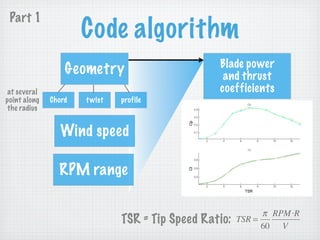
Part 1
                      Code algorithm
                                                  Blade power
                  Geometry                         and thrust
 at several                                       coefficients
point along   Chord   t wist   profile
 the radius


                 Wind speed

                RPM range

                                                              π RPM ·R
                               TSR = Tip Speed Ratio:   TSR =
                                                              60 V
Part 2
                Code algorithm
         Blade power
          and thrust
         coefficients


            +
       Generator,
    Battery & system
       parameters
Test subject:
 WindAids’ 4
 meter design
   Are we using the best
generator for these blades?
 How much will we gain by
       modifying it?
Part 1
         BEM theory
BEM theory
Using conser vation of momentum/energy/
mass on annular rings of flow volume through
the blades
Using 2D blade section data - from
measurements, or simulations (xfoil,JavaFoil )
Results: prediction of Shaft power, and blade
loads for every blade RPM and windspeed
(usually - the combination of both
              π RPM ·R
through TSR = 60 V ,where R is the blade
radius and V is the wind speed )
BEM input 1:
Blade geometry
NACA 4412


  BEM input 2:
airfoil properties
NACA4412 Re = 250K-750K


  BEM input 2:
airfoil properties
BEM output: force
distribution at each TSR
BEM output: Power
coefficients vs. TSR
Part 2


Estimating the Power Curve
         Balance of power -
         Blade shaft power =
               generator shaft power
         All that’s missing is -
         a model for the generator
         shaft power vs. RPM, and
         generator electrical power
         vs. RPM
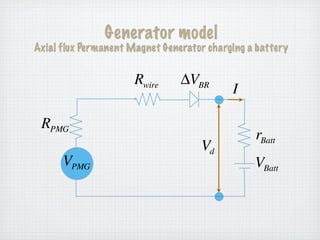
Generator model
Axial flux Permanent Magnet Generator charging a battery


                      Rwire     ΔVBR
                                           I

 RPMG
                                                rBatt
                                    Vd
      VPMG                                      VBatt
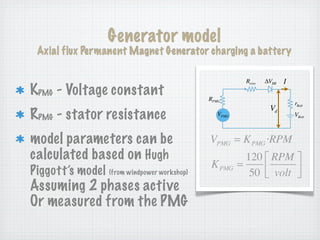
Generator model
 Axial flux Permanent Magnet Generator charging a battery

                                                       Rwire   ΔVBR   I
KPMG - Voltage constant                     RPMG
                                                                          rBatt
                                                                Vd
RPMG - stator resistance                       VPMG                       VBatt


model parameters can be                     VPMG = K PMG ·RPM
calculated based on Hugh                                120 ⎡ RPM ⎤
                                            K PMG     =
Piggott’s model (from windpower workshop)                50 ⎢ volt ⎥
                                                            ⎣      ⎦
Assuming 2 phases active
Or measured from the PMG
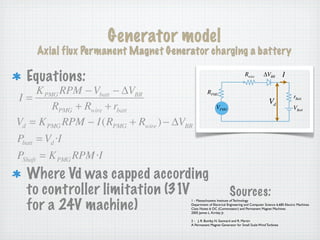
Generator model
    Axial flux Permanent Magnet Generator charging a battery

  Equations:                                                               Rwire        ΔVBR         I

    K PMG RPM − Vbatt − ΔVBR                      RPMG
I=                                                                                          Vd
                                                                                                             rBatt
        RPMG + Rwire + rbatt                            VPMG                                                 VBatt

Vd = K PMG RPM − I(RPMG + Rwire ) − ΔVBR
Pbatt = Vd ·I
PShaft = K PMG RPM ·I
  Where Vd was capped according
  to controller limitation (31V                                  Sources:
  for a 24V machine)
                                       1 - Massachusetts Institute of Technology
                                       Department of Electrical Engineering and Computer Science 6.685 Electric Machines
                                       Class Notes 6: DC (Commutator) and Permanent Magnet Machines
                                       2005 James L. Kirtley Jr.

                                       2 - J. R. Bumby, N. Stannard and R. Martin
                                       A Permanent Magnet Generator for Small Scale Wind Turbines
ΔVBR


                                                PMG
            Rwire          I

  RPMG
                               rBatt
                     Vd
     VPMG                      VBatt
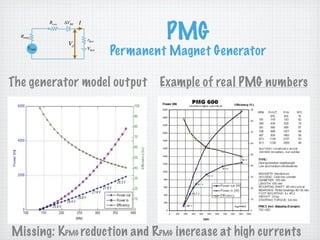
                                       Permanent Magnet Generator

The generator model output                     Example of real PMG numbers


Missing: KPMG reduction and RPMG increase at high currents
Estimating the power cur ve - WA4
                      Putting it together
Comparison to measurements is good (but not enough measurements)
Estimating the power curve - Piggott 3 m
Comparison to measurements is not very good - Section data from NACA 44XX
            measurements , resulting in a wrong Cp vs TSR curve
Concluding remarks
Model is sufficiently
accurate

Can help decide if
generator winding
need changing

Quantify how to
change best wind speed
efficiency of turbine

Or to identify poor
blade configuration
Concluding remarks
Needs improvement

Many possible measurement
errors

   Amp/volt measurement

   wind measurement

Many possible modeling errors

   Generator/Battery/wire
   resistance

   Blade profile properties
   for wooden blades
I’m working on a site
        for this program
At the moment at It’s at http://
gs.playstix.net/piggott/

Will include an option to upload your blade
geometry & generator parameters, and
use the code to predict outputs, calibrate
to measurements and see how changes in
gen. parameters effect performance etc.

work is at an early stage… probably up
and working by the middle of the year

Code is written in Octave, and is open-
source - http://gitorious.org/piggott-
turbine-design/piggott-turbine-design

That’s me. Wish I was here in Dakar!
Piggott turbine design_code_dakar_presentation

Piggott turbine design_code_dakar_presentation

  • 1.
    Piggott turbine modeling Estimation of electricity production and blade/ tower loads for Hugh Piggott designs, using BEM theory and simple PMG-battery charging model Hanan Einav Levy
  • 2.
    Scope A BEM codewith a battery charging generator model was written in matlab (also runs on the open source octave) This presentation shows the basics of the model And comparison to measurements The code is open for any one to use! Also, a web page is being written, for allowing non octave sav vy individuals to use this code, for designing and reviewing their Hugh Piggott turbines The model is made of t wo parts: BEM - Blade Element Momentum Battery charging PMG model
  • 3.
    Part 1 Code algorithm Blade power Geometry and thrust at several coefficients point along Chord t wist profile the radius Wind speed RPM range π RPM ·R TSR = Tip Speed Ratio: TSR = 60 V
  • 4.
    Part 2 Code algorithm Blade power and thrust coefficients + Generator, Battery & system parameters
  • 5.
    Test subject: WindAids’4 meter design Are we using the best generator for these blades? How much will we gain by modifying it?
  • 6.
    Part 1 BEM theory
  • 7.
    BEM theory Using conservation of momentum/energy/ mass on annular rings of flow volume through the blades Using 2D blade section data - from measurements, or simulations (xfoil,JavaFoil ) Results: prediction of Shaft power, and blade loads for every blade RPM and windspeed (usually - the combination of both π RPM ·R through TSR = 60 V ,where R is the blade radius and V is the wind speed )
  • 8.
  • 9.
    NACA 4412 BEM input 2: airfoil properties
  • 10.
    NACA4412 Re =250K-750K BEM input 2: airfoil properties
  • 11.
  • 12.
  • 13.
    Part 2 Estimating thePower Curve Balance of power - Blade shaft power = generator shaft power All that’s missing is - a model for the generator shaft power vs. RPM, and generator electrical power vs. RPM
  • 14.
    Generator model Axial fluxPermanent Magnet Generator charging a battery Rwire ΔVBR I RPMG rBatt Vd VPMG VBatt
  • 15.
    Generator model Axialflux Permanent Magnet Generator charging a battery Rwire ΔVBR I KPMG - Voltage constant RPMG rBatt Vd RPMG - stator resistance VPMG VBatt model parameters can be VPMG = K PMG ·RPM calculated based on Hugh 120 ⎡ RPM ⎤ K PMG = Piggott’s model (from windpower workshop) 50 ⎢ volt ⎥ ⎣ ⎦ Assuming 2 phases active Or measured from the PMG
  • 16.
    Generator model Axial flux Permanent Magnet Generator charging a battery Equations: Rwire ΔVBR I K PMG RPM − Vbatt − ΔVBR RPMG I= Vd rBatt RPMG + Rwire + rbatt VPMG VBatt Vd = K PMG RPM − I(RPMG + Rwire ) − ΔVBR Pbatt = Vd ·I PShaft = K PMG RPM ·I Where Vd was capped according to controller limitation (31V Sources: for a 24V machine) 1 - Massachusetts Institute of Technology Department of Electrical Engineering and Computer Science 6.685 Electric Machines Class Notes 6: DC (Commutator) and Permanent Magnet Machines 2005 James L. Kirtley Jr. 2 - J. R. Bumby, N. Stannard and R. Martin A Permanent Magnet Generator for Small Scale Wind Turbines
  • 17.
    ΔVBR PMG Rwire I RPMG rBatt Vd VPMG VBatt Permanent Magnet Generator The generator model output Example of real PMG numbers Missing: KPMG reduction and RPMG increase at high currents
  • 18.
    Estimating the powercur ve - WA4 Putting it together Comparison to measurements is good (but not enough measurements)
  • 19.
    Estimating the powercurve - Piggott 3 m Comparison to measurements is not very good - Section data from NACA 44XX measurements , resulting in a wrong Cp vs TSR curve
  • 20.
    Concluding remarks Model issufficiently accurate Can help decide if generator winding need changing Quantify how to change best wind speed efficiency of turbine Or to identify poor blade configuration
  • 21.
    Concluding remarks Needs improvement Manypossible measurement errors Amp/volt measurement wind measurement Many possible modeling errors Generator/Battery/wire resistance Blade profile properties for wooden blades
  • 22.
    I’m working ona site for this program At the moment at It’s at http:// gs.playstix.net/piggott/ Will include an option to upload your blade geometry & generator parameters, and use the code to predict outputs, calibrate to measurements and see how changes in gen. parameters effect performance etc. work is at an early stage… probably up and working by the middle of the year Code is written in Octave, and is open- source - http://gitorious.org/piggott- turbine-design/piggott-turbine-design That’s me. Wish I was here in Dakar!