PHYSIOTHERAPY
NATIONAL UNIVERSITY PEDRO RUIZ
GALLO
Facultad de Medicina Humana
Medical
English
Group 1
Carrion Arcela Jhean Pierre
Castro Maldonado Betty
Gasco Arteaga Leslie
Gonzáles Vásquez Deysi
Mendoza Castillo Fabricio
Moreno Luigui
2
PHYSIOTHERAP
Y
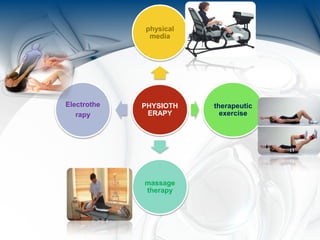
PHYSIOTH
ERAPY
physical
media
therapeutic
exercise
massage
therapy
Electrothe
rapy
Physiotherapy includes the
execution of
• The value of the
impairment and muscle
strength.
• Functional capabilities.
• Amplitude of the
movement to articulate
• Measures of vital capacity
electrical
and
manuals
tests
4
5
PHYSIOTHERAP
Y
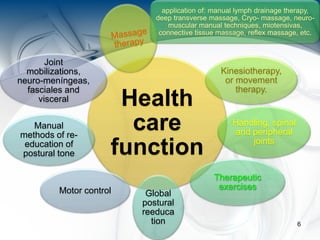
Health
care
function
Kinesiotherapy,
or movement
therapy.
Handling, spinal
and peripheral
joints
application of: manual lymph drainage therapy,
deep transverse massage, Cryo- massage, neuro-
muscular manual techniques, miotensivas,
connective tissue massage, reflex massage, etc.
Therapeutic
exercises
Global
postural
reeduca
tion
Manual
methods of re-
education of
postural tone
Motor control
Joint
mobilizations,
neuro-meníngeas,
fasciales and
visceral
6
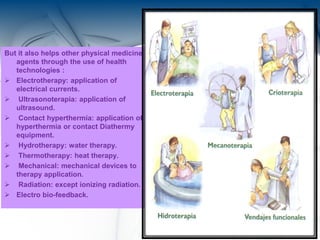
But it also helps other physical medicine
agents through the use of health
technologies :
 Electrotherapy: application of
electrical currents.
 Ultrasonoterapia: application of
ultrasound.
 Contact hyperthermia: application of
hyperthermia or contact Diathermy
equipment.
 Hydrotherapy: water therapy.
 Thermotherapy: heat therapy.
 Mechanical: mechanical devices to
therapy application.
 Radiation: except ionizing radiation.
 Electro bio-feedback.
7
8
PHYSIOTHERAP
Y
9
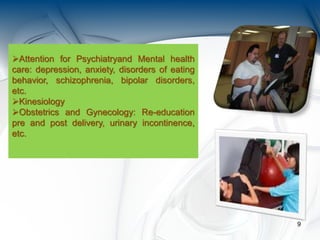
Attention for Psychiatryand Mental health
care: depression, anxiety, disorders of eating
behavior, schizophrenia, bipolar disorders,
etc.
Kinesiology
Obstetrics and Gynecology: Re-education
pre and post delivery, urinary incontinence,
etc.
10
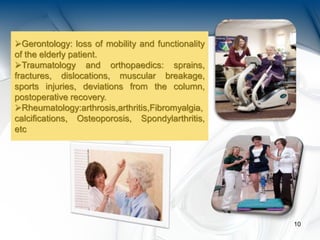
Gerontology: loss of mobility and functionality
of the elderly patient.
Traumatology and orthopaedics: sprains,
fractures, dislocations, muscular breakage,
sports injuries, deviations from the column,
postoperative recovery.
Rheumatology:arthrosis,arthritis,Fibromyalgia,
calcifications, Osteoporosis, Spondylarthritis,
etc
11
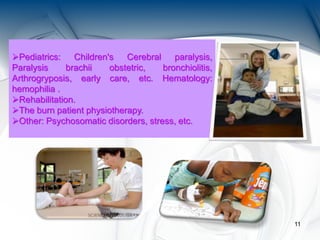
Pediatrics: Children's Cerebral paralysis,
Paralysis brachii obstetric, bronchiolitis,
Arthrogryposis, early care, etc. Hematology:
hemophilia .
Rehabilitation.
The burn patient physiotherapy.
Other: Psychosomatic disorders, stress, etc.
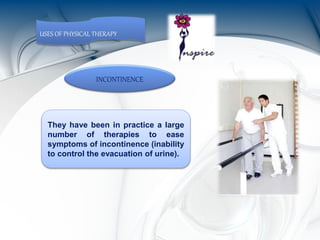
INCONTINENCE
They have been in practice a large
number of therapies to ease
symptoms of incontinence (inability
to control the evacuation of urine).
USES OF PHYSICAL THERAPY
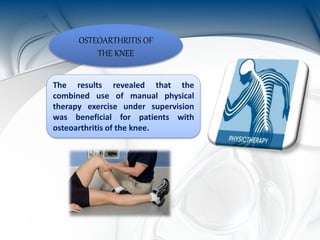
OSTEOARTHRITIS OF
THE KNEE
The results revealed that the
combined use of manual physical
therapy exercise under supervision
was beneficial for patients with
osteoarthritis of the knee.
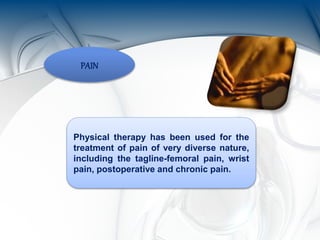
PAIN
Physical therapy has been used for the
treatment of pain of very diverse nature,
including the tagline-femoral pain, wrist
pain, postoperative and chronic pain.
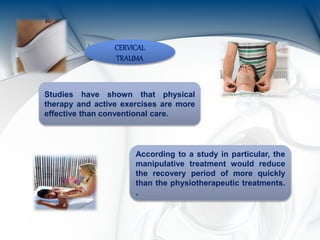
CERVICAL
TRAUMA
Studies have shown that physical
therapy and active exercises are more
effective than conventional care.
According to a study in particular, the
manipulative treatment would reduce
the recovery period of more quickly
than the physiotherapeutic treatments.
.
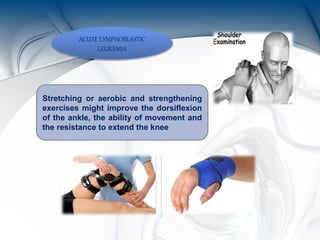
ACUTE LYMPHOBLASTIC
LEUKEMIA
Stretching or aerobic and strengthening
exercises might improve the dorsiflexion
of the ankle, the ability of movement and
the resistance to extend the knee
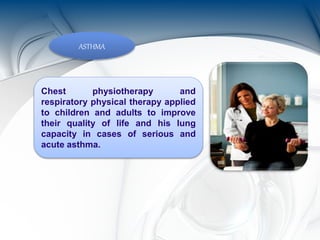
ASTHMA
Chest physiotherapy and
respiratory physical therapy applied
to children and adults to improve
their quality of life and his lung
capacity in cases of serious and
acute asthma.
BONE
DENSITY
In patients with arthritis exercise
programs have been applied to
long-term high-intensity with
weights, producing positive
results.
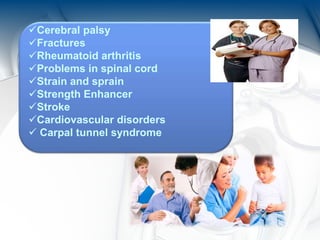
Cerebral palsy
Fractures
Rheumatoid arthritis
Problems in spinal cord
Strain and sprain
Strength Enhancer
Stroke
Cardiovascular disorders
 Carpal tunnel syndrome
20
PHYSIOTHERAP
Y
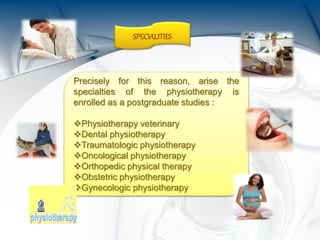
SPECIALITIES
Precisely for this reason, arise the
specialties of the physiotherapy is
enrolled as a postgraduate studies :
Physiotherapy veterinary
Dental physiotherapy
Traumatologic physiotherapy
Oncological physiotherapy
Orthopedic physical therapy
Obstetric physiotherapy
Gynecologic physiotherapy
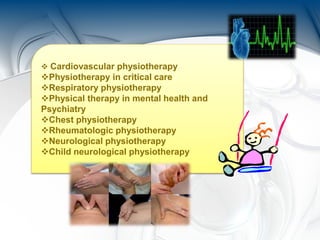
 Cardiovascular physiotherapy
Physiotherapy in critical care
Respiratory physiotherapy
Physical therapy in mental health and
Psychiatry
Chest physiotherapy
Rheumatologic physiotherapy
Neurological physiotherapy
Child neurological physiotherapy
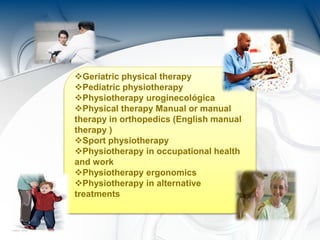
Geriatric physical therapy
Pediatric physiotherapy
Physiotherapy uroginecológica
Physical therapy Manual or manual
therapy in orthopedics (English manual
therapy )
Sport physiotherapy
Physiotherapy in occupational health
and work
Physiotherapy ergonomics
Physiotherapy in alternative
treatments
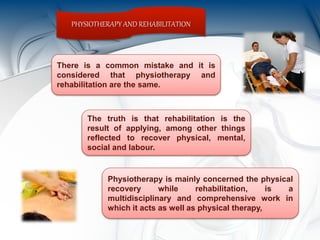
PHYSIOTHERAPY AND REHABILITATION
There is a common mistake and it is
considered that physiotherapy and
rehabilitation are the same.
The truth is that rehabilitation is the
result of applying, among other things
reflected to recover physical, mental,
social and labour.
Physiotherapy is mainly concerned the physical
recovery while rehabilitation, is a
multidisciplinary and comprehensive work in
which it acts as well as physical therapy,
..

Physiotherapy 1

  • 1.
    PHYSIOTHERAPY NATIONAL UNIVERSITY PEDRORUIZ GALLO Facultad de Medicina Humana Medical English Group 1 Carrion Arcela Jhean Pierre Castro Maldonado Betty Gasco Arteaga Leslie Gonzáles Vásquez Deysi Mendoza Castillo Fabricio Moreno Luigui
  • 2.
  • 3.
  • 4.
    Physiotherapy includes the executionof • The value of the impairment and muscle strength. • Functional capabilities. • Amplitude of the movement to articulate • Measures of vital capacity electrical and manuals tests 4
  • 5.
  • 6.
    Health care function Kinesiotherapy, or movement therapy. Handling, spinal andperipheral joints application of: manual lymph drainage therapy, deep transverse massage, Cryo- massage, neuro- muscular manual techniques, miotensivas, connective tissue massage, reflex massage, etc. Therapeutic exercises Global postural reeduca tion Manual methods of re- education of postural tone Motor control Joint mobilizations, neuro-meníngeas, fasciales and visceral 6
  • 7.
    But it alsohelps other physical medicine agents through the use of health technologies :  Electrotherapy: application of electrical currents.  Ultrasonoterapia: application of ultrasound.  Contact hyperthermia: application of hyperthermia or contact Diathermy equipment.  Hydrotherapy: water therapy.  Thermotherapy: heat therapy.  Mechanical: mechanical devices to therapy application.  Radiation: except ionizing radiation.  Electro bio-feedback. 7
  • 8.
  • 9.
    9 Attention for PsychiatryandMental health care: depression, anxiety, disorders of eating behavior, schizophrenia, bipolar disorders, etc. Kinesiology Obstetrics and Gynecology: Re-education pre and post delivery, urinary incontinence, etc.
  • 10.
    10 Gerontology: loss ofmobility and functionality of the elderly patient. Traumatology and orthopaedics: sprains, fractures, dislocations, muscular breakage, sports injuries, deviations from the column, postoperative recovery. Rheumatology:arthrosis,arthritis,Fibromyalgia, calcifications, Osteoporosis, Spondylarthritis, etc
  • 11.
    11 Pediatrics: Children's Cerebralparalysis, Paralysis brachii obstetric, bronchiolitis, Arthrogryposis, early care, etc. Hematology: hemophilia . Rehabilitation. The burn patient physiotherapy. Other: Psychosomatic disorders, stress, etc.
  • 12.
    INCONTINENCE They have beenin practice a large number of therapies to ease symptoms of incontinence (inability to control the evacuation of urine). USES OF PHYSICAL THERAPY
  • 13.
    OSTEOARTHRITIS OF THE KNEE Theresults revealed that the combined use of manual physical therapy exercise under supervision was beneficial for patients with osteoarthritis of the knee.
  • 14.
    PAIN Physical therapy hasbeen used for the treatment of pain of very diverse nature, including the tagline-femoral pain, wrist pain, postoperative and chronic pain.
  • 15.
    CERVICAL TRAUMA Studies have shownthat physical therapy and active exercises are more effective than conventional care. According to a study in particular, the manipulative treatment would reduce the recovery period of more quickly than the physiotherapeutic treatments. .
  • 16.
    ACUTE LYMPHOBLASTIC LEUKEMIA Stretching oraerobic and strengthening exercises might improve the dorsiflexion of the ankle, the ability of movement and the resistance to extend the knee
  • 17.
    ASTHMA Chest physiotherapy and respiratoryphysical therapy applied to children and adults to improve their quality of life and his lung capacity in cases of serious and acute asthma.
  • 18.
    BONE DENSITY In patients witharthritis exercise programs have been applied to long-term high-intensity with weights, producing positive results.
  • 19.
    Cerebral palsy Fractures Rheumatoid arthritis Problemsin spinal cord Strain and sprain Strength Enhancer Stroke Cardiovascular disorders  Carpal tunnel syndrome
  • 20.
  • 21.
    SPECIALITIES Precisely for thisreason, arise the specialties of the physiotherapy is enrolled as a postgraduate studies : Physiotherapy veterinary Dental physiotherapy Traumatologic physiotherapy Oncological physiotherapy Orthopedic physical therapy Obstetric physiotherapy Gynecologic physiotherapy
  • 22.
     Cardiovascular physiotherapy Physiotherapyin critical care Respiratory physiotherapy Physical therapy in mental health and Psychiatry Chest physiotherapy Rheumatologic physiotherapy Neurological physiotherapy Child neurological physiotherapy
  • 23.
    Geriatric physical therapy Pediatricphysiotherapy Physiotherapy uroginecológica Physical therapy Manual or manual therapy in orthopedics (English manual therapy ) Sport physiotherapy Physiotherapy in occupational health and work Physiotherapy ergonomics Physiotherapy in alternative treatments
  • 24.
    PHYSIOTHERAPY AND REHABILITATION Thereis a common mistake and it is considered that physiotherapy and rehabilitation are the same. The truth is that rehabilitation is the result of applying, among other things reflected to recover physical, mental, social and labour. Physiotherapy is mainly concerned the physical recovery while rehabilitation, is a multidisciplinary and comprehensive work in which it acts as well as physical therapy,
  • 25.