Introduction to
physiotherapy
PHYSIOTHERAPY
PHYSICAL THERAPY
Physio : physical agents
Therapy : treating people
Physical Therapy
 therapy for the preservation, enhancement, or
restoration of movement and physical function
impaired or threatened by disability, injury, or
disease that utilizes therapeutic exercise, physical
modalities (as massage and electrotherapy),
assistive devices, and patient education and
training—called also physiotherapy
 Merriam-Webster’s definition
 A primary health care profession
 Aimed at enhancing mobility, physical
independence & quality of life
 Focused on
Treating a variety of conditions
Promoting health & well-being
 Prescribed to individuals who vary in
Age Athletic ability
Physiotherapy is…..
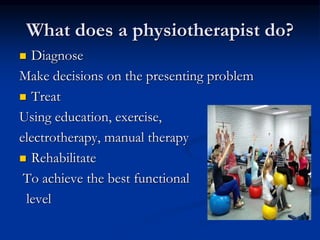
What does a physiotherapist do?
 Diagnose
Make decisions on the presenting problem
 Treat
Using education, exercise,
electrotherapy, manual therapy
 Rehabilitate
To achieve the best functional
level
Who are physiotherapists?
 Go-to health professionals
 Accessible, first-line health professionals
 Skilled in health promotion, injury prevention and
patient management
 University-trained in the health sciences
 Intensive study of anatomy and physiology
Who are physiotherapists?
 Skilled in clinical reasoning
 Life long learners
 Committed to evidence-based decision making
 Licensed and regulated health professionals with
a unique professional title
 Only registered physiotherapists can provide
physiotherapy services
What exactly do
physiotherapists do?
Assess, manage and treat a broad range
of medical conditions from sprained
ankles to strokes
Relieve physical pain and help heal injuries
Increase mobility, build strength,
improve balance, and
enhance cardiovascular
performance
 Help you to help yourself
Engage clients by prescribing
therapeutic exercises
Teach clients to better manage
their own health
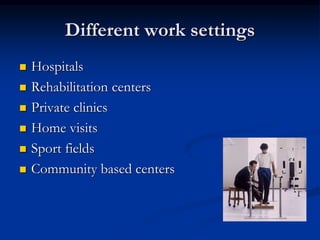
Different work settings
 Hospitals
 Rehabilitation centers
 Private clinics
 Home visits
 Sport fields
 Community based centers
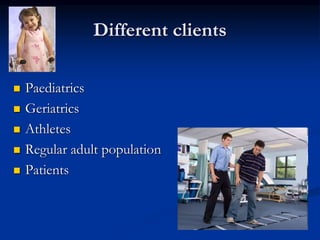
Different clients
 Paediatrics
 Geriatrics
 Athletes
 Regular adult population
 Patients
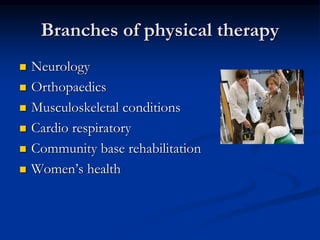
Branches of physical therapy
 Neurology
 Orthopaedics
 Musculoskeletal conditions
 Cardio respiratory
 Community base rehabilitation
 Women’s health
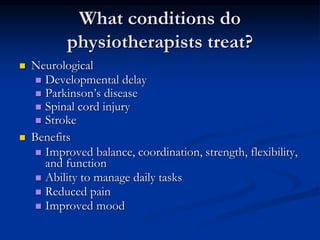
What conditions do
physiotherapists treat?
 Neurological
 Developmental delay
 Parkinson’s disease
 Spinal cord injury
 Stroke
 Benefits
 Improved balance, coordination, strength, flexibility,
and function
 Ability to manage daily tasks
 Reduced pain
 Improved mood
What specific conditions do
physiotherapists treat?
 Orthopaedic
 Back and neck pain
 Arthritis and osteoarthritis
 Fractures or sprains
 Joint replacements
 Sports injuries
 Benefits
 Decreased pain
 Improved joint mobility and strength
 Restored physical function and injury prevention
 Possibly prevent or delay
 Cardio-respiratory
 Chronic obstructive pulmonary disease
 Cystic fibrosis
 Heart disease
 Respiratory infections
 Post-surgical care
 Benefits
 Improved breathing and secretion clearance
 Reduced breathlessness and increased endurance
 Increased strength of arms and legs
 Women’s health
 Breast cancer rehabilitation
 Chronic pelvic pain
 Incontinence
 Benefits
 Reduced post-surgical pain and swelling
 Reduced fatigue caused by radiation and
chemotherapy
 Improved pelvic pain and urinary incontinence
Treatments
 Electrotherapy
 Exercises
 Hydrotherapy / Aquatherapy
 Posture & ergonomic corrections
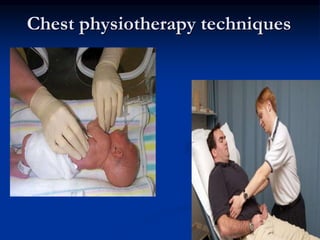
 Chest physiotherapy techniques
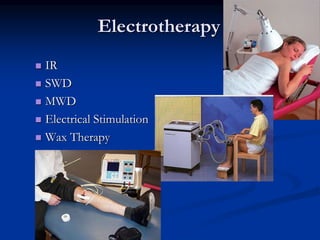
Electrotherapy
 IR
 SWD
 MWD
 Electrical Stimulation
 Wax Therapy
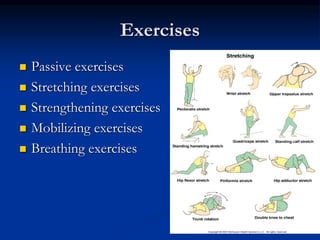
Exercises
 Passive exercises
 Stretching exercises
 Strengthening exercises
 Mobilizing exercises
 Breathing exercises
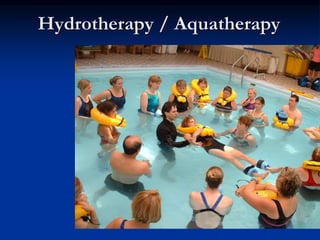
Hydrotherapy / Aquatherapy
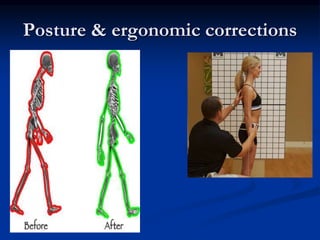
Posture & ergonomic corrections
Chest physiotherapy techniques
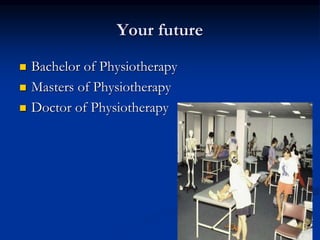
Your future
 Bachelor of Physiotherapy
 Masters of Physiotherapy
 Doctor of Physiotherapy
Any questions
Thank you

physiotherapy.ppt

  • 1.
  • 2.
    PHYSIOTHERAPY PHYSICAL THERAPY Physio :physical agents Therapy : treating people
  • 3.
    Physical Therapy  therapyfor the preservation, enhancement, or restoration of movement and physical function impaired or threatened by disability, injury, or disease that utilizes therapeutic exercise, physical modalities (as massage and electrotherapy), assistive devices, and patient education and training—called also physiotherapy  Merriam-Webster’s definition
  • 4.
     A primaryhealth care profession  Aimed at enhancing mobility, physical independence & quality of life  Focused on Treating a variety of conditions Promoting health & well-being  Prescribed to individuals who vary in Age Athletic ability Physiotherapy is…..
  • 5.
    What does aphysiotherapist do?  Diagnose Make decisions on the presenting problem  Treat Using education, exercise, electrotherapy, manual therapy  Rehabilitate To achieve the best functional level
  • 6.
    Who are physiotherapists? Go-to health professionals  Accessible, first-line health professionals  Skilled in health promotion, injury prevention and patient management  University-trained in the health sciences  Intensive study of anatomy and physiology
  • 7.
    Who are physiotherapists? Skilled in clinical reasoning  Life long learners  Committed to evidence-based decision making  Licensed and regulated health professionals with a unique professional title  Only registered physiotherapists can provide physiotherapy services
  • 8.
    What exactly do physiotherapistsdo? Assess, manage and treat a broad range of medical conditions from sprained ankles to strokes Relieve physical pain and help heal injuries Increase mobility, build strength, improve balance, and enhance cardiovascular performance
  • 9.
     Help youto help yourself Engage clients by prescribing therapeutic exercises Teach clients to better manage their own health
  • 10.
    Different work settings Hospitals  Rehabilitation centers  Private clinics  Home visits  Sport fields  Community based centers
  • 11.
    Different clients  Paediatrics Geriatrics  Athletes  Regular adult population  Patients
  • 12.
    Branches of physicaltherapy  Neurology  Orthopaedics  Musculoskeletal conditions  Cardio respiratory  Community base rehabilitation  Women’s health
  • 13.
    What conditions do physiotherapiststreat?  Neurological  Developmental delay  Parkinson’s disease  Spinal cord injury  Stroke  Benefits  Improved balance, coordination, strength, flexibility, and function  Ability to manage daily tasks  Reduced pain  Improved mood
  • 14.
    What specific conditionsdo physiotherapists treat?  Orthopaedic  Back and neck pain  Arthritis and osteoarthritis  Fractures or sprains  Joint replacements  Sports injuries  Benefits  Decreased pain  Improved joint mobility and strength  Restored physical function and injury prevention  Possibly prevent or delay
  • 15.
     Cardio-respiratory  Chronicobstructive pulmonary disease  Cystic fibrosis  Heart disease  Respiratory infections  Post-surgical care  Benefits  Improved breathing and secretion clearance  Reduced breathlessness and increased endurance  Increased strength of arms and legs
  • 16.
     Women’s health Breast cancer rehabilitation  Chronic pelvic pain  Incontinence  Benefits  Reduced post-surgical pain and swelling  Reduced fatigue caused by radiation and chemotherapy  Improved pelvic pain and urinary incontinence
  • 17.
    Treatments  Electrotherapy  Exercises Hydrotherapy / Aquatherapy  Posture & ergonomic corrections  Chest physiotherapy techniques
  • 18.
    Electrotherapy  IR  SWD MWD  Electrical Stimulation  Wax Therapy
  • 19.
    Exercises  Passive exercises Stretching exercises  Strengthening exercises  Mobilizing exercises  Breathing exercises
  • 20.
  • 21.
  • 22.
  • 23.
    Your future  Bachelorof Physiotherapy  Masters of Physiotherapy  Doctor of Physiotherapy
  • 24.
  • 25.