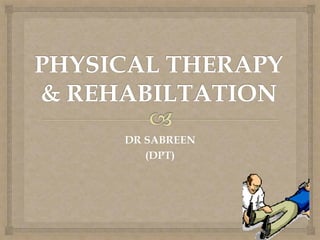
DR SABREEN
(DPT)

 Definition of physical therapy.
 History
 Who are Physical therapists?
 The Physical Therapist Scope of Practice
 Role of a Physical Therapist
 Where Do Physical Therapists Practice?
 Physical Therapists Improve Movement, Function, and Health
 Physical Therapist Treatment
 PT Specialist Certification
 Dynamic Areas of PT Practice
 Definition of Rehabilitation
 Rehabilitation Principles
LEARNING OBJECTIVE

Physical therapists (PTs) are highly-educated,
licensed health care professionals who can help
patients reduce pain and improve or restore mobility
- in many cases without expensive surgery and
often reducing the need for long-term use of
prescription medications and their side effects.
American Physical Therapy Association (APTA)
DEFINITION

 American physical therapists
formed their first professional
association in 1921.
 American Women's Physical
Therapeutic Association.
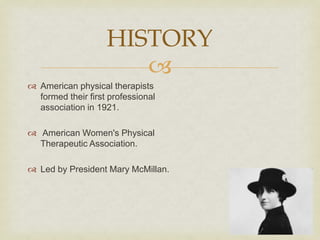
 Led by President Mary McMillan.
HISTORY

 Physical therapists can teach patients how to prevent or
manage their condition so that they will achieve long-term
health benefits.
 PTs examine each individual and develop a plan, using
treatment techniques to promote the ability to move, reduce
pain, restore function, and prevent disability.
 In addition, PTs work with individuals to prevent the loss of
mobility before it occurs by developing fitness- and wellness-
oriented programs for healthier and more active lifestyles.
Who Are Physical Therapists?

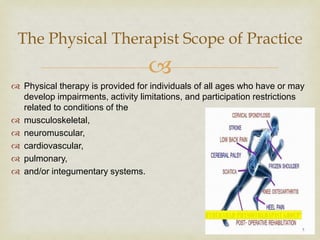
 Physical therapy is provided for individuals of all ages who have or may
develop impairments, activity limitations, and participation restrictions
related to conditions of the
 musculoskeletal,
 neuromuscular,
 cardiovascular,
 pulmonary,
 and/or integumentary systems.
The Physical Therapist Scope of Practice

 Physical therapists (PTs) are health care professionals who diagnose and
treat individuals of all ages, from newborns to the very oldest, who have
medical problems or other health-related conditions that limit their abilities
to move and perform functional activities in their daily lives.
 Diagnose and manage movement dysfunction and enhance physical and
functional abilities.
 Restore, maintain, and promote optimal
 physical function,
 wellness and fitness, and
 quality of life as it relates to movement and health.
 Prevent the onset, symptoms, and progression of impairments, functional
limitations, and disabilities that may result from diseases.
Role of a Physical Therapist

As essential participants in the health care delivery system, PTs assume
leadership roles in
 rehabilitation
 prevention,
 health maintenance, and
 programs that promote health, wellness, and fitness
As clinicians, physical therapists engage in an examination process that
includes:
 taking the patient/client history,
 conducting a systems review, and
 performing tests and measures to identify potential and
existing problems.
a

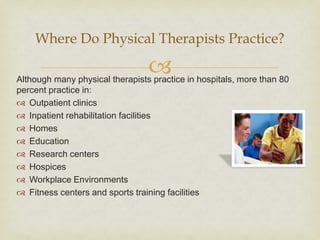
Although many physical therapists practice in hospitals, more than 80
percent practice in:
 Outpatient clinics
 Inpatient rehabilitation facilities
 Homes
 Education
 Research centers
 Hospices
 Workplace Environments
 Fitness centers and sports training facilities
Where Do Physical Therapists Practice?

Physical Therapists Improve Movement,
Function, and Health
• Orthopedic conditions
• Joint and soft-tissue injuries
• Sports injuries
• Neurologic conditions
• Arthritic conditions
• Systemic conditions
• Cardiovascular and pulmonary conditions
• Workplace injuries
• Integumentary conditions
• Pediatric conditions

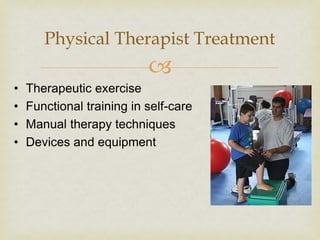
• Therapeutic exercise
• Functional training in self-care
• Manual therapy techniques
• Devices and equipment
Physical Therapist Treatment

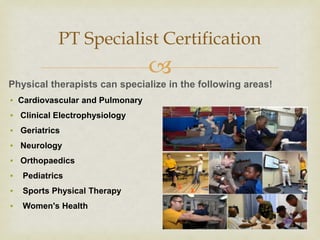
Physical therapists can specialize in the following areas!
▪ Cardiovascular and Pulmonary
▪ Clinical Electrophysiology
▪ Geriatrics
▪ Neurology
▪ Orthopaedics
▪ Pediatrics
▪ Sports Physical Therapy
▪ Women's Health
PT Specialist Certification

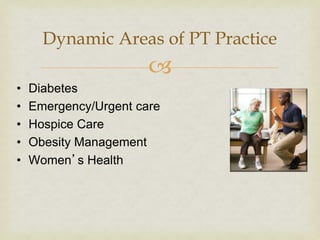
• Diabetes
• Emergency/Urgent care
• Hospice Care
• Obesity Management
• Women’s Health
Dynamic Areas of PT Practice

• Shortens stays in the ICU
• Reduces risk of postnatal depression
• Improves function after back surgery
• Improves movement in premature infants
• Improves postural stability in patients
with Parkinson disease
• Effective for pregnancy-related incontinence
• Effective for relieving pain and stiffness associated with OA of the knee
• Successfully treats lymphedema
Practice Based on
Evidence

DEFINITION
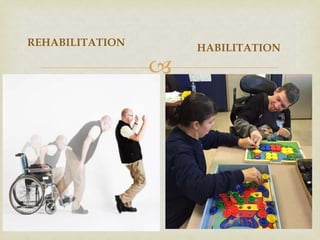
REHABILITATION
 Health care services that help a
person keep, restore or improve
skills and functioning for daily
living that have been lost or
impaired because a person was
sick, hurt or disabled.
 These services may include
physical therapy, occupational
therapy, and speech-language
pathology and psychiatric
rehabilitation services in a variety
of inpatient and/or outpatient
settings.
HABILITATION
 Health care services that help a
person keep, learn or improve
skills and functioning for daily
living.
 Examples include therapy for a
child who isn’t walking or talking
at the expected age.
 These services may include
physical therapy, occupational
therapy, and speech-language
pathology and other services for
people with disabilities in a variety
of inpatient and/or outpatient
settings.

REHABILITATION
HABILITATION

Generally, rehabilitative services as they pertain to physical therapy may include:
1. Diagnosis, prognosis, and management of impairments, activity limitations,
and participation restrictions to enhance optimal health, performance, and
quality of life;
2. Skilled interventions to address functioning and disabilities (e.g., impairments,
activity limitations, and participation restrictions) that restore, maintain, or
promote optimal physical function, quality of life, health status, or independence
in activities of daily living; and
3. Prevention and management of the onset, symptoms, and progression of
impairments, activity limitations, and participation restrictions that may result
from disease, disorders, conditions or injuries (including services that are
necessary for the establishment of a safe and effective maintenance program for
the patient).
Rehabilitation Principles:

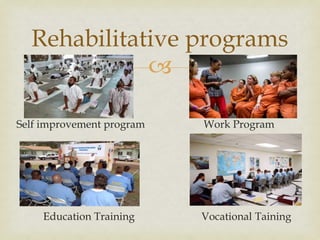
Self improvement program Work Program
Education Training Vocational Taining
Rehabilitative programs

1. Learn definition of physiotherapy.
2. What is physiotherapy?
3. Who are Physical therapists?
4. What is the Physical Therapist Scope of Practice?
5. What is the Role of a Physical Therapist?
6. Where Do Physical Therapists Practice?
7. What is Rehabilitation?
8. What is the Principles of rehabilitation?
Assignments

10.Examples of musculoskeletal Conditions Treated By
Physical Therapists.
11. Examples of neuromuscular conditions treated by PT.
12.Examples of cardiovascular conditions treated by PT.
13.Examples of pulmonary condition treated by PT.
14.Examples of integumentary condition treated by PT.
15. What are the goals of rehabilitation?

 http://www.apta.org
REFERENCE

Pt

  • 1.
  • 2.
      Definition ofphysical therapy.  History  Who are Physical therapists?  The Physical Therapist Scope of Practice  Role of a Physical Therapist  Where Do Physical Therapists Practice?  Physical Therapists Improve Movement, Function, and Health  Physical Therapist Treatment  PT Specialist Certification  Dynamic Areas of PT Practice  Definition of Rehabilitation  Rehabilitation Principles LEARNING OBJECTIVE
  • 3.
     Physical therapists (PTs)are highly-educated, licensed health care professionals who can help patients reduce pain and improve or restore mobility - in many cases without expensive surgery and often reducing the need for long-term use of prescription medications and their side effects. American Physical Therapy Association (APTA) DEFINITION
  • 4.
      American physicaltherapists formed their first professional association in 1921.  American Women's Physical Therapeutic Association.  Led by President Mary McMillan. HISTORY
  • 5.
      Physical therapistscan teach patients how to prevent or manage their condition so that they will achieve long-term health benefits.  PTs examine each individual and develop a plan, using treatment techniques to promote the ability to move, reduce pain, restore function, and prevent disability.  In addition, PTs work with individuals to prevent the loss of mobility before it occurs by developing fitness- and wellness- oriented programs for healthier and more active lifestyles. Who Are Physical Therapists?
  • 6.
      Physical therapyis provided for individuals of all ages who have or may develop impairments, activity limitations, and participation restrictions related to conditions of the  musculoskeletal,  neuromuscular,  cardiovascular,  pulmonary,  and/or integumentary systems. The Physical Therapist Scope of Practice
  • 7.
      Physical therapists(PTs) are health care professionals who diagnose and treat individuals of all ages, from newborns to the very oldest, who have medical problems or other health-related conditions that limit their abilities to move and perform functional activities in their daily lives.  Diagnose and manage movement dysfunction and enhance physical and functional abilities.  Restore, maintain, and promote optimal  physical function,  wellness and fitness, and  quality of life as it relates to movement and health.  Prevent the onset, symptoms, and progression of impairments, functional limitations, and disabilities that may result from diseases. Role of a Physical Therapist
  • 8.
     As essential participantsin the health care delivery system, PTs assume leadership roles in  rehabilitation  prevention,  health maintenance, and  programs that promote health, wellness, and fitness As clinicians, physical therapists engage in an examination process that includes:  taking the patient/client history,  conducting a systems review, and  performing tests and measures to identify potential and existing problems. a
  • 9.
     Although many physicaltherapists practice in hospitals, more than 80 percent practice in:  Outpatient clinics  Inpatient rehabilitation facilities  Homes  Education  Research centers  Hospices  Workplace Environments  Fitness centers and sports training facilities Where Do Physical Therapists Practice?
  • 10.
     Physical Therapists ImproveMovement, Function, and Health • Orthopedic conditions • Joint and soft-tissue injuries • Sports injuries • Neurologic conditions • Arthritic conditions • Systemic conditions • Cardiovascular and pulmonary conditions • Workplace injuries • Integumentary conditions • Pediatric conditions
  • 11.
     • Therapeutic exercise •Functional training in self-care • Manual therapy techniques • Devices and equipment Physical Therapist Treatment
  • 12.
     Physical therapists canspecialize in the following areas! ▪ Cardiovascular and Pulmonary ▪ Clinical Electrophysiology ▪ Geriatrics ▪ Neurology ▪ Orthopaedics ▪ Pediatrics ▪ Sports Physical Therapy ▪ Women's Health PT Specialist Certification
  • 13.
     • Diabetes • Emergency/Urgentcare • Hospice Care • Obesity Management • Women’s Health Dynamic Areas of PT Practice
  • 14.
     • Shortens staysin the ICU • Reduces risk of postnatal depression • Improves function after back surgery • Improves movement in premature infants • Improves postural stability in patients with Parkinson disease • Effective for pregnancy-related incontinence • Effective for relieving pain and stiffness associated with OA of the knee • Successfully treats lymphedema Practice Based on Evidence
  • 15.
     DEFINITION REHABILITATION  Health careservices that help a person keep, restore or improve skills and functioning for daily living that have been lost or impaired because a person was sick, hurt or disabled.  These services may include physical therapy, occupational therapy, and speech-language pathology and psychiatric rehabilitation services in a variety of inpatient and/or outpatient settings. HABILITATION  Health care services that help a person keep, learn or improve skills and functioning for daily living.  Examples include therapy for a child who isn’t walking or talking at the expected age.  These services may include physical therapy, occupational therapy, and speech-language pathology and other services for people with disabilities in a variety of inpatient and/or outpatient settings.
  • 16.
  • 17.
     Generally, rehabilitative servicesas they pertain to physical therapy may include: 1. Diagnosis, prognosis, and management of impairments, activity limitations, and participation restrictions to enhance optimal health, performance, and quality of life; 2. Skilled interventions to address functioning and disabilities (e.g., impairments, activity limitations, and participation restrictions) that restore, maintain, or promote optimal physical function, quality of life, health status, or independence in activities of daily living; and 3. Prevention and management of the onset, symptoms, and progression of impairments, activity limitations, and participation restrictions that may result from disease, disorders, conditions or injuries (including services that are necessary for the establishment of a safe and effective maintenance program for the patient). Rehabilitation Principles:
  • 18.
     Self improvement programWork Program Education Training Vocational Taining Rehabilitative programs
  • 19.
     1. Learn definitionof physiotherapy. 2. What is physiotherapy? 3. Who are Physical therapists? 4. What is the Physical Therapist Scope of Practice? 5. What is the Role of a Physical Therapist? 6. Where Do Physical Therapists Practice? 7. What is Rehabilitation? 8. What is the Principles of rehabilitation? Assignments
  • 20.
     10.Examples of musculoskeletalConditions Treated By Physical Therapists. 11. Examples of neuromuscular conditions treated by PT. 12.Examples of cardiovascular conditions treated by PT. 13.Examples of pulmonary condition treated by PT. 14.Examples of integumentary condition treated by PT. 15. What are the goals of rehabilitation?
  • 21.