Physical Training in Tennis
Adriano Vretaros
Strength and Conditioning Coach
São Paulo – BRAZIL – avretaros@gmail.com
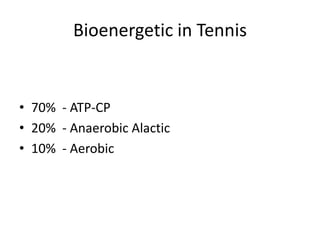
Bioenergetic in Tennis
•
70% - ATP-CP
•
20% - Anaerobic Lactic
•
10% - Aerobic
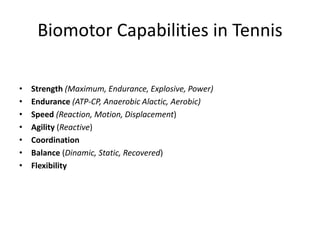
Biomotor Capabilities in Tennis
•
Strength (Maximum, Endurance, Explosive, Power)
•
Endurance (ATP-CP, Anaerobic Lactic, Aerobic)
•
Speed (Reaction, Motion, Displacement)
•
Agility (Reactive)
•
Coordination
•
Balance (Dinamic, Static, Recovered)
•
Flexibility
Motor Skills in Tennis
•
Forehand
•
Backhand
•
Volley
•
Smash
•
Serve
Biomechanical Studies
•
Trunk muscle activation
•
Abdominal muscle activation(rectus abdominis, external
oblique and erector spinae)
•
Ballistic muscle activation
•
Primarilly eccentric compared to concentric muscle actions
•
Stretch-shortening cycle(footwork)
(Knudson & Blackwell, 2000)
Periodization
•
Microcycle
•
Mesocycle
•
Macrocycle
•
Four parts: Preparatory, Precompetitive, Competitive and
Passive/Active Rest
Periodization Programs
•
Calendar of excessive season
•
Competition ~ 11months
•
Peak Performance: 4 Grand Slams
Intensity of Tennis Match Play
•
Combined periods of maximum or near the maximum work
and some long periods of moderate activity or low intensity
•
Match intensity varies: players level, style(offensive or
defensive) and sex
•
Court surface and Ball type
(Fernandez et alii, 2006)
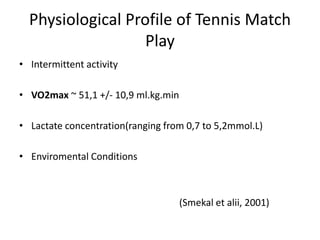
Physiological Profile of Tennis
Match Play
•
Intermittent activity
•
VO2max ~ 51,1 +/- 10,9 ml.kg.min
•
Lactate concentration(ranging from 0,7 to 5,2mmol.L)
•
Enviromental Conditions
(Smekal et alii, 2001)
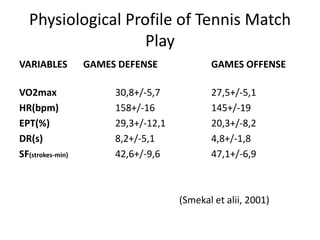
Physiological Profile of Tennis
Match Play
VARIABLES GAMES DEFENSE GAMES OFFENSE
VO2max 30,8+/-5,7 27,5+/-5,1
HR(bpm) 158+/-16 145+/-19
EPT(%) 29,3+/-12,1 20,3+/-8,2
DR(s) 8,2+/-5,1 4,8+/-1,8
SF(strokes-min) 42,6+/-9,6 47,1+/-6,9
(Smekal et alii, 2001)
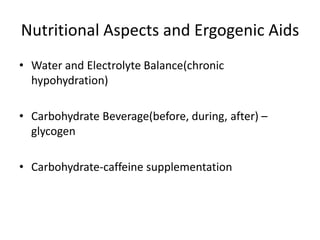
Nutritional Aspects and Ergogenic
Aids
•
Water and Electrolyte Balance (chronic
hypohydration)
•
Carbohydrate Beverage (before, during, after) –
glycogen
•
Carbohydrate-caffeine supplementation
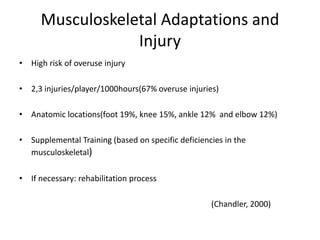
Musculoskeletal Adaptations and
Injury
•
High risk of overuse injury
•
2,3 injuries/player/1000hours(67% overuse injuries)
•
Anatomic locations(foot 19%, knee 15%, ankle 12% and elbow 12%)
•
Supplemental Training (based on specific deficiencies in the
musculoskeletal)
•
If necessary: rehabilitation process
(Chandler, 2000)

Physical Training in Tennis

  • 1.
    Physical Training inTennis Adriano Vretaros Strength and Conditioning Coach São Paulo – BRAZIL – avretaros@gmail.com
  • 2.
    Bioenergetic in Tennis • 70%- ATP-CP • 20% - Anaerobic Lactic • 10% - Aerobic
  • 3.
    Biomotor Capabilities inTennis • Strength (Maximum, Endurance, Explosive, Power) • Endurance (ATP-CP, Anaerobic Lactic, Aerobic) • Speed (Reaction, Motion, Displacement) • Agility (Reactive) • Coordination • Balance (Dinamic, Static, Recovered) • Flexibility
  • 4.
    Motor Skills inTennis • Forehand • Backhand • Volley • Smash • Serve
  • 5.
    Biomechanical Studies • Trunk muscleactivation • Abdominal muscle activation(rectus abdominis, external oblique and erector spinae) • Ballistic muscle activation • Primarilly eccentric compared to concentric muscle actions • Stretch-shortening cycle(footwork) (Knudson & Blackwell, 2000)
  • 6.
  • 7.
    Periodization Programs • Calendar ofexcessive season • Competition ~ 11months • Peak Performance: 4 Grand Slams
  • 8.
    Intensity of TennisMatch Play • Combined periods of maximum or near the maximum work and some long periods of moderate activity or low intensity • Match intensity varies: players level, style(offensive or defensive) and sex • Court surface and Ball type (Fernandez et alii, 2006)
  • 9.
    Physiological Profile ofTennis Match Play • Intermittent activity • VO2max ~ 51,1 +/- 10,9 ml.kg.min • Lactate concentration(ranging from 0,7 to 5,2mmol.L) • Enviromental Conditions (Smekal et alii, 2001)
  • 10.
    Physiological Profile ofTennis Match Play VARIABLES GAMES DEFENSE GAMES OFFENSE VO2max 30,8+/-5,7 27,5+/-5,1 HR(bpm) 158+/-16 145+/-19 EPT(%) 29,3+/-12,1 20,3+/-8,2 DR(s) 8,2+/-5,1 4,8+/-1,8 SF(strokes-min) 42,6+/-9,6 47,1+/-6,9 (Smekal et alii, 2001)
  • 11.
    Nutritional Aspects andErgogenic Aids • Water and Electrolyte Balance (chronic hypohydration) • Carbohydrate Beverage (before, during, after) – glycogen • Carbohydrate-caffeine supplementation
  • 12.
    Musculoskeletal Adaptations and Injury • Highrisk of overuse injury • 2,3 injuries/player/1000hours(67% overuse injuries) • Anatomic locations(foot 19%, knee 15%, ankle 12% and elbow 12%) • Supplemental Training (based on specific deficiencies in the musculoskeletal) • If necessary: rehabilitation process (Chandler, 2000)