PHRASAL VERBS
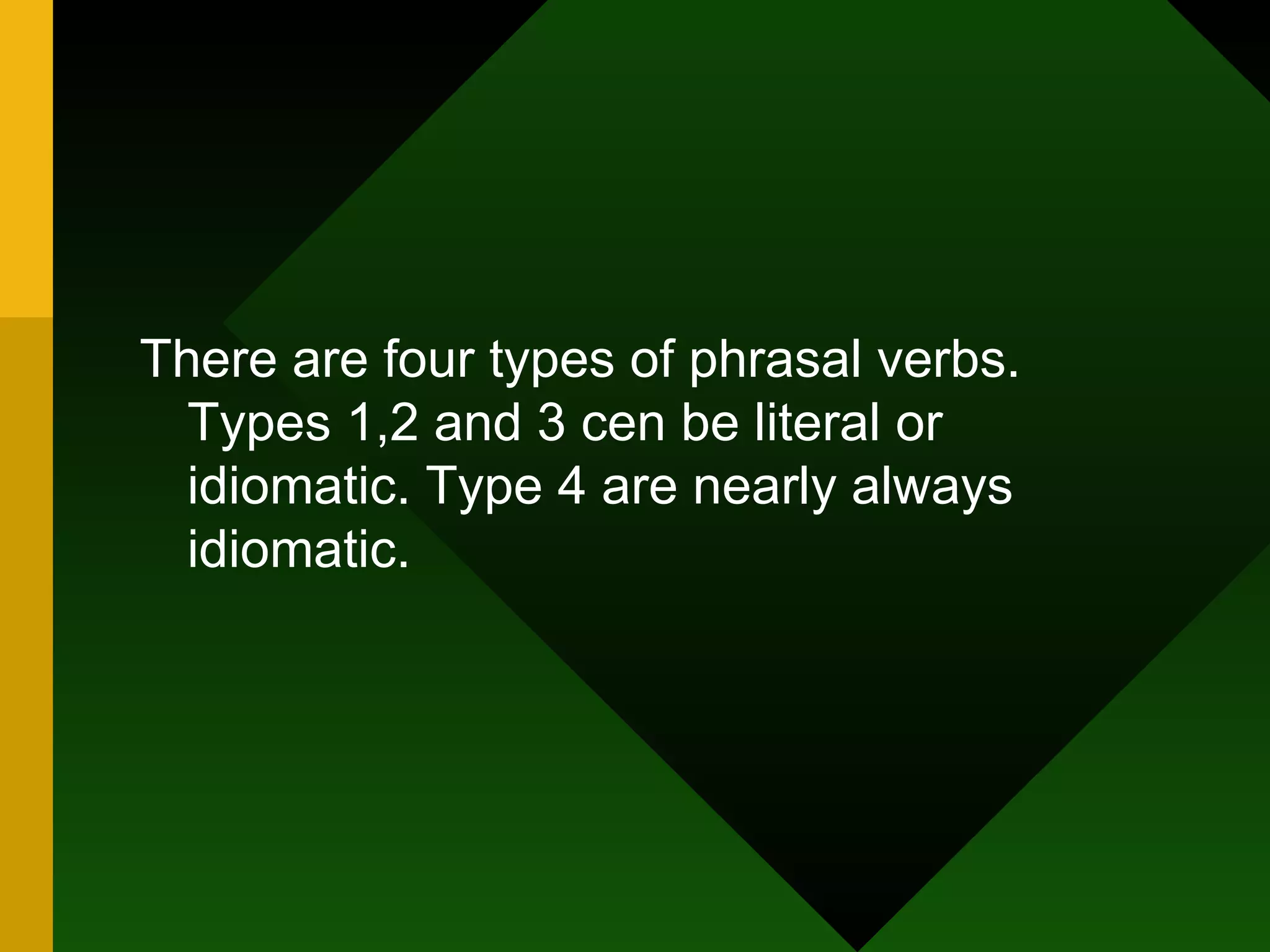
There are four types of phrasal verbs. Types 1,2 and 3 cen be literal or idiomatic. Type 4 are nearly always idiomatic.
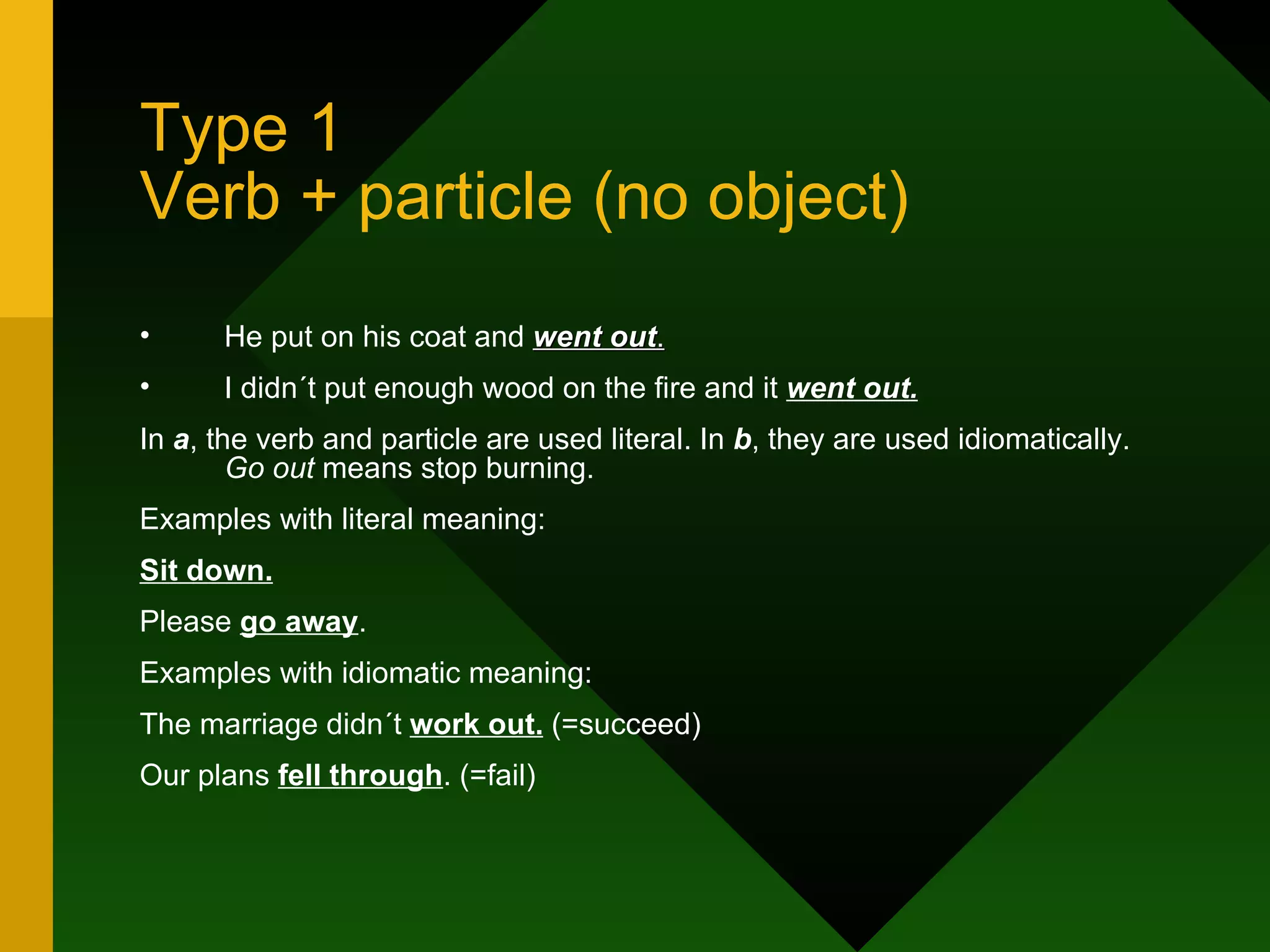
Type 1 Verb + particle (no object) He put on his coat and  went out . I didn´t put enough wood on the fire and it  went out. In  a , the verb and particle are used literal. In  b , they are used idiomatically.  Go out  means stop burning. Examples with literal meaning: Sit down. Please  go away . Examples with idiomatic meaning: The marriage didn´t  work out.  (=succeed) Our plans  fell through . (=fail)
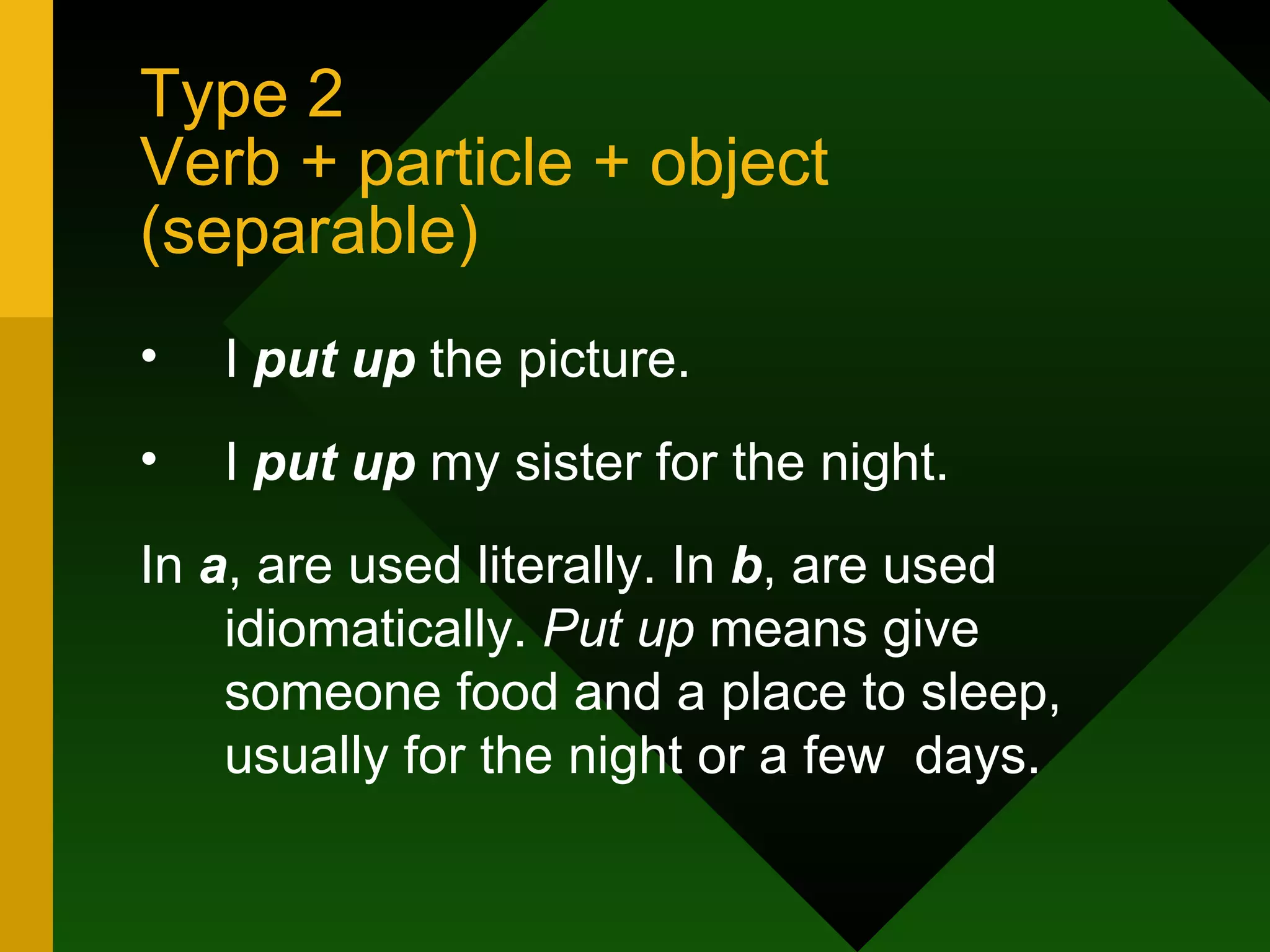
Type 2 Verb + particle + object (separable) I  put up  the picture. I  put up  my sister for the night. In  a , are used literally. In  b , are used idiomatically.  Put up  means give someone food and a place to sleep, usually for the night or a few  days.
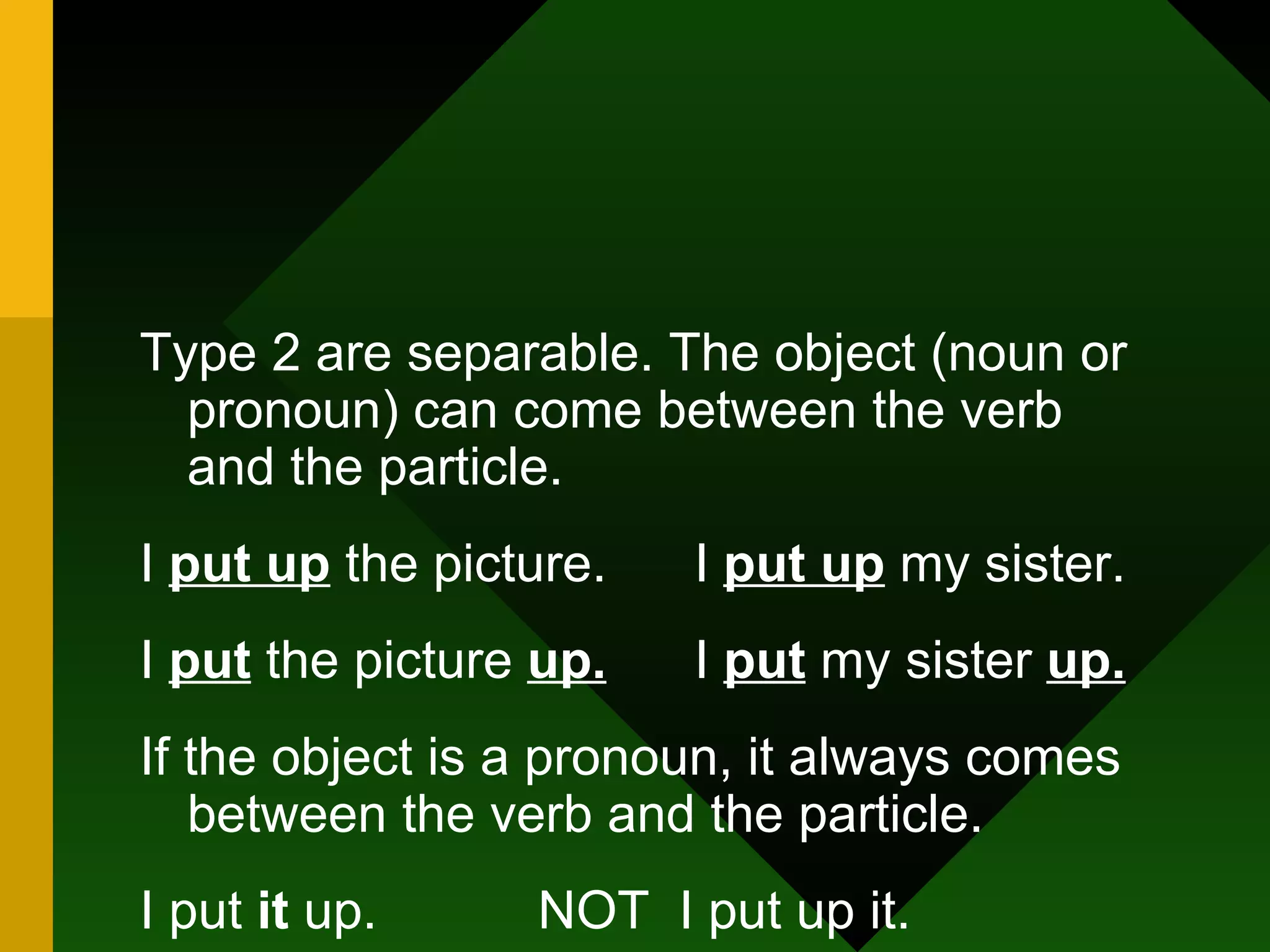
Type 2 are separable. The object (noun or pronoun) can come between the verb and the particle. I  put up  the picture.  I  put up  my sister. I  put  the picture  up.   I  put  my sister  up. If the object is a pronoun, it always comes between the verb and the particle. I put  it  up.  NOT  I put up it. I put  her  up.  NOT  I put up her.
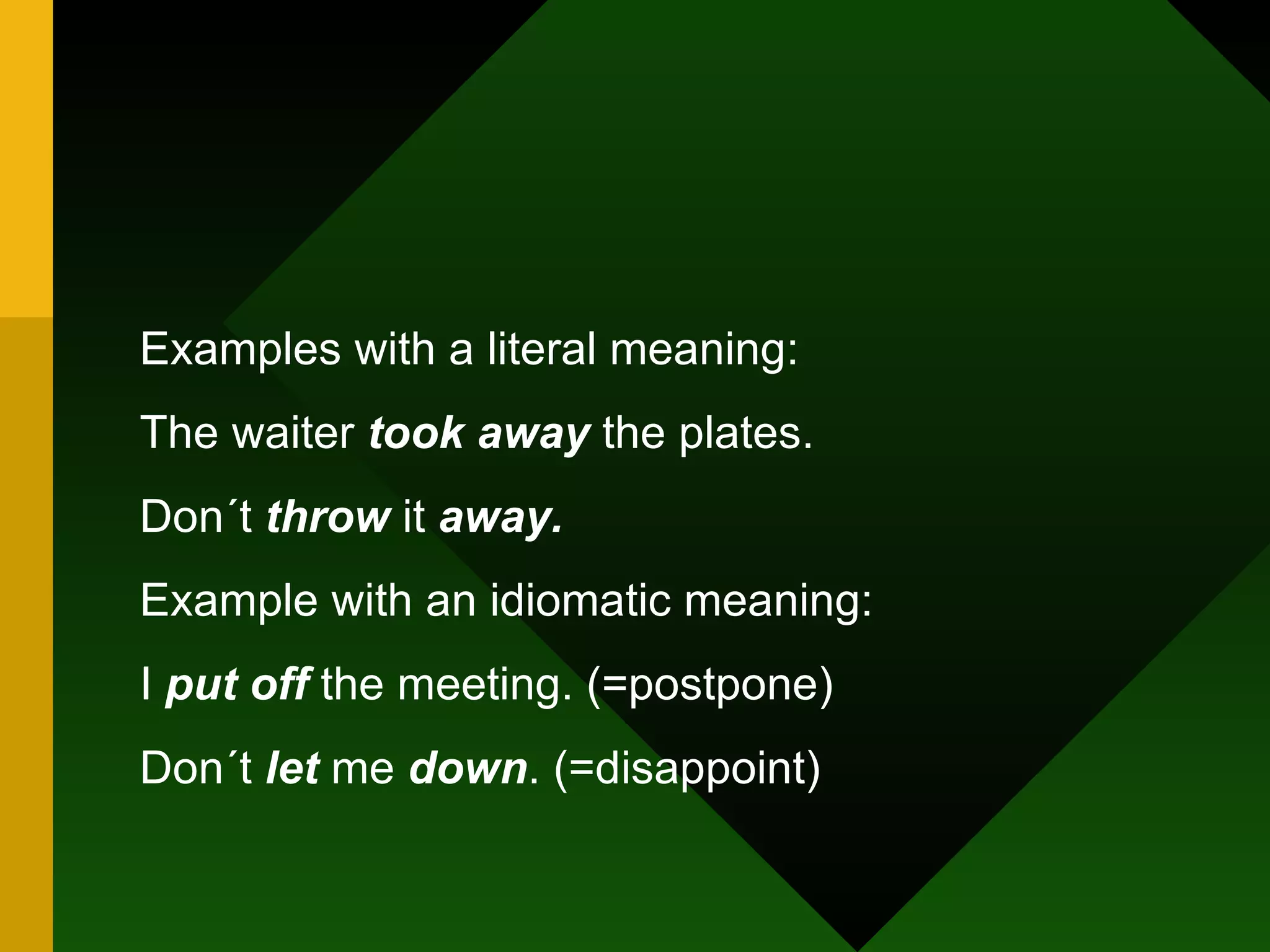
Examples with a literal meaning: The waiter  took away  the plates. Don´t  throw  it  away. Example with an idiomatic meaning: I  put off  the meeting. (=postpone) Don´t  let  me  down . (=disappoint)
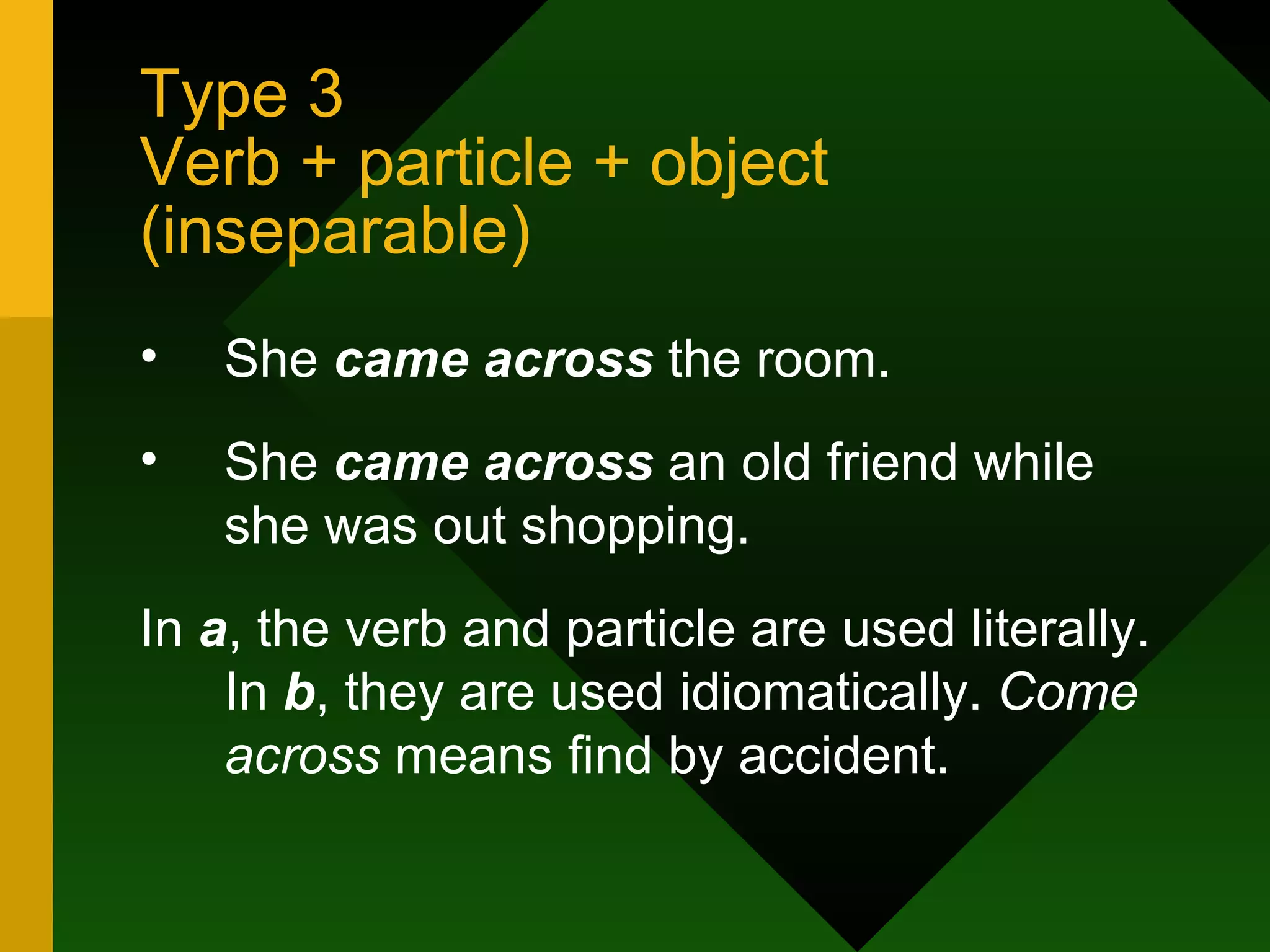
Type 3  Verb + particle + object (inseparable) She  came across  the room. She  came across  an old friend while she was out shopping. In  a , the verb and particle are used literally. In  b , they are used idiomatically.  Come across  means find by accident.
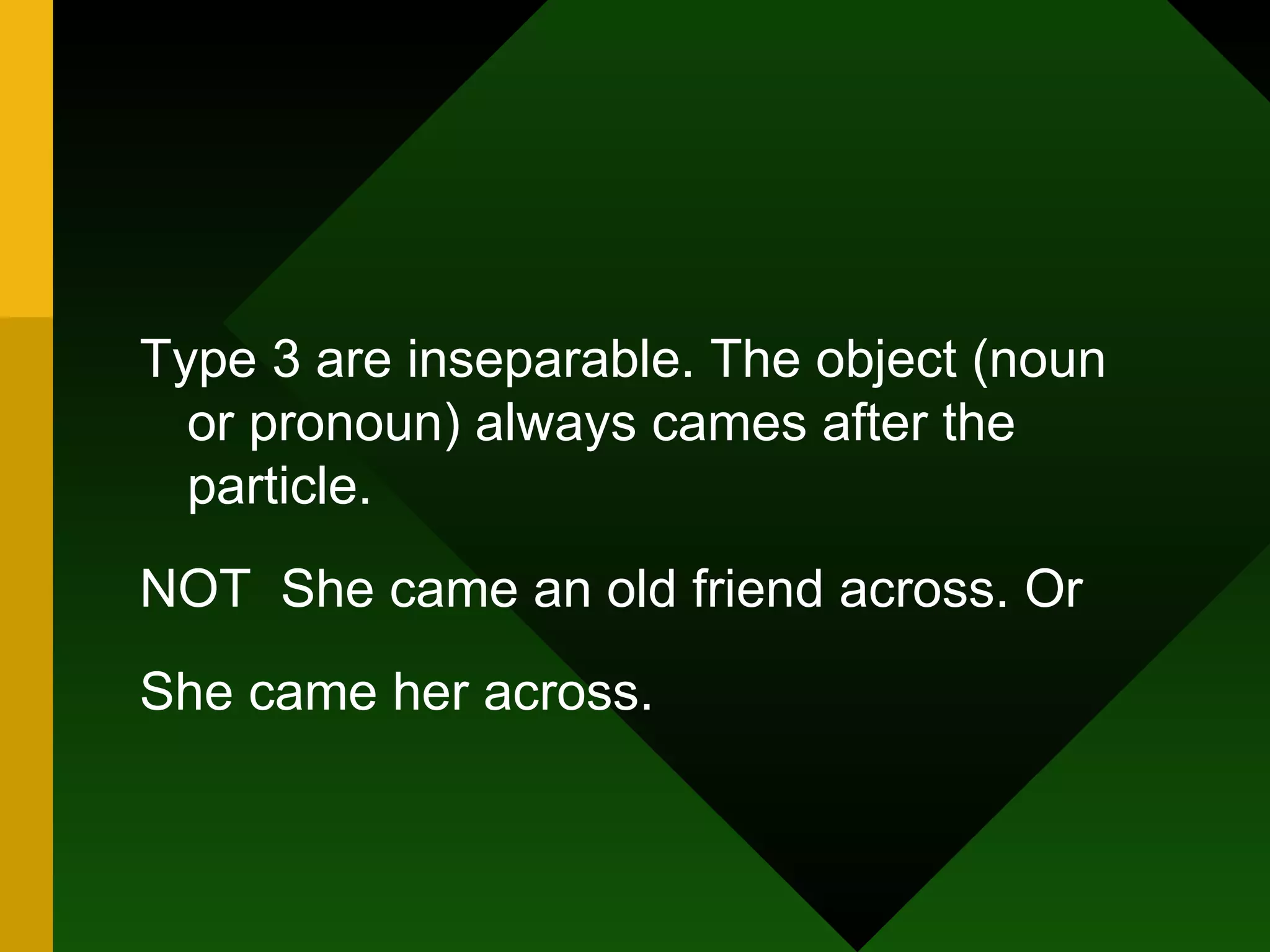
Type 3 are inseparable. The object (noun or pronoun) always cames after the particle. NOT  She came an old friend across. Or She came her across.
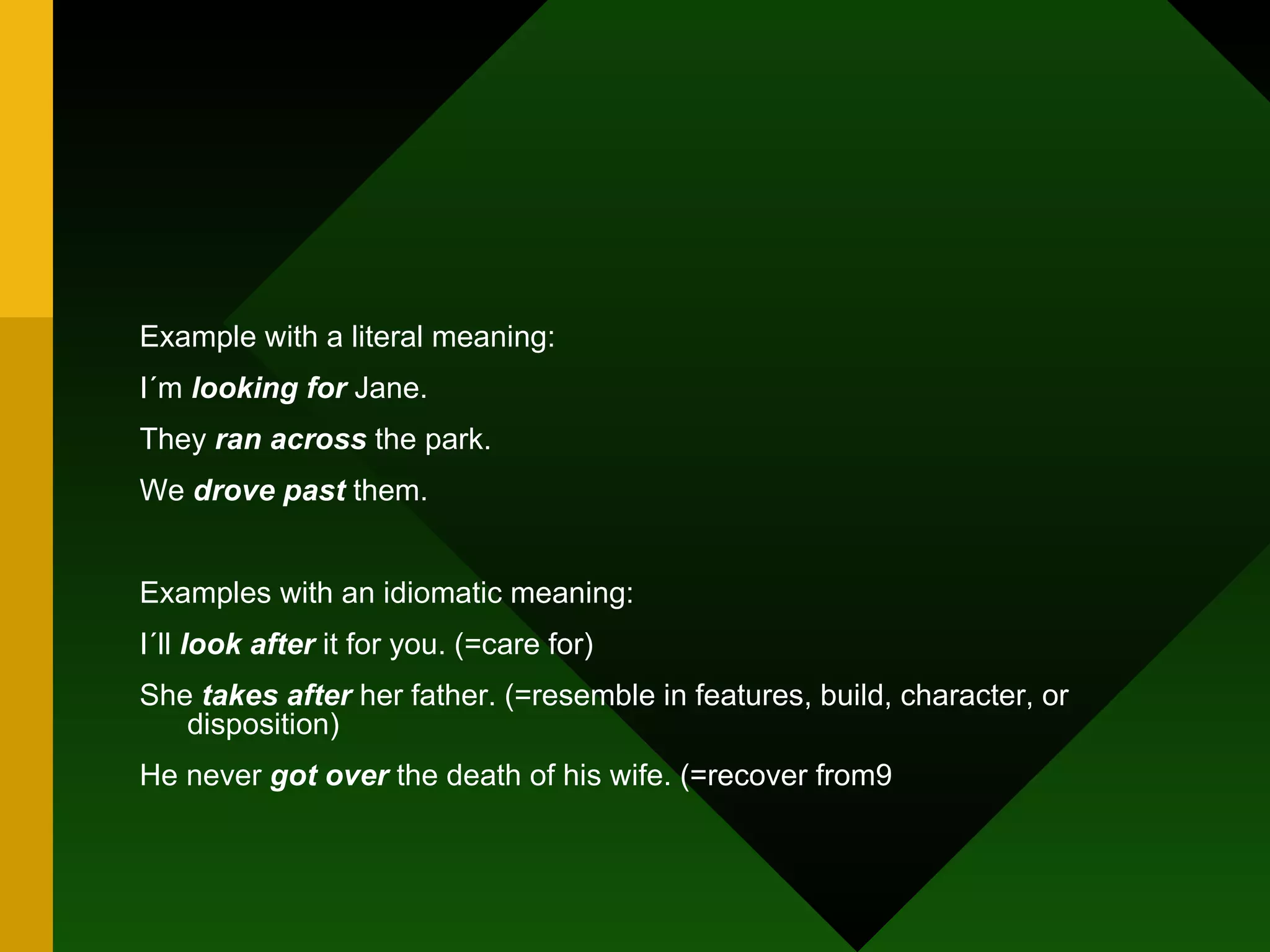
Example with a literal meaning:  I´m  looking for  Jane. They  ran across  the park. We  drove past  them. Examples with an idiomatic meaning: I´ll  look after  it for you. (=care for) She  takes after  her father. (=resemble in features, build, character, or disposition) He never  got over  the death of his wife. (=recover from9
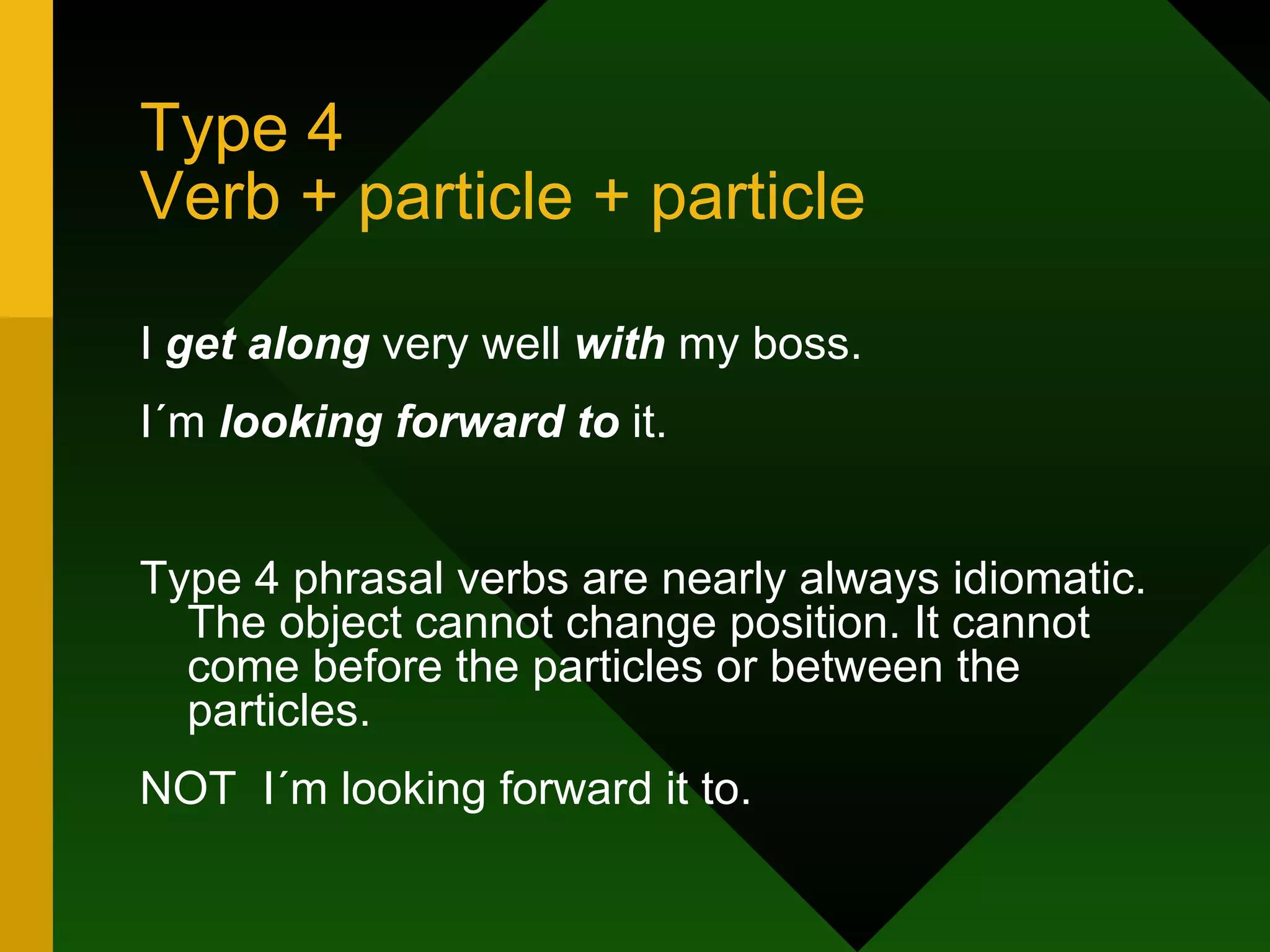
Type 4 Verb + particle + particle I  get along  very well  with  my boss. I´m  looking forward to  it. Type 4 phrasal verbs are nearly always idiomatic. The object cannot change position. It cannot come before the particles or between the particles. NOT  I´m looking forward it to.
THANKS!!!!!!!

Phrasal Verbs,Ingl

  • 1.
  • 2.
    There are fourtypes of phrasal verbs. Types 1,2 and 3 cen be literal or idiomatic. Type 4 are nearly always idiomatic.
  • 3.
    Type 1 Verb+ particle (no object) He put on his coat and went out . I didn´t put enough wood on the fire and it went out. In a , the verb and particle are used literal. In b , they are used idiomatically. Go out means stop burning. Examples with literal meaning: Sit down. Please go away . Examples with idiomatic meaning: The marriage didn´t work out. (=succeed) Our plans fell through . (=fail)
  • 4.
    Type 2 Verb+ particle + object (separable) I put up the picture. I put up my sister for the night. In a , are used literally. In b , are used idiomatically. Put up means give someone food and a place to sleep, usually for the night or a few days.
  • 5.
    Type 2 areseparable. The object (noun or pronoun) can come between the verb and the particle. I put up the picture. I put up my sister. I put the picture up. I put my sister up. If the object is a pronoun, it always comes between the verb and the particle. I put it up. NOT I put up it. I put her up. NOT I put up her.
  • 6.
    Examples with aliteral meaning: The waiter took away the plates. Don´t throw it away. Example with an idiomatic meaning: I put off the meeting. (=postpone) Don´t let me down . (=disappoint)
  • 7.
    Type 3 Verb + particle + object (inseparable) She came across the room. She came across an old friend while she was out shopping. In a , the verb and particle are used literally. In b , they are used idiomatically. Come across means find by accident.
  • 8.
    Type 3 areinseparable. The object (noun or pronoun) always cames after the particle. NOT She came an old friend across. Or She came her across.
  • 9.
    Example with aliteral meaning: I´m looking for Jane. They ran across the park. We drove past them. Examples with an idiomatic meaning: I´ll look after it for you. (=care for) She takes after her father. (=resemble in features, build, character, or disposition) He never got over the death of his wife. (=recover from9
  • 10.
    Type 4 Verb+ particle + particle I get along very well with my boss. I´m looking forward to it. Type 4 phrasal verbs are nearly always idiomatic. The object cannot change position. It cannot come before the particles or between the particles. NOT I´m looking forward it to.
  • 11.