PronounsPronouns
Objectives:
• To identify types of pronouns
• To use pronoun correctly in writing
Definition:
• A pronoun is a word that takes the
place of a noun, a group of words
acting as a noun, or another pronoun.
• The word or words that a pronoun
replaces is called the antecedent.
• The pronoun must match the
antecedent in number and gender.
Types:
• Personal
• Possessive
• Reflexive
• Intensive
• Demonstrative
• Interrogative
• Relative
• Indefinite
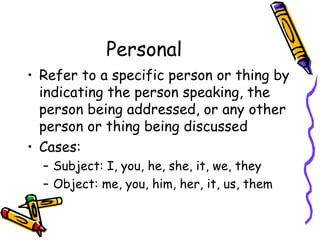
Personal
• Refer to a specific person or thing by
indicating the person speaking, the
person being addressed, or any other
person or thing being discussed
• Cases:
– Subject: I, you, he, she, it, we, they
– Object: me, you, him, her, it, us, them
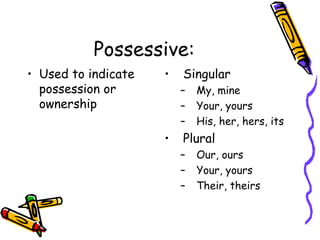
Possessive:
• Used to indicate
possession or
ownership
• Singular
– My, mine
– Your, yours
– His, her, hers, its
• Plural
– Our, ours
– Your, yours
– Their, theirs
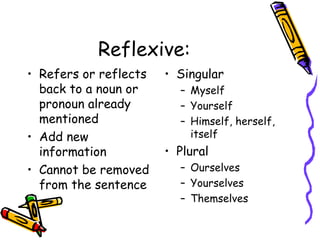
Reflexive:
• Refers or reflects
back to a noun or
pronoun already
mentioned
• Add new
information
• Cannot be removed
from the sentence
• Singular
– Myself
– Yourself
– Himself, herself,
itself
• Plural
– Ourselves
– Yourselves
– Themselves
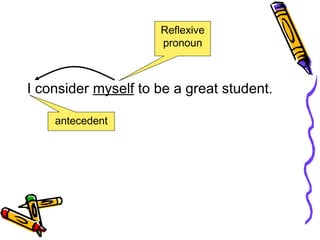
I consider myself to be a great student.
Reflexive
pronoun
antecedent
Intensive
• Add emphasis
• Can be removed
from the sentence
• Singular
– Myself
– Yourself
– Himself, herself,
itself
• Plural
– Ourselves
– Yourselves
– Themselves
Mom drove me to school herself.
Intensive
pronoun
Antecedent
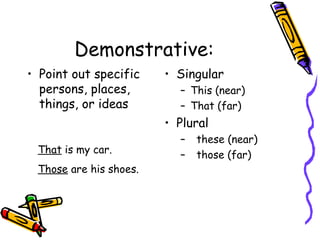
Demonstrative:
• Point out specific
persons, places,
things, or ideas
• Singular
– This (near)
– That (far)
• Plural
– these (near)
– those (far)That is my car.
Those are his shoes.
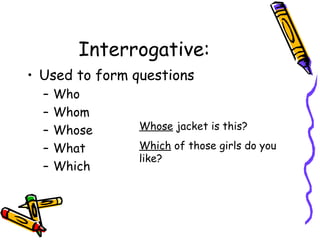
Interrogative:
• Used to form questions
– Who
– Whom
– Whose
– What
– Which
Whose jacket is this?
Which of those girls do you
like?
Relative:
• Used to begin a special subject-verb word
group called a subordinate clause.
– Who, whoever
– Whose
– Whom, whomever
– That
– Which, whichever
– What, whatever
Whoever borrowed my
book needs to return it.
`
All Either Much Others
Another Enough Neither Plenty
Any Everybody Nobody Several
Anybody Everyone None Some
Anything Few Nothing Someone
Pronouns:
• A pronoun is a word that takes the
place of a noun
• The word replaced is called the
antecedent
• The pronoun must match its
antecedent in number and gender
• Pronouns make English easier

Pronouns

  • 1.
  • 2.
    Objectives: • To identifytypes of pronouns • To use pronoun correctly in writing
  • 3.
    Definition: • A pronounis a word that takes the place of a noun, a group of words acting as a noun, or another pronoun. • The word or words that a pronoun replaces is called the antecedent. • The pronoun must match the antecedent in number and gender.
  • 4.
    Types: • Personal • Possessive •Reflexive • Intensive • Demonstrative • Interrogative • Relative • Indefinite
  • 5.
    Personal • Refer toa specific person or thing by indicating the person speaking, the person being addressed, or any other person or thing being discussed • Cases: – Subject: I, you, he, she, it, we, they – Object: me, you, him, her, it, us, them
  • 6.
    Possessive: • Used toindicate possession or ownership • Singular – My, mine – Your, yours – His, her, hers, its • Plural – Our, ours – Your, yours – Their, theirs
  • 7.
    Reflexive: • Refers orreflects back to a noun or pronoun already mentioned • Add new information • Cannot be removed from the sentence • Singular – Myself – Yourself – Himself, herself, itself • Plural – Ourselves – Yourselves – Themselves
  • 8.
    I consider myselfto be a great student. Reflexive pronoun antecedent
  • 9.
    Intensive • Add emphasis •Can be removed from the sentence • Singular – Myself – Yourself – Himself, herself, itself • Plural – Ourselves – Yourselves – Themselves
  • 10.
    Mom drove meto school herself. Intensive pronoun Antecedent
  • 11.
    Demonstrative: • Point outspecific persons, places, things, or ideas • Singular – This (near) – That (far) • Plural – these (near) – those (far)That is my car. Those are his shoes.
  • 12.
    Interrogative: • Used toform questions – Who – Whom – Whose – What – Which Whose jacket is this? Which of those girls do you like?
  • 13.
    Relative: • Used tobegin a special subject-verb word group called a subordinate clause. – Who, whoever – Whose – Whom, whomever – That – Which, whichever – What, whatever Whoever borrowed my book needs to return it.
  • 14.
    ` All Either MuchOthers Another Enough Neither Plenty Any Everybody Nobody Several Anybody Everyone None Some Anything Few Nothing Someone
  • 15.
    Pronouns: • A pronounis a word that takes the place of a noun • The word replaced is called the antecedent • The pronoun must match its antecedent in number and gender • Pronouns make English easier