PHOTOVOLTAIC PV
LED LIGHTING
SYSTEMS
PREPARED BY-
KUNAL S. MAHJAN
TE ELECTRICAL, GCOE, JALGAON.
INDEX
Introduction
Solar cell
Working of solar cell
Components of PV system
Types of PV systems
LED Lighting
Advantages and disadvantages of PV systems
Conclusion
References
INTRODUCTION
Photovoltaic (PV) systems convert sunlight directly
into electricity.
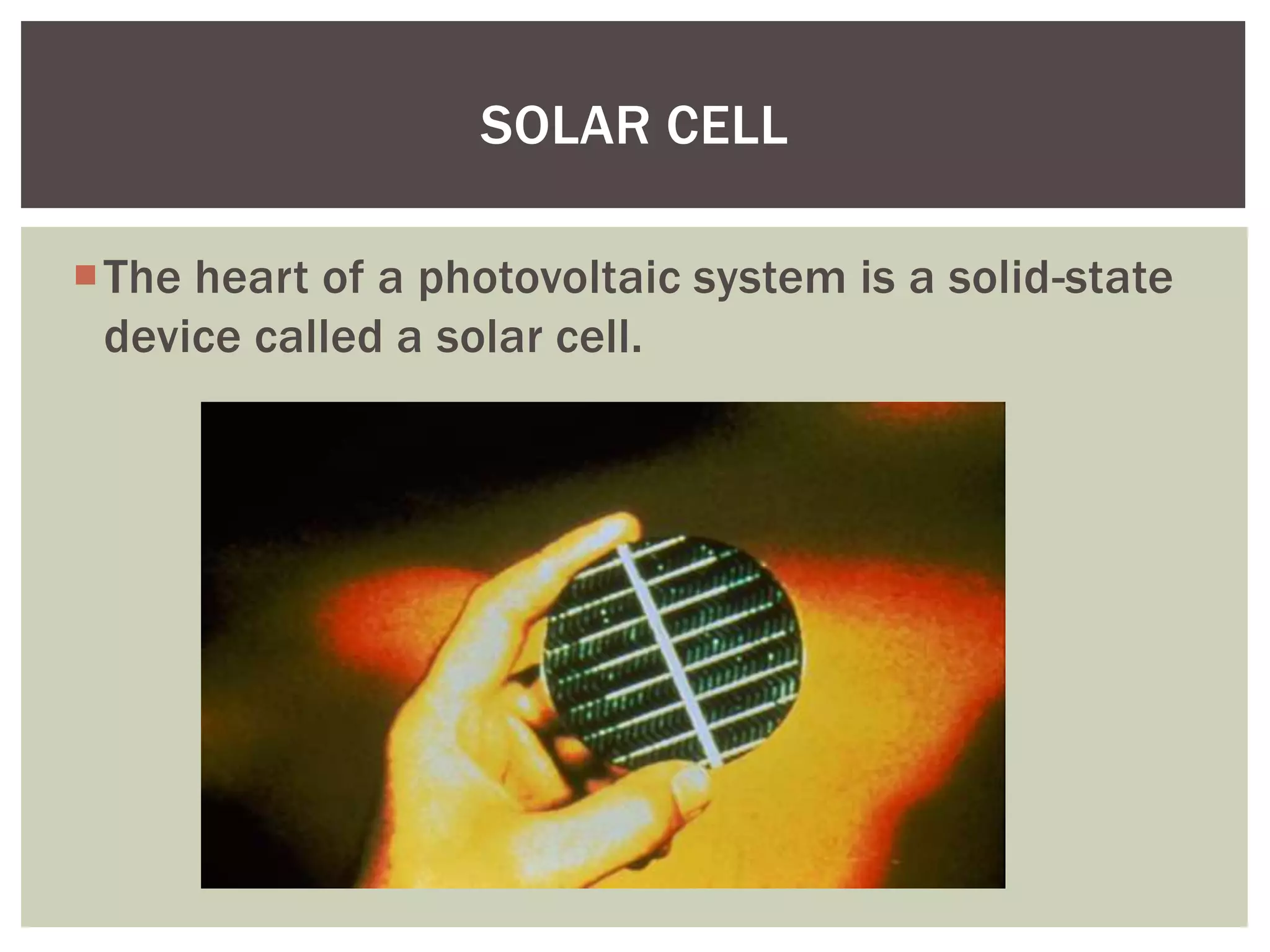
The heart of a photovoltaic system is a solid-state
device called a solar cell.
SOLAR CELL
Solar cells are made of silicon.
Treated to be positive on one side and negative on
other side.
When light energy hits the cell, electrons loose out
from the atoms in the semiconductor material.
If electrical conductors are attached to the positive
and negative sides, forming an electrical circuit,
and the flow of released electron produces the
current.
WORKING OF SOLAR CELL
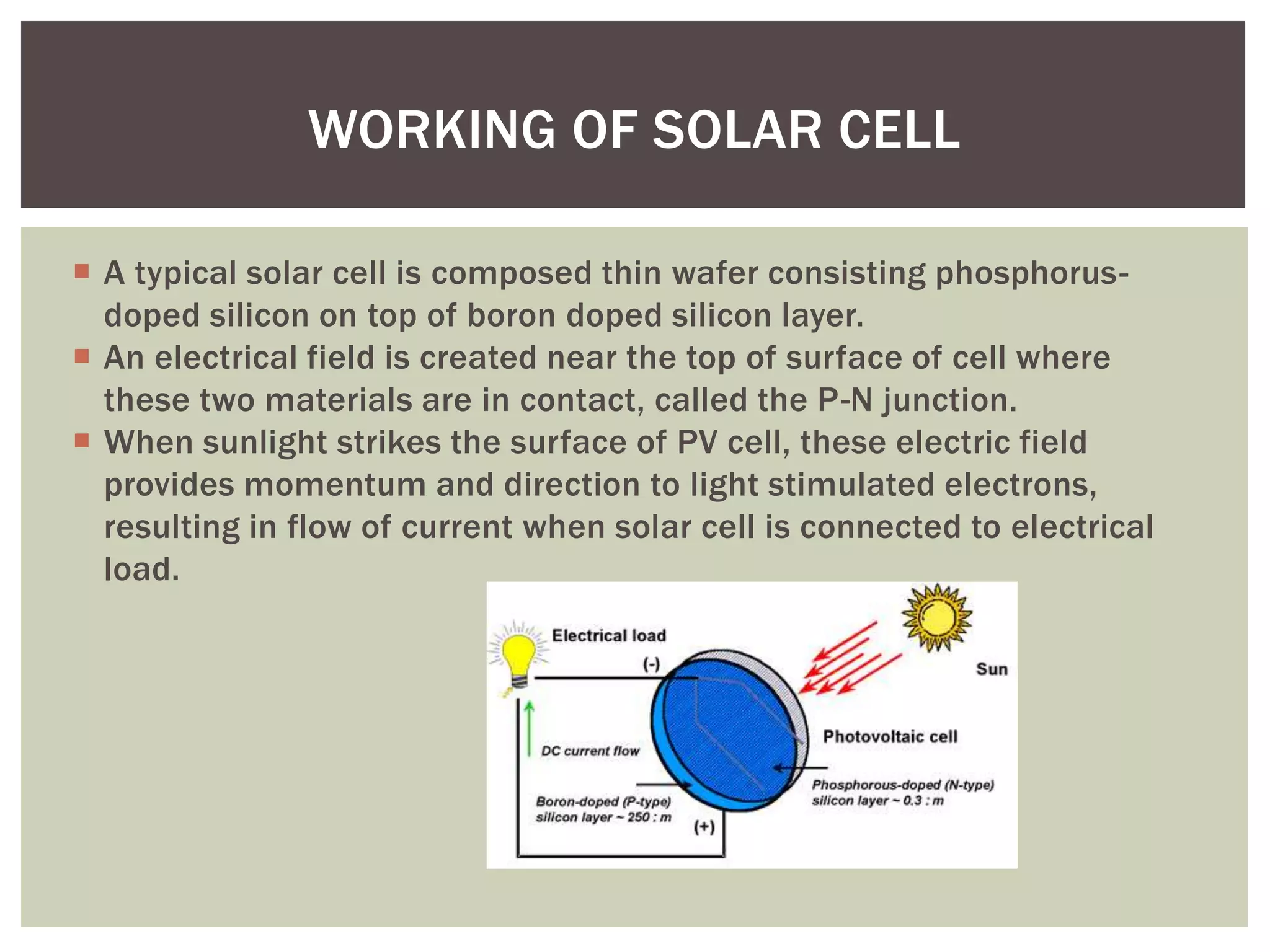
 A typical solar cell is composed thin wafer consisting phosphorus-
doped silicon on top of boron doped silicon layer.
 An electrical field is created near the top of surface of cell where
these two materials are in contact, called the P-N junction.
 When sunlight strikes the surface of PV cell, these electric field
provides momentum and direction to light stimulated electrons,
resulting in flow of current when solar cell is connected to electrical
load.
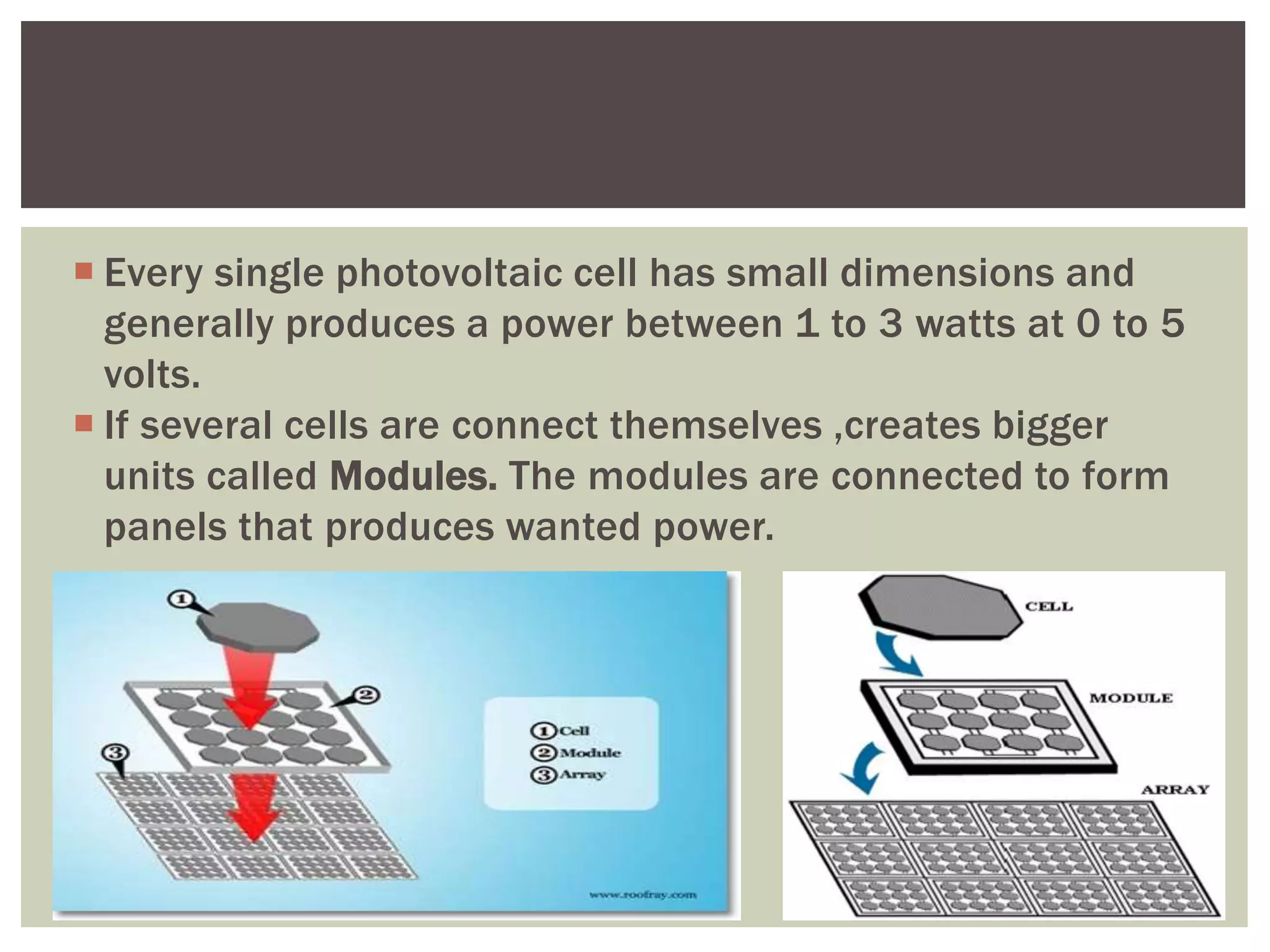
 Every single photovoltaic cell has small dimensions and
generally produces a power between 1 to 3 watts at 0 to 5
volts.
 If several cells are connect themselves ,creates bigger
units called Modules. The modules are connected to form
panels that produces wanted power.
 Solar modules ,battery ,inverter ,charge controller are the main
components of PV system.
 This four components occupies more than two-thirds of the total cost
of system.
 Batteries are used to store the electrical energy generated by
photovoltaic modules.
 Power can be drawn out from the batteries whenever required during
the day or night.
 Direct current systems which power AC load must use an Inverter.
 The use of inverter increases the cost of system.
 Charge regulator limits the rate at which current is drawn or added to
batteries.
 Here we are using LED as a load.
 Inverter converts DC to AC.
COMPONENTS OF PV SYSTEM
TYPES OF PV SYSTEMS
Mainly classified as Grid connected and stand-alone systems.
oGrid connected PV systems
• Grid connected PV systems are designed to operate in parallel with
the electrical utility grid.
• The main component of grid connected PV system is inverter. The
inverter converts DC power produced by PV array into AC power as
required by the utility grid.
oStand-Alone PV systems
• Stand-alone PV systems are generally designed to supply DC and/or
AC electrical loads.
• The simplest example of stand-alone PV system is directly connected
DC load.
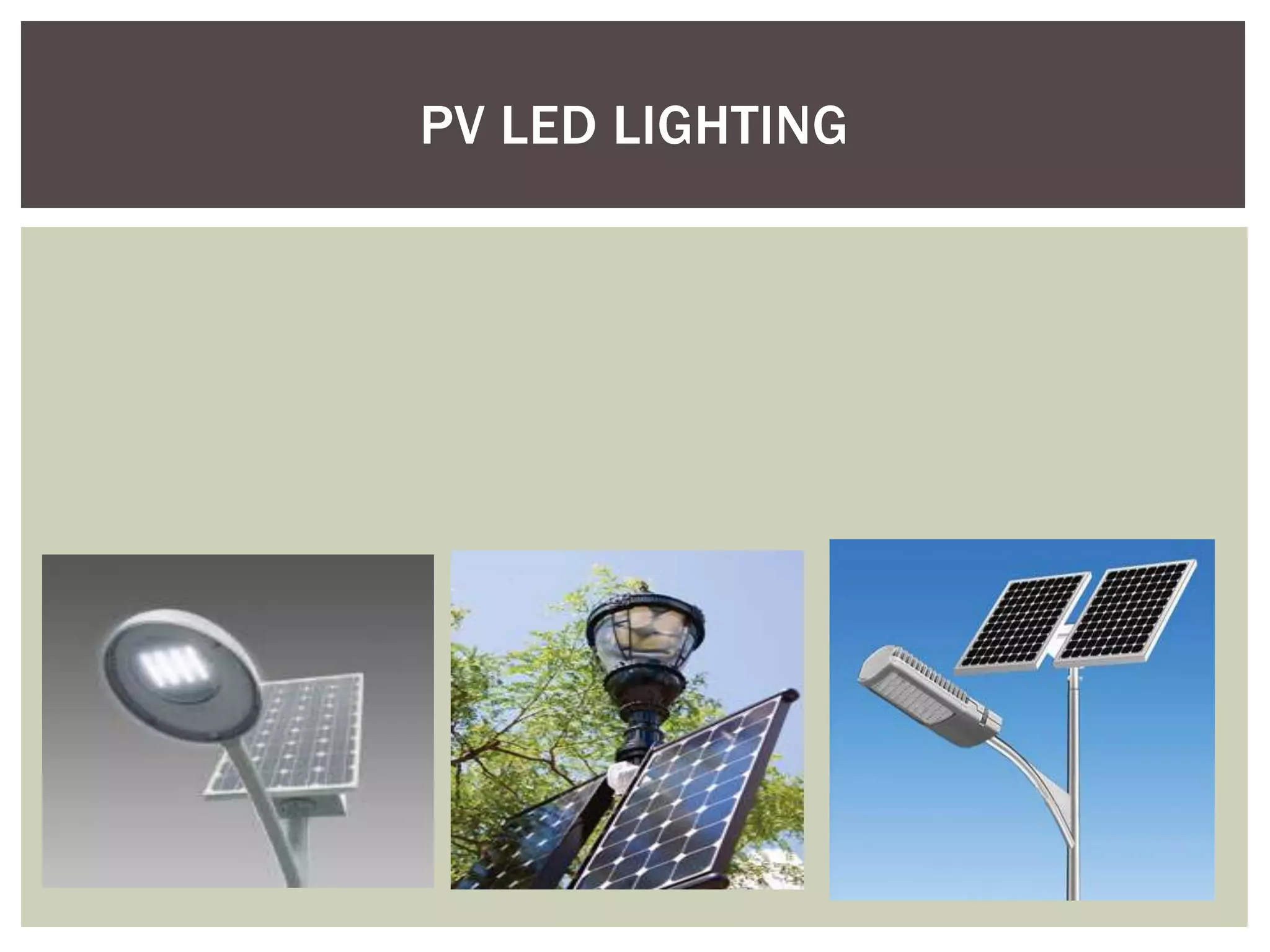
 Recently solar PV are coupled with Light Emitting Diodes
[LEDs] to give energy efficient light.
 Recent advancements in LED technology have led to
development of white light emitting diodes[WLEDs]
 WLEDs provide a bright white light that’s ideal for domestic
lighting.
 The advantage of using LEDs with solar PV system is that
the LED requires very much lower power wattage
 Therefore the size and cost of solar system is much
reduced.
LED LIGHTING
PV LED LIGHTING
In our country there are about 300 clear sunny
days in a year and hence solar energy is widely
available.
There is a vast scope for solar sector in India
There is still over 100000 villages in the country to
be electrified.
Recognizing the importance of PV technology
Government is also implanting a comprehensive
pregramme in solar sector.
INDIA HAS LOT OF SUN LIGHT
ADVANTAGES AND DISADVANTAGES
Advantages
Fuel is free and easily available.
Easily expandable.
No noise pollution or other type of pollution.
PV systems which are properly design and properly installed required
nominal maintenance.
 Disadvantages
High cost of PV modules and equipments is the primary limiting
factor.
The surface area required for the PV array may be limiting factor.
CONCLUSION
It is light to light conversion.
It is very simple system to implement.
LEDs are used because they need very small
voltage to operate and more life time.
Although cost is major factor but PV systems are
long life durable and long time service provider .
REFERENCES
W C Adams, 'Photovoltaic solar energy generation'.
http://www.thinkelectrics.com/solar-pv/
http://www.lrc.rpi.edu/programs/NLPIP/lightingA
nswers/photovoltaic/02-photovoltaic-what-is-
PV.asp
http://free-energi.com/index.php?a=4
http://portal.indiainfoline.com/datamonitor/Ener
gy/Number-of-Towns-and-Villages-Electrified-in-
India.aspx
THANK YOU
 For more details contact
 Kunalmahajan03@gmail.com

Photovoltaic (PV) LED Lightning system

  • 1.
    PHOTOVOLTAIC PV LED LIGHTING SYSTEMS PREPAREDBY- KUNAL S. MAHJAN TE ELECTRICAL, GCOE, JALGAON.
  • 2.
    INDEX Introduction Solar cell Working ofsolar cell Components of PV system Types of PV systems LED Lighting Advantages and disadvantages of PV systems Conclusion References
  • 3.
    INTRODUCTION Photovoltaic (PV) systemsconvert sunlight directly into electricity.
  • 4.
    The heart ofa photovoltaic system is a solid-state device called a solar cell. SOLAR CELL
  • 5.
    Solar cells aremade of silicon. Treated to be positive on one side and negative on other side. When light energy hits the cell, electrons loose out from the atoms in the semiconductor material. If electrical conductors are attached to the positive and negative sides, forming an electrical circuit, and the flow of released electron produces the current.
  • 6.
    WORKING OF SOLARCELL  A typical solar cell is composed thin wafer consisting phosphorus- doped silicon on top of boron doped silicon layer.  An electrical field is created near the top of surface of cell where these two materials are in contact, called the P-N junction.  When sunlight strikes the surface of PV cell, these electric field provides momentum and direction to light stimulated electrons, resulting in flow of current when solar cell is connected to electrical load.
  • 7.
     Every singlephotovoltaic cell has small dimensions and generally produces a power between 1 to 3 watts at 0 to 5 volts.  If several cells are connect themselves ,creates bigger units called Modules. The modules are connected to form panels that produces wanted power.
  • 8.
     Solar modules,battery ,inverter ,charge controller are the main components of PV system.  This four components occupies more than two-thirds of the total cost of system.  Batteries are used to store the electrical energy generated by photovoltaic modules.  Power can be drawn out from the batteries whenever required during the day or night.  Direct current systems which power AC load must use an Inverter.  The use of inverter increases the cost of system.  Charge regulator limits the rate at which current is drawn or added to batteries.  Here we are using LED as a load.  Inverter converts DC to AC. COMPONENTS OF PV SYSTEM
  • 9.
    TYPES OF PVSYSTEMS Mainly classified as Grid connected and stand-alone systems. oGrid connected PV systems • Grid connected PV systems are designed to operate in parallel with the electrical utility grid. • The main component of grid connected PV system is inverter. The inverter converts DC power produced by PV array into AC power as required by the utility grid. oStand-Alone PV systems • Stand-alone PV systems are generally designed to supply DC and/or AC electrical loads. • The simplest example of stand-alone PV system is directly connected DC load.
  • 10.
     Recently solarPV are coupled with Light Emitting Diodes [LEDs] to give energy efficient light.  Recent advancements in LED technology have led to development of white light emitting diodes[WLEDs]  WLEDs provide a bright white light that’s ideal for domestic lighting.  The advantage of using LEDs with solar PV system is that the LED requires very much lower power wattage  Therefore the size and cost of solar system is much reduced. LED LIGHTING
  • 11.
  • 12.
    In our countrythere are about 300 clear sunny days in a year and hence solar energy is widely available. There is a vast scope for solar sector in India There is still over 100000 villages in the country to be electrified. Recognizing the importance of PV technology Government is also implanting a comprehensive pregramme in solar sector. INDIA HAS LOT OF SUN LIGHT
  • 13.
    ADVANTAGES AND DISADVANTAGES Advantages Fuelis free and easily available. Easily expandable. No noise pollution or other type of pollution. PV systems which are properly design and properly installed required nominal maintenance.  Disadvantages High cost of PV modules and equipments is the primary limiting factor. The surface area required for the PV array may be limiting factor.
  • 14.
    CONCLUSION It is lightto light conversion. It is very simple system to implement. LEDs are used because they need very small voltage to operate and more life time. Although cost is major factor but PV systems are long life durable and long time service provider .
  • 15.
    REFERENCES W C Adams,'Photovoltaic solar energy generation'. http://www.thinkelectrics.com/solar-pv/ http://www.lrc.rpi.edu/programs/NLPIP/lightingA nswers/photovoltaic/02-photovoltaic-what-is- PV.asp http://free-energi.com/index.php?a=4 http://portal.indiainfoline.com/datamonitor/Ener gy/Number-of-Towns-and-Villages-Electrified-in- India.aspx
  • 16.
  • 17.
     For moredetails contact  Kunalmahajan03@gmail.com