METABOLISM-I
Bacterial Photosynthesis
CONTENTS
 Introduction
 Photosynthetic Pigments
 Phases of Photosynthesis
 Types of Photosynthesis
Oxygenic Photosynthesis
Anoxygenic Photosynthesis
 Calvin Cycle
 References
INTRODUCTION
• Photosynthesis is a light-dependent reaction that
occurs in autotrophic organisms where light energy is
converted to chemical energy and the carbohydrate
formed is stored as food.
• Photosynthesis is carried out by plants, blue-green
algae (Cyanobacteria), and some bacteria such as
purple and green-sulphur bacteria.
• The photosynthesis process in bacteria and plants
differs. Bacterial photosynthesis is primarily an
anoxygenic process in which O2 is not evolved
(except in cyanobacteria), whereas plant
photosynthesis is an oxygenic process in which O2 is
evolved.
• There are two primary forms of bacterial
photosynthesis: oxygenic and anoxygenic
photosynthesis.
Photosynthetic Pigments
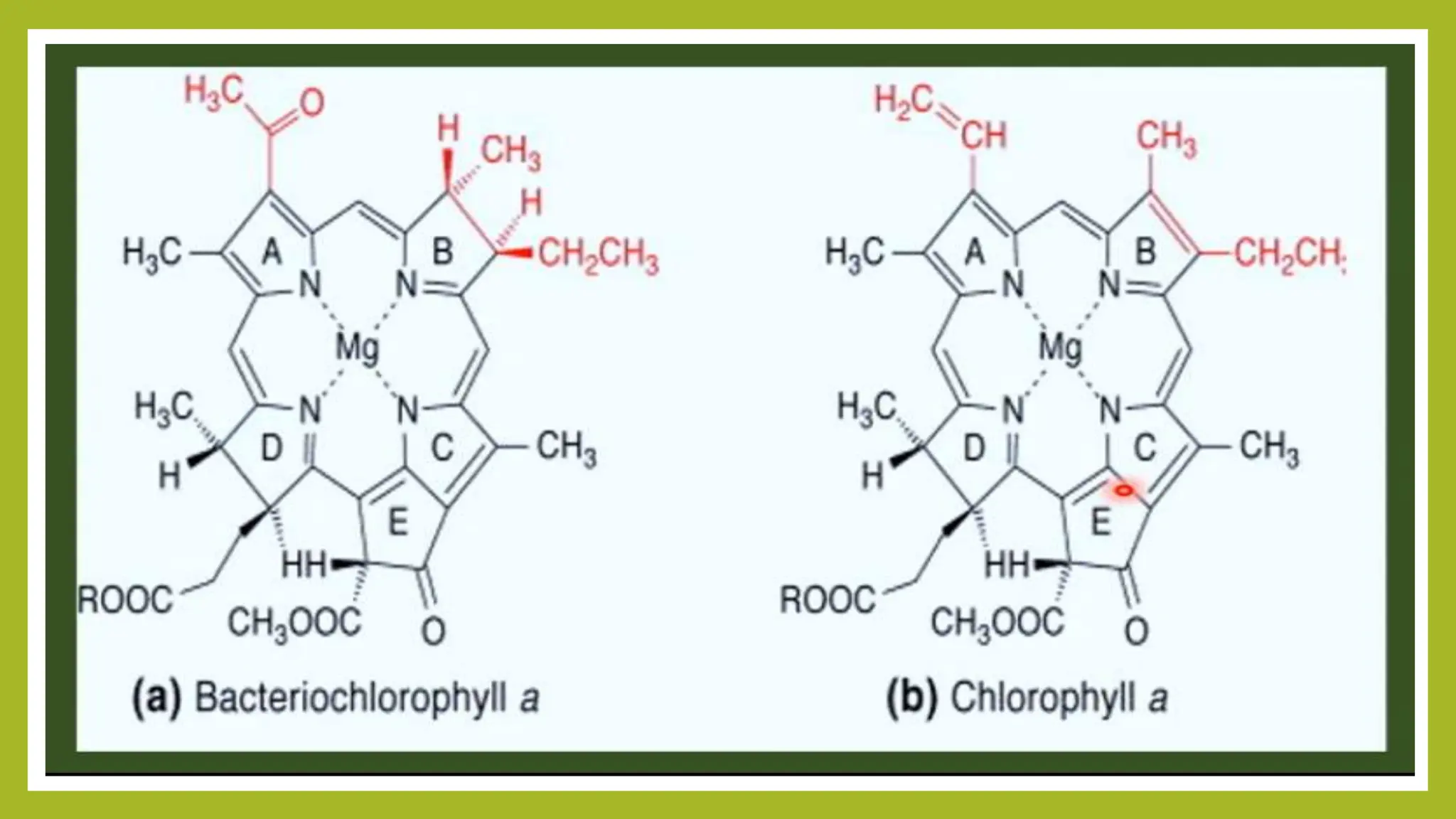
Chlorophyll
 Chlorophyll is the photosynthetic pigment in all
oxygenic bacteria called Cyanobacteria
 Contains a Magnesium atom in the center of the
porphyrin ring
 Types of Chlorophyll:
Chlorophyll a: Absorbs red light around 680 nm
and is found in Cyanobacteria
Chlorophyll b: Absorbs red light around 660 nm
and is found in Prochlorophytes.
Chlorophyll c: Absorbs red light between 450nm
and 640nm and is found in eukaryotic microbes
Chlorophyll d: It is found in a type of
cyanobacterium that lives in areas lacking visible
light, but containing infrared radiation.
Bacteriochlorophyll
 Bacteriochlorophyll is found in anoxygenic phototrophic
bacteria such as Purple bacteria, Purple-Sulphur
bacteria, Purple Non-Sulphur bacteria and Green
bacteria
 It absorbs light of red and blue region in the VIBGYOR.
 Types of Bacteriochlorophyll:
Bacteriochlorophyll a and b: Absorbs infrared radiation
(800nmto 1040nm) and are found in Purple bacteria.
Bacteriochlorophyll c,d and e: Absorbs far red light
(720nm to 750nm) and are found in Green Sulphur
bacteria.
Bacteriochlorophyll cs: Absorbs far red light (720nm)
and is found in Green Non-Sulphur bacteria.
Bacteriochlorophyll g: Absorbs red or far red light
(670nmto 788nm) and is found in the Heliobacteria
Accessory Pigments
Carotenoids
 They are hydrophobic pigments, firmly
or tightly embedded in the membrane.
 May be yellow, red, brown or green in
color.
 They protect the photosynthetic
pigments from the destructive
photooxidation that occurs in the
presence of light and carbon-dioxide.
 Example: Chlorobactene, Rhodopsin,
Lycopene
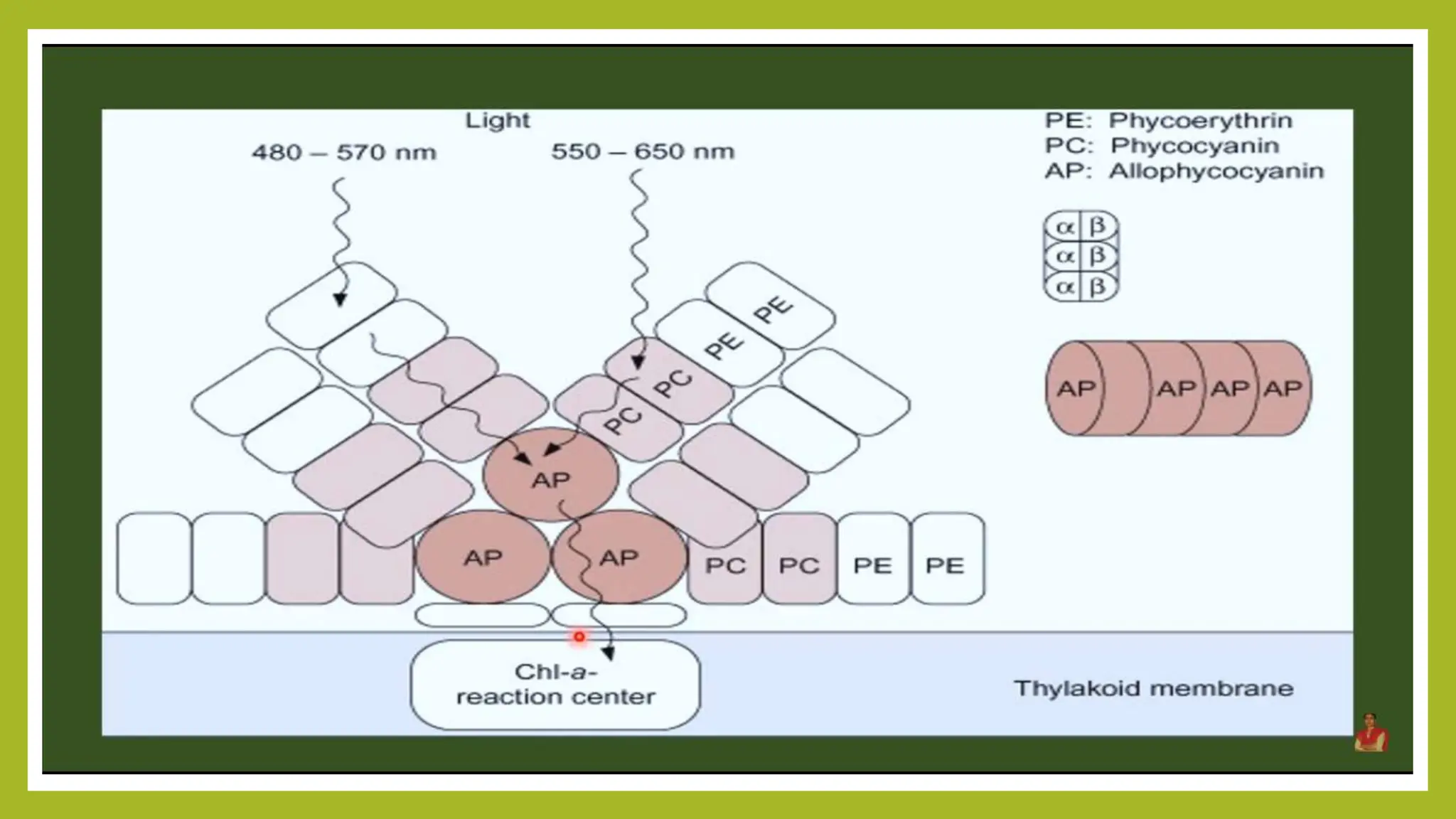
Phycobiliproteins
 They are principle light harvesting
pigments and are red or blue in color.
 The red pigment is called phycoerythrin
and captures light at 550nm.
 The blue pigment is called phycocyanin
and captures light at 620nm.
 Allophycocyanin absorbs light at about
650nm.
 Phycobiliproteins aggregate in the form
of phycobilisomes.
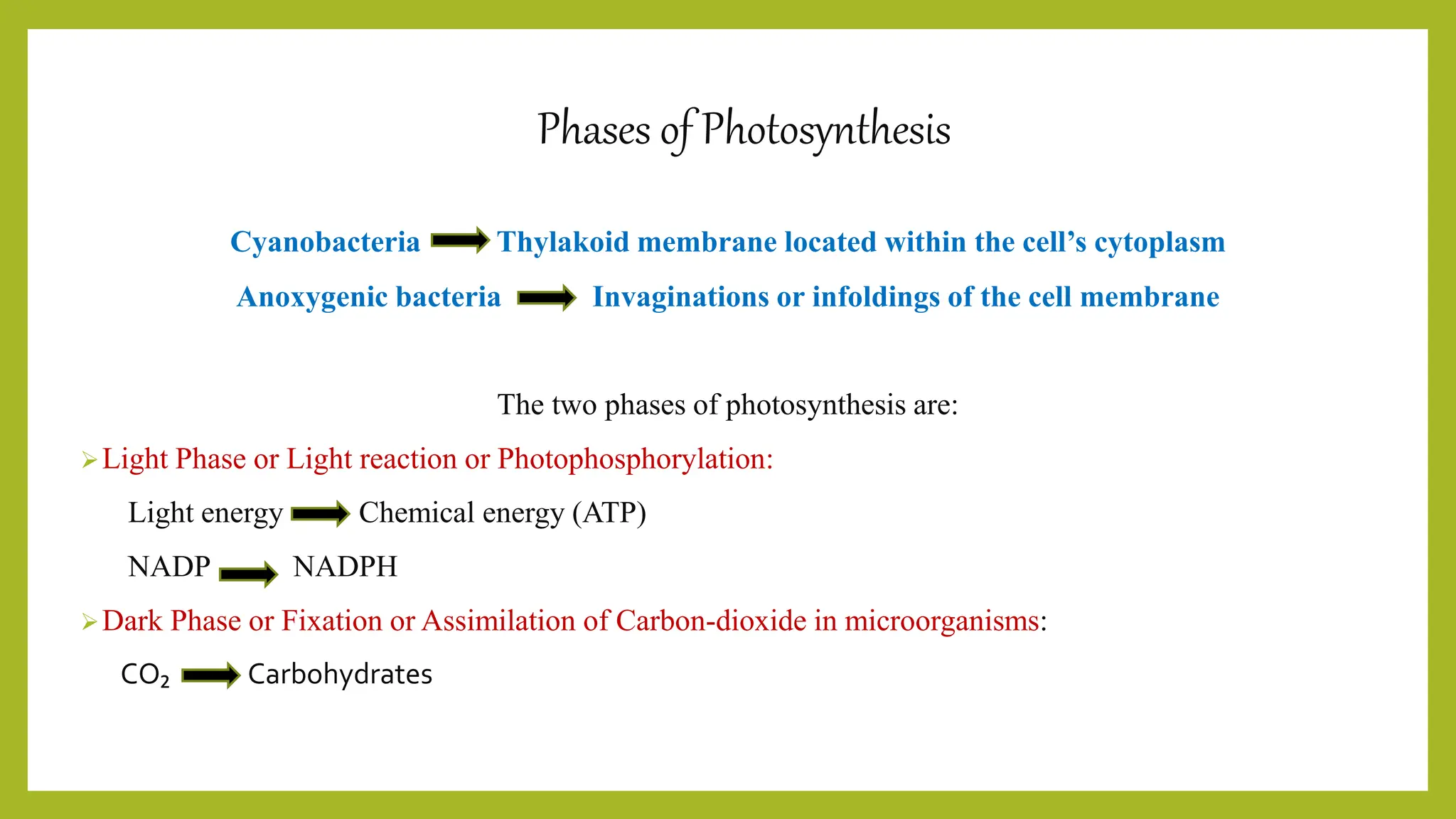
Phases of Photosynthesis
Cyanobacteria Thylakoid membrane located within the cell’s cytoplasm
Anoxygenic bacteria Invaginations or infoldings of the cell membrane
The two phases of photosynthesis are:
Light Phase or Light reaction or Photophosphorylation:
Light energy Chemical energy (ATP)
NADP NADPH
Dark Phase or Fixation or Assimilation of Carbon-dioxide in microorganisms:
CO₂ Carbohydrates
TYPES OF PHOTOSYNTHESIS
 OXYGENIC PHOTOSYNTHESIS
 It is seen in Cyanobacteria.
 Chlorophyll is the photosynthetic pigment.
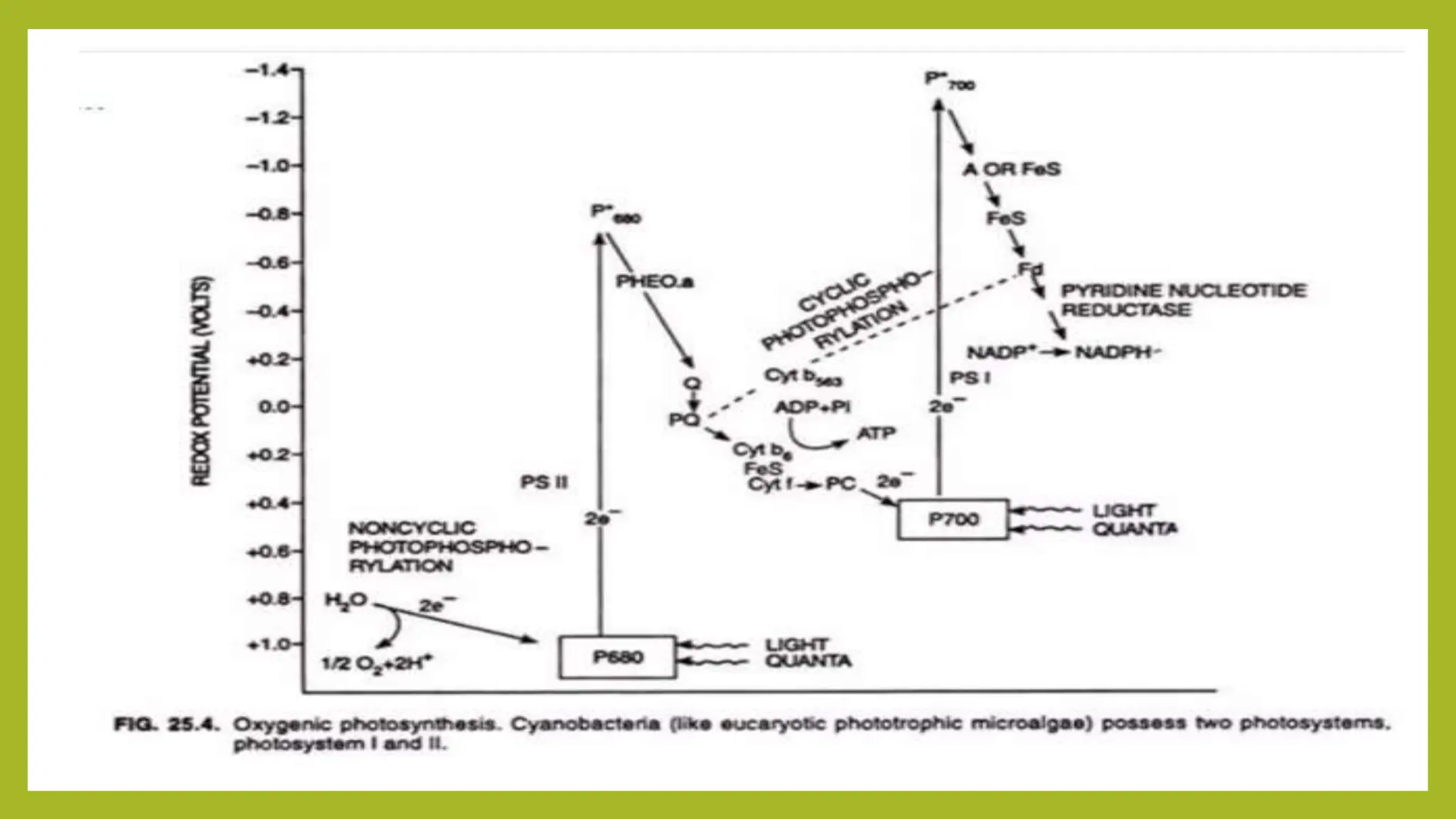
 Contain two distinct, interconnected photosystems : Photosystem I (P700) and
Photosystem II (P680).
 The compounds used to carry electrons include pheophytin (Chlorophyll with Mg2+
ion in the center), quinones, cytochromes, plastoquinones, non-heme Fe-S proteins,
ferredoxin and flavoproteins.
 Two types of Photophosphorylation occurs in Cyanobacteria: Cyclic and Non-Cyclic
Photophosphorylation
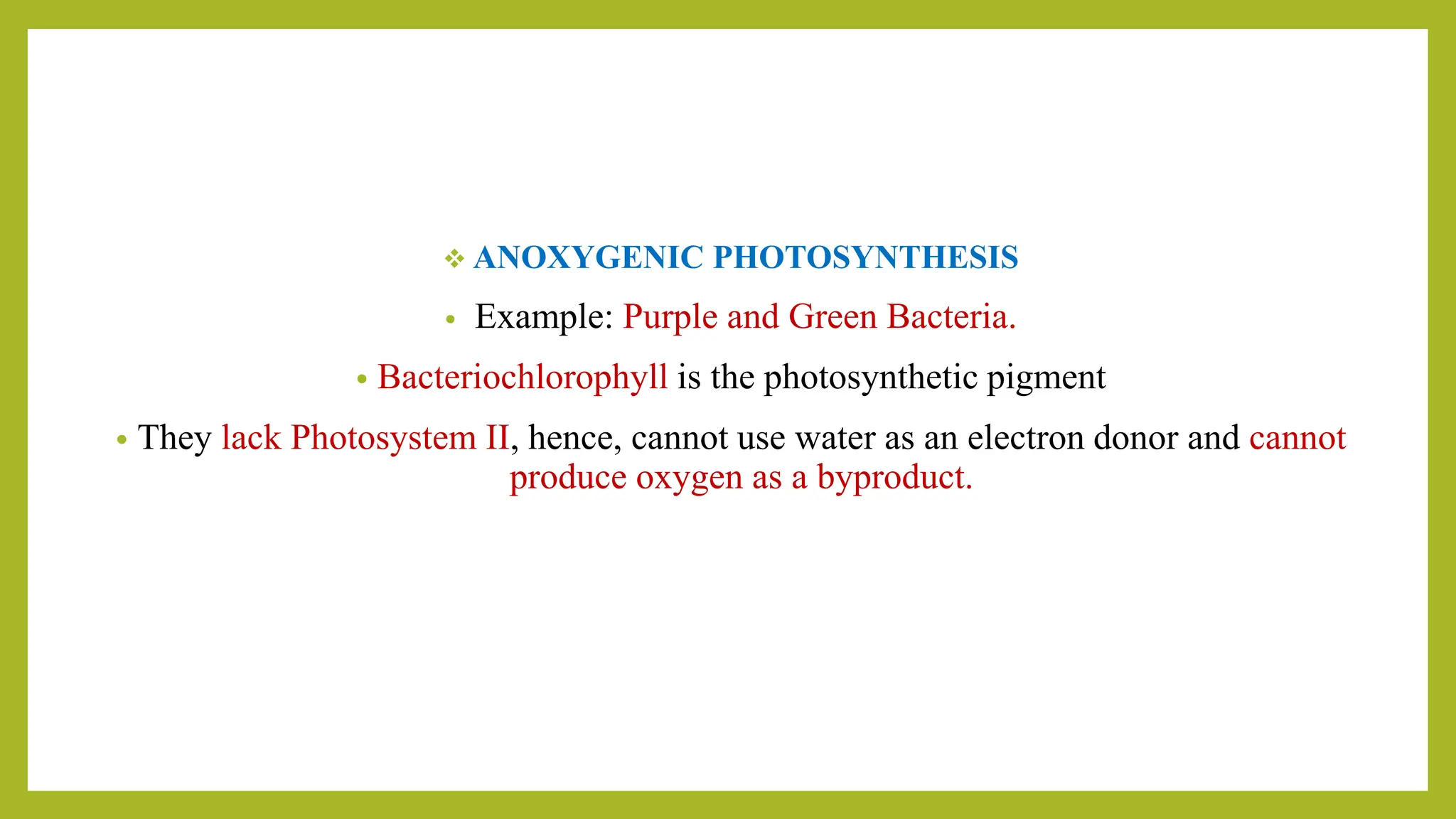
 ANOXYGENIC PHOTOSYNTHESIS
• Example: Purple and Green Bacteria.
• Bacteriochlorophyll is the photosynthetic pigment
• They lack Photosystem II, hence, cannot use water as an electron donor and cannot
produce oxygen as a byproduct.
REFERENCES
• Stanier, Y., Doudoroff, M., & Adelberg, E. A. (1958). General
microbiology.
• Vermaas, W. F. (2001). Photosynthesis and respiration in
cyanobacteria. e LS.
• Willey, J. M., Sherwood, L. M., & Woolverton, C. J. (2014). Prescott's
microbiology. McGraw-Hill.
• Lodish, H.F. (2003). Molecular cell biology 5th edition, 331-344
THANK YOU!!

Process involved in Bacterial photosynthesis.pptx

  • 1.
  • 2.
    CONTENTS  Introduction  PhotosyntheticPigments  Phases of Photosynthesis  Types of Photosynthesis Oxygenic Photosynthesis Anoxygenic Photosynthesis  Calvin Cycle  References
  • 3.
    INTRODUCTION • Photosynthesis isa light-dependent reaction that occurs in autotrophic organisms where light energy is converted to chemical energy and the carbohydrate formed is stored as food. • Photosynthesis is carried out by plants, blue-green algae (Cyanobacteria), and some bacteria such as purple and green-sulphur bacteria. • The photosynthesis process in bacteria and plants differs. Bacterial photosynthesis is primarily an anoxygenic process in which O2 is not evolved (except in cyanobacteria), whereas plant photosynthesis is an oxygenic process in which O2 is evolved. • There are two primary forms of bacterial photosynthesis: oxygenic and anoxygenic photosynthesis.
  • 4.
    Photosynthetic Pigments Chlorophyll  Chlorophyllis the photosynthetic pigment in all oxygenic bacteria called Cyanobacteria  Contains a Magnesium atom in the center of the porphyrin ring  Types of Chlorophyll: Chlorophyll a: Absorbs red light around 680 nm and is found in Cyanobacteria Chlorophyll b: Absorbs red light around 660 nm and is found in Prochlorophytes. Chlorophyll c: Absorbs red light between 450nm and 640nm and is found in eukaryotic microbes Chlorophyll d: It is found in a type of cyanobacterium that lives in areas lacking visible light, but containing infrared radiation. Bacteriochlorophyll  Bacteriochlorophyll is found in anoxygenic phototrophic bacteria such as Purple bacteria, Purple-Sulphur bacteria, Purple Non-Sulphur bacteria and Green bacteria  It absorbs light of red and blue region in the VIBGYOR.  Types of Bacteriochlorophyll: Bacteriochlorophyll a and b: Absorbs infrared radiation (800nmto 1040nm) and are found in Purple bacteria. Bacteriochlorophyll c,d and e: Absorbs far red light (720nm to 750nm) and are found in Green Sulphur bacteria. Bacteriochlorophyll cs: Absorbs far red light (720nm) and is found in Green Non-Sulphur bacteria. Bacteriochlorophyll g: Absorbs red or far red light (670nmto 788nm) and is found in the Heliobacteria
  • 6.
    Accessory Pigments Carotenoids  Theyare hydrophobic pigments, firmly or tightly embedded in the membrane.  May be yellow, red, brown or green in color.  They protect the photosynthetic pigments from the destructive photooxidation that occurs in the presence of light and carbon-dioxide.  Example: Chlorobactene, Rhodopsin, Lycopene Phycobiliproteins  They are principle light harvesting pigments and are red or blue in color.  The red pigment is called phycoerythrin and captures light at 550nm.  The blue pigment is called phycocyanin and captures light at 620nm.  Allophycocyanin absorbs light at about 650nm.  Phycobiliproteins aggregate in the form of phycobilisomes.
  • 8.
    Phases of Photosynthesis CyanobacteriaThylakoid membrane located within the cell’s cytoplasm Anoxygenic bacteria Invaginations or infoldings of the cell membrane The two phases of photosynthesis are: Light Phase or Light reaction or Photophosphorylation: Light energy Chemical energy (ATP) NADP NADPH Dark Phase or Fixation or Assimilation of Carbon-dioxide in microorganisms: CO₂ Carbohydrates
  • 9.
    TYPES OF PHOTOSYNTHESIS OXYGENIC PHOTOSYNTHESIS  It is seen in Cyanobacteria.  Chlorophyll is the photosynthetic pigment.  Contain two distinct, interconnected photosystems : Photosystem I (P700) and Photosystem II (P680).  The compounds used to carry electrons include pheophytin (Chlorophyll with Mg2+ ion in the center), quinones, cytochromes, plastoquinones, non-heme Fe-S proteins, ferredoxin and flavoproteins.  Two types of Photophosphorylation occurs in Cyanobacteria: Cyclic and Non-Cyclic Photophosphorylation
  • 11.
     ANOXYGENIC PHOTOSYNTHESIS •Example: Purple and Green Bacteria. • Bacteriochlorophyll is the photosynthetic pigment • They lack Photosystem II, hence, cannot use water as an electron donor and cannot produce oxygen as a byproduct.
  • 15.
    REFERENCES • Stanier, Y.,Doudoroff, M., & Adelberg, E. A. (1958). General microbiology. • Vermaas, W. F. (2001). Photosynthesis and respiration in cyanobacteria. e LS. • Willey, J. M., Sherwood, L. M., & Woolverton, C. J. (2014). Prescott's microbiology. McGraw-Hill. • Lodish, H.F. (2003). Molecular cell biology 5th edition, 331-344
  • 16.