P
h
o
t
o
g
r
a
p
h
(Step by Step Instructable)
R
e
s
t
o
r
a
t
i
o
n
I
m
p
o
r
t
a
n
t
N
o
t
e
s
Non Destructive Editing
I
m
p
o
r
t
a
n
t
N
o
t
e
s
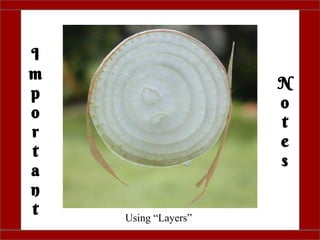
Using “Layers”
I
m
p
o
r
t
a
n
t
N
o
t
e
s
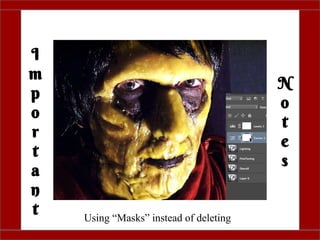
Using “Masks” instead of deleting
I
m
p
o
r
t
a
n
t
N
o
t
e
s
SAVE SAVE SAVE SAVE SAVE SAVE
SAVE
In at least three places
I
m
p
o
r
t
a
n
t
N
o
t
e
s
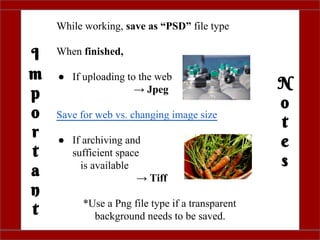
While working, save as “PSD” file type
When finished,
● If uploading to the web
→ Jpeg
Save for web vs. changing image size
● If archiving and
sufficient space
is available
→ Tiff
*Use a Png file type if a transparent
background needs to be saved.
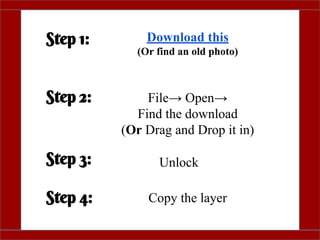
Step 1:
Step 2:
Download this
(Or find an old photo)
File→ Open→
Find the download
(Or Drag and Drop it in)
Step 3:
Step 4: Copy the layer
Unlock
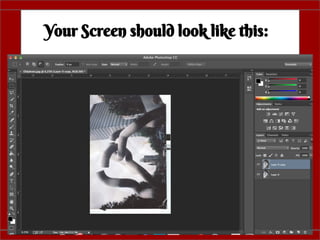
Your Screen should look like this:
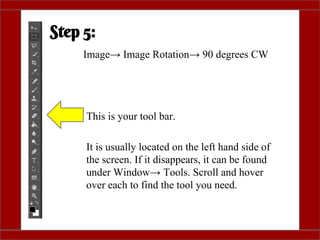
Step 5:
Image→ Image Rotation→ 90 degrees CW
This is your tool bar.
It is usually located on the left hand side of
the screen. If it disappears, it can be found
under Window→ Tools. Scroll and hover
over each to find the tool you need.
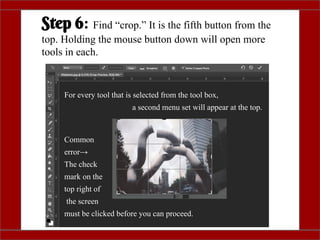
Step 6: Find “crop.” It is the fifth button from the
top. Holding the mouse button down will open more
tools in each.
For every tool that is selected from the tool box,
a second menu set will appear at the top.
Common
error→
The check
mark on the
top right of
the screen
must be clicked before you can proceed.
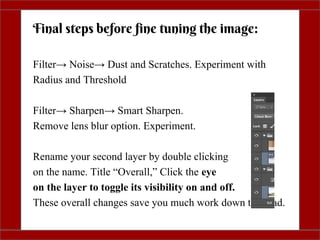
Filter→ Sharpen→ Smart Sharpen.
Remove lens blur option. Experiment.
Rename your second layer by double clicking
on the name. Title “Overall,” Click the eye
on the layer to toggle its visibility on and off.
These overall changes save you much work down the road.
Final steps before fine tuning the image:
Filter→ Noise→ Dust and Scratches. Experiment with
Radius and Threshold
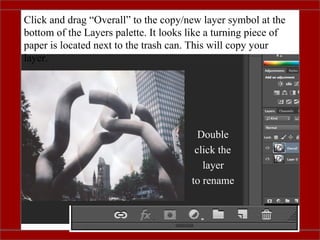
Click and drag “Overall” to the copy/new layer symbol at the
bottom of the Layers palette. It looks like a turning piece of
paper is located next to the trash can. This will copy your
layer.
Double
click the
layer
to rename
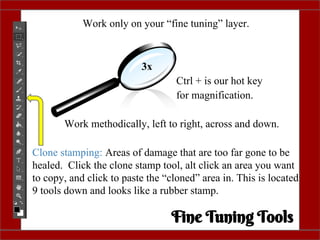
Work only on your “fine tuning” layer.
3x
Ctrl + is our hot key
for magnification.
Work methodically, left to right, across and down.
Clone stamping: Areas of damage that are too far gone to be
healed. Click the clone stamp tool, alt click an area you want
to copy, and click to paste the “cloned” area in. This is located
9 tools down and looks like a rubber stamp.
Fine Tuning Tools
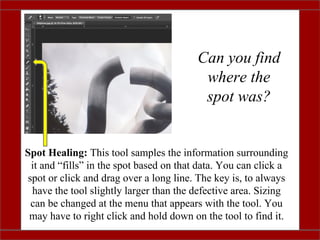
Can you find
where the
spot was?
Spot Healing: This tool samples the information surrounding
it and “fills” in the spot based on that data. You can click a
spot or click and drag over a long line. The key is, to always
have the tool slightly larger than the defective area. Sizing
can be changed at the menu that appears with the tool. You
may have to right click and hold down on the tool to find it.
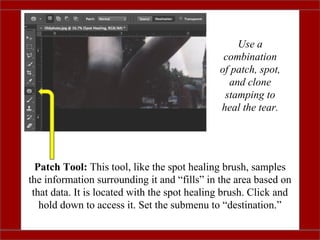
Patch Tool: This tool, like the spot healing brush, samples
the information surrounding it and “fills” in the area based on
that data. It is located with the spot healing brush. Click and
hold down to access it. Set the submenu to “destination.”
Use a
combination
of patch, spot,
and clone
stamping to
heal the tear.
Final Touches
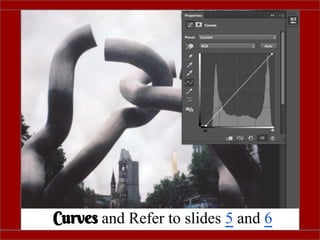
Curves and Refer to slides 5 and 6

Photograph Restoration

  • 1.
    P h o t o g r a p h (Step by StepInstructable) R e s t o r a t i o n
  • 2.
  • 3.
  • 4.
  • 5.
    I m p o r t a n t N o t e s SAVE SAVE SAVESAVE SAVE SAVE SAVE In at least three places
  • 6.
    I m p o r t a n t N o t e s While working, saveas “PSD” file type When finished, ● If uploading to the web → Jpeg Save for web vs. changing image size ● If archiving and sufficient space is available → Tiff *Use a Png file type if a transparent background needs to be saved.
  • 7.
    Step 1: Step 2: Downloadthis (Or find an old photo) File→ Open→ Find the download (Or Drag and Drop it in) Step 3: Step 4: Copy the layer Unlock
  • 8.
    Your Screen shouldlook like this:
  • 9.
    Step 5: Image→ ImageRotation→ 90 degrees CW This is your tool bar. It is usually located on the left hand side of the screen. If it disappears, it can be found under Window→ Tools. Scroll and hover over each to find the tool you need.
  • 10.
    Step 6: Find“crop.” It is the fifth button from the top. Holding the mouse button down will open more tools in each. For every tool that is selected from the tool box, a second menu set will appear at the top. Common error→ The check mark on the top right of the screen must be clicked before you can proceed.
  • 11.
    Filter→ Sharpen→ SmartSharpen. Remove lens blur option. Experiment. Rename your second layer by double clicking on the name. Title “Overall,” Click the eye on the layer to toggle its visibility on and off. These overall changes save you much work down the road. Final steps before fine tuning the image: Filter→ Noise→ Dust and Scratches. Experiment with Radius and Threshold
  • 12.
    Click and drag“Overall” to the copy/new layer symbol at the bottom of the Layers palette. It looks like a turning piece of paper is located next to the trash can. This will copy your layer. Double click the layer to rename
  • 13.
    Work only onyour “fine tuning” layer. 3x Ctrl + is our hot key for magnification. Work methodically, left to right, across and down. Clone stamping: Areas of damage that are too far gone to be healed. Click the clone stamp tool, alt click an area you want to copy, and click to paste the “cloned” area in. This is located 9 tools down and looks like a rubber stamp. Fine Tuning Tools
  • 14.
    Can you find wherethe spot was? Spot Healing: This tool samples the information surrounding it and “fills” in the spot based on that data. You can click a spot or click and drag over a long line. The key is, to always have the tool slightly larger than the defective area. Sizing can be changed at the menu that appears with the tool. You may have to right click and hold down on the tool to find it.
  • 15.
    Patch Tool: Thistool, like the spot healing brush, samples the information surrounding it and “fills” in the area based on that data. It is located with the spot healing brush. Click and hold down to access it. Set the submenu to “destination.” Use a combination of patch, spot, and clone stamping to heal the tear.
  • 16.
  • 17.
    Curves and Referto slides 5 and 6