
Exploit Next Generation®
“Missão dada é missão cumprida!”
Agenda
Agenda

• 0001 – Introduction
Agenda

• 0001 – Introduction

• 0010 – Brain at work
Agenda

• 0001 – Introduction

• 0010 – Brain at work

• 0011 – ENG++ approach
Agenda

• 0001 – Introduction     • 0100 – Demonstration

• 0010 – Brain at work

• 0011 – ENG++ approach
Agenda

• 0001 – Introduction     • 0100 – Demonstration

• 0010 – Brain at work    • 0101 – Conclusions

• 0011 – ENG++ approach
Agenda

• 0001 – Introduction     • 0100 – Demonstration

• 0010 – Brain at work    • 0101 – Conclusions

• 0011 – ENG++ approach   • 0110 – Questions and Answers
nbrito@pitbull:~$ whoami
• Nelson Brito:
   • Security researcher enthusiast
   • Addict for (in)security systems
nbrito@pitbull:~$ whoami
• Nelson Brito:
   • Security researcher enthusiast
   • Addict for (in)security systems

• Home town:
   – Rio de Janeiro
nbrito@pitbull:~$ whoami
• Nelson Brito:
   • Security researcher enthusiast
   • Addict for (in)security systems

• Home town:
   – Rio de Janeiro

• Public tools:
    • T50 Experimental Mixed Packet Injector
    • ENG++ SQL Fingerprint™
nbrito@pitbull:~$ whoami
• Nelson Brito:
   • Security researcher enthusiast
   • Addict for (in)security systems

• Home town:
   – Rio de Janeiro

• Public tools:
    • T50 Experimental Mixed Packet Injector
    • ENG++ SQL Fingerprint™

• WEB:
   • http://fnstenv.blogspot.com/
   • http://twitter.com/nbrito
0001 – Introduction
“Because five bytes can make the difference”
Before starting


0-Day                                                    Pattern-matching
• 0-day is cool, isn’t it? But only if nobody is aware   • This technology is as need today as it was in the
  of its existence.                                        past, but the security solution cannot rely only on
                                                           this.
• Once the unknown vulnerability becomes
  known, the 0-day will expire – since a patch or        • No matter how fast is the pattern-matching
  a mitigation is released (which comes first).            algorithm, if a pattern does not match, it means
                                                           that there is no vulnerability exploitation.
• So we can conclude that, once expired (patched
  or mitigated), 0-day has no more value. If you         • No vulnerability exploitation, no protection
  do not believe me, you can try to sell a well-           action… But what if the pattern is wrong?
  known vulnerability to your vulnerability-
  broker.                                                • How can we guarantee that the pattern, which
                                                           was not matched, is the correct approach for a
• Some security solutions fight against 0-day faster       protection action? Was the detection really
  than the affected vendor.                                designed to detect the vulnerability?
Current evasion techniques (a.k.a. TT)

Techniques                                       Tools
• Packet fragmentation – Overlapping fragments   • Fragroute / Fragrouter

• Stream segmentation – Overlapping segments     • ADMutate / ALPHA[2-3] / BETA3 / Others

• Byte and traffic insertion
                                                 • Whisker / Nikto / Sandcat

• Polymorphic shellcode
                                                 • Snot / Stick / IDS-wakeup / Others
• Denial of Service
                                                 • Sidestep / “rpc-evade-poc.pl” / Others
• URL obfuscation (+ SSL encryption)
                                                 • “predator”
• RPC fragmentation
                                                 • Etc…
• HTML and JavaScript obfuscation

• Etc…
What is Exploit Next Generation®?


The scenario                                          The methodology
• Remember: “Some security solutions fight against    • To circumvent or avoid a pattern-matching
  0-day faster than the affected vendor”.               detection, there are two options:
                                                          – Easier: know how the vulnerability is
• This protection (mitigation) has a long life, and          detected (access to signature/vaccine).
  sometimes the correct protection (patch) is not         – Harder: know deeply how to trigger the
  applied.                                                   vulnerability and how to exploit it (access
                                                             to vulnerable ecosystem).
• People’s hope, consequently their security
  strategy, resides on this security model:           • ENG++ is the hardest option:
  vulnerability mitigated, no patch…                      – Deep analysis of a vulnerability.
                                                          – Use all the acquired knowledge to offer a
• But what if an old and well-known                         variety of decision points (variants).
  vulnerability could be exploited, even on this          – Interact with the trigger and the
  security approach model?                                  additional     entities,     preparing the
                                                            vulnerable ecosystem and performing
• According to pattern-matching, any new                    some memory manipulation .
  variant of an old vulnerability exploitation is         – Use randomness to provide unpredictable
  considered a new vulnerability, because there is          payloads, i.e., permutation.
  no pattern to be matched yet!
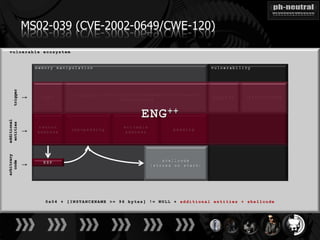
ENG++ (pronounced /ěn’jĭn/ incremented)


The truth                                           The examples
• ENG++ methodology deals with vulnerable           • Server-side vulnerabilities:
  ecosystem and memory manipulation, rather             – MS02-039: CVE-2002-0649/CWE-120.
  than shellcode – it is neither a new
  polymorphic shellcode technique, nor an               – MS02-056: CVE-2002-1123/CWE-120.
  obfuscation technique, instead, ENG++ employs
  “Permutation Oriented Programming”.               • Client-side vulnerabilities:
                                                         – MS08-078: CVE-2008-4844/CWE-367.
• ENG++ methodology can be applied to work with:
  Rapid7 Metasploit Framework, CORE Impact Pro,          – MS09-002: CVE-2009-0075/CWE-367.
  Immunity CANVAS Professional, and stand-alone
  proof-of-concepts (a.k.a. freestyle coding).      • Windows 32-bit shellcodes:
                                                        – 波動拳: “CMD /k”.
• ENG++ methodology is neither an additional
                                                        – 昇龍拳: “CMD /k set DIRCMD=/b”.
  entropy for tools mentioned above, nor an
  Advanced Evasion Technique (AET). Instead,
  ENG++ methodology can empower both of them.       • All example modules were ported to work with
                                                      Rapid7 Metasploit Framework, but there are also
• ENG++ methodology maintains the exploitation        examples for client-side in HTML and JavaScript.
  reliability, even using random decisions, it is
  able to achieve all exploitation requirements.
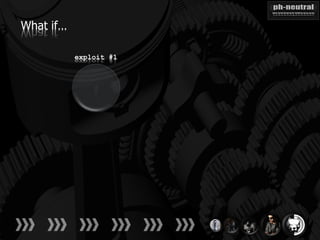
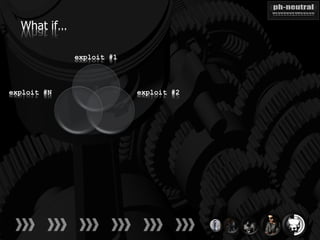
What if…

           exploit #1
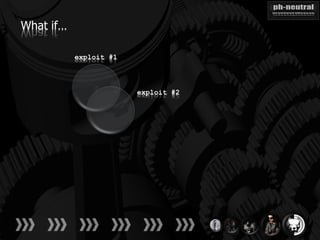
What if…

           exploit #1


                        exploit #2
What if…

             exploit #1


exploit #N                exploit #2
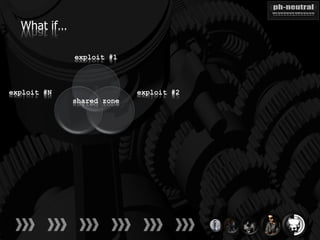
What if…

             exploit #1


exploit #N                 exploit #2
             shared zone
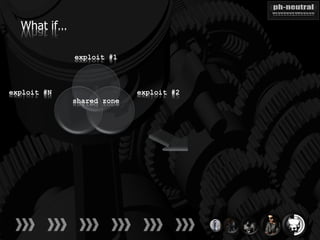
What if…

             exploit #1


exploit #N                 exploit #2
             shared zone
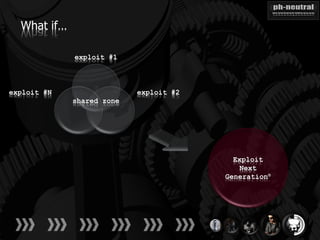
What if…

             exploit #1


exploit #N                 exploit #2
             shared zone


                                          Exploit
                                            Next
                                        Generation®
0010 – Brain at work
“Hardest option”
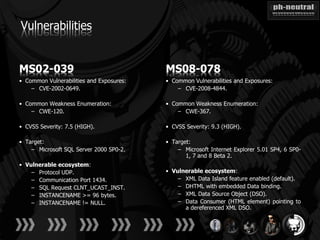
Vulnerabilities


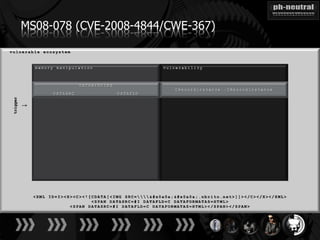
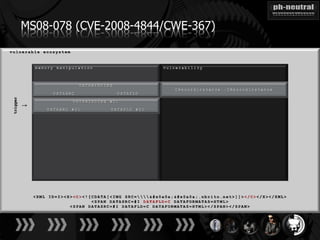
MS02-039                                  MS08-078
• Common Vulnerabilities and Exposures:   • Common Vulnerabilities and Exposures:
    – CVE-2002-0649.                          – CVE-2008-4844.

• Common Weakness Enumeration:            • Common Weakness Enumeration:
    – CWE-120.                                – CWE-367.

• CVSS Severity: 7.5 (HIGH).              • CVSS Severity: 9.3 (HIGH).

• Target:                                 • Target:
    – Microsoft SQL Server 2000 SP0-2.        – Microsoft Internet Explorer 5.01 SP4, 6 SP0-
                                                 1, 7 and 8 Beta 2.
• Vulnerable ecosystem:
    – Protocol UDP.                       • Vulnerable ecosystem:
    – Communication Port 1434.                – XML Data Island feature enabled (default).
    – SQL Request CLNT_UCAST_INST.            – DHTML with embedded Data binding.
    – INSTANCENAME >= 96 bytes.               – XML Data Source Object (DSO).
    – INSTANCENAME != NULL.                   – Data Consumer (HTML element) pointing to
                                                a dereferenced XML DSO.
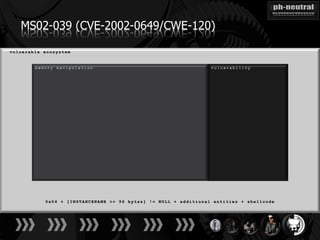
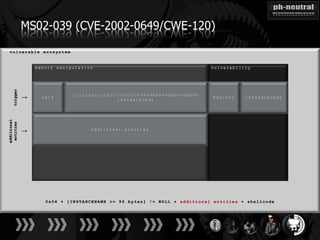
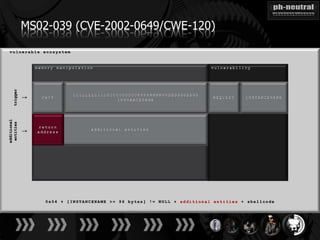
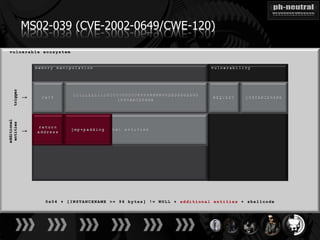
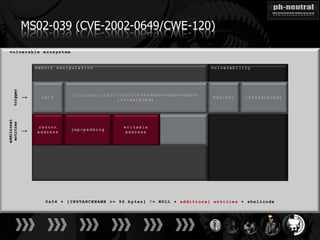
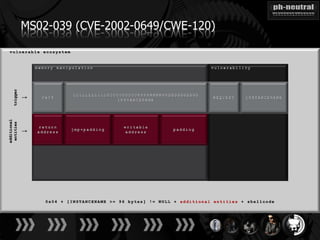
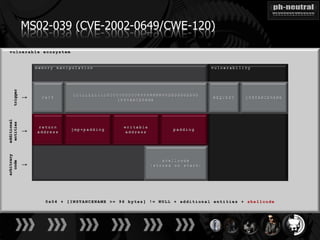
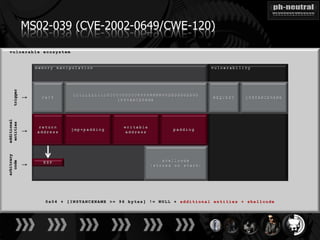
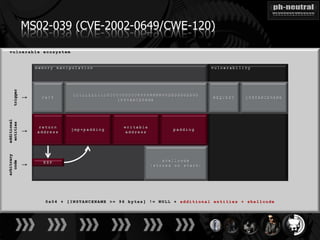
MS02-039 (CVE-2002-0649/CWE-120)
trigger

          ↓
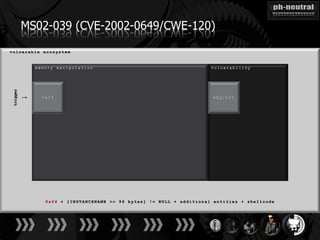
MS02-039 (CVE-2002-0649/CWE-120)
trigger

          ↓
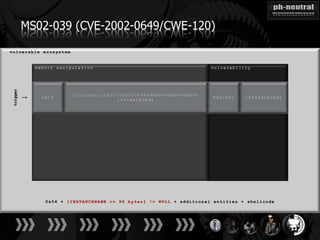
MS02-039 (CVE-2002-0649/CWE-120)
     trigger

               ↓
additional
 entities

               ↓
MS02-039 (CVE-2002-0649/CWE-120)
     trigger

               ↓
additional
 entities

               ↓
MS02-039 (CVE-2002-0649/CWE-120)
     trigger

               ↓
additional
 entities

               ↓
MS02-039 (CVE-2002-0649/CWE-120)
     trigger

               ↓
additional
 entities

               ↓
MS02-039 (CVE-2002-0649/CWE-120)
     trigger

               ↓
additional
 entities

               ↓
arbitrary   additional
  code       entities    trigger

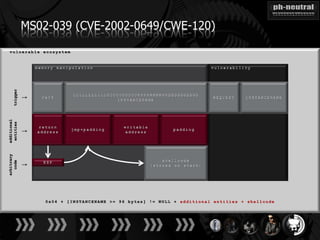
   ↓           ↓           ↓       MS02-039 (CVE-2002-0649/CWE-120)
arbitrary   additional
  code       entities    trigger

   ↓           ↓           ↓       MS02-039 (CVE-2002-0649/CWE-120)
arbitrary   additional
  code       entities    trigger

   ↓           ↓           ↓       MS02-039 (CVE-2002-0649/CWE-120)
arbitrary   additional
  code       entities    trigger

   ↓           ↓           ↓       MS02-039 (CVE-2002-0649/CWE-120)
arbitrary   additional
  code       entities    trigger

   ↓           ↓           ↓       MS02-039 (CVE-2002-0649/CWE-120)
arbitrary   additional
  code       entities    trigger

   ↓           ↓           ↓       MS02-039 (CVE-2002-0649/CWE-120)
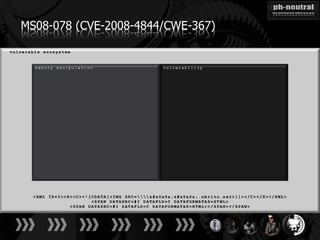
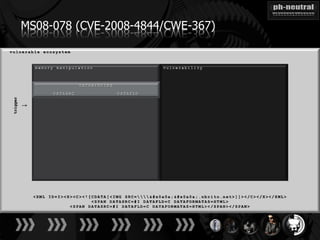
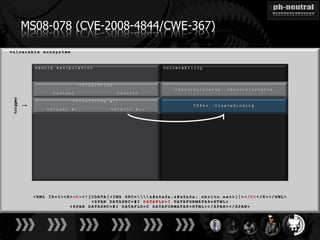
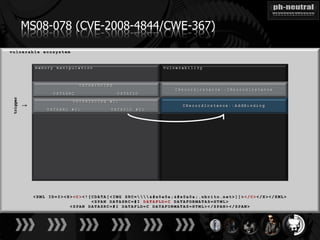
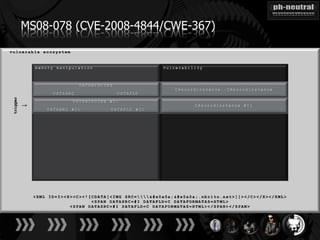
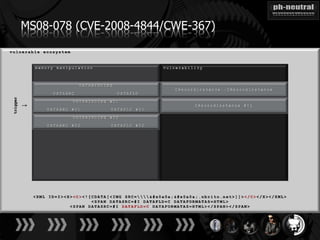
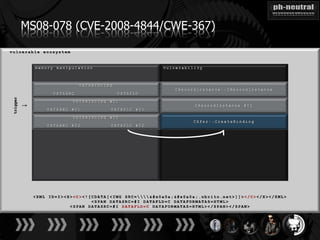
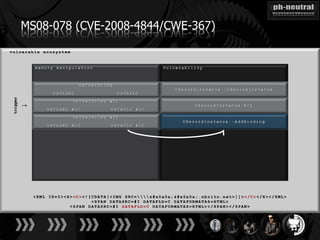
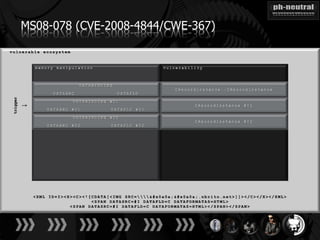
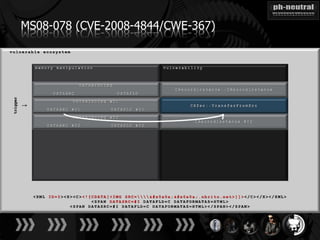
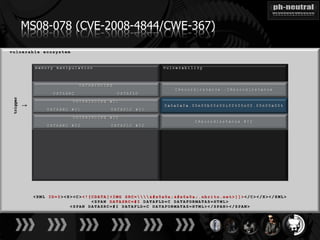
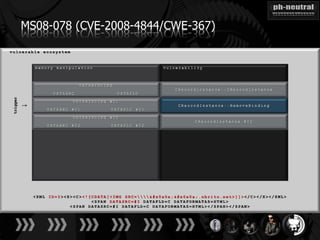
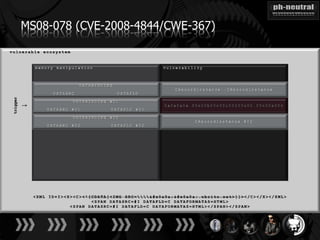
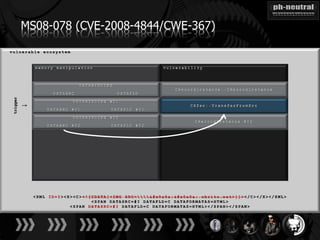
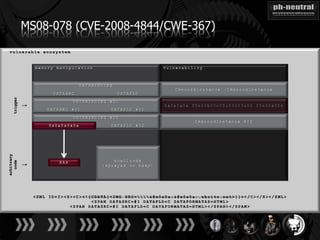
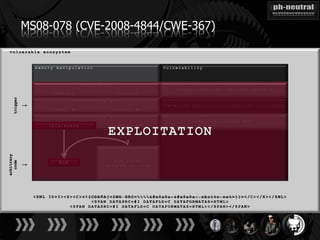
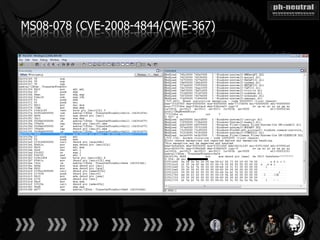
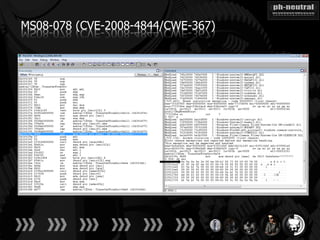
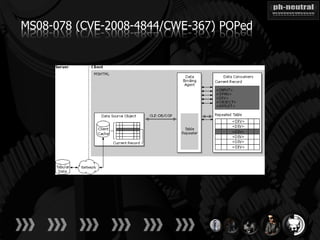
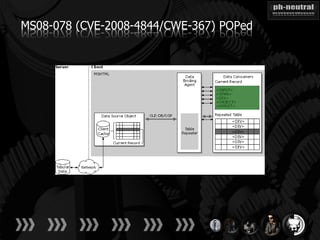
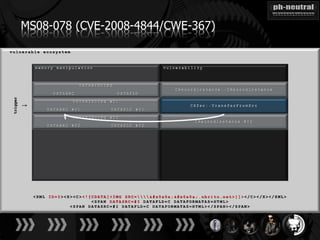
MS08-078 (CVE-2008-4844/CWE-367)
trigger

          ↓
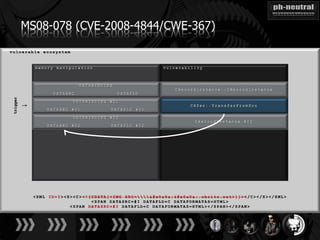
MS08-078 (CVE-2008-4844/CWE-367)
trigger

          ↓
MS08-078 (CVE-2008-4844/CWE-367)
trigger

          ↓
MS08-078 (CVE-2008-4844/CWE-367)
trigger

          ↓
MS08-078 (CVE-2008-4844/CWE-367)
trigger

          ↓
MS08-078 (CVE-2008-4844/CWE-367)
trigger

          ↓
MS08-078 (CVE-2008-4844/CWE-367)
trigger

          ↓
MS08-078 (CVE-2008-4844/CWE-367)
trigger

          ↓
MS08-078 (CVE-2008-4844/CWE-367)
trigger

          ↓
MS08-078 (CVE-2008-4844/CWE-367)
trigger

          ↓
MS08-078 (CVE-2008-4844/CWE-367)
trigger

          ↓
MS08-078 (CVE-2008-4844/CWE-367)
trigger

          ↓
MS08-078 (CVE-2008-4844/CWE-367)
trigger

          ↓
MS08-078 (CVE-2008-4844/CWE-367)
trigger

          ↓
MS08-078 (CVE-2008-4844/CWE-367)
trigger

          ↓
MS08-078 (CVE-2008-4844/CWE-367)
trigger

          ↓
MS08-078 (CVE-2008-4844/CWE-367)
trigger

          ↓
MS08-078 (CVE-2008-4844/CWE-367)
trigger

          ↓
MS08-078 (CVE-2008-4844/CWE-367)
trigger

          ↓
MS08-078 (CVE-2008-4844/CWE-367)
trigger

          ↓
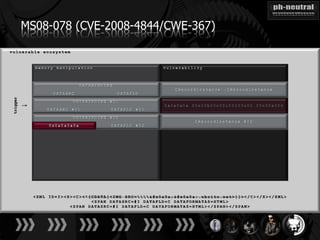
MS08-078 (CVE-2008-4844/CWE-367)
    trigger

              ↓
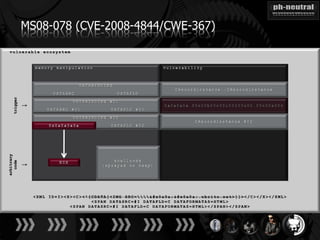
arbitrary
  code

              ↓
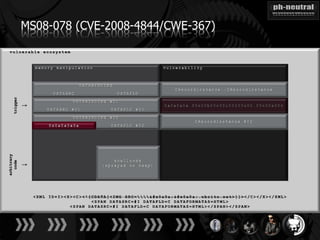
MS08-078 (CVE-2008-4844/CWE-367)
    trigger

              ↓
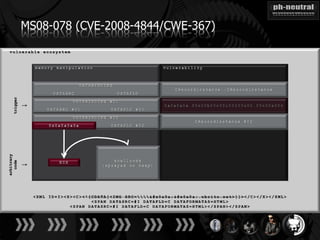
arbitrary
  code

              ↓
MS08-078 (CVE-2008-4844/CWE-367)
    trigger

              ↓
arbitrary
  code

              ↓
MS08-078 (CVE-2008-4844/CWE-367)
    trigger

              ↓
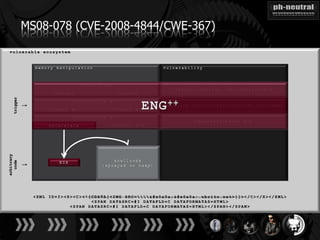
arbitrary
  code

              ↓
MS08-078 (CVE-2008-4844/CWE-367)
    trigger

              ↓
arbitrary
  code

              ↓
MS08-078 (CVE-2008-4844/CWE-367)
    trigger

              ↓
arbitrary
  code

              ↓
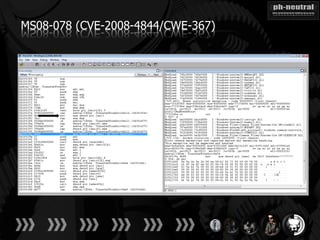
MS08-078 (CVE-2008-4844/CWE-367)
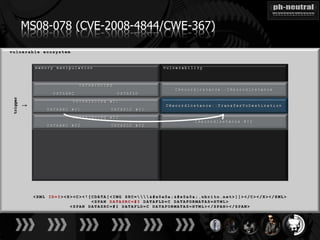
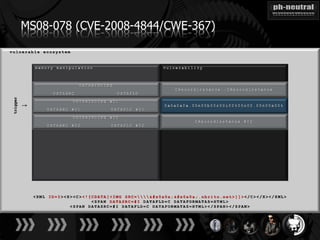
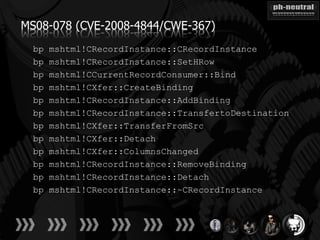
  bp   mshtml!CRecordInstance::CRecordInstance
  bp   mshtml!CRecordInstance::SetHRow
  bp   mshtml!CCurrentRecordConsumer::Bind
  bp   mshtml!CXfer::CreateBinding
  bp   mshtml!CRecordInstance::AddBinding
  bp   mshtml!CRecordInstance::TransfertoDestination
  bp   mshtml!CXfer::TransferFromSrc
  bp   mshtml!CXfer::Detach
  bp   mshtml!CXfer::ColumnsChanged
  bp   mshtml!CRecordInstance::RemoveBinding
  bp   mshtml!CRecordInstance::Detach
  bp   mshtml!CRecordInstance::~CRecordInstance
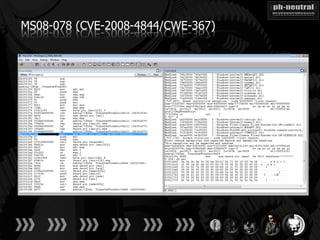
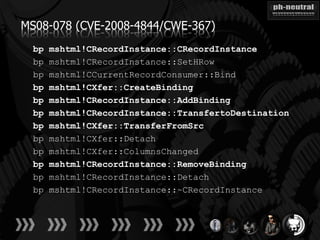
MS08-078 (CVE-2008-4844/CWE-367)
  bp   mshtml!CRecordInstance::CRecordInstance
  bp   mshtml!CRecordInstance::SetHRow
  bp   mshtml!CCurrentRecordConsumer::Bind
  bp   mshtml!CXfer::CreateBinding
  bp   mshtml!CRecordInstance::AddBinding
  bp   mshtml!CRecordInstance::TransfertoDestination
  bp   mshtml!CXfer::TransferFromSrc
  bp   mshtml!CXfer::Detach
  bp   mshtml!CXfer::ColumnsChanged
  bp   mshtml!CRecordInstance::RemoveBinding
  bp   mshtml!CRecordInstance::Detach
  bp   mshtml!CRecordInstance::~CRecordInstance
0011 – ENG++ approach
Permutation Oriented Programming
Also known as “(Re)searching for alternatives”
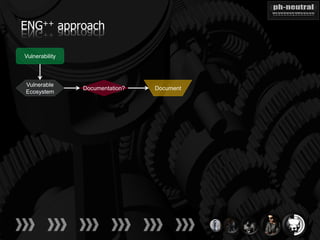
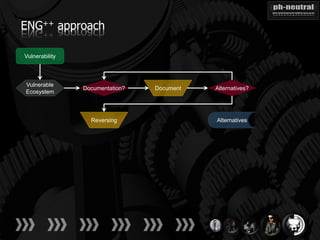
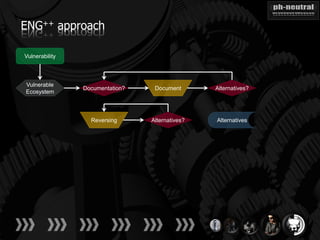
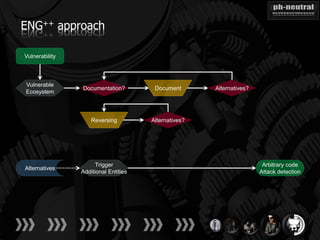
ENG++ approach

Vulnerability
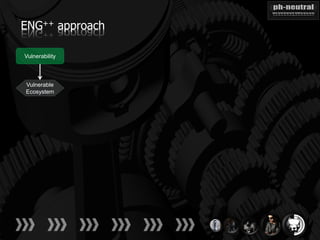
ENG++ approach

Vulnerability


Vulnerable
Ecosystem
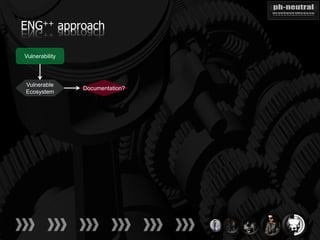
ENG++ approach

Vulnerability


Vulnerable
                Documentation?
Ecosystem
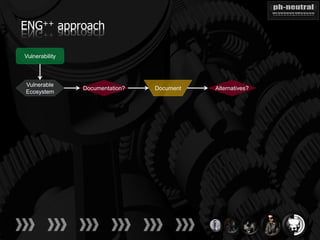
ENG++ approach

Vulnerability


Vulnerable
                Documentation?   Document
Ecosystem
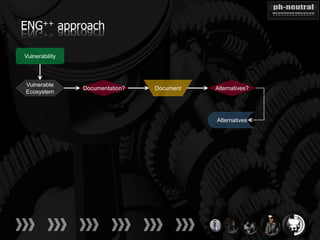
ENG++ approach

Vulnerability


Vulnerable
                Documentation?   Document   Alternatives?
Ecosystem
ENG++ approach

Vulnerability


Vulnerable
                Documentation?   Document   Alternatives?
Ecosystem


                                            Alternatives
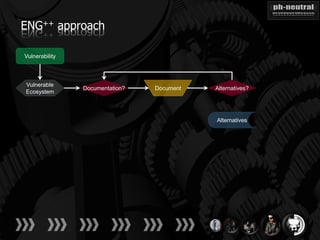
ENG++ approach

Vulnerability


Vulnerable
                Documentation?   Document   Alternatives?
Ecosystem


                                            Alternatives
ENG++ approach

Vulnerability


Vulnerable
                Documentation?   Document   Alternatives?
Ecosystem


                  Reversing                 Alternatives
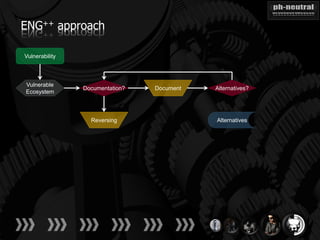
ENG++ approach

Vulnerability


Vulnerable
                Documentation?   Document   Alternatives?
Ecosystem


                  Reversing                 Alternatives
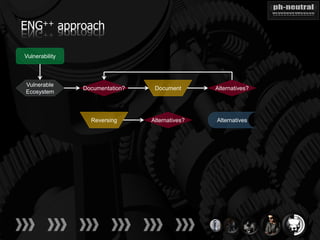
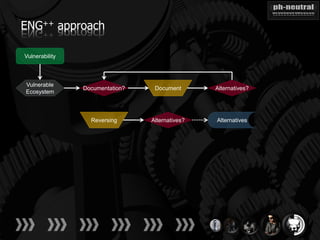
ENG++ approach

Vulnerability


Vulnerable
                Documentation?    Document       Alternatives?
Ecosystem


                  Reversing      Alternatives?   Alternatives
ENG++ approach

Vulnerability


Vulnerable
                Documentation?    Document       Alternatives?
Ecosystem


                  Reversing      Alternatives?   Alternatives
ENG++ approach

Vulnerability


Vulnerable
                Documentation?    Document       Alternatives?
Ecosystem


                  Reversing      Alternatives?   Alternatives
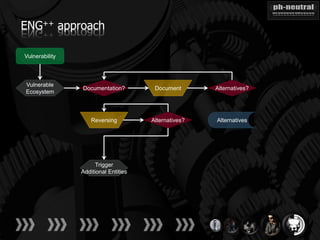
ENG++ approach

Vulnerability


Vulnerable
                Documentation?         Document       Alternatives?
Ecosystem


                    Reversing         Alternatives?   Alternatives


                      Trigger
                Additional Entities
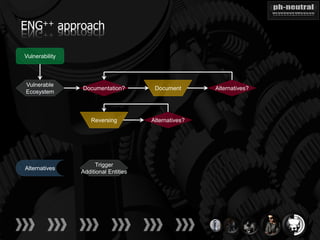
ENG++ approach

Vulnerability


Vulnerable
                Documentation?         Document       Alternatives?
Ecosystem


                    Reversing         Alternatives?


                      Trigger
Alternatives
                Additional Entities
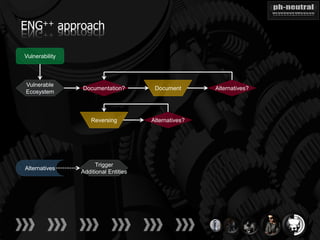
ENG++ approach

Vulnerability


Vulnerable
                Documentation?         Document       Alternatives?
Ecosystem


                    Reversing         Alternatives?


                      Trigger
Alternatives
                Additional Entities
ENG++ approach

Vulnerability


Vulnerable
                Documentation?         Document       Alternatives?
Ecosystem


                    Reversing         Alternatives?


                      Trigger                                          Arbitrary code
Alternatives
                Additional Entities                                   Attack detection
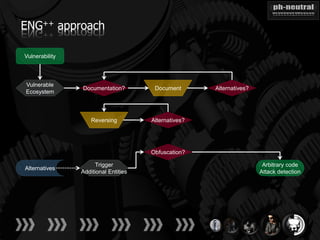
ENG++ approach

Vulnerability


Vulnerable
                Documentation?         Document       Alternatives?
Ecosystem


                    Reversing         Alternatives?


                                      Obfuscation?

                      Trigger                                          Arbitrary code
Alternatives
                Additional Entities                                   Attack detection
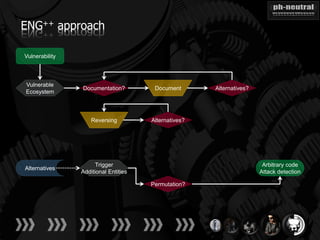
ENG++ approach

Vulnerability


Vulnerable
                Documentation?         Document       Alternatives?
Ecosystem


                    Reversing         Alternatives?


                      Trigger                                          Arbitrary code
Alternatives
                Additional Entities                                   Attack detection

                                      Permutation?
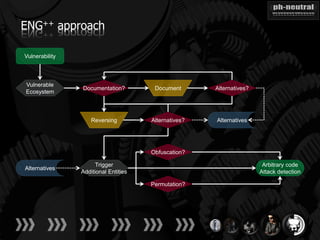
ENG++ approach

Vulnerability


Vulnerable
                Documentation?         Document       Alternatives?
Ecosystem


                    Reversing         Alternatives?   Alternatives


                                      Obfuscation?

                      Trigger                                          Arbitrary code
Alternatives
                Additional Entities                                   Attack detection

                                      Permutation?
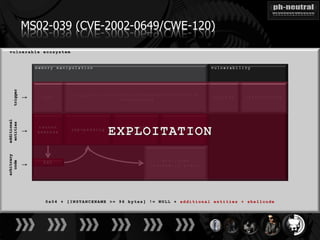
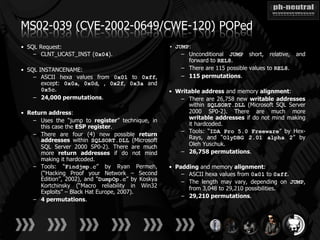
MS02-039 (CVE-2002-0649/CWE-120) POPed
• SQL Request:                                    • JUMP:
    – CLNT_UCAST_INST (0x04).                         – Unconditional JUMP short, relative,      and
                                                        forward to REL8.
• SQL INSTANCENAME:                                   – There are 115 possible values to REL8.
    – ASCII hexa values from 0x01 to 0xff,            – 115 permutations.
       except: 0x0a, 0x0d, , 0x2f, 0x3a and
       0x5c.                                      • Writable address and memory alignment:
    – 24,000 permutations.                           – There are 26,758 new writable addresses
                                                        within SQLSORT.DLL (Microsoft SQL Server
• Return address:                                       2000 SP0-2). There are much more
    – Uses the “jump to register” technique, in         writable addresses if do not mind making
      this case the ESP register.                       it hardcoded.
                                                     – Tools: “IDA Pro 5.0 Freeware” by Hex-
    – There are four (4) new possible return
      addresses within SQLSORT.DLL (Microsoft           Rays, and “OlyDBG 2.01 alpha 2” by
      SQL Server 2000 SP0-2). There are much            Oleh Yuschuk.
      more return addresses if do not mind           – 26,758 permutations.
      making it hardcoded.
    – Tools: “Findjmp.c” by Ryan Permeh,          • Padding and memory alignment:
      (“Hacking Proof your Network – Second           – ASCII hexa values from 0x01 to 0xff.
      Edition”, 2002), and “DumpOp.c” by Koskya       – The length may vary, depending on JUMP,
      Kortchinsky (“Macro reliability in Win32          from 3,048 to 29,210 possibilities.
      Exploits” – Black Hat Europe, 2007).
                                                      – 29,210 permutations.
    – 4 permutations.
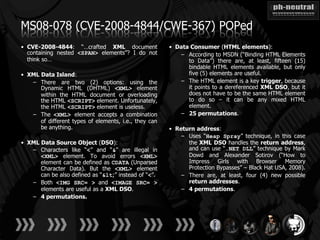
MS08-078 (CVE-2008-4844/CWE-367) POPed
• CVE-2008-4844: “…crafted XML document                • Data Consumer (HTML elements):
  containing nested <SPAN> elements”? I do not            – According to MSDN (“Binding HTML Elements
  think so…                                                  to Data”) there are, at least, fifteen (15)
                                                             bindable HTML elements available, but only
• XML Data Island:                                           five (5) elements are useful.
   – There are two (2) options: using the                 – The HTML element is a key trigger, because
      Dynamic HTML (DHTML) <XML> element                     it points to a dereferenced XML DSO, but it
      within the HTML document or overloading                does not have to be the same HTML element
      the HTML <SCRIPT> element. Unfortunately,              to do so – it can be any mixed HTML
      the HTML <SCRIPT> element is useless.                  element.
   – The <XML> element accepts a combination              – 25 permutations.
      of different types of elements, i.e., they can
      be anything.                                     • Return address:
                                                           – Uses “Heap Spray” technique, in this case
• XML Data Source Object (DSO):                              the XML DSO handles the return address,
   – Characters like “<” and “&” are illegal in              and can use “.NET DLL” technique by Mark
      <XML> element. To avoid errors <XML>                   Dowd and Alexander Sotirov (“How to
      element can be defined as CDATA (Unparsed              Impress Girls with Browser Memory
      Character Data). But the <XML> element                 Protection Bypasses” – Black Hat USA, 2008).
      can be also defined as “&lt;” instead of “<”.        – There are, at least, four (4) new possible
   – Both <IMG SRC= > and <IMAGE SRC= >                      return addresses.
      elements are useful as a XML DSO.                    – 4 permutations.
   – 4 permutations.
0100 – Demonstration
What demo?


  The examples applying ENG++
 methodology will be available – as
   soon as I connect to Internet.
  Thus you will be able to test by
           yourselves!!!
0101 – Conclusions
Conclusions
• Some examples, applying ENG++ methodology,              • The ENG++ methodology is not part of any
  will be available. For further details, please refer      commercial or public tool and is freely available,
  to:                                                       although the examples were ported to work with
                                                            Rapid7 Metasploit Framework – this is to show
    – http://fnstenv.blogspot.com/                          how flexible its approach and deployment is –
                                                            hoping it can help people to understand the
• ENG++ examples are licensed under              GNU        threat, improving their infra-structure, security
  General Public License version 2.                         solutions and development approach.

                                                          • ENG++ methodology can be freely applied, there
• The   examples cover pretty old vulnerabilities, such     are no restrictions… No other than laziness.
  as:
    –   MS02-039:     3,231 days since published.         • ENG++ methodology can help different people,
    –   MS02-056:     3,161 days since published.           performing different tasks, such as:
    –   MS08-078:     893 days since published.               – Penetration-testing.
    –   MS09-002:     838 days since published.               – Development of exploit and proof-of-concept
                                                                 tools.
                                                              – Evaluation and analysis of security solutions.
• ENG++ is also not new:
                                                              – Quality assurance for security solution.
    – Encore-NG: 980 days since BUGTRAQ and                   – Development of detection and protection
      FULL-DISCLOSURE.                                           mechanisms.
    – ENG++ : 546 days since H2HC 6th Edition.                – Etc…
0110 – Questions & Answers
Any questions?
[PH-Neutral 0x7db] Exploit Next Generation®

[PH-Neutral 0x7db] Exploit Next Generation®

  • 1.
    Exploit Next Generation® “Missãodada é missão cumprida!”
  • 2.
  • 3.
    Agenda • 0001 –Introduction
  • 4.
    Agenda • 0001 –Introduction • 0010 – Brain at work
  • 5.
    Agenda • 0001 –Introduction • 0010 – Brain at work • 0011 – ENG++ approach
  • 6.
    Agenda • 0001 –Introduction • 0100 – Demonstration • 0010 – Brain at work • 0011 – ENG++ approach
  • 7.
    Agenda • 0001 –Introduction • 0100 – Demonstration • 0010 – Brain at work • 0101 – Conclusions • 0011 – ENG++ approach
  • 8.
    Agenda • 0001 –Introduction • 0100 – Demonstration • 0010 – Brain at work • 0101 – Conclusions • 0011 – ENG++ approach • 0110 – Questions and Answers
  • 9.
  • 10.
    nbrito@pitbull:~$ whoami • NelsonBrito: • Security researcher enthusiast • Addict for (in)security systems
  • 11.
    nbrito@pitbull:~$ whoami • NelsonBrito: • Security researcher enthusiast • Addict for (in)security systems • Home town: – Rio de Janeiro
  • 12.
    nbrito@pitbull:~$ whoami • NelsonBrito: • Security researcher enthusiast • Addict for (in)security systems • Home town: – Rio de Janeiro • Public tools: • T50 Experimental Mixed Packet Injector • ENG++ SQL Fingerprint™
  • 13.
    nbrito@pitbull:~$ whoami • NelsonBrito: • Security researcher enthusiast • Addict for (in)security systems • Home town: – Rio de Janeiro • Public tools: • T50 Experimental Mixed Packet Injector • ENG++ SQL Fingerprint™ • WEB: • http://fnstenv.blogspot.com/ • http://twitter.com/nbrito
  • 14.
    0001 – Introduction “Becausefive bytes can make the difference”
  • 15.
    Before starting 0-Day Pattern-matching • 0-day is cool, isn’t it? But only if nobody is aware • This technology is as need today as it was in the of its existence. past, but the security solution cannot rely only on this. • Once the unknown vulnerability becomes known, the 0-day will expire – since a patch or • No matter how fast is the pattern-matching a mitigation is released (which comes first). algorithm, if a pattern does not match, it means that there is no vulnerability exploitation. • So we can conclude that, once expired (patched or mitigated), 0-day has no more value. If you • No vulnerability exploitation, no protection do not believe me, you can try to sell a well- action… But what if the pattern is wrong? known vulnerability to your vulnerability- broker. • How can we guarantee that the pattern, which was not matched, is the correct approach for a • Some security solutions fight against 0-day faster protection action? Was the detection really than the affected vendor. designed to detect the vulnerability?
  • 16.
    Current evasion techniques(a.k.a. TT) Techniques Tools • Packet fragmentation – Overlapping fragments • Fragroute / Fragrouter • Stream segmentation – Overlapping segments • ADMutate / ALPHA[2-3] / BETA3 / Others • Byte and traffic insertion • Whisker / Nikto / Sandcat • Polymorphic shellcode • Snot / Stick / IDS-wakeup / Others • Denial of Service • Sidestep / “rpc-evade-poc.pl” / Others • URL obfuscation (+ SSL encryption) • “predator” • RPC fragmentation • Etc… • HTML and JavaScript obfuscation • Etc…
  • 17.
    What is ExploitNext Generation®? The scenario The methodology • Remember: “Some security solutions fight against • To circumvent or avoid a pattern-matching 0-day faster than the affected vendor”. detection, there are two options: – Easier: know how the vulnerability is • This protection (mitigation) has a long life, and detected (access to signature/vaccine). sometimes the correct protection (patch) is not – Harder: know deeply how to trigger the applied. vulnerability and how to exploit it (access to vulnerable ecosystem). • People’s hope, consequently their security strategy, resides on this security model: • ENG++ is the hardest option: vulnerability mitigated, no patch… – Deep analysis of a vulnerability. – Use all the acquired knowledge to offer a • But what if an old and well-known variety of decision points (variants). vulnerability could be exploited, even on this – Interact with the trigger and the security approach model? additional entities, preparing the vulnerable ecosystem and performing • According to pattern-matching, any new some memory manipulation . variant of an old vulnerability exploitation is – Use randomness to provide unpredictable considered a new vulnerability, because there is payloads, i.e., permutation. no pattern to be matched yet!
  • 18.
    ENG++ (pronounced /ěn’jĭn/incremented) The truth The examples • ENG++ methodology deals with vulnerable • Server-side vulnerabilities: ecosystem and memory manipulation, rather – MS02-039: CVE-2002-0649/CWE-120. than shellcode – it is neither a new polymorphic shellcode technique, nor an – MS02-056: CVE-2002-1123/CWE-120. obfuscation technique, instead, ENG++ employs “Permutation Oriented Programming”. • Client-side vulnerabilities: – MS08-078: CVE-2008-4844/CWE-367. • ENG++ methodology can be applied to work with: Rapid7 Metasploit Framework, CORE Impact Pro, – MS09-002: CVE-2009-0075/CWE-367. Immunity CANVAS Professional, and stand-alone proof-of-concepts (a.k.a. freestyle coding). • Windows 32-bit shellcodes: – 波動拳: “CMD /k”. • ENG++ methodology is neither an additional – 昇龍拳: “CMD /k set DIRCMD=/b”. entropy for tools mentioned above, nor an Advanced Evasion Technique (AET). Instead, ENG++ methodology can empower both of them. • All example modules were ported to work with Rapid7 Metasploit Framework, but there are also • ENG++ methodology maintains the exploitation examples for client-side in HTML and JavaScript. reliability, even using random decisions, it is able to achieve all exploitation requirements.
  • 19.
    What if… exploit #1
  • 20.
    What if… exploit #1 exploit #2
  • 21.
    What if… exploit #1 exploit #N exploit #2
  • 22.
    What if… exploit #1 exploit #N exploit #2 shared zone
  • 23.
    What if… exploit #1 exploit #N exploit #2 shared zone
  • 24.
    What if… exploit #1 exploit #N exploit #2 shared zone Exploit Next Generation®
  • 25.
    0010 – Brainat work “Hardest option”
  • 26.
    Vulnerabilities MS02-039 MS08-078 • Common Vulnerabilities and Exposures: • Common Vulnerabilities and Exposures: – CVE-2002-0649. – CVE-2008-4844. • Common Weakness Enumeration: • Common Weakness Enumeration: – CWE-120. – CWE-367. • CVSS Severity: 7.5 (HIGH). • CVSS Severity: 9.3 (HIGH). • Target: • Target: – Microsoft SQL Server 2000 SP0-2. – Microsoft Internet Explorer 5.01 SP4, 6 SP0- 1, 7 and 8 Beta 2. • Vulnerable ecosystem: – Protocol UDP. • Vulnerable ecosystem: – Communication Port 1434. – XML Data Island feature enabled (default). – SQL Request CLNT_UCAST_INST. – DHTML with embedded Data binding. – INSTANCENAME >= 96 bytes. – XML Data Source Object (DSO). – INSTANCENAME != NULL. – Data Consumer (HTML element) pointing to a dereferenced XML DSO.
  • 27.
  • 28.
  • 29.
  • 30.
    MS02-039 (CVE-2002-0649/CWE-120) trigger ↓ additional entities ↓
  • 31.
    MS02-039 (CVE-2002-0649/CWE-120) trigger ↓ additional entities ↓
  • 32.
    MS02-039 (CVE-2002-0649/CWE-120) trigger ↓ additional entities ↓
  • 33.
    MS02-039 (CVE-2002-0649/CWE-120) trigger ↓ additional entities ↓
  • 34.
    MS02-039 (CVE-2002-0649/CWE-120) trigger ↓ additional entities ↓
  • 35.
    arbitrary additional code entities trigger ↓ ↓ ↓ MS02-039 (CVE-2002-0649/CWE-120)
  • 36.
    arbitrary additional code entities trigger ↓ ↓ ↓ MS02-039 (CVE-2002-0649/CWE-120)
  • 37.
    arbitrary additional code entities trigger ↓ ↓ ↓ MS02-039 (CVE-2002-0649/CWE-120)
  • 38.
    arbitrary additional code entities trigger ↓ ↓ ↓ MS02-039 (CVE-2002-0649/CWE-120)
  • 39.
    arbitrary additional code entities trigger ↓ ↓ ↓ MS02-039 (CVE-2002-0649/CWE-120)
  • 40.
    arbitrary additional code entities trigger ↓ ↓ ↓ MS02-039 (CVE-2002-0649/CWE-120)
  • 41.
  • 42.
  • 43.
  • 44.
  • 45.
  • 46.
  • 47.
  • 48.
  • 49.
  • 50.
  • 51.
  • 52.
  • 53.
  • 54.
  • 55.
  • 56.
  • 57.
  • 58.
  • 59.
  • 60.
  • 61.
  • 62.
    MS08-078 (CVE-2008-4844/CWE-367) trigger ↓ arbitrary code ↓
  • 63.
    MS08-078 (CVE-2008-4844/CWE-367) trigger ↓ arbitrary code ↓
  • 64.
    MS08-078 (CVE-2008-4844/CWE-367) trigger ↓ arbitrary code ↓
  • 65.
    MS08-078 (CVE-2008-4844/CWE-367) trigger ↓ arbitrary code ↓
  • 66.
    MS08-078 (CVE-2008-4844/CWE-367) trigger ↓ arbitrary code ↓
  • 67.
    MS08-078 (CVE-2008-4844/CWE-367) trigger ↓ arbitrary code ↓
  • 68.
  • 69.
  • 70.
  • 71.
  • 72.
  • 73.
    MS08-078 (CVE-2008-4844/CWE-367) bp mshtml!CRecordInstance::CRecordInstance bp mshtml!CRecordInstance::SetHRow bp mshtml!CCurrentRecordConsumer::Bind bp mshtml!CXfer::CreateBinding bp mshtml!CRecordInstance::AddBinding bp mshtml!CRecordInstance::TransfertoDestination bp mshtml!CXfer::TransferFromSrc bp mshtml!CXfer::Detach bp mshtml!CXfer::ColumnsChanged bp mshtml!CRecordInstance::RemoveBinding bp mshtml!CRecordInstance::Detach bp mshtml!CRecordInstance::~CRecordInstance
  • 74.
    MS08-078 (CVE-2008-4844/CWE-367) bp mshtml!CRecordInstance::CRecordInstance bp mshtml!CRecordInstance::SetHRow bp mshtml!CCurrentRecordConsumer::Bind bp mshtml!CXfer::CreateBinding bp mshtml!CRecordInstance::AddBinding bp mshtml!CRecordInstance::TransfertoDestination bp mshtml!CXfer::TransferFromSrc bp mshtml!CXfer::Detach bp mshtml!CXfer::ColumnsChanged bp mshtml!CRecordInstance::RemoveBinding bp mshtml!CRecordInstance::Detach bp mshtml!CRecordInstance::~CRecordInstance
  • 75.
    0011 – ENG++approach Permutation Oriented Programming Also known as “(Re)searching for alternatives”
  • 76.
  • 77.
  • 78.
  • 79.
    ENG++ approach Vulnerability Vulnerable Documentation? Document Ecosystem
  • 80.
    ENG++ approach Vulnerability Vulnerable Documentation? Document Alternatives? Ecosystem
  • 81.
    ENG++ approach Vulnerability Vulnerable Documentation? Document Alternatives? Ecosystem Alternatives
  • 82.
    ENG++ approach Vulnerability Vulnerable Documentation? Document Alternatives? Ecosystem Alternatives
  • 83.
    ENG++ approach Vulnerability Vulnerable Documentation? Document Alternatives? Ecosystem Reversing Alternatives
  • 84.
    ENG++ approach Vulnerability Vulnerable Documentation? Document Alternatives? Ecosystem Reversing Alternatives
  • 85.
    ENG++ approach Vulnerability Vulnerable Documentation? Document Alternatives? Ecosystem Reversing Alternatives? Alternatives
  • 86.
    ENG++ approach Vulnerability Vulnerable Documentation? Document Alternatives? Ecosystem Reversing Alternatives? Alternatives
  • 87.
    ENG++ approach Vulnerability Vulnerable Documentation? Document Alternatives? Ecosystem Reversing Alternatives? Alternatives
  • 88.
    ENG++ approach Vulnerability Vulnerable Documentation? Document Alternatives? Ecosystem Reversing Alternatives? Alternatives Trigger Additional Entities
  • 89.
    ENG++ approach Vulnerability Vulnerable Documentation? Document Alternatives? Ecosystem Reversing Alternatives? Trigger Alternatives Additional Entities
  • 90.
    ENG++ approach Vulnerability Vulnerable Documentation? Document Alternatives? Ecosystem Reversing Alternatives? Trigger Alternatives Additional Entities
  • 91.
    ENG++ approach Vulnerability Vulnerable Documentation? Document Alternatives? Ecosystem Reversing Alternatives? Trigger Arbitrary code Alternatives Additional Entities Attack detection
  • 92.
    ENG++ approach Vulnerability Vulnerable Documentation? Document Alternatives? Ecosystem Reversing Alternatives? Obfuscation? Trigger Arbitrary code Alternatives Additional Entities Attack detection
  • 93.
    ENG++ approach Vulnerability Vulnerable Documentation? Document Alternatives? Ecosystem Reversing Alternatives? Trigger Arbitrary code Alternatives Additional Entities Attack detection Permutation?
  • 94.
    ENG++ approach Vulnerability Vulnerable Documentation? Document Alternatives? Ecosystem Reversing Alternatives? Alternatives Obfuscation? Trigger Arbitrary code Alternatives Additional Entities Attack detection Permutation?
  • 95.
    MS02-039 (CVE-2002-0649/CWE-120) POPed •SQL Request: • JUMP: – CLNT_UCAST_INST (0x04). – Unconditional JUMP short, relative, and forward to REL8. • SQL INSTANCENAME: – There are 115 possible values to REL8. – ASCII hexa values from 0x01 to 0xff, – 115 permutations. except: 0x0a, 0x0d, , 0x2f, 0x3a and 0x5c. • Writable address and memory alignment: – 24,000 permutations. – There are 26,758 new writable addresses within SQLSORT.DLL (Microsoft SQL Server • Return address: 2000 SP0-2). There are much more – Uses the “jump to register” technique, in writable addresses if do not mind making this case the ESP register. it hardcoded. – Tools: “IDA Pro 5.0 Freeware” by Hex- – There are four (4) new possible return addresses within SQLSORT.DLL (Microsoft Rays, and “OlyDBG 2.01 alpha 2” by SQL Server 2000 SP0-2). There are much Oleh Yuschuk. more return addresses if do not mind – 26,758 permutations. making it hardcoded. – Tools: “Findjmp.c” by Ryan Permeh, • Padding and memory alignment: (“Hacking Proof your Network – Second – ASCII hexa values from 0x01 to 0xff. Edition”, 2002), and “DumpOp.c” by Koskya – The length may vary, depending on JUMP, Kortchinsky (“Macro reliability in Win32 from 3,048 to 29,210 possibilities. Exploits” – Black Hat Europe, 2007). – 29,210 permutations. – 4 permutations.
  • 96.
  • 97.
  • 98.
    MS08-078 (CVE-2008-4844/CWE-367) POPed •CVE-2008-4844: “…crafted XML document • Data Consumer (HTML elements): containing nested <SPAN> elements”? I do not – According to MSDN (“Binding HTML Elements think so… to Data”) there are, at least, fifteen (15) bindable HTML elements available, but only • XML Data Island: five (5) elements are useful. – There are two (2) options: using the – The HTML element is a key trigger, because Dynamic HTML (DHTML) <XML> element it points to a dereferenced XML DSO, but it within the HTML document or overloading does not have to be the same HTML element the HTML <SCRIPT> element. Unfortunately, to do so – it can be any mixed HTML the HTML <SCRIPT> element is useless. element. – The <XML> element accepts a combination – 25 permutations. of different types of elements, i.e., they can be anything. • Return address: – Uses “Heap Spray” technique, in this case • XML Data Source Object (DSO): the XML DSO handles the return address, – Characters like “<” and “&” are illegal in and can use “.NET DLL” technique by Mark <XML> element. To avoid errors <XML> Dowd and Alexander Sotirov (“How to element can be defined as CDATA (Unparsed Impress Girls with Browser Memory Character Data). But the <XML> element Protection Bypasses” – Black Hat USA, 2008). can be also defined as “&lt;” instead of “<”. – There are, at least, four (4) new possible – Both <IMG SRC= > and <IMAGE SRC= > return addresses. elements are useful as a XML DSO. – 4 permutations. – 4 permutations.
  • 99.
  • 100.
    What demo? The examples applying ENG++ methodology will be available – as soon as I connect to Internet. Thus you will be able to test by yourselves!!!
  • 101.
  • 102.
    Conclusions • Some examples,applying ENG++ methodology, • The ENG++ methodology is not part of any will be available. For further details, please refer commercial or public tool and is freely available, to: although the examples were ported to work with Rapid7 Metasploit Framework – this is to show – http://fnstenv.blogspot.com/ how flexible its approach and deployment is – hoping it can help people to understand the • ENG++ examples are licensed under GNU threat, improving their infra-structure, security General Public License version 2. solutions and development approach. • ENG++ methodology can be freely applied, there • The examples cover pretty old vulnerabilities, such are no restrictions… No other than laziness. as: – MS02-039: 3,231 days since published. • ENG++ methodology can help different people, – MS02-056: 3,161 days since published. performing different tasks, such as: – MS08-078: 893 days since published. – Penetration-testing. – MS09-002: 838 days since published. – Development of exploit and proof-of-concept tools. – Evaluation and analysis of security solutions. • ENG++ is also not new: – Quality assurance for security solution. – Encore-NG: 980 days since BUGTRAQ and – Development of detection and protection FULL-DISCLOSURE. mechanisms. – ENG++ : 546 days since H2HC 6th Edition. – Etc…
  • 103.
  • 104.