


Pre-Spanish Period 
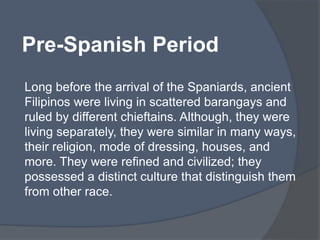
Long before the arrival of the Spaniards, ancient 
Filipinos were living in scattered barangays and 
ruled by different chieftains. Although, they were 
living separately, they were similar in many ways, 
their religion, mode of dressing, houses, and 
more. They were refined and civilized; they 
possessed a distinct culture that distinguish them 
from other race.
House 
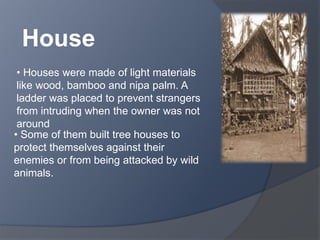
• Houses were made of light materials 
like wood, bamboo and nipa palm. A 
ladder was placed to prevent strangers 
from intruding when the owner was not 
around 
• Some of them built tree houses to 
protect themselves against their 
enemies or from being attacked by wild 
animals.
Dress 
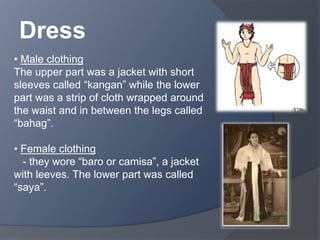
• Male clothing 
The upper part was a jacket with short 
sleeves called “kangan” while the lower 
part was a strip of cloth wrapped around 
the waist and in between the legs called 
“bahag”. 
• Female clothing 
- they wore “baro or camisa”, a jacket 
with leeves. The lower part was called 
“saya”.
Government 
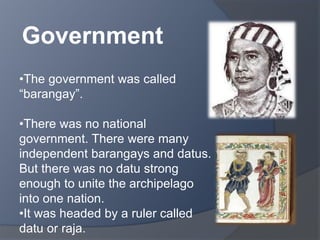
•The government was called 
“barangay”. 
•There was no national 
government. There were many 
independent barangays and datus. 
But there was no datu strong 
enough to unite the archipelago 
into one nation. 
•It was headed by a ruler called 
datu or raja.
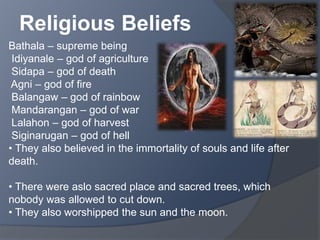
Religious Beliefs 
Bathala – supreme being 
Idiyanale – god of agriculture 
Sidapa – god of death 
Agni – god of fire 
Balangaw – god of rainbow 
Mandarangan – god of war 
Lalahon – god of harvest 
Siginarugan – god of hell 
• They also believed in the immortality of souls and life after 
death. 
• There were aslo sacred place and sacred trees, which 
nobody was allowed to cut down. 
• They also worshipped the sun and the moon.
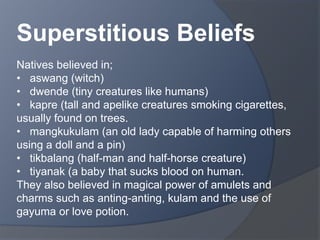
Superstitious Beliefs 
Natives believed in; 
• aswang (witch) 
• dwende (tiny creatures like humans) 
• kapre (tall and apelike creatures smoking cigarettes, 
usually found on trees. 
• mangkukulam (an old lady capable of harming others 
using a doll and a pin) 
• tikbalang (half-man and half-horse creature) 
• tiyanak (a baby that sucks blood on human. 
They also believed in magical power of amulets and 
charms such as anting-anting, kulam and the use of 
gayuma or love potion.
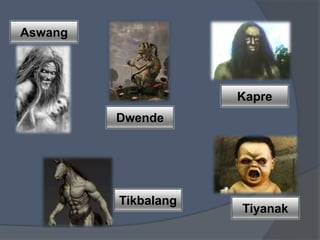
Aswang 
Dwende 
Kapre 
Tikbalang 
Tiyanak
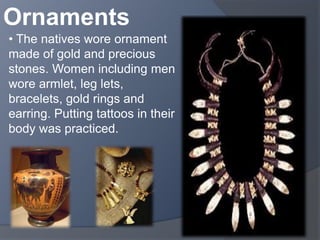
Ornaments 
• The natives wore ornament 
made of gold and precious 
stones. Women including men 
wore armlet, leg lets, 
bracelets, gold rings and 
earring. Putting tattoos in their 
body was practiced.
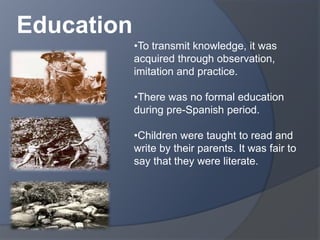
•To transmit knowledge, it was 
acquired through observation, 
imitation and practice. 
•There was no formal education 
during pre-Spanish period. 
•Children were taught to read and 
write by their parents. It was fair to 
say that they were literate. 
Education
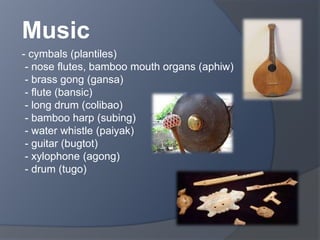
Music 
- cymbals (plantiles) 
- nose flutes, bamboo mouth organs (aphiw) 
- brass gong (gansa) 
- flute (bansic) 
- long drum (colibao) 
- bamboo harp (subing) 
- water whistle (paiyak) 
- guitar (bugtot) 
- xylophone (agong) 
- drum (tugo)
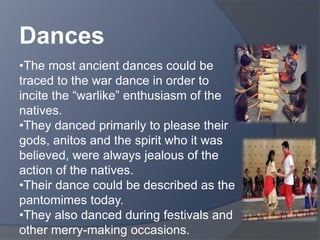
Dances 
•The most ancient dances could be 
traced to the war dance in order to 
incite the “warlike” enthusiasm of the 
natives. 
•They danced primarily to please their 
gods, anitos and the spirit who it was 
believed, were always jealous of the 
action of the natives. 
•Their dance could be described as the 
pantomimes today. 
•They also danced during festivals and 
other merry-making occasions.
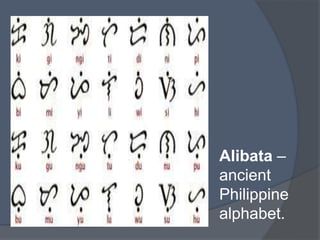
Alibata – 
ancient 
Philippine 
alphabet.
Art (Pre-Spanish)

Art (Pre-Spanish)

  • 2.
    Pre-Spanish Period Longbefore the arrival of the Spaniards, ancient Filipinos were living in scattered barangays and ruled by different chieftains. Although, they were living separately, they were similar in many ways, their religion, mode of dressing, houses, and more. They were refined and civilized; they possessed a distinct culture that distinguish them from other race.
  • 3.
    House • Houseswere made of light materials like wood, bamboo and nipa palm. A ladder was placed to prevent strangers from intruding when the owner was not around • Some of them built tree houses to protect themselves against their enemies or from being attacked by wild animals.
  • 4.
    Dress • Maleclothing The upper part was a jacket with short sleeves called “kangan” while the lower part was a strip of cloth wrapped around the waist and in between the legs called “bahag”. • Female clothing - they wore “baro or camisa”, a jacket with leeves. The lower part was called “saya”.
  • 5.
    Government •The governmentwas called “barangay”. •There was no national government. There were many independent barangays and datus. But there was no datu strong enough to unite the archipelago into one nation. •It was headed by a ruler called datu or raja.
  • 6.
    Religious Beliefs Bathala– supreme being Idiyanale – god of agriculture Sidapa – god of death Agni – god of fire Balangaw – god of rainbow Mandarangan – god of war Lalahon – god of harvest Siginarugan – god of hell • They also believed in the immortality of souls and life after death. • There were aslo sacred place and sacred trees, which nobody was allowed to cut down. • They also worshipped the sun and the moon.
  • 7.
    Superstitious Beliefs Nativesbelieved in; • aswang (witch) • dwende (tiny creatures like humans) • kapre (tall and apelike creatures smoking cigarettes, usually found on trees. • mangkukulam (an old lady capable of harming others using a doll and a pin) • tikbalang (half-man and half-horse creature) • tiyanak (a baby that sucks blood on human. They also believed in magical power of amulets and charms such as anting-anting, kulam and the use of gayuma or love potion.
  • 8.
    Aswang Dwende Kapre Tikbalang Tiyanak
  • 9.
    Ornaments • Thenatives wore ornament made of gold and precious stones. Women including men wore armlet, leg lets, bracelets, gold rings and earring. Putting tattoos in their body was practiced.
  • 10.
    •To transmit knowledge,it was acquired through observation, imitation and practice. •There was no formal education during pre-Spanish period. •Children were taught to read and write by their parents. It was fair to say that they were literate. Education
  • 11.
    Music - cymbals(plantiles) - nose flutes, bamboo mouth organs (aphiw) - brass gong (gansa) - flute (bansic) - long drum (colibao) - bamboo harp (subing) - water whistle (paiyak) - guitar (bugtot) - xylophone (agong) - drum (tugo)
  • 12.
    Dances •The mostancient dances could be traced to the war dance in order to incite the “warlike” enthusiasm of the natives. •They danced primarily to please their gods, anitos and the spirit who it was believed, were always jealous of the action of the natives. •Their dance could be described as the pantomimes today. •They also danced during festivals and other merry-making occasions.
  • 13.
    Alibata – ancient Philippine alphabet.