Phase 0 Clinical trial
Dr. Satyabrata sahoo
DM Resident Clinical Pharmacology
Dept. of Clin.& expt. Pharmacology
School of Tropical Medicine, Kolkata
Contents
• Introduction
• Drug development Process
• Concept Phase 0
• Basic features and goals
• Regulatory guidelines
• Uses of phase o
• Advantages and limitations
• Ethical considerations
• Indian scenarios
• Challenges
• conclusion
Introduction
• Drug development is a long, complex and expensive
activity
• Requires 10-15 years of sustained efforts
• Cost of US $ 500 million to $ 1 billion for a single
marketed drug
• Surveys over the past 10 years- research and drug
discovery expenditure is increasing almost
exponentially year and year.
• Nearly one-third of the investigational new drugs(INDs)
fail in the phase 1 trials, many due to PK/PD, safety or
efficacy issues
Cont..
• If the phase 1 failed, then the human volunteers
would have been unnecessarily exposed to a failed
drug and large numbers of animals would have
been used.
• Thus phase 0 or micro dosing studies introduced to
address issues pertaining to drug metabolism and
pharmacokinetics.
• It offers a way of developing drugs in a faster ,more
cost effective and ethical way than ever before
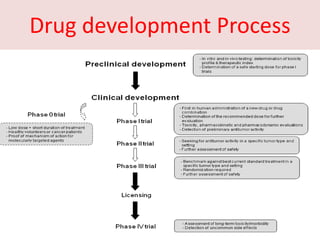
Drug development Process
Concept of Phase 0
• The concept of phase 0/micro dosing first appeared in 1990s
as a method of assessing human pharmacokinetics prior to
full phase I clinical trials and the first data appeared in the
literature in 2003( Garmer RC, Lappin G)
• Study of new drugs in micro doses to derive PK information in
human before undertaking phase I studies is called phase 0
• Microdose: less than 1/100 of the dose of a test substance
calcuated to produce pharmacological effect with a max dose
≤ 100 micrograms
• Objective: To obtain preliminary pharmacokinetic data
• Micro dosing approach could accelerate drug development
without compromising clinical safety
• Micro dosing helps researchers select better drug candidates
for clinical trials by providing early human PK and
bioavailability data.
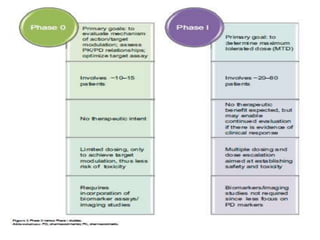
Basic features of phase 0 trials
• First-in-human trial conducted prior to traditional
phase 1 study
• Small number of subjects(10-15)
• Limited drug exposure
Low, non-toxic doses
Short duration(≤7 days)
One course only
• No therapeutic intent(clinical benefit)
• Phase 0 trials are not definitive studies(further
studies are required)
Various Goals of Phase 0 trial
• Provide human PK-PD relationship data prior to
defintitive phase 1 testing
• Evaluate human PK(e.g. Bioavailability) to select
most promising candidate for further development
• Eliminating bad agents early in clinical development
because of poor PK or PD properties
• E.g. Lack of target effect, poor bioavailability,very
rapid clearance
Microdosing and Regulatory Guidelines
• EMEA position paper on Non clinical safety studies
to support clinical trials with a single microdose
• FDA Us departmental of Health and Human services
guidance for industry investigators and reviewers
• ICH Topic M3 note for guidance on nonclinical
safety pharmacology studies for human
pharmaceuticals
• The microdose of drug defined by the USFDA is
analogous to that defined by EMEA
• The latest ICH M3 guideline now universally
accepted.
Uses of phase 0
• PK-PD
• Drug drug interactions
• Measuring drug concentration at site of action
• Metabolic profiling
• Study in vulnerable populations
Advantages
• Early selection of promising compounds
• Overall acceleration in the process of drug
development
• Avoid unnecessary exposure of the participants to
the not so promising compounds
• Not so promising compounds can be eliminated
earlier thereby saving costs
• Less number of animals used
Limitations
• It may lead to false positive or false negative results
• Caution needs to be exercised while applying this
methodology to the drugs showing complex/nonlinear
kinetics
• Since certain drugs dissolve readily at low doses but
exhibit limited solubility at higher doses, it may be
difficult to predict the absorption characteristics at the
microdose levels
• There is lack of any therapeutic and/or diagnostic
intent
• Difficult to motivate the volunteers to become a part of
the trial
• The database for microdosing study is very small
Ethical considerations
• Since Phase 0 trials will definitely not benefit the enrolled person, convincing
to participate in phase 0 trial is difficult
• Indeed, Phase 0 trials are both ethically challenged and ethically
challenging.
• The issue of being ethically challenged can be overcome with scientifically
valid and rigorous methodology
Indian Scenarios
• In 2007-2008 the ISCR proposed a change in
regulation and permit phase 0 trial in India
• Regulatory change enabling phase 1 and
microdosing studies open the door for early clinical
development
• This could bring India in to the main stream of
pharmaceutical research
Microdosing Studies: Challenges
• Failure to recognize the potential benefits of
microdose studies
• Human microdosing is a promising strategy
• Despite obstacles in terms of infrastructure, existing
regulations and ethical challenges, the issue is
worth considering
Conclusion
• Human microdosing holds significant promise as an
analytical tool
• Microdosing may help both patients and
pharmaceutical industry.
• Helps to determine the first dose for the
subsequent phase I clinical studies
References
1.Shivaani Kummar, MD*, Larry Rubinstein Cancer J. 2008 ; 14(3): 133–
137. doi:10.1097/PPO.0b013e318172d6f3.
2. James H Doroshow, Future Med,Chem(2009) 1(8)
3.FDA.gov.in
4.Lappin G & Gramer,R.C.(2008)The utility of microdosing over the past
5 years
THANK YOU

Phase 0 clinical trial

  • 1.
    Phase 0 Clinicaltrial Dr. Satyabrata sahoo DM Resident Clinical Pharmacology Dept. of Clin.& expt. Pharmacology School of Tropical Medicine, Kolkata
  • 2.
    Contents • Introduction • Drugdevelopment Process • Concept Phase 0 • Basic features and goals • Regulatory guidelines • Uses of phase o • Advantages and limitations • Ethical considerations • Indian scenarios • Challenges • conclusion
  • 3.
    Introduction • Drug developmentis a long, complex and expensive activity • Requires 10-15 years of sustained efforts • Cost of US $ 500 million to $ 1 billion for a single marketed drug • Surveys over the past 10 years- research and drug discovery expenditure is increasing almost exponentially year and year. • Nearly one-third of the investigational new drugs(INDs) fail in the phase 1 trials, many due to PK/PD, safety or efficacy issues
  • 4.
    Cont.. • If thephase 1 failed, then the human volunteers would have been unnecessarily exposed to a failed drug and large numbers of animals would have been used. • Thus phase 0 or micro dosing studies introduced to address issues pertaining to drug metabolism and pharmacokinetics. • It offers a way of developing drugs in a faster ,more cost effective and ethical way than ever before
  • 5.
  • 8.
    Concept of Phase0 • The concept of phase 0/micro dosing first appeared in 1990s as a method of assessing human pharmacokinetics prior to full phase I clinical trials and the first data appeared in the literature in 2003( Garmer RC, Lappin G) • Study of new drugs in micro doses to derive PK information in human before undertaking phase I studies is called phase 0 • Microdose: less than 1/100 of the dose of a test substance calcuated to produce pharmacological effect with a max dose ≤ 100 micrograms • Objective: To obtain preliminary pharmacokinetic data • Micro dosing approach could accelerate drug development without compromising clinical safety • Micro dosing helps researchers select better drug candidates for clinical trials by providing early human PK and bioavailability data.
  • 9.
    Basic features ofphase 0 trials • First-in-human trial conducted prior to traditional phase 1 study • Small number of subjects(10-15) • Limited drug exposure Low, non-toxic doses Short duration(≤7 days) One course only • No therapeutic intent(clinical benefit) • Phase 0 trials are not definitive studies(further studies are required)
  • 10.
    Various Goals ofPhase 0 trial • Provide human PK-PD relationship data prior to defintitive phase 1 testing • Evaluate human PK(e.g. Bioavailability) to select most promising candidate for further development • Eliminating bad agents early in clinical development because of poor PK or PD properties • E.g. Lack of target effect, poor bioavailability,very rapid clearance
  • 11.
    Microdosing and RegulatoryGuidelines • EMEA position paper on Non clinical safety studies to support clinical trials with a single microdose • FDA Us departmental of Health and Human services guidance for industry investigators and reviewers • ICH Topic M3 note for guidance on nonclinical safety pharmacology studies for human pharmaceuticals • The microdose of drug defined by the USFDA is analogous to that defined by EMEA • The latest ICH M3 guideline now universally accepted.
  • 12.
    Uses of phase0 • PK-PD • Drug drug interactions • Measuring drug concentration at site of action • Metabolic profiling • Study in vulnerable populations
  • 13.
    Advantages • Early selectionof promising compounds • Overall acceleration in the process of drug development • Avoid unnecessary exposure of the participants to the not so promising compounds • Not so promising compounds can be eliminated earlier thereby saving costs • Less number of animals used
  • 14.
    Limitations • It maylead to false positive or false negative results • Caution needs to be exercised while applying this methodology to the drugs showing complex/nonlinear kinetics • Since certain drugs dissolve readily at low doses but exhibit limited solubility at higher doses, it may be difficult to predict the absorption characteristics at the microdose levels • There is lack of any therapeutic and/or diagnostic intent • Difficult to motivate the volunteers to become a part of the trial • The database for microdosing study is very small
  • 15.
    Ethical considerations • SincePhase 0 trials will definitely not benefit the enrolled person, convincing to participate in phase 0 trial is difficult • Indeed, Phase 0 trials are both ethically challenged and ethically challenging. • The issue of being ethically challenged can be overcome with scientifically valid and rigorous methodology
  • 16.
    Indian Scenarios • In2007-2008 the ISCR proposed a change in regulation and permit phase 0 trial in India • Regulatory change enabling phase 1 and microdosing studies open the door for early clinical development • This could bring India in to the main stream of pharmaceutical research
  • 17.
    Microdosing Studies: Challenges •Failure to recognize the potential benefits of microdose studies • Human microdosing is a promising strategy • Despite obstacles in terms of infrastructure, existing regulations and ethical challenges, the issue is worth considering
  • 18.
    Conclusion • Human microdosingholds significant promise as an analytical tool • Microdosing may help both patients and pharmaceutical industry. • Helps to determine the first dose for the subsequent phase I clinical studies
  • 19.
    References 1.Shivaani Kummar, MD*,Larry Rubinstein Cancer J. 2008 ; 14(3): 133– 137. doi:10.1097/PPO.0b013e318172d6f3. 2. James H Doroshow, Future Med,Chem(2009) 1(8) 3.FDA.gov.in 4.Lappin G & Gramer,R.C.(2008)The utility of microdosing over the past 5 years
  • 20.