Pharmacovigilance
Dr. SURENDRA.S.AKASH MD
ADVERSE DRUG REACTION
•
We define an adverse drug reaction as "an
appreciably harmful or unpleasant reaction,
resulting from an intervention related to the use
of a medicinal product, which predicts hazard
from future administration and warrants
prevention or specific treatment, or alteration of
the dosage regimen, or withdrawal of the
product."
3Pharmacovigilance
•
The science and activities relating to the detection,
evaluation, understanding and prevention of
adverse drug reactions or any other drug-related
problems
4
Aims of
Pharmacovigilance
•
To improve patient care and safety
•
To improve public health and safety
•
To contribute to the assessment of benefit, harm,
effectiveness and risk of medicines
•
To promote understanding, education and clinical
training
5Who are the partners?
•
Government
•
Industry
•
Hospitals and academia
•
Medical and pharmaceutical associations
•
Poisons information centres
•
Health professionals
•
Patients
•
Consumers
•
Media
•
WHO
6History
•
1986 - a formal adverse drug reaction (ADR)
monitoring system consisting of 12 regional
centers, each covering a population of 50 million,
was proposed for India.
•
In 1989, under the aegis of the Drug Controller of
India, six regional centres were set up in
Mumbai, New Delhi, Calcutta, Lucknow,
Pondicherry and Chandigarh.
8
•
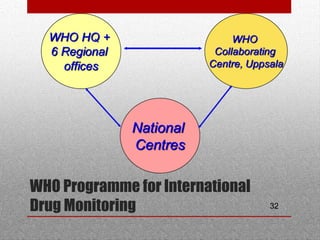
In 1997, India joined the WHO Programme for
International Drug Monitoring managed by the
Uppsala Monitoring Centre, Sweden.
•
Of the six centres, only the centres in Mumbai
and New Delhi were active, yet spontaneous
reporting of ADRs was poor.
9History
•
Recognising the need for improved ADR
monitoring in India, the Government of India
sent a proposal to the World Bank for funding.
•
The World Bank approved the proposal with an
annual grant of $US 0.1 million for 5 years and
the National Pharmacovigilance programme was
launched in November 2004.
10
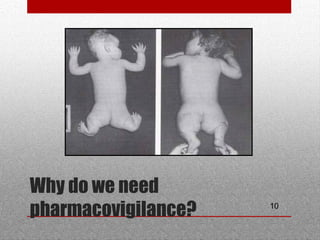
Why do we need
pharmacovigilance?
11
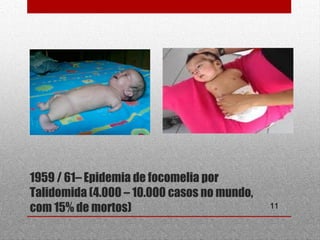
1959 / 61– Epidemia de focomelia por
Talidomida (4.000 – 10.000 casos no mundo,
com 15% de mortos)
12
Reason 1:
•
Humanitarian concern –
•
Insufficient evidence of safety from clinical trials
•
Animal experiments
•
Phase 1 – 3 studies prior to marketing authorization
13
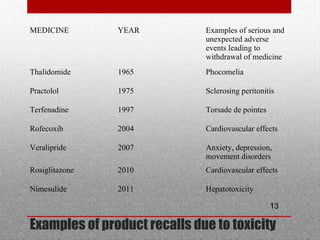
Examples of product recalls due to toxicity
MEDICINE YEAR Examples of serious and
unexpected adverse
events leading to
withdrawal of medicine
Thalidomide 1965 Phocomelia
Practolol 1975 Sclerosing peritonitis
Terfenadine 1997 Torsade de pointes
Rofecoxib 2004 Cardiovascular effects
Veralipride 2007 Anxiety, depression,
movement disorders
Rosiglitazone 2010 Cardiovascular effects
Nimesulide 2011 Hepatotoxicity
14Reason 2
•
Medicines are supposed to save lives
•
Dying from a disease is sometimes unavoidable;
dying from a medicine is unacceptable.
Lepakhin V. Geneva
2005
15
•
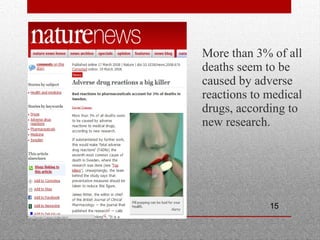
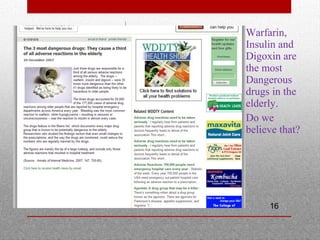
More than 3% of all
deaths seem to be
caused by adverse
reactions to medical
drugs, according to
new research.
16
Warfarin,
Insulin and
Digoxin are
the most
Dangerous
drugs in the
elderly.
Do we
believe that?
17Reason 3
•
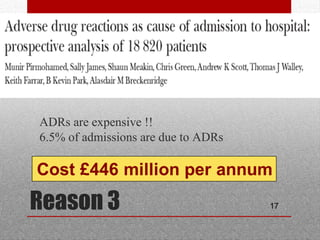
ADRs are expensive !!
•
6.5% of admissions are due to ADRs
18Cost of ADRs in the US?
•
Cost of drug related morbidity and mortality
exceeded $177.4 billion in 2000 (Ernst FR &
Grizzle AJ, 2001: J American Pharm. Assoc)
•
ADR related cost to the country exceeds the cost
of the medications themselves
19
Reason 4:
•
Promoting rational use of medicines and adherence
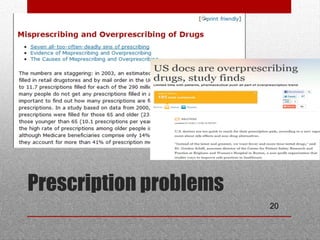
20
Prescription problems
21Reason 5
•
Ensuring public confidence
22
23
24
25
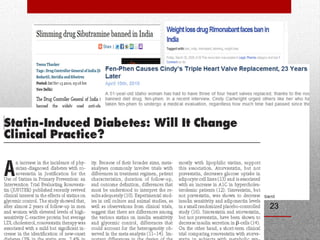
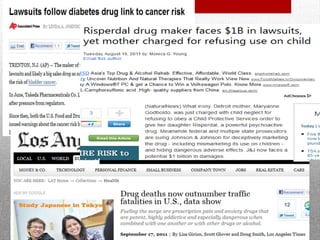
•
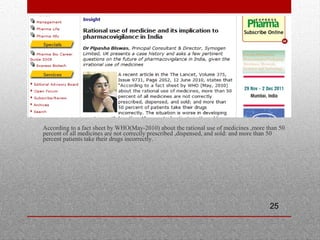
According to a fact sheet by WHO(May-2010) about the rational use of medicines ,more than 50
percent of all medicines are not correctly prescribed ,dispensed, and sold: and more than 50
percent patients take their drugs incorrectly.
26Reason 6
•
Ethics
•
To know of something that is harmful to another
person who does not know, and not telling, is
unethical
27
•
Not reporting a serious unknown reaction is
unethical

valid for everyone

patient

health professional

manufacturer

authorities
28ADR FORM
29ADR FORM
30What to report?
•
The programme particularly solicits reports of:
•
• All adverse events suspected to have been
caused by new drugs and •drugs of current
interest'
•
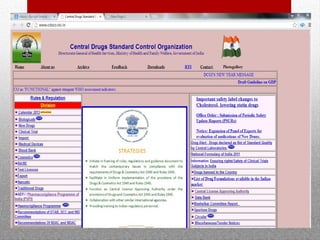
(List published by CDSCO {Central Drugs
Standard Control Organization} from time to time)
31
•
• Reactions to any other drugs which are
suspected of significantly affecting a patient's
management, including reactions suspected of
causing:
•
• Death
•
• Life-threatening (real risk of dying)
•
• Hospitalization (initial or prolonged)
•
• Disability (significant, persistent or permanent)
•
• Congenital anomaly
•
• Required intervention to prevent permanent
impairment or damage.
32
WHO Programme for International
Drug Monitoring
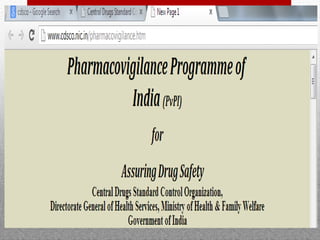
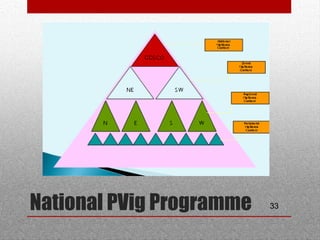
33National PVig Programme
34
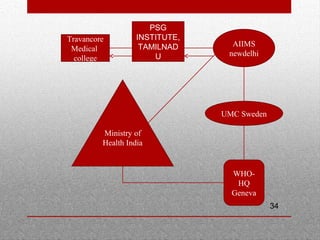
Travancore
Medical
college
PSG
INSTITUTE,
TAMILNAD
U
AIIMS
newdelhi
UMC Sweden
WHO-
HQ
Geneva
Ministry of
Health India
37SO….WHAT IS OUR ROLE?
SEND NOT ONLY QUANTITY BUT….
38HOW?
•
Monitor clinical status of patients
•
Identify the correct ADRs not side effects
•
Get more information
•
Investigate at hospital level
•
Help practitioners to fill-up the forms
•
Keep patient’s record if more information needed
39CONCLUSION
•
Pharmacovigilance looks at all available
information to assess the safety profile of a drug.
•
Pharmacovigilance should also take the benefit of
the drug in account.
•
Pharmacovigilance is required for systematically
identifying and correlating drugs and side-effects
and taking corrective actions, especially for the
product launching first time in India.
40THANKYOU
41
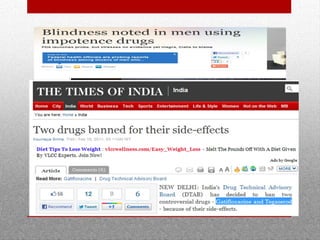
•
Tegaserod is reported to
increase the risk of heart
attacks by 10 times, while
the use of gatifloxacin in
elderly patients may
increase risk of
developing serious
hyperglycemia 17 times
compared with other anti-
biotics

Pharmacovigilance

  • 1.
  • 2.
    ADVERSE DRUG REACTION • Wedefine an adverse drug reaction as "an appreciably harmful or unpleasant reaction, resulting from an intervention related to the use of a medicinal product, which predicts hazard from future administration and warrants prevention or specific treatment, or alteration of the dosage regimen, or withdrawal of the product."
  • 3.
    3Pharmacovigilance • The science andactivities relating to the detection, evaluation, understanding and prevention of adverse drug reactions or any other drug-related problems
  • 4.
    4 Aims of Pharmacovigilance • To improvepatient care and safety • To improve public health and safety • To contribute to the assessment of benefit, harm, effectiveness and risk of medicines • To promote understanding, education and clinical training
  • 5.
    5Who are thepartners? • Government • Industry • Hospitals and academia • Medical and pharmaceutical associations • Poisons information centres • Health professionals • Patients • Consumers • Media • WHO
  • 6.
    6History • 1986 - aformal adverse drug reaction (ADR) monitoring system consisting of 12 regional centers, each covering a population of 50 million, was proposed for India. • In 1989, under the aegis of the Drug Controller of India, six regional centres were set up in Mumbai, New Delhi, Calcutta, Lucknow, Pondicherry and Chandigarh.
  • 8.
    8 • In 1997, Indiajoined the WHO Programme for International Drug Monitoring managed by the Uppsala Monitoring Centre, Sweden. • Of the six centres, only the centres in Mumbai and New Delhi were active, yet spontaneous reporting of ADRs was poor.
  • 9.
    9History • Recognising the needfor improved ADR monitoring in India, the Government of India sent a proposal to the World Bank for funding. • The World Bank approved the proposal with an annual grant of $US 0.1 million for 5 years and the National Pharmacovigilance programme was launched in November 2004.
  • 10.
    10 Why do weneed pharmacovigilance?
  • 11.
    11 1959 / 61–Epidemia de focomelia por Talidomida (4.000 – 10.000 casos no mundo, com 15% de mortos)
  • 12.
    12 Reason 1: • Humanitarian concern– • Insufficient evidence of safety from clinical trials • Animal experiments • Phase 1 – 3 studies prior to marketing authorization
  • 13.
    13 Examples of productrecalls due to toxicity MEDICINE YEAR Examples of serious and unexpected adverse events leading to withdrawal of medicine Thalidomide 1965 Phocomelia Practolol 1975 Sclerosing peritonitis Terfenadine 1997 Torsade de pointes Rofecoxib 2004 Cardiovascular effects Veralipride 2007 Anxiety, depression, movement disorders Rosiglitazone 2010 Cardiovascular effects Nimesulide 2011 Hepatotoxicity
  • 14.
    14Reason 2 • Medicines aresupposed to save lives • Dying from a disease is sometimes unavoidable; dying from a medicine is unacceptable. Lepakhin V. Geneva 2005
  • 15.
    15 • More than 3%of all deaths seem to be caused by adverse reactions to medical drugs, according to new research.
  • 16.
    16 Warfarin, Insulin and Digoxin are themost Dangerous drugs in the elderly. Do we believe that?
  • 17.
    17Reason 3 • ADRs areexpensive !! • 6.5% of admissions are due to ADRs
  • 18.
    18Cost of ADRsin the US? • Cost of drug related morbidity and mortality exceeded $177.4 billion in 2000 (Ernst FR & Grizzle AJ, 2001: J American Pharm. Assoc) • ADR related cost to the country exceeds the cost of the medications themselves
  • 19.
    19 Reason 4: • Promoting rationaluse of medicines and adherence
  • 20.
  • 21.
  • 22.
  • 23.
  • 24.
  • 25.
    25 • According to afact sheet by WHO(May-2010) about the rational use of medicines ,more than 50 percent of all medicines are not correctly prescribed ,dispensed, and sold: and more than 50 percent patients take their drugs incorrectly.
  • 26.
    26Reason 6 • Ethics • To knowof something that is harmful to another person who does not know, and not telling, is unethical
  • 27.
    27 • Not reporting aserious unknown reaction is unethical  valid for everyone  patient  health professional  manufacturer  authorities
  • 28.
  • 29.
  • 30.
    30What to report? • Theprogramme particularly solicits reports of: • • All adverse events suspected to have been caused by new drugs and •drugs of current interest' • (List published by CDSCO {Central Drugs Standard Control Organization} from time to time)
  • 31.
    31 • • Reactions toany other drugs which are suspected of significantly affecting a patient's management, including reactions suspected of causing: • • Death • • Life-threatening (real risk of dying) • • Hospitalization (initial or prolonged) • • Disability (significant, persistent or permanent) • • Congenital anomaly • • Required intervention to prevent permanent impairment or damage.
  • 32.
    32 WHO Programme forInternational Drug Monitoring
  • 33.
  • 34.
  • 37.
    37SO….WHAT IS OURROLE? SEND NOT ONLY QUANTITY BUT….
  • 38.
    38HOW? • Monitor clinical statusof patients • Identify the correct ADRs not side effects • Get more information • Investigate at hospital level • Help practitioners to fill-up the forms • Keep patient’s record if more information needed
  • 39.
    39CONCLUSION • Pharmacovigilance looks atall available information to assess the safety profile of a drug. • Pharmacovigilance should also take the benefit of the drug in account. • Pharmacovigilance is required for systematically identifying and correlating drugs and side-effects and taking corrective actions, especially for the product launching first time in India.
  • 40.
  • 41.
    41 • Tegaserod is reportedto increase the risk of heart attacks by 10 times, while the use of gatifloxacin in elderly patients may increase risk of developing serious hyperglycemia 17 times compared with other anti- biotics