immunosuppressant
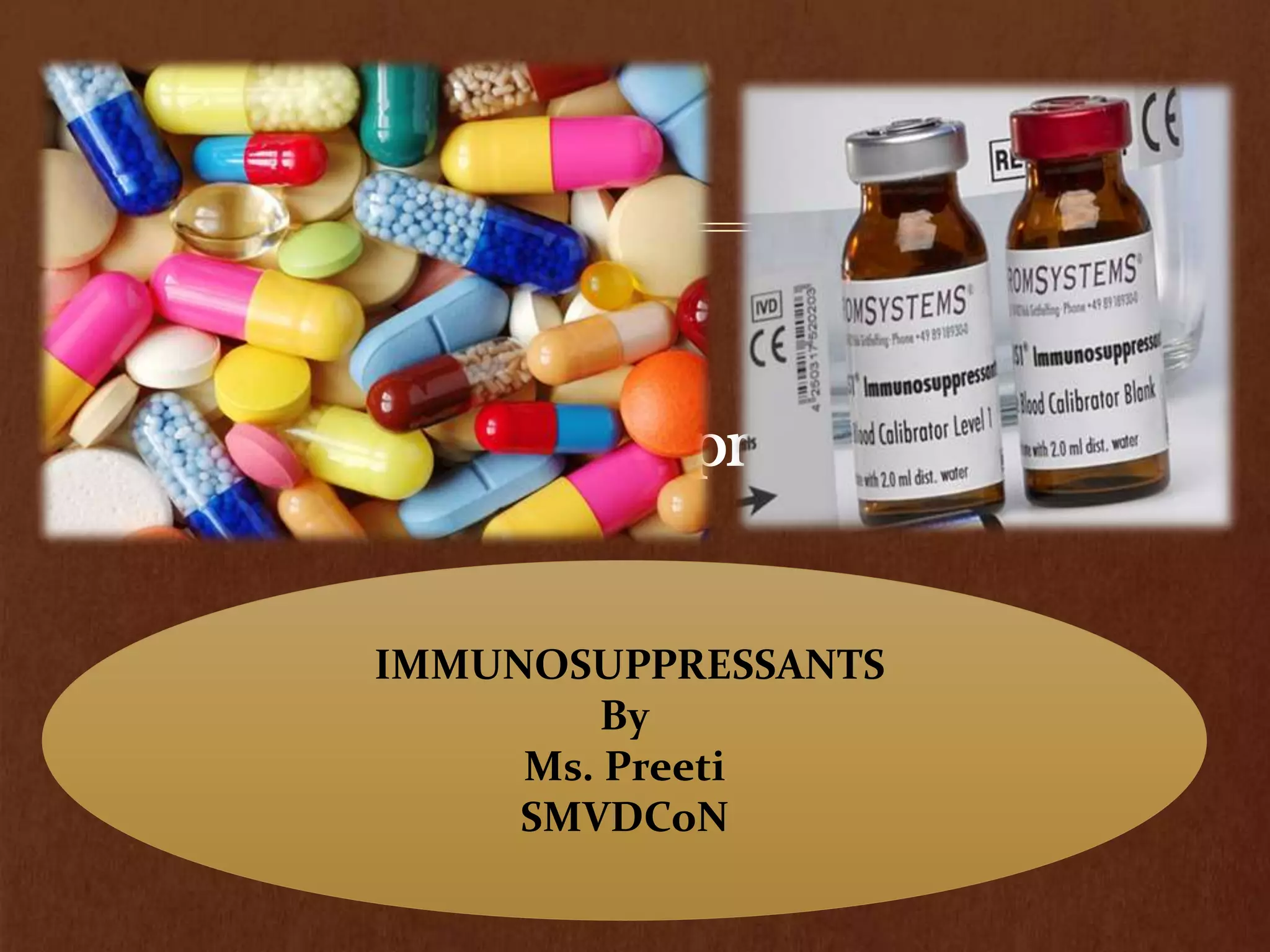
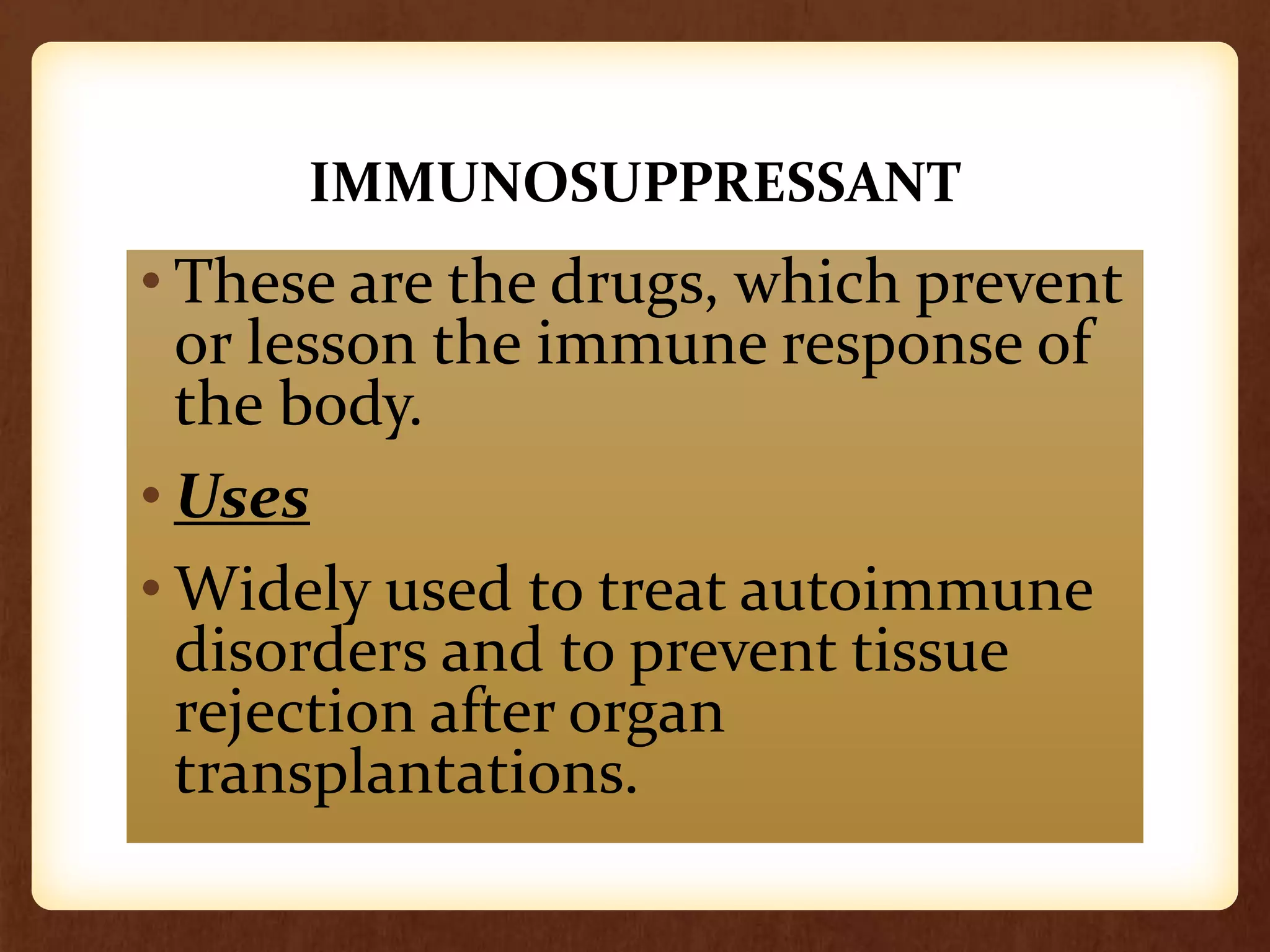
IMMUNOSUPPRESSANTS
By
Ms. Preeti
SMVDCoN
IMMUNOSUPPRESSION
• Immunosuppression involves an act
that reduces the activation or efficacy
of the immune system. Some portions
of the immune system itself have
immuno-suppressive effects on other
parts of the immune system, and
immunosuppression may occur as an
adverse reaction to treatment of other
conditions.
IMMUNOSUPPRESSANT
• An immunosuppressant is any agent
that causes immuno suppression,
including immunosuppressive drugs
and some environmental toxins. One
of the primary uses of
immunosuppressant drugs is to lower
the body’s ability to reject a
transplanted organ, such as a liver,
heart or kidney.
IMMUNOSUPPRESSANT
• These are the drugs, which prevent
or lesson the immune response of
the body.
• Uses
• Widely used to treat autoimmune
disorders and to prevent tissue
rejection after organ
transplantations.
Commonly used Drugs
Cyclosporine
(sandimmune)
Mycophenolaten
mofetil (cell
cept)
Tacrolimus (
FK506,Prograf)
Azathiprine
(imuran)
Muromanab-
CD3 (orthoclone
OKT3)
CONTRAINDICATION
Administration alone with vaccine or combination
immunosuppressive therapy can cause serum
sickness.
Side effects
• Infection
• Irritation at the site of administration
• Anemia
• Thrombocytopenia
• GI distress
Nursing implication
• Avoid extravasations at IV site.
• Monitor frequently for super
infection
• Avoid administering oral form in
empty stomach
• Monitor liver functions and blood
count periodically.
• Assess for transplant rejection
,report fever more than 99 F
IMMUNOMODULATING AGENTS:
• These are the drugs ,which can
stimulate cellular immune system,
enhance multiplication of activated
killer T- cell and protect bone
marrow cell by binding to receptors
on bone marrow cell involved in
production of neutrophils.
Commonly used class of drugs
Interleukins
Colony-
stimulating
factors
interferons
INTERLEUKINS
• Interleukins enhance the rate of B-
cell and activated killer –T cell
production that recognizes cancer
cells as foreign and destroy them,
but ignores normal cell.
USES OF INTERLEUKINS
• These drugs have limited uses in
treating Hodgkin’s cancer of the
female reproductive organs and
lung cancers.
• Effective in treatment of colorectal
adenocarcinoma, renal cell
carcinoma and malignant
melanomas.
COMMONALY USED DRUGS ARE
ALDESLEUKIN (PROLEUKIN)
• Side effects :
• Capillary leaking syndrome-capillaries
loose their essential component
(protein) into the surrounding that
causes fluid retention with edema.
• Congestive cardiac failure and
arrhythmias, secondary the fluid
retention.
• Flu-like symptoms.
INTERACTIONS
CHEMOTHERA-
PEUTIC
AGENTS
ANTIBIOTICS
CORTICOSTE
ROIDS
ANTIHYPERT
ENSIVE
NURSING IMPLICATIONS
• Monitor fluid
intake and
output.
• Use non opoidal
analgesic to treat
flu-like
symptoms.
COLONY-STIMULATING FACTORS
• CSFs bind to receptors
on bone marrow cells
and inhibit
neutropenia caused by
chemotherapeutic
agents.
• They are also known to
stimulating immune
cells that destroy
viruses, fungi and
tumor cells.
USES
• Used in the treatment of viral
and fungal infections.
• Following bone marrow
transplantation.
• Used in combination with
chemotherapeutic agents, to
reduce the incidence of
neutropenia.
COMMONALY USED DRUGS
• Epoitin alfa
( human recombinant erthropoeitin)
Side effects:
• Hypertension and dyspnea, secondary
fluid retention.
• G.I. distress
NURSING IMPLICATIONS
•Monitor fluid retention
and BP.
•Assess lung sounds for
pulmonary edema.
INTERFERONS
• Interferons possess antineoplastic and
antiviral properties by directly inhibiting the
synthesis of DNA and protein.
• They also have ability to increase the cell
surface antigen on the tumor cell, thus
enabling the immune system to recognize
tumor cell. They also stop viral penetration
into healthy cells and replications.
USES
• Treatment of multiple
sclerosis (autoimmune
disease)
• Treatment of viral infections
such as ,condyloma (STD of
virus) viral hepatitis,
papilloma virus, retrovirus
and rhino virus.
COMMONLY USED DRUGS
Interferon-alfa ,beta and gamma
Side
effects
GI distress
Flu-like
distress
Allergy
Liver
toxicity
Renal
toxicity
Dizziness
NURSING IMPLICATIONS
• Take the history of allergy to
egg or egg product. If the
person is allergic avoid
administration of these drugs.
• Implement safety measures if
confusion or dizziness is
reported.
• Monitor renal and liver
functions periodically by
laboratory parameters.
THANK YOU

Immunosuppressants

  • 1.
  • 2.
    IMMUNOSUPPRESSION • Immunosuppression involvesan act that reduces the activation or efficacy of the immune system. Some portions of the immune system itself have immuno-suppressive effects on other parts of the immune system, and immunosuppression may occur as an adverse reaction to treatment of other conditions.
  • 3.
    IMMUNOSUPPRESSANT • An immunosuppressantis any agent that causes immuno suppression, including immunosuppressive drugs and some environmental toxins. One of the primary uses of immunosuppressant drugs is to lower the body’s ability to reject a transplanted organ, such as a liver, heart or kidney.
  • 4.
    IMMUNOSUPPRESSANT • These arethe drugs, which prevent or lesson the immune response of the body. • Uses • Widely used to treat autoimmune disorders and to prevent tissue rejection after organ transplantations.
  • 5.
    Commonly used Drugs Cyclosporine (sandimmune) Mycophenolaten mofetil(cell cept) Tacrolimus ( FK506,Prograf) Azathiprine (imuran) Muromanab- CD3 (orthoclone OKT3)
  • 6.
    CONTRAINDICATION Administration alone withvaccine or combination immunosuppressive therapy can cause serum sickness. Side effects • Infection • Irritation at the site of administration • Anemia • Thrombocytopenia • GI distress
  • 7.
    Nursing implication • Avoidextravasations at IV site. • Monitor frequently for super infection • Avoid administering oral form in empty stomach • Monitor liver functions and blood count periodically. • Assess for transplant rejection ,report fever more than 99 F
  • 8.
    IMMUNOMODULATING AGENTS: • Theseare the drugs ,which can stimulate cellular immune system, enhance multiplication of activated killer T- cell and protect bone marrow cell by binding to receptors on bone marrow cell involved in production of neutrophils.
  • 9.
    Commonly used classof drugs Interleukins Colony- stimulating factors interferons
  • 10.
    INTERLEUKINS • Interleukins enhancethe rate of B- cell and activated killer –T cell production that recognizes cancer cells as foreign and destroy them, but ignores normal cell.
  • 11.
    USES OF INTERLEUKINS •These drugs have limited uses in treating Hodgkin’s cancer of the female reproductive organs and lung cancers. • Effective in treatment of colorectal adenocarcinoma, renal cell carcinoma and malignant melanomas.
  • 12.
    COMMONALY USED DRUGSARE ALDESLEUKIN (PROLEUKIN) • Side effects : • Capillary leaking syndrome-capillaries loose their essential component (protein) into the surrounding that causes fluid retention with edema. • Congestive cardiac failure and arrhythmias, secondary the fluid retention. • Flu-like symptoms.
  • 13.
  • 14.
    NURSING IMPLICATIONS • Monitorfluid intake and output. • Use non opoidal analgesic to treat flu-like symptoms.
  • 15.
    COLONY-STIMULATING FACTORS • CSFsbind to receptors on bone marrow cells and inhibit neutropenia caused by chemotherapeutic agents. • They are also known to stimulating immune cells that destroy viruses, fungi and tumor cells.
  • 16.
    USES • Used inthe treatment of viral and fungal infections. • Following bone marrow transplantation. • Used in combination with chemotherapeutic agents, to reduce the incidence of neutropenia.
  • 17.
    COMMONALY USED DRUGS •Epoitin alfa ( human recombinant erthropoeitin) Side effects: • Hypertension and dyspnea, secondary fluid retention. • G.I. distress
  • 18.
    NURSING IMPLICATIONS •Monitor fluidretention and BP. •Assess lung sounds for pulmonary edema.
  • 19.
    INTERFERONS • Interferons possessantineoplastic and antiviral properties by directly inhibiting the synthesis of DNA and protein. • They also have ability to increase the cell surface antigen on the tumor cell, thus enabling the immune system to recognize tumor cell. They also stop viral penetration into healthy cells and replications.
  • 20.
    USES • Treatment ofmultiple sclerosis (autoimmune disease) • Treatment of viral infections such as ,condyloma (STD of virus) viral hepatitis, papilloma virus, retrovirus and rhino virus.
  • 21.
    COMMONLY USED DRUGS Interferon-alfa,beta and gamma Side effects GI distress Flu-like distress Allergy Liver toxicity Renal toxicity Dizziness
  • 22.
    NURSING IMPLICATIONS • Takethe history of allergy to egg or egg product. If the person is allergic avoid administration of these drugs. • Implement safety measures if confusion or dizziness is reported. • Monitor renal and liver functions periodically by laboratory parameters.
  • 23.