This document discusses pharmacoepidemiology and provides an overview of key concepts:
- Pharmacoepidemiology is defined as the study of the use and effects of drugs in large populations. It combines principles from clinical pharmacology and epidemiology.
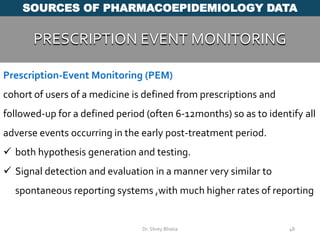
- Several study designs can be used including cohort studies, case-control studies, and case reports. Spontaneous adverse event reporting systems are an important source of pharmacoepidemiology data and can generate hypotheses for further investigation.
- Factors that may prompt a pharmacoepidemiological study include regulatory requirements, assessing drug safety in real-world use, and investigating potential issues identified from pre-marketing studies or spontaneous reports.