Pharmaceutical Engineering
S. I MAKRANI
Assistant Professor
Department of Pharmaceutics
Ali Allana College of Pharmacy
Akkalkuwa.
Introduction of chapters and diagrammatic
representation of Instrumentation
Flow of fluids
• Flow of fluid may be defined as the flow of substances that do not
permanently resist distortion.( alteration of the original shape )
• Fluid is a substance that continually deforms (flows) under an applied
shear stress.
• Fluid are a subset of the matter and include liquids, gases.
• The subject of fluid flow can be divided into fluid statics and fluid
dynamics
1
Simple manometers
Figure 1. Construction of Simple Manometers 2
Differential manometers
Figure 2. Construction of Differential Manometers 3
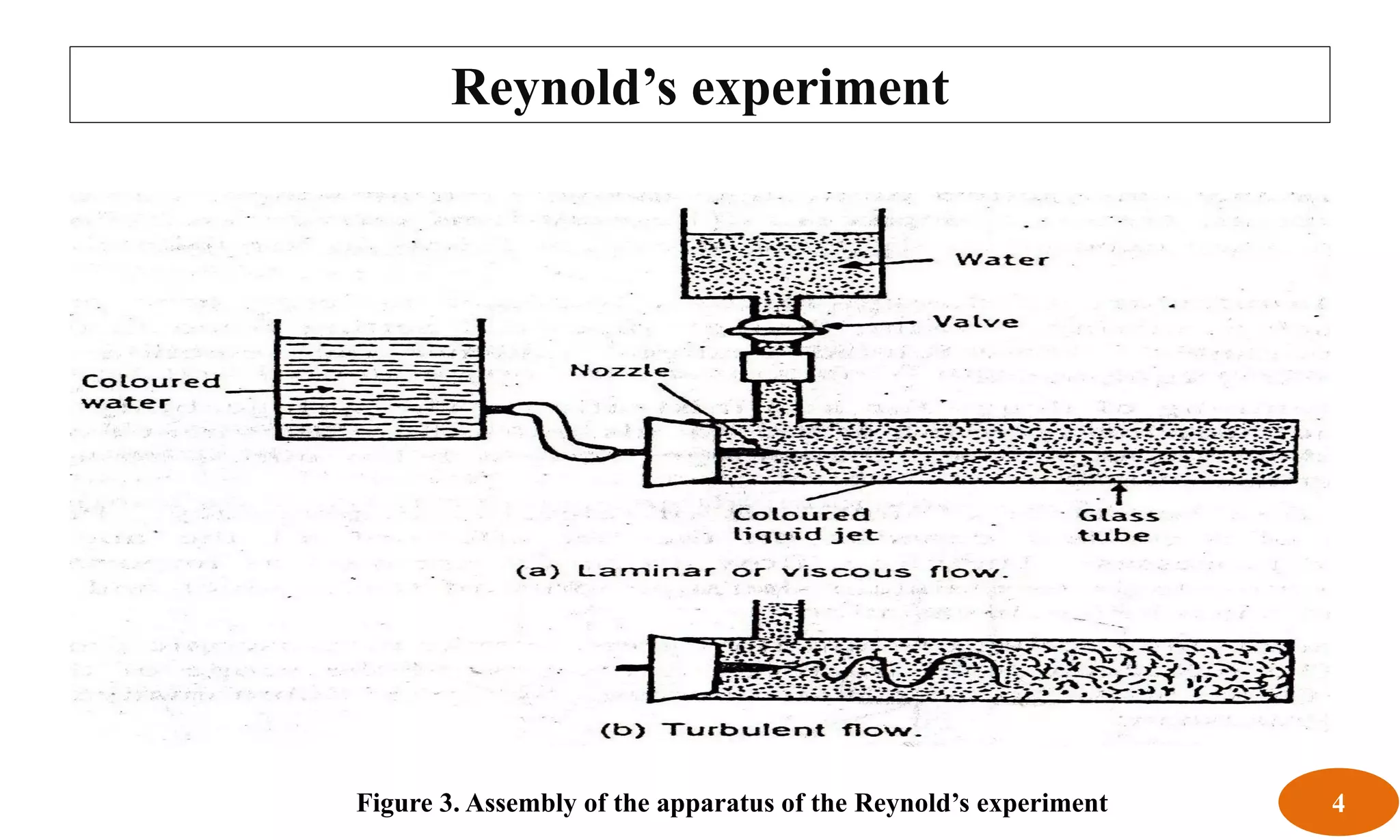
Reynold’s experiment
Figure 3. Assembly of the apparatus of the Reynold’s experiment 4
Orifice meter
Figure 4. Construction of Orifice meter 5
Venturi meter
Figure 5. Construction of Venturi meter 6
Pitot tube
Figure 6. Construction and assembly of Pitot tube 7
Rotameter
Figure 7. Construction of Rotameter 8
Size Reduction
• Size reduction is a process of reducing large solid unit masses (
vegetable or chemical substances ) into small unit masses,coarse
particles or fine particles.
• Size reduction is a process in which the particle size of a solid is made
smaller.
• The term size reduction is applied to ways in which particles of solids
are cut or broken into smaller pieces.
• Size reduction is necessary if the starting material is too coarse, and
the final product needs to be a fine powder.
9
General Parts of Size reduction
Figure 8. General Parts of Size reduction 10
Hammer mill
Figure 9. Construction of Hammer mill 11
Ball mill
Figure 10. Construction of Ball mill 12
Fluid energy mill
Figure 11. Construction of Fluid energy mill 13
Edge runner mill
Figure 12. Construction of Edge runner mill 14
End runner mill
Figure 13. Construction of End runner mill 15
Size Separation
• Size separation is a unit operation that involves the separation of a
mixture of various sizes of particles into two or more portions by
means of screening surfaces.
• Size separation is also known as sieving, sifting, classifying or
screening.
• Size separation is the process of separation of different sizes of
particles with the help of sieve, microscope or sedimentation technique.
• Particle size analysis is the determination of the size of particles present
in the bulk substance or mixture.
16
Sieve Shaker machine
Figure 14. Construction of Sieve Shaker machine 17
Cyclone separator
Figure 15. Construction of Cyclone separator 18
Air separator
Figure 16. Construction of Air separator 19
Bag filter
Figure 17. Construction of Bag filter 20
Heat Transfer
• Heat is a form of energy.
• According to the principles of thermodynamics, whenever a physical
or chemical transformation occurs,heat flows into the system.
• Heat flows from a region of high temperature to a region of low
temperature.
• Heat energy can be transferred from one body to the other or from
one location in a body to the other.
21
Liquid to liquid heat interchanger
Figure 18. Construction of Liquid to liquid heat interchanger 22
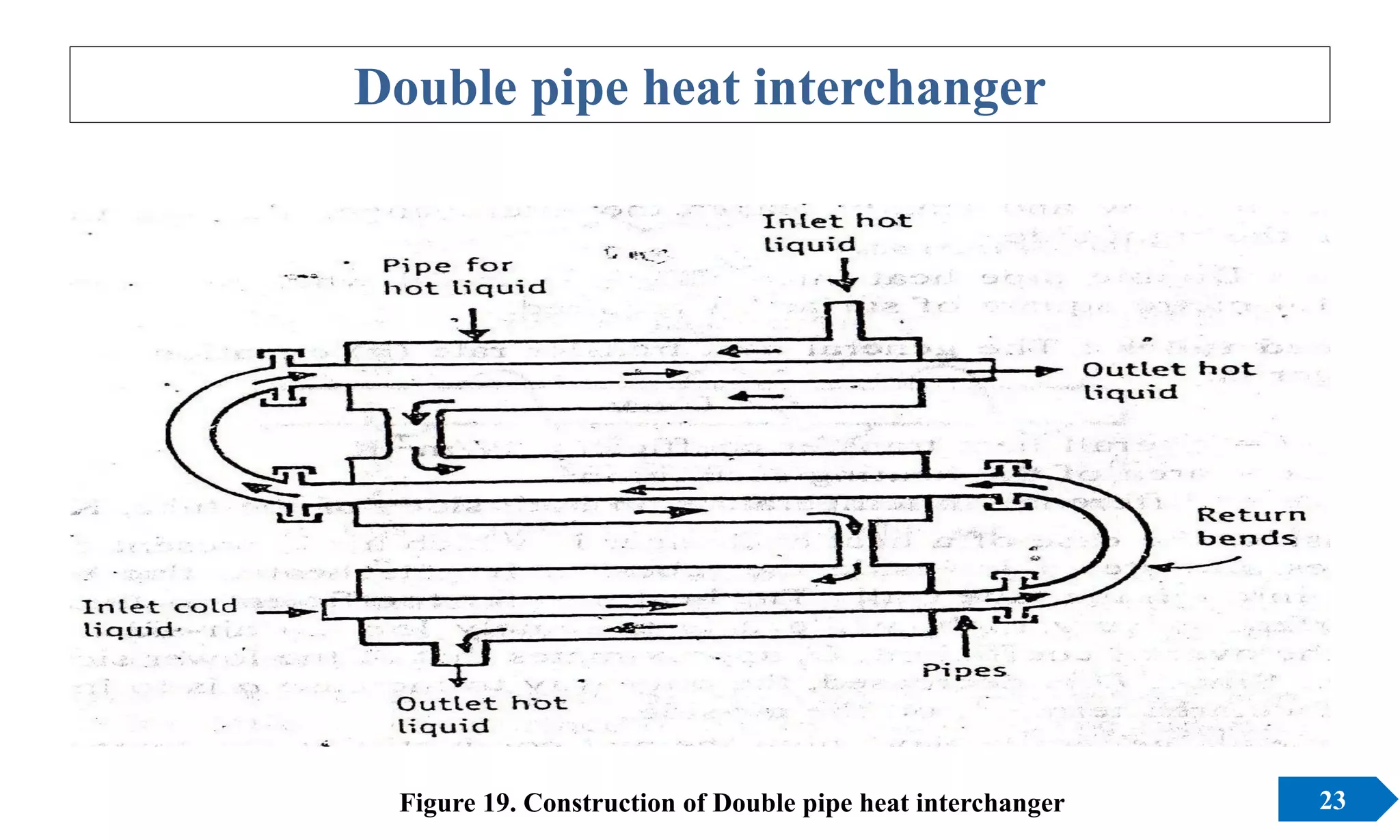
Double pipe heat interchanger
Figure 19. Construction of Double pipe heat interchanger 23
Single pass tubular heater
Figure 20. Construction of Single pass tubular heater 24
Evaporation
• Evaporation is a process of vaporizing large quantities of volatile liquid
to get a concentrated product.
• Equipment used for the evaporation are known as evaporators.
• Evaporation is the process by which water changes from a liquid to a
gas or vapor.
25
Steam jacketed kettle
Figure 21. Construction of Steam jacketed kettle 26
Horizontal tube evaporator
Figure 22. Construction of Horizontal tube evaporator 27
Climbing film evaporator
Figure 23. Construction of Climbing film evaporator 28
Forced circulation evaporator
Figure 24. Construction of Forced circulation evaporator 29

Pharmaceutical Engineering by Makrani Shaharukh

  • 1.
    Pharmaceutical Engineering S. IMAKRANI Assistant Professor Department of Pharmaceutics Ali Allana College of Pharmacy Akkalkuwa. Introduction of chapters and diagrammatic representation of Instrumentation
  • 2.
    Flow of fluids •Flow of fluid may be defined as the flow of substances that do not permanently resist distortion.( alteration of the original shape ) • Fluid is a substance that continually deforms (flows) under an applied shear stress. • Fluid are a subset of the matter and include liquids, gases. • The subject of fluid flow can be divided into fluid statics and fluid dynamics 1
  • 3.
    Simple manometers Figure 1.Construction of Simple Manometers 2
  • 4.
    Differential manometers Figure 2.Construction of Differential Manometers 3
  • 5.
    Reynold’s experiment Figure 3.Assembly of the apparatus of the Reynold’s experiment 4
  • 6.
    Orifice meter Figure 4.Construction of Orifice meter 5
  • 7.
    Venturi meter Figure 5.Construction of Venturi meter 6
  • 8.
    Pitot tube Figure 6.Construction and assembly of Pitot tube 7
  • 9.
  • 10.
    Size Reduction • Sizereduction is a process of reducing large solid unit masses ( vegetable or chemical substances ) into small unit masses,coarse particles or fine particles. • Size reduction is a process in which the particle size of a solid is made smaller. • The term size reduction is applied to ways in which particles of solids are cut or broken into smaller pieces. • Size reduction is necessary if the starting material is too coarse, and the final product needs to be a fine powder. 9
  • 11.
    General Parts ofSize reduction Figure 8. General Parts of Size reduction 10
  • 12.
    Hammer mill Figure 9.Construction of Hammer mill 11
  • 13.
    Ball mill Figure 10.Construction of Ball mill 12
  • 14.
    Fluid energy mill Figure11. Construction of Fluid energy mill 13
  • 15.
    Edge runner mill Figure12. Construction of Edge runner mill 14
  • 16.
    End runner mill Figure13. Construction of End runner mill 15
  • 17.
    Size Separation • Sizeseparation is a unit operation that involves the separation of a mixture of various sizes of particles into two or more portions by means of screening surfaces. • Size separation is also known as sieving, sifting, classifying or screening. • Size separation is the process of separation of different sizes of particles with the help of sieve, microscope or sedimentation technique. • Particle size analysis is the determination of the size of particles present in the bulk substance or mixture. 16
  • 18.
    Sieve Shaker machine Figure14. Construction of Sieve Shaker machine 17
  • 19.
    Cyclone separator Figure 15.Construction of Cyclone separator 18
  • 20.
    Air separator Figure 16.Construction of Air separator 19
  • 21.
    Bag filter Figure 17.Construction of Bag filter 20
  • 22.
    Heat Transfer • Heatis a form of energy. • According to the principles of thermodynamics, whenever a physical or chemical transformation occurs,heat flows into the system. • Heat flows from a region of high temperature to a region of low temperature. • Heat energy can be transferred from one body to the other or from one location in a body to the other. 21
  • 23.
    Liquid to liquidheat interchanger Figure 18. Construction of Liquid to liquid heat interchanger 22
  • 24.
    Double pipe heatinterchanger Figure 19. Construction of Double pipe heat interchanger 23
  • 25.
    Single pass tubularheater Figure 20. Construction of Single pass tubular heater 24
  • 26.
    Evaporation • Evaporation isa process of vaporizing large quantities of volatile liquid to get a concentrated product. • Equipment used for the evaporation are known as evaporators. • Evaporation is the process by which water changes from a liquid to a gas or vapor. 25
  • 27.
    Steam jacketed kettle Figure21. Construction of Steam jacketed kettle 26
  • 28.
    Horizontal tube evaporator Figure22. Construction of Horizontal tube evaporator 27
  • 29.
    Climbing film evaporator Figure23. Construction of Climbing film evaporator 28
  • 30.
    Forced circulation evaporator Figure24. Construction of Forced circulation evaporator 29