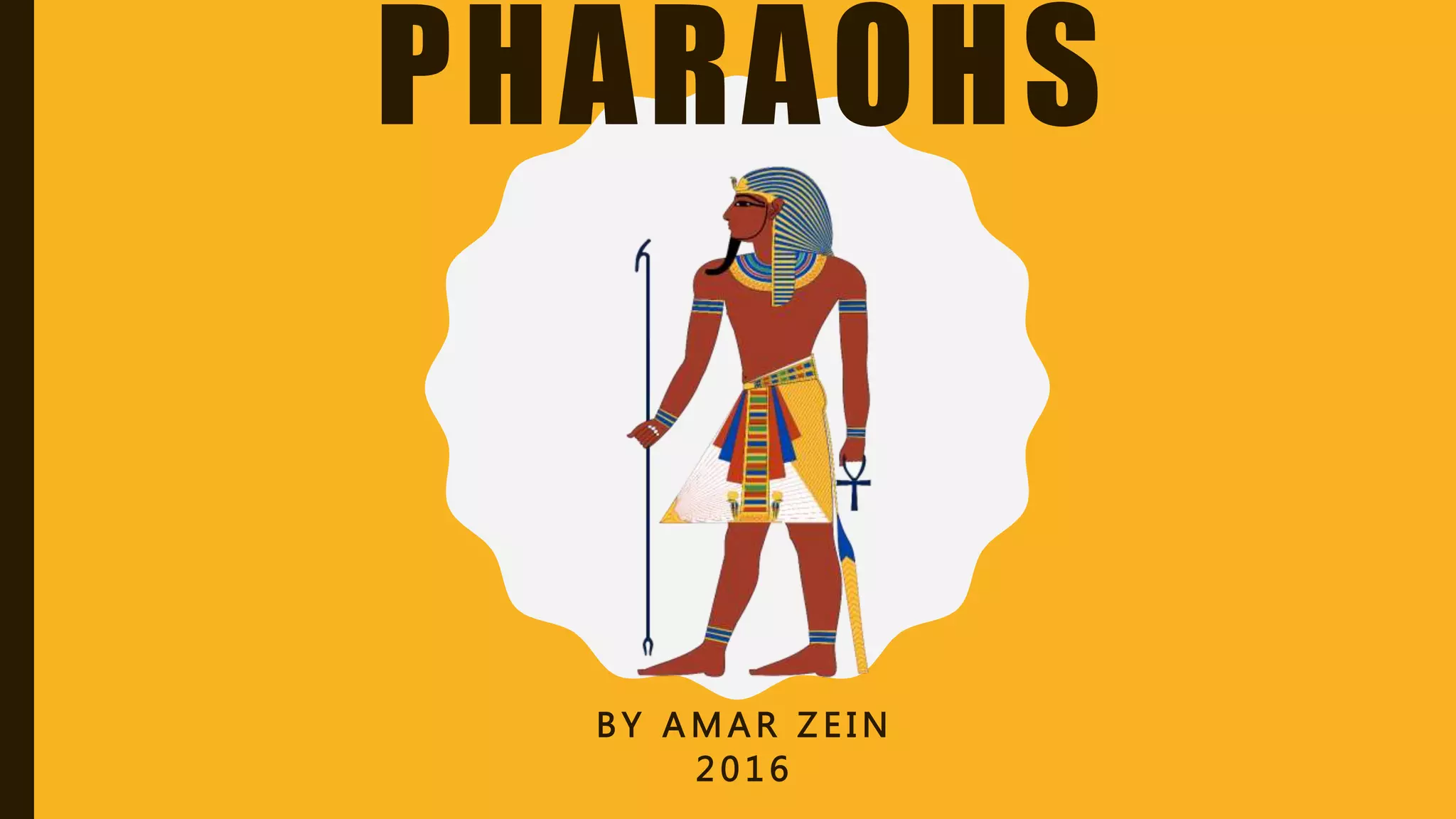
PHARAOHS
B Y A M A R Z E I N
2 0 1 6
WHO ARE PHARAOHS?
• The Pharaoh in ancient Egypt was the political and religious
leader of the people and held the titles 'Lord of the Two
Lands’ and 'High Priest of Every Temple’. The word 'pharaoh’
is the Greek form of the Egyptian 'pero’ or 'per-a-a’, which
was the name for the royal residence. The name of the
residence became associated with the ruler and, in time, was
used exclusively for the leader of the people.
ALPHABET
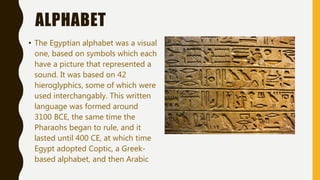
• The Egyptian alphabet was a visual
one, based on symbols which each
have a picture that represented a
sound. It was based on 42
hieroglyphics, some of which were
used interchangably. This written
language was formed around
3100 BCE, the same time the
Pharaohs began to rule, and it
lasted until 400 CE, at which time
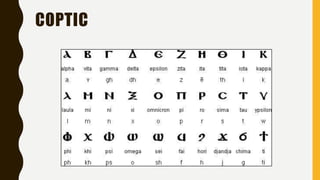
Egypt adopted Coptic, a Greek-
based alphabet, and then Arabic
COPTIC
CLOTHINGS
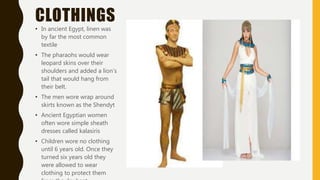
• In ancient Egypt, linen was
by far the most common
textile
• The pharaohs would wear
leopard skins over their
shoulders and added a lion’s
tail that would hang from
their belt.
• The men wore wrap around
skirts known as the Shendyt
• Ancient Egyptian women
often wore simple sheath
dresses called kalasiris
• Children wore no clothing
until 6 years old. Once they
turned six years old they
were allowed to wear
clothing to protect them
RELIGION
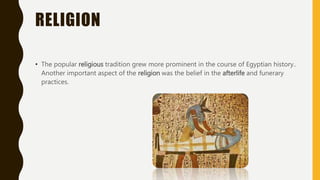
• The popular religious tradition grew more prominent in the course of Egyptian history..
Another important aspect of the religion was the belief in the afterlife and funerary
practices.
PYRAMIDS
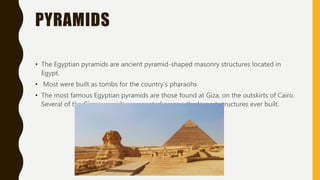
• The Egyptian pyramids are ancient pyramid-shaped masonry structures located in
Egypt.
• Most were built as tombs for the country's pharaohs
• The most famous Egyptian pyramids are those found at Giza, on the outskirts of Cairo.
Several of the Giza pyramids are counted among the largest structures ever built.
Pharaohs

Pharaohs

  • 1.
    PHARAOHS B Y AM A R Z E I N 2 0 1 6
  • 2.
    WHO ARE PHARAOHS? •The Pharaoh in ancient Egypt was the political and religious leader of the people and held the titles 'Lord of the Two Lands’ and 'High Priest of Every Temple’. The word 'pharaoh’ is the Greek form of the Egyptian 'pero’ or 'per-a-a’, which was the name for the royal residence. The name of the residence became associated with the ruler and, in time, was used exclusively for the leader of the people.
  • 5.
    ALPHABET • The Egyptianalphabet was a visual one, based on symbols which each have a picture that represented a sound. It was based on 42 hieroglyphics, some of which were used interchangably. This written language was formed around 3100 BCE, the same time the Pharaohs began to rule, and it lasted until 400 CE, at which time Egypt adopted Coptic, a Greek- based alphabet, and then Arabic
  • 6.
  • 7.
    CLOTHINGS • In ancientEgypt, linen was by far the most common textile • The pharaohs would wear leopard skins over their shoulders and added a lion’s tail that would hang from their belt. • The men wore wrap around skirts known as the Shendyt • Ancient Egyptian women often wore simple sheath dresses called kalasiris • Children wore no clothing until 6 years old. Once they turned six years old they were allowed to wear clothing to protect them
  • 9.
    RELIGION • The popularreligious tradition grew more prominent in the course of Egyptian history.. Another important aspect of the religion was the belief in the afterlife and funerary practices.
  • 11.
    PYRAMIDS • The Egyptianpyramids are ancient pyramid-shaped masonry structures located in Egypt. • Most were built as tombs for the country's pharaohs • The most famous Egyptian pyramids are those found at Giza, on the outskirts of Cairo. Several of the Giza pyramids are counted among the largest structures ever built.