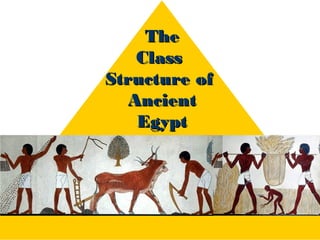
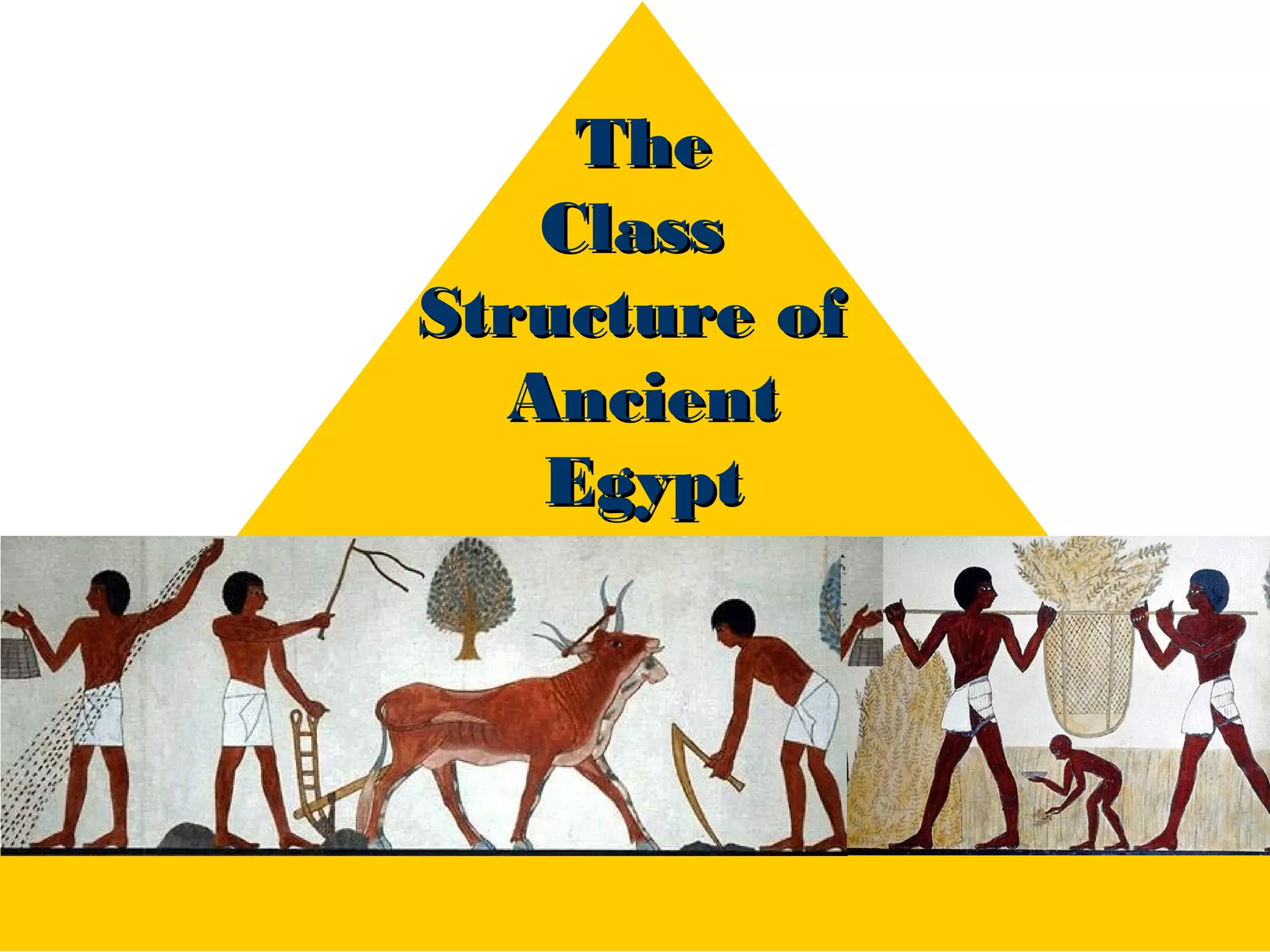
TThhee 
CCllaassss 
SSttrruuccttuurree ooff 
AAnncciieenntt 
EEggyypptt
Egyptian Life 
Class Structure: 
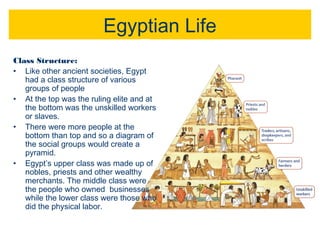
• Like other ancient societies, Egypt 
had a class structure of various 
groups of people 
• At the top was the ruling elite and at 
the bottom was the unskilled workers 
or slaves. 
• There were more people at the 
bottom than top and so a diagram of 
the social groups would create a 
pyramid. 
• Egypt’s upper class was made up of 
nobles, priests and other wealthy 
merchants. The middle class were 
the people who owned businesses 
while the lower class were those who 
did the physical labor.
Pharaoh 
• Born into being the ruler of the WORLD! 
• The Pharaohs were the Kings & Queens of 
Egypt. 
• They were the head of government and high 
priest of every temple. 
• The Pharaoh owned all of Egypt. 
• He or she decided what was right or what was 
wrong and their word was law. 
• The people of Egypt considered the pharaoh 
to be half-human and half-god. 
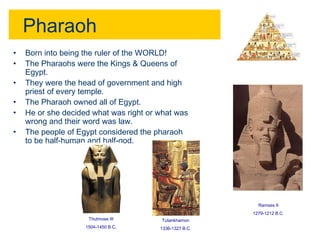
Thutmose III 
1504-1450 B.C. 
Tutankhamon 
1336-1327 B.C. 
Ramses II 
1279-1212 B.C.
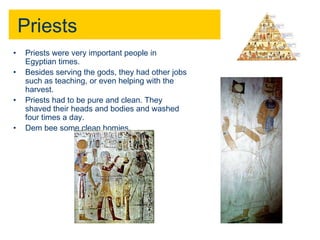
Priests 
• Priests were very important people in 
Egyptian times. 
• Besides serving the gods, they had other jobs 
such as teaching, or even helping with the 
harvest. 
• Priests had to be pure and clean. They 
shaved their heads and bodies and washed 
four times a day. 
• Dem bee some clean homies.
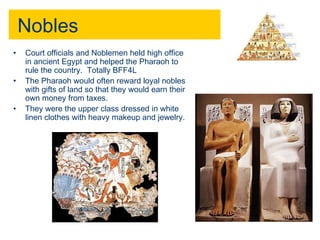
Nobles 
• Court officials and Noblemen held high office 
in ancient Egypt and helped the Pharaoh to 
rule the country. Totally BFF4L 
• The Pharaoh would often reward loyal nobles 
with gifts of land so that they would earn their 
own money from taxes. 
• They were the upper class dressed in white 
linen clothes with heavy makeup and jewelry.
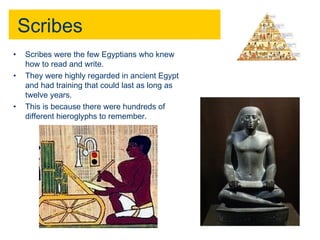
Scribes 
• Scribes were the few Egyptians who knew 
how to read and write. 
• They were highly regarded in ancient Egypt 
and had training that could last as long as 
twelve years. 
• This is because there were hundreds of 
different hieroglyphs to remember.
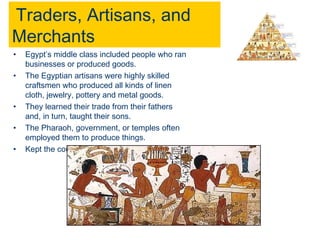
Traders, Artisans, and 
Merchants 
• Egypt’s middle class included people who ran 
businesses or produced goods. 
• The Egyptian artisans were highly skilled 
craftsmen who produced all kinds of linen 
cloth, jewelry, pottery and metal goods. 
• They learned their trade from their fathers 
and, in turn, taught their sons. 
• The Pharaoh, government, or temples often 
employed them to produce things. 
• Kept the country running and money flowing.
Farmers 
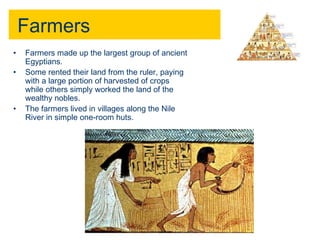
• Farmers made up the largest group of ancient 
Egyptians. 
• Some rented their land from the ruler, paying 
with a large portion of harvested of crops 
while others simply worked the land of the 
wealthy nobles. 
• The farmers lived in villages along the Nile 
River in simple one-room huts.
Laborers and slaves 
(unskilled workers) 
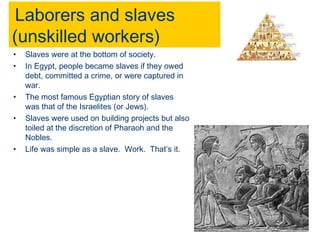
• Slaves were at the bottom of society. 
• In Egypt, people became slaves if they owed 
debt, committed a crime, or were captured in 
war. 
• The most famous Egyptian story of slaves 
was that of the Israelites (or Jews). 
• Slaves were used on building projects but also 
toiled at the discretion of Pharaoh and the 
Nobles. 
• Life was simple as a slave. Work. That’s it.
Laborers and slaves 
(unskilled workers) 
• Slaves were at the bottom of society. 
• In Egypt, people became slaves if they owed 
debt, committed a crime, or were captured in 
war. 
• The most famous Egyptian story of slaves 
was that of the Israelites (or Jews). 
• Slaves were used on building projects but also 
toiled at the discretion of Pharaoh and the 
Nobles. 
• Life was simple as a slave. Work. That’s it.

Class structure of ancient egypt powerpoint

  • 1.
    TThhee CCllaassss SSttrruuccttuurreeooff AAnncciieenntt EEggyypptt
  • 2.
    Egyptian Life ClassStructure: • Like other ancient societies, Egypt had a class structure of various groups of people • At the top was the ruling elite and at the bottom was the unskilled workers or slaves. • There were more people at the bottom than top and so a diagram of the social groups would create a pyramid. • Egypt’s upper class was made up of nobles, priests and other wealthy merchants. The middle class were the people who owned businesses while the lower class were those who did the physical labor.
  • 3.
    Pharaoh • Borninto being the ruler of the WORLD! • The Pharaohs were the Kings & Queens of Egypt. • They were the head of government and high priest of every temple. • The Pharaoh owned all of Egypt. • He or she decided what was right or what was wrong and their word was law. • The people of Egypt considered the pharaoh to be half-human and half-god. Thutmose III 1504-1450 B.C. Tutankhamon 1336-1327 B.C. Ramses II 1279-1212 B.C.
  • 4.
    Priests • Priestswere very important people in Egyptian times. • Besides serving the gods, they had other jobs such as teaching, or even helping with the harvest. • Priests had to be pure and clean. They shaved their heads and bodies and washed four times a day. • Dem bee some clean homies.
  • 5.
    Nobles • Courtofficials and Noblemen held high office in ancient Egypt and helped the Pharaoh to rule the country. Totally BFF4L • The Pharaoh would often reward loyal nobles with gifts of land so that they would earn their own money from taxes. • They were the upper class dressed in white linen clothes with heavy makeup and jewelry.
  • 6.
    Scribes • Scribeswere the few Egyptians who knew how to read and write. • They were highly regarded in ancient Egypt and had training that could last as long as twelve years. • This is because there were hundreds of different hieroglyphs to remember.
  • 7.
    Traders, Artisans, and Merchants • Egypt’s middle class included people who ran businesses or produced goods. • The Egyptian artisans were highly skilled craftsmen who produced all kinds of linen cloth, jewelry, pottery and metal goods. • They learned their trade from their fathers and, in turn, taught their sons. • The Pharaoh, government, or temples often employed them to produce things. • Kept the country running and money flowing.
  • 8.
    Farmers • Farmersmade up the largest group of ancient Egyptians. • Some rented their land from the ruler, paying with a large portion of harvested of crops while others simply worked the land of the wealthy nobles. • The farmers lived in villages along the Nile River in simple one-room huts.
  • 9.
    Laborers and slaves (unskilled workers) • Slaves were at the bottom of society. • In Egypt, people became slaves if they owed debt, committed a crime, or were captured in war. • The most famous Egyptian story of slaves was that of the Israelites (or Jews). • Slaves were used on building projects but also toiled at the discretion of Pharaoh and the Nobles. • Life was simple as a slave. Work. That’s it.
  • 10.
    Laborers and slaves (unskilled workers) • Slaves were at the bottom of society. • In Egypt, people became slaves if they owed debt, committed a crime, or were captured in war. • The most famous Egyptian story of slaves was that of the Israelites (or Jews). • Slaves were used on building projects but also toiled at the discretion of Pharaoh and the Nobles. • Life was simple as a slave. Work. That’s it.