by: SharaMay M.Anacay
BSE - English
42 Nomes – No. of province
*norms = province
• 22 – no. of nomes in the upper part
(south)
• 20 – no. of nomes in the lower part
(north)
*upper part – south
*lower part – north
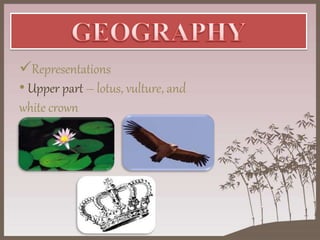
Representations
• Upper part – lotus, vulture, and
white crown
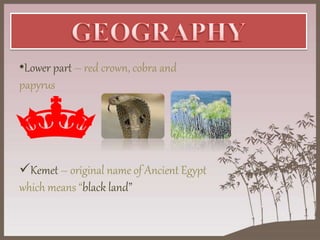
•Lower part – red crown, cobra and
papyrus
Kemet – original name of Ancient Egypt
which means “black land”
3, 100 BC
- Civilized; 1st Dynasty; Narmor – “Menes”-
founder
2,500 BC
- The 2nd Dynasty; practice of
mummification
*Saqqara – the location of the 1st stone pyramid
that was built by Zoser.
2,000 BC
- Egypt colonized to expand their land
1,540 BC
*1st female pharaoh – Hatu
Shepsu; she wanted peace rather than
war.
*Thutmose I – husband and half
brother of Hatu Shepsu. He ruled Egypt
for 4 yrs.
1,353 BC
- practice of Monotheism –
worshipping one God.
*Amenhotep IV – change his
name to Aken(means other gods)
*Akenhotep – from the name of
god he wanted to change
13th Century
- beginning of Ramses(Pharaoh on
Moses time.
332 BC
*Alexander the Great – conquered
Egypt and adapted their beliefs.
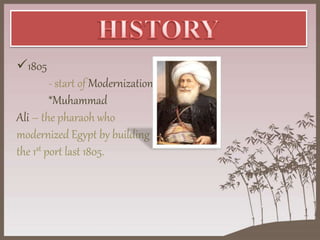
1805
- start of Modernization
*Muhammad
Ali – the pharaoh who
modernized Egypt by building
the 1st port last 1805.
*Their Society was organized
Hierarchy of society in Egypt
1. Pharaoh
2. Vizier
3. Priesthood
4. Army General
5. Officials
6. Mayors
7. Working Class
8. Criminals/ Slaves
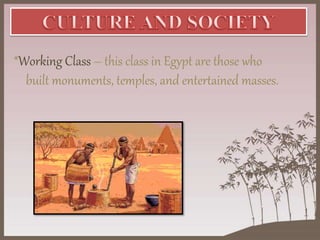
*Working Class – this class in Egypt are those who
built monuments, temples, and entertained masses.
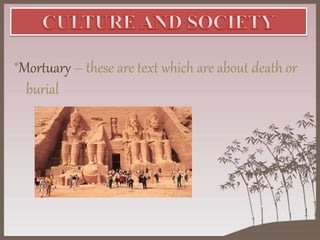
*Mortuary – these are text which are about death or
burial
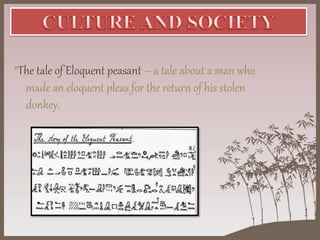
*The tale of Eloquent peasant – a tale about a man who
made an eloquent pleas for the return of his stolen
donkey.
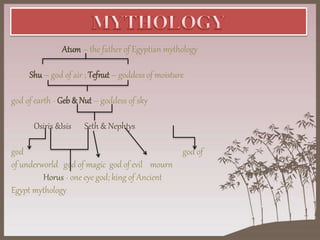
Atum – the father of Egyptian mythology
Shu – god of air ; Tefnut – goddess of moisture
god of earth - Geb & Nut – goddess of sky
Osiris &Isis Seth & Nephtys
god god of
of underworld god of magic god of evil mourn
Horus - one eye god; king of Ancient
Egypt mythology
*Seth killed King Osiris and Osiris went
to underworld
*Horus killed Seth
*R a – god of sun
*Baphomet – half ram and half man
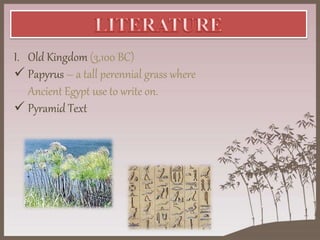
I. Old Kingdom (3,100 BC)
 Papyrus – a tall perennial grass where
Ancient Egypt use to write on.
 Pyramid Text
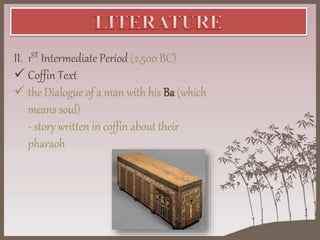
II. 1ST Intermediate Period (2,500 BC)
 Coffin Text
 the Dialogue of a man with his Ba (which
means soul)
- story written in coffin about their
pharaoh
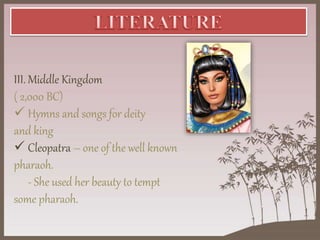
III. Middle Kingdom
( 2,000 BC)
 Hymns and songs for deity
and king
 Cleopatra – one of the well known
pharaoh.
- She used her beauty to tempt
some pharaoh.
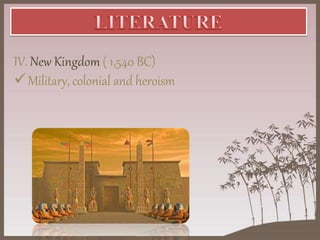
IV. New Kingdom ( 1,540 BC)
Military, colonial and heroism
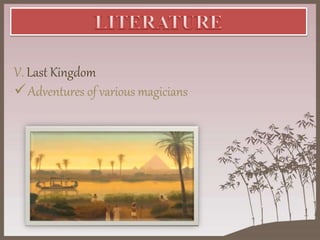
V. Last Kingdom
Adventures of various magicians
THANK YOU
FOR
WATCHING!


Egyptian literature ppt

  • 1.
  • 2.
    42 Nomes –No. of province *norms = province • 22 – no. of nomes in the upper part (south) • 20 – no. of nomes in the lower part (north) *upper part – south *lower part – north
  • 3.
    Representations • Upper part– lotus, vulture, and white crown
  • 4.
    •Lower part –red crown, cobra and papyrus Kemet – original name of Ancient Egypt which means “black land”
  • 5.
    3, 100 BC -Civilized; 1st Dynasty; Narmor – “Menes”- founder 2,500 BC - The 2nd Dynasty; practice of mummification *Saqqara – the location of the 1st stone pyramid that was built by Zoser. 2,000 BC - Egypt colonized to expand their land
  • 6.
    1,540 BC *1st femalepharaoh – Hatu Shepsu; she wanted peace rather than war. *Thutmose I – husband and half brother of Hatu Shepsu. He ruled Egypt for 4 yrs.
  • 7.
    1,353 BC - practiceof Monotheism – worshipping one God. *Amenhotep IV – change his name to Aken(means other gods) *Akenhotep – from the name of god he wanted to change
  • 8.
    13th Century - beginningof Ramses(Pharaoh on Moses time. 332 BC *Alexander the Great – conquered Egypt and adapted their beliefs.
  • 9.
    1805 - start ofModernization *Muhammad Ali – the pharaoh who modernized Egypt by building the 1st port last 1805.
  • 10.
    *Their Society wasorganized Hierarchy of society in Egypt 1. Pharaoh 2. Vizier 3. Priesthood 4. Army General 5. Officials 6. Mayors 7. Working Class 8. Criminals/ Slaves
  • 11.
    *Working Class –this class in Egypt are those who built monuments, temples, and entertained masses.
  • 12.
    *Mortuary – theseare text which are about death or burial
  • 13.
    *The tale ofEloquent peasant – a tale about a man who made an eloquent pleas for the return of his stolen donkey.
  • 14.
    Atum – thefather of Egyptian mythology Shu – god of air ; Tefnut – goddess of moisture god of earth - Geb & Nut – goddess of sky Osiris &Isis Seth & Nephtys god god of of underworld god of magic god of evil mourn Horus - one eye god; king of Ancient Egypt mythology
  • 15.
    *Seth killed KingOsiris and Osiris went to underworld *Horus killed Seth *R a – god of sun *Baphomet – half ram and half man
  • 16.
    I. Old Kingdom(3,100 BC)  Papyrus – a tall perennial grass where Ancient Egypt use to write on.  Pyramid Text
  • 17.
    II. 1ST IntermediatePeriod (2,500 BC)  Coffin Text  the Dialogue of a man with his Ba (which means soul) - story written in coffin about their pharaoh
  • 18.
    III. Middle Kingdom (2,000 BC)  Hymns and songs for deity and king  Cleopatra – one of the well known pharaoh. - She used her beauty to tempt some pharaoh.
  • 19.
    IV. New Kingdom( 1,540 BC) Military, colonial and heroism
  • 20.
    V. Last Kingdom Adventuresof various magicians
  • 21.