Blended Learning  and e-Environments Tony Reeves UCA Learning Technologist PGC Session 1.3
Investigate ways in which  technology can support learning Explore PGC course area Consider how you might incorporate inclusive, online activities into your teaching practice Objectives of this session
A place accessed by computer where learning can occur? A ‘virtual’ space where interaction can take place? A room full of computers..? Personal learning environment What is an ‘e-Environment’?
An approach to learning and teaching which “ combines and aligns learning undertaken in face-to-face sessions with learning opportunities created online”  University of Wolverhampton Using technology to  support inclusive learning  increase accessibility  increase learning opportunities What is ‘blended learning’?
How might an online space support inclusive practice? Enabling disabled students to participate in group work more equally Encouraging less confident students to participate  e.g. (Nonnecke & Preece, 2001) “Why Lurkers Lurk” Legitimate peripheral participation  – (Lave & Wenger, 1991) Communities of practice (Wenger, 1998) “ [The blog] brings the feeling of community closer, which is very important on a course that is considered to be dominated by bedroom dwelling nerds” 1   UCA CGArts graduate Fostering inclusive practice 1. http://ucacommunities.blogspot.com
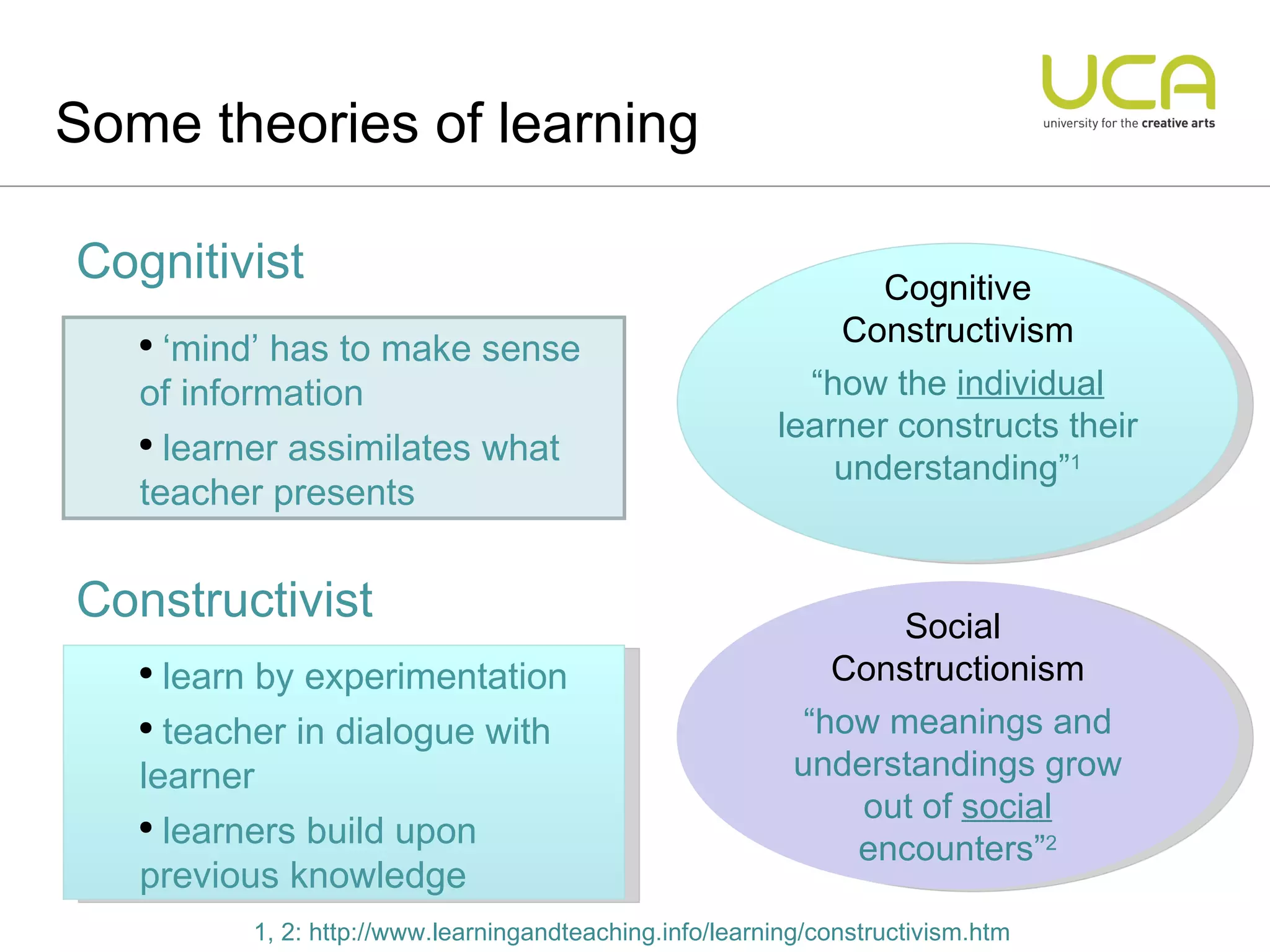
Some theories of learning learn by experimentation teacher in dialogue with  learner learners build upon  previous knowledge ‘ mind’ has to make sense of information learner assimilates what teacher presents Cognitive Constructivism “ how the  individual  learner constructs their understanding” 1 Social  Constructionism “ how meanings and understandings grow out of  social  encounters” 2 1, 2: http://www.learningandteaching.info/learning/constructivism.htm Cognitivist Constructivist
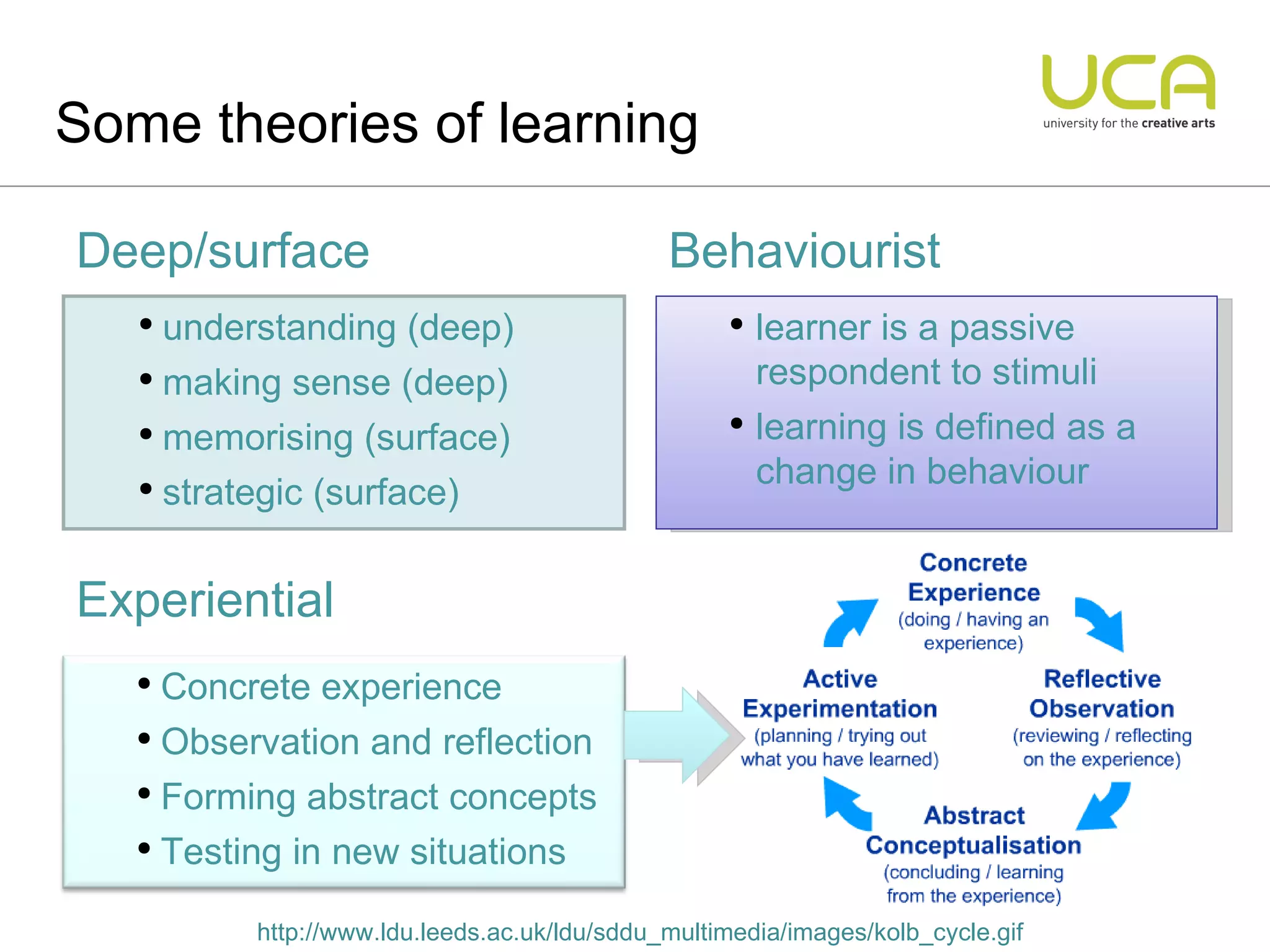
Some theories of learning learner is a passive  respondent to stimuli learning is defined as a change in behaviour understanding (deep) making sense (deep) memorising (surface) strategic (surface) http://www.ldu.leeds.ac.uk/ldu/sddu_multimedia/images/kolb_cycle.gif Deep/surface Experiential Behaviourist Concrete experience Observation and reflection Forming abstract concepts Testing in new situations
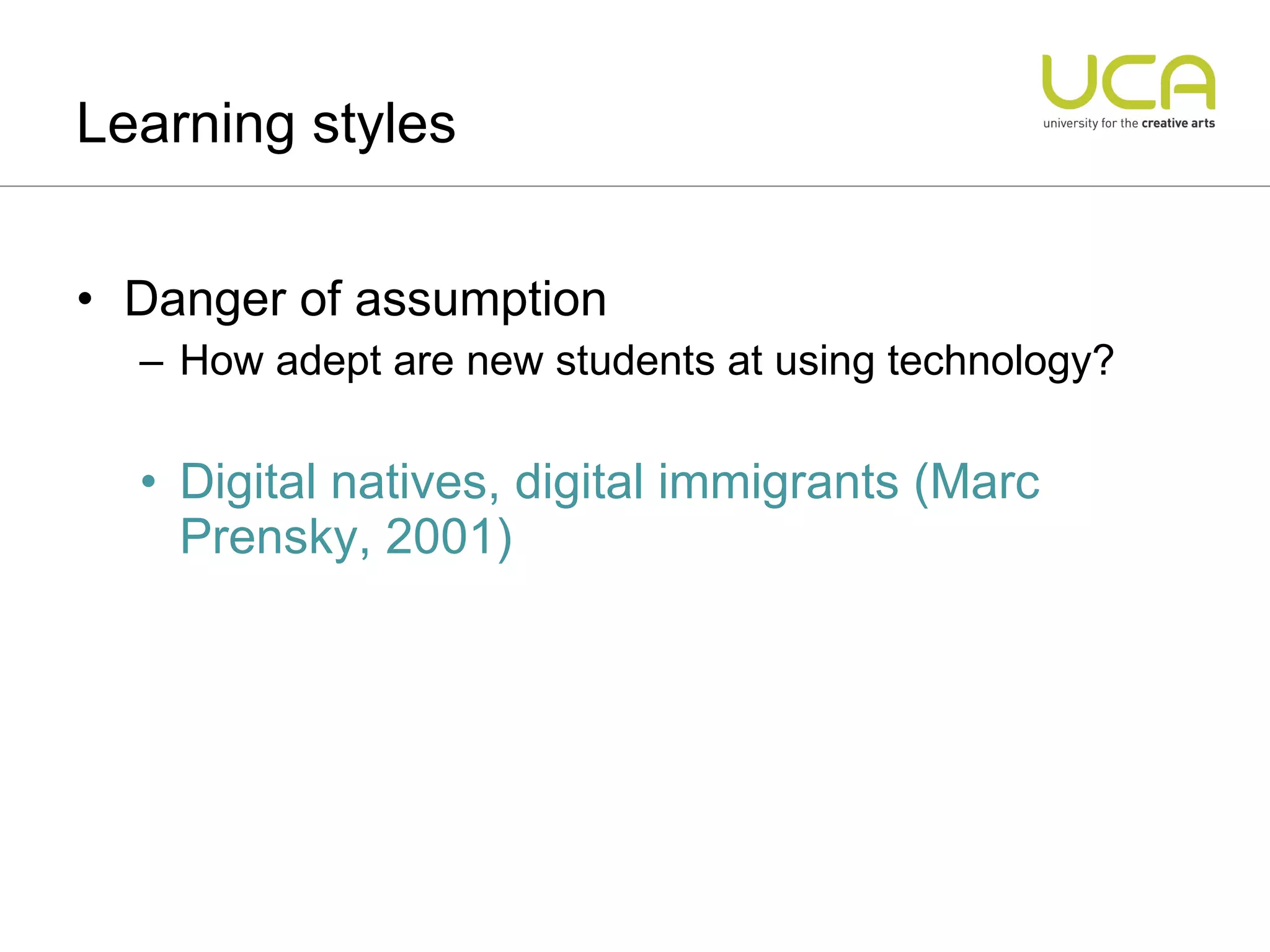
Danger of assumption How adept are new students at using technology? Digital natives, digital immigrants (Marc Prensky, 2001) Learning styles
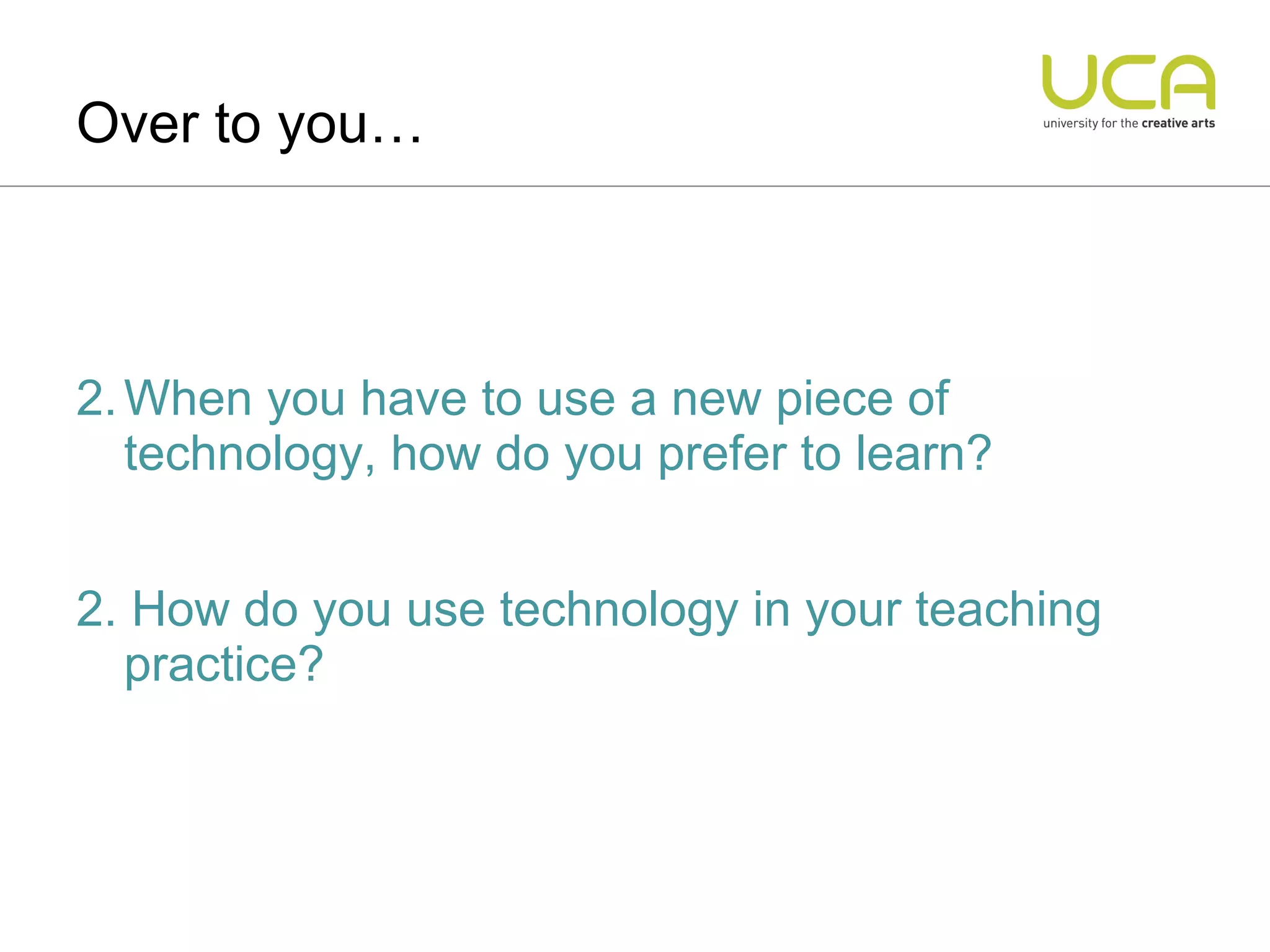
When you have to use a new piece of technology, how do you prefer to learn? 2. How do you use technology in your teaching practice? Over to you…
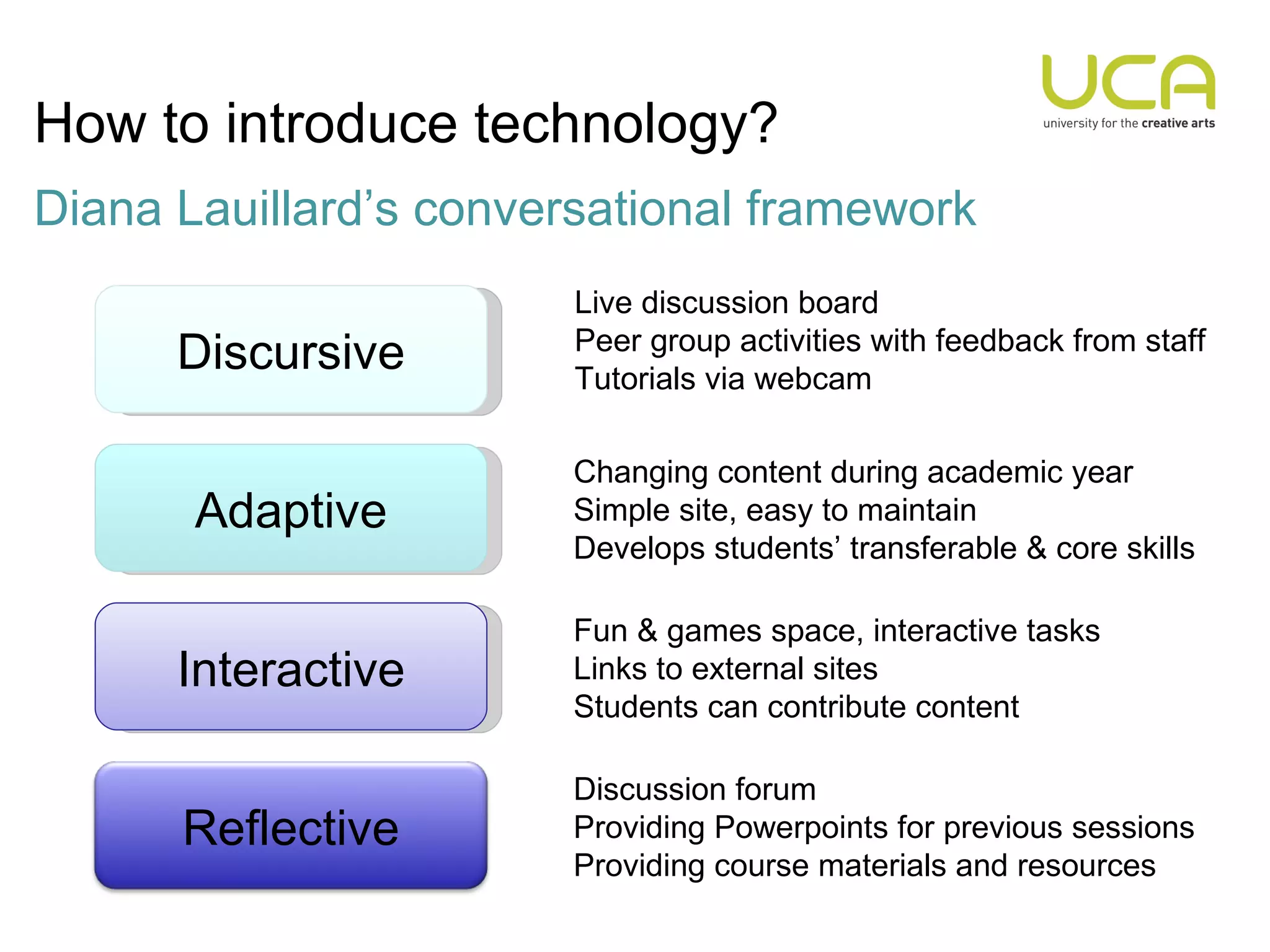
How to introduce technology? Diana Lauillard’s conversational framework Adaptive Interactive Discursive Live discussion board Peer group activities with feedback from staff Tutorials via webcam Changing content during academic year Simple site, easy to maintain Develops students’ transferable & core skills Fun & games space, interactive tasks Links to external sites Students can contribute content Discussion forum Providing Powerpoints for previous sessions Providing course materials and resources Reflective
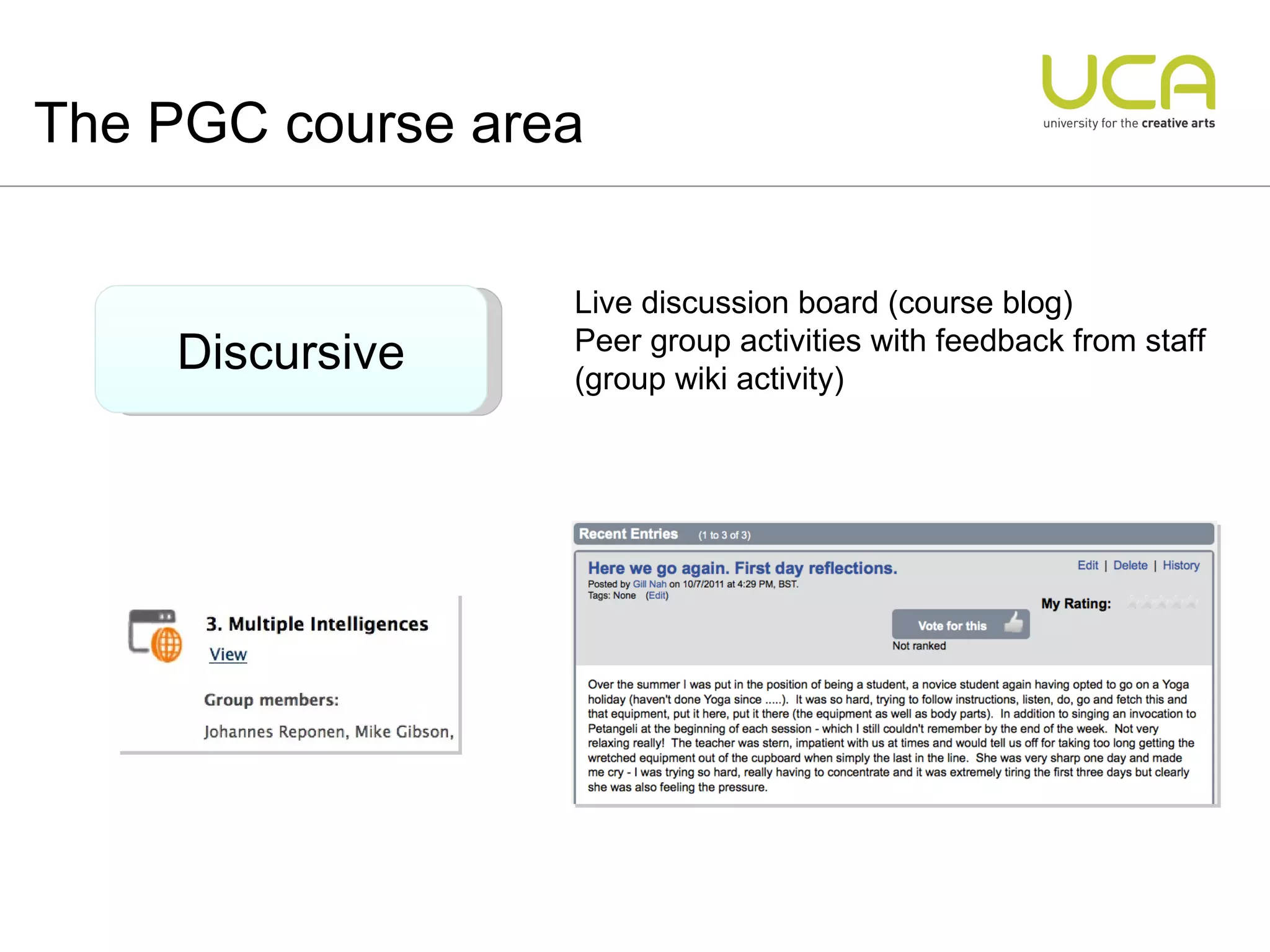
The PGC course area Discursive Live discussion board (course blog) Peer group activities with feedback from staff (group wiki activity)
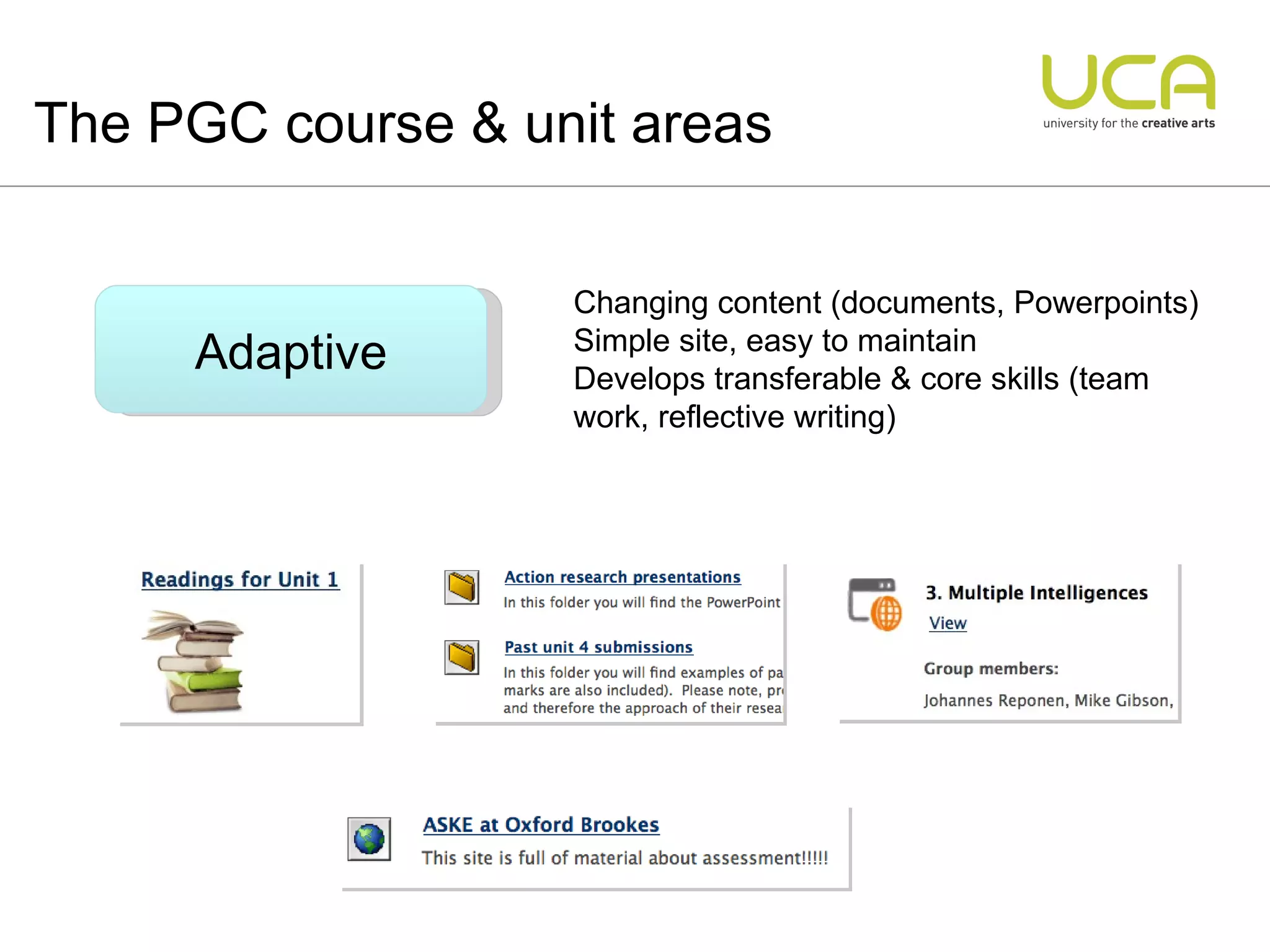
The PGC course & unit areas Adaptive Changing content (documents, Powerpoints) Simple site, easy to maintain Develops transferable & core skills (team work, reflective writing)
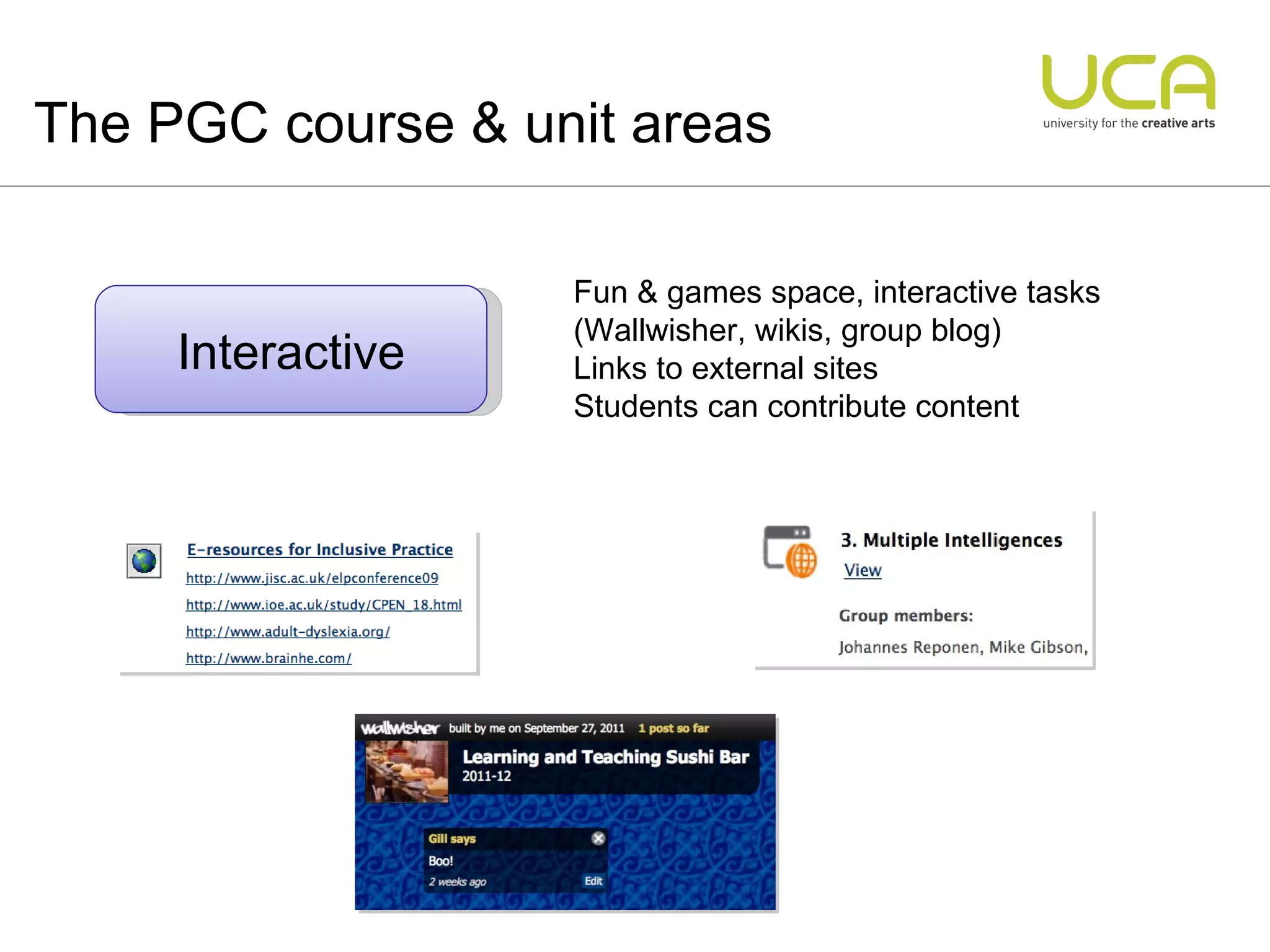
The PGC course & unit areas Interactive Fun & games space, interactive tasks (Wallwisher, wikis, group blog) Links to external sites Students can contribute content
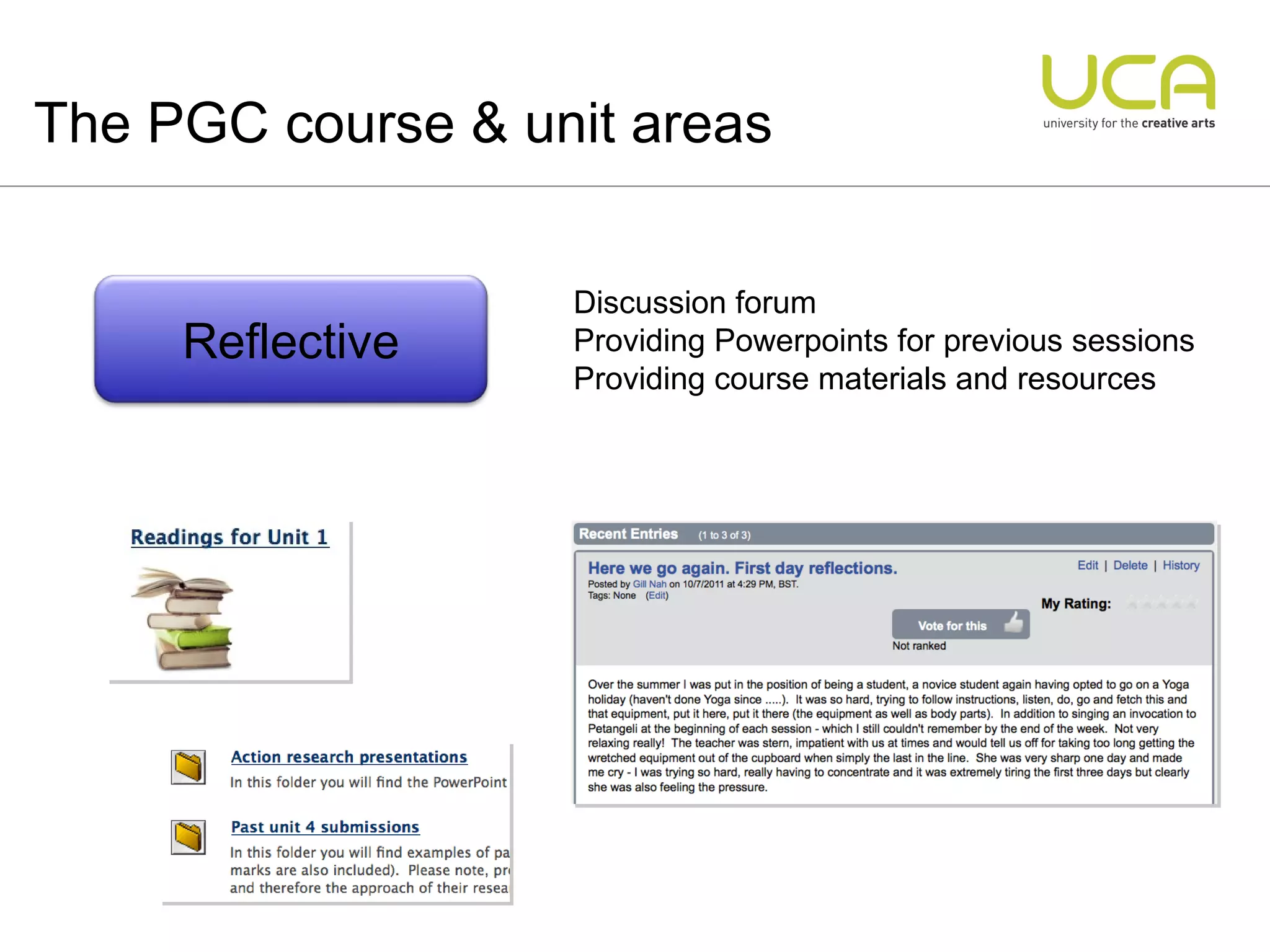
The PGC course & unit areas Discussion forum Providing Powerpoints for previous sessions Providing course materials and resources Reflective
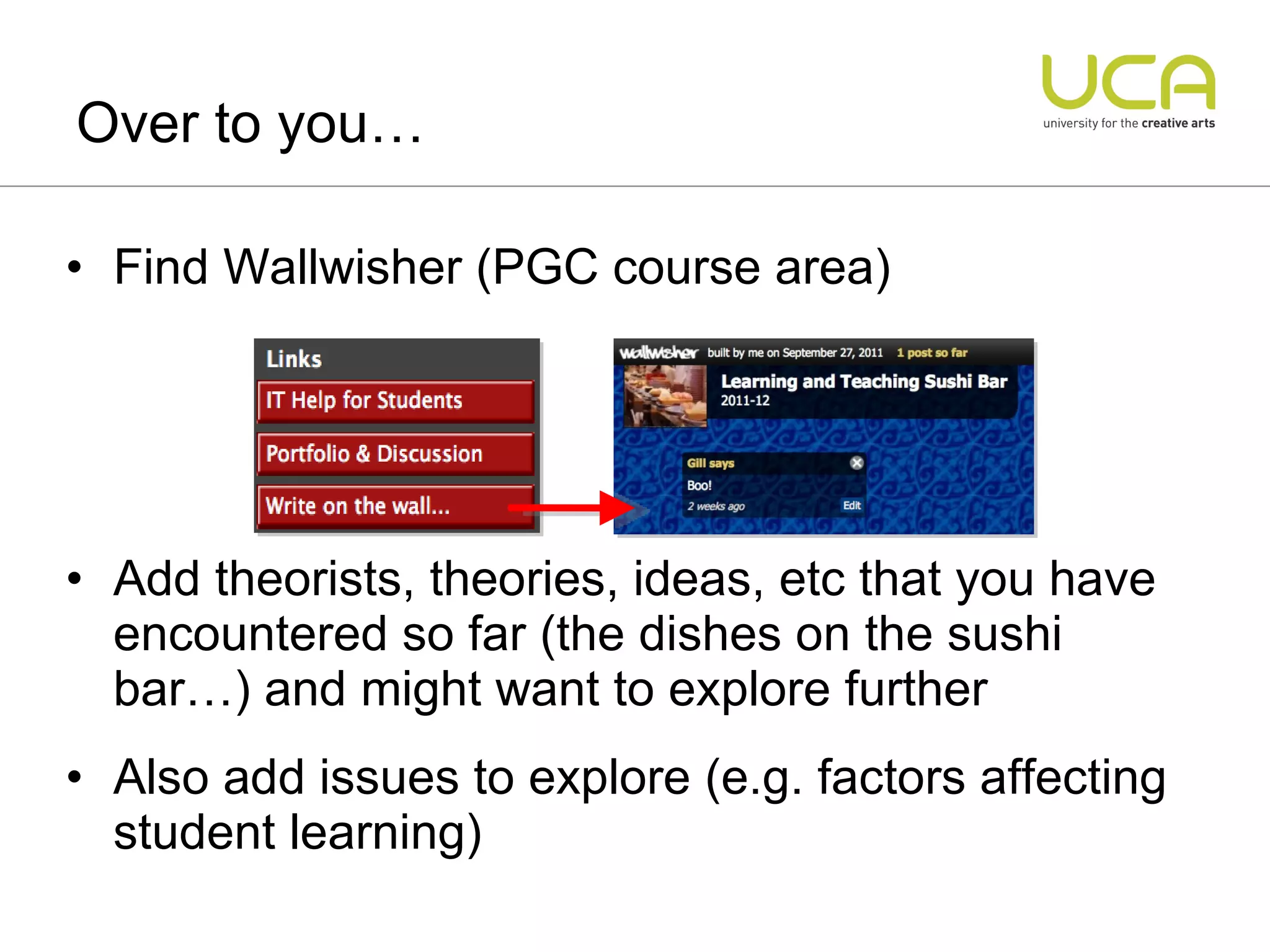
Over to you… Find Wallwisher (PGC course area) Add theorists, theories, ideas, etc that you have encountered so far (the dishes on the sushi bar…) and might want to explore further  Also add issues to explore (e.g. factors affecting student learning)
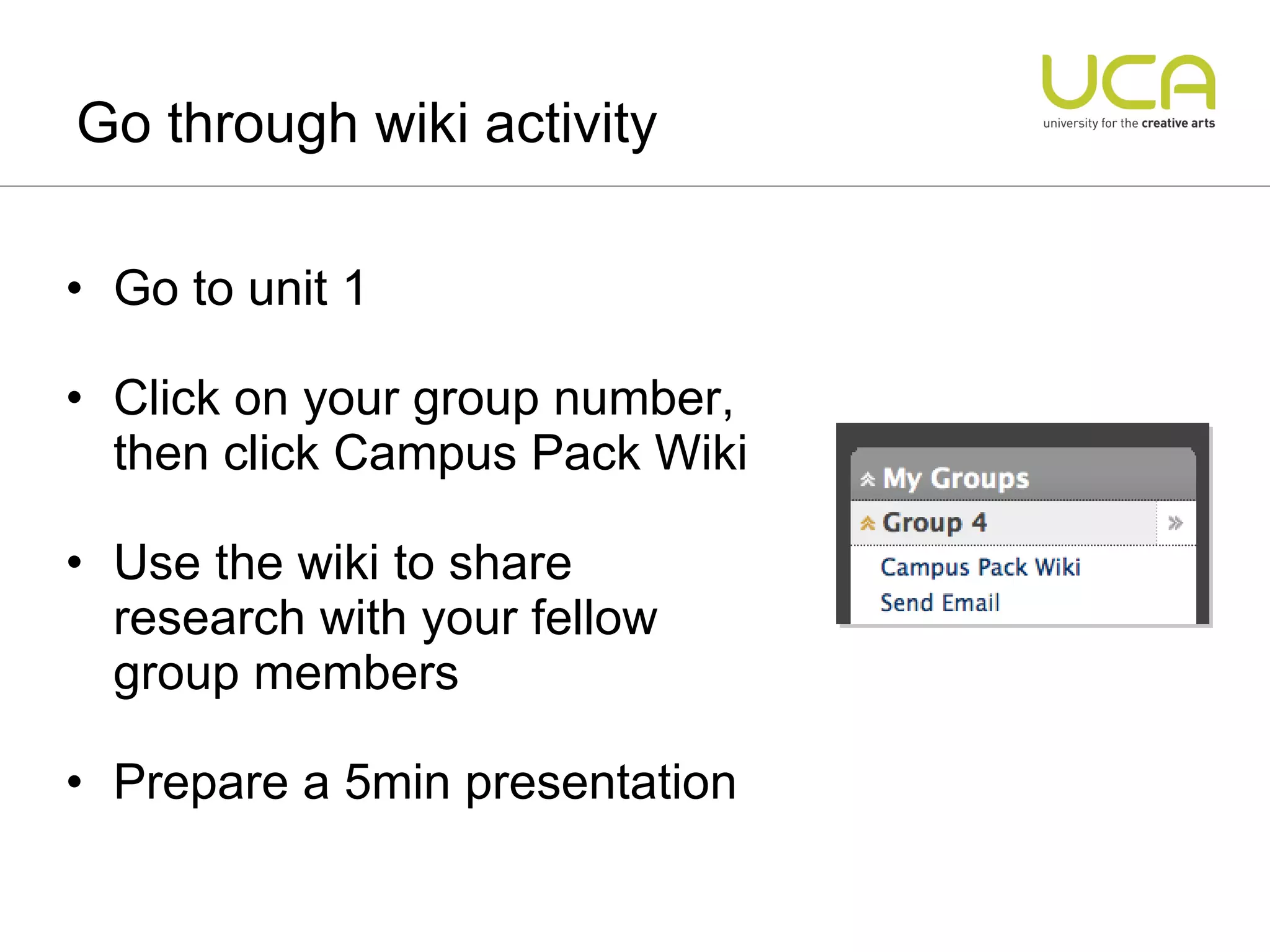
Go through wiki activity Go to unit 1 Click on your group number, then click Campus Pack Wiki Use the wiki to share research with your fellow group members Prepare a 5min presentation
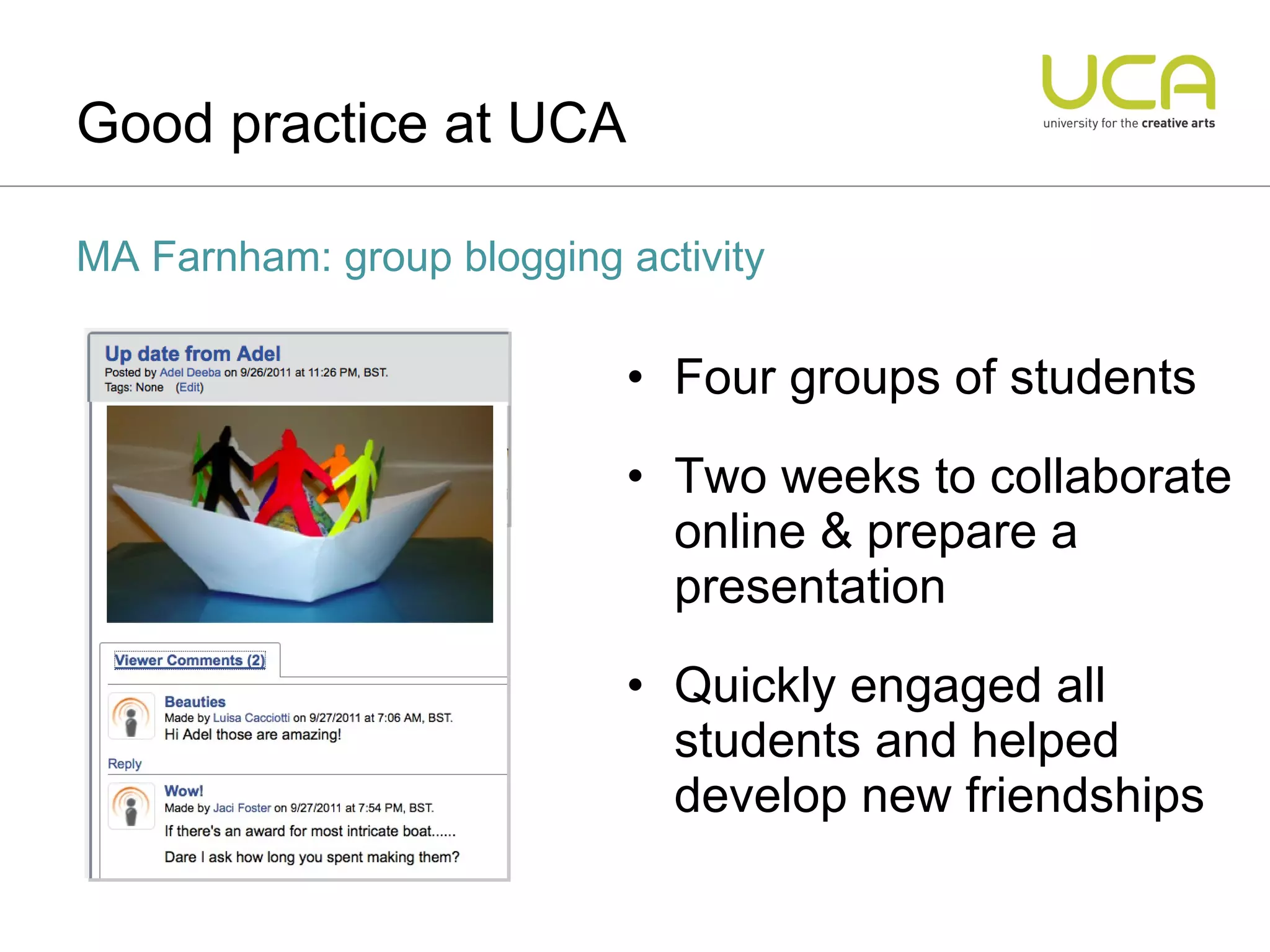
Four groups of students Two weeks to collaborate online & prepare a presentation Quickly engaged all students and helped develop new friendships Good practice at UCA MA Farnham: group blogging activity
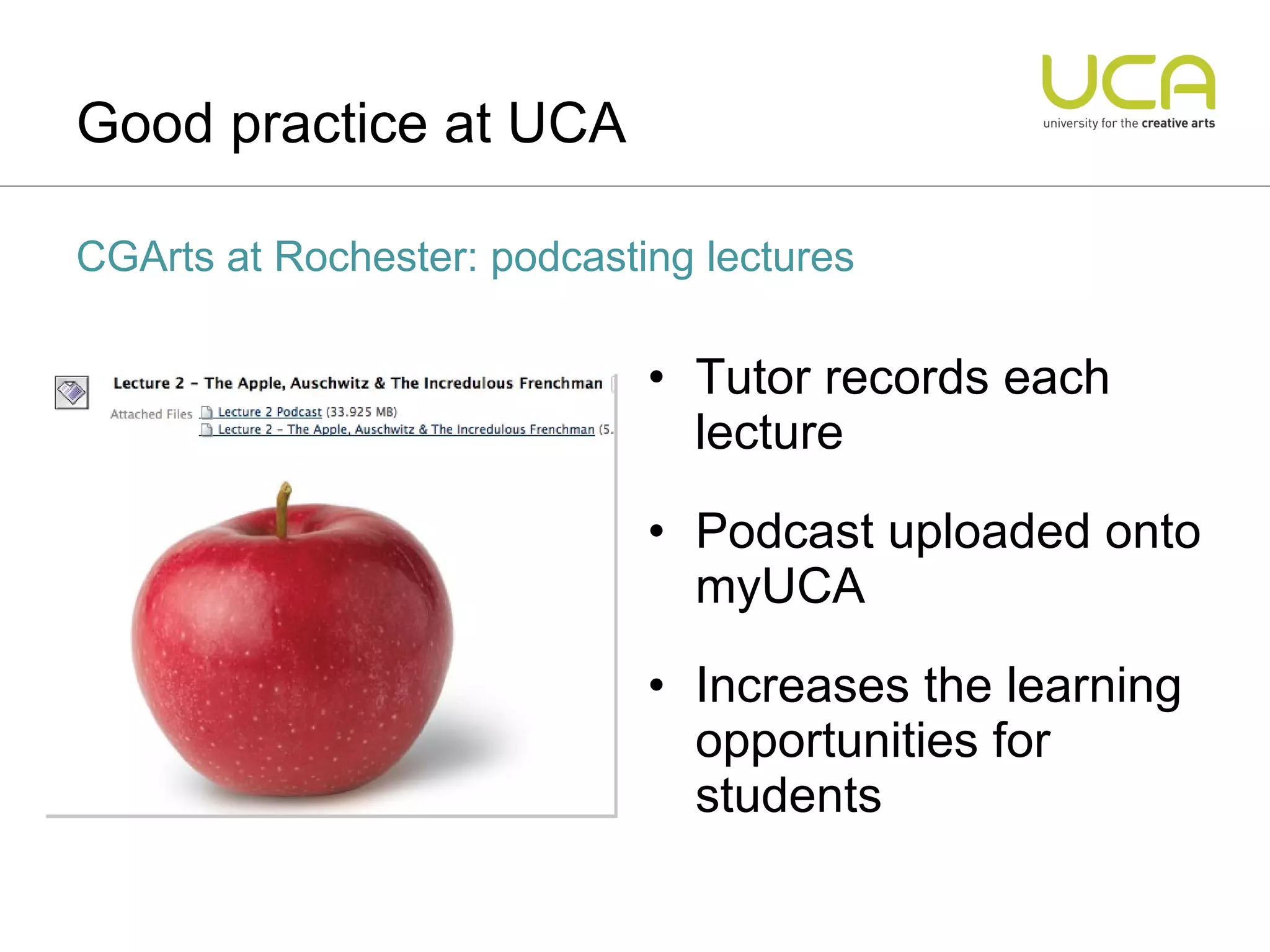
Tutor records each lecture Podcast uploaded onto myUCA Increases the learning opportunities for students Good practice at UCA CGArts at Rochester: podcasting lectures
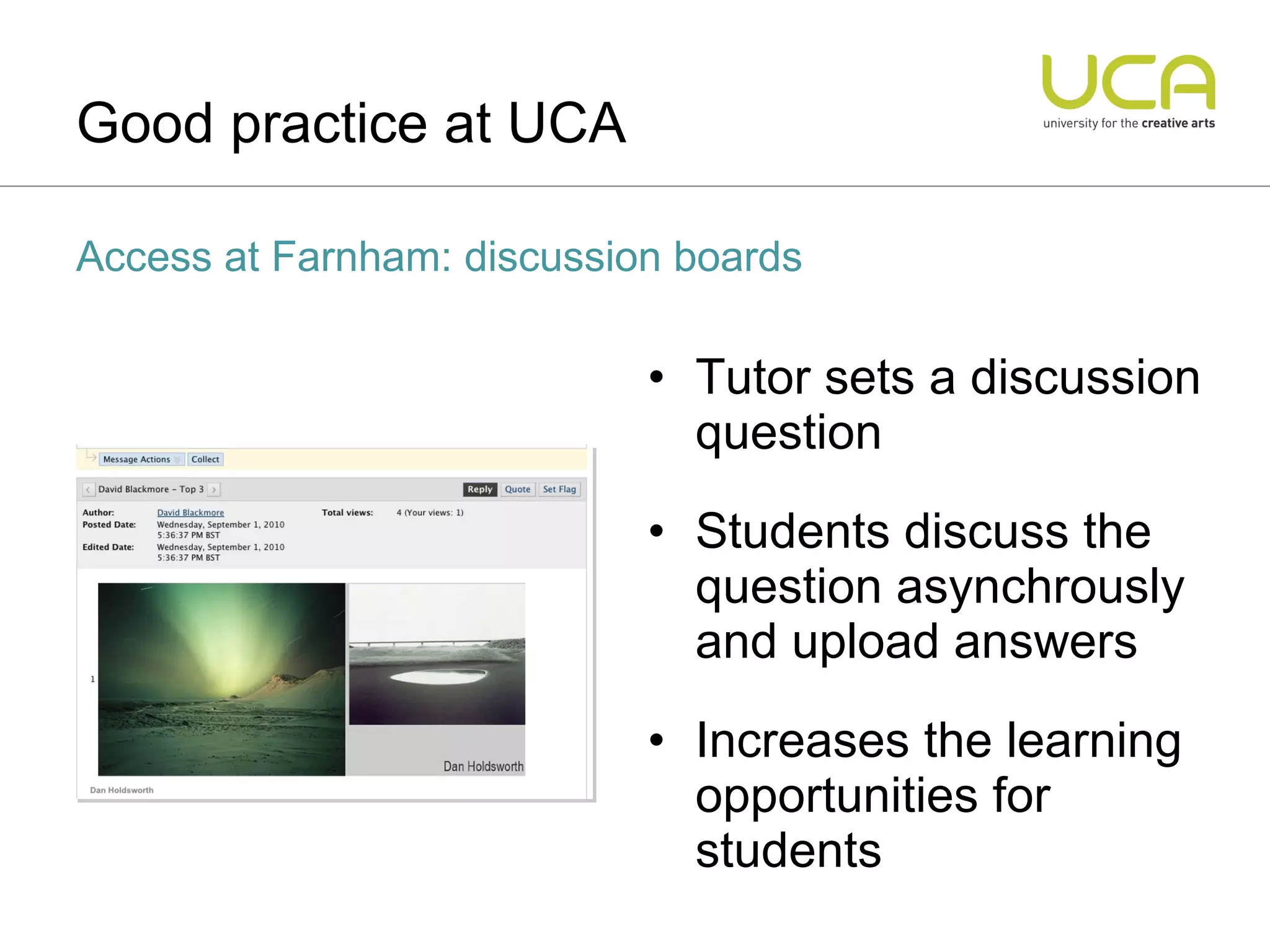
Tutor sets a discussion question Students discuss the question asynchrously and upload answers Increases the learning opportunities for students Good practice at UCA Access at Farnham: discussion boards
Turnitin allows tutors to check for plagiarism Encourages students to reference correctly Enables students to submit work online Good practice at UCA CS at Rochester: Turnitin

Pgc session 1.3 oct 2011

  • 1.
    Blended Learning and e-Environments Tony Reeves UCA Learning Technologist PGC Session 1.3
  • 2.
    Investigate ways inwhich technology can support learning Explore PGC course area Consider how you might incorporate inclusive, online activities into your teaching practice Objectives of this session
  • 3.
    A place accessedby computer where learning can occur? A ‘virtual’ space where interaction can take place? A room full of computers..? Personal learning environment What is an ‘e-Environment’?
  • 4.
    An approach tolearning and teaching which “ combines and aligns learning undertaken in face-to-face sessions with learning opportunities created online” University of Wolverhampton Using technology to support inclusive learning increase accessibility increase learning opportunities What is ‘blended learning’?
  • 5.
    How might anonline space support inclusive practice? Enabling disabled students to participate in group work more equally Encouraging less confident students to participate e.g. (Nonnecke & Preece, 2001) “Why Lurkers Lurk” Legitimate peripheral participation – (Lave & Wenger, 1991) Communities of practice (Wenger, 1998) “ [The blog] brings the feeling of community closer, which is very important on a course that is considered to be dominated by bedroom dwelling nerds” 1 UCA CGArts graduate Fostering inclusive practice 1. http://ucacommunities.blogspot.com
  • 6.
    Some theories oflearning learn by experimentation teacher in dialogue with learner learners build upon previous knowledge ‘ mind’ has to make sense of information learner assimilates what teacher presents Cognitive Constructivism “ how the individual learner constructs their understanding” 1 Social Constructionism “ how meanings and understandings grow out of social encounters” 2 1, 2: http://www.learningandteaching.info/learning/constructivism.htm Cognitivist Constructivist
  • 7.
    Some theories oflearning learner is a passive respondent to stimuli learning is defined as a change in behaviour understanding (deep) making sense (deep) memorising (surface) strategic (surface) http://www.ldu.leeds.ac.uk/ldu/sddu_multimedia/images/kolb_cycle.gif Deep/surface Experiential Behaviourist Concrete experience Observation and reflection Forming abstract concepts Testing in new situations
  • 8.
    Danger of assumptionHow adept are new students at using technology? Digital natives, digital immigrants (Marc Prensky, 2001) Learning styles
  • 9.
    When you haveto use a new piece of technology, how do you prefer to learn? 2. How do you use technology in your teaching practice? Over to you…
  • 10.
    How to introducetechnology? Diana Lauillard’s conversational framework Adaptive Interactive Discursive Live discussion board Peer group activities with feedback from staff Tutorials via webcam Changing content during academic year Simple site, easy to maintain Develops students’ transferable & core skills Fun & games space, interactive tasks Links to external sites Students can contribute content Discussion forum Providing Powerpoints for previous sessions Providing course materials and resources Reflective
  • 11.
    The PGC coursearea Discursive Live discussion board (course blog) Peer group activities with feedback from staff (group wiki activity)
  • 12.
    The PGC course& unit areas Adaptive Changing content (documents, Powerpoints) Simple site, easy to maintain Develops transferable & core skills (team work, reflective writing)
  • 13.
    The PGC course& unit areas Interactive Fun & games space, interactive tasks (Wallwisher, wikis, group blog) Links to external sites Students can contribute content
  • 14.
    The PGC course& unit areas Discussion forum Providing Powerpoints for previous sessions Providing course materials and resources Reflective
  • 15.
    Over to you…Find Wallwisher (PGC course area) Add theorists, theories, ideas, etc that you have encountered so far (the dishes on the sushi bar…) and might want to explore further Also add issues to explore (e.g. factors affecting student learning)
  • 16.
    Go through wikiactivity Go to unit 1 Click on your group number, then click Campus Pack Wiki Use the wiki to share research with your fellow group members Prepare a 5min presentation
  • 17.
    Four groups ofstudents Two weeks to collaborate online & prepare a presentation Quickly engaged all students and helped develop new friendships Good practice at UCA MA Farnham: group blogging activity
  • 18.
    Tutor records eachlecture Podcast uploaded onto myUCA Increases the learning opportunities for students Good practice at UCA CGArts at Rochester: podcasting lectures
  • 19.
    Tutor sets adiscussion question Students discuss the question asynchrously and upload answers Increases the learning opportunities for students Good practice at UCA Access at Farnham: discussion boards
  • 20.
    Turnitin allows tutorsto check for plagiarism Encourages students to reference correctly Enables students to submit work online Good practice at UCA CS at Rochester: Turnitin