PGC Session 1.3


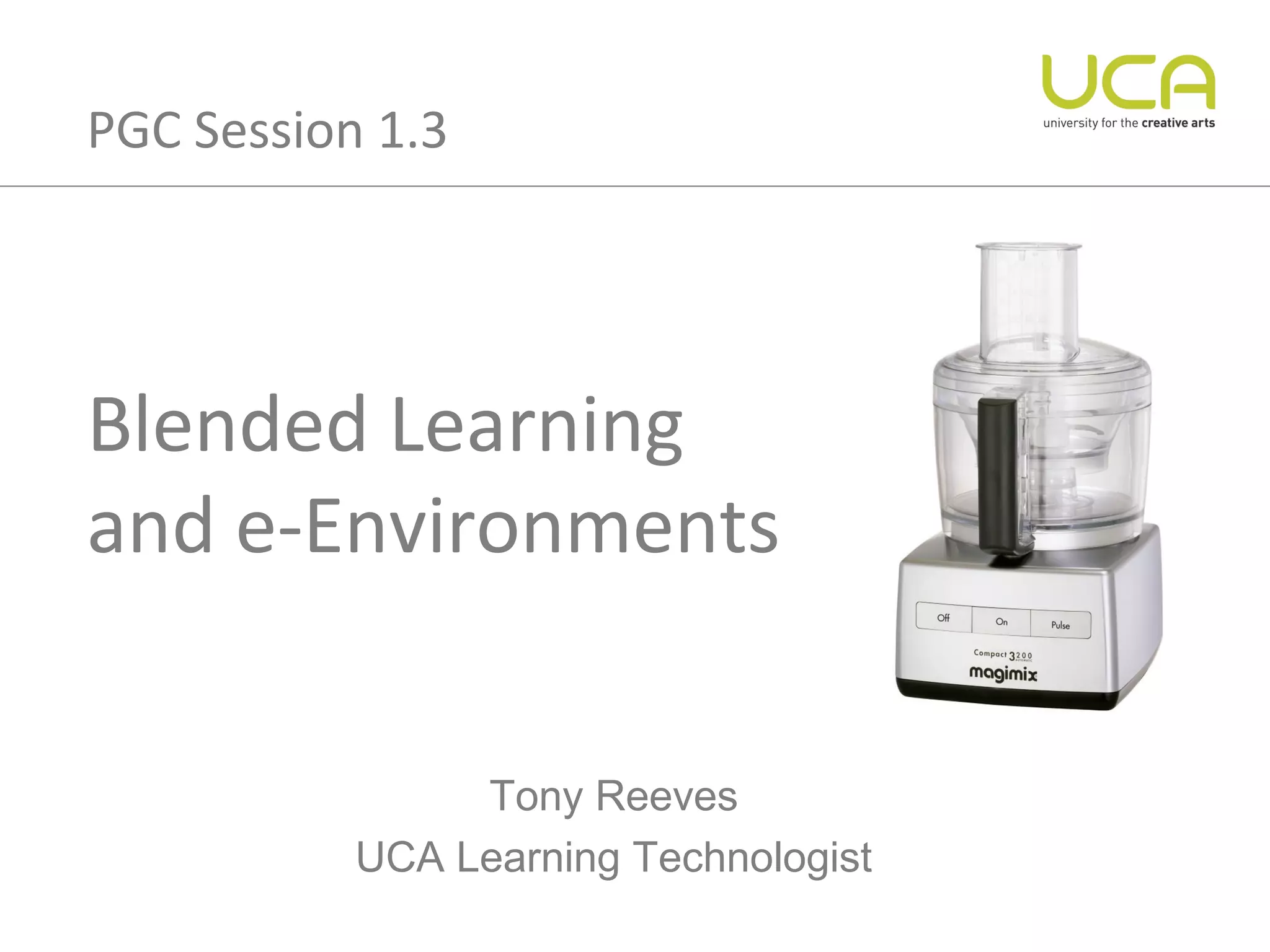
Blended Learning
and e-Environments


                Tony Reeves
           UCA Learning Technologist
Objectives of this session


 • Investigate ways in which
   technology can support learning

 • Consider how you might
   incorporate inclusive, online
   activities into your teaching
   practice
What is an ‘e-Environment’?


• A place accessed by computer
  where learning can occur?
• A ‘virtual’ space where interaction
  can take place?
• A room full of computers..?

• Personal learning environment
What is ‘blended learning’?


• An approach to learning and teaching which
  “combines and aligns learning undertaken in
  face-to-face sessions with learning opportunities
  created online” University of Wolverhampton

• Using technology to
   – increase learning opportunities
Some theories of learning


 Deep / surface learning (Marton & Saljo, 1979)

      understanding (deep)             memorising (surface)
      making sense (deep)              strategic (surface)


 A deep learner: articulate, autonomous but collaborative with high
   meta-cognitive control and the generic skills of learning…they
  have developed a certain kind of learner identity (Simms, 2006)

 “In learning with and through [technology], young people are also
            learning how to learn” (Buckingham 2008: 17)
Some theories of learning


 Behaviourism

    • learner is a passive respondent to stimuli
    • learning is defined as a change in behaviour


 e.g. using computer testing to teach processes, then
 providing positive feedback for correct answers

 e.g. using technology to give students individual and
 personalised data about their performance (stimulus) can
 provide the ‘response’ of a more dedicated student
Some theories of learning


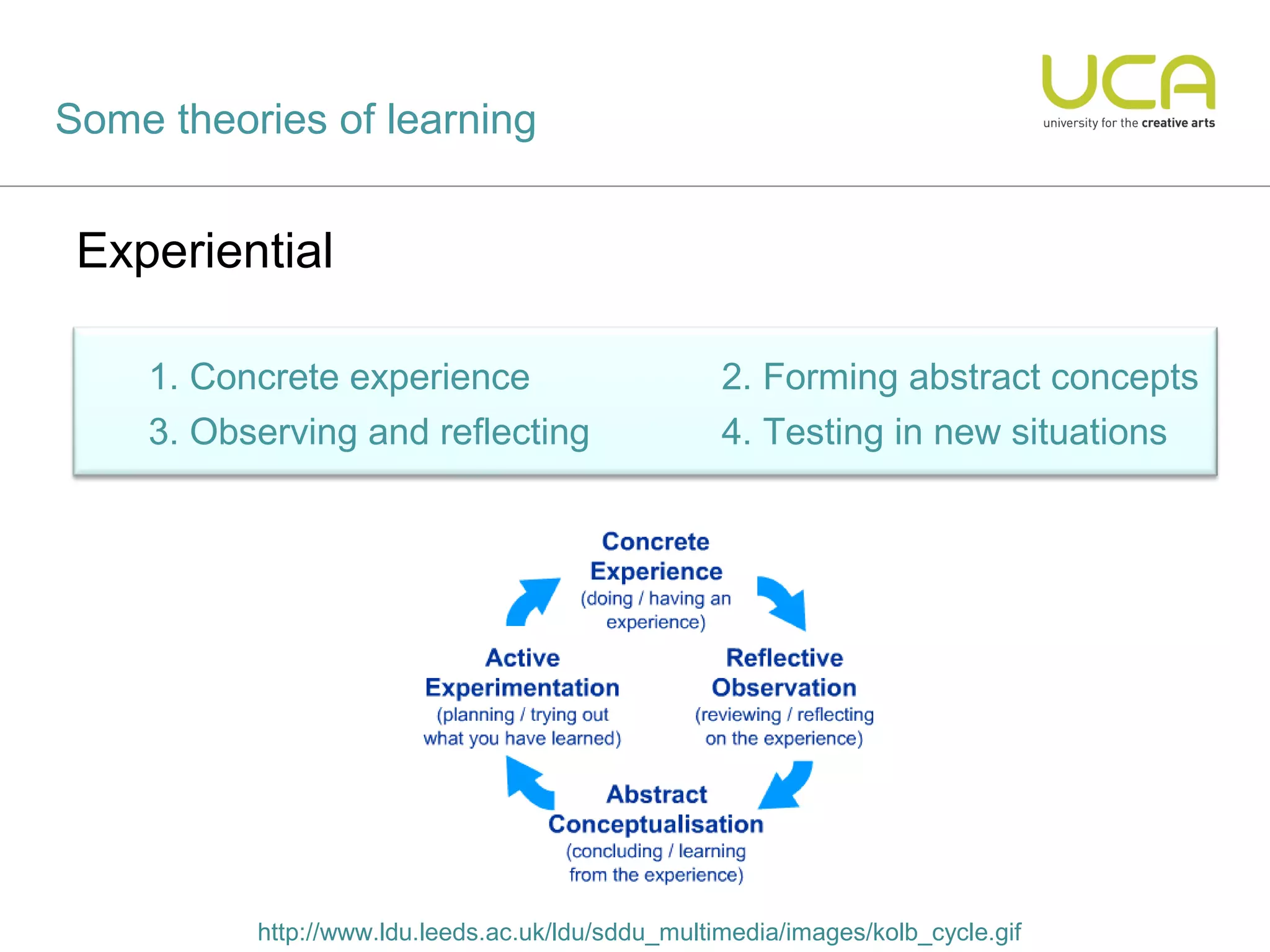
 Experiential

    1. Concrete experience                         2. Forming abstract concepts
    3. Observing and reflecting                    4. Testing in new situations


          http://www.ldu.leeds.ac.uk/ldu/sddu_multimedia/images/kolb_cycle.gif
Some theories of learning


 Experiential

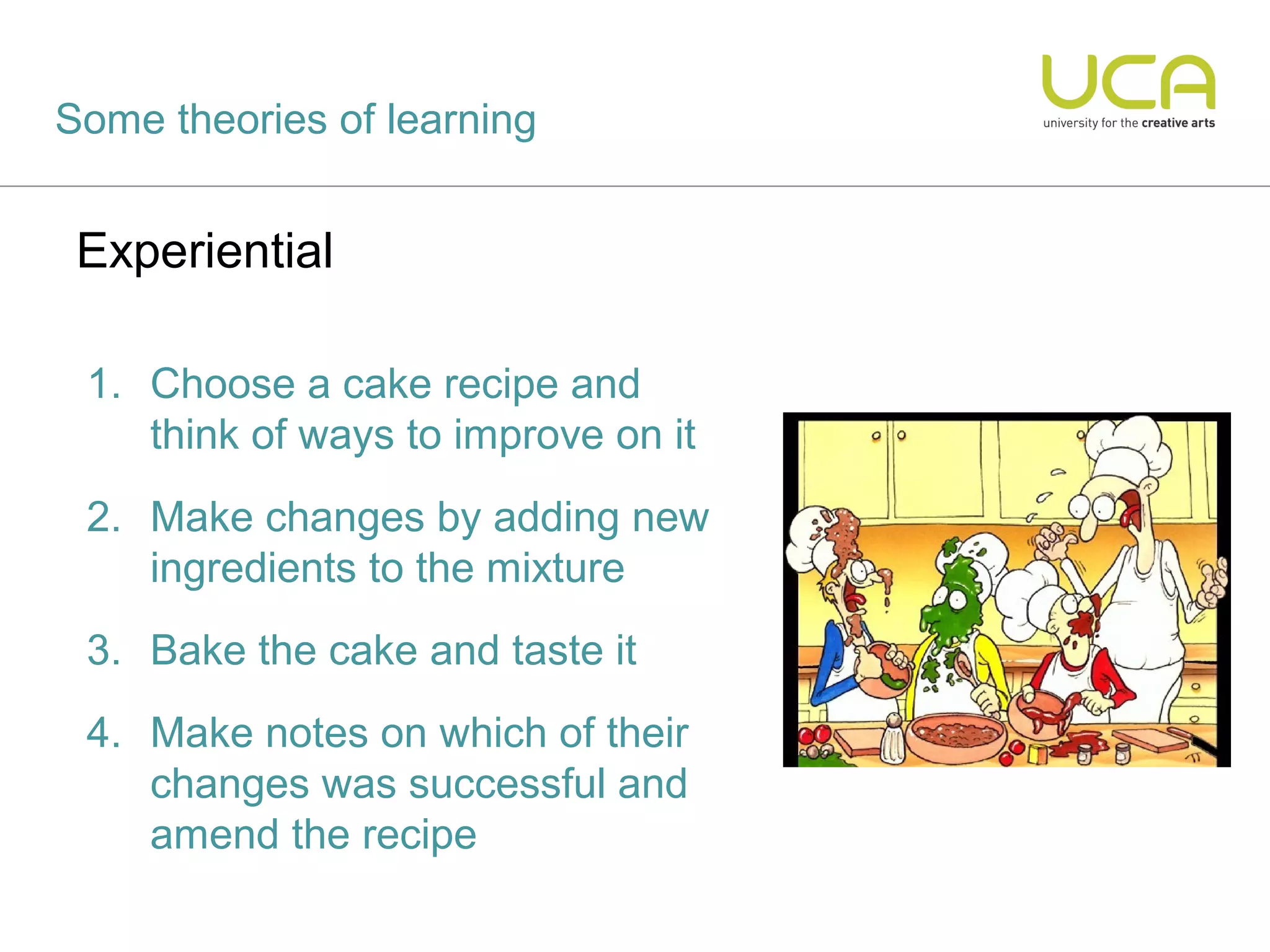
 1. Choose a cake recipe and
    think of ways to improve on it
 2. Make changes by adding new
    ingredients to the mixture
 3. Bake the cake and taste it
 4. Make notes on which of their
    changes was successful and
    amend the recipe
Some theories of learning


 Experiential

 1. Choose a unit in which you want to
    make a change
 2. Make changes by introducing a
    technology-based activity, e.g. a blog
 3. Run the unit and monitor the ways in
    which students are using the blog
 4. Evaluate the success of the changes
    and update the unit plan for the next
    cohort
Some theories of learning


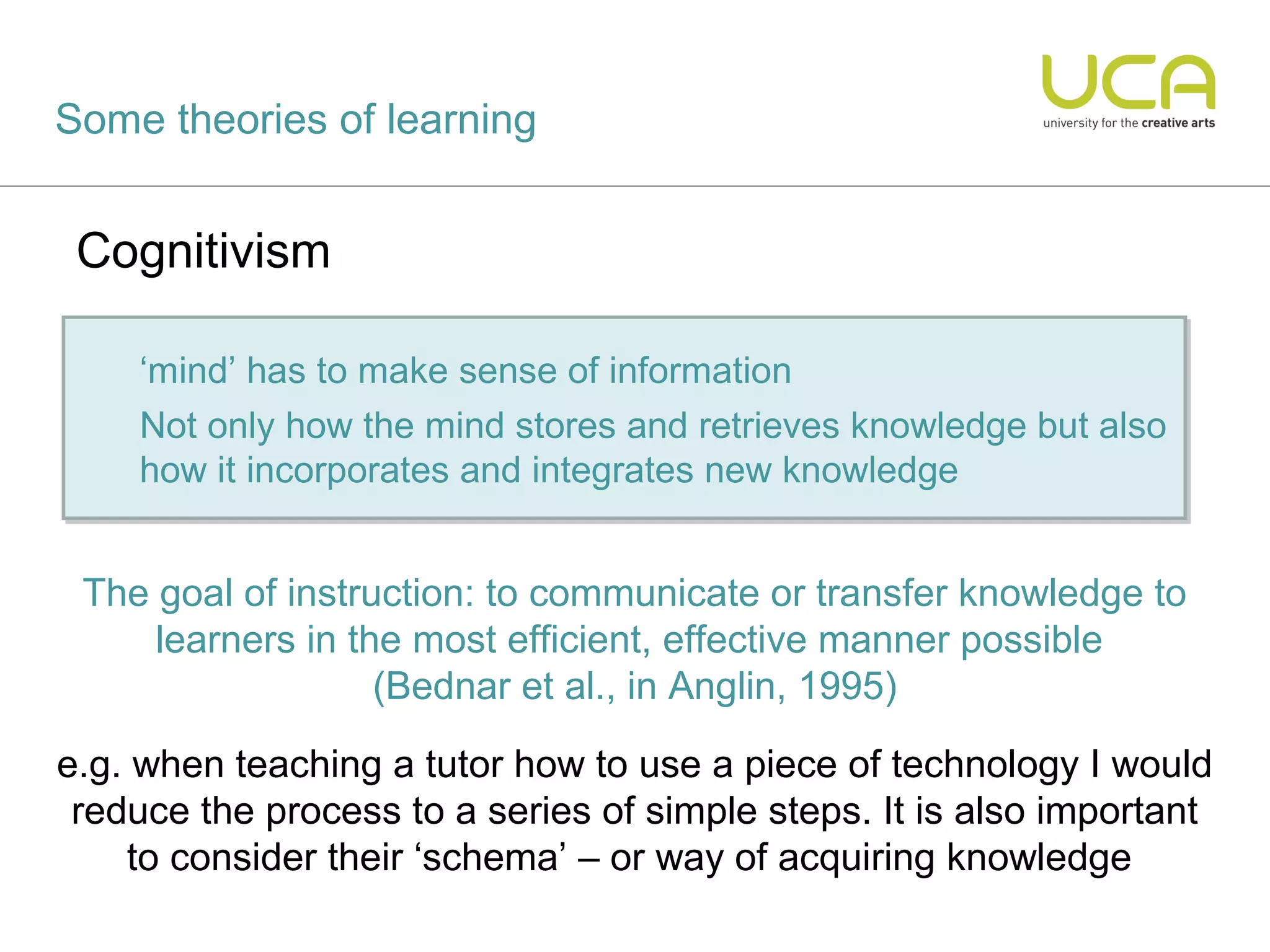
 Cognitivism

    ‘mind’ has to make sense of information
    ‘mind’        make sense of information
    Not only how the mind stores and retrieves knowledge but also
    Not only how the       stores and          knowledge but also
    how it incorporates and integrates new knowledge
    how incorporates                   new knowledge


 The goal of instruction: to communicate or transfer knowledge to
     learners in the most efficient, effective manner possible
                   (Bednar et al., in Anglin, 1995)

e.g. when teaching a tutor how to use a piece of technology I would
 reduce the process to a series of simple steps. It is also important
    to consider their ‘schema’ – or way of acquiring knowledge
Some theories of learning


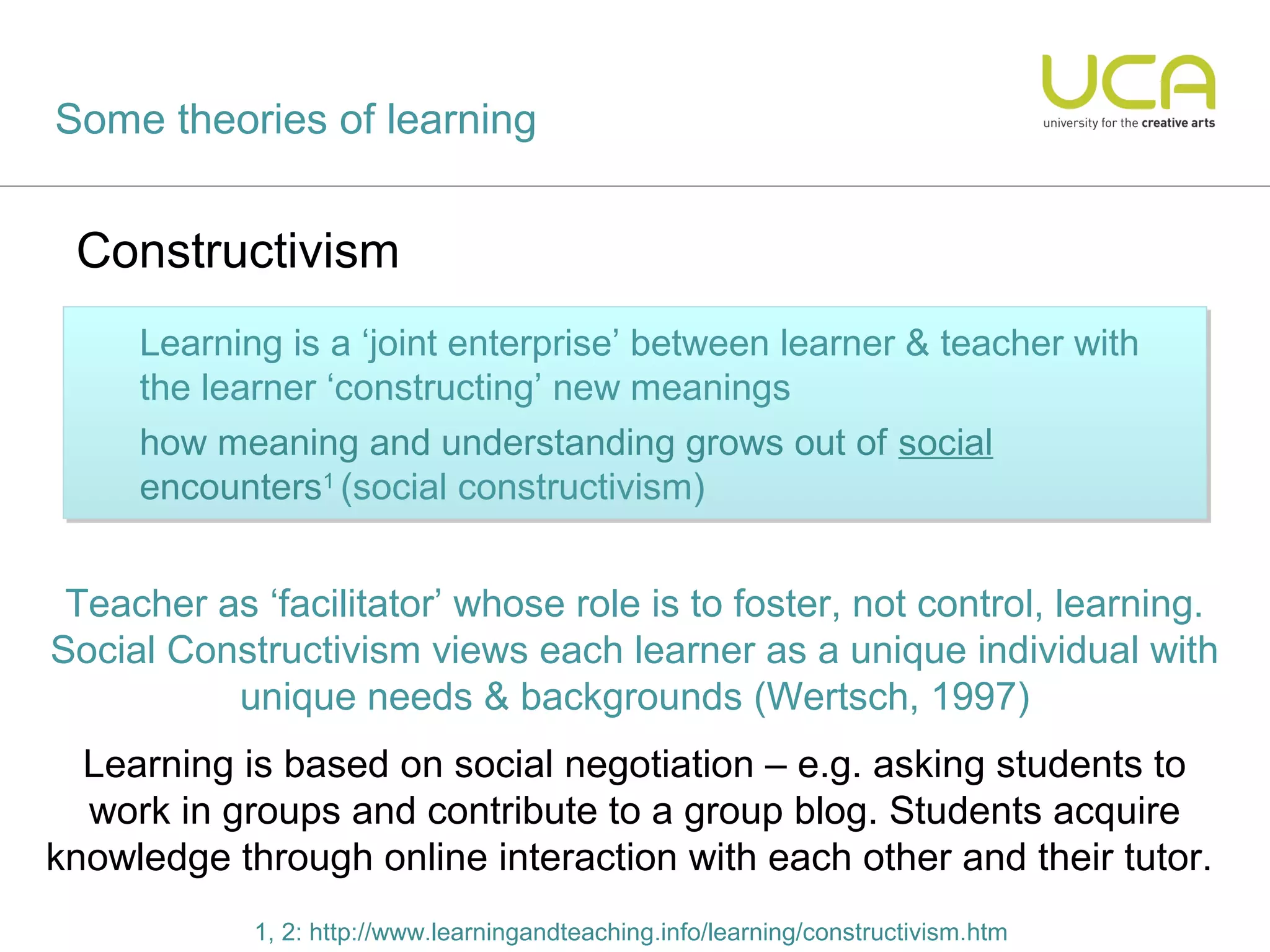
 Constructivism
     Learning is a ‘joint enterprise’ between learner & teacher with
     Learning is ‘joint enterprise’ between learner & teacher with
     the learner ‘constructing’ new meanings
     the         ‘constructing’       meanings
     how meaning and understanding grows out of social
     how meaning and understanding                 of social
     encounters1 (social constructivism)
     encounters1 (social constructivism)


 Teacher as ‘facilitator’ whose role is to foster, not control, learning.
Social Constructivism views each learner as a unique individual with
          unique needs & backgrounds (Wertsch, 1997)
  Learning is based on social negotiation – e.g. asking students to
  work in groups and contribute to a group blog. Students acquire
knowledge through online interaction with each other and their tutor.
            1, 2: http://www.learningandteaching.info/learning/constructivism.htm
Over to you…


      ‘Making learning possible implies that the
    teacher must know something about student
           learning’ (Laurillard, 2002: 13)

1. When you have to use a new piece of technology, how
   do you prefer to learn?
2. How do you use technology in your teaching practice?
3. What do you know about the ways in which your
   students are using social and online technologies to
   learn, both at university and prior to arriving?
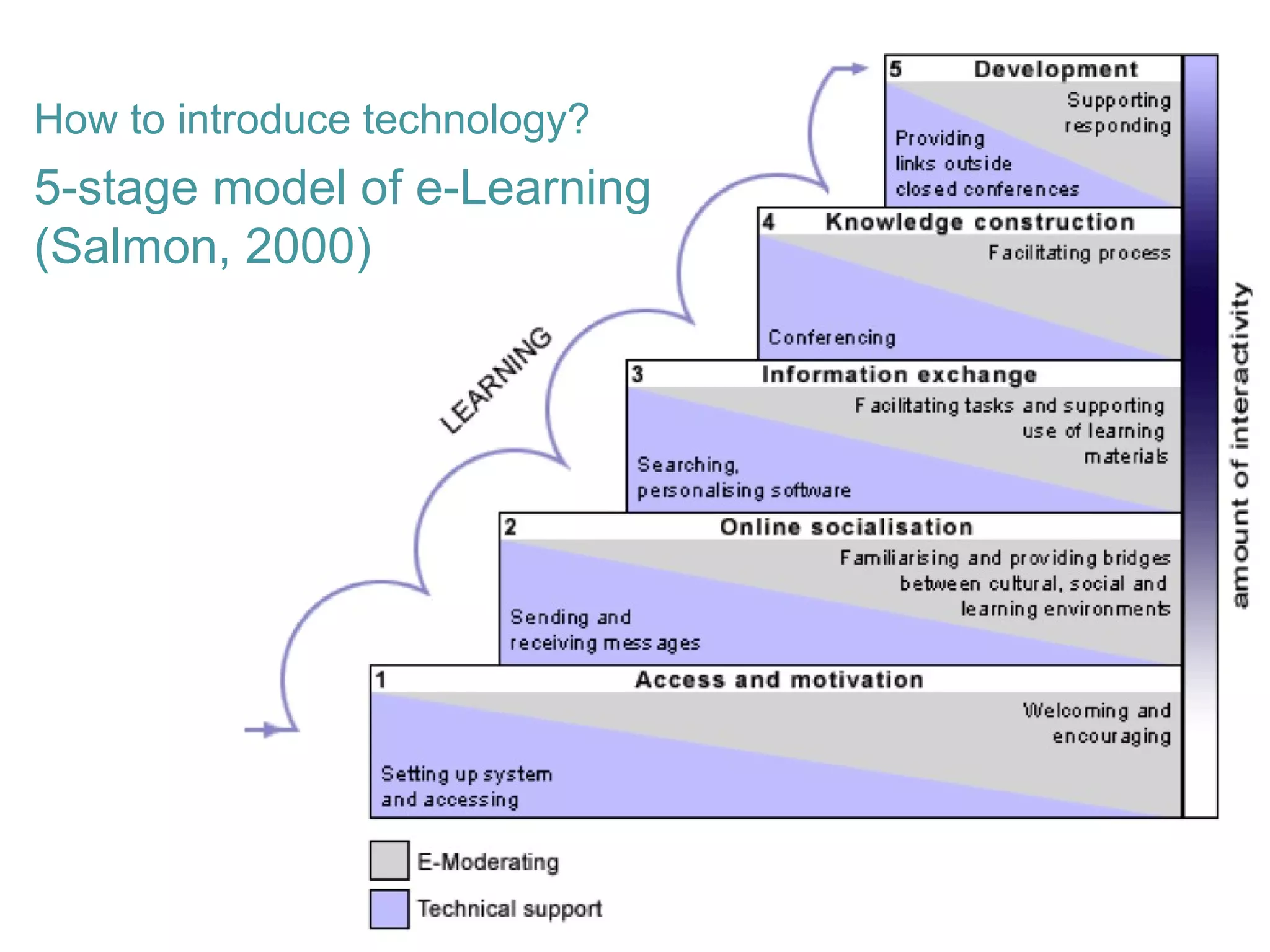
How to introduce technology?
5-stage model of e-Learning
(Salmon, 2000)
How to introduce technology?
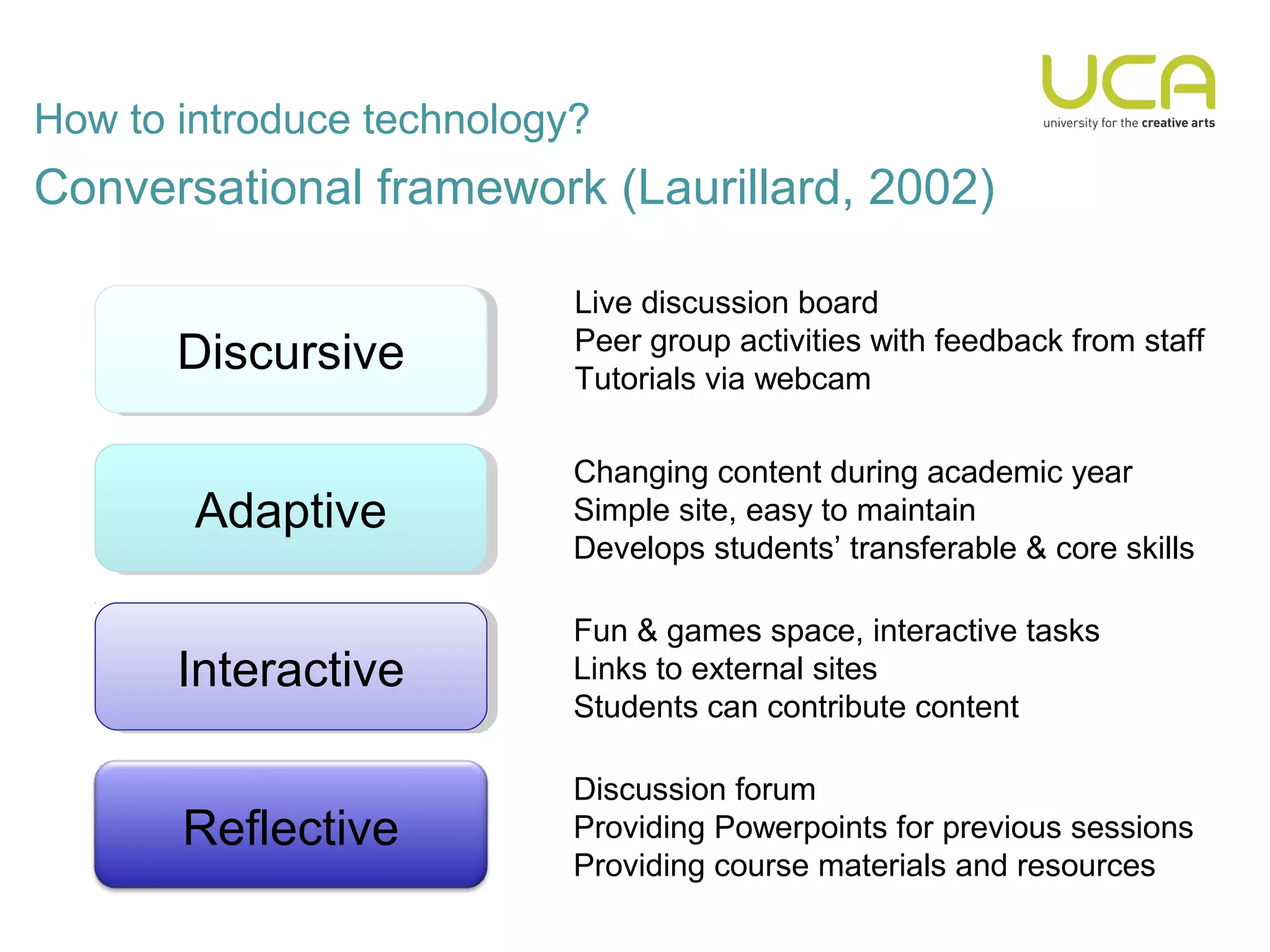
Conversational framework (Laurillard, 2002)

                           Live discussion board
                           Peer group activities with feedback from staff
       Discursive
       Discursive          Tutorials via webcam

                           Changing content during academic year
        Adaptive
        Adaptive           Simple site, easy to maintain
                           Develops students’ transferable & core skills

                           Fun & games space, interactive tasks
       Interactive
        Interactive        Links to external sites
                           Students can contribute content

                           Discussion forum
       Reflective          Providing Powerpoints for previous sessions
                           Providing course materials and resources
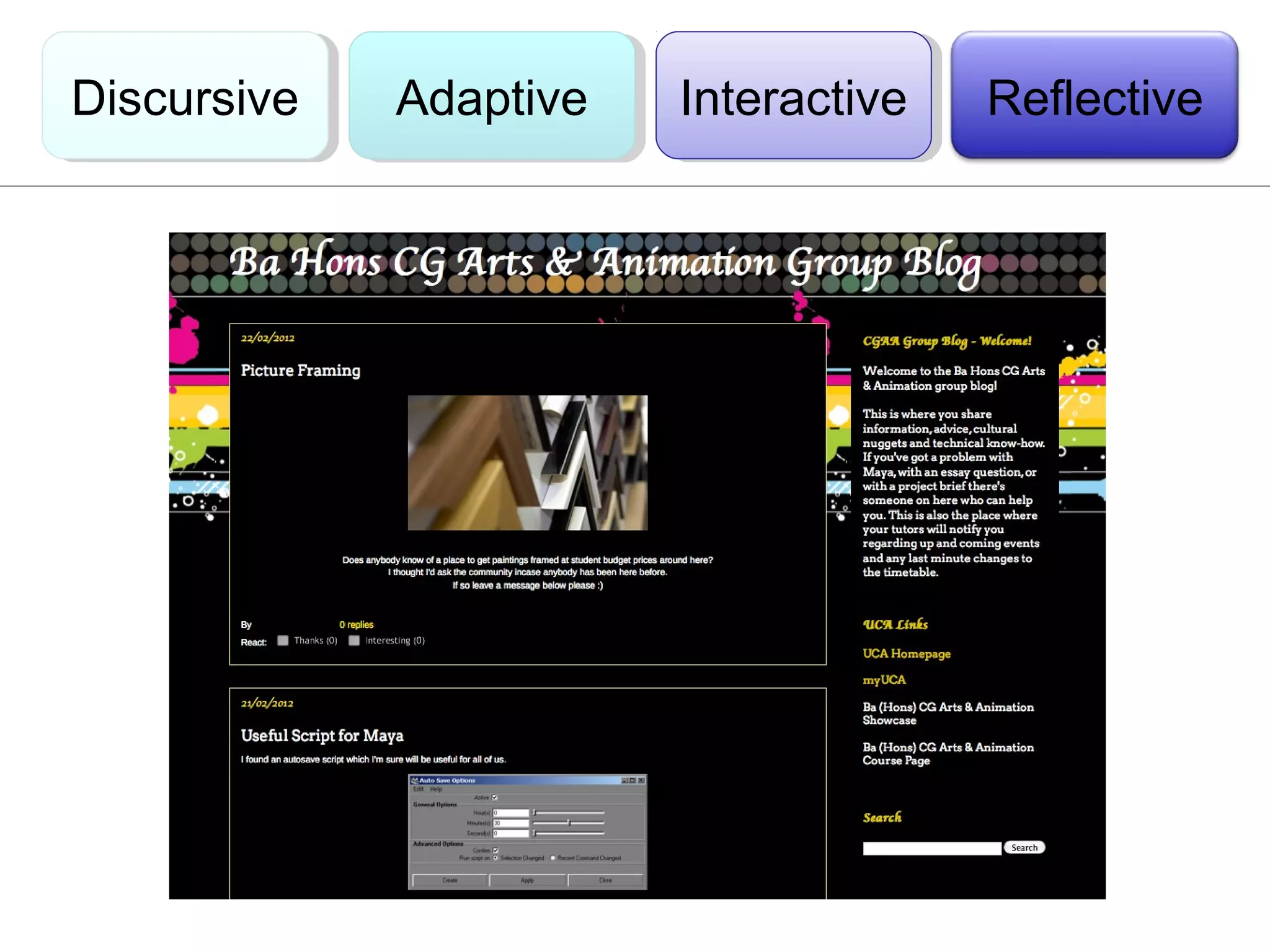
Discursive
Discursive   Adaptive
             Adaptive   Interactive
                         Interactive   Reflective
Discursive
Discursive     Adaptive
               Adaptive        Interactive
                                Interactive   Reflective


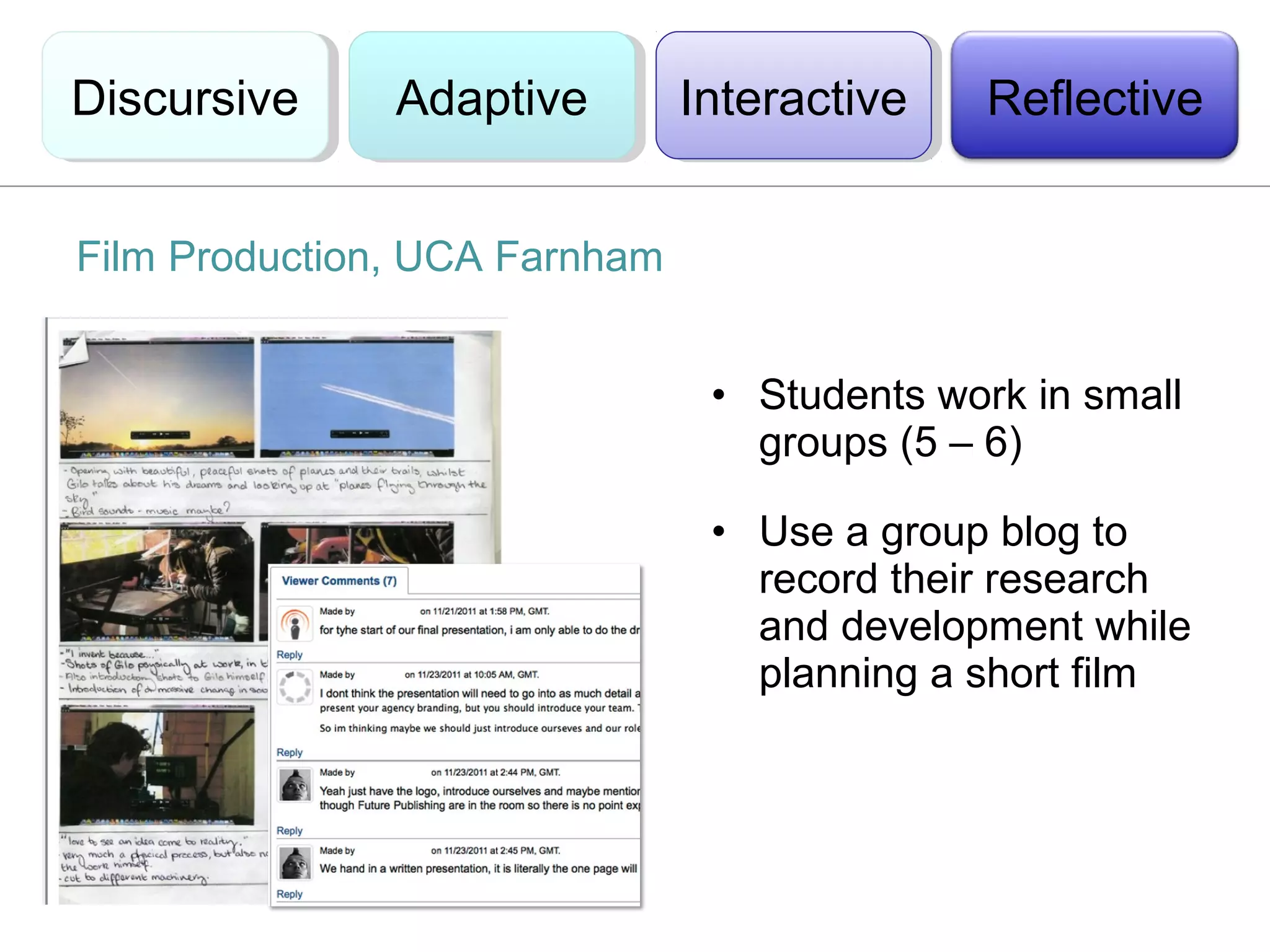
Film Production, UCA Farnham


                                • Students work in small
                                  groups (5 – 6)

                                • Use a group blog to
                                  record their research
                                  and development while
                                  planning a short film
Discursive
Discursive      Adaptive
                Adaptive       Interactive
                                Interactive   Reflective


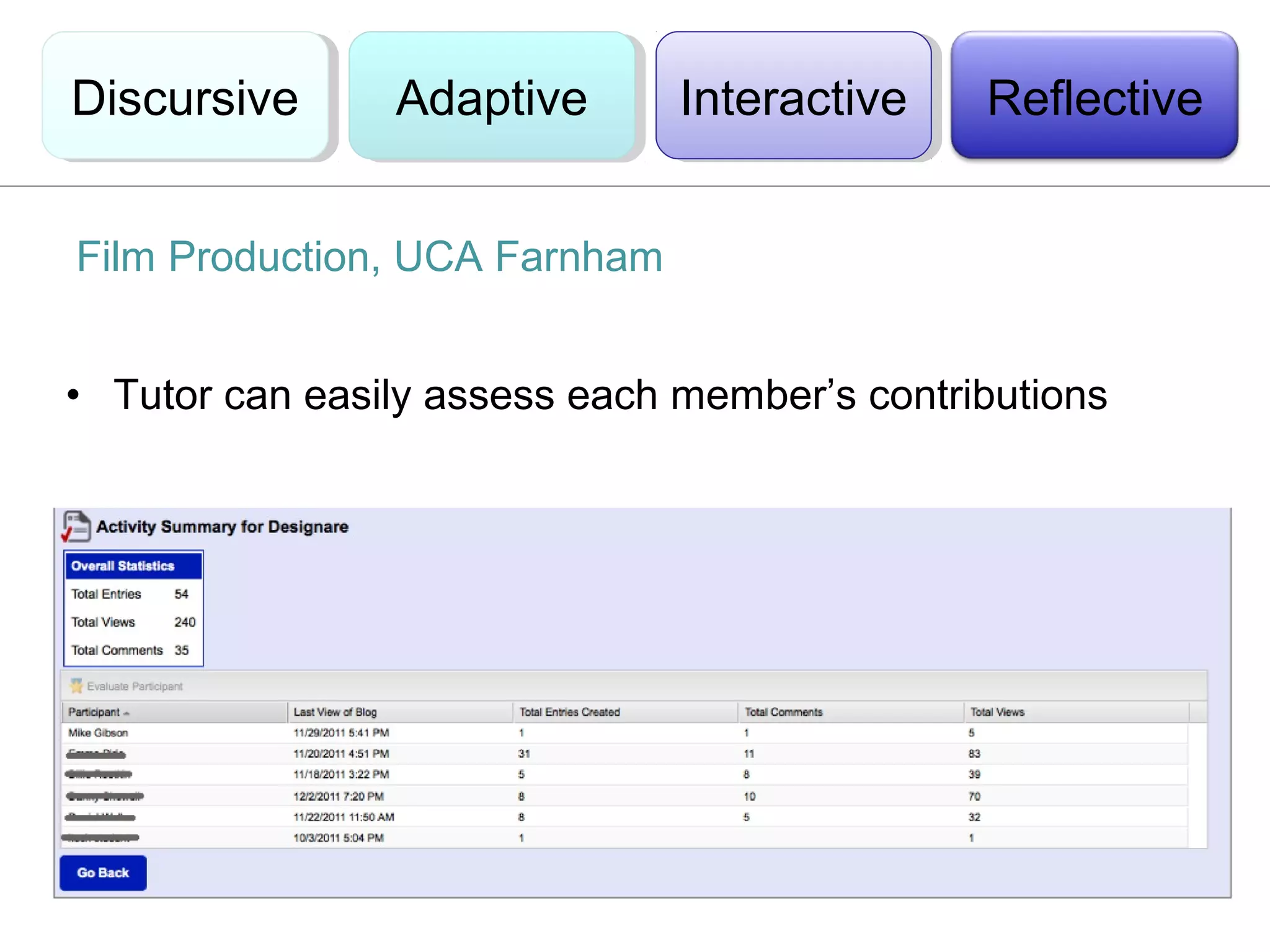
Film Production, UCA Farnham


• Tutor can easily assess each member’s contributions
Discursive
Discursive        Adaptive
                  Adaptive       Interactive
                                  Interactive   Reflective


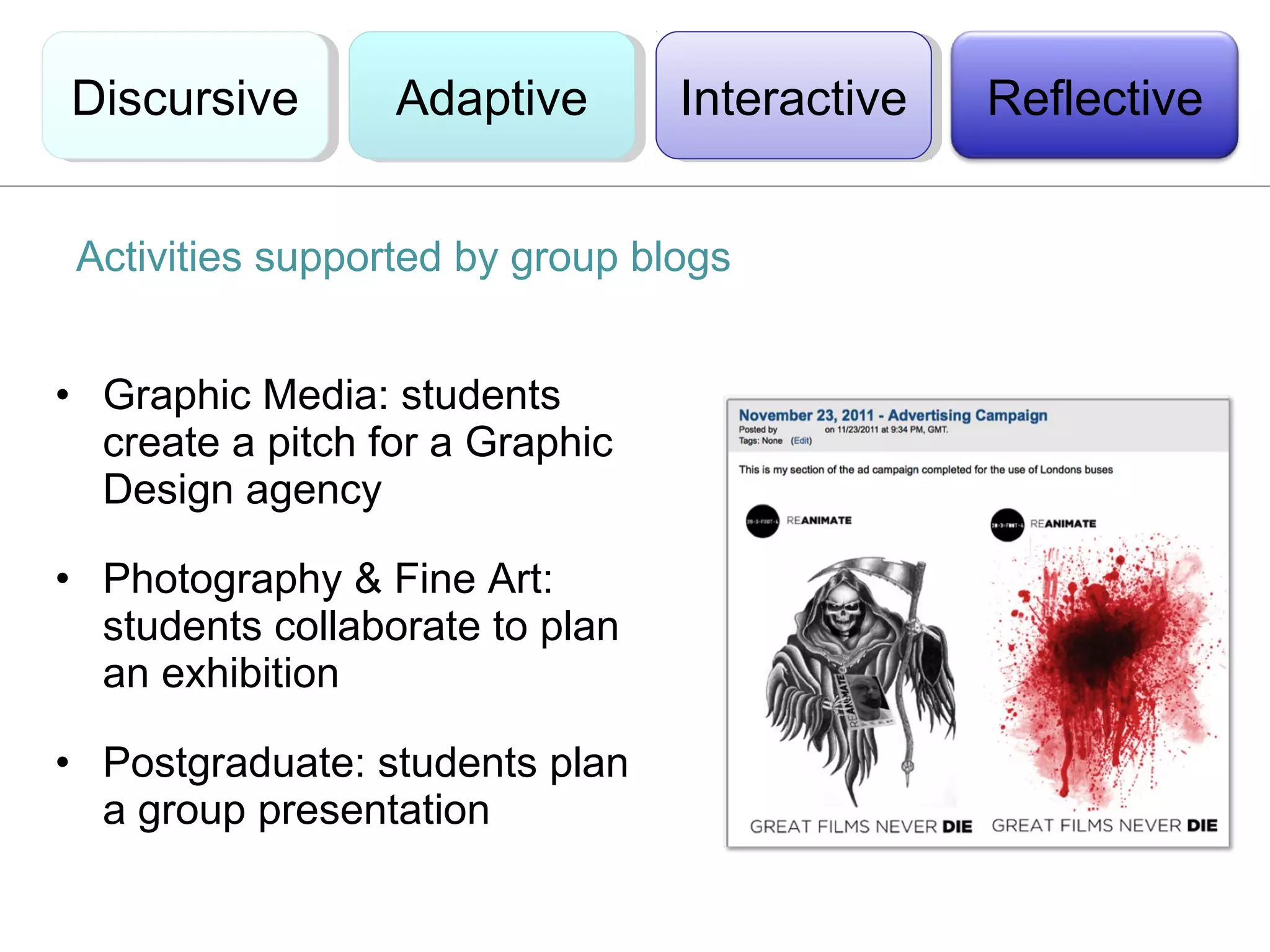
 Activities supported by group blogs


• Graphic Media: students
  create a pitch for a Graphic
  Design agency

• Photography & Fine Art:
  students collaborate to plan
  an exhibition

• Postgraduate: students plan
  a group presentation
Discursive
Discursive       Adaptive
                 Adaptive   Interactive
                             Interactive   Reflective


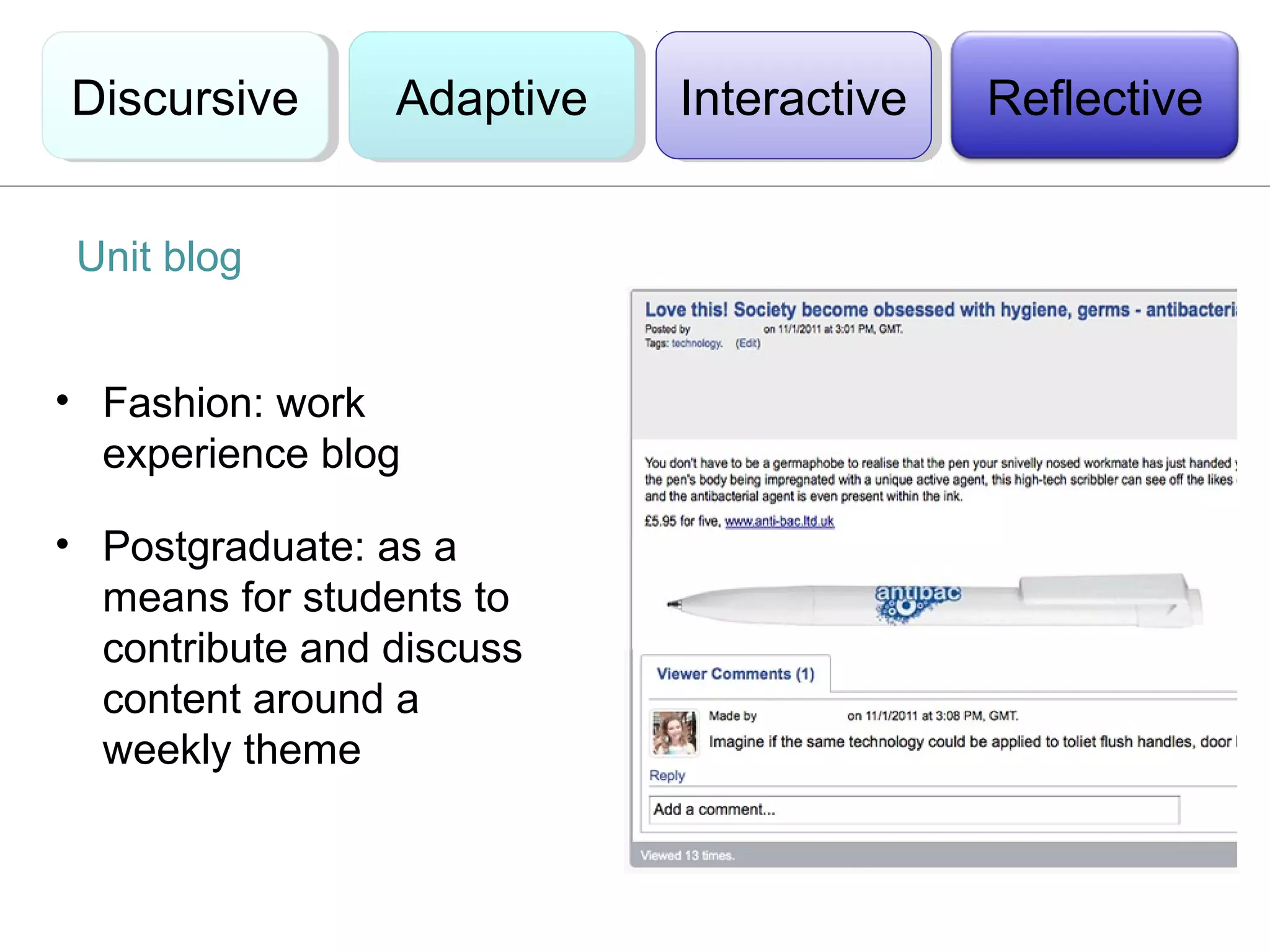
 Unit blog


• Fashion: work
  experience blog

• Postgraduate: as a
  means for students to
  contribute and discuss
  content around a
  weekly theme
Adaptive
                   Adaptive      Interactive
                                  Interactive   Reflective


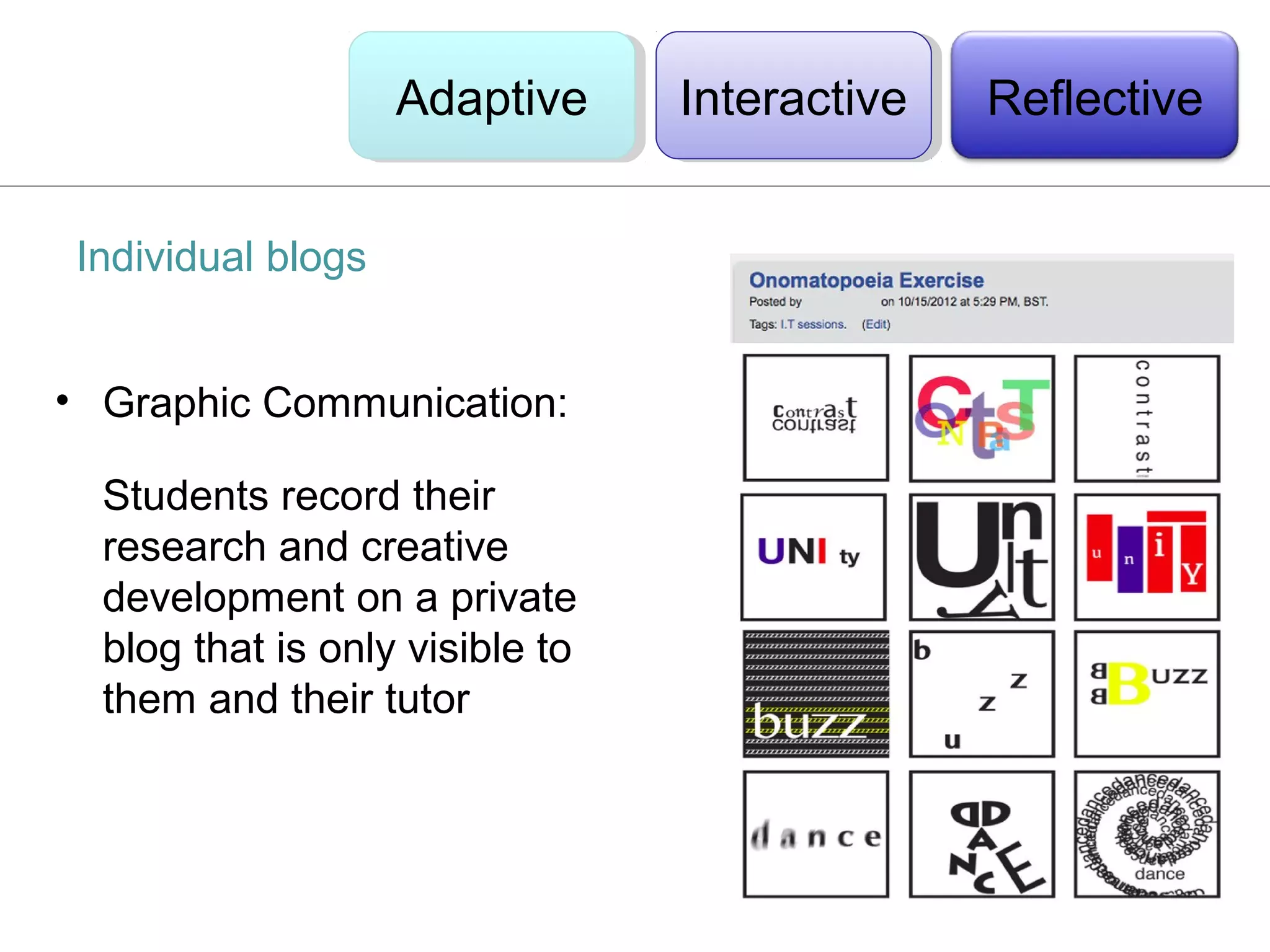
Individual blogs


• Graphic Communication:

  Students record their
  research and creative
  development on a private
  blog that is only visible to
  them and their tutor
Discursive
Discursive    Adaptive
              Adaptive    Interactive
                           Interactive   Reflective


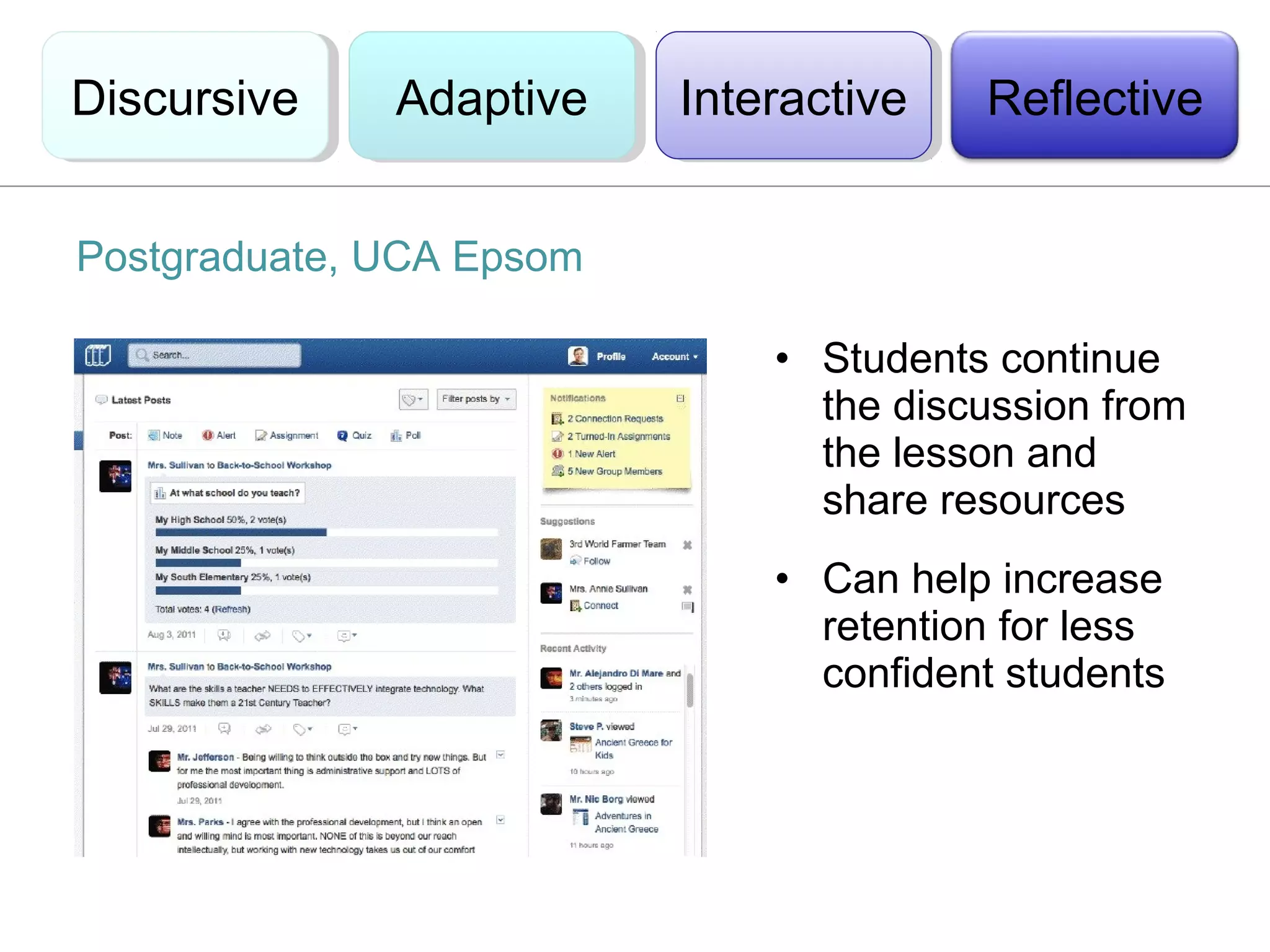
Postgraduate, UCA Epsom

                              • Students continue
                                the discussion from
                                the lesson and
                                share resources
                              • Can help increase
                                retention for less
                                confident students
Adaptive
                 Adaptive    Interactive
                              Interactive


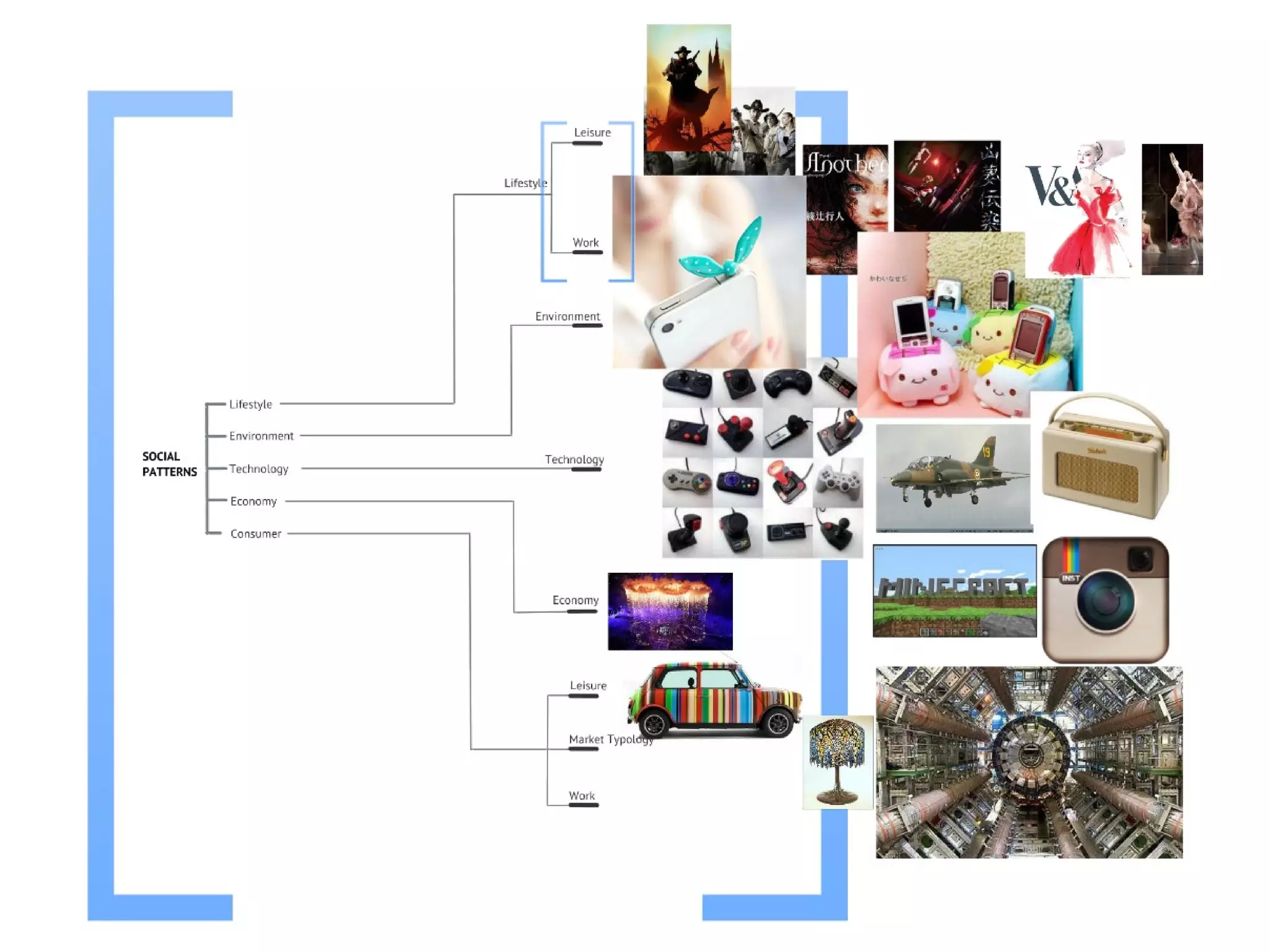
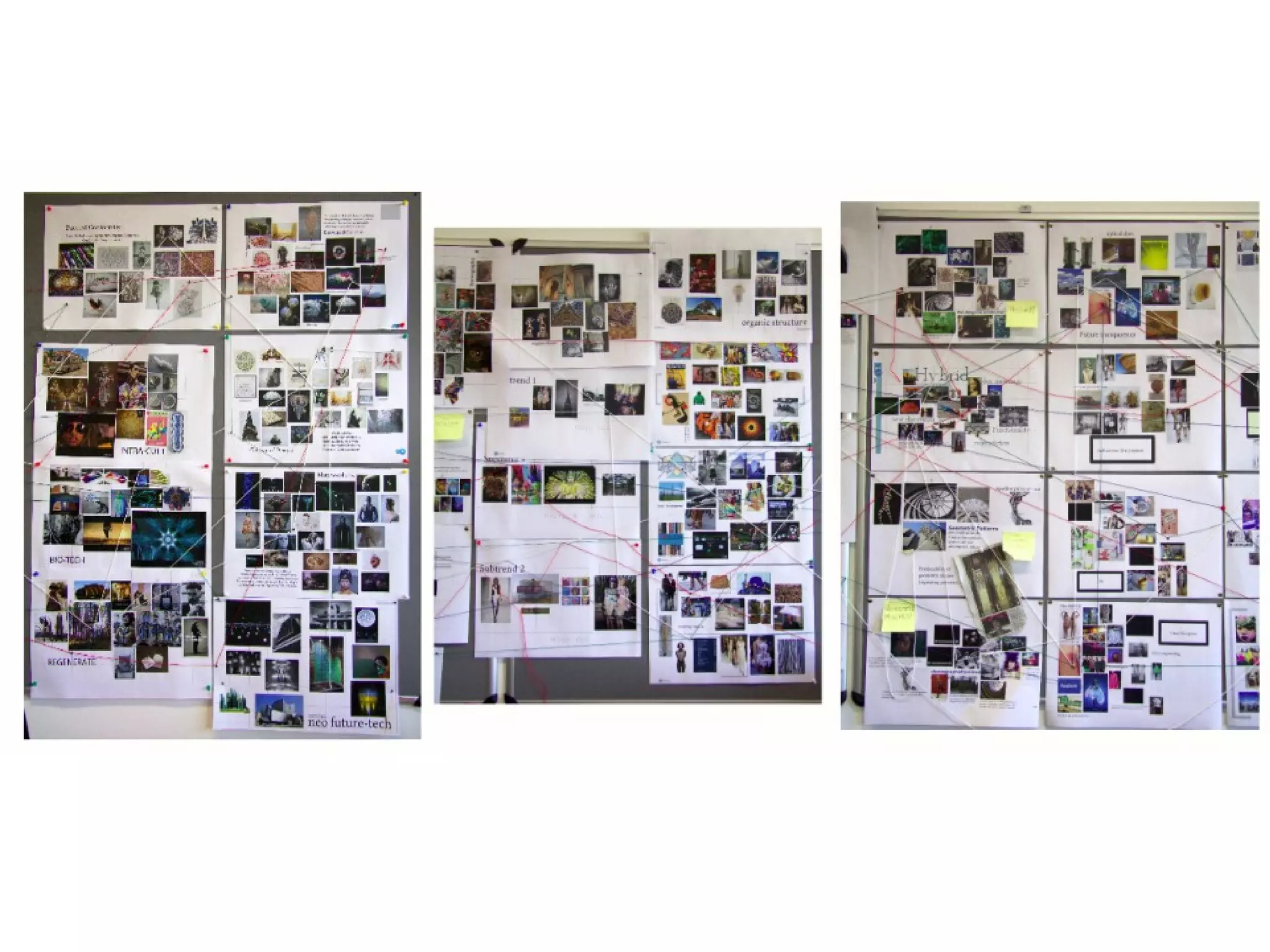
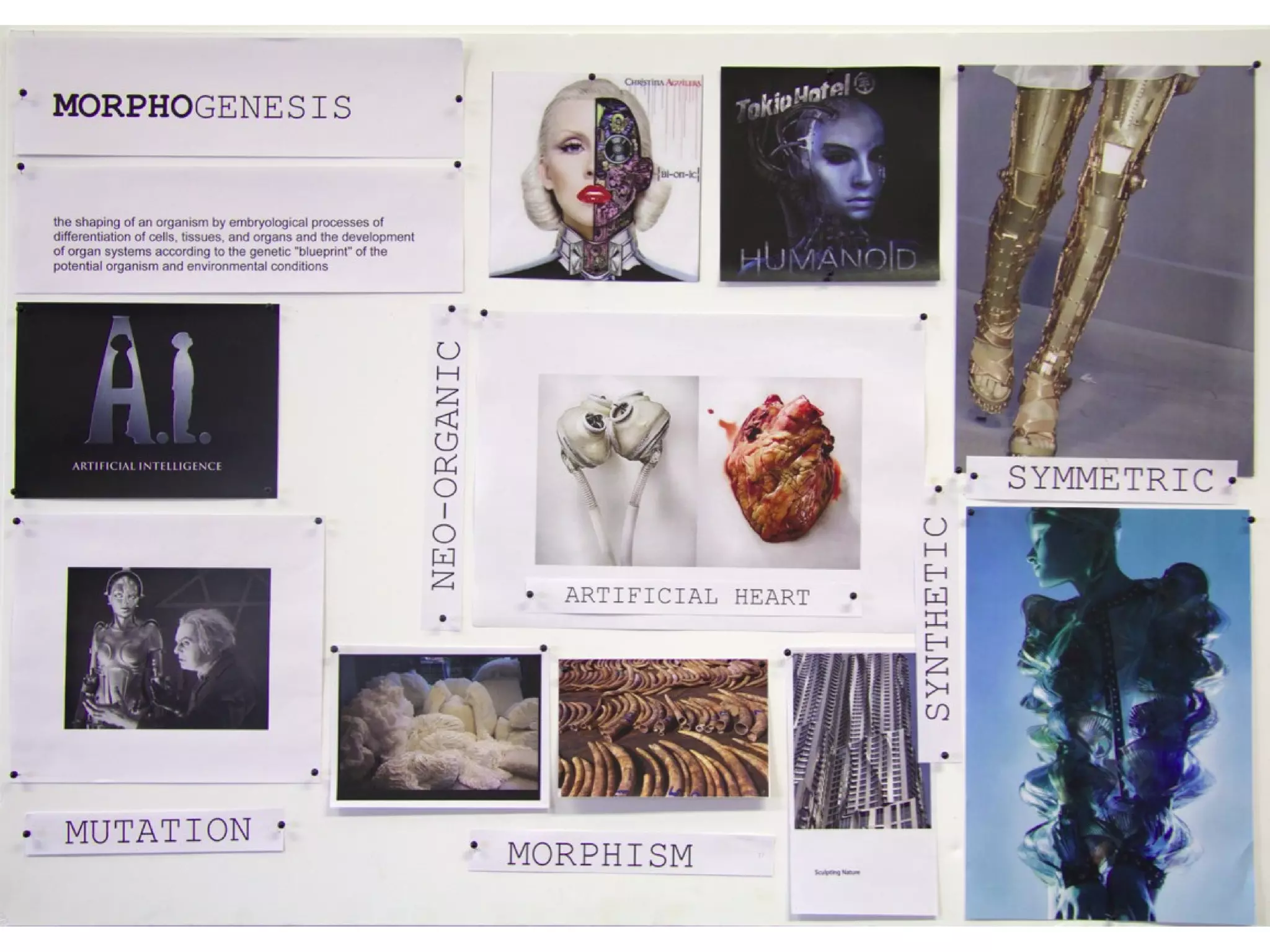
 Prezi


• Fashion: Students work
  in groups over several
  weeks to brainstorm
  ideas around trends

• These are then printed
  out and brought together
  in class
Adaptive
              Adaptive                    Reflective


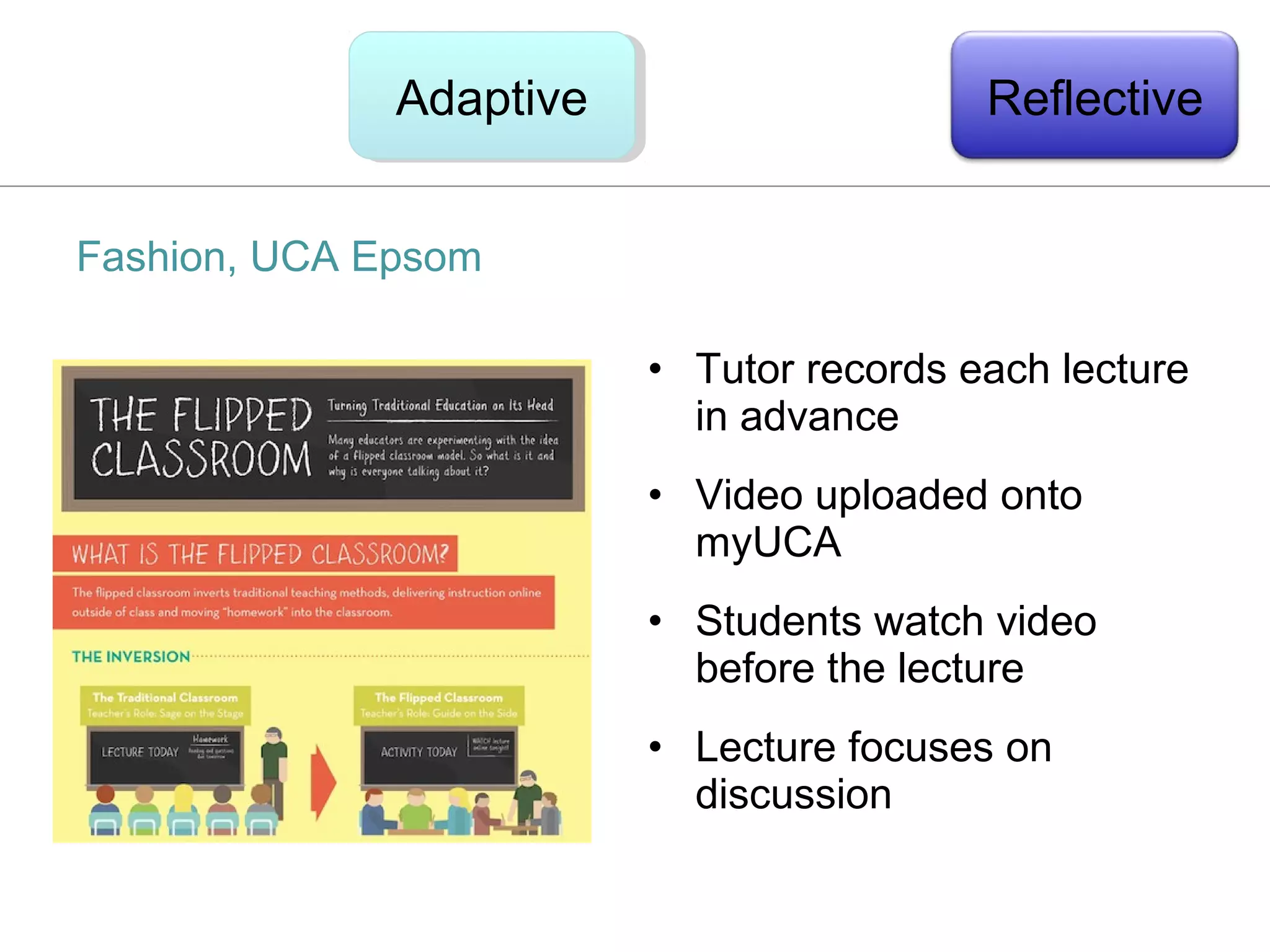
Fashion, UCA Epsom

                         • Tutor records each lecture
                           in advance
                         • Video uploaded onto
                           myUCA
                         • Students watch video
                           before the lecture
                         • Lecture focuses on
                           discussion
Interactive
                                  Interactive    Reflective


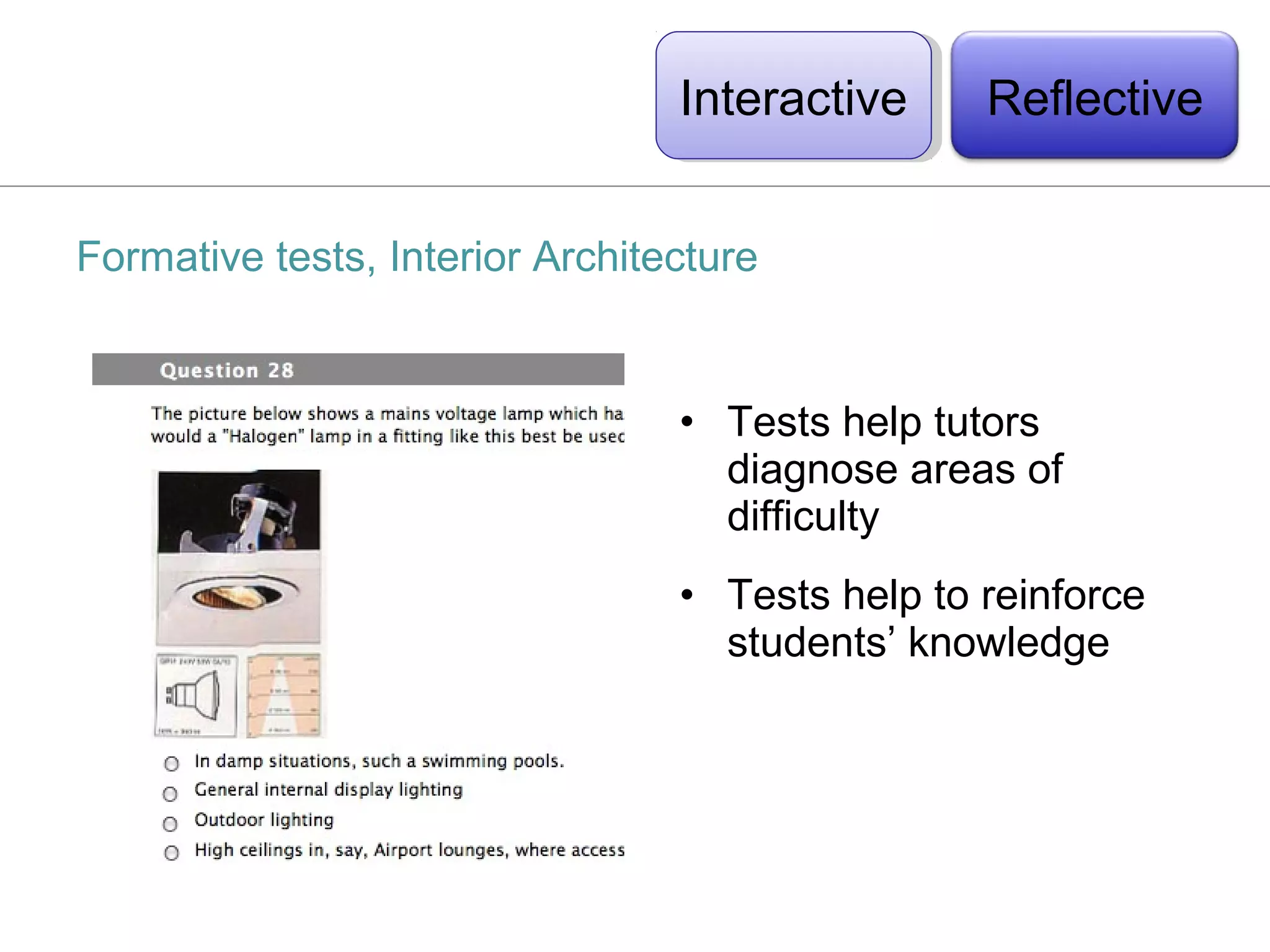
Formative tests, Interior Architecture


                                 • Tests help tutors
                                   diagnose areas of
                                   difficulty
                                 • Tests help to reinforce
                                   students’ knowledge
Discursive
Discursive     Adaptive
               Adaptive   Interactive
                           Interactive   Reflective


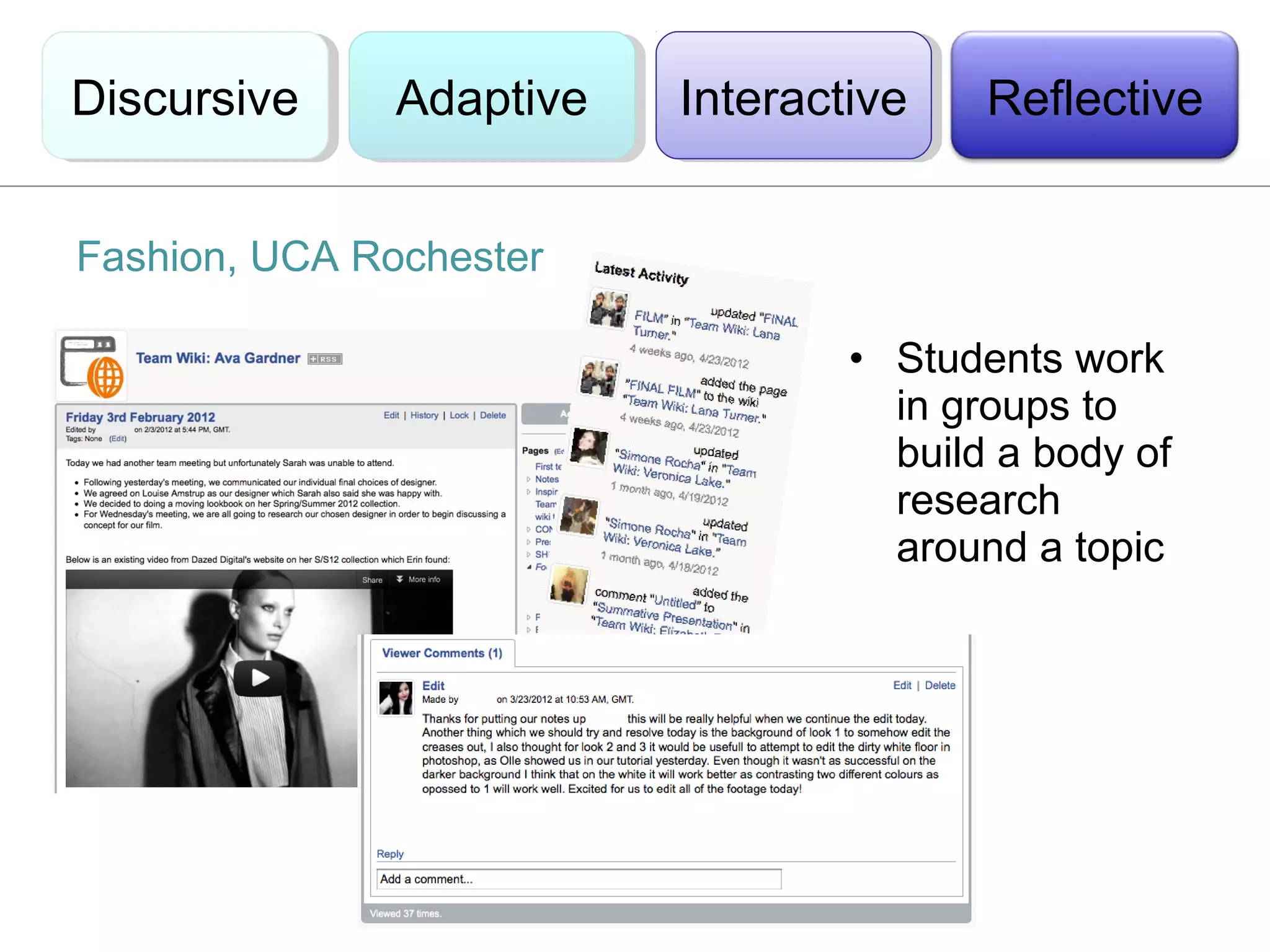
Fashion, UCA Rochester

                                  • Students work
                                    in groups to
                                    build a body of
                                    research
                                    around a topic
Over to you…


Choose a lesson that you teach or in which you have
participated as a student. Plan an activity for students’ home
work/self study that uses technology to enable students to
continue to learn between lessons.

The activity can last several weeks. Explain:

1.what you would ask the students to do
2.how you will manage your time and monitor students’ progress
3.how you will evaluate students’ learning and provide them with
feedback on their progress
4.how the theories of learning have informed the design of your
activity

PGC1.3 Blended Learning & e-Environments

  • 1.
    PGC Session 1.3 BlendedLearning and e-Environments Tony Reeves UCA Learning Technologist
  • 2.
    Objectives of thissession • Investigate ways in which technology can support learning • Consider how you might incorporate inclusive, online activities into your teaching practice
  • 3.
    What is an‘e-Environment’? • A place accessed by computer where learning can occur? • A ‘virtual’ space where interaction can take place? • A room full of computers..? • Personal learning environment
  • 4.
    What is ‘blendedlearning’? • An approach to learning and teaching which “combines and aligns learning undertaken in face-to-face sessions with learning opportunities created online” University of Wolverhampton • Using technology to – increase learning opportunities
  • 5.
    Some theories oflearning Deep / surface learning (Marton & Saljo, 1979) understanding (deep) memorising (surface) making sense (deep) strategic (surface) A deep learner: articulate, autonomous but collaborative with high meta-cognitive control and the generic skills of learning…they have developed a certain kind of learner identity (Simms, 2006) “In learning with and through [technology], young people are also learning how to learn” (Buckingham 2008: 17)
  • 6.
    Some theories oflearning Behaviourism • learner is a passive respondent to stimuli • learning is defined as a change in behaviour e.g. using computer testing to teach processes, then providing positive feedback for correct answers e.g. using technology to give students individual and personalised data about their performance (stimulus) can provide the ‘response’ of a more dedicated student
  • 7.
    Some theories oflearning Experiential 1. Concrete experience 2. Forming abstract concepts 3. Observing and reflecting 4. Testing in new situations http://www.ldu.leeds.ac.uk/ldu/sddu_multimedia/images/kolb_cycle.gif
  • 8.
    Some theories oflearning Experiential 1. Choose a cake recipe and think of ways to improve on it 2. Make changes by adding new ingredients to the mixture 3. Bake the cake and taste it 4. Make notes on which of their changes was successful and amend the recipe
  • 9.
    Some theories oflearning Experiential 1. Choose a unit in which you want to make a change 2. Make changes by introducing a technology-based activity, e.g. a blog 3. Run the unit and monitor the ways in which students are using the blog 4. Evaluate the success of the changes and update the unit plan for the next cohort
  • 10.
    Some theories oflearning Cognitivism ‘mind’ has to make sense of information ‘mind’ make sense of information Not only how the mind stores and retrieves knowledge but also Not only how the stores and knowledge but also how it incorporates and integrates new knowledge how incorporates new knowledge The goal of instruction: to communicate or transfer knowledge to learners in the most efficient, effective manner possible (Bednar et al., in Anglin, 1995) e.g. when teaching a tutor how to use a piece of technology I would reduce the process to a series of simple steps. It is also important to consider their ‘schema’ – or way of acquiring knowledge
  • 11.
    Some theories oflearning Constructivism Learning is a ‘joint enterprise’ between learner & teacher with Learning is ‘joint enterprise’ between learner & teacher with the learner ‘constructing’ new meanings the ‘constructing’ meanings how meaning and understanding grows out of social how meaning and understanding of social encounters1 (social constructivism) encounters1 (social constructivism) Teacher as ‘facilitator’ whose role is to foster, not control, learning. Social Constructivism views each learner as a unique individual with unique needs & backgrounds (Wertsch, 1997) Learning is based on social negotiation – e.g. asking students to work in groups and contribute to a group blog. Students acquire knowledge through online interaction with each other and their tutor. 1, 2: http://www.learningandteaching.info/learning/constructivism.htm
  • 12.
    Over to you… ‘Making learning possible implies that the teacher must know something about student learning’ (Laurillard, 2002: 13) 1. When you have to use a new piece of technology, how do you prefer to learn? 2. How do you use technology in your teaching practice? 3. What do you know about the ways in which your students are using social and online technologies to learn, both at university and prior to arriving?
  • 13.
    How to introducetechnology? 5-stage model of e-Learning (Salmon, 2000)
  • 14.
    How to introducetechnology? Conversational framework (Laurillard, 2002) Live discussion board Peer group activities with feedback from staff Discursive Discursive Tutorials via webcam Changing content during academic year Adaptive Adaptive Simple site, easy to maintain Develops students’ transferable & core skills Fun & games space, interactive tasks Interactive Interactive Links to external sites Students can contribute content Discussion forum Reflective Providing Powerpoints for previous sessions Providing course materials and resources
  • 15.
    Discursive Discursive Adaptive Adaptive Interactive Interactive Reflective
  • 16.
    Discursive Discursive Adaptive Adaptive Interactive Interactive Reflective Film Production, UCA Farnham • Students work in small groups (5 – 6) • Use a group blog to record their research and development while planning a short film
  • 17.
    Discursive Discursive Adaptive Adaptive Interactive Interactive Reflective Film Production, UCA Farnham • Tutor can easily assess each member’s contributions
  • 18.
    Discursive Discursive Adaptive Adaptive Interactive Interactive Reflective Activities supported by group blogs • Graphic Media: students create a pitch for a Graphic Design agency • Photography & Fine Art: students collaborate to plan an exhibition • Postgraduate: students plan a group presentation
  • 19.
    Discursive Discursive Adaptive Adaptive Interactive Interactive Reflective Unit blog • Fashion: work experience blog • Postgraduate: as a means for students to contribute and discuss content around a weekly theme
  • 20.
    Adaptive Adaptive Interactive Interactive Reflective Individual blogs • Graphic Communication: Students record their research and creative development on a private blog that is only visible to them and their tutor
  • 21.
    Discursive Discursive Adaptive Adaptive Interactive Interactive Reflective Postgraduate, UCA Epsom • Students continue the discussion from the lesson and share resources • Can help increase retention for less confident students
  • 22.
    Adaptive Adaptive Interactive Interactive Prezi • Fashion: Students work in groups over several weeks to brainstorm ideas around trends • These are then printed out and brought together in class
  • 26.
    Adaptive Adaptive Reflective Fashion, UCA Epsom • Tutor records each lecture in advance • Video uploaded onto myUCA • Students watch video before the lecture • Lecture focuses on discussion
  • 27.
    Interactive Interactive Reflective Formative tests, Interior Architecture • Tests help tutors diagnose areas of difficulty • Tests help to reinforce students’ knowledge
  • 28.
    Discursive Discursive Adaptive Adaptive Interactive Interactive Reflective Fashion, UCA Rochester • Students work in groups to build a body of research around a topic
  • 29.
    Over to you… Choosea lesson that you teach or in which you have participated as a student. Plan an activity for students’ home work/self study that uses technology to enable students to continue to learn between lessons. The activity can last several weeks. Explain: 1.what you would ask the students to do 2.how you will manage your time and monitor students’ progress 3.how you will evaluate students’ learning and provide them with feedback on their progress 4.how the theories of learning have informed the design of your activity