


Technology and English Language 
Teaching: Telepresence Technology 
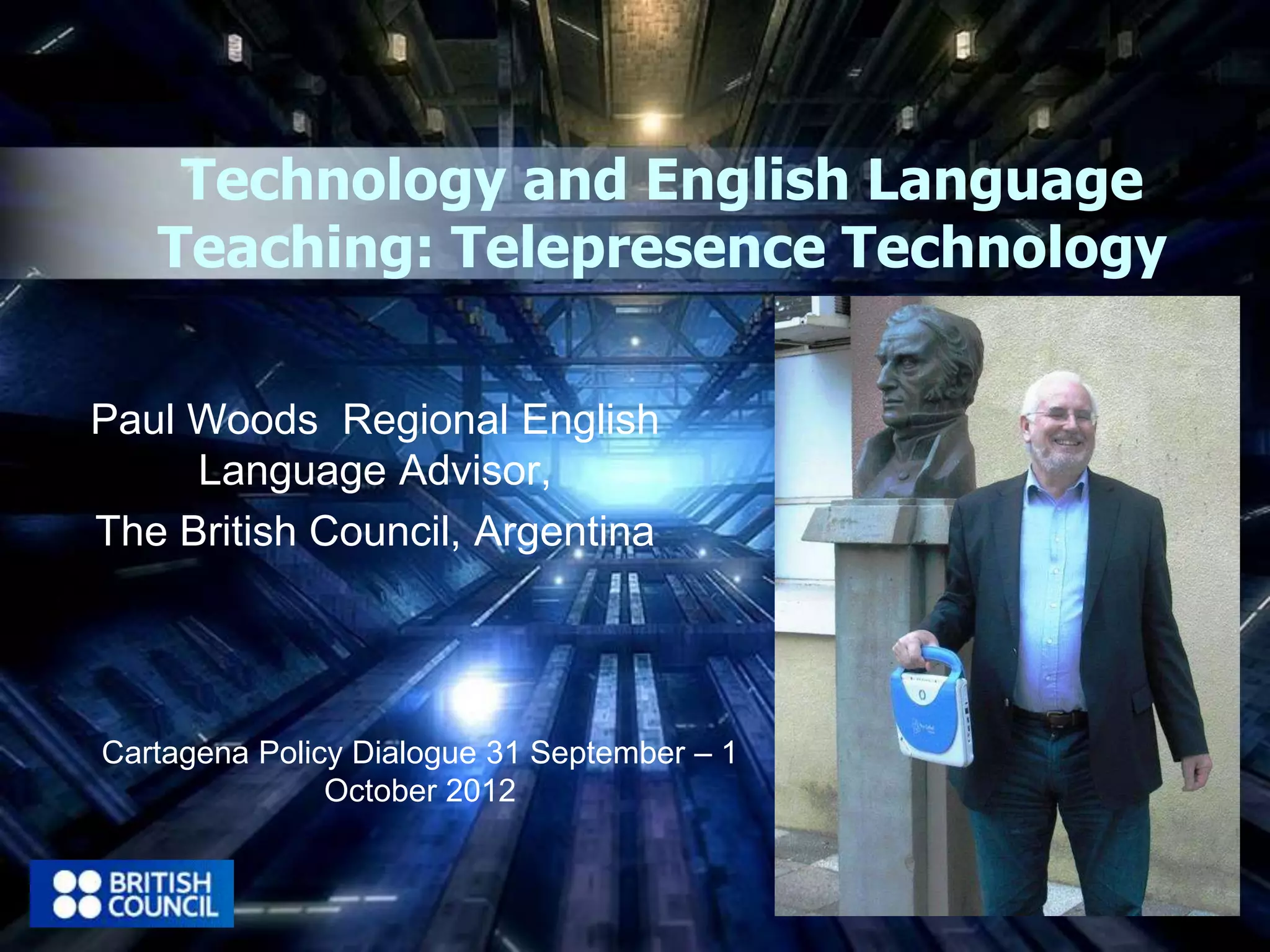
Paul Woods Regional English 
Language Advisor, 
The British Council, Argentina 
Cartagena Policy Dialogue 31 September – 1 
October 2012
Pace of change…. 
 We are living in exponential times 
 In 2 years time there will be early adopters using devices 
for teaching and learning that we don’t even know about 
yet 
 In 10 years time handheld devices will largely have 
replaced books 
 “Teachers will not be replaced by technology, but 
teachers who don’t use technology will be replaced by 
those who do” ~Sheryl Nussbaum-Beach~ 
 The next generation will demand teachers who use 
methods they know and understand. This inevitably 
involves teaching with technology.
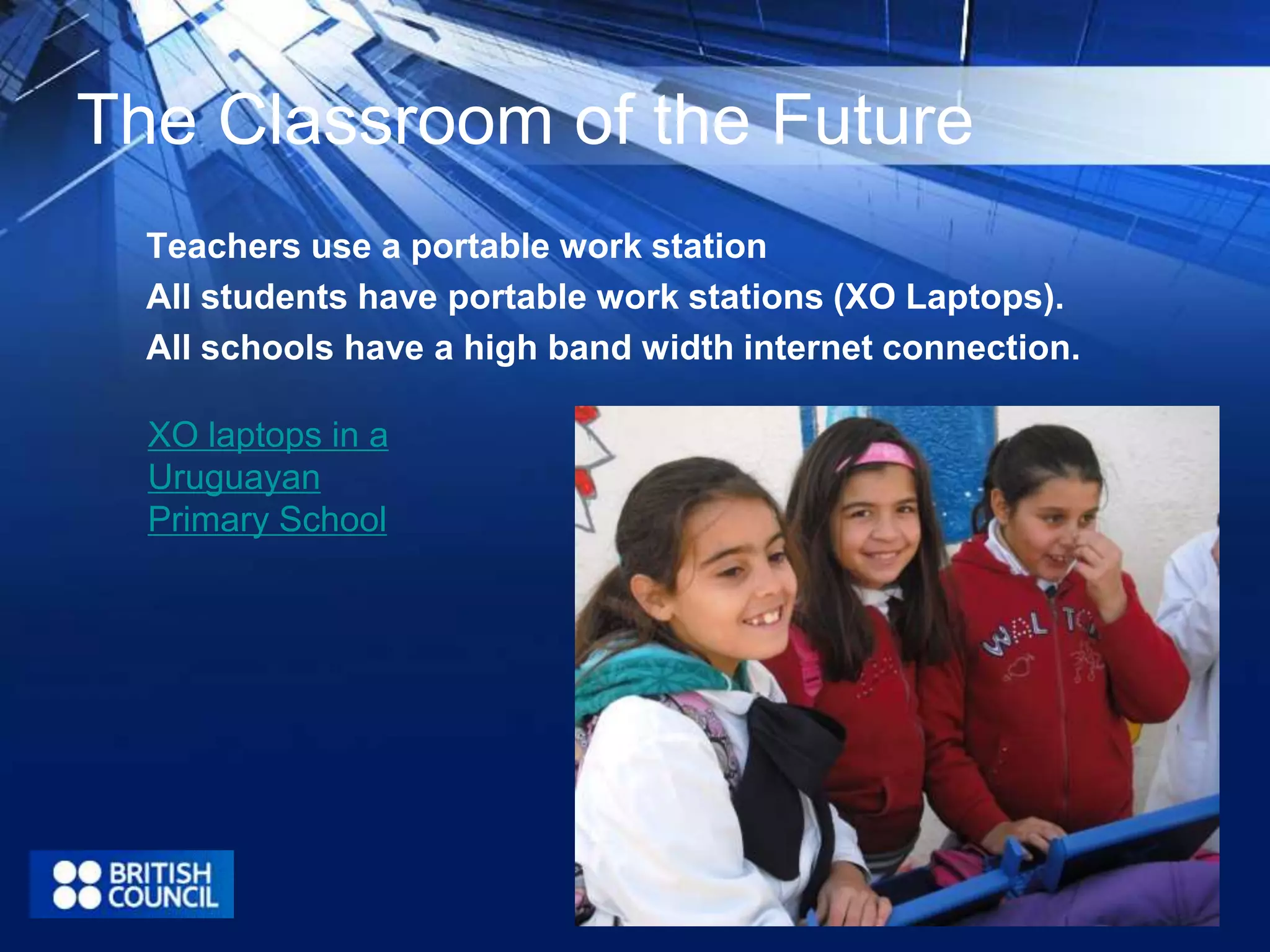
The Classroom of the Future 
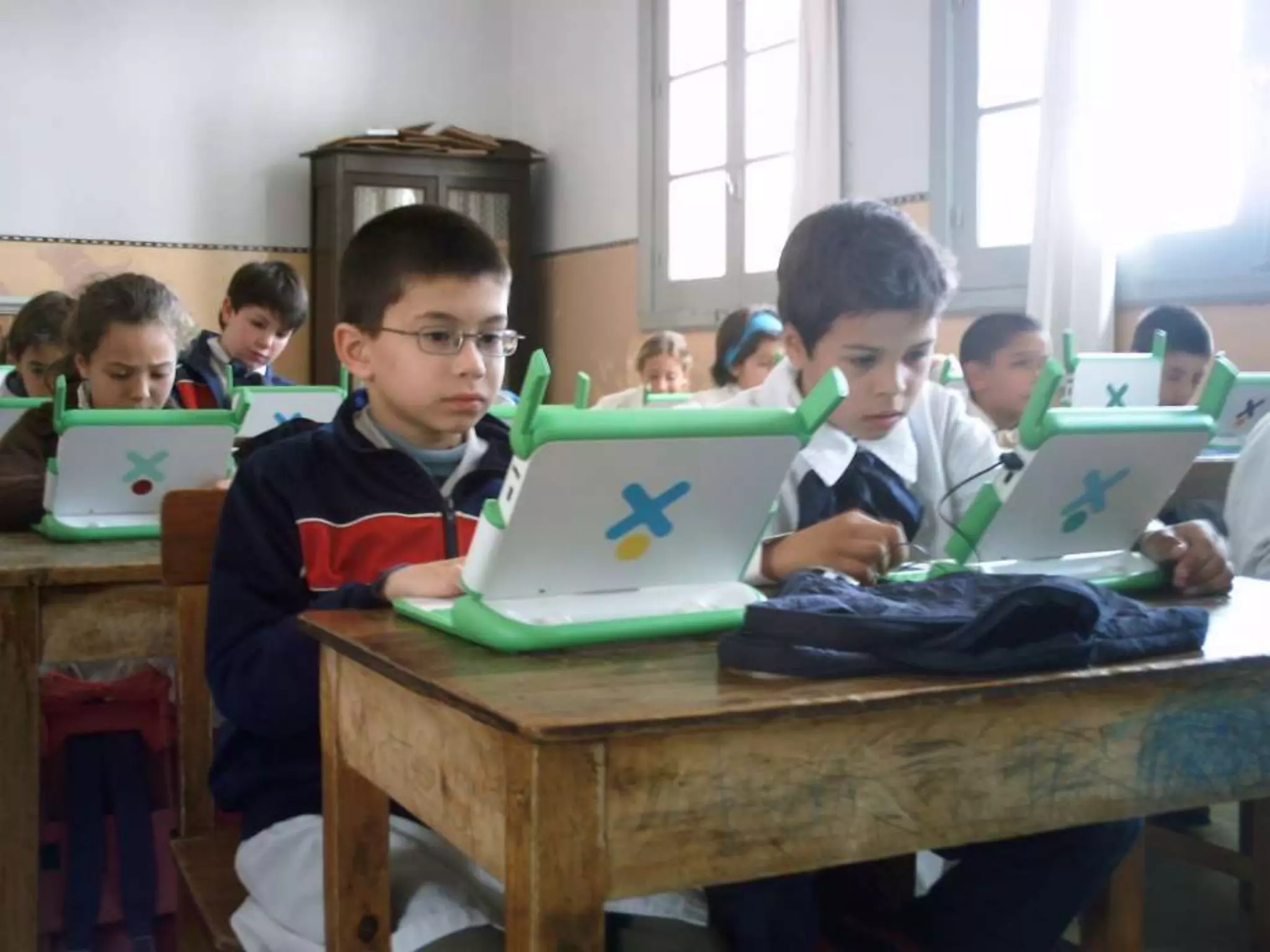
Teachers use a portable work station 
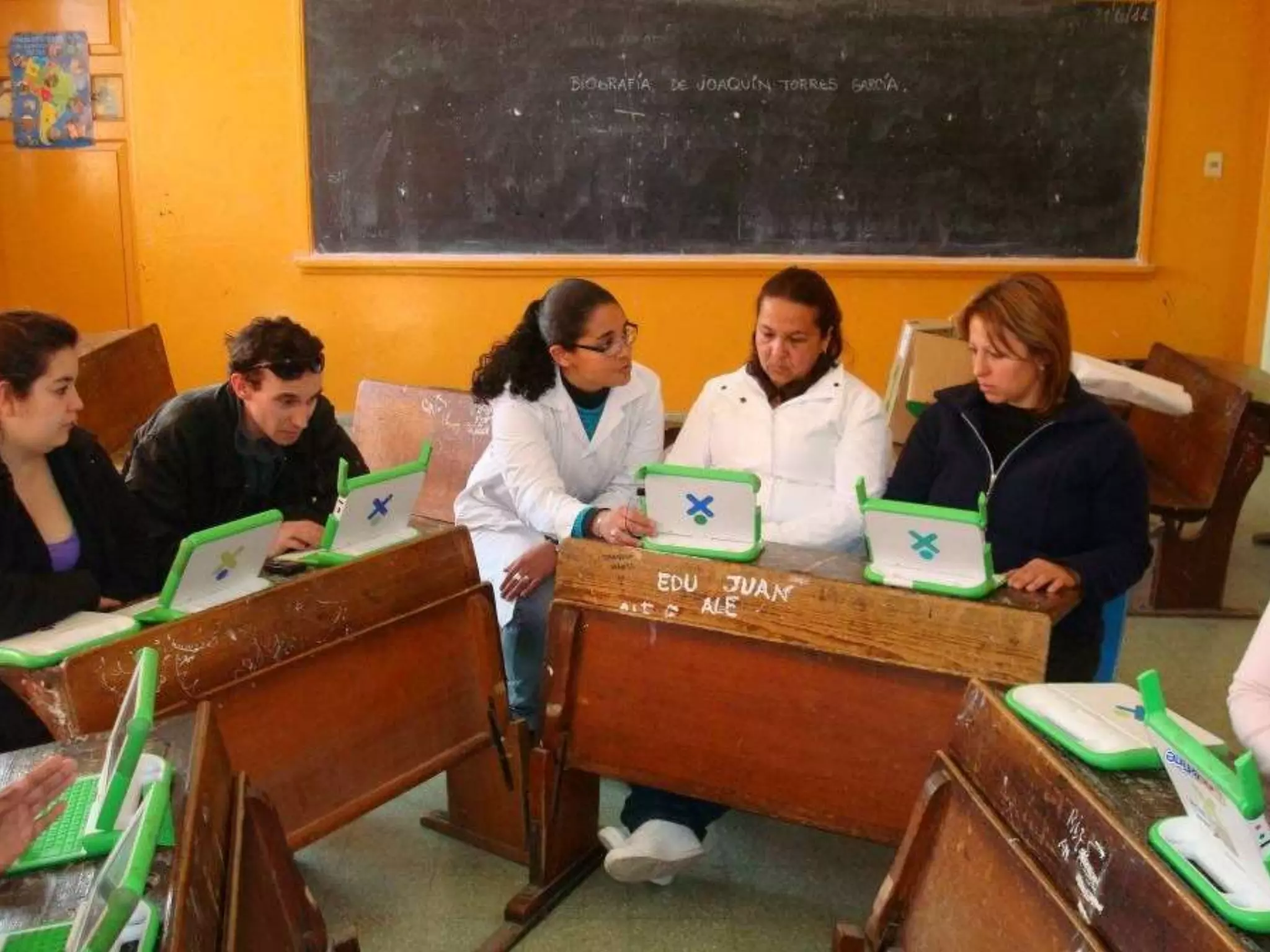
All students have portable work stations (XO Laptops). 
All schools have a high band width internet connection. 
XO laptops in a 
Uruguayan 
Primary School
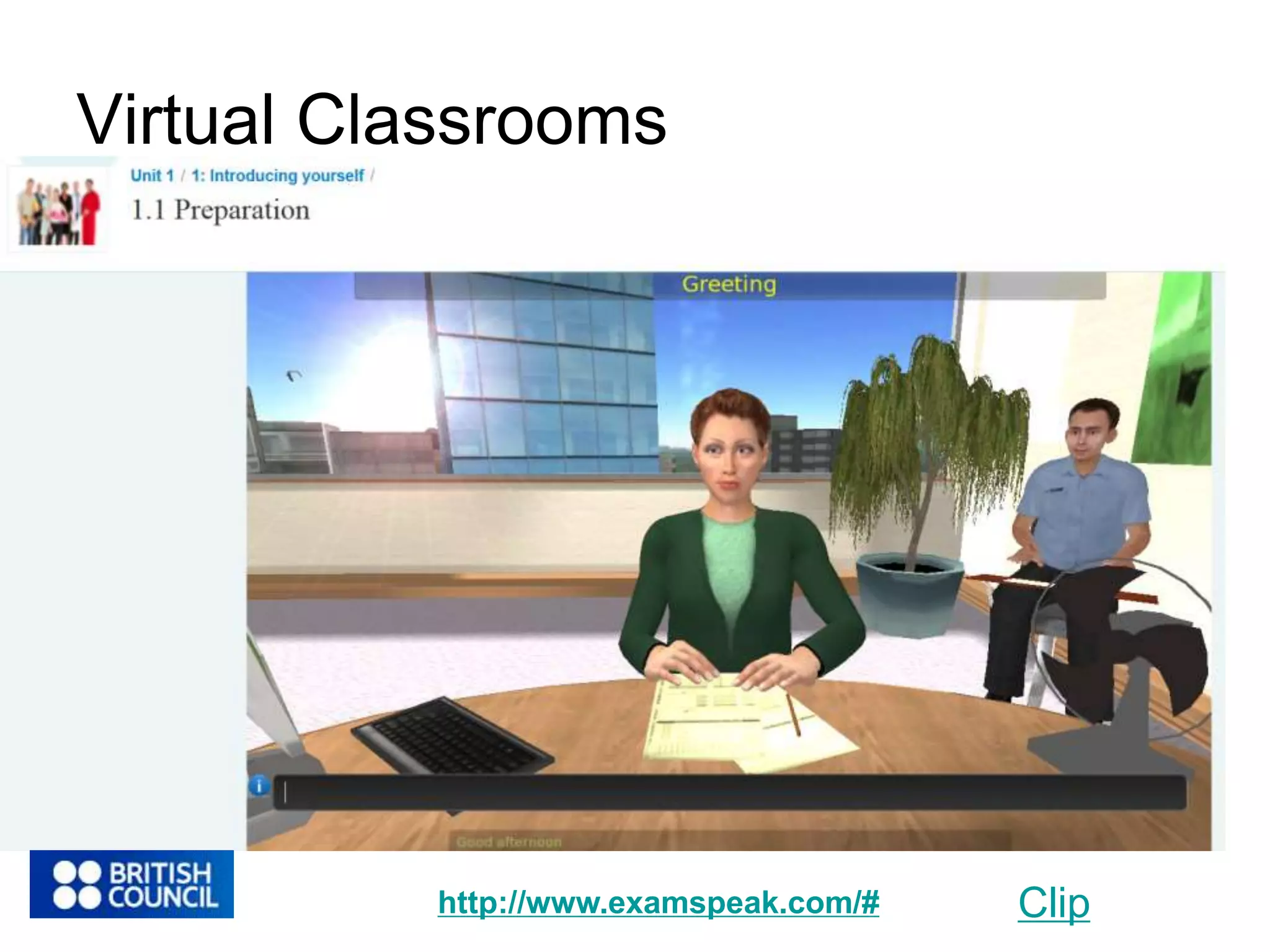
Virtual Classrooms 
http://www.examspeak.com/# Clip
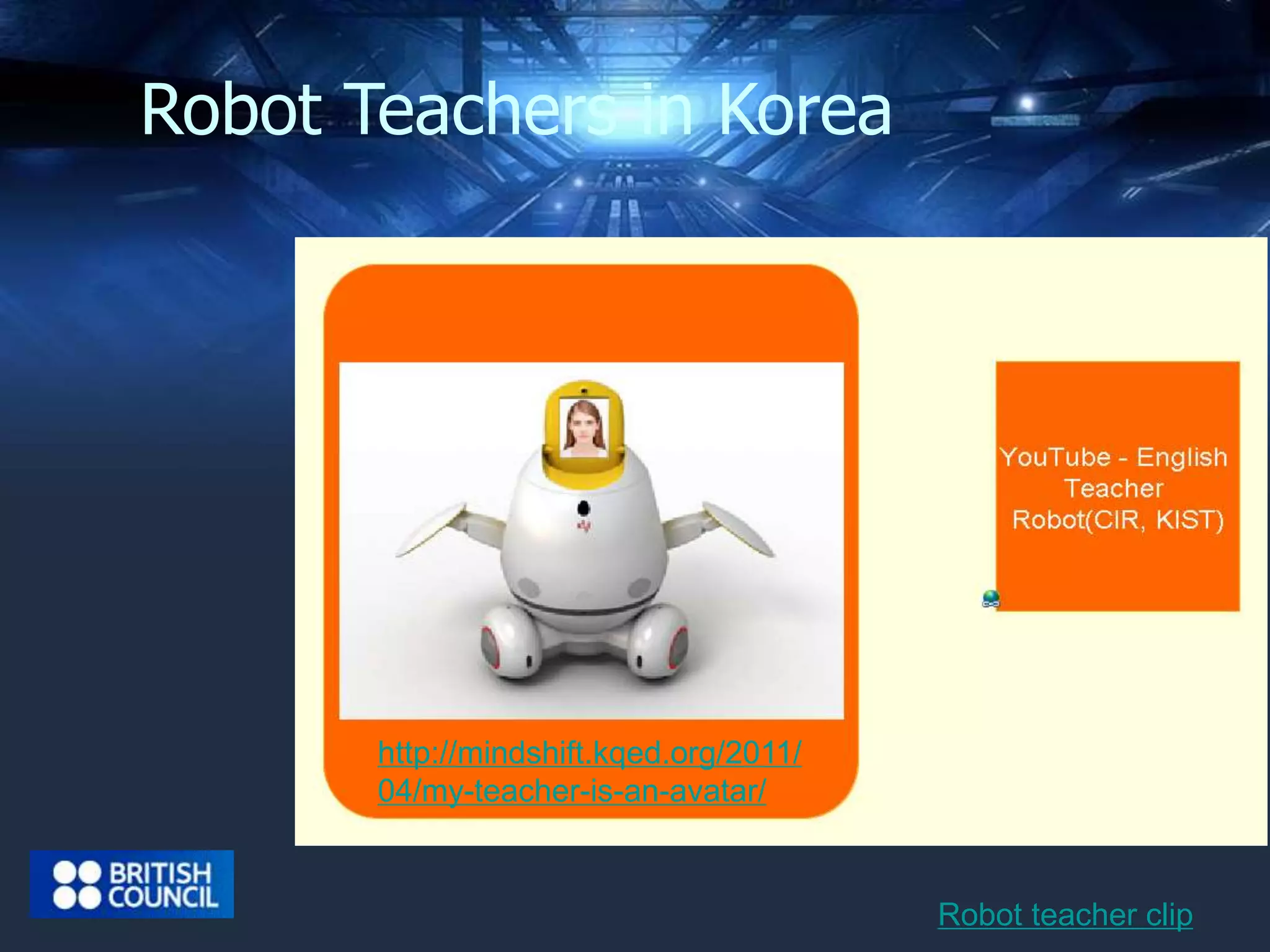
Robot Teachers in Korea 
http://mindshift.kqed.org/2011/ 
04/my-teacher-is-an-avatar/ 
Robot teacher clip
“This is Uruguay's problem: 40% of children who attend public 
schools come from the poorest fifth rung of society. And out of this 
fifth, just 3% makes it to college. Through Plan CEIBAL we decided 
to take a chance on making a change and to find a way out of this 
crisis we live in.” 
Miguel Brechner, Plan Ceibal
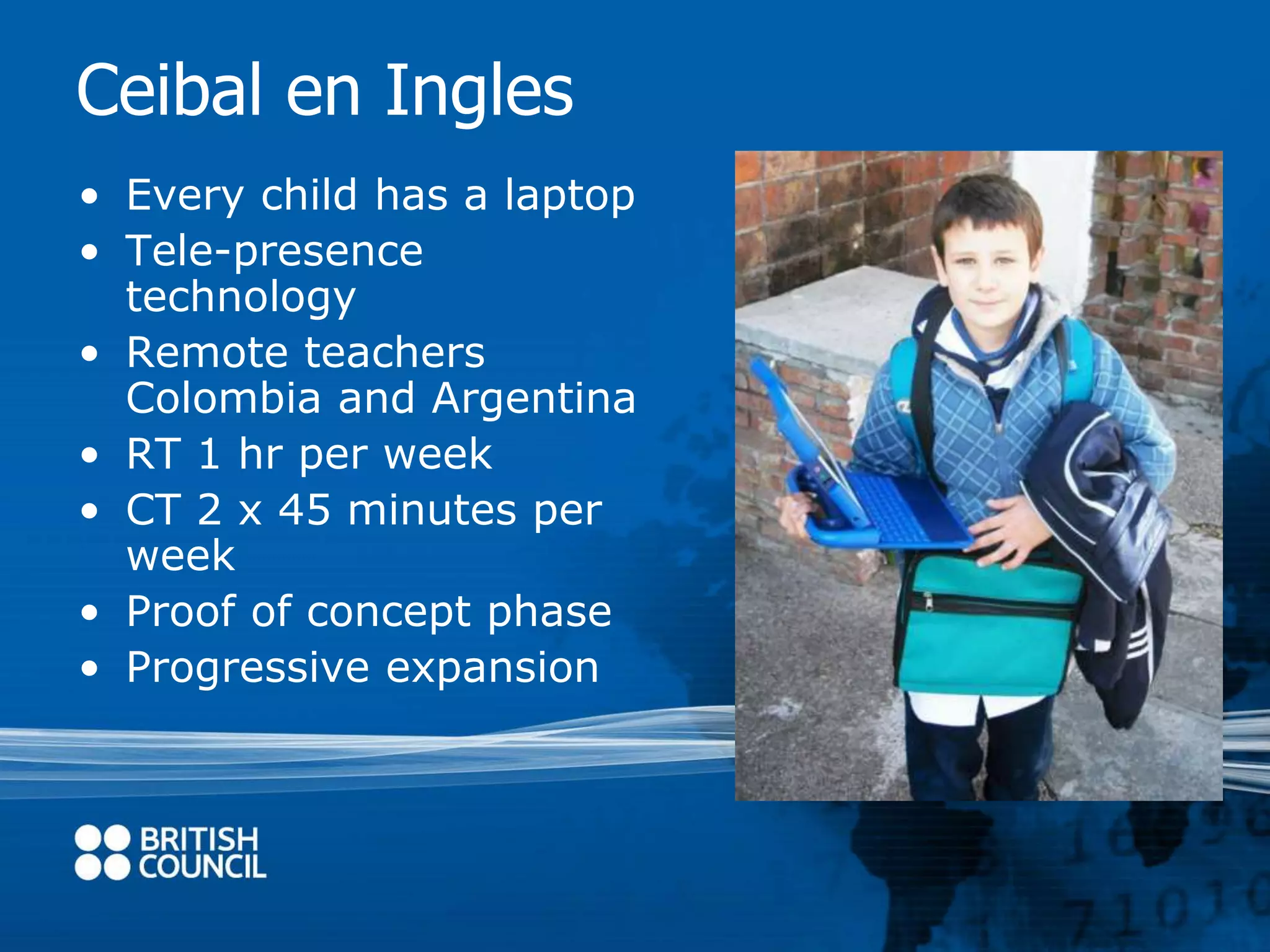
Ceibal en Ingles 
• Every child has a laptop 
• Tele-presence 
technology 
• Remote teachers 
Colombia and Argentina 
• RT 1 hr per week 
• CT 2 x 45 minutes per 
week 
• Proof of concept phase 
• Progressive expansion
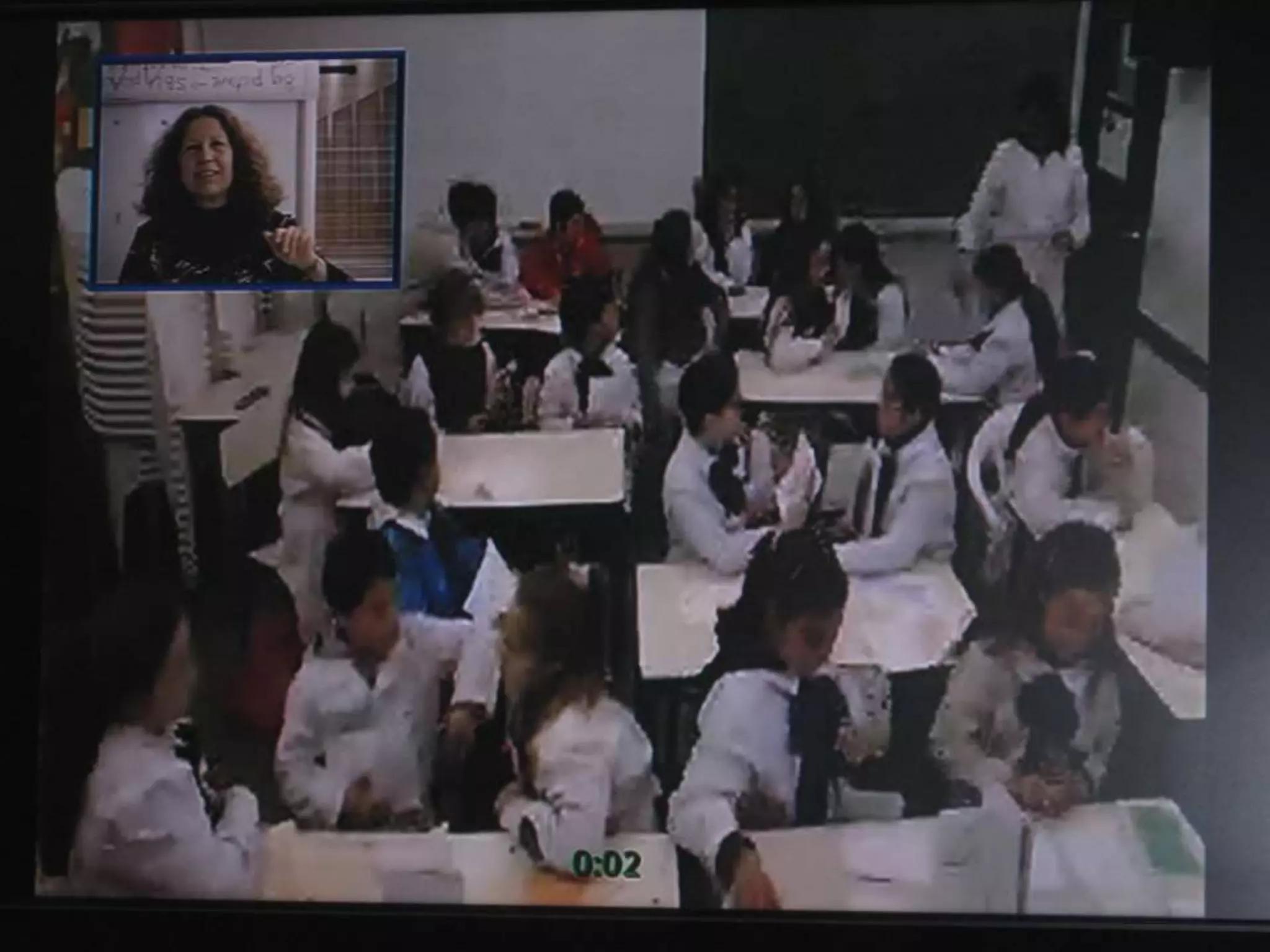
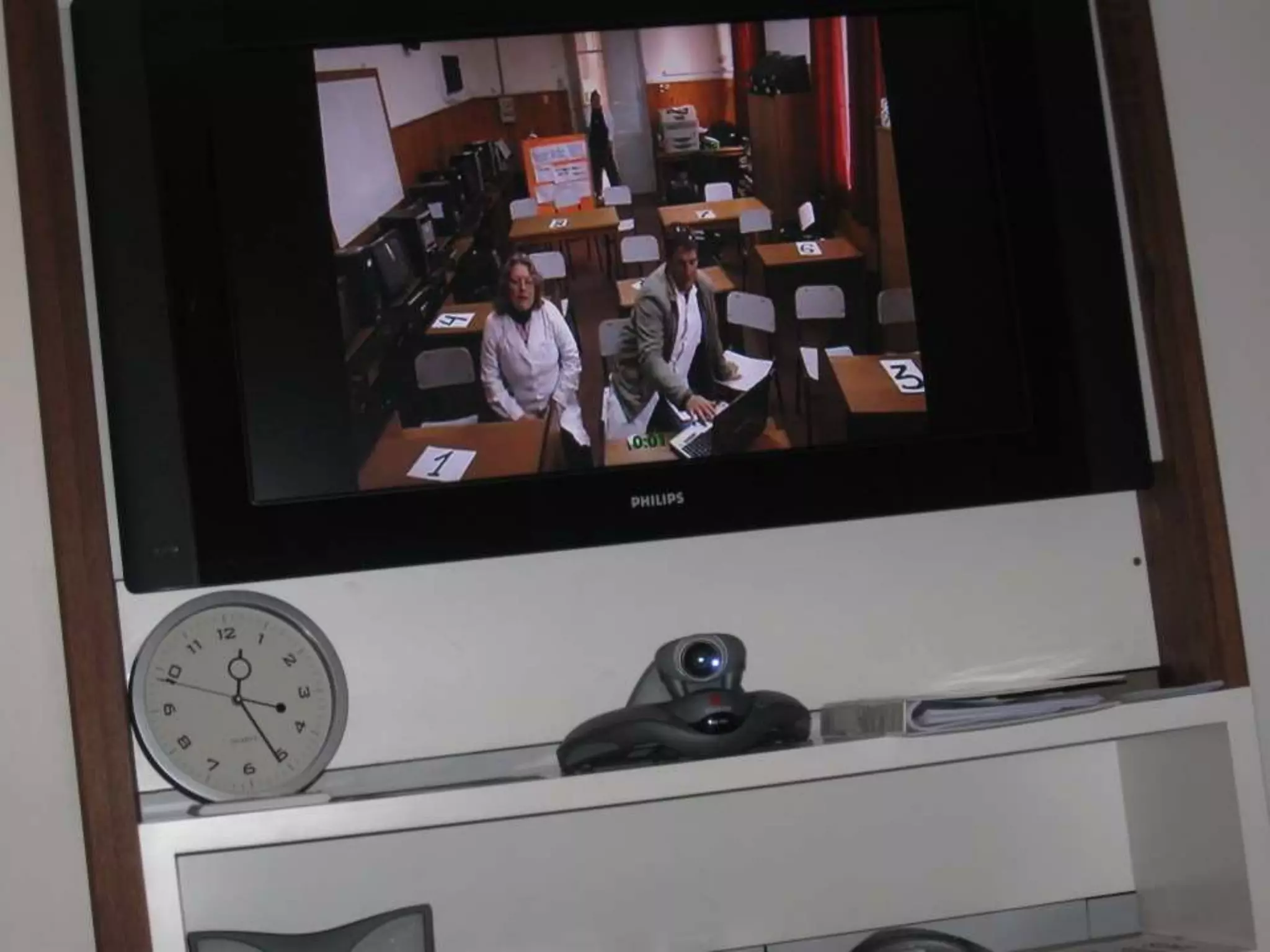
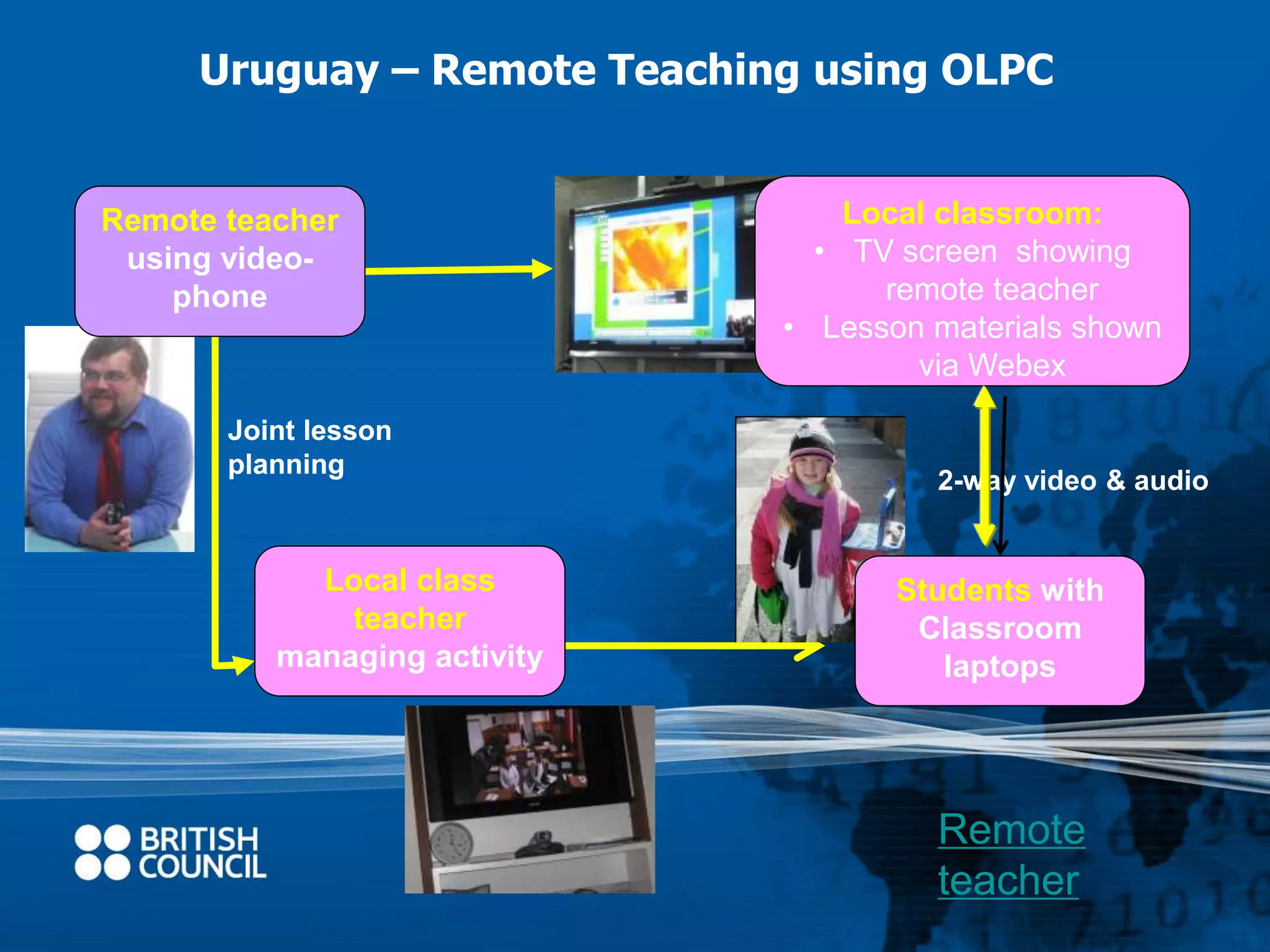
Uruguay – Remote Teaching using OLPC 
Local classroom: 
• TV screen showing 
remote teacher 
• Lesson materials shown 
via Webex 
2-way video & audio 
Remote teacher 
using video-phone 
Joint lesson 
planning 
Students with 
Classroom 
laptops 
Local class 
teacher 
managing activity 
Remote 
teacher
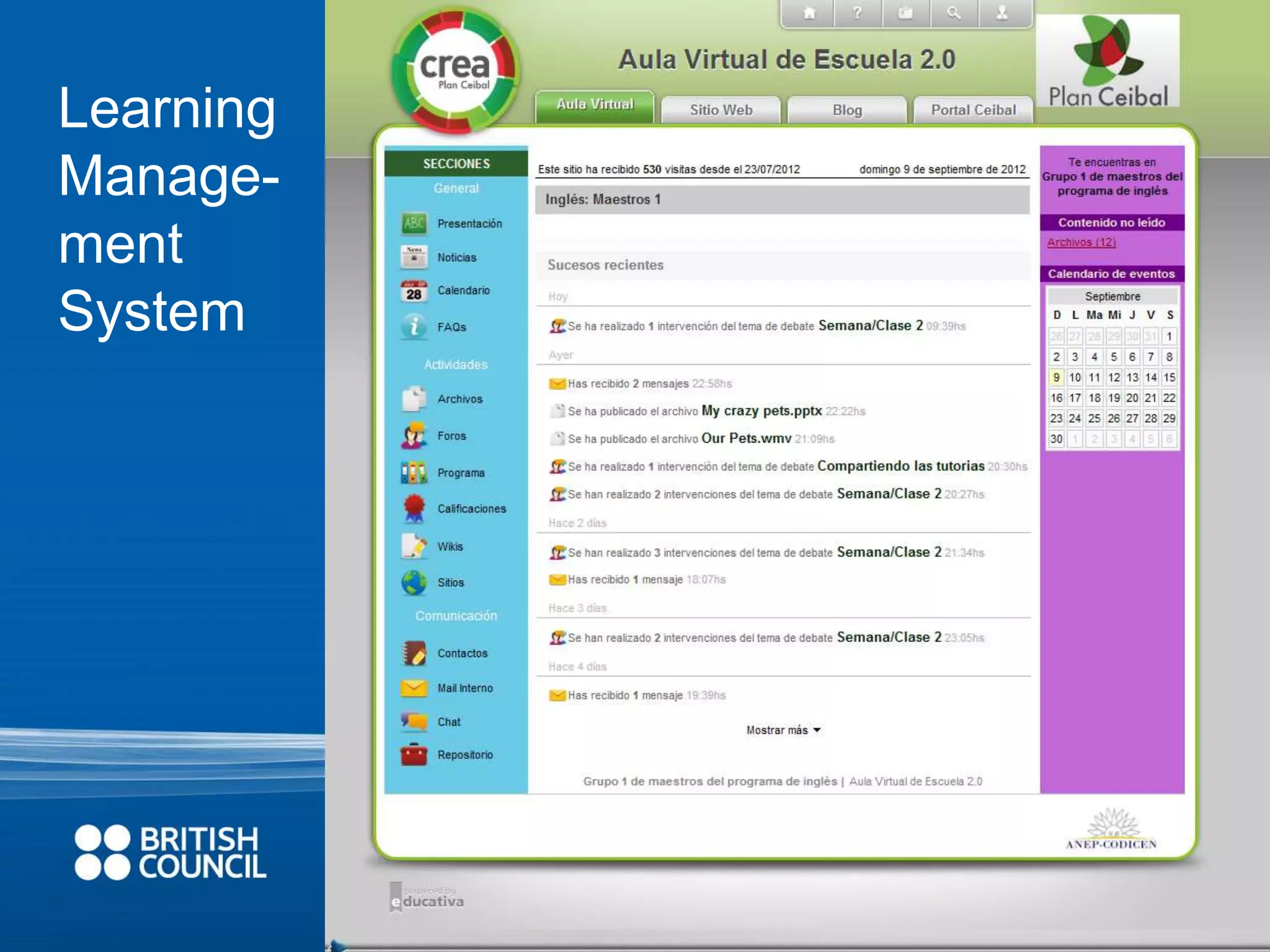
Learning 
Manage-ment 
System
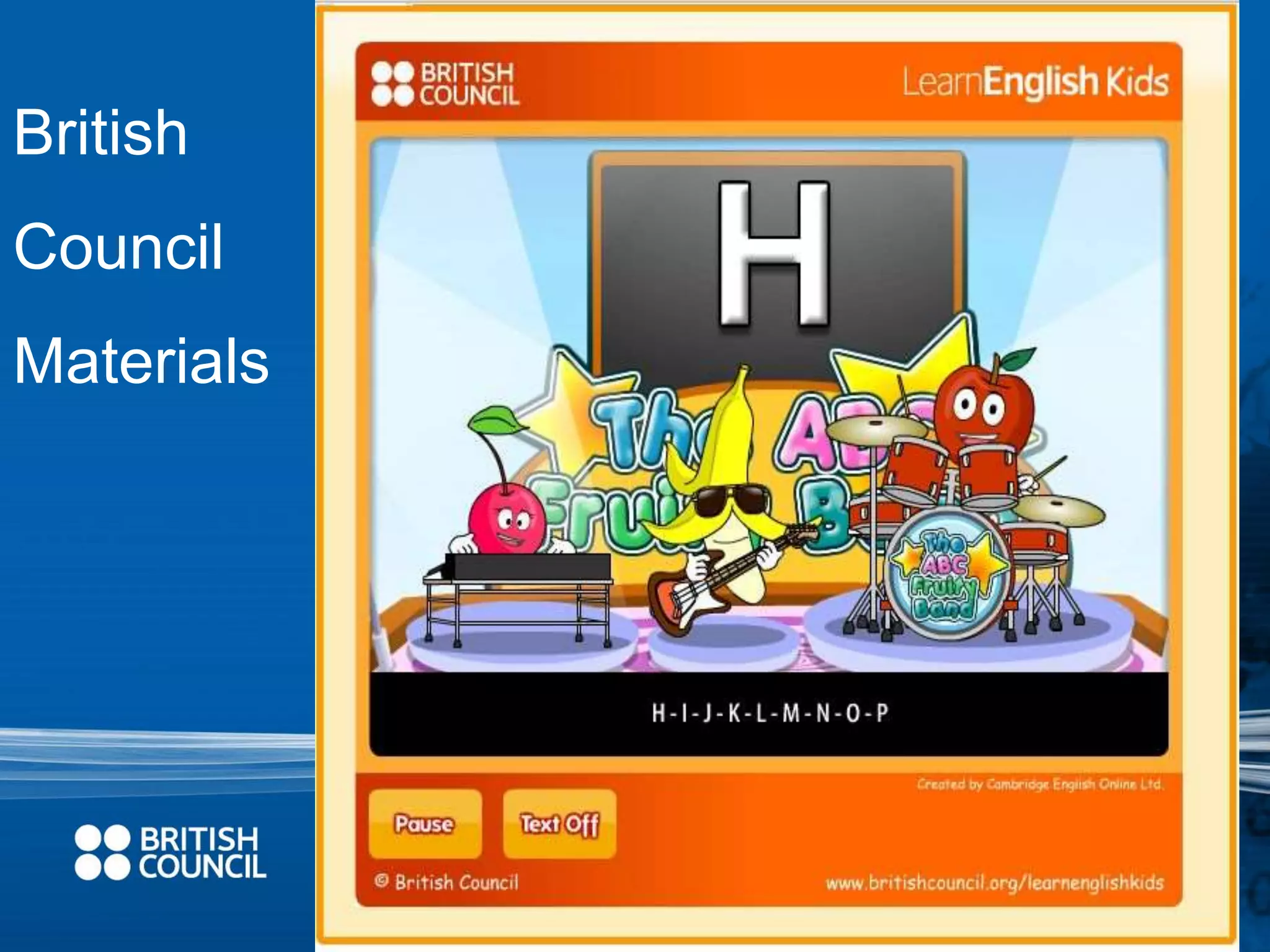
British 
Council 
Materials
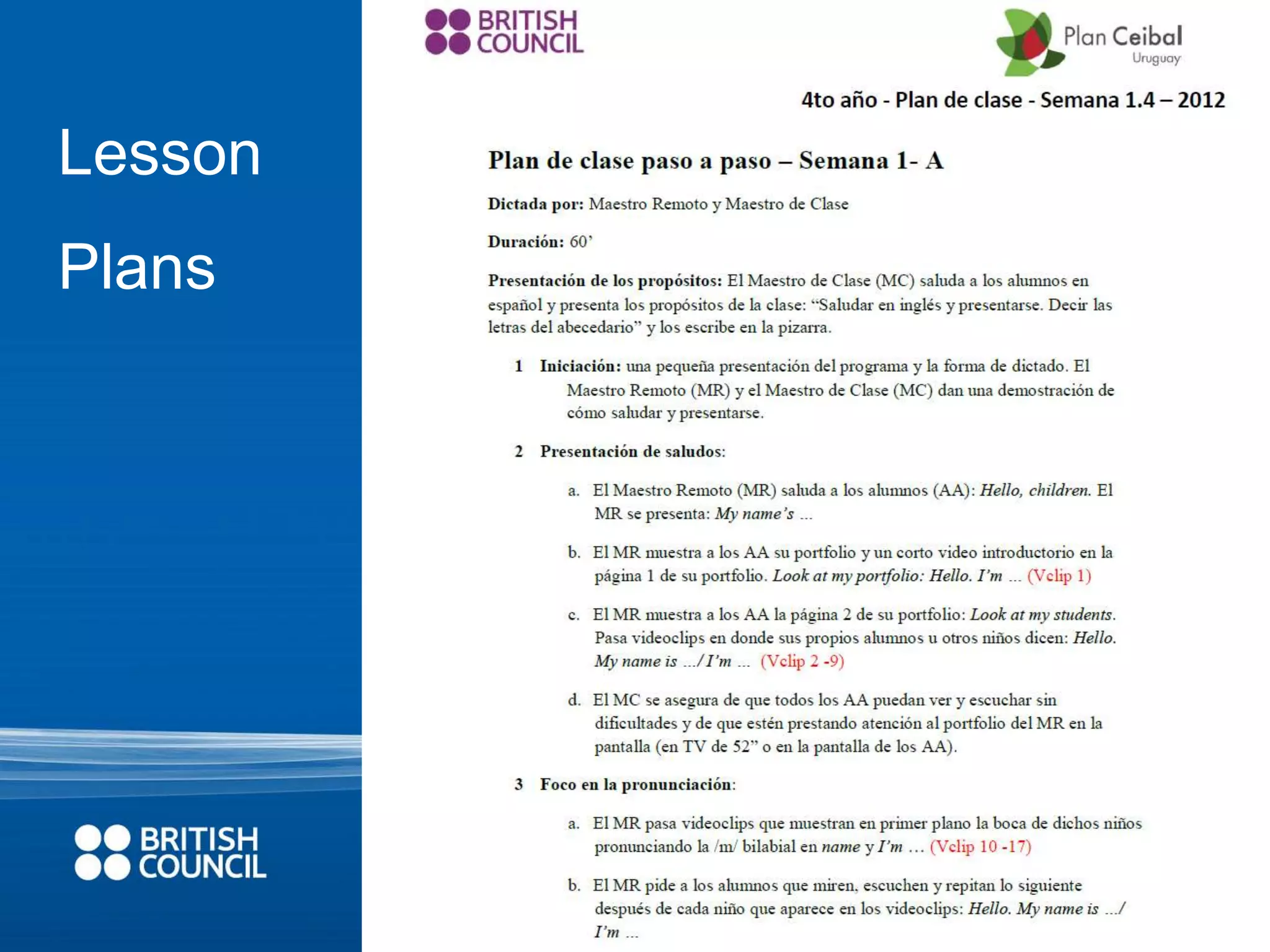
Lesson 
Plans
Visual Aids
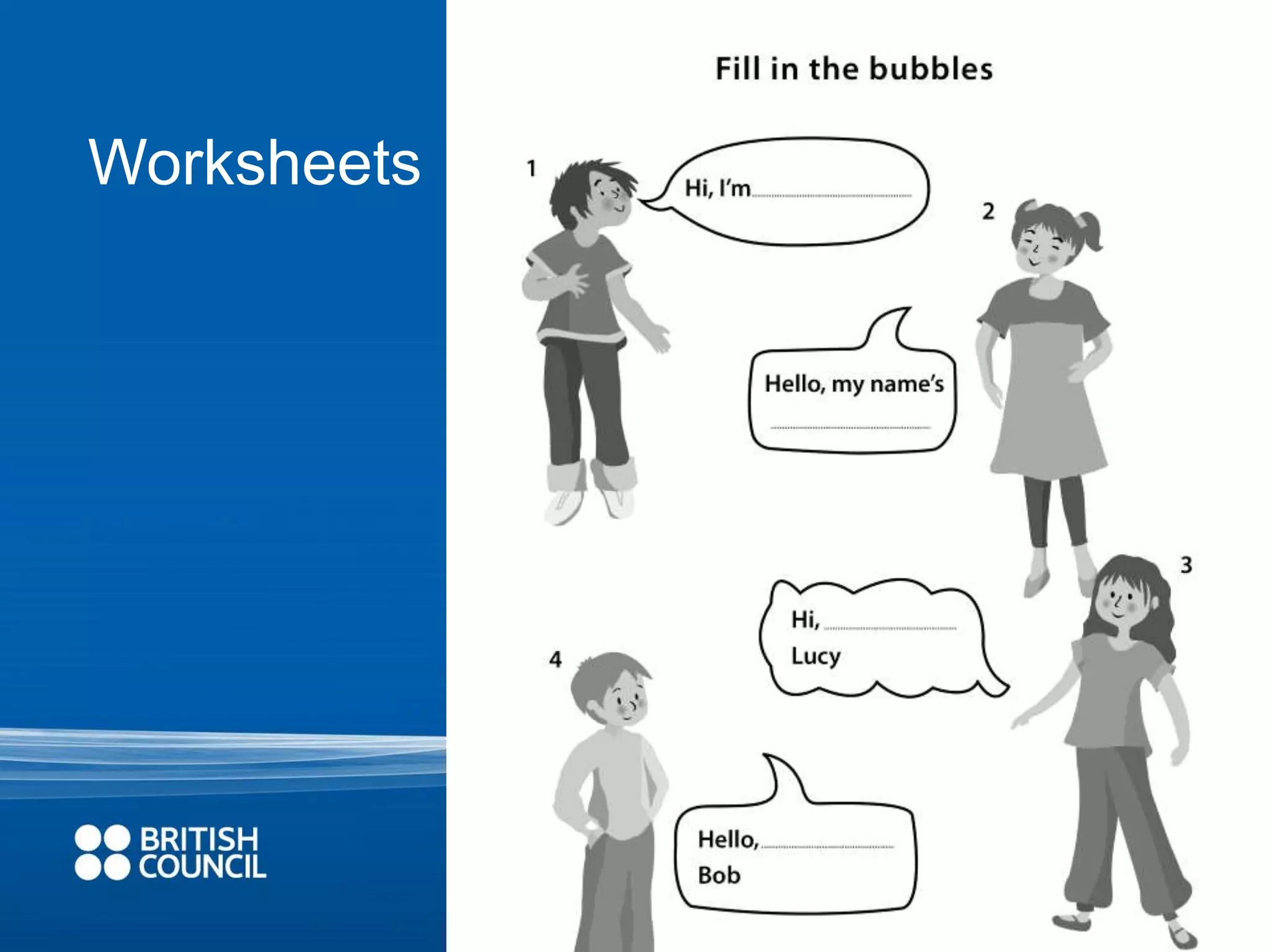
Worksheets
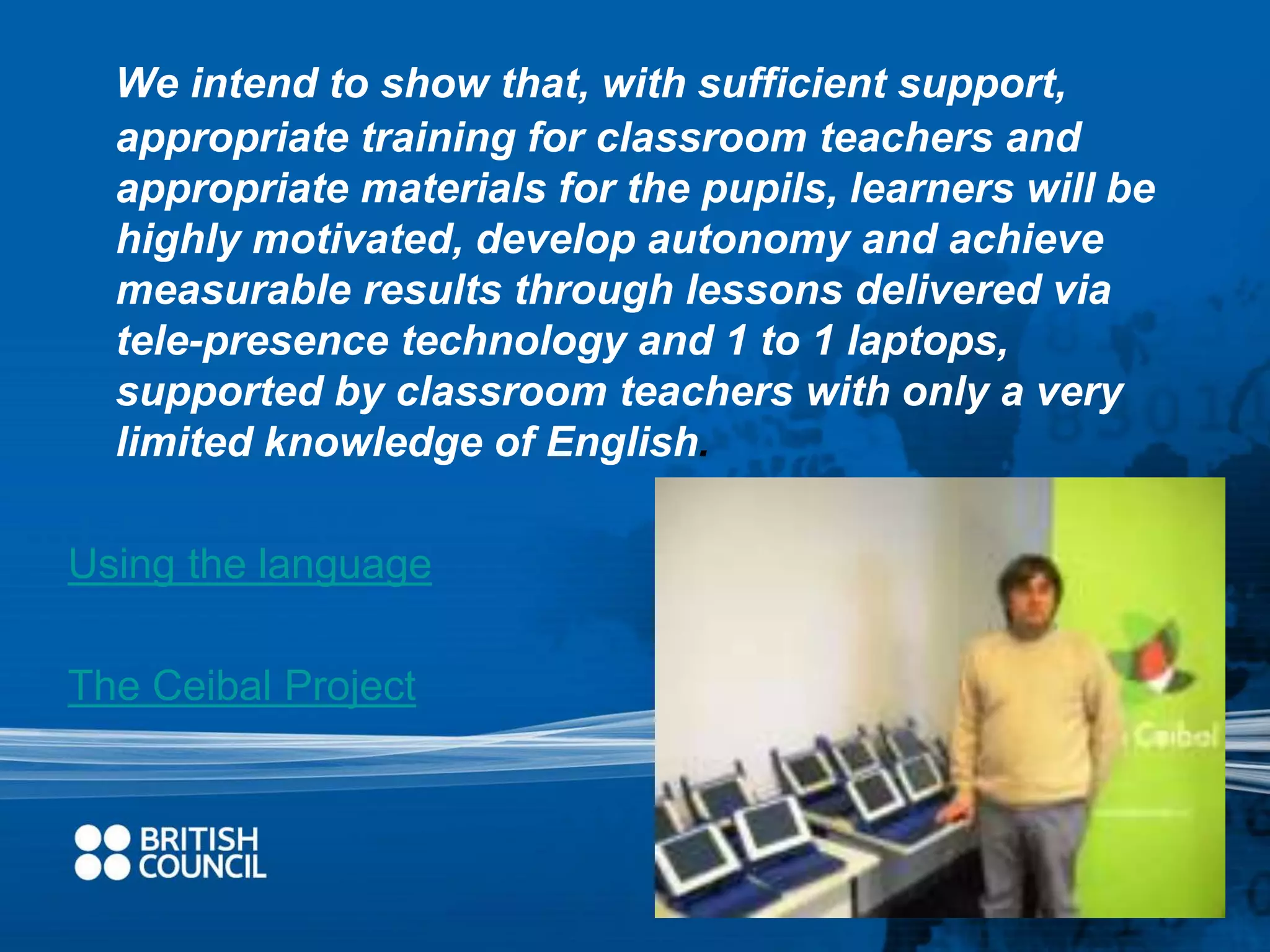
We intend to show that, with sufficient support, 
appropriate training for classroom teachers and 
appropriate materials for the pupils, learners will be 
highly motivated, develop autonomy and achieve 
measurable results through lessons delivered via 
tele-presence technology and 1 to 1 laptops, 
supported by classroom teachers with only a very 
limited knowledge of English. 
Using the language 
The Ceibal Project
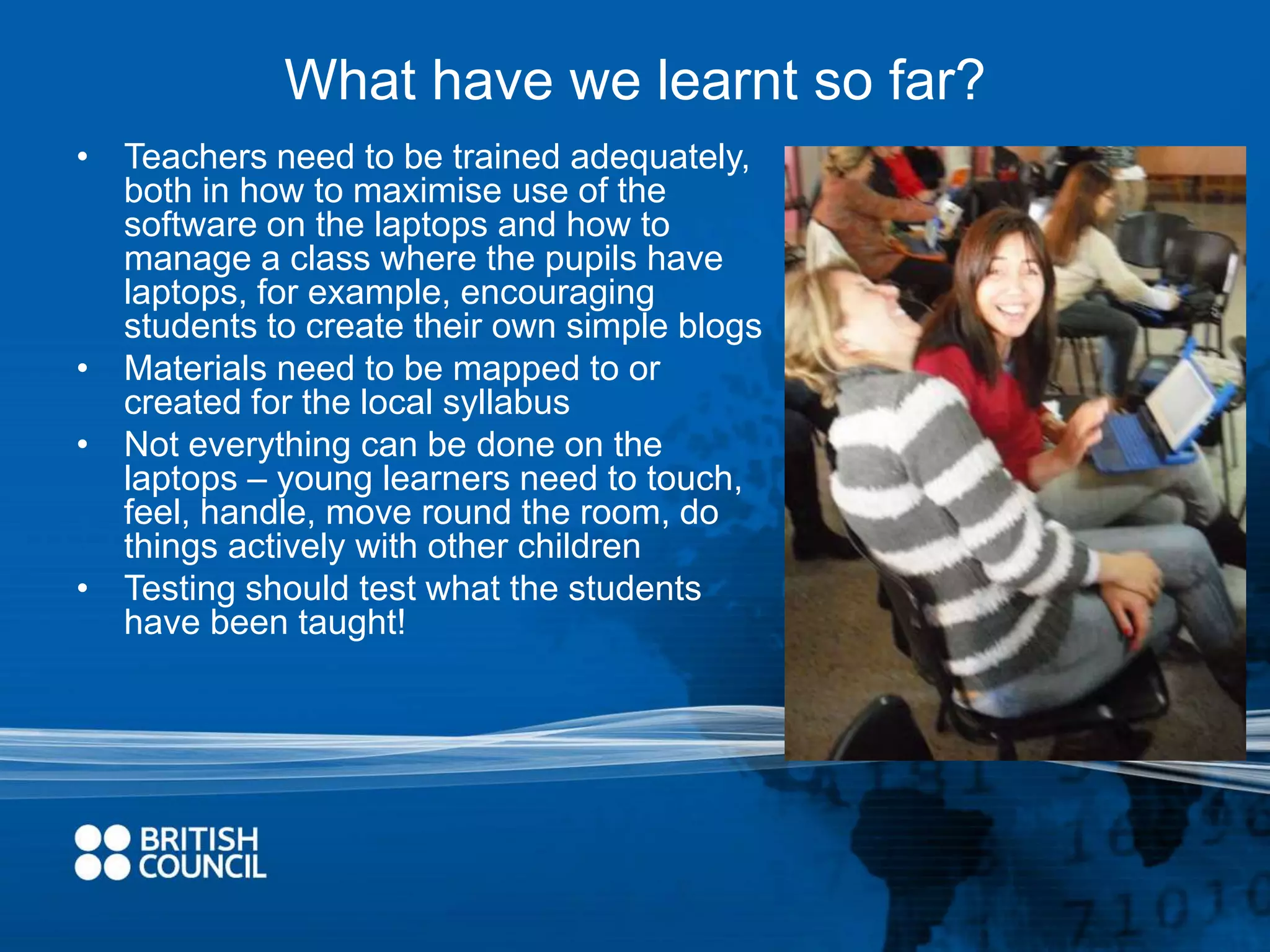
What have we learnt so far? 
• Teachers need to be trained adequately, 
both in how to maximise use of the 
software on the laptops and how to 
manage a class where the pupils have 
laptops, for example, encouraging 
students to create their own simple blogs 
• Materials need to be mapped to or 
created for the local syllabus 
• Not everything can be done on the 
laptops – young learners need to touch, 
feel, handle, move round the room, do 
things actively with other children 
• Testing should test what the students 
have been taught!
Thank you for listening! 
Paul.woods@britishcouncil.org.ar

Technology and English Language teaching: telepresence technology

  • 1.
    Technology and EnglishLanguage Teaching: Telepresence Technology Paul Woods Regional English Language Advisor, The British Council, Argentina Cartagena Policy Dialogue 31 September – 1 October 2012
  • 2.
    Pace of change….  We are living in exponential times  In 2 years time there will be early adopters using devices for teaching and learning that we don’t even know about yet  In 10 years time handheld devices will largely have replaced books  “Teachers will not be replaced by technology, but teachers who don’t use technology will be replaced by those who do” ~Sheryl Nussbaum-Beach~  The next generation will demand teachers who use methods they know and understand. This inevitably involves teaching with technology.
  • 3.
    The Classroom ofthe Future Teachers use a portable work station All students have portable work stations (XO Laptops). All schools have a high band width internet connection. XO laptops in a Uruguayan Primary School
  • 4.
  • 5.
    Robot Teachers inKorea http://mindshift.kqed.org/2011/ 04/my-teacher-is-an-avatar/ Robot teacher clip
  • 6.
    “This is Uruguay'sproblem: 40% of children who attend public schools come from the poorest fifth rung of society. And out of this fifth, just 3% makes it to college. Through Plan CEIBAL we decided to take a chance on making a change and to find a way out of this crisis we live in.” Miguel Brechner, Plan Ceibal
  • 12.
    Ceibal en Ingles • Every child has a laptop • Tele-presence technology • Remote teachers Colombia and Argentina • RT 1 hr per week • CT 2 x 45 minutes per week • Proof of concept phase • Progressive expansion
  • 13.
    Uruguay – RemoteTeaching using OLPC Local classroom: • TV screen showing remote teacher • Lesson materials shown via Webex 2-way video & audio Remote teacher using video-phone Joint lesson planning Students with Classroom laptops Local class teacher managing activity Remote teacher
  • 14.
  • 15.
  • 16.
  • 17.
  • 18.
  • 20.
    We intend toshow that, with sufficient support, appropriate training for classroom teachers and appropriate materials for the pupils, learners will be highly motivated, develop autonomy and achieve measurable results through lessons delivered via tele-presence technology and 1 to 1 laptops, supported by classroom teachers with only a very limited knowledge of English. Using the language The Ceibal Project
  • 21.
    What have welearnt so far? • Teachers need to be trained adequately, both in how to maximise use of the software on the laptops and how to manage a class where the pupils have laptops, for example, encouraging students to create their own simple blogs • Materials need to be mapped to or created for the local syllabus • Not everything can be done on the laptops – young learners need to touch, feel, handle, move round the room, do things actively with other children • Testing should test what the students have been taught!
  • 22.
    Thank you forlistening! Paul.woods@britishcouncil.org.ar