
PROFESSIONAL STUDIES 3A
 Professional
doing a certain kind of work as a full-time
job for payment
 Learning
involves obtaining knowledge by
studying
 Network
a net-like arrangement of connected
lines; a group of people that exchange
information
 Is the entire collection of people with
whom you engage and exchange
information, usually online.
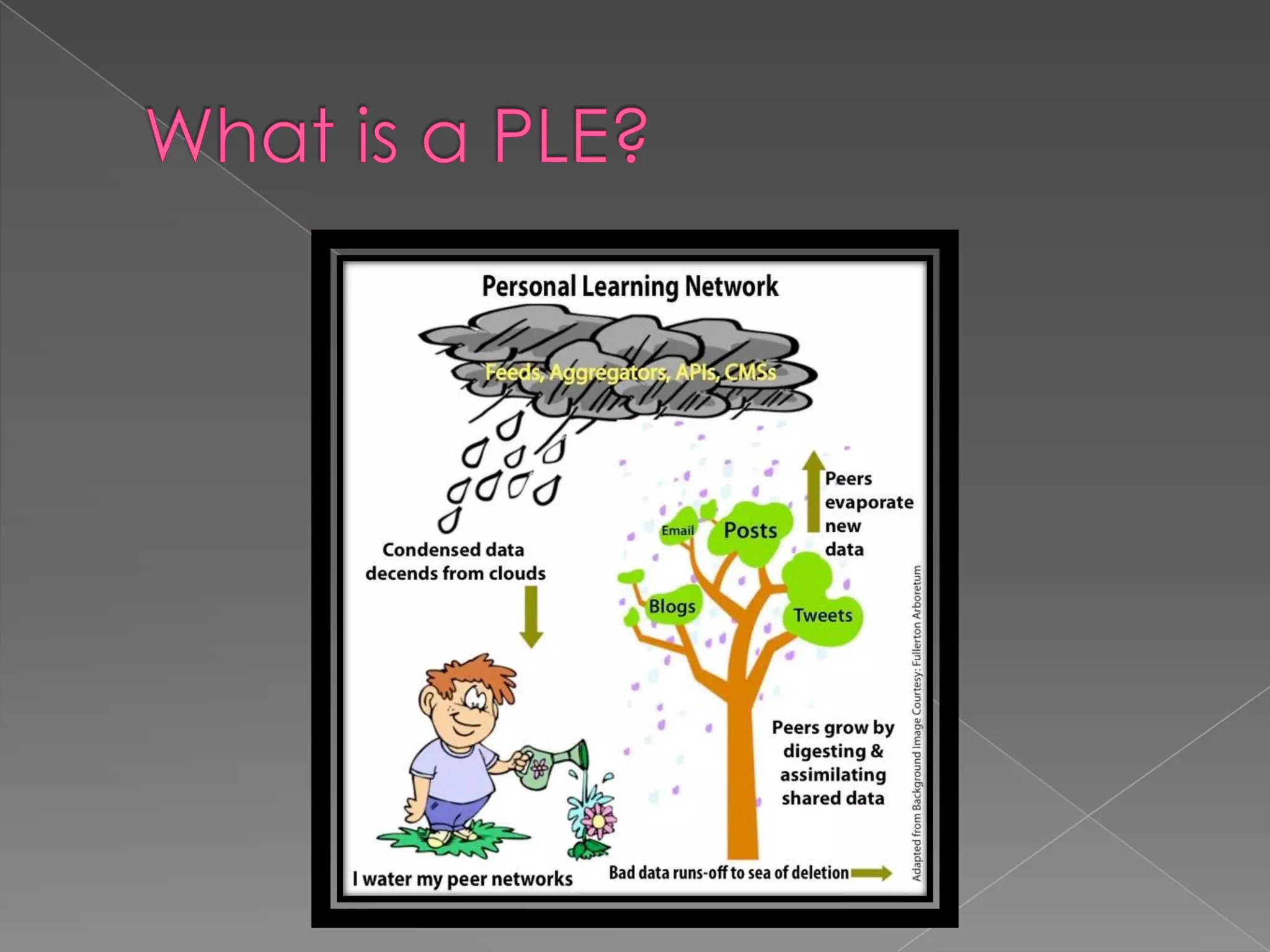
 A personal learning network is an
informal learning network that consists of
the people a learner interacts with and
derives knowledge from in a personal
learning environment.
 In a PLN, a person makes a connection
with another person with the specific
intent that some type of learning will
occur because of that connection
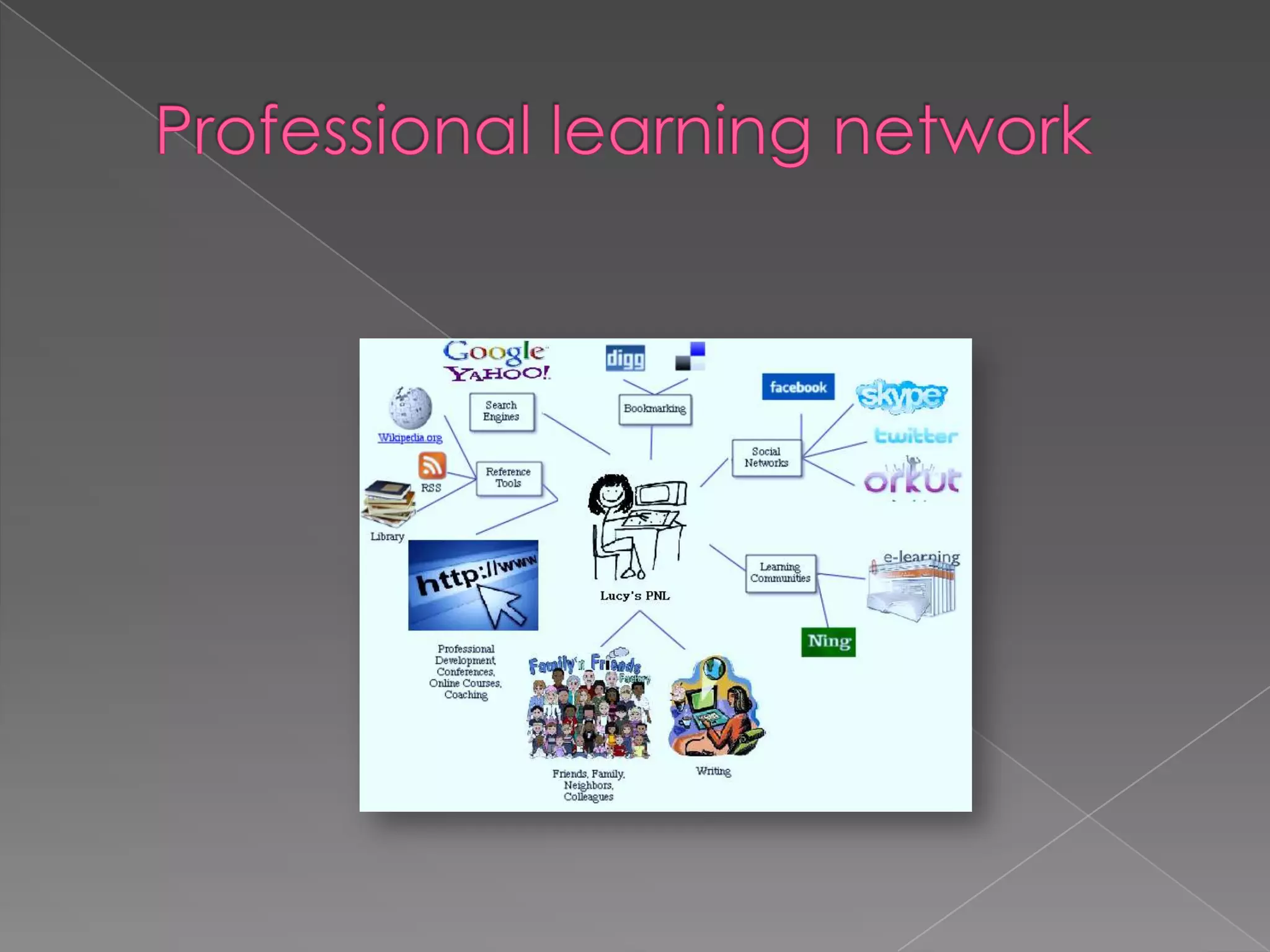
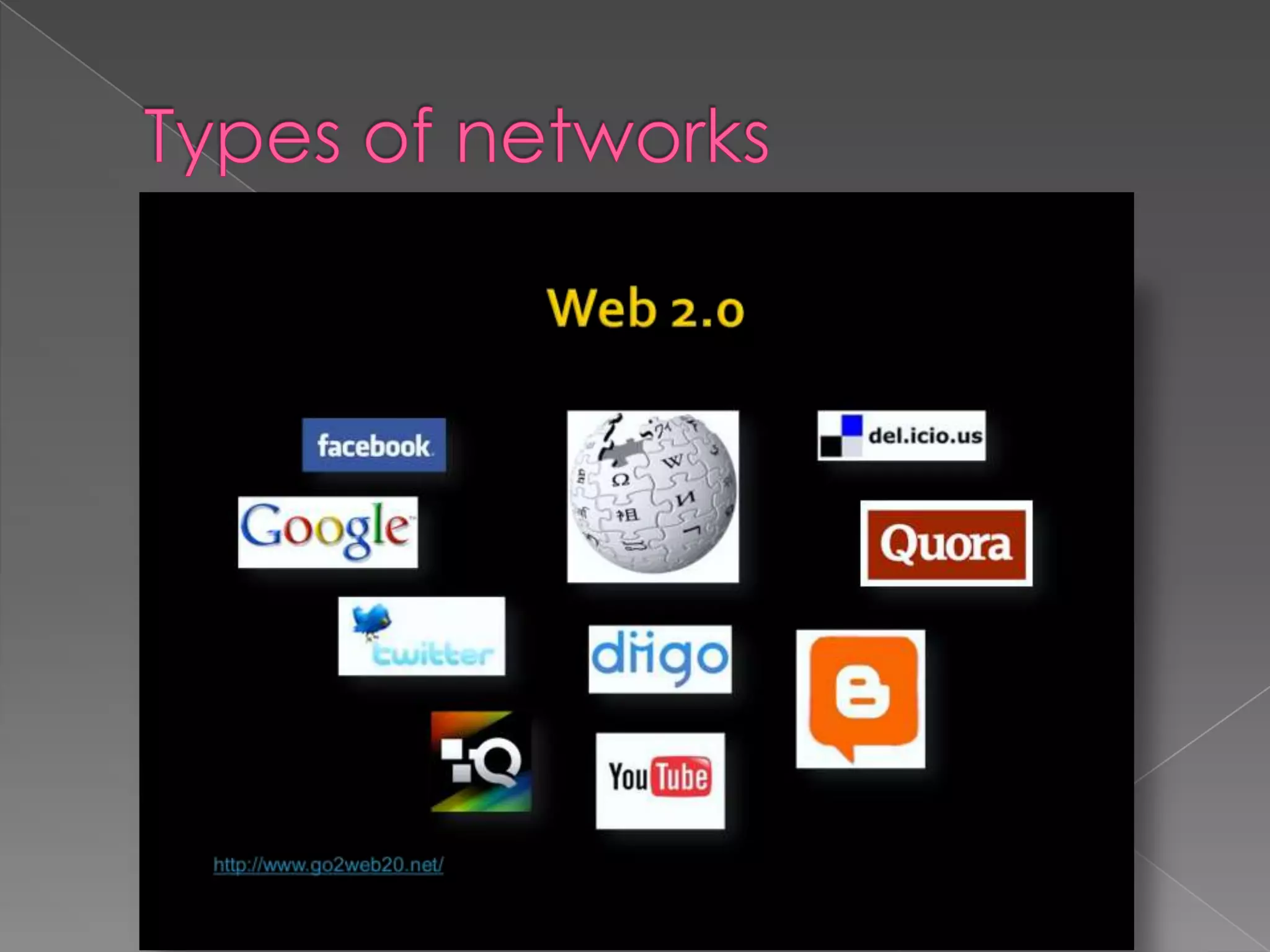
 There are different types of PLN,
PLNs can include tons of different
communities – social networking sites like
Facebook, blogs, Twitter, wikis, social
bookmarking tools, LinkedIn.
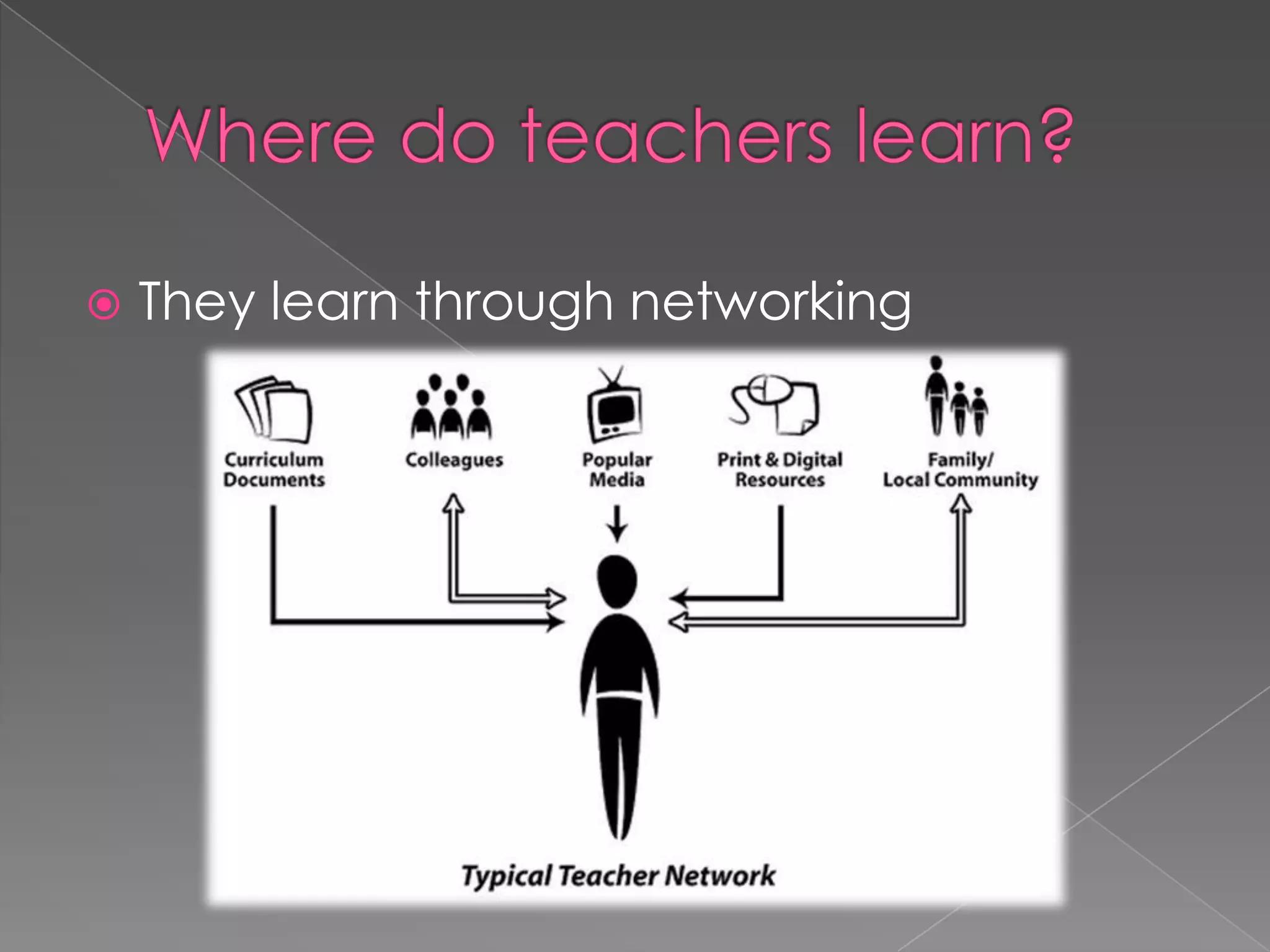
 They learn through networking
 Knowledge exists in the connection we
make on a daily basis with other
individuals.
 Types of connections:
 Strong connections vs weak connections
 Staying connected improves knowledge
 “A personal representation that
represents a skill set, a big idea, a belief
system, and value-equation that other
people find of interest. Personal
branding is everything you do that
differentiates and market yourself, such
as your messages, self-presentation, and
marketing tactics”. C. Kupta
 Entails that you:
 reflect on your practice
 attend conferences, workshops and
seminars
 continuously read academic journals
and/or professional literature
 attend service training sessions and staff
meetings
 Learn new things
 Ask questions
 Collaborate
 Validation
 Camaraderie
 Stay in touch with friends
 To update our practice
 To learn, unlearn, and relearn
 To reflect constantly to the changes
around your profession
 The personal web site is still one of the
most critical foundations of your
professional brand.
 The online environment allow you to
manage your brand perception
(professional development).
 The web allows you to archive and
display your attributes. Web sites don’t
have to be complicated to be of value.
 Be sure to focus on the usability,
graphics, navigation, metadata, page
layout and information content.
 While technology comes and goes over
time, the simplicity of design never does.
Maybe a full scale web site is too much
time and effort, if so then simply create a
blog from one of the many free sources.
 The key is to get that professionalism out
in the public. At the heart of a
professional representation is to see that
the individual has differentiated
themselves from the pack, a diverse set
of skills and talent, and a history of
delivery. If you can communicate that in
a simple and concise manner then you
are at the top of your game.
 We know we can distribute information,
now we need to concentrate on how
we associate to each other, how we
build learning contexts
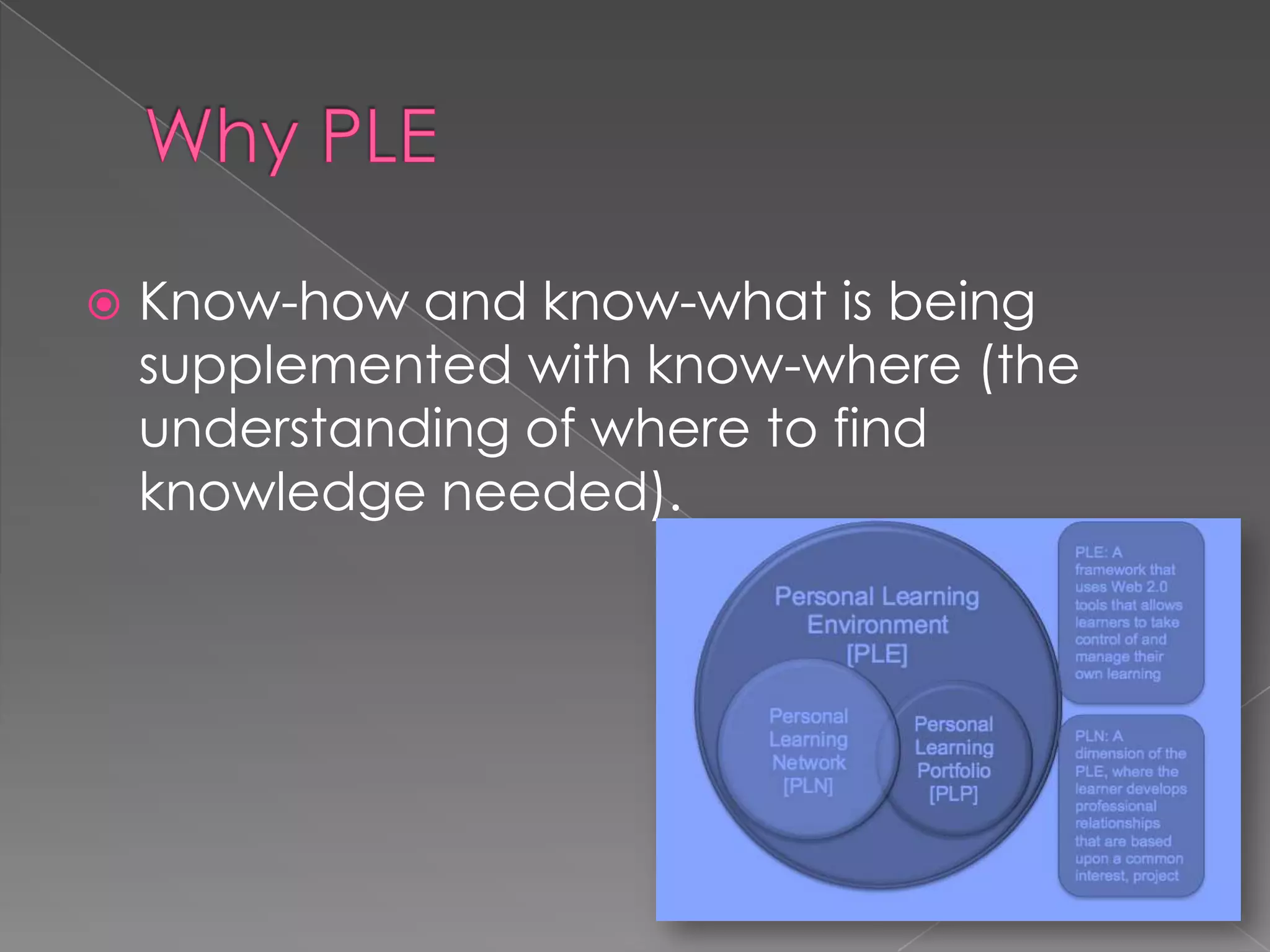
 Know-how and know-what is being
supplemented with know-where (the
understanding of where to find
knowledge needed).
 Professional development – learn from
content-area specialists
 Locate resources for your classroom,
such as free websites and software
 Get lesson plan ideas from master
teachers
 Learn about new technology and how
to integrate it into your teaching
 Find collaborative solutions
 Find interesting links to education news
 Students can also reap the benefits of
tapping into their PLNs.
http://www.youtube.com/watch?v=Xw
M4ieFOotA
 Whether you’re a full-time teacher, or a
full-time student, your PLN can be
extremely interesting and helpful. The
beauty of people communicating online
is the ease of finding and sharing
information and – if you ask for it – the
group feedback that you get on ideas
and projects.
 Raquseo, C. (2001, March 4). Professional
development. pp. 4-30.
 Abbey,E. (2009, March 6). Professional learning
networks. pp. 1-23.
 Stephens, R. (2005, August 31). Fifteen ways to
implement professional branding. 15 Ways, p. 19.
 http://en.wikipedia.org/wiki/Personal_learning_netwo
rk
 http://onceateacher.wordpress.com/2009/05/05/pln-
your-personal-learning-network-made-easy/

Pfs3

  • 1.
  • 4.
     Professional doing acertain kind of work as a full-time job for payment  Learning involves obtaining knowledge by studying  Network a net-like arrangement of connected lines; a group of people that exchange information
  • 5.
     Is theentire collection of people with whom you engage and exchange information, usually online.  A personal learning network is an informal learning network that consists of the people a learner interacts with and derives knowledge from in a personal learning environment.
  • 6.
     In aPLN, a person makes a connection with another person with the specific intent that some type of learning will occur because of that connection  There are different types of PLN, PLNs can include tons of different communities – social networking sites like Facebook, blogs, Twitter, wikis, social bookmarking tools, LinkedIn.
  • 8.
     They learnthrough networking
  • 9.
     Knowledge existsin the connection we make on a daily basis with other individuals.  Types of connections:  Strong connections vs weak connections  Staying connected improves knowledge
  • 11.
     “A personalrepresentation that represents a skill set, a big idea, a belief system, and value-equation that other people find of interest. Personal branding is everything you do that differentiates and market yourself, such as your messages, self-presentation, and marketing tactics”. C. Kupta
  • 12.
     Entails thatyou:  reflect on your practice  attend conferences, workshops and seminars  continuously read academic journals and/or professional literature  attend service training sessions and staff meetings
  • 13.
     Learn newthings  Ask questions  Collaborate  Validation  Camaraderie  Stay in touch with friends
  • 14.
     To updateour practice  To learn, unlearn, and relearn  To reflect constantly to the changes around your profession
  • 15.
     The personalweb site is still one of the most critical foundations of your professional brand.  The online environment allow you to manage your brand perception (professional development).  The web allows you to archive and display your attributes. Web sites don’t have to be complicated to be of value.
  • 16.
     Be sureto focus on the usability, graphics, navigation, metadata, page layout and information content.  While technology comes and goes over time, the simplicity of design never does. Maybe a full scale web site is too much time and effort, if so then simply create a blog from one of the many free sources.
  • 17.
     The keyis to get that professionalism out in the public. At the heart of a professional representation is to see that the individual has differentiated themselves from the pack, a diverse set of skills and talent, and a history of delivery. If you can communicate that in a simple and concise manner then you are at the top of your game.
  • 18.
     We knowwe can distribute information, now we need to concentrate on how we associate to each other, how we build learning contexts
  • 19.
     Know-how andknow-what is being supplemented with know-where (the understanding of where to find knowledge needed).
  • 21.
     Professional development– learn from content-area specialists  Locate resources for your classroom, such as free websites and software  Get lesson plan ideas from master teachers
  • 22.
     Learn aboutnew technology and how to integrate it into your teaching  Find collaborative solutions  Find interesting links to education news  Students can also reap the benefits of tapping into their PLNs. http://www.youtube.com/watch?v=Xw M4ieFOotA
  • 23.
     Whether you’rea full-time teacher, or a full-time student, your PLN can be extremely interesting and helpful. The beauty of people communicating online is the ease of finding and sharing information and – if you ask for it – the group feedback that you get on ideas and projects.
  • 24.
     Raquseo, C.(2001, March 4). Professional development. pp. 4-30.  Abbey,E. (2009, March 6). Professional learning networks. pp. 1-23.  Stephens, R. (2005, August 31). Fifteen ways to implement professional branding. 15 Ways, p. 19.  http://en.wikipedia.org/wiki/Personal_learning_netwo rk  http://onceateacher.wordpress.com/2009/05/05/pln- your-personal-learning-network-made-easy/